Form Irrevocable Trust With A Trust
Description

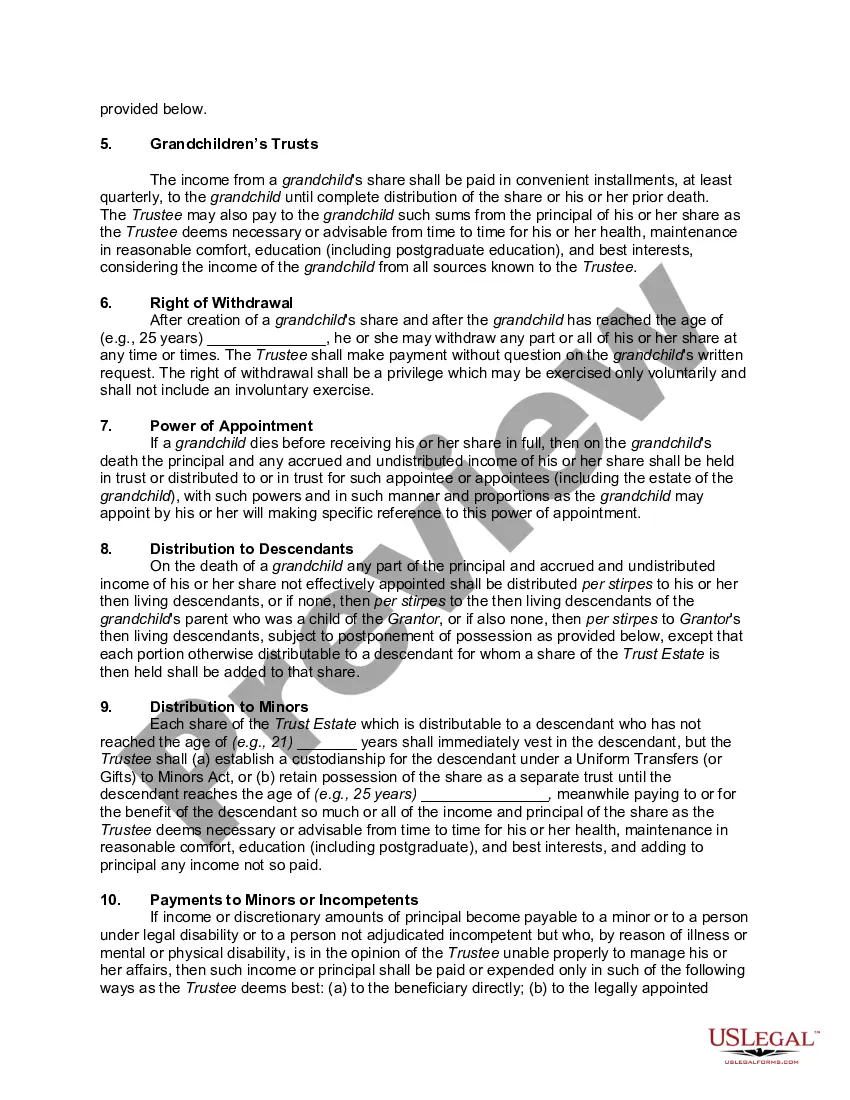
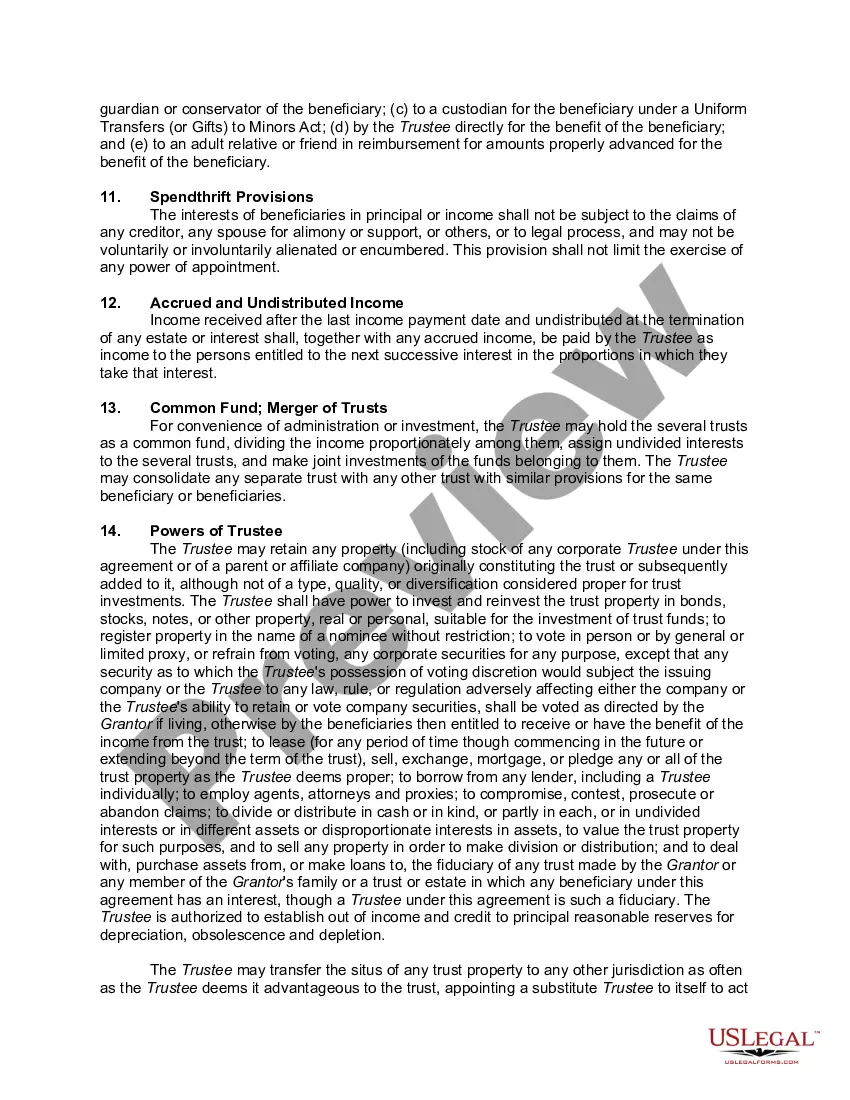
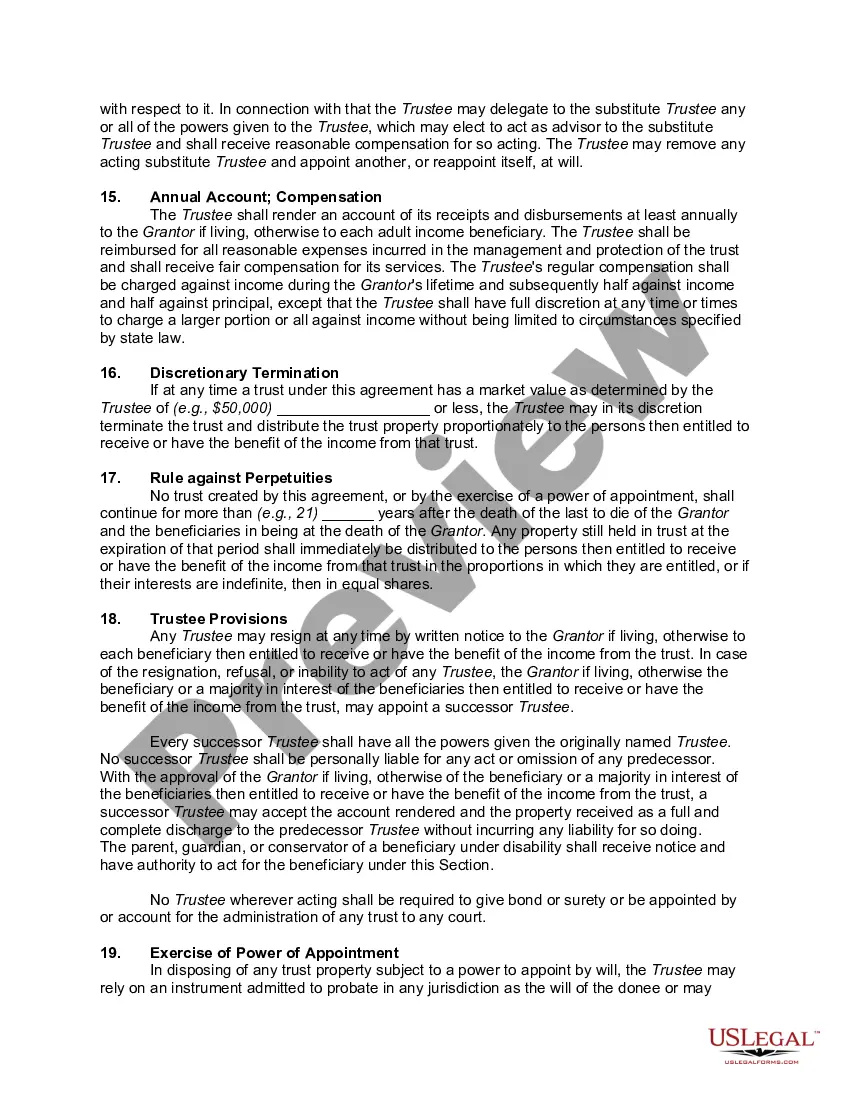
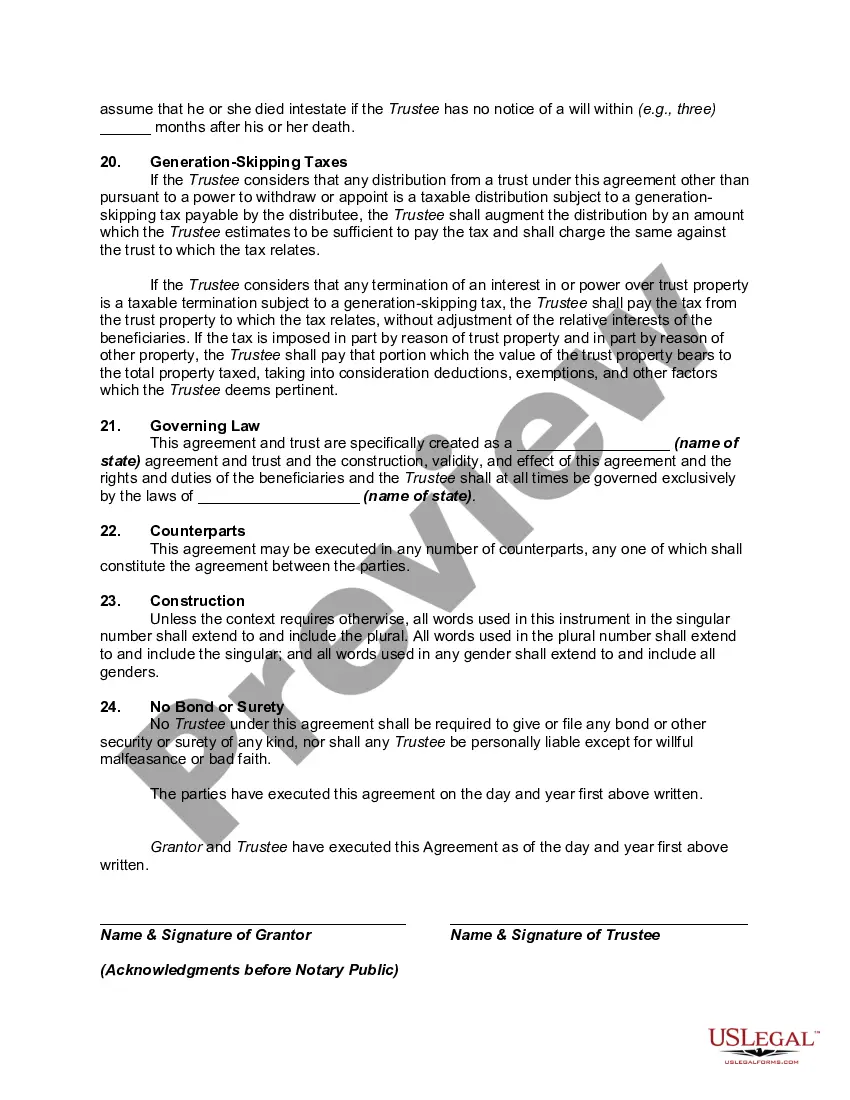



Get your form ready online
Our built-in tools help you complete, sign, share, and store your documents in one place.
Make edits, fill in missing information, and update formatting in US Legal Forms—just like you would in MS Word.
Download a copy, print it, send it by email, or mail it via USPS—whatever works best for your next step.
Sign and collect signatures with our SignNow integration. Send to multiple recipients, set reminders, and more. Go Premium to unlock E-Sign.
If this form requires notarization, complete it online through a secure video call—no need to meet a notary in person or wait for an appointment.
We protect your documents and personal data by following strict security and privacy standards.

Make edits, fill in missing information, and update formatting in US Legal Forms—just like you would in MS Word.

Download a copy, print it, send it by email, or mail it via USPS—whatever works best for your next step.

Sign and collect signatures with our SignNow integration. Send to multiple recipients, set reminders, and more. Go Premium to unlock E-Sign.

If this form requires notarization, complete it online through a secure video call—no need to meet a notary in person or wait for an appointment.

We protect your documents and personal data by following strict security and privacy standards.
Looking for another form?
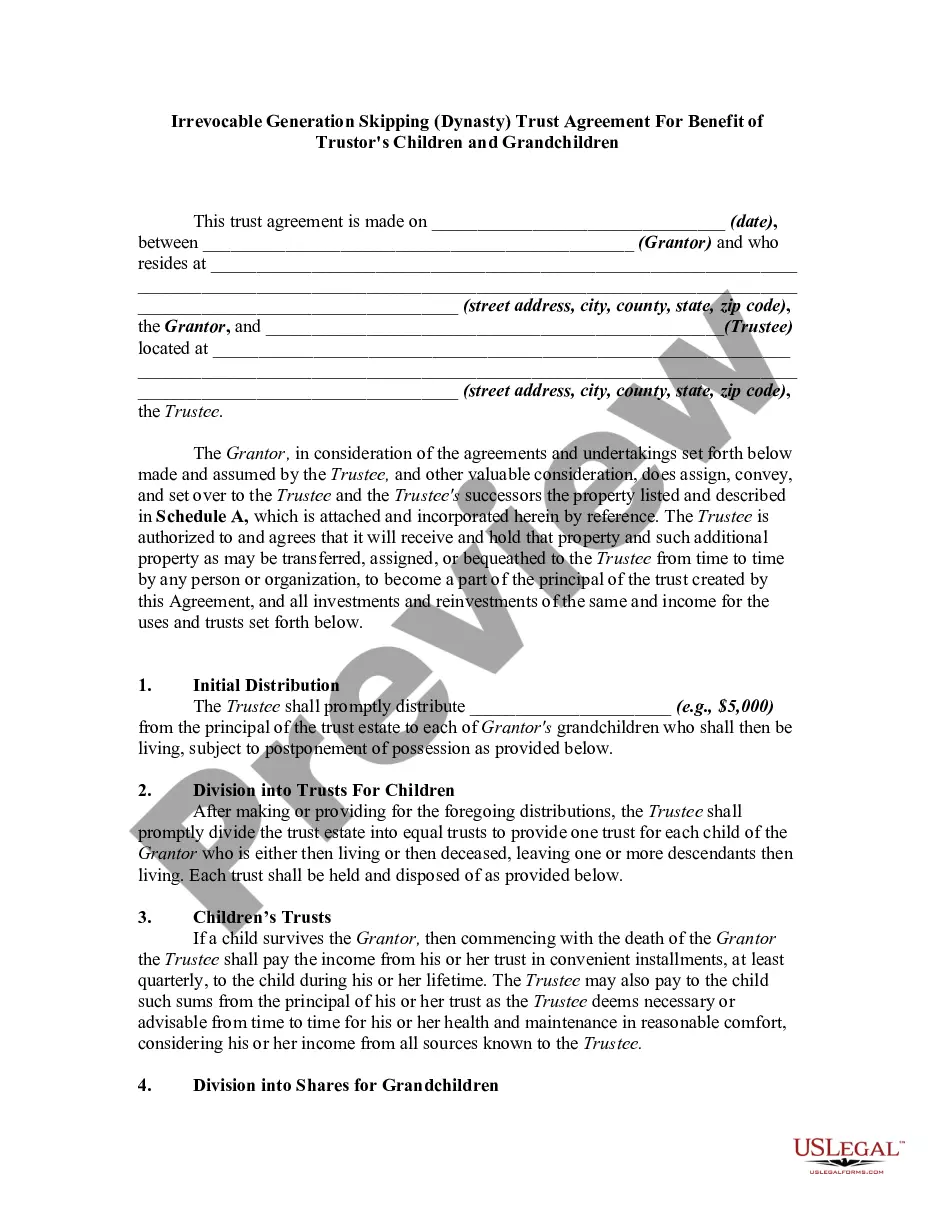
How to fill out Irrevocable Trust Agreement For Benefit Of Trustor's Children And Grandchildren?
- Log in to your US Legal Forms account if you're an existing user. Verify that your subscription is active; if it's expired, renew as necessary.
- In the Preview mode, review the form details to ensure it meets your requirements and complies with local jurisdiction regulations.
- If adjustments are needed, utilize the Search feature to find the appropriate template that fits your trust planning needs.
- After selecting the correct document, click on the Buy Now button to choose your desired subscription plan.
- Complete your purchase by entering your payment information securely via credit card or PayPal.
- Download the finalized form to your device and access it anytime from the My Forms menu on your profile.
With US Legal Forms, you benefit from a vast collection of legal documents, boasting over 85,000 forms that are easily fillable and editable. Their commitment to providing users with expert assistance ensures that your completed forms meet legal standards.
Start your estate planning today by taking advantage of US Legal Forms’ resources. Form your irrevocable trust with confidence and ease!
Form popularity
FAQ
An irrevocable trust typically needs to file Form 1041, the U.S. Income Tax Return for Estates and Trusts. Depending on the income and distributions, the trust may also provide beneficiaries with a Schedule K-1. Forming an irrevocable trust with a trust document from uslegalforms can simplify this process and ensure you meet all requirements.
The IRS considers irrevocable trusts as separate tax entities once they are formed. This means the trust itself is responsible for any taxes on its income. When you form an irrevocable trust with a trust document, understanding your obligations under IRS rules helps ensure compliance and effective management of the trust.
Irrevocable trusts can provide asset protection, tax benefits, and control over asset distribution after your passing. They can shield assets from creditors and reduce estate taxes. By choosing to form an irrevocable trust with a trust document, you can achieve these advantages while securing your legacy.
Trusts that have taxable income or have a gross income of $600 or more must file Form 1041. This includes most irrevocable trusts, which report income earned during the tax year. When you form an irrevocable trust with a trust document, awareness of the filing requirements is essential for compliance.
Yes, an irrevocable trust can issue a Schedule K-1 to beneficiaries who receive distributions of income. This form reports each beneficiary's share of the trust's income, deductions, and credits. When you form an irrevocable trust with a trust document, understanding the K-1 process helps in managing tax responsibilities.
An irrevocable trust typically needs to issue a Form 1099 if it has income that requires reporting. This includes interest, dividends, and other types of income earned by the trust. Ensure that when you form an irrevocable trust with a trust document, you keep thorough records to meet IRS requirements.
Yes, you can create an irrevocable trust yourself, but it is often beneficial to consult with a legal professional. Using resources from uslegalforms can guide you through the process, ensuring that you complete the necessary steps correctly. Remember, when you form an irrevocable trust with a trust document, proper language and compliance with state laws are crucial for its validity.
One frequent mistake parents make when setting up a trust fund is not clearly defining the terms or the objectives of the trust. This lack of clarity can lead to misunderstandings among beneficiaries, potentially causing disputes. Additionally, failing to regularly review and update the trust can lead to unintended consequences down the line. Seeking assistance from experts, such as those at USLegalForms, can help your parents avoid these pitfalls.
A family trust is beneficial, but it does have some disadvantages that should be considered. One significant drawback is that it can complicate financial matters, especially if not all family members agree on management decisions. Moreover, there could be tax implications and costs involved in maintaining the trust over time. Therefore, understanding these factors is essential before forming an irrevocable trust with a trust.
Although there are many advantages, forming an irrevocable trust with a trust can also come with certain downsides. One major issue is the permanent nature of the trust; once established, your parents generally cannot change or dissolve it. This lack of flexibility can be problematic if their financial situation or their intentions change in the future. It's crucial to weigh these factors before making a commitment.