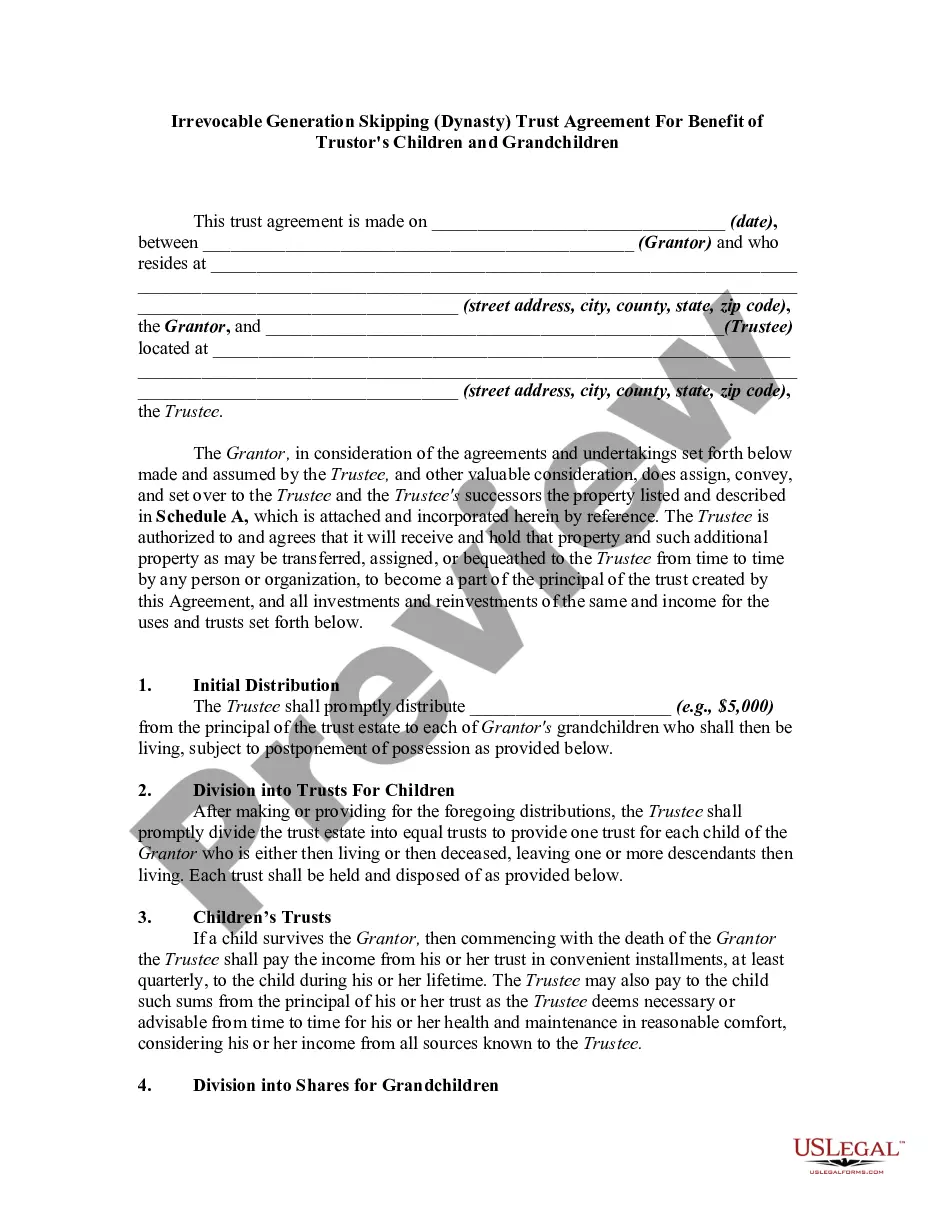
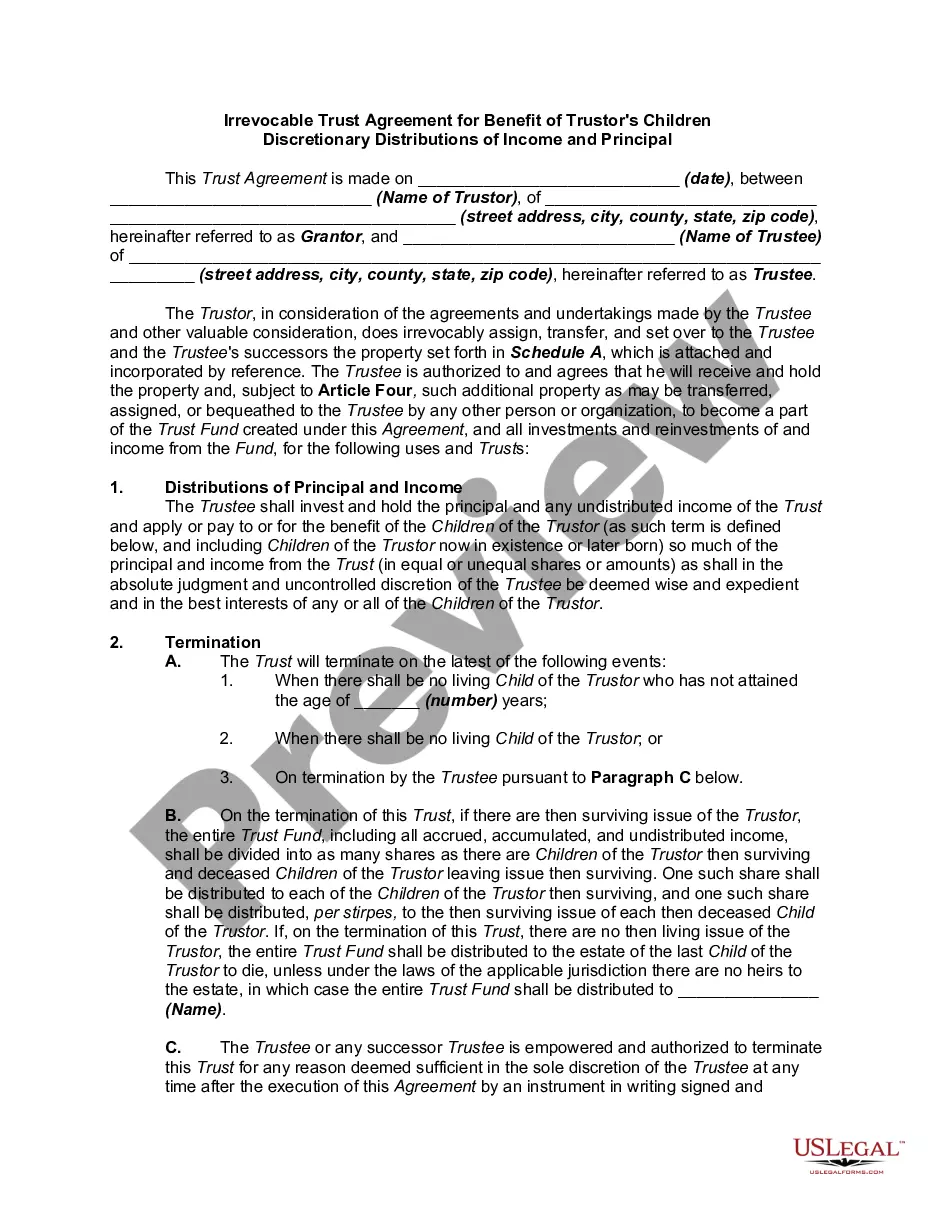
Agreement Trust Irrevocable For Trust
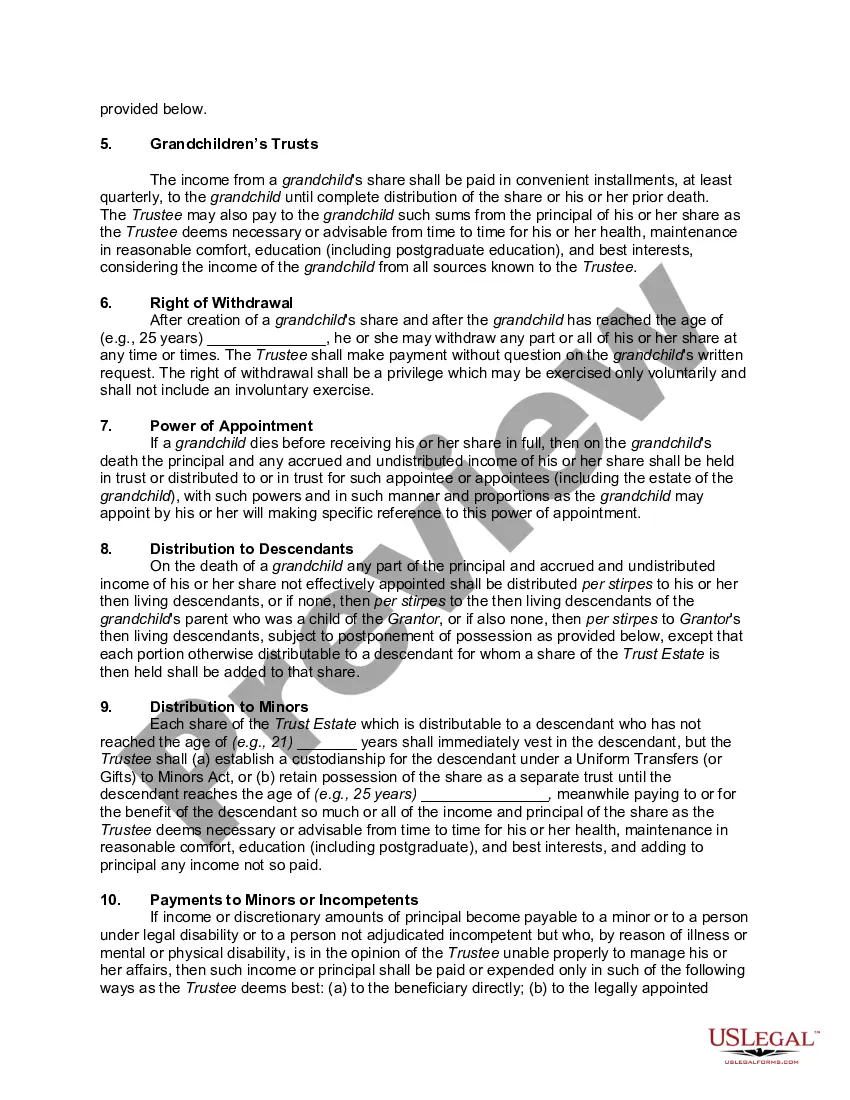
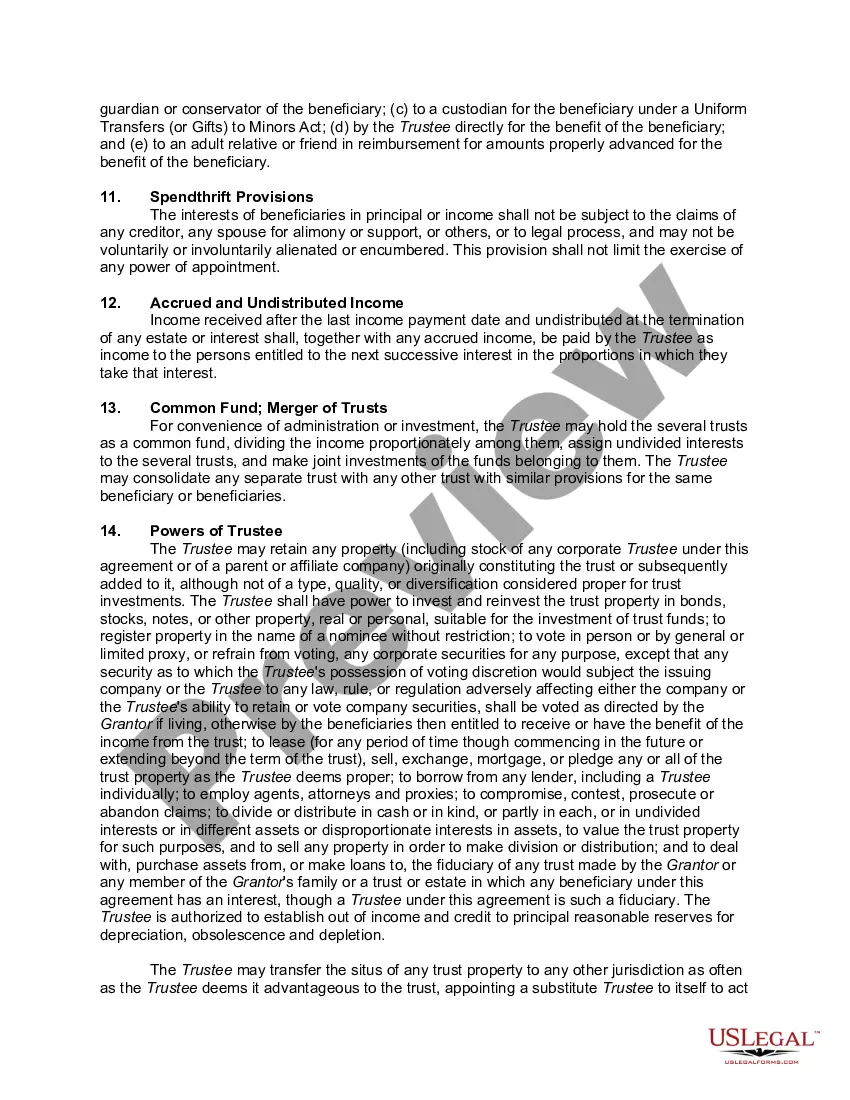
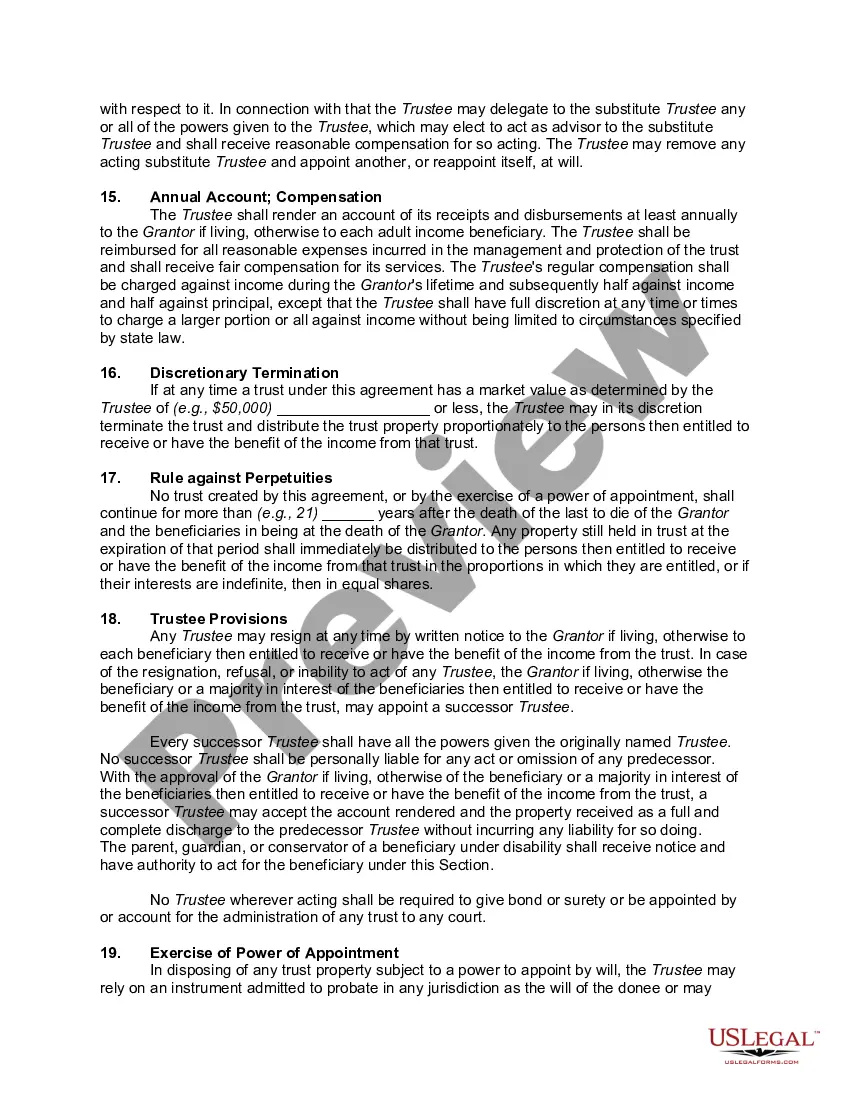
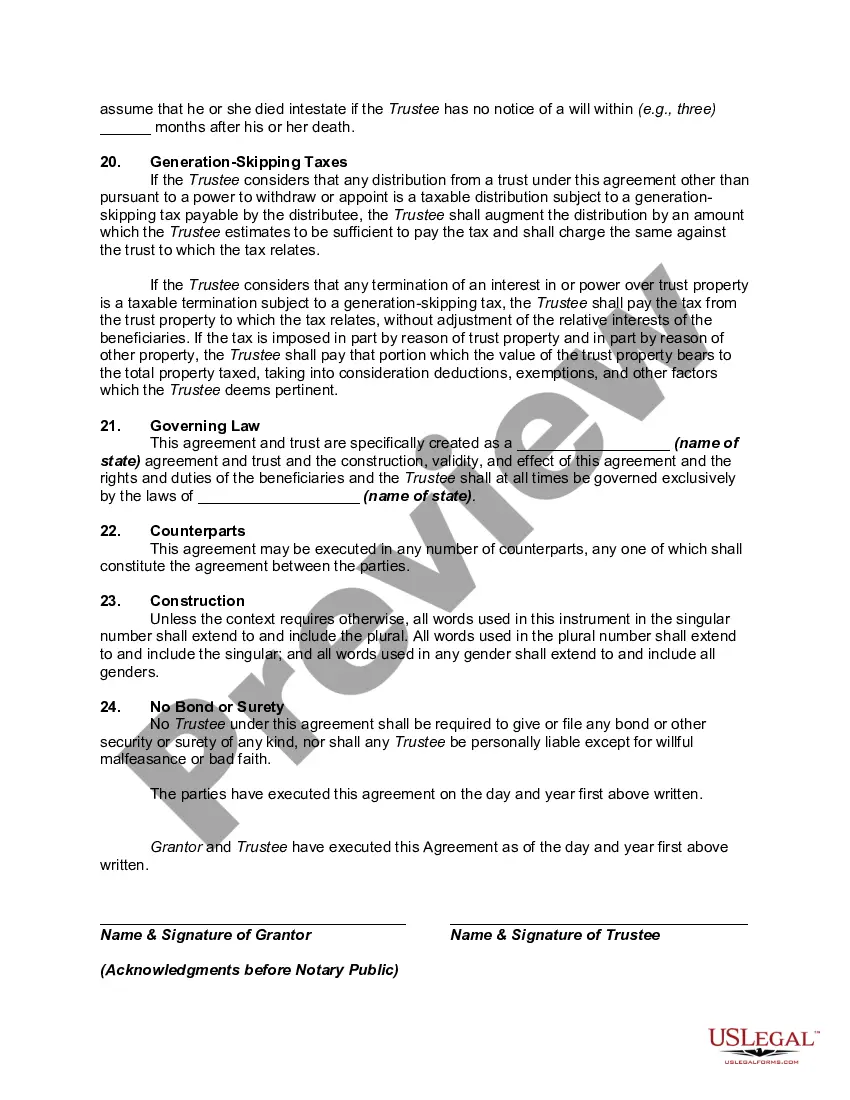
Description




Get your form ready online
Our built-in tools help you complete, sign, share, and store your documents in one place.
Make edits, fill in missing information, and update formatting in US Legal Forms—just like you would in MS Word.
Download a copy, print it, send it by email, or mail it via USPS—whatever works best for your next step.
Sign and collect signatures with our SignNow integration. Send to multiple recipients, set reminders, and more. Go Premium to unlock E-Sign.
If this form requires notarization, complete it online through a secure video call—no need to meet a notary in person or wait for an appointment.
We protect your documents and personal data by following strict security and privacy standards.

Make edits, fill in missing information, and update formatting in US Legal Forms—just like you would in MS Word.

Download a copy, print it, send it by email, or mail it via USPS—whatever works best for your next step.

Sign and collect signatures with our SignNow integration. Send to multiple recipients, set reminders, and more. Go Premium to unlock E-Sign.

If this form requires notarization, complete it online through a secure video call—no need to meet a notary in person or wait for an appointment.

We protect your documents and personal data by following strict security and privacy standards.
Looking for another form?








How to fill out Irrevocable Trust Agreement For Benefit Of Trustor's Children And Grandchildren?
Handling legal documents and processes can be a lengthy addition to your day.
Agreement Trust Irrevocable For Trust and similar forms generally necessitate that you seek them out and comprehend how to fill them out correctly.
Consequently, whether you are managing financial, legal, or personal affairs, having an extensive and user-friendly online collection of forms readily available will be immensely beneficial.
US Legal Forms is the leading online resource for legal templates, boasting over 85,000 state-specific forms and a range of materials to assist you in easily completing your documents.
Is this your first time using US Legal Forms? Register and create an account in a few minutes to access the form library and Agreement Trust Irrevocable For Trust. Then, follow the steps outlined below to complete your form.
- Explore the repository of relevant documents accessible with just one click.
- US Legal Forms provides you with state- and county-specific forms available for download at any time.
- Enhance your document management procedures by utilizing a quality service that allows you to prepare any form in minutes without extra or hidden fees.
- Simply Log In to your account, find Agreement Trust Irrevocable For Trust, and download it instantly from the My documents section.
- You can also access forms you have downloaded in the past.
Form popularity
FAQ
The primary difference lies in the function and form of the two terms. A trust is the overall arrangement where a trustee manages assets on behalf of beneficiaries, while a trust agreement is the written document outlining the details of that arrangement. In other words, think of the trust as the entity and the trust agreement as the blueprint guiding its operations. Knowing this difference is essential when dealing with an Agreement trust irrevocable for trust.
An irrevocable trust agreement is a legal document that establishes a trust that cannot be altered or revoked once it is created. This means that once assets are transferred into the trust, the grantor relinquishes control, making it highly effective for asset protection and tax benefits. Understanding the implications of setting up an irrevocable trust is crucial for effective estate planning using an Agreement trust irrevocable for trust.
The three main types of irrevocable trusts include the irrevocable life insurance trust, charitable remainder trust, and special needs trust. Each serves specific purposes: the irrevocable life insurance trust helps manage life insurance benefits, the charitable remainder trust enables philanthropic giving with tax benefits, and the special needs trust protects benefits for individuals with disabilities. When considering estate planning, an Agreement trust irrevocable for trust can provide various solutions tailored to your needs.
Typically, a trust under agreement is categorized as either revocable or irrevocable. While an irrevocable trust cannot be altered once established, a revocable trust allows the grantor to modify or dissolve it during their lifetime. Therefore, if flexibility is a priority, consider a revocable trust instead. However, if asset protection is your goal, an Agreement trust irrevocable for trust may be more suitable.
Another common name for a trust agreement is a trust instrument. This term encompasses the legal framework that specifies how a trust operates. Essentially, the trust instrument lays out the roles of the trustee and beneficiaries, as well as the conditions under which the trust assets are managed. When referring to an Agreement trust irrevocable for trust, you might encounter the term trust instrument often.
In general, a trust agreement can supersede a will when it comes to the distribution of assets. If the trust is established before the individual passes away, it will govern the distribution of trust assets outside of the will. However, it is essential to ensure both documents are legally consistent. An Agreement trust irrevocable for trust can streamline the estate planning process significantly.
A trust agreement is a legal document that outlines the terms and conditions of a trust. In contrast, a trust itself refers to the arrangement where one party manages assets for the benefit of another. Essentially, the trust agreement details how the trust functions, while the trust is the operational entity that manages the assets according to that agreement. Understanding this distinction is crucial when dealing with an Agreement trust irrevocable for trust.
A trust agreement can come with several disadvantages. First, establishing an irrevocable trust may limit your control over assets since once it's set up, you usually cannot change it. Second, setting up a trust can incur legal fees, taxes, and administrative costs, which may add financial burdens. Therefore, it is vital to weigh these factors when considering an Agreement trust irrevocable for trust.
Filling out an irrevocable trust requires careful attention to detail. Start by gathering essential information about the trust's purpose, the trustee, and beneficiaries. Next, ensure you follow the specific guidelines set forth in the agreement trust irrevocable for trust template. Using a reliable platform like US Legal Forms can simplify this process, providing you with the necessary forms and guidance to ensure accuracy and compliance with legal standards.
The downside of an irrevocable trust is that, once established, you cannot alter or dissolve it without legal complexities. This means you lose control over the assets placed into the trust. While an agreement trust irrevocable for trust offers advantages, such as tax benefits and protection from creditors, it's crucial to weigh these against the long-term commitment it entails. Consulting a legal expert can help you evaluate if this option suits your financial goals.