Agreement Irrevocable Trust With A Beneficiary
Description


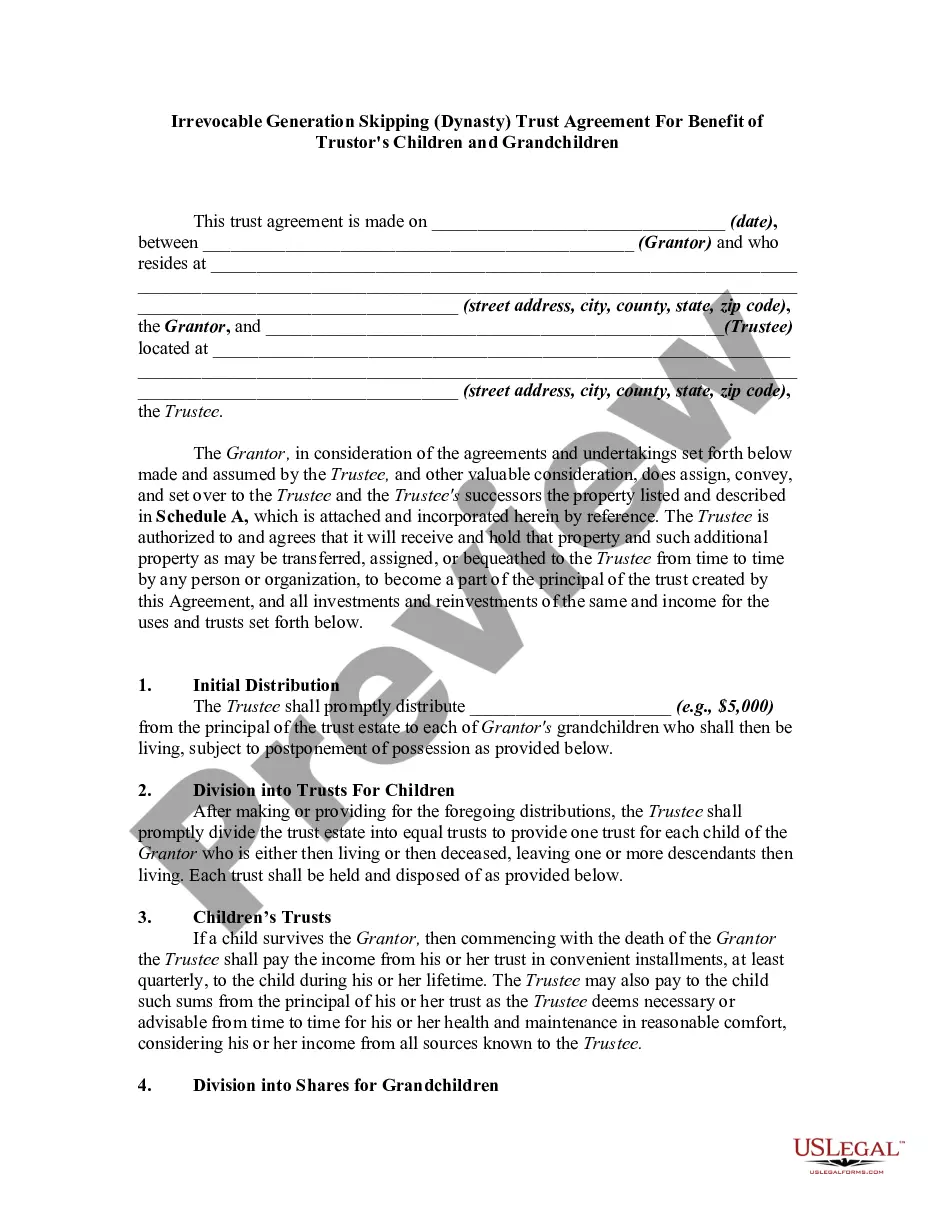
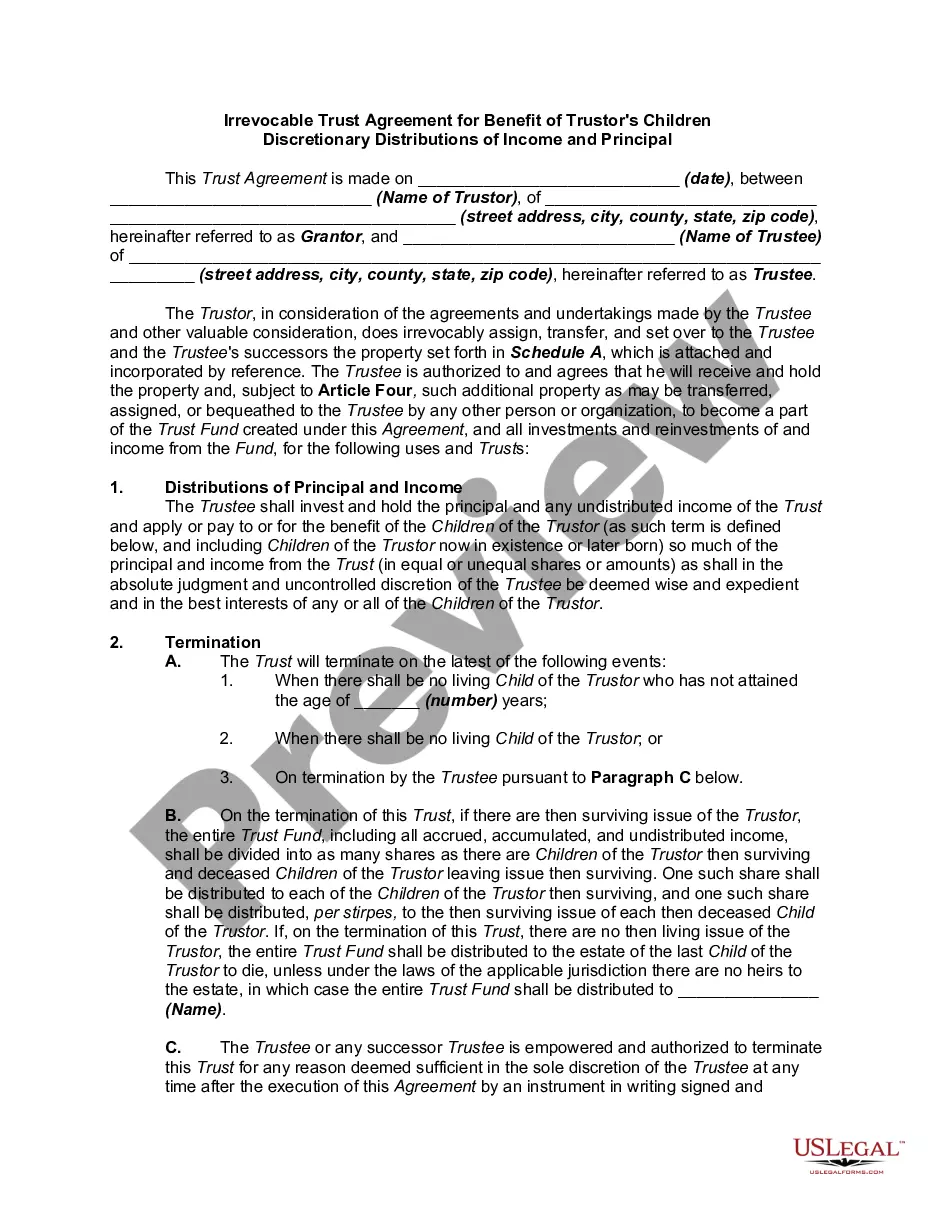

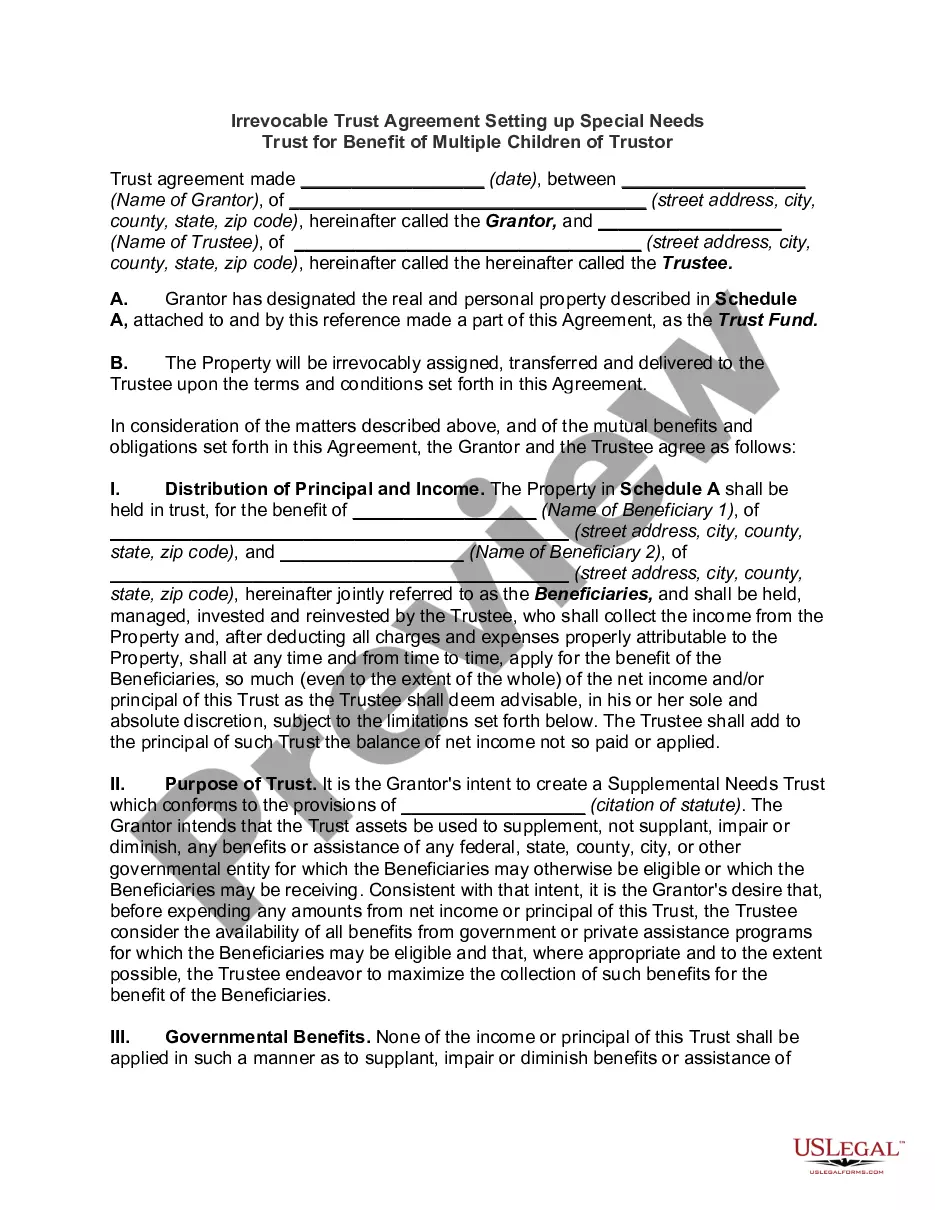
Get your form ready online
Our built-in tools help you complete, sign, share, and store your documents in one place.
Make edits, fill in missing information, and update formatting in US Legal Forms—just like you would in MS Word.
Download a copy, print it, send it by email, or mail it via USPS—whatever works best for your next step.
Sign and collect signatures with our SignNow integration. Send to multiple recipients, set reminders, and more. Go Premium to unlock E-Sign.
If this form requires notarization, complete it online through a secure video call—no need to meet a notary in person or wait for an appointment.
We protect your documents and personal data by following strict security and privacy standards.

Make edits, fill in missing information, and update formatting in US Legal Forms—just like you would in MS Word.

Download a copy, print it, send it by email, or mail it via USPS—whatever works best for your next step.

Sign and collect signatures with our SignNow integration. Send to multiple recipients, set reminders, and more. Go Premium to unlock E-Sign.

If this form requires notarization, complete it online through a secure video call—no need to meet a notary in person or wait for an appointment.

We protect your documents and personal data by following strict security and privacy standards.
Looking for another form?









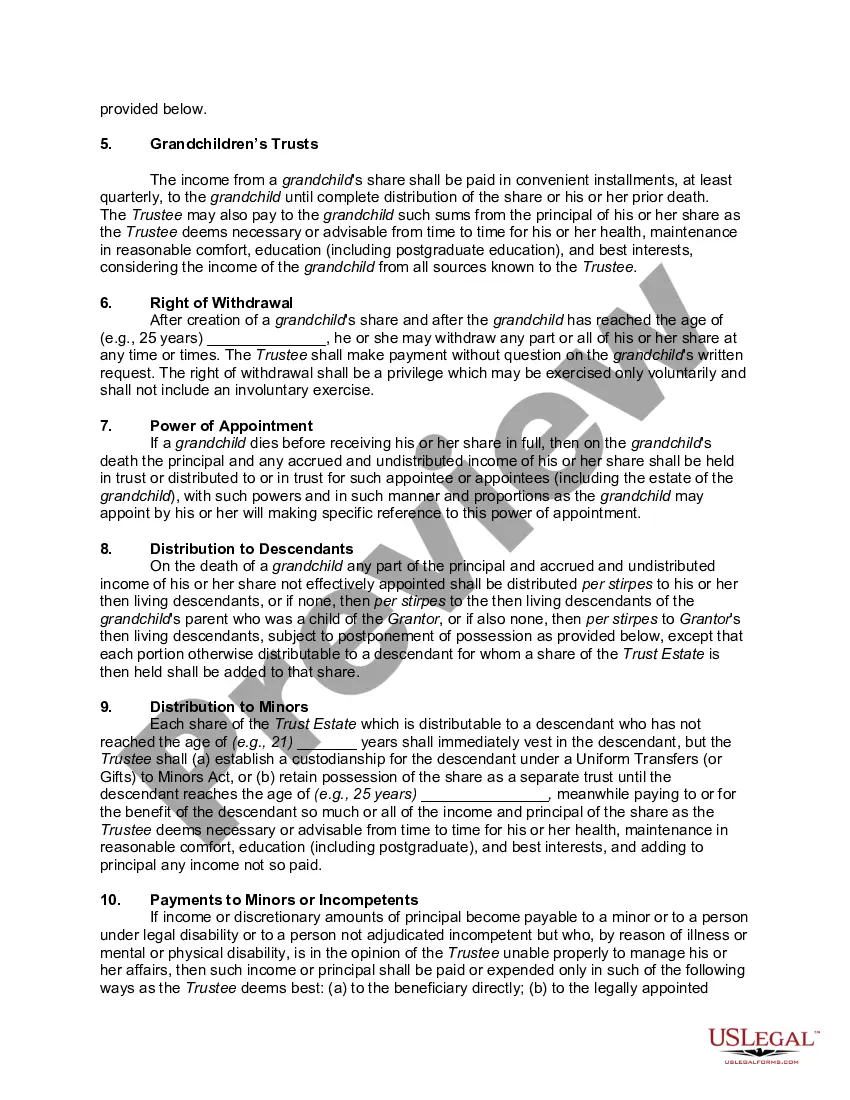
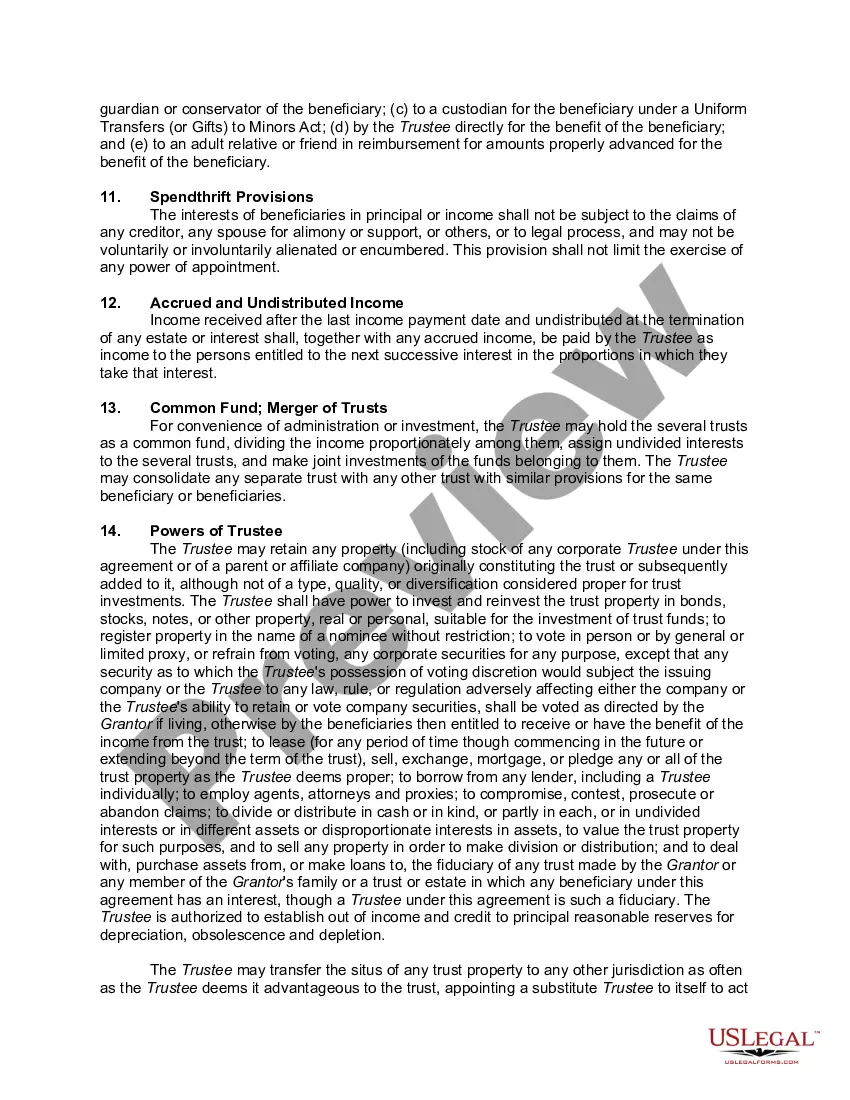
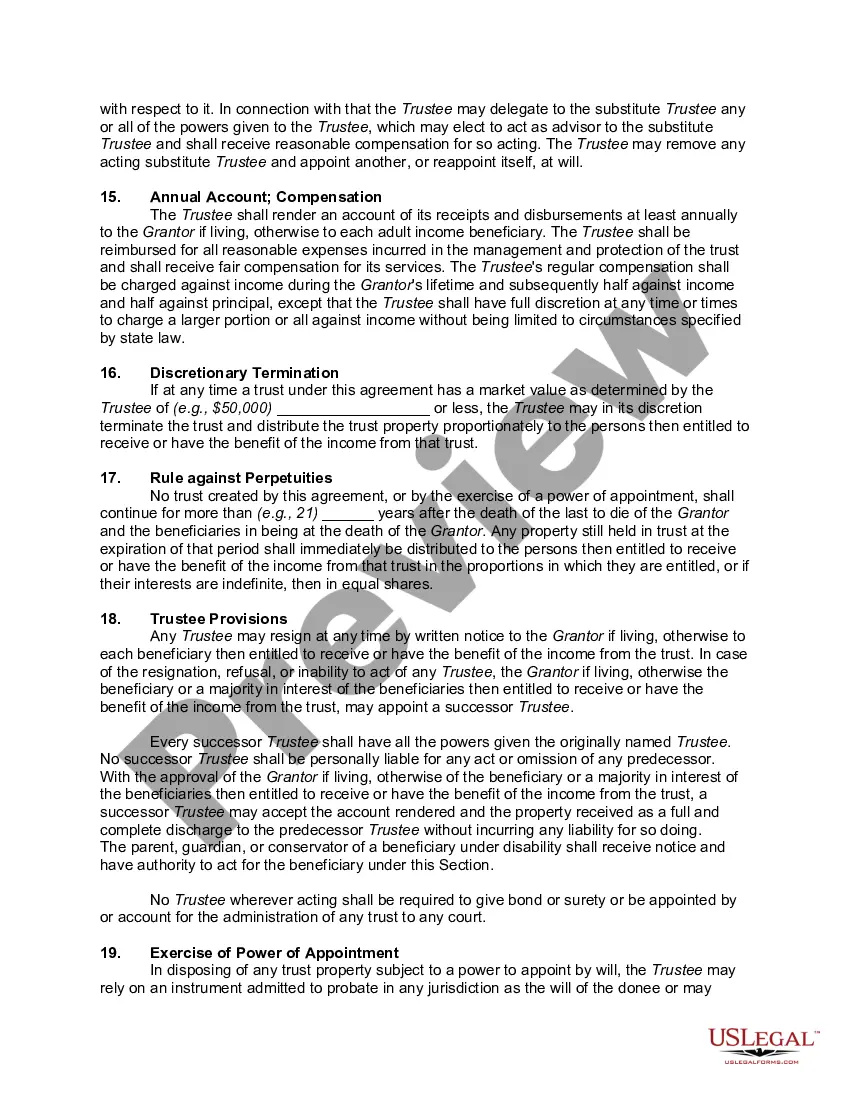
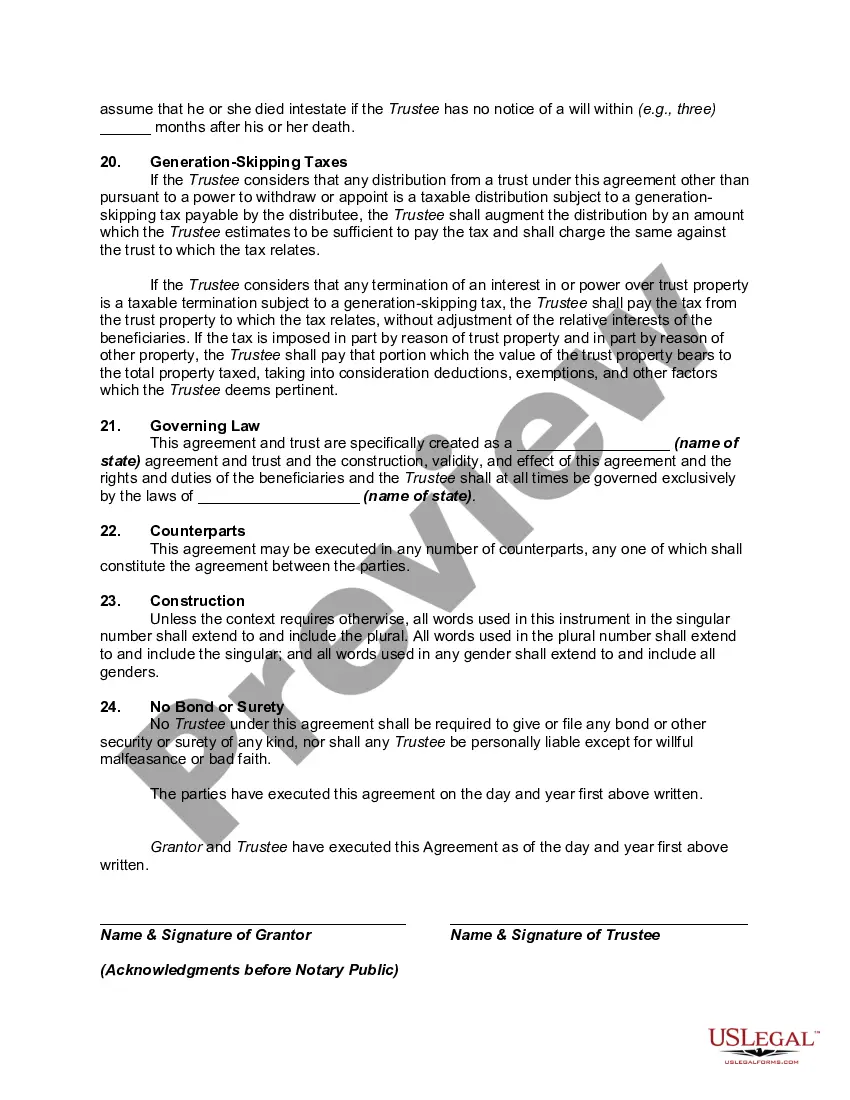
How to fill out Irrevocable Trust Agreement For Benefit Of Trustor's Children And Grandchildren?
- If you are an existing user, log in to your account and access your dashboard. Ensure your subscription is active; renew if necessary.
- Review the form preview and description to ensure it meets your specific requirements and local jurisdiction standards.
- If discrepancies arise, utilize the Search feature to find an alternative template that aligns with your needs.
- Select your document. Click on the Buy Now button and choose a subscription plan that fits your requirements. Registering for an account is essential to access full library resources.
- Complete your purchase by entering your payment details through credit card or PayPal.
- Download your completed document and save it to your device. You can access it anytime from the My Forms section.
After following these steps, you’ll have your agreement irrevocable trust with a beneficiary ready for use. US Legal Forms offers the benefit of a vast collection of documents, ensuring you have more options than competitors.
Start your journey to secure your financial future today! Visit US Legal Forms to explore their comprehensive library and get started.
Form popularity
FAQ
The 5-year rule regarding an agreement irrevocable trust with a beneficiary refers to the period during which assets must remain in the trust to avoid penalties when applying for Medicaid. If you create and fund the trust, you typically need to wait at least five years before the assets are no longer considered in determining Medicaid eligibility. This rule encourages early planning, as moving assets into the trust closer to your care needs may lead to delays in benefits. Consulting a professional can help you navigate this rule effectively.
An agreement irrevocable trust with a beneficiary can offer some asset protection from nursing home costs, but timing is crucial. Typically, if assets are placed in this type of trust more than five years before needing nursing home care, they may not be counted towards your financial resources. This can help in qualifying for Medicaid benefits, ensuring that your assets are preserved for your loved ones. It's important to consult a legal expert to fully understand how this applies to your situation.
To close an irrevocable trust after death, you need to follow the terms outlined in the trust document. Typically, the trustee will manage the final distributions to the beneficiaries as stated in the agreement irrevocable trust with a beneficiary. If you're unsure about the process, platforms like USLegalForms can provide the necessary forms and guidance to ensure a smooth closure.
The primary downside to an irrevocable trust is the loss of control over the assets once the trust is established. This means you cannot alter the terms or revoke the trust without the consent of the beneficiaries. An agreement irrevocable trust with a beneficiary secures assets for heirs, but it also means you must be certain of your decisions before proceeding.
No, you cannot name yourself as a beneficiary of your own irrevocable trust. Once you create an agreement irrevocable trust with a beneficiary, you relinquish control over the assets placed within it. This limitation ensures that the trust serves its purpose of protecting assets for the other beneficiaries.
Yes, you can designate an irrevocable trust as a beneficiary in your estate planning. This setup allows the trust to manage assets on behalf of the beneficiaries listed in the agreement. Utilizing an agreement irrevocable trust with a beneficiary can provide significant tax benefits and streamline asset distribution without the hassle of probate.
Yes, you can be a beneficiary of your own irrevocable trust, depending on how the trust is structured. Many individuals choose to include themselves as beneficiaries to receive support during their lifetime while ensuring that the trust's assets are preserved for future generations. Establishing an agreement irrevocable trust with a beneficiary like yourself can create a balanced approach to asset management and distribution.
Yes, an irrevocable trust can indeed be named as a beneficiary in various agreements, including life insurance policies or retirement accounts. This arrangement allows the trust to receive assets upon the grantor's death, further safeguarding the beneficiaries' interests. By establishing an agreement irrevocable trust with a beneficiary, a person can ensure that the assets are managed according to their wishes.
When the individual who created the agreement irrevocable trust with a beneficiary passes away, the trust generally remains intact and continues to operate according to its terms. The assets in the trust do not go through probate, ensuring a quicker distribution to the beneficiaries. Additionally, the terms of the trust guide how the assets will be managed and distributed, often providing financial security and clarity for the beneficiaries.
A common mistake parents make when setting up a trust fund is failing to clearly communicate their intentions with family members. Establishing an agreement irrevocable trust with a beneficiary requires clear guidelines to avoid misunderstandings later. Without open discussions, family members might have different expectations, leading to complications or disputes in the future.