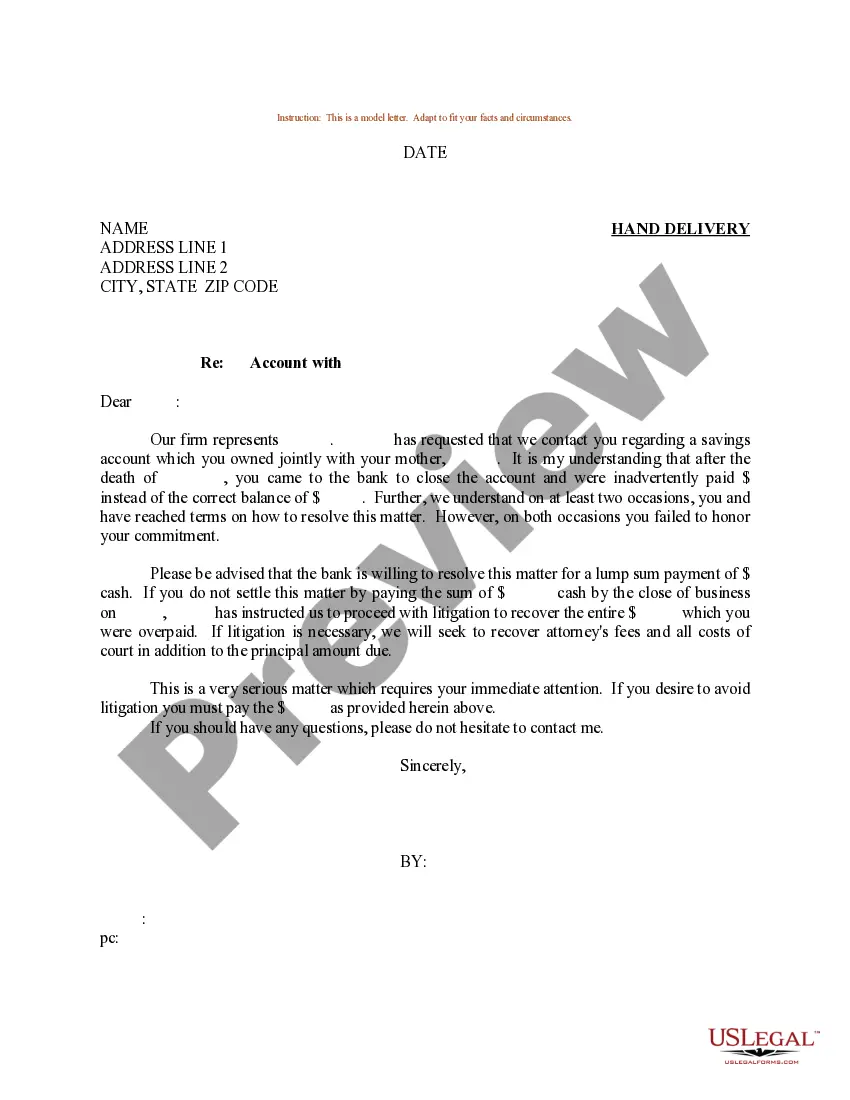
Checking Account For Estates
Description

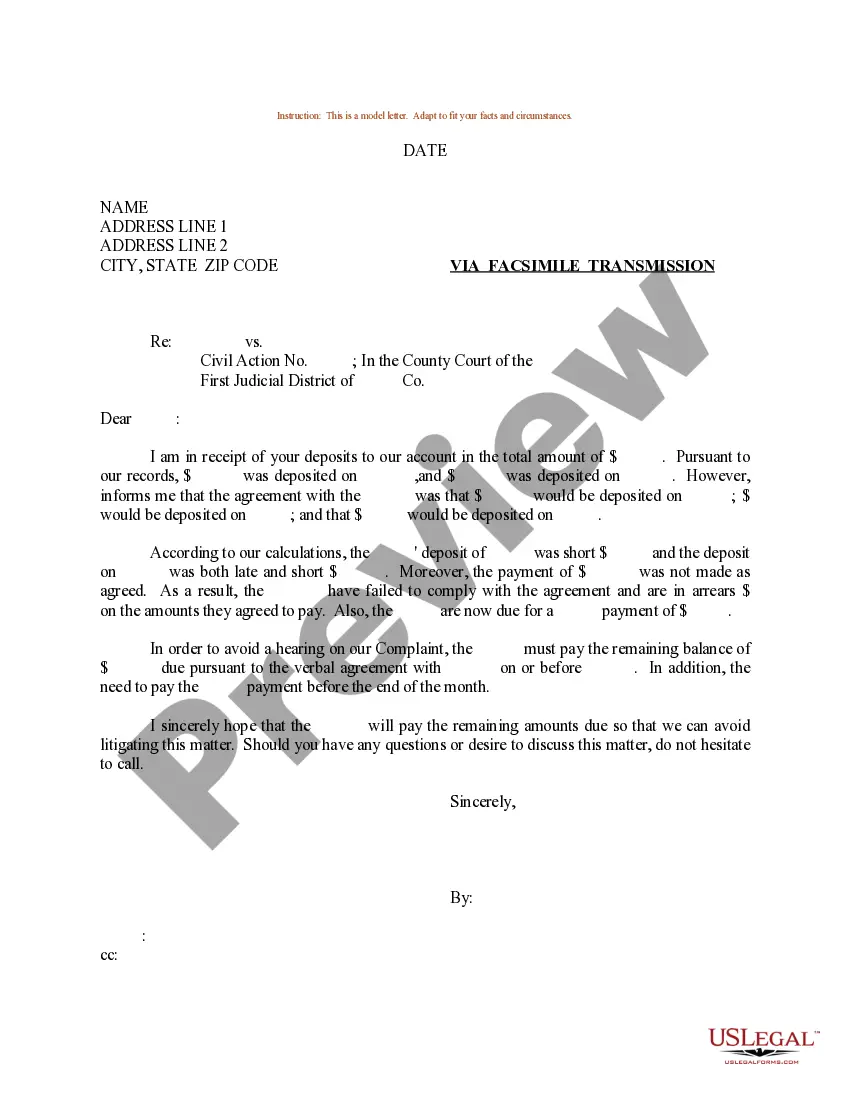
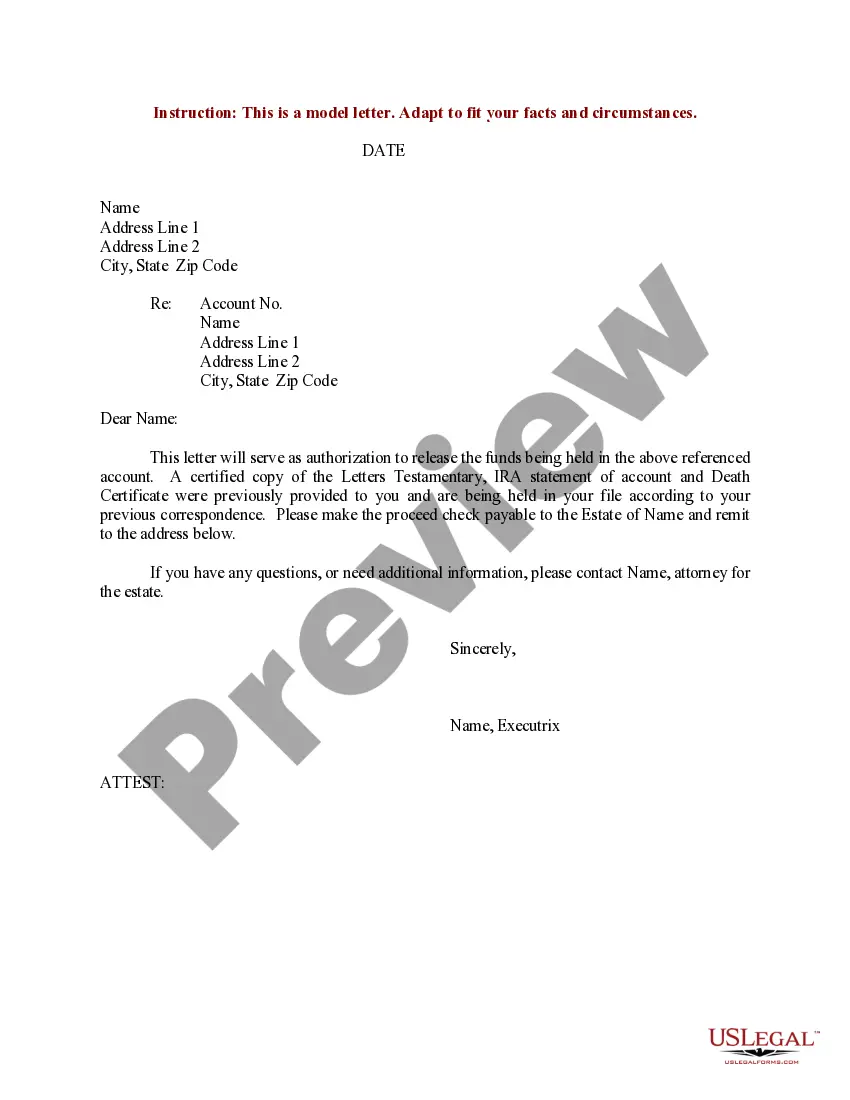
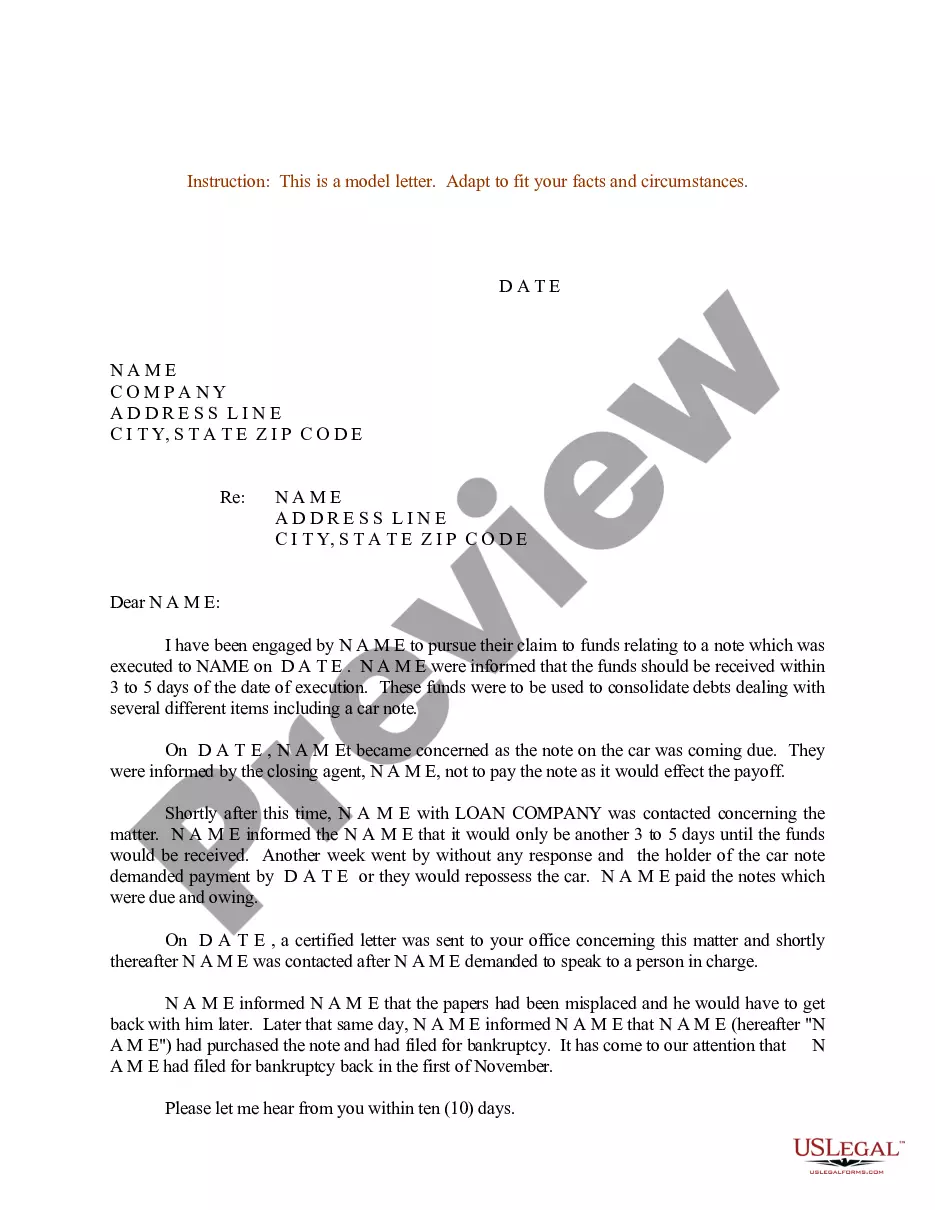
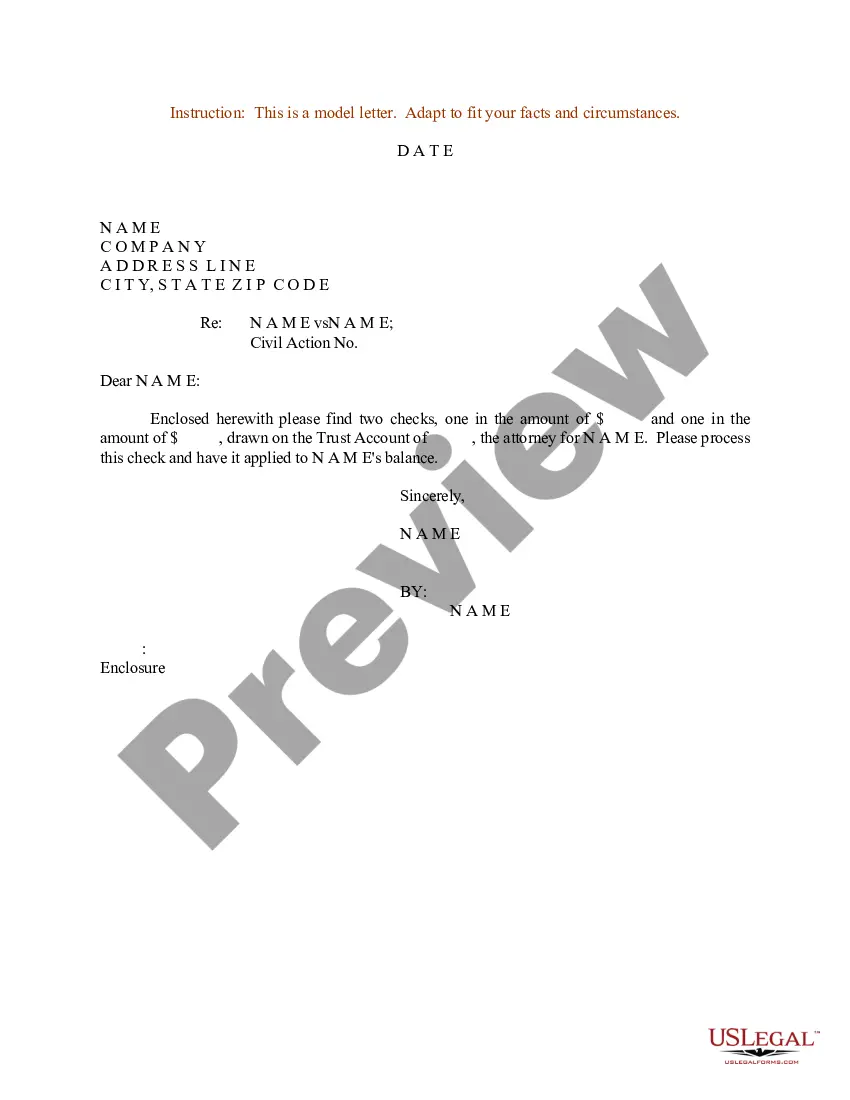
Get your form ready online
Our built-in tools help you complete, sign, share, and store your documents in one place.
Make edits, fill in missing information, and update formatting in US Legal Forms—just like you would in MS Word.
Download a copy, print it, send it by email, or mail it via USPS—whatever works best for your next step.
Sign and collect signatures with our SignNow integration. Send to multiple recipients, set reminders, and more. Go Premium to unlock E-Sign.
If this form requires notarization, complete it online through a secure video call—no need to meet a notary in person or wait for an appointment.
We protect your documents and personal data by following strict security and privacy standards.

Make edits, fill in missing information, and update formatting in US Legal Forms—just like you would in MS Word.

Download a copy, print it, send it by email, or mail it via USPS—whatever works best for your next step.

Sign and collect signatures with our SignNow integration. Send to multiple recipients, set reminders, and more. Go Premium to unlock E-Sign.

If this form requires notarization, complete it online through a secure video call—no need to meet a notary in person or wait for an appointment.

We protect your documents and personal data by following strict security and privacy standards.
Looking for another form?
How to fill out Sample Letter For Bank Account Funds?
Accessing legal documents that comply with federal and state laws is essential, and the internet provides many choices available.
However, why waste time looking for the correctly formulated Checking Account For Estates template online when the US Legal Forms digital library already has such documents gathered in one location.
US Legal Forms is the largest online legal repository with over 85,000 editable documents created by attorneys for any business and personal circumstance.
Examine the template using the Preview option or through the text outline to verify it meets your requirements.
- They are straightforward to navigate with all documents categorized by state and intended use.
- Our experts keep current with legal modifications, ensuring your documents are always updated and compliant when obtaining a Checking Account For Estates from our site.
- Getting a Checking Account For Estates is fast and convenient for both existing and new users.
- If you already possess an account with an active subscription, Log In and save the document sample you need in your desired format.
- If you are new to our platform, follow the steps outlined below.
Form popularity
FAQ
If a decedent dies with a will and their bank accounts do not have beneficiary designations, then the bank accounts will become a part of the decedent's probate estate.
The person you choose to inherit your account is a beneficiary. After your death, the account beneficiary can immediately claim ownership. Before setting up your account, reviewing bank account beneficiary rules is a good idea.
'Estate of' accounts can be opened at any bank. All Executor(s)/Administrator(s)/next of kin must visit their chosen branch with the Death Certificate and Will (if applicable) and advise the staff that they wish to open an 'Estate of' account.
The Check Belongs to the Estate Now As such, you'll need legal authority to cash or deposit the check. Typically, this requires being named as the executor or administrator of the estate via the probate process.
The bank or financial institution will transfer the assets from the deceased's accounts to an ?estate account? or will re-title the deceased's accounts to signify that the accounts are now part of the deceased's estates. The executor may write and sign checks from the estate account.