Foreclose Judgment Lien Form Nys
Description
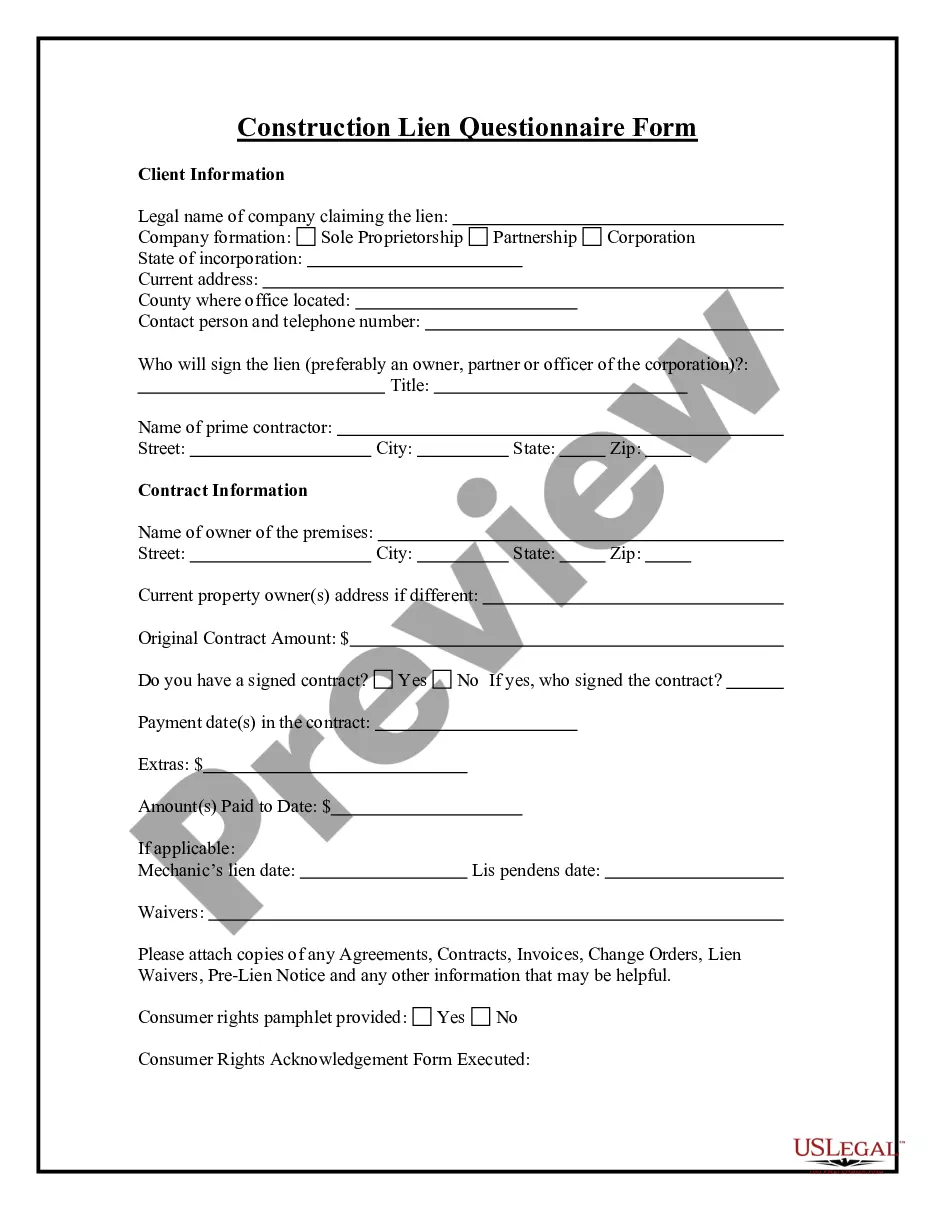
Get your form ready online
Our built-in tools help you complete, sign, share, and store your documents in one place.
Make edits, fill in missing information, and update formatting in US Legal Forms—just like you would in MS Word.
Download a copy, print it, send it by email, or mail it via USPS—whatever works best for your next step.
Sign and collect signatures with our SignNow integration. Send to multiple recipients, set reminders, and more. Go Premium to unlock E-Sign.
If this form requires notarization, complete it online through a secure video call—no need to meet a notary in person or wait for an appointment.
We protect your documents and personal data by following strict security and privacy standards.

Make edits, fill in missing information, and update formatting in US Legal Forms—just like you would in MS Word.

Download a copy, print it, send it by email, or mail it via USPS—whatever works best for your next step.

Sign and collect signatures with our SignNow integration. Send to multiple recipients, set reminders, and more. Go Premium to unlock E-Sign.

If this form requires notarization, complete it online through a secure video call—no need to meet a notary in person or wait for an appointment.

We protect your documents and personal data by following strict security and privacy standards.
Looking for another form?




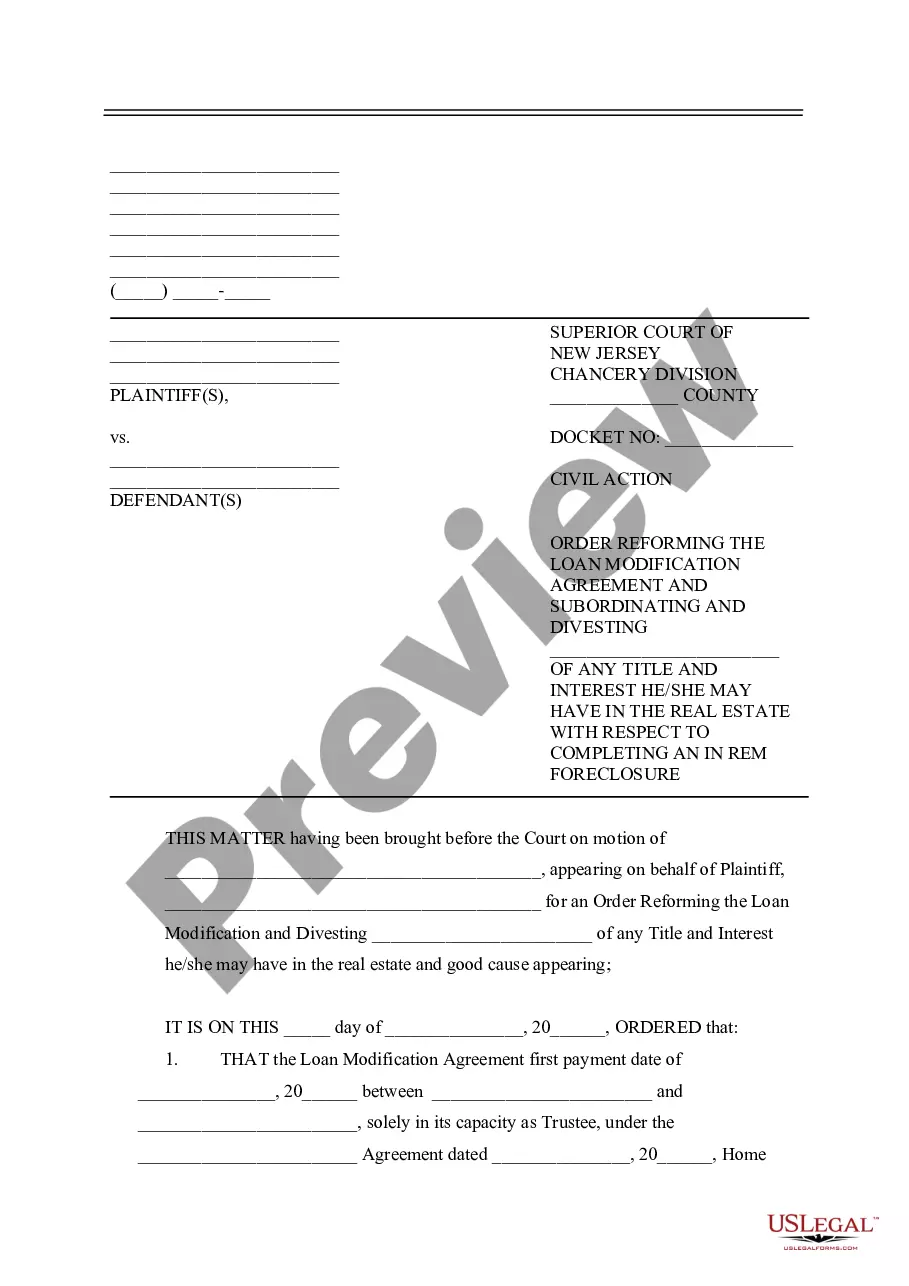
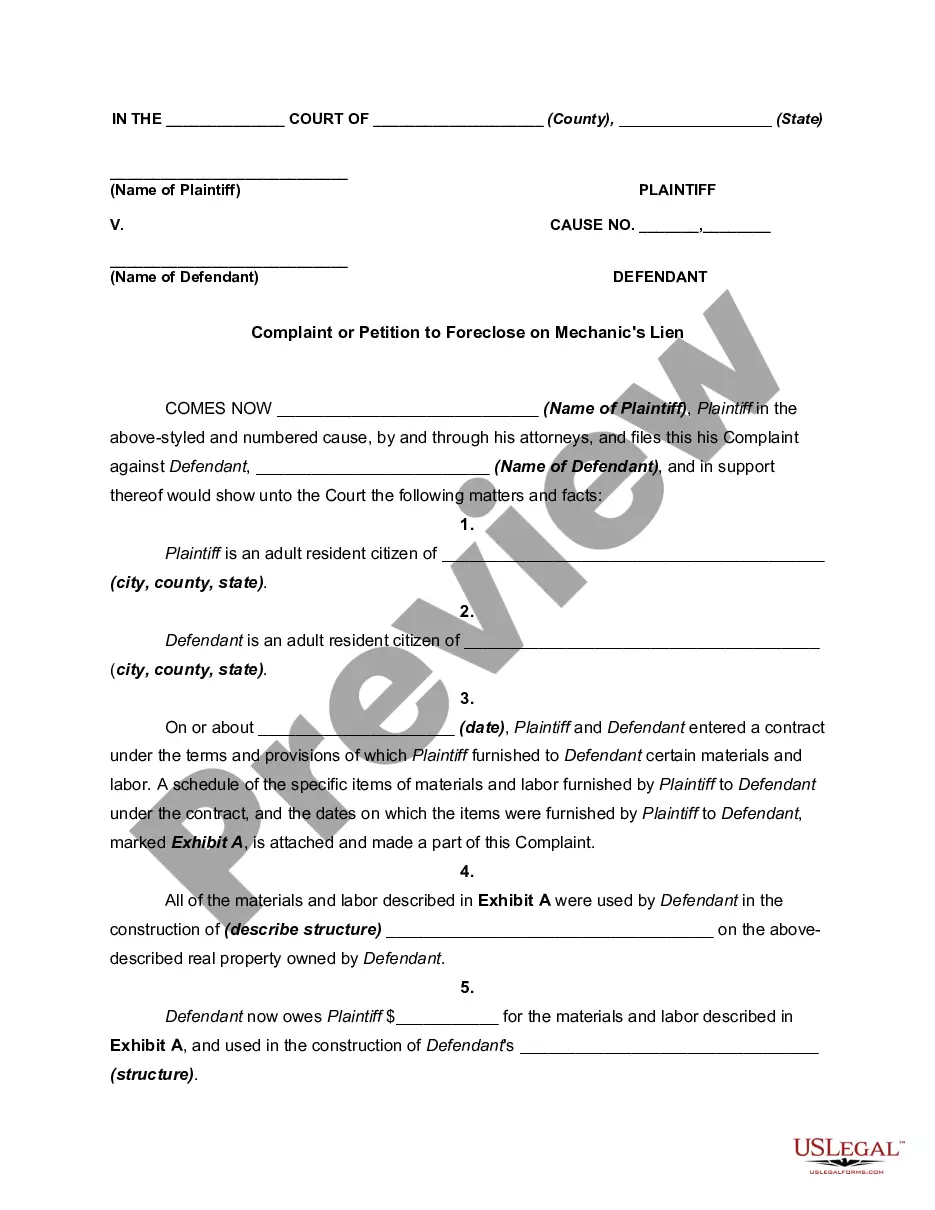
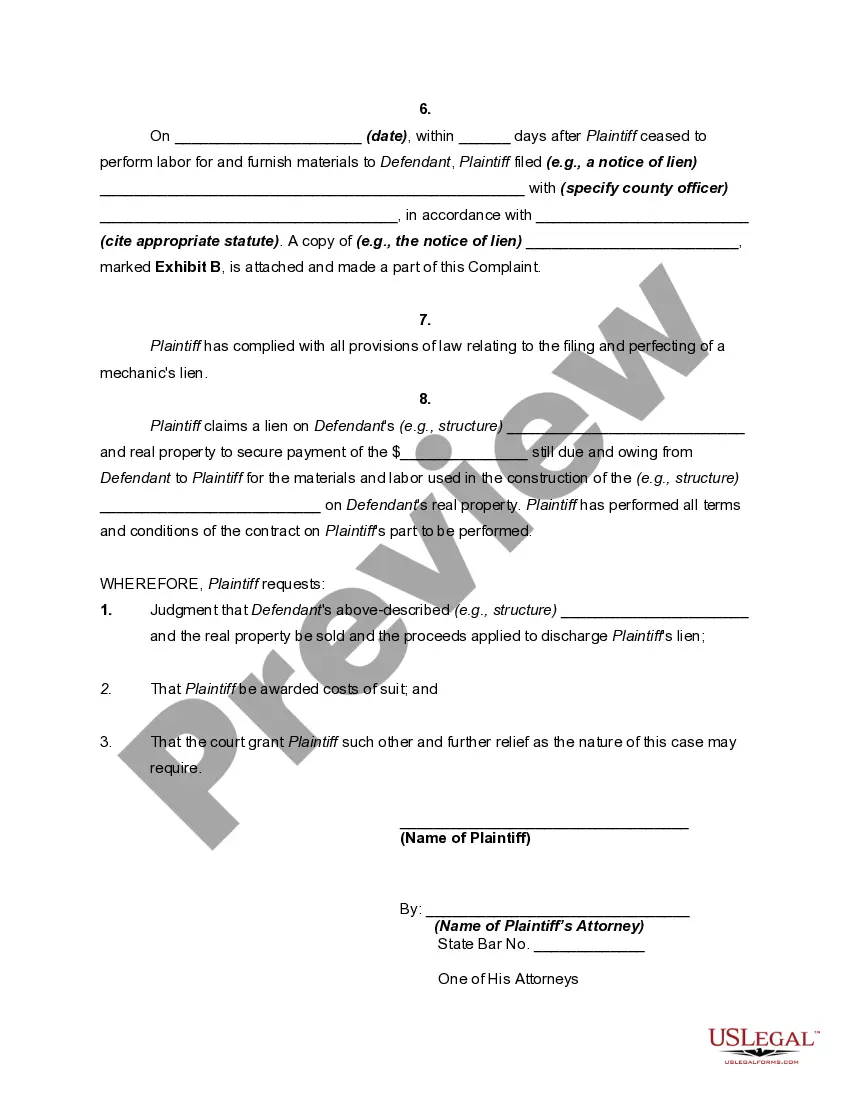
How to fill out Complaint Or Petition To Foreclose On Mechanic's Lien?
Legal management can be overwhelming, even for experienced professionals.
When you are searching for a Foreclosure Judgment Lien Form Nys and lack the time to dedicate to finding the correct and current version, the process can be stressful.
US Legal Forms addresses all your requirements, from personal to corporate documentation, all in one location.
Utilize advanced tools to complete and manage your Foreclosure Judgment Lien Form Nys.
Here are the steps to follow after acquiring the form you need: Verify that this is the correct document by previewing it and reviewing its details. Confirm that the template is valid in your state or county. Click Buy Now when you are ready. Select a subscription plan. Choose the format you need, and Download, complete, sign, print, and send your documents. Take advantage of the US Legal Forms online library, supported by 25 years of expertise and reliability. Simplify your daily document management into a straightforward and user-friendly process today.
- Access a repository of articles, guidelines, manuals, and resources related to your situation and needs.
- Save time and energy in looking for the documents you require, and use US Legal Forms’ sophisticated search and Review tool to find Foreclosure Judgment Lien Form Nys and obtain it.
- If you have a subscription, Log In to your US Legal Forms account, search for the form, and download it.
- Check your My documents tab to review the documents you have previously saved and organize your folders as you wish.
- If this is your first experience with US Legal Forms, create a free account and gain unlimited access to all the platform's features.
- A robust online form library can be transformative for anyone who aims to handle these matters efficiently.
- US Legal Forms is a leader in online legal documents, with over 85,000 state-specific legal forms accessible to you at any time.
- With US Legal Forms, you can access state- or county-specific legal and business documents.
Form popularity
FAQ
In New York, you can typically miss three consecutive mortgage payments before a lender initiates foreclosure proceedings. However, the timeline can vary based on the lender's policies and state laws. It’s important to communicate with your lender if you are having trouble making payments. Being proactive can help you avoid foreclosure and explore alternatives.
A judgment of foreclosure is a court order that allows a lender to proceed with selling a property to recover the outstanding mortgage debt. This judgment typically follows a legal process where the court evaluates the facts of the case. Once granted, it allows the lender to initiate a foreclosure auction. Understanding this judgment is critical, especially when dealing with the foreclose judgment lien form NYS.
After a foreclosure auction in New York, the new owner must follow specific procedures before taking possession of the property. Typically, the homeowner will have 30 days to vacate the premises after receiving a notice from the new owner. However, this timeline can vary based on individual circumstances. Being aware of this timeframe can help you make necessary arrangements during this challenging period.
The foreclosure process in New York State typically begins when a borrower misses several mortgage payments. The lender then files a lawsuit to initiate foreclosure, which involves several court proceedings. Once the court issues a judgment, the property may be sold at auction to recover the owed amount. For homeowners, knowing how to navigate this process, including using the foreclose judgment lien form NYS, can be crucial.
In New York, the one action rule states that a lender can only initiate one legal action to collect a debt secured by a mortgage. This means that if a lender wants to foreclose on a property, they must do so through a single lawsuit. This rule aims to prevent multiple lawsuits regarding the same debt and provides clarity for homeowners. Understanding this rule is important when dealing with the foreclose judgment lien form NYS.
If you got a Summons and Complaint, you need to deliver a written Answer form to the plaintiff and the Court. Your Answer is what you tell the court about what the plaintiff said in the Complaint. The Answer tells the court your defenses or reasons the plaintiff must not win the case.
A judgment is good for 20 years, but if the plaintiff wants to enforce the judgment against land it is only good for 10 years unless the plaintiff renews it for another 10 years.
How to Collect on a Judgment in New York Docketing judgments. Creating liens on real property. Contempt applications. Restraints. Issuing subpoenas. Depositions of the debtor or third parties. Installment payment orders. Property executions.
By obtaining a TRANSCRIPT OF JUDGMENT for a fee (payable by cash or money order only) from the City Court and then filing or docketing that Transcript in the County Clerk's office (for an additional fee), a Creditor creates a lien against any real property, that is, real estate, the Debtor owns in the county.
An original judgment lien is valid for 10 years. If the judgment isn't paid by the end of the first 10 years, then the judgment creditor can seek a renewal judgment on the lien that would be valid for another 10 years.