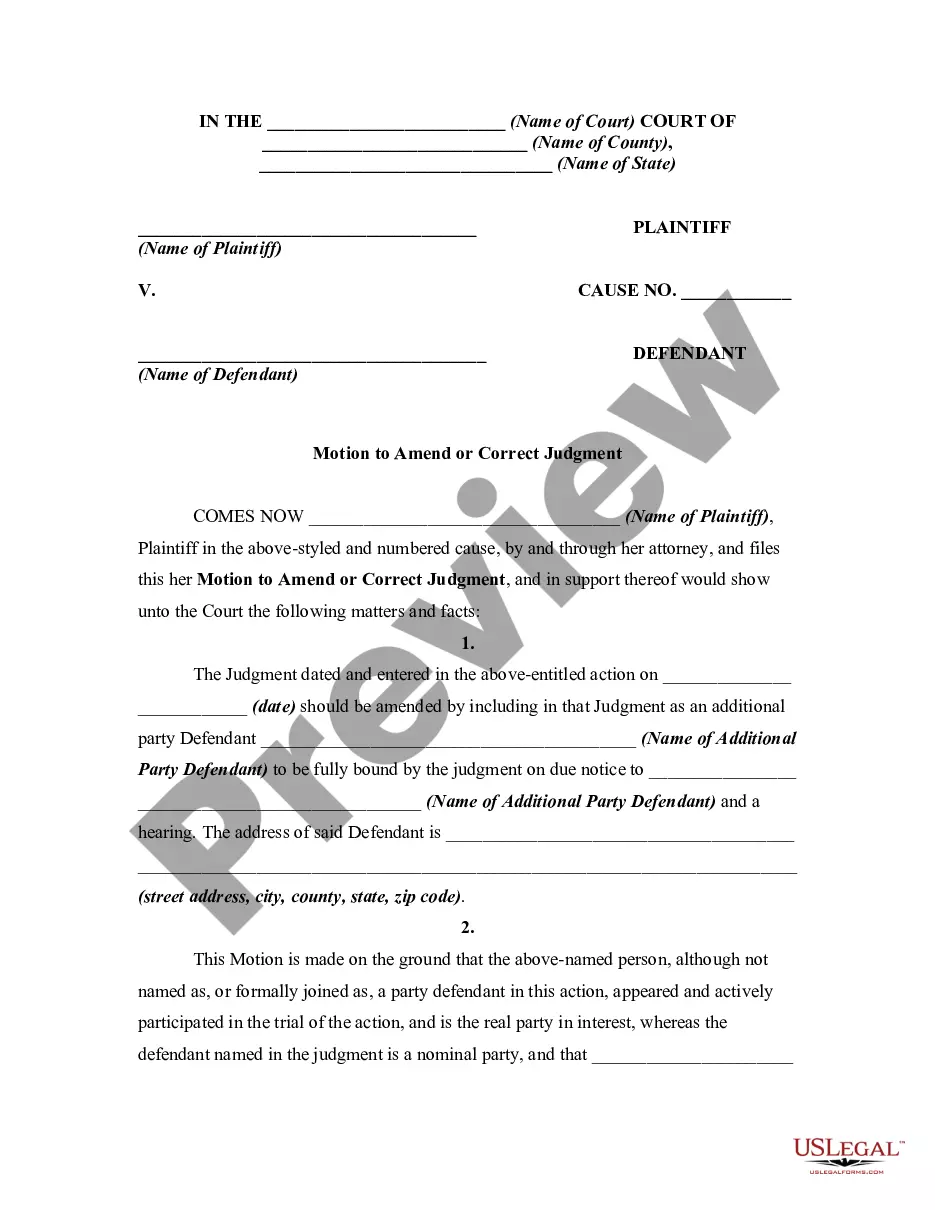
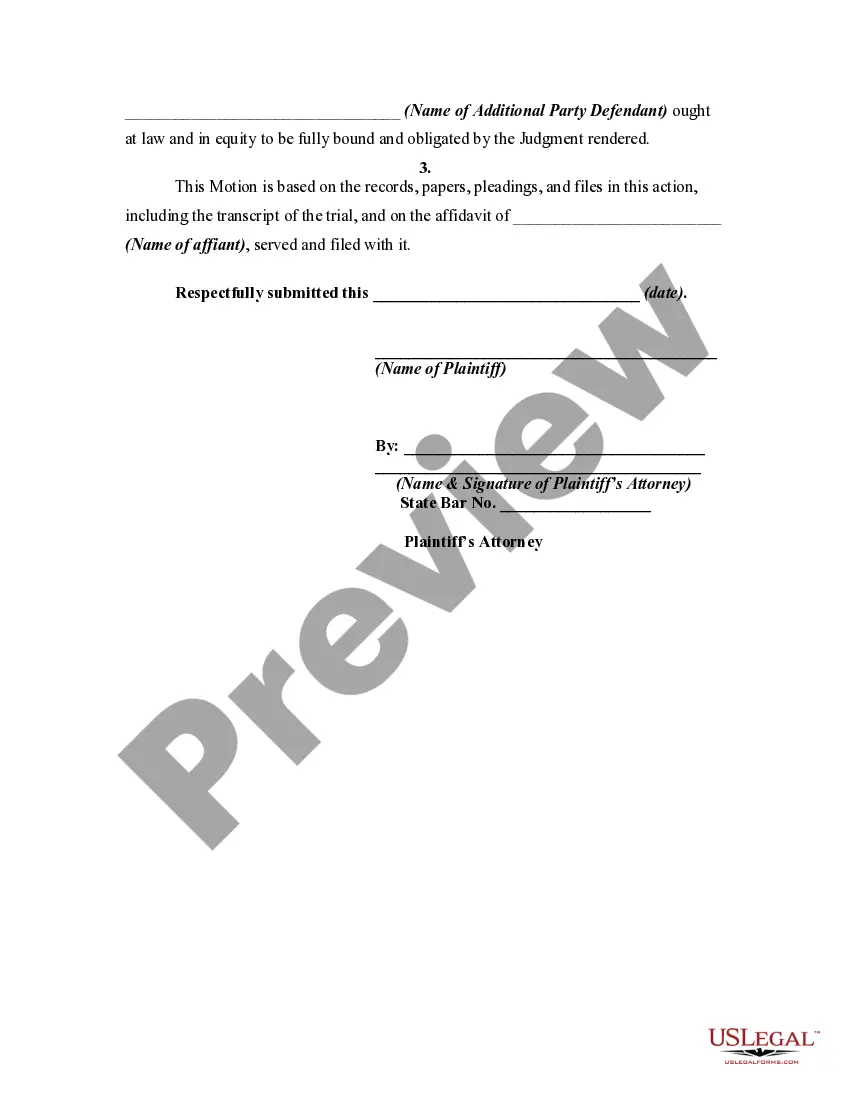
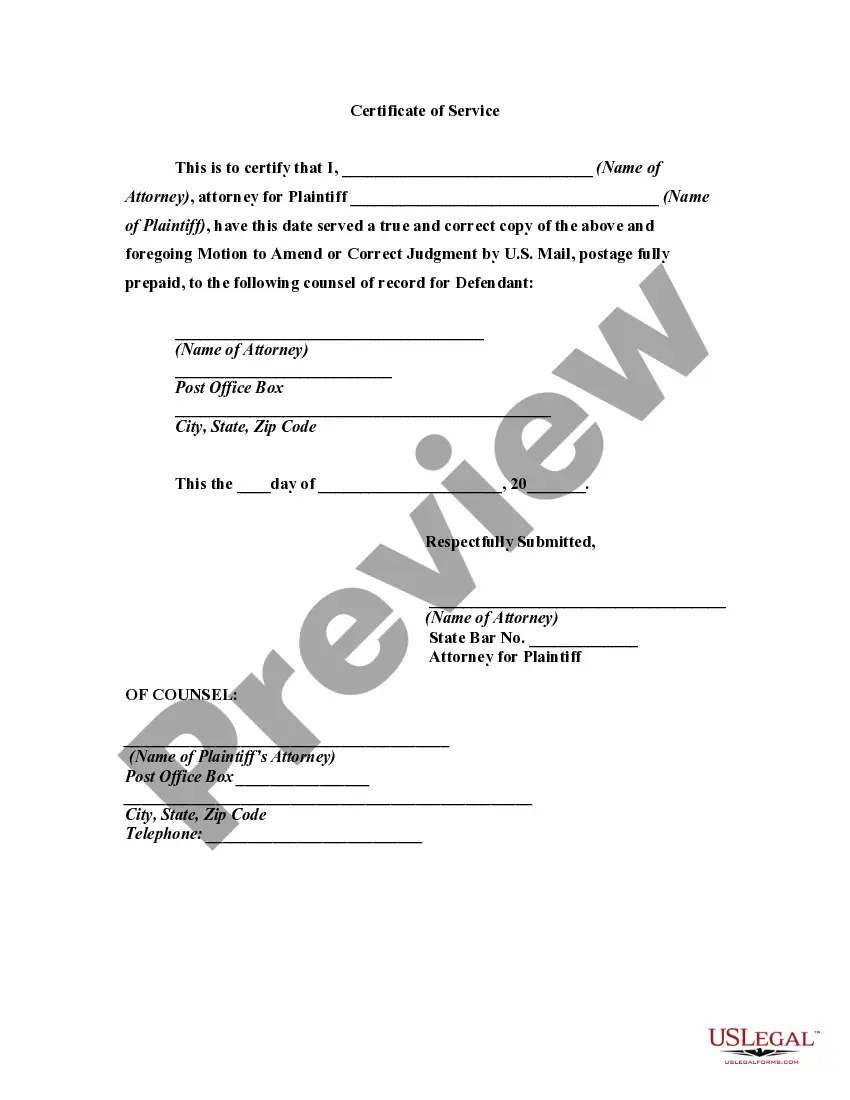
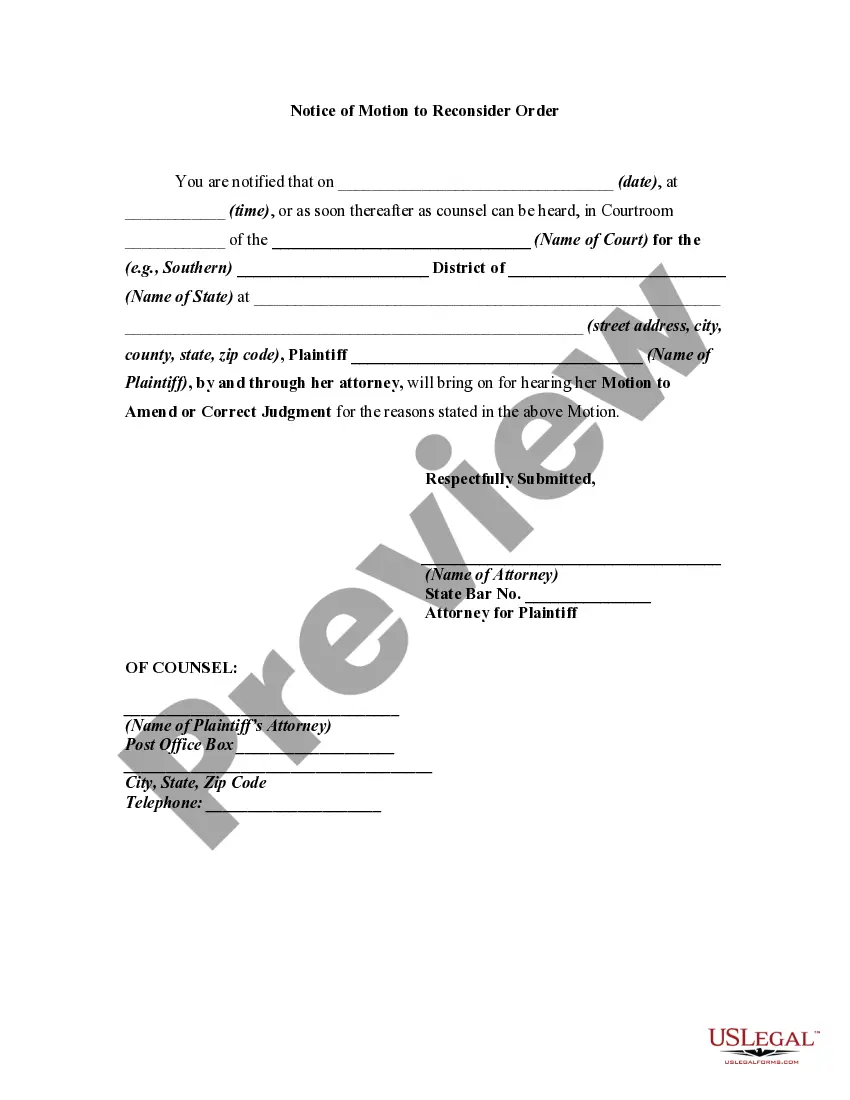
Motion Amend Judgment With Judgment
Description
Get your form ready online
Our built-in tools help you complete, sign, share, and store your documents in one place.
Make edits, fill in missing information, and update formatting in US Legal Forms—just like you would in MS Word.
Download a copy, print it, send it by email, or mail it via USPS—whatever works best for your next step.
Sign and collect signatures with our SignNow integration. Send to multiple recipients, set reminders, and more. Go Premium to unlock E-Sign.
If this form requires notarization, complete it online through a secure video call—no need to meet a notary in person or wait for an appointment.
We protect your documents and personal data by following strict security and privacy standards.

Make edits, fill in missing information, and update formatting in US Legal Forms—just like you would in MS Word.

Download a copy, print it, send it by email, or mail it via USPS—whatever works best for your next step.

Sign and collect signatures with our SignNow integration. Send to multiple recipients, set reminders, and more. Go Premium to unlock E-Sign.

If this form requires notarization, complete it online through a secure video call—no need to meet a notary in person or wait for an appointment.

We protect your documents and personal data by following strict security and privacy standards.
Looking for another form?
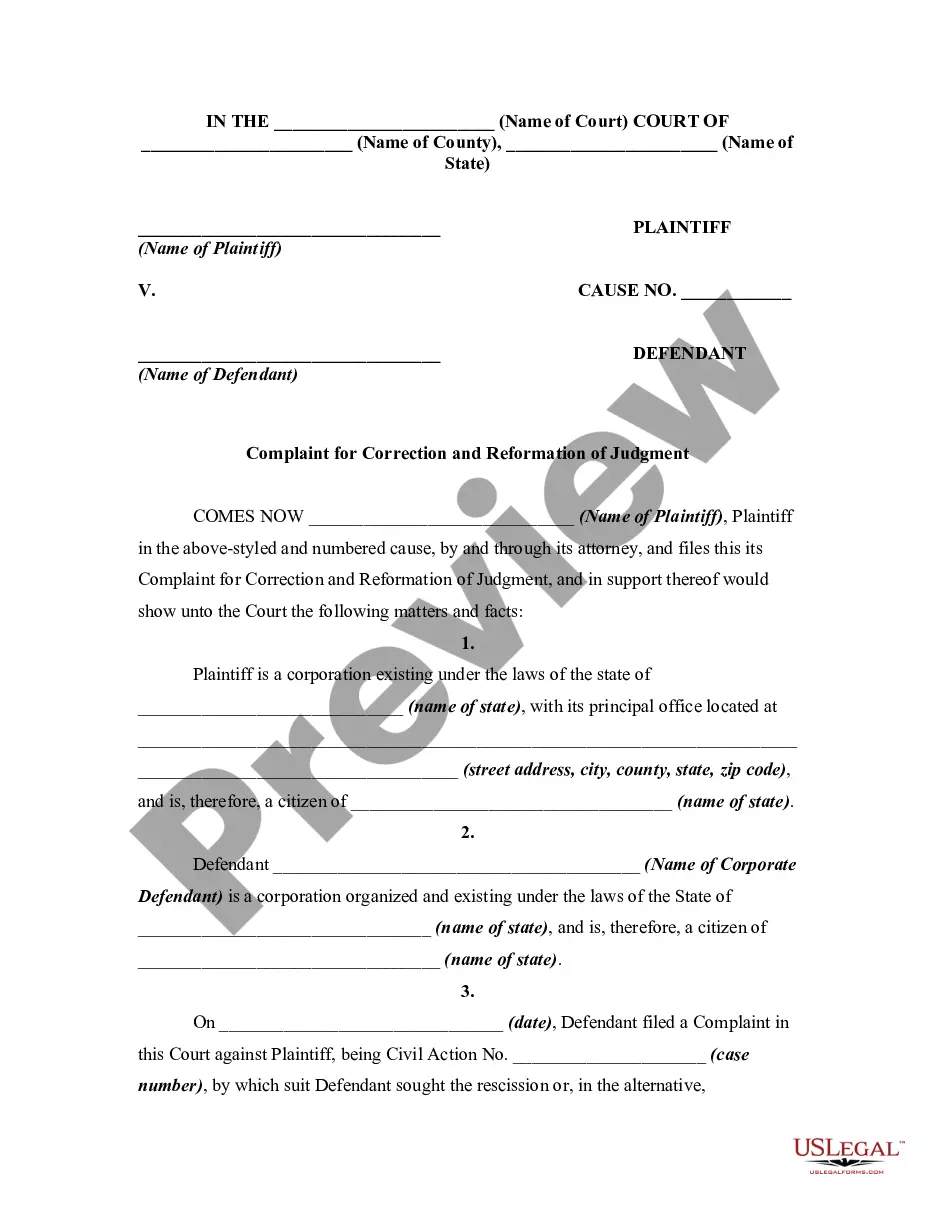
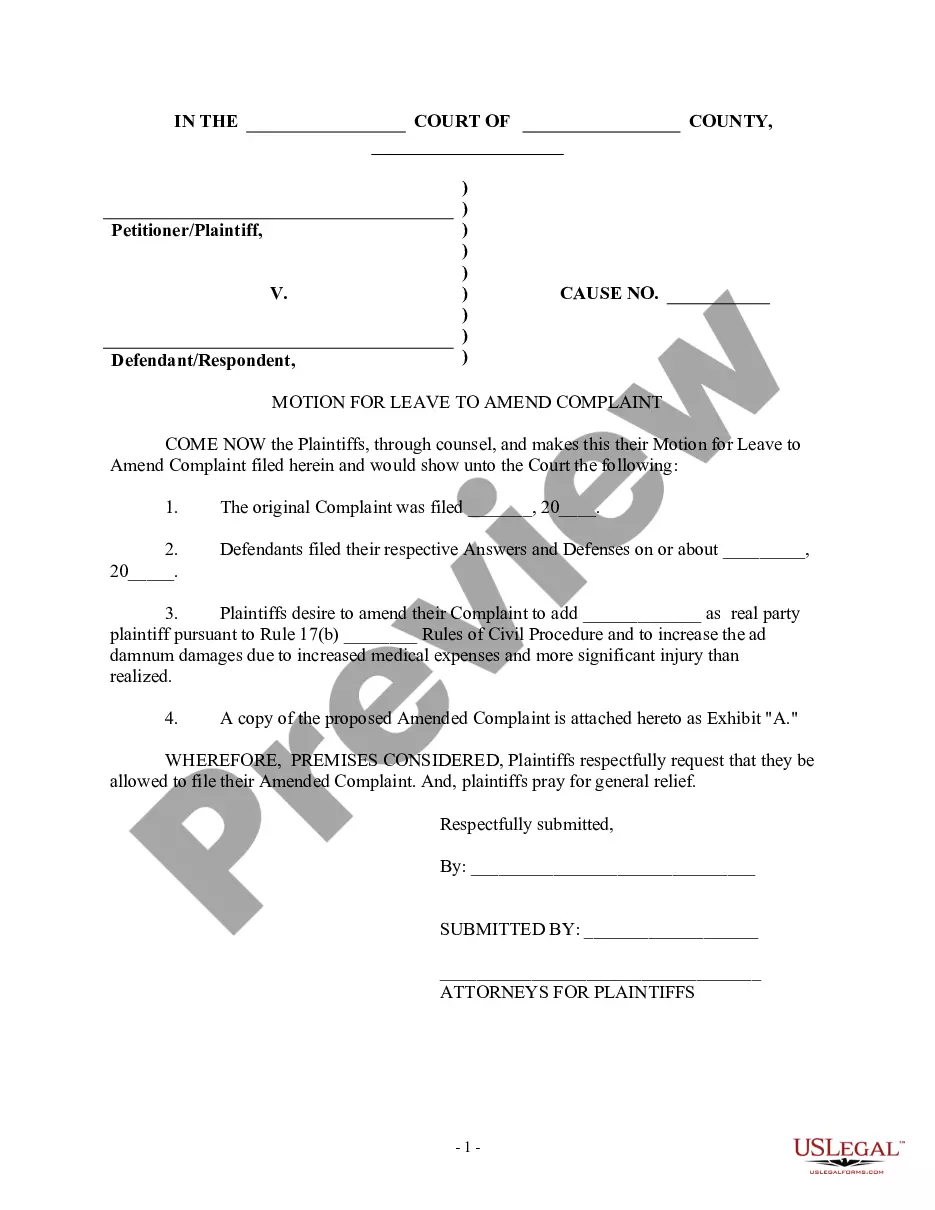
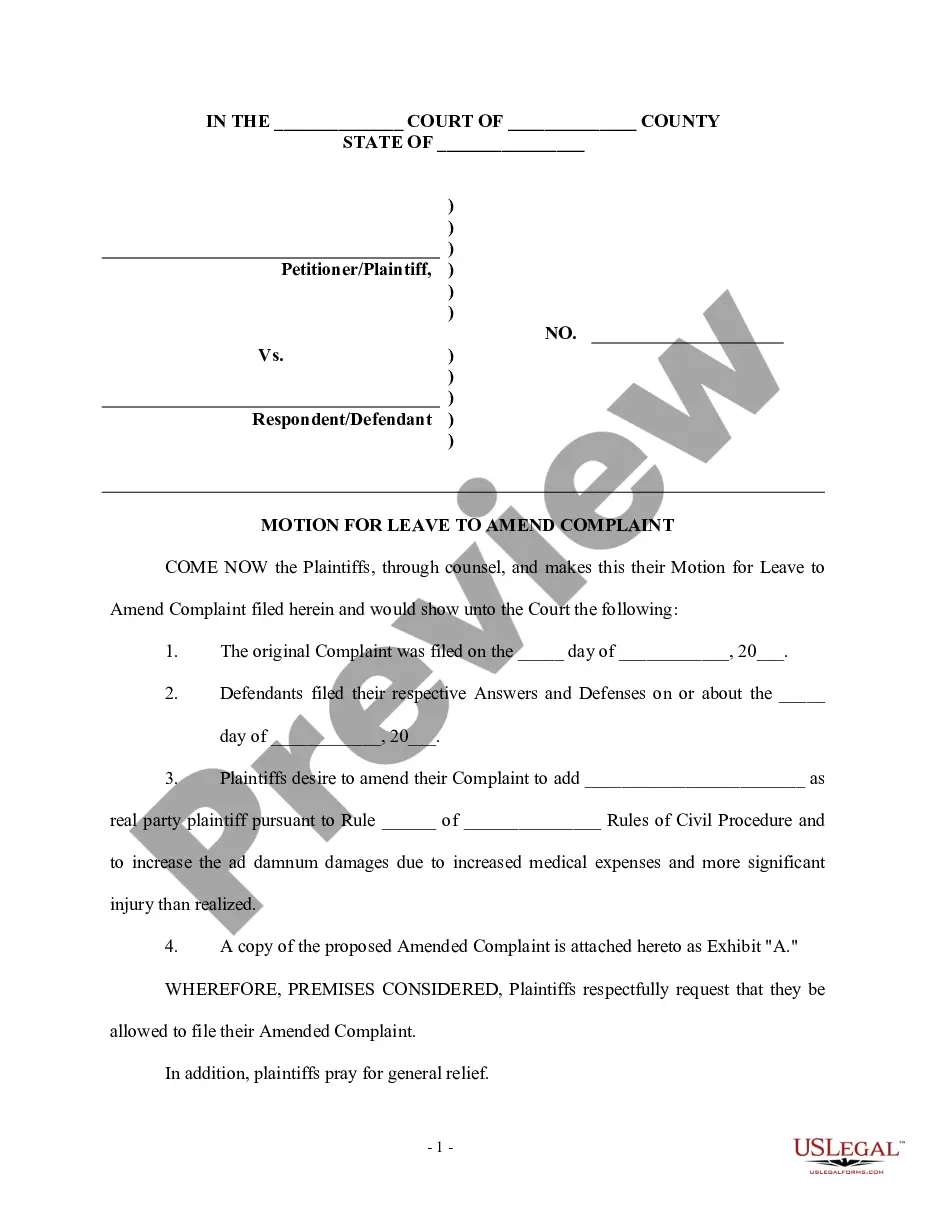
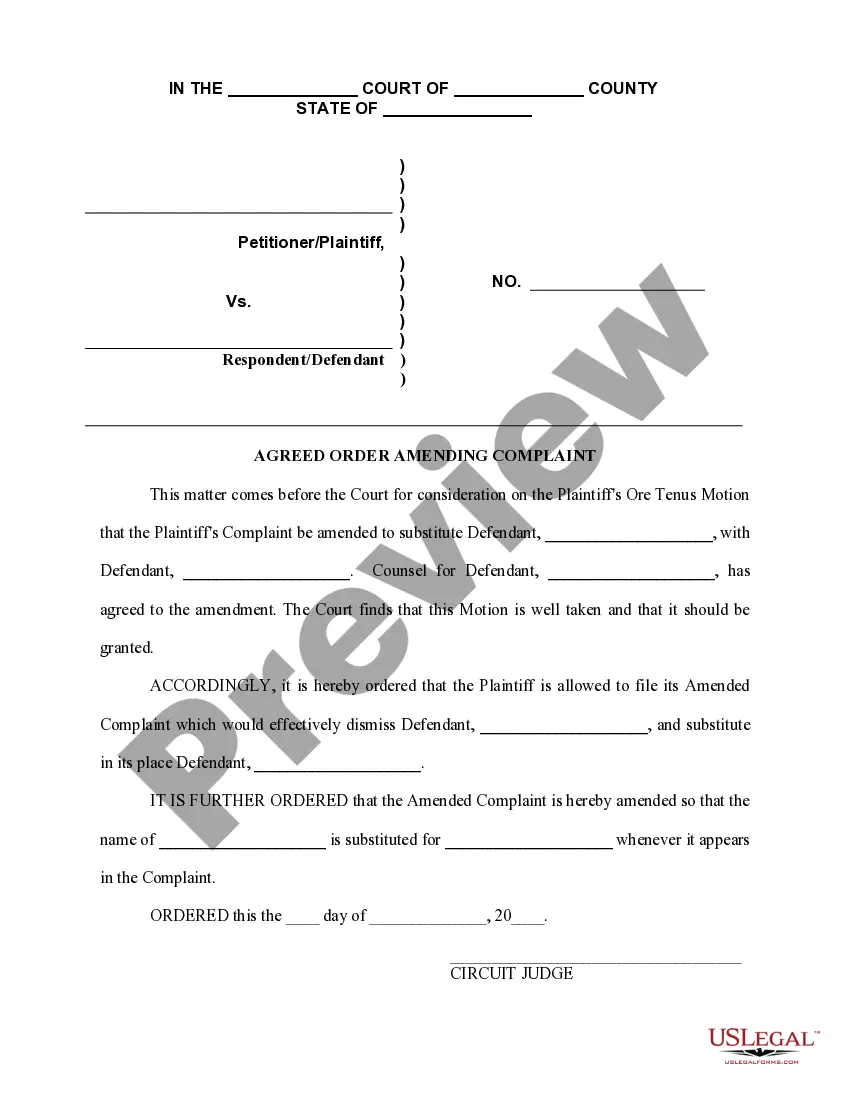
How to fill out Motion To Amend Or Correct Judgment To Include Additional Party Defendant As Real Party In Interest?
Regardless of whether it is for professional reasons or personal matters, everyone must confront legal issues at some stage in their lives.
Completing legal documents requires meticulous care, beginning with selecting the appropriate form template.
After it is saved, you can fill out the form using editing software or print it and complete it manually. With an extensive US Legal Forms catalog available, you never have to waste time searching for the suitable sample online. Utilize the library’s straightforward navigation to find the right form for any situation.
- For instance, if you select an incorrect version of the Motion Amend Judgment With Judgment, it will be rejected upon submission.
- Thus, it is crucial to have a trustworthy source for legal documents like US Legal Forms.
- If you need to obtain a Motion Amend Judgment With Judgment template, follow these straightforward steps.
- Retrieve the sample you require using the search bar or catalog navigation.
- Examine the form’s description to confirm it aligns with your circumstances, state, and county.
- Click on the form’s preview to inspect it.
- If it is the wrong form, return to the search feature to locate the Motion Amend Judgment With Judgment sample you need.
- Download the file once it satisfies your requirements.
- If you already possess a US Legal Forms account, simply click Log in to access previously saved documents in My documents.
- In case you do not yet have an account, you can obtain the form by clicking Buy now.
- Select the appropriate pricing option.
- Complete the account registration form.
- Choose your payment method: you can utilize a credit card or PayPal account.
- Select the document format you desire and download the Motion Amend Judgment With Judgment.
Form popularity
FAQ
A motion to amend judgment refers to a legal request aimed at modifying a court's existing decision. It usually arises when one party believes the judgment does not accurately reflect the trial's proceedings or evidence presented. This motion allows for essential adjustments to the ruling, which can significantly impact the parties involved. By utilizing platforms like USLegalForms, you can access tools and templates to simplify the process of filing a motion amend judgment with judgment.
The purpose of a motion to amend is to seek corrections or revisions to a court's ruling to ensure justice is served. By filing this motion, a party can bring new evidence to light, clarify issues, or point out mistakes in the initial judgment. This process helps maintain the integrity of the legal system and can lead to a more favorable outcome. Using resources like USLegalForms can guide you through the steps to effectively create a motion amend judgment with judgment.
A motion to alter or amend judgment is a request made to a court to change its previous decision regarding a case. This motion is often filed after a judgment has been entered, providing the opportunity to correct errors or address issues that were overlooked. The process is crucial for ensuring that the judgment accurately reflects the facts and legal standards applicable to the case. Understanding how to properly file a motion amend judgment with judgment can significantly impact the outcome of your legal matter.
When a motion is amended, it means changes or modifications have been made to the original motion. This can involve adding new arguments, correcting errors, or adjusting prayer for relief based on new information. Amending a motion ensures that the court has the most accurate and updated information for its decision-making process. Utilizing the ability to amend a motion enhances your chances of achieving a favorable judgment.
The purpose of a motion for judgment is to request a court decision in favor of one party when there is no genuine issue of material fact. This allows the court to rule on the case without proceeding to trial, saving time and resources. By filing this motion, you can lead the court to grant a judgment based on the evidence presented. This motion is essential in expediting legal processes efficiently.
To amend a judgment, you must file a motion that specifies the changes you seek. You typically provide reasons for your request and any supporting documents or evidence relevant to your case. This process requires adherence to court rules, making it essential to understand the requirements for a successful amendment. A motion to amend judgment with judgment can significantly impact the final outcome of your legal situation.
A motion to modify is a request that asks the court to change an existing judgment or order. This motion can alter various aspects, such as child support, custody, or alimony based on changing circumstances. When you file a motion to modify, you present reasons why the current judgment is no longer appropriate. It is a powerful tool to adapt legal outcomes to reflect current realities.
A Rule 59 E motion to alter or amend judgment allows a party to request the court to revise its decision. This motion is typically used when a party believes there is a clear error of law or fact in the judgment. By filing this motion, you can provide new evidence or raise arguments that support your request to change the court's ruling. Essentially, it serves as a formal way to seek a correction or adjustment in your judgment.
A motion to amend a judgment allows a party to formally request changes to a court's ruling after it has been entered. This may involve correcting errors, addressing new evidence, or clarifying legal terms. Utilizing such a motion can significantly influence the enforcement and interpretation of the judgment, making it a crucial component in the legal process.
When a judgment is amended, it indicates that the court has modified the original decision to correct errors or clarify issues. This amendment enhances the accuracy of the court's ruling, ensuring that all parties understand its implications. Thus, it plays a vital role in upholding fairness in the legal system.