Agreement Out Wedlock For Child Born
Description
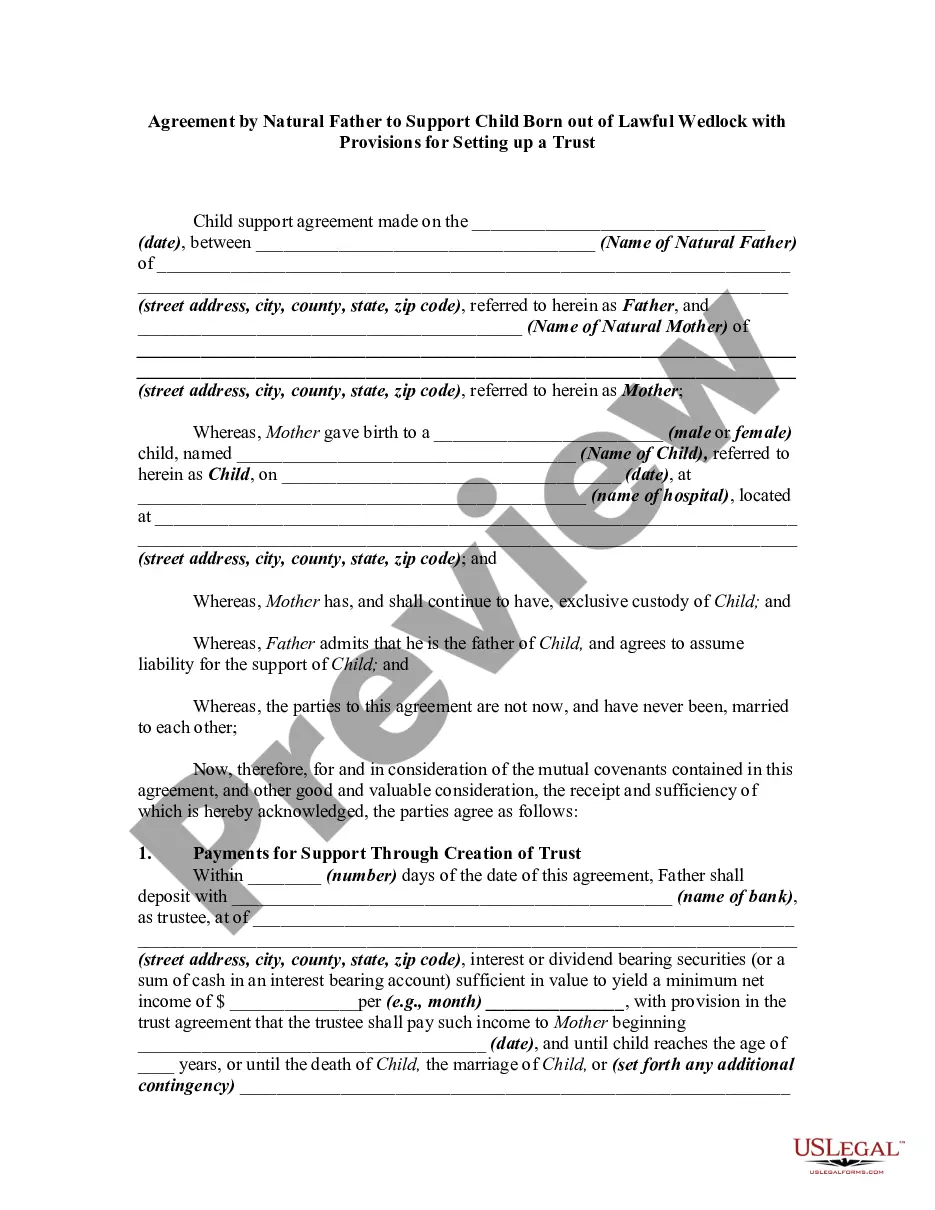
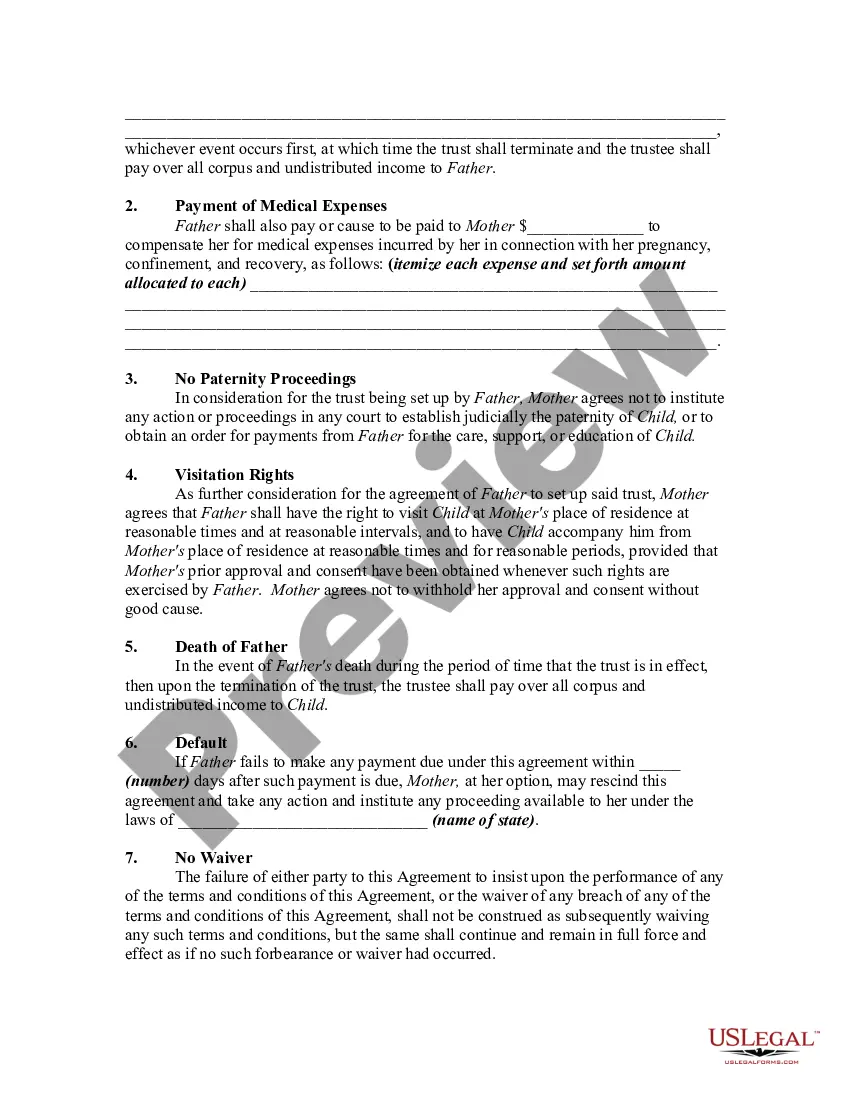
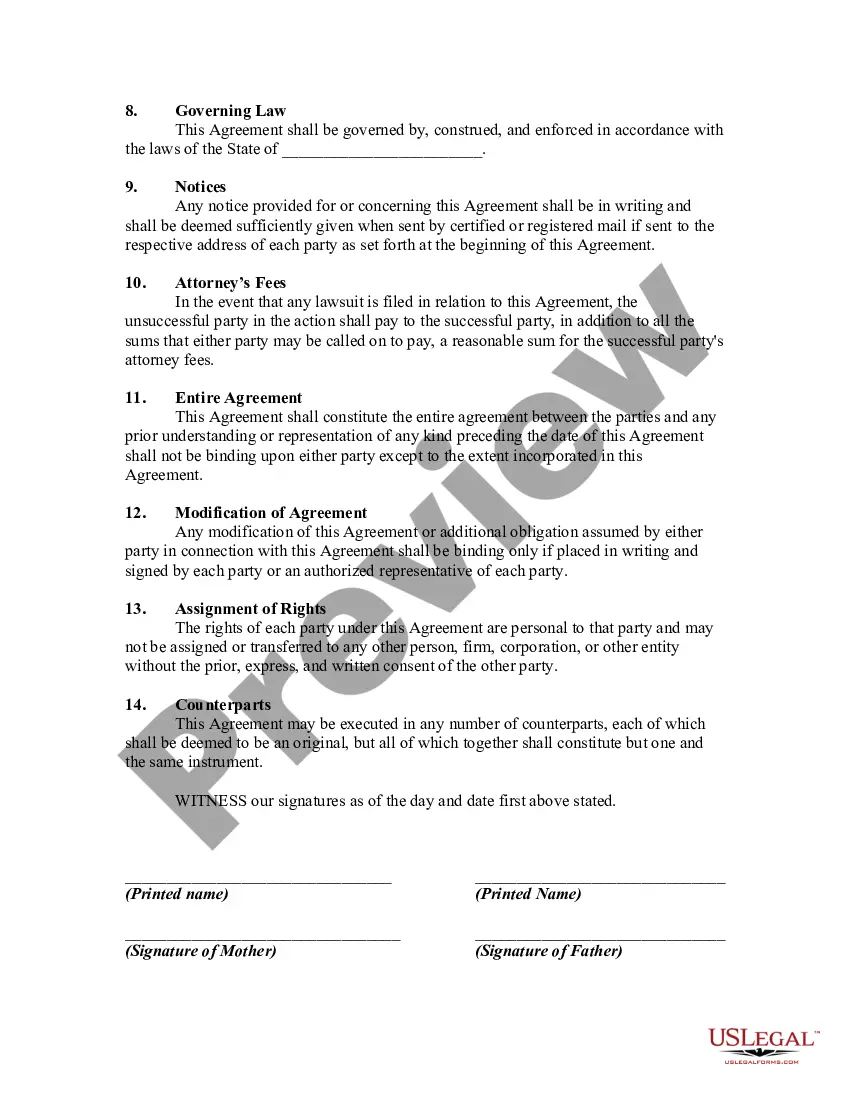

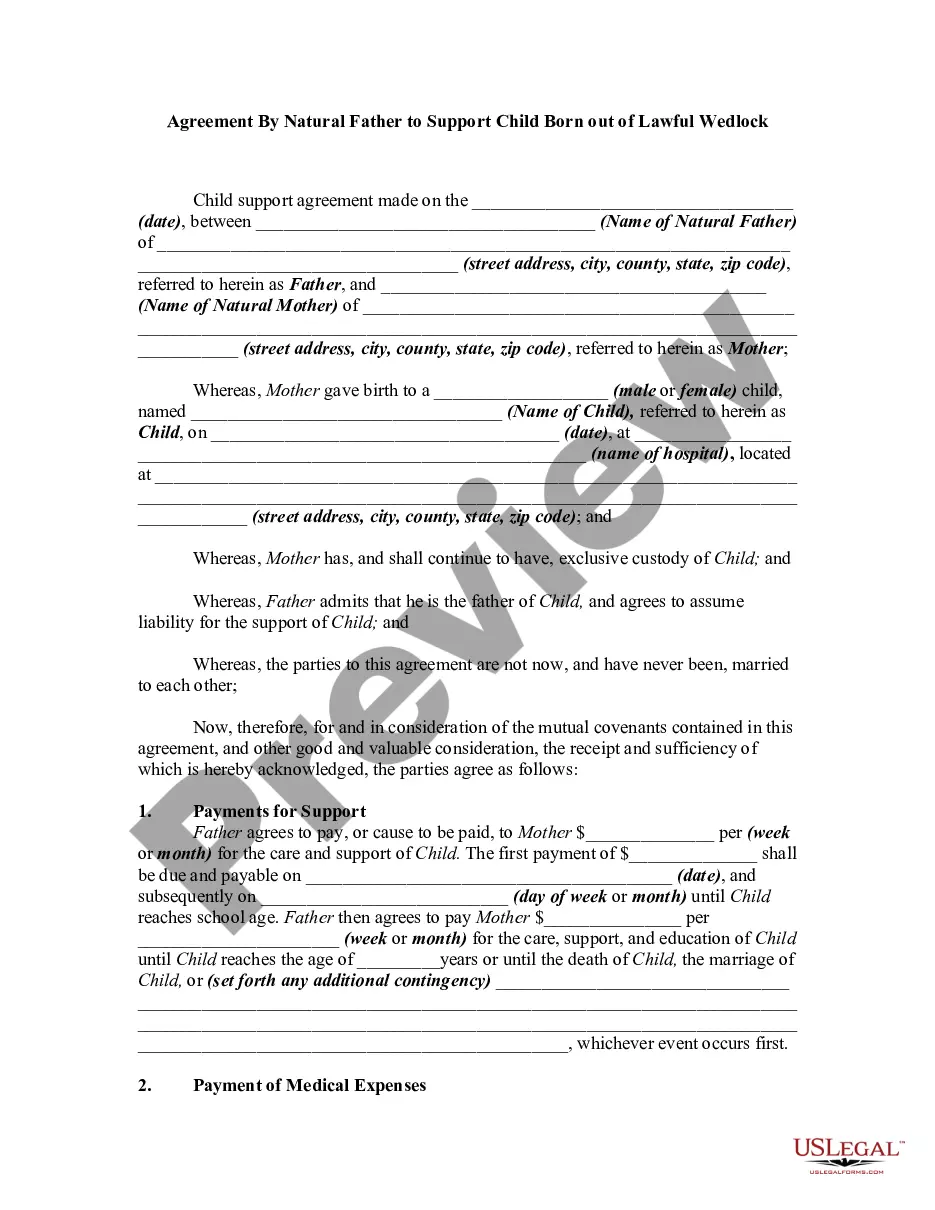
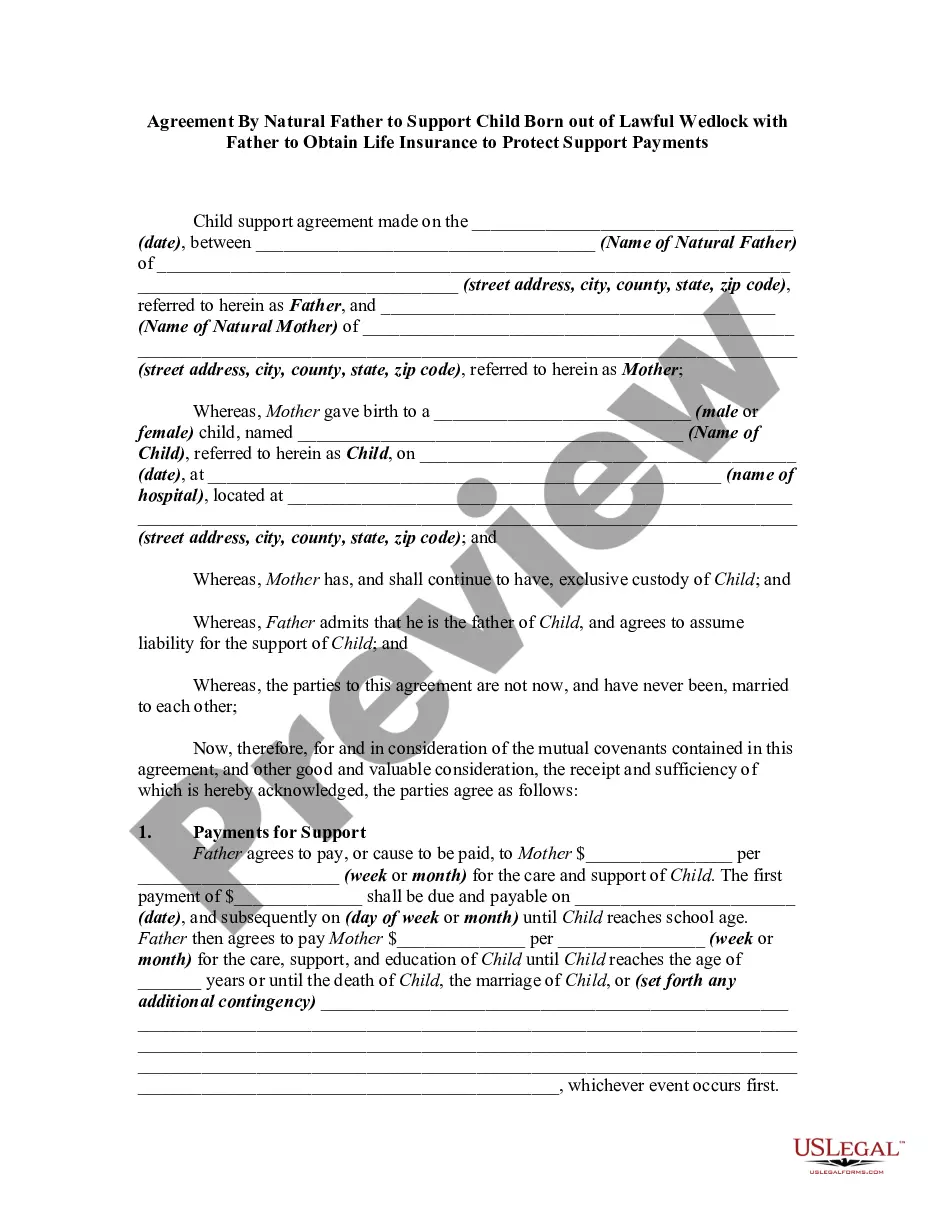
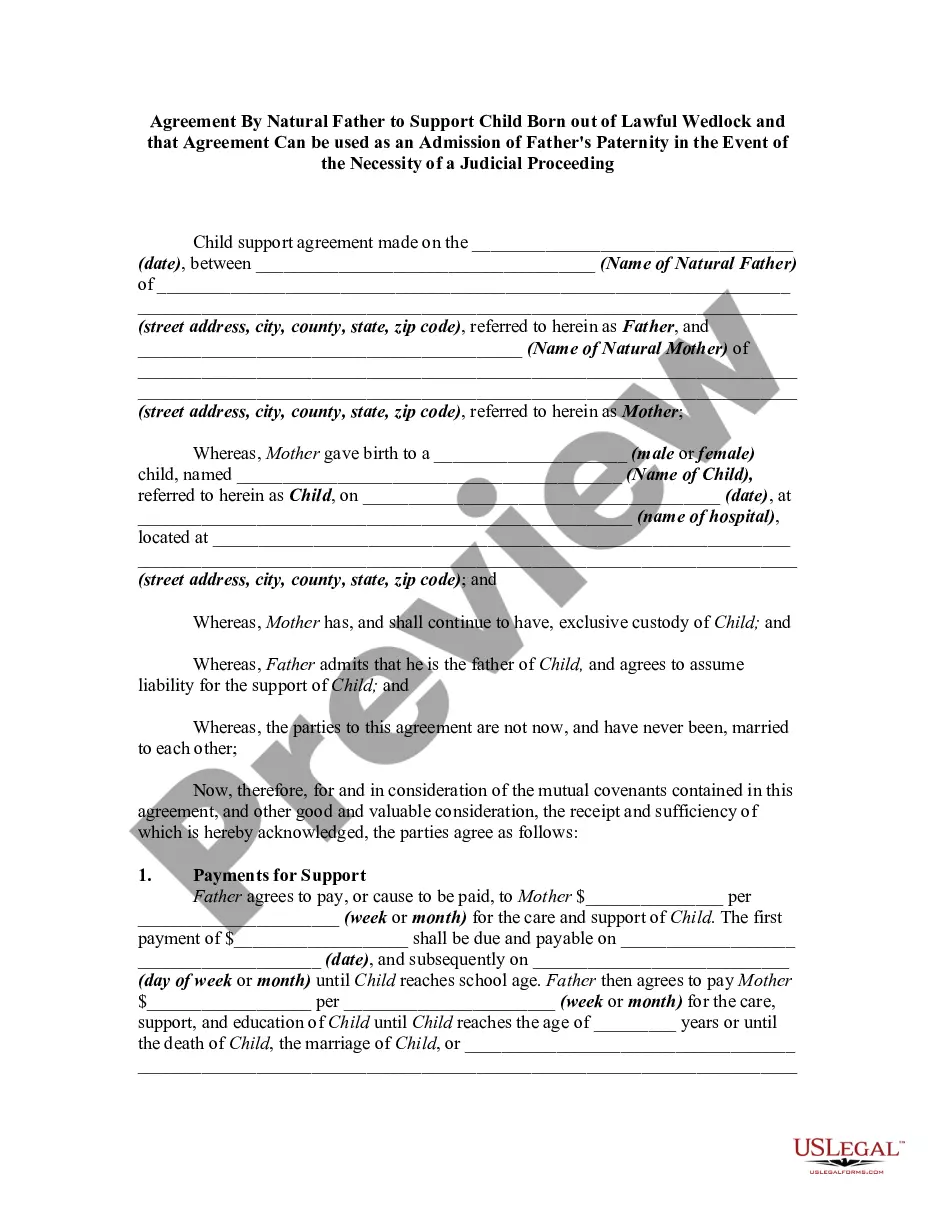
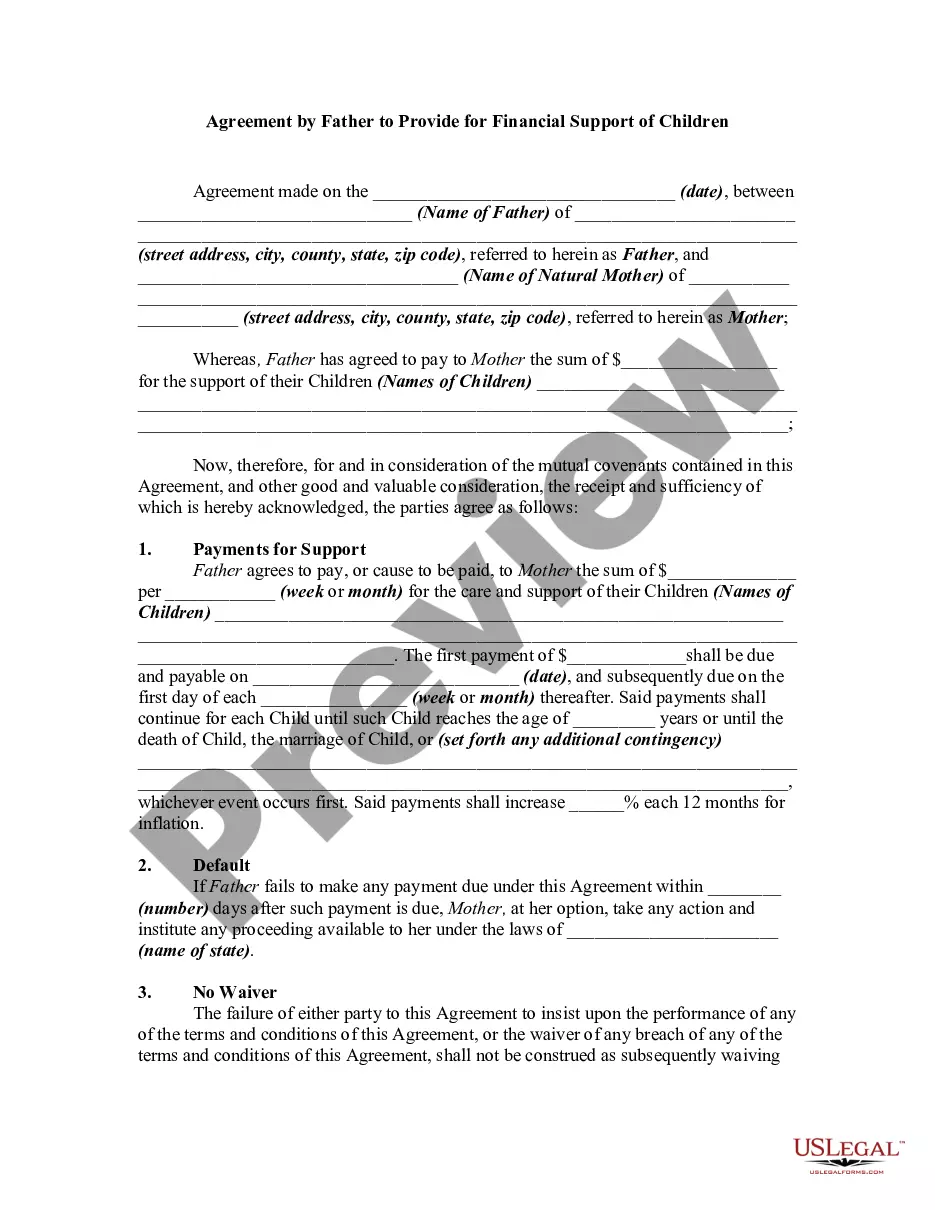
Get your form ready online
Our built-in tools help you complete, sign, share, and store your documents in one place.
Make edits, fill in missing information, and update formatting in US Legal Forms—just like you would in MS Word.
Download a copy, print it, send it by email, or mail it via USPS—whatever works best for your next step.
Sign and collect signatures with our SignNow integration. Send to multiple recipients, set reminders, and more. Go Premium to unlock E-Sign.
If this form requires notarization, complete it online through a secure video call—no need to meet a notary in person or wait for an appointment.
We protect your documents and personal data by following strict security and privacy standards.

Make edits, fill in missing information, and update formatting in US Legal Forms—just like you would in MS Word.

Download a copy, print it, send it by email, or mail it via USPS—whatever works best for your next step.

Sign and collect signatures with our SignNow integration. Send to multiple recipients, set reminders, and more. Go Premium to unlock E-Sign.

If this form requires notarization, complete it online through a secure video call—no need to meet a notary in person or wait for an appointment.

We protect your documents and personal data by following strict security and privacy standards.
Looking for another form?








How to fill out Agreement By Natural Father To Support Child Born Out Of Lawful Wedlock With Provisions For Setting Up A Trust?
Whether for corporate reasons or personal issues, everyone must handle legal matters eventually in their lifetime.
Completing legal documents requires meticulous care, starting with selecting the correct form template.
With an extensive US Legal Forms library available, there is no need to waste time searching for the appropriate template online. Utilize the library’s straightforward navigation to find the right template for any situation.
- For example, if you select an incorrect version of an Agreement Out Wedlock For Child Born, it will be rejected upon submission.
- Thus, it is crucial to have a reliable source of legal documents like US Legal Forms.
- If you need to obtain an Agreement Out Wedlock For Child Born template, follow these straightforward steps.
- 1. Find the template you require using the search function or catalog browsing.
- 2. Review the form’s details to verify it matches your circumstances, state, and county.
- 3. Click on the form’s preview to inspect it.
- 4. If it is the incorrect form, return to the search feature to locate the Agreement Out Wedlock For Child Born sample you need.
- 5. Download the file when it fits your requirements.
- 6. If you already possess a US Legal Forms account, simply click Log in to access previously saved documents in My documents.
- 7. If you do not have an account yet, click Buy now to download the form.
- 8. Select the suitable pricing option.
- 9. Complete the account registration form.
- 10. Choose your payment method: use a credit card or PayPal account.
- 11. Select the desired file format and download the Agreement Out Wedlock For Child Born.
- 12. Once downloaded, you can complete the form using editing software or print it and fill it out by hand.
Form popularity
FAQ
The steps in the process Prepare the notice of claim. A lawsuit in Small Claims Court begins with a notice of claim. ... File the notice of claim in court. You must file the notice of claim in the Small Claims Court registry. ... Serve the notice on the defendant. ... Wait for a reply. ... Attend the settlement conference.
In North Dakota, a state district court civil action starts with service of a summons on the Defendant. A copy of the complaint must be served with the summons. Filing a summons and complaint with the state district court does not start a civil action.
To start a Small Claims Court action, the Plaintiff completes the Claim Affidavit (Form 2) and files it with the clerk of court. Then, the Plaintiff arranges for service of a copy of the completed Claim Affidavit and five (5) other forms from the Small Claims Court packet on the Defendant.
A copy of the summons and complaint must be deposited in a post office or with a third-party commercial carrier in North Dakota, postage or shipping prepaid, and directed to the defendant to be served at the defendant's last reasonably ascertainable address, within ten days after the filing of the affidavit for ...
An affidavit, declaration of service, or certificate of service gives the court proof of service.
Divorce records are available from the Clerk of the District Court servicing the county where the divorce was granted. Marriage records are available from the County Judge in the county where the license was issued.