Bailment For Hire
Description
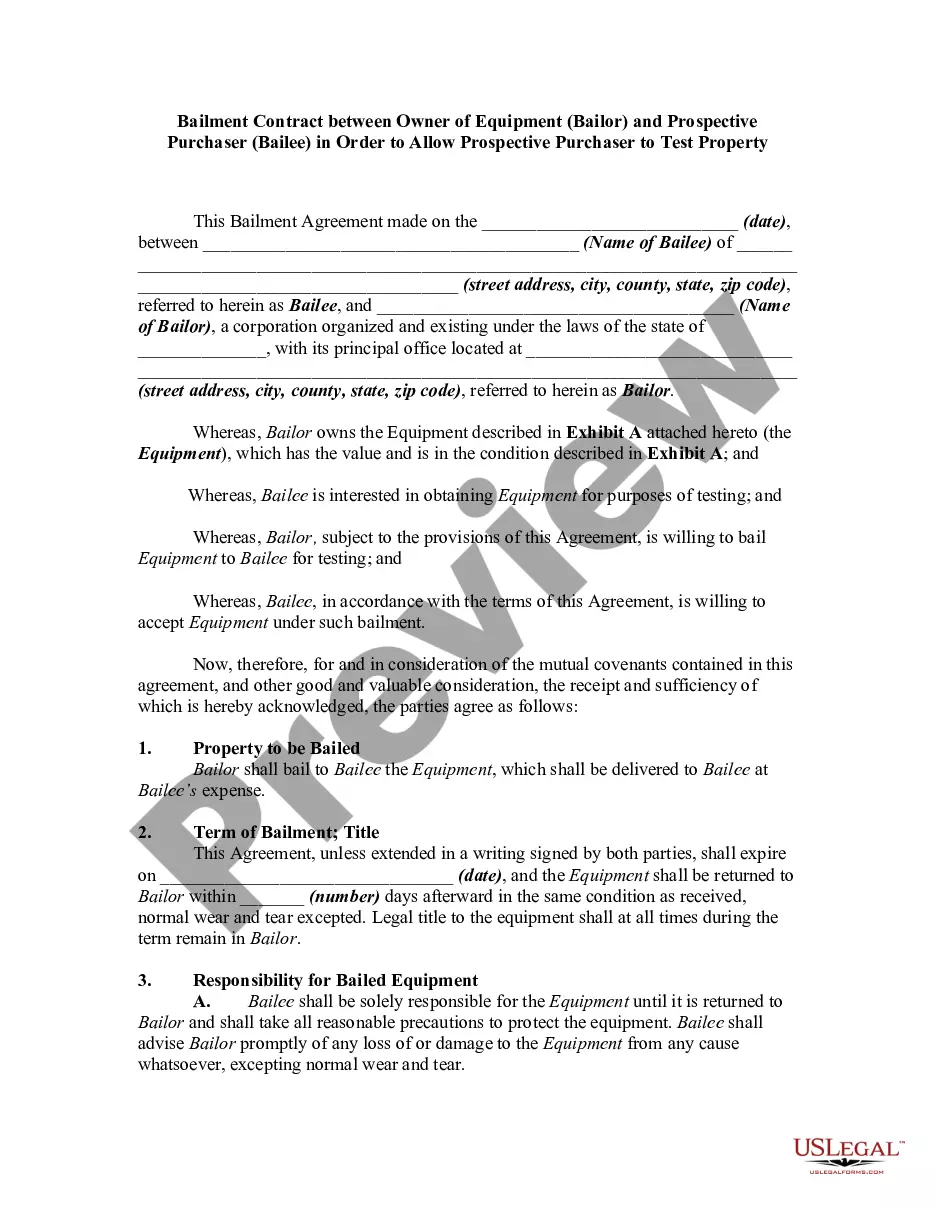
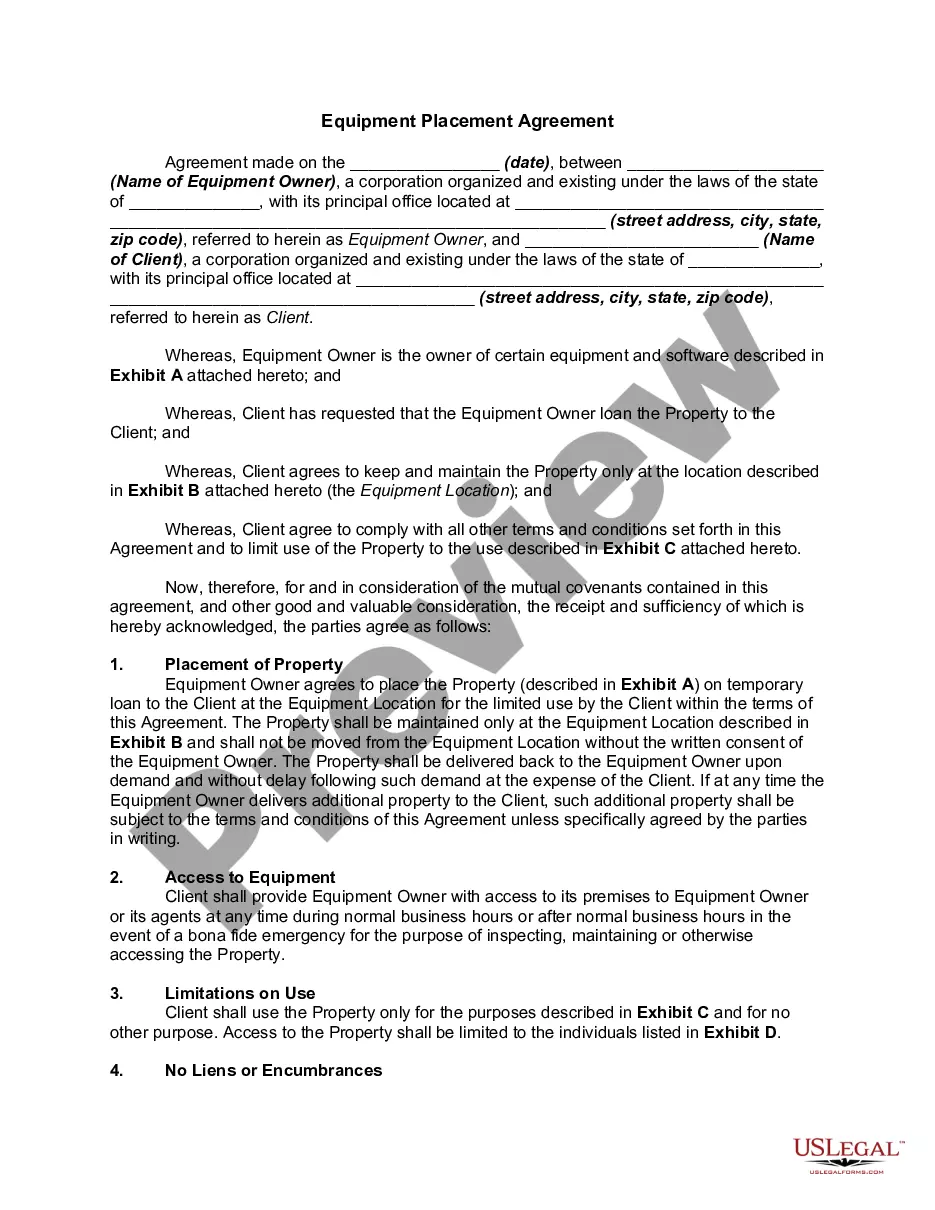
Get your form ready online
Our built-in tools help you complete, sign, share, and store your documents in one place.
Make edits, fill in missing information, and update formatting in US Legal Forms—just like you would in MS Word.
Download a copy, print it, send it by email, or mail it via USPS—whatever works best for your next step.
Sign and collect signatures with our SignNow integration. Send to multiple recipients, set reminders, and more. Go Premium to unlock E-Sign.
If this form requires notarization, complete it online through a secure video call—no need to meet a notary in person or wait for an appointment.
We protect your documents and personal data by following strict security and privacy standards.

Make edits, fill in missing information, and update formatting in US Legal Forms—just like you would in MS Word.

Download a copy, print it, send it by email, or mail it via USPS—whatever works best for your next step.

Sign and collect signatures with our SignNow integration. Send to multiple recipients, set reminders, and more. Go Premium to unlock E-Sign.

If this form requires notarization, complete it online through a secure video call—no need to meet a notary in person or wait for an appointment.

We protect your documents and personal data by following strict security and privacy standards.
Looking for another form?



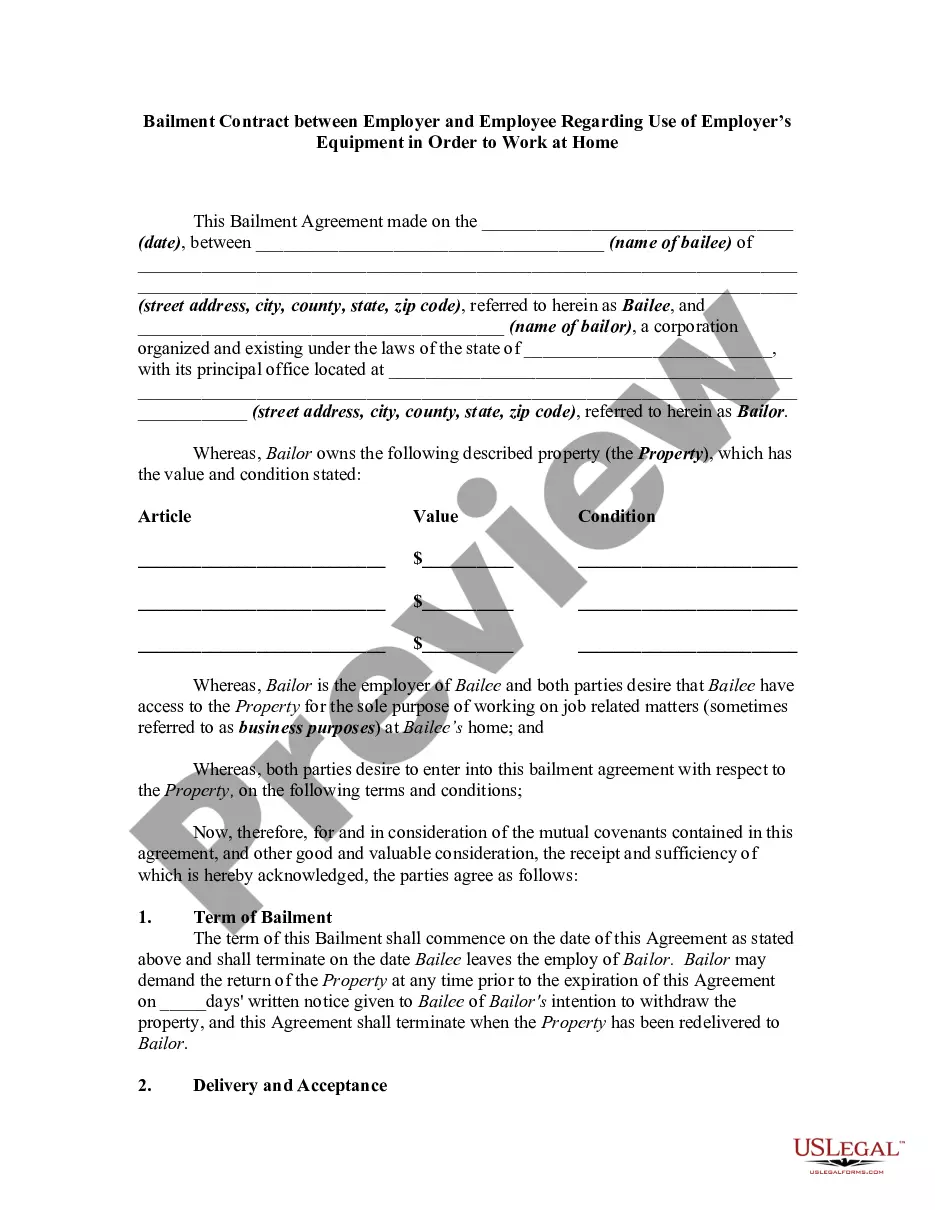
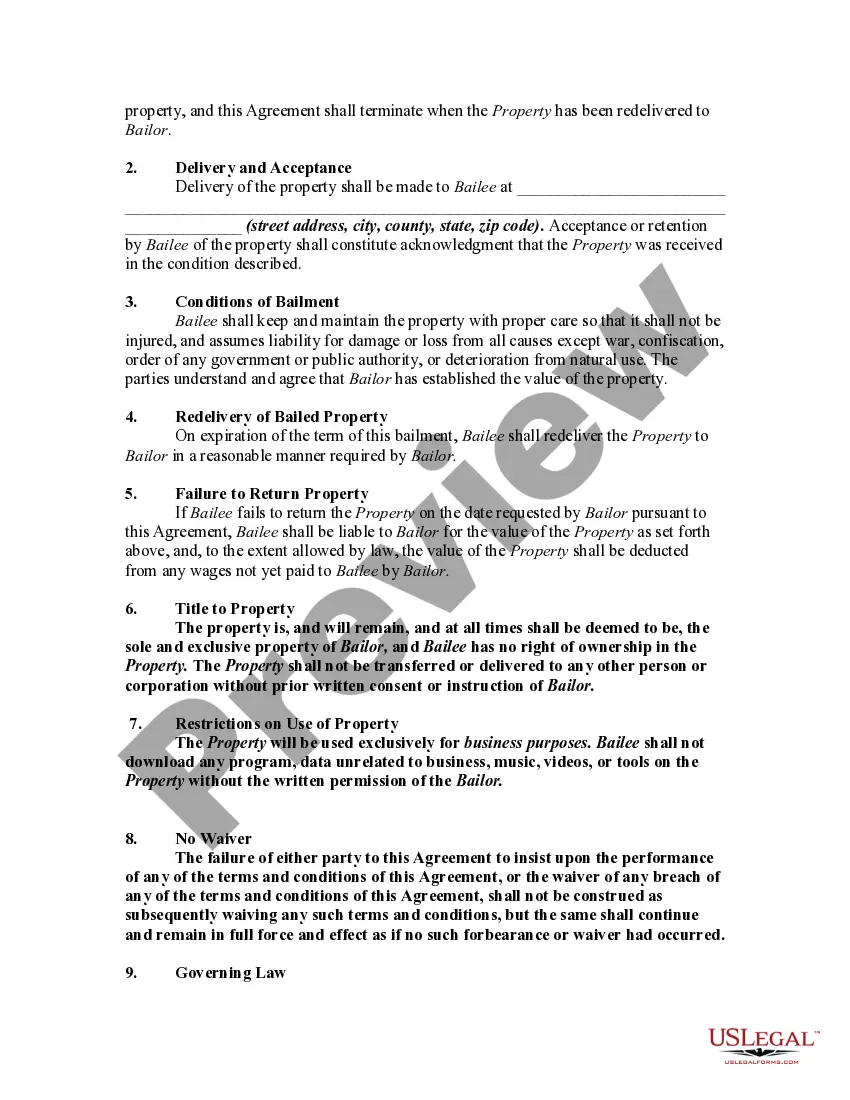
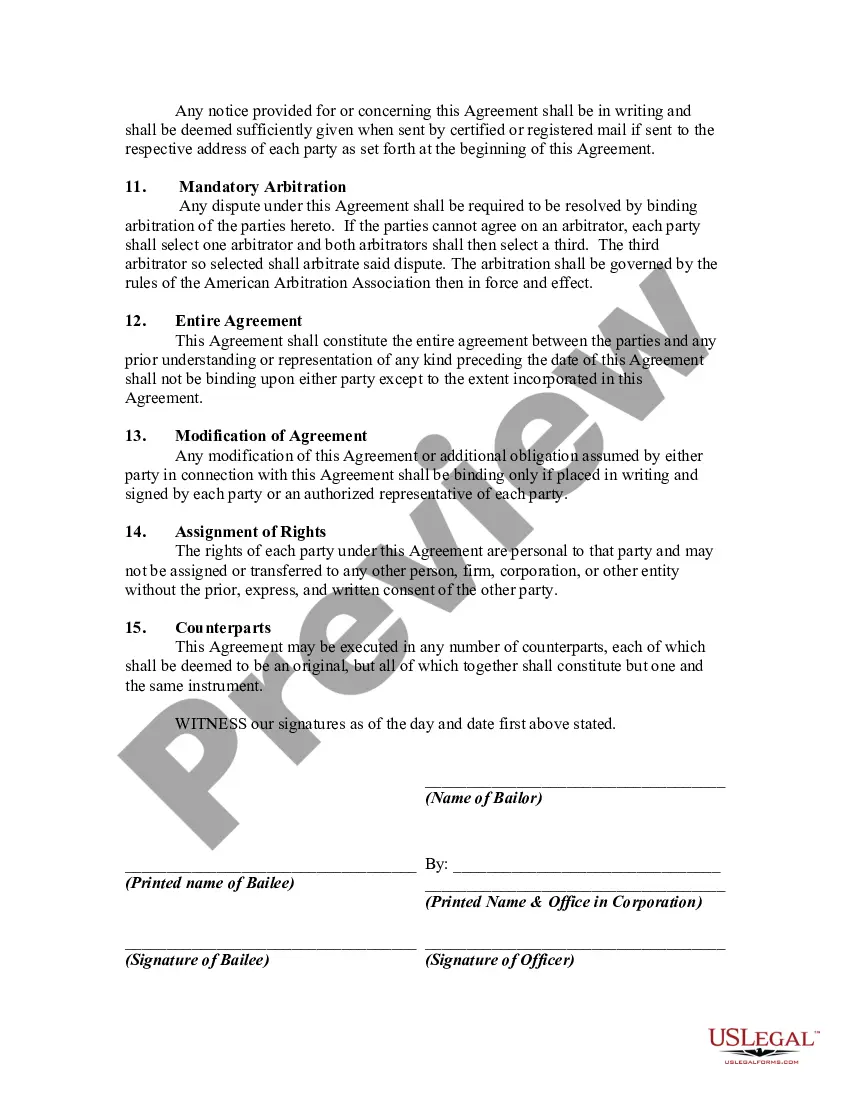
How to fill out Bailment Contract Between Employer And Employee Regarding Use Of Employer's Equipment In Order To Work At Home?
- Visit the US Legal Forms website and log into your account if you are a returning user.
- If you're new, browse the extensive library to find the necessary bailment for hire form by checking its preview and description.
- If you need additional templates, utilize the Search tab to find the correct form that matches your jurisdiction requirements.
- Proceed to purchase the document by clicking the Buy Now button and select a subscription plan that suits you.
- Complete your transaction by entering your payment details, either through credit card or PayPal.
- Finally, download your completed form and save it on your device. You can also access it anytime from the My Forms section of your account.
In conclusion, using US Legal Forms simplifies the process of acquiring legal documents like bailment for hire. With a robust collection of over 85,000 editable forms, users can enjoy the peace of mind that comes with having precise and legally sound documents at their fingertips.
Start today and make the legal process easier by exploring the diverse offerings at US Legal Forms!
Form popularity
FAQ
The difference between a bailment and a hire lies primarily in possession and ownership. In a bailment for hire, one party transfers possession of an item to another for a specific purpose without transferring ownership. Conversely, hiring typically involves the transfer of goods or services for compensation, but ownership remains with the original party. Understanding these distinctions is crucial for anyone engaging in these agreements.
A bailment example can be seen when you leave your car at a mechanic for repairs. In this scenario, you give temporary possession of your car to the mechanic, while you retain ownership. This arrangement illustrates bailment for hire because the mechanic is responsible for the car's safekeeping while providing a service. It's essential to understand that the mechanic does not own the car; they simply hold it for your benefit.
The three types of bailment are for the sole benefit of the bailor, for the sole benefit of the bailee, and mutual benefit. In agreements for the sole benefit of the bailor, the bailee takes care of the property without any compensation. Conversely, in a bailment for the sole benefit of the bailee, the bailor incurs risks while providing the property. Lastly, mutual benefit agreements are common in commercial transactions, where both parties gain. Familiarizing yourself with these types can make managing bailments easier.
While both bailment and lease involve transfer of possession, their key difference lies in the rights related to the property. In a bailment, the owner retains ownership, while a lease involves transferring both possession and certain rights for a specified period. Understanding these distinctions is essential for drafting agreements and managing responsibilities. When dealing with property, recognizing these terms can help avoid legal complications.
Bailment refers to the temporary transfer of possession of personal property from one party to another, while retaining ownership. In this arrangement, the bailee is responsible for safeguarding the property and must return it upon request. Understanding bailment is crucial for both parties involved, especially in commercial transactions. When it comes to business dealings, knowing how bailment works can protect your interests.
The three types of bailments are for the benefit of the bailor, for the benefit of the bailee, and mutual benefit bailments. A bailment for hire typically aligns with mutual benefits, where both parties receive advantages—such as in rental situations. Understanding these types helps you navigate your rights and obligations better. For a comprehensive overview of these concepts, UsLegalForms offers resources to clarify each type of bailment.
A simple example of bailment occurs when you leave your coat with a friend while attending an event. Your friend agrees to hold on to your coat temporarily, and it will be returned to you afterward. Here, the coat's ownership remains with you, but the possession shifts to your friend during the event. This concept of bailment can also be detailed using forms from UsLegalForms to avoid any potential disputes.
An excellent example of a bailment for hire is renting a car. When you rent a vehicle, you receive temporary possession from the rental company, which retains ownership. In this arrangement, you, the renter, are responsible for steering the proper usage of the vehicle while it is in your possession. It's beneficial to refer to UsLegalForms for various rental agreement templates to ensure clarity in responsibilities.
A valid bailment for hire requires three main elements: delivery of the property, acceptance by the bailee, and a mutual agreement. The bailor must transfer possession of the property to the bailee, who accepts it with the understanding that it will be returned after use. Clear communication about how the property will be used and handled is crucial. Using templates from UsLegalForms can help clarify these requirements.
To create a bailment for hire, you must have a clear agreement between the bailor and the bailee. Both parties should understand their rights and responsibilities regarding the property involved. Typically, this agreement is either verbal or written, but having it in writing helps avoid misunderstandings. Utilize UsLegalForms to generate a solid bailment agreement that outlines the terms clearly.