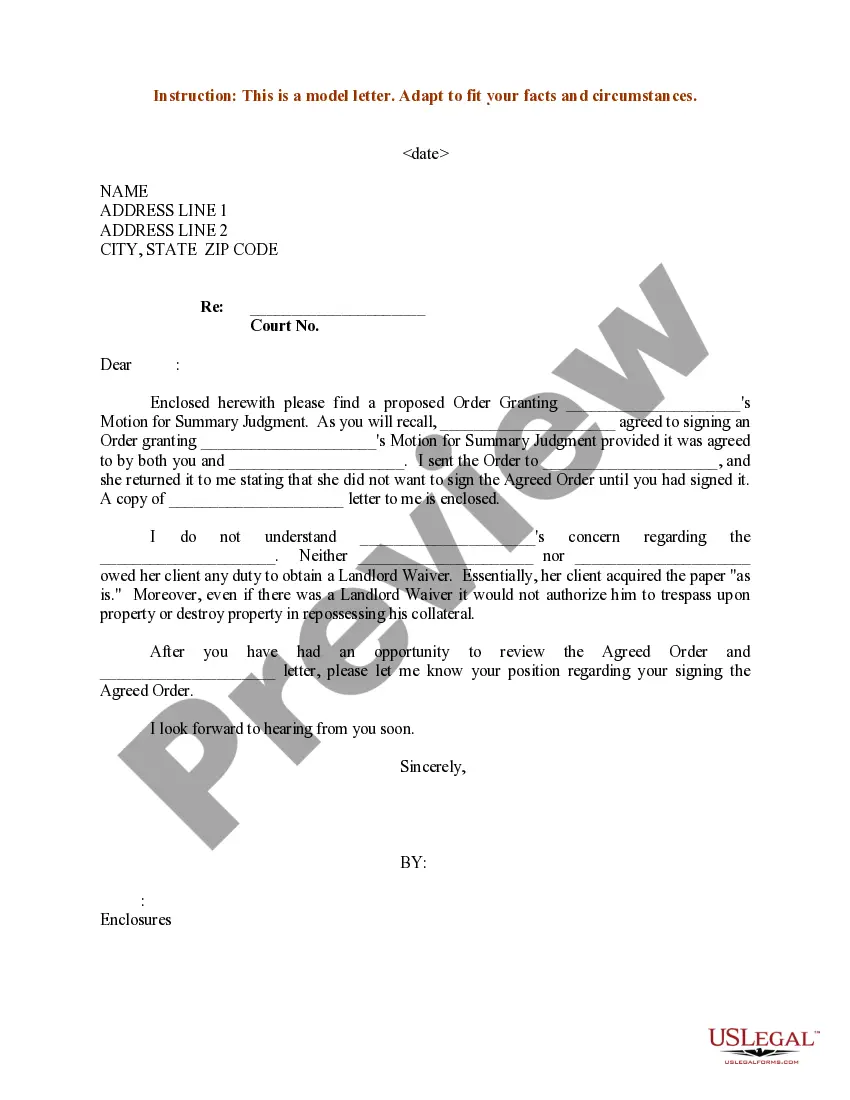
Proposed Order Sample For Default Judgment
Description
Get your form ready online
Our built-in tools help you complete, sign, share, and store your documents in one place.
Make edits, fill in missing information, and update formatting in US Legal Forms—just like you would in MS Word.
Download a copy, print it, send it by email, or mail it via USPS—whatever works best for your next step.
Sign and collect signatures with our SignNow integration. Send to multiple recipients, set reminders, and more. Go Premium to unlock E-Sign.
If this form requires notarization, complete it online through a secure video call—no need to meet a notary in person or wait for an appointment.
We protect your documents and personal data by following strict security and privacy standards.

Make edits, fill in missing information, and update formatting in US Legal Forms—just like you would in MS Word.

Download a copy, print it, send it by email, or mail it via USPS—whatever works best for your next step.

Sign and collect signatures with our SignNow integration. Send to multiple recipients, set reminders, and more. Go Premium to unlock E-Sign.

If this form requires notarization, complete it online through a secure video call—no need to meet a notary in person or wait for an appointment.

We protect your documents and personal data by following strict security and privacy standards.
Looking for another form?
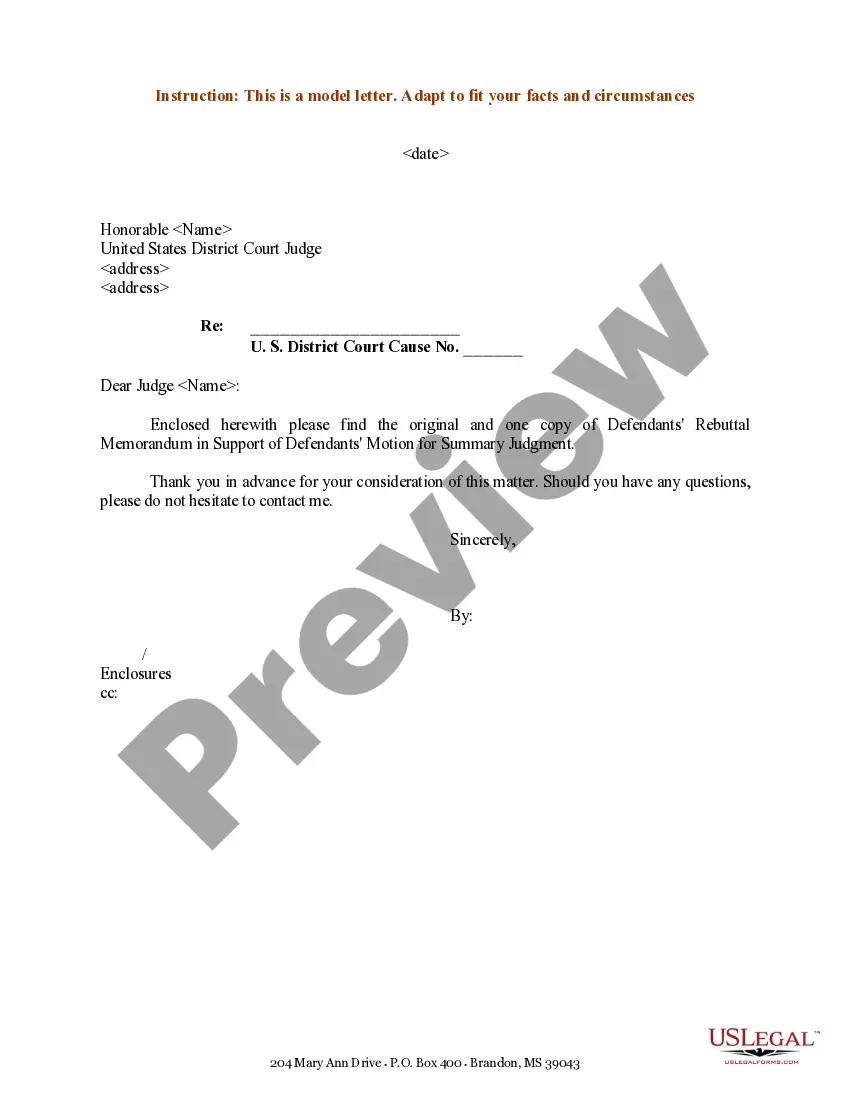
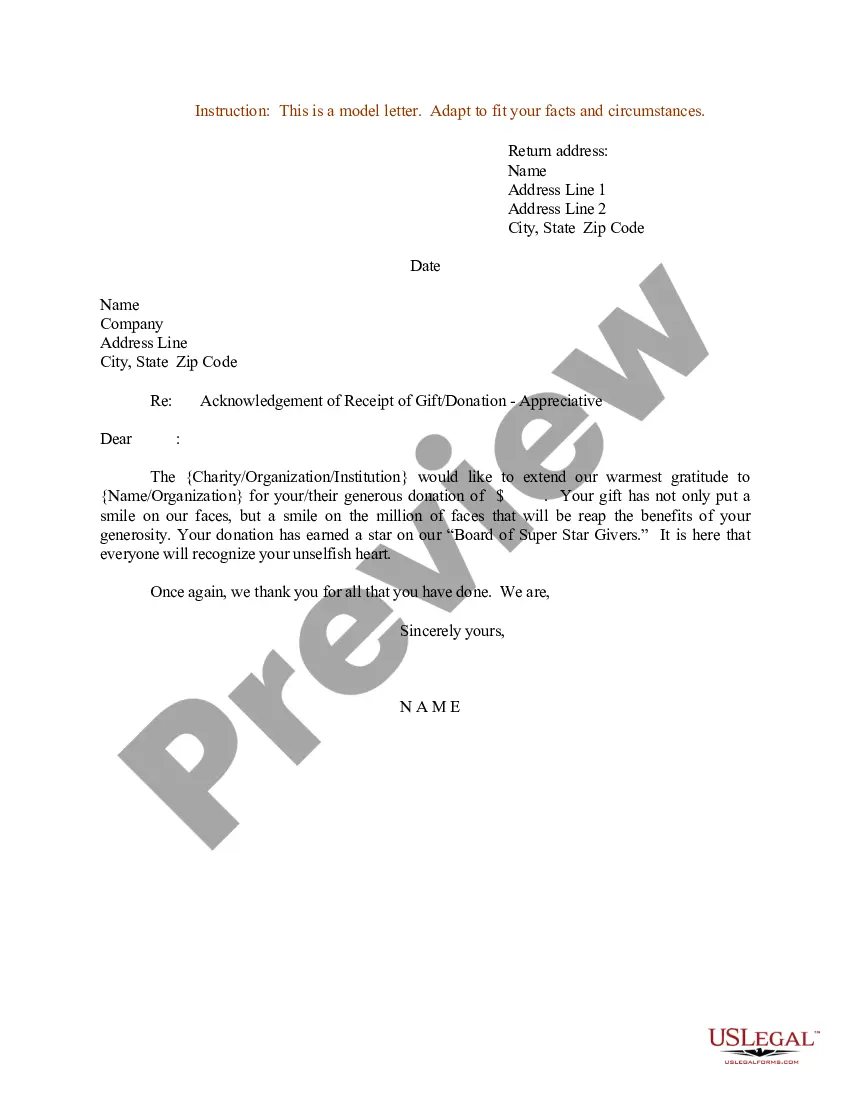
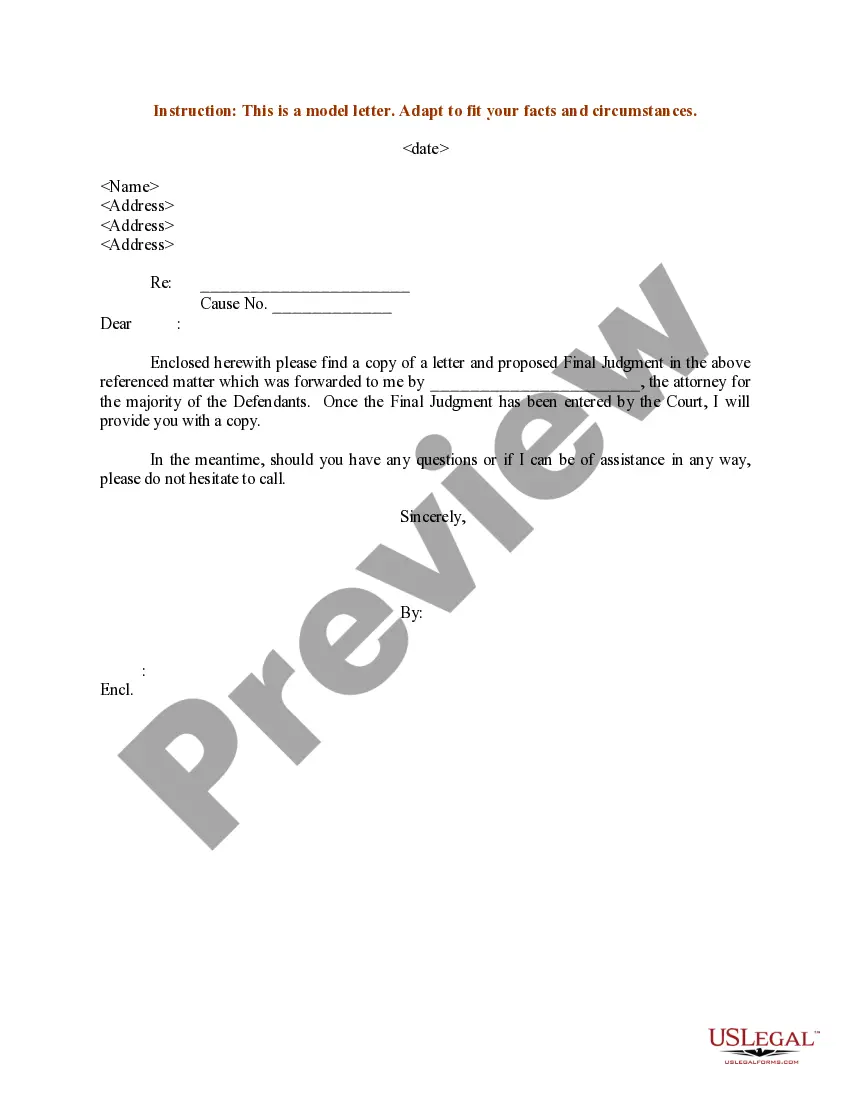
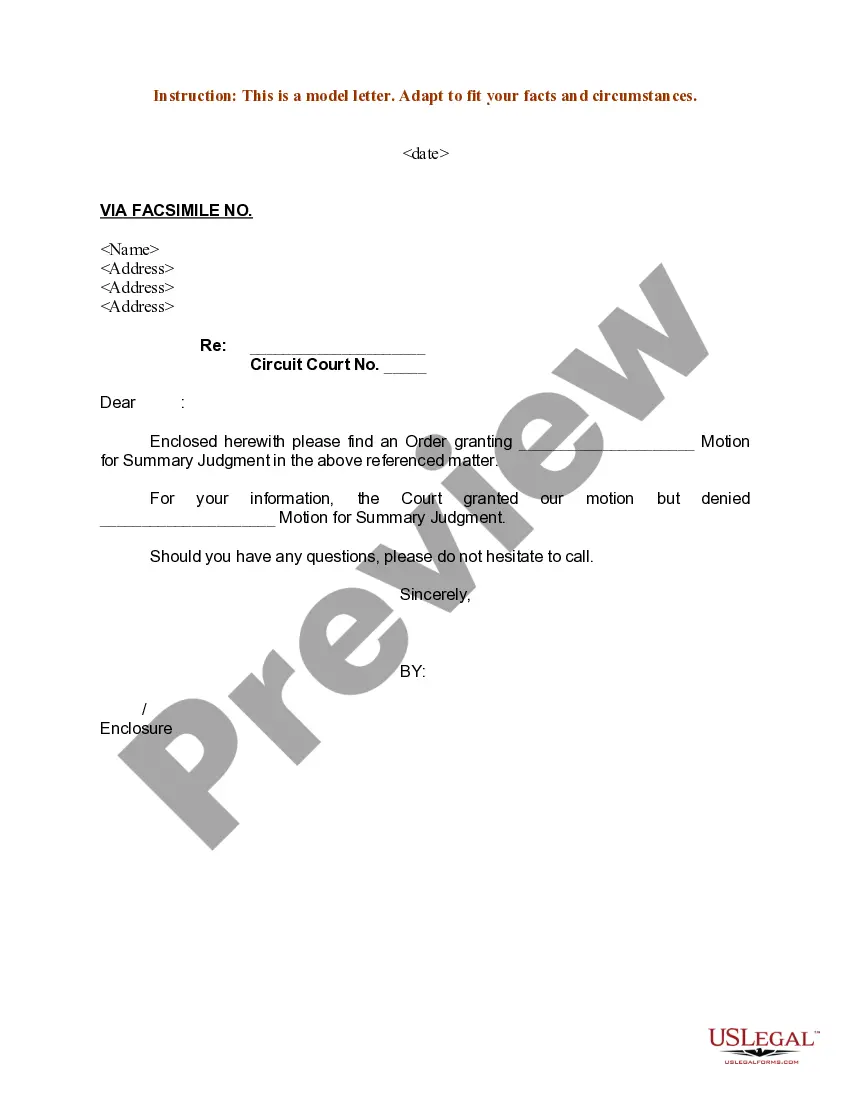
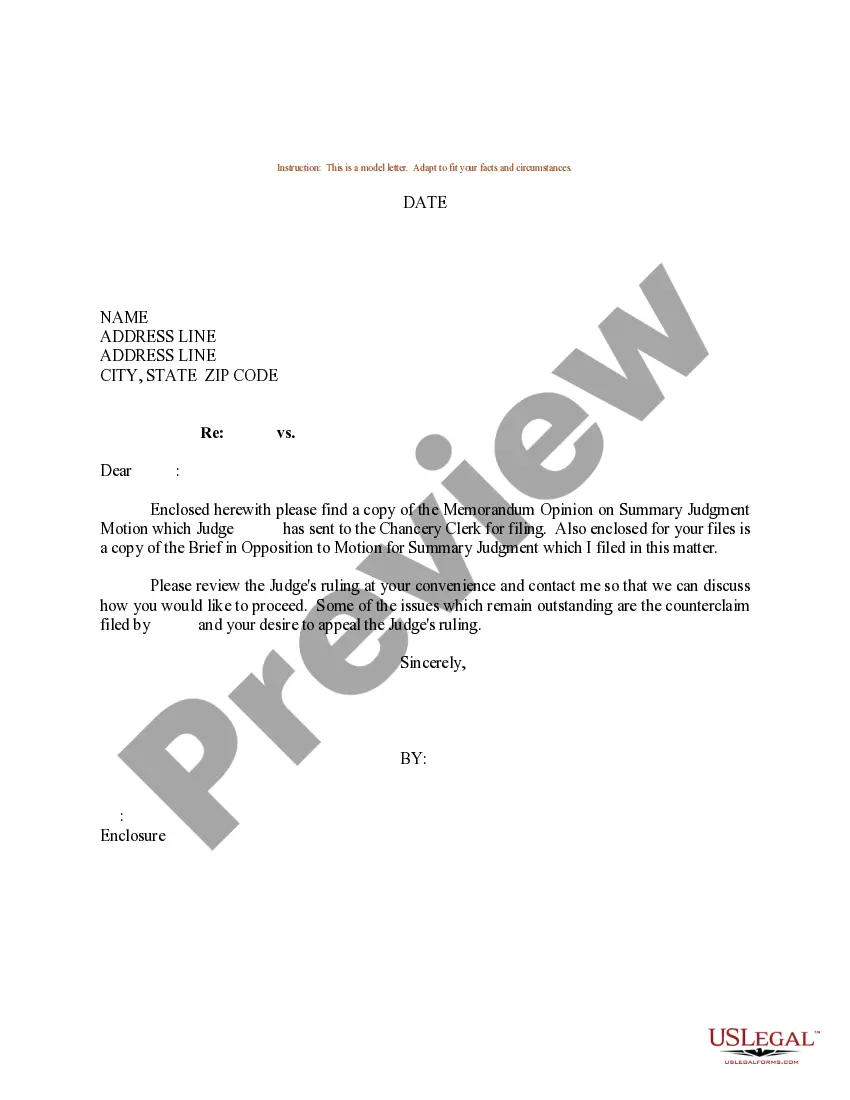
How to fill out Sample Letter For Proposed Order Granting Summary Judgment?
Finding a reliable place to acquire the latest and suitable legal templates is part of the challenge of dealing with bureaucracy.
Identifying the correct legal document prerequisites requires precision and meticulousness, which is why it is crucial to obtain samples of the Proposed Order Template For Default Judgment solely from reputable sources, such as US Legal Forms. An incorrect template will squander your time and delay the matter you are facing. With US Legal Forms, you have minimal concerns. You can access and examine all the details regarding the document’s applicability and importance for your situation and in your state or county.
Once you have the form on your device, you can adjust it with the editor or print it and fill it out manually. Eliminate the hassle associated with your legal documentation. Explore the extensive US Legal Forms catalog to discover legal templates, verify their relevance to your situation, and download them instantly.
- Use the library navigation or search bar to find your template.
- Check the form’s description to ensure it meets the criteria of your state and area.
- View the form preview, if available, to confirm the template is what you need.
- Return to the search and find the appropriate document if the Proposed Order Template For Default Judgment does not fulfill your requirements.
- If you are certain about the form’s applicability, download it.
- If you are a registered user, click Log in to verify and access your chosen templates in My documents.
- If you do not have an account yet, click Buy now to acquire the template.
- Select the pricing plan that fits your needs.
- Proceed to the registration to complete your purchase.
- Conclude your purchase by selecting a payment option (credit card or PayPal).
- Choose the file format for downloading the Proposed Order Template For Default Judgment.
Form popularity
FAQ
Rule 12 of the Federal Rules of Civil Procedure outlines the requirements for responding to a complaint, including the possibility of default judgment. Under this rule, if a defendant fails to file an answer within the specified time, the plaintiff may request a default judgment. Having a proposed order sample for default judgment can facilitate this request by providing a clear outline of what the court needs to proceed. Utilizing resources like USLegalForms can further streamline this process, making compliance easier.
A default judgment occurs when one party fails to respond to a lawsuit. For instance, if a landlord files a suit against a tenant for unpaid rent and the tenant does not answer, the court may issue a default judgment in favor of the landlord. In this context, using a proposed order sample for default judgment can help simplify the process. It provides a structured format, ensuring all necessary information is included for the court's consideration.
A good reason to set aside a default judgment often involves showing that the defendant did not receive proper notice or had valid excuses for their failure to respond. Additionally, if new evidence could substantially change the outcome, this may warrant reconsideration. Courts want to ensure fairness, so presenting a compelling case is essential. A proposed order sample for default judgment can help frame your argument effectively.
An example of a default judgment occurs when a defendant fails to respond to a lawsuit, and the plaintiff seeks judgment in their favor. In this case, the court may grant the plaintiff's requests without hearing the defendant's arguments. This outcome emphasizes the importance of timely responses in legal proceedings. Reviewing a proposed order sample for default judgment showcases how these scenarios are managed.
To secure a default judgment, you typically need to provide proof that the other party was properly served and failed to respond. You may also need to submit evidence that supports your claims, such as documents or testimonies. It’s important to compile all required documentation to ensure the court can evaluate your request effectively. A proposed order sample for default judgment can illustrate how to structure your submission.
There are two types of judgments; judgments that are discriminating, and judgments that are evaluative.
When a party against whom a judgment for affirmative relief is sought has failed to plead or otherwise defend, and that failure is shown by affidavit or otherwise, the clerk must enter the party's default.
A Proposed Judgment is what the child support agency handling the case is asking the judge to order. California law requires courts to comply with statewide uniform guidelines in setting child support orders. These legal documents are served upon the parent being asked to pay child support.
If the justice's decision says ?settle order or submit order on notice,? unless otherwise specifically directed by the court, the winning party must prepare the order, attach the order to a notice of settlement and serve it on the other parties to the lawsuit at least five (5) days before its settlement date [ten (10) ...
An "Order" is a separate document that a judge signs which sets forth the judge's ruling on a motion. A "Judgment" is a separate document that a judge signs and sets forth the judge's ruling at the end of an adversary proceeding.