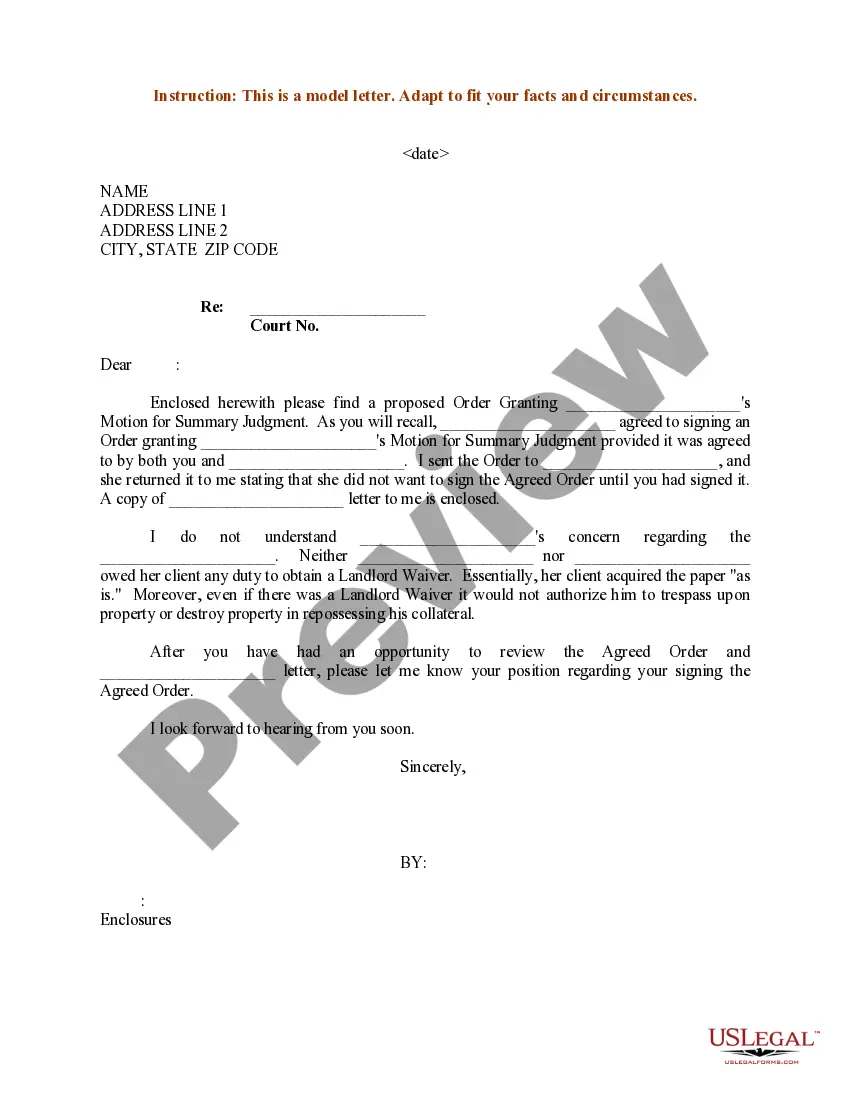
Proposed Order And Stipulation To Continue Trial
Description
Get your form ready online
Our built-in tools help you complete, sign, share, and store your documents in one place.
Make edits, fill in missing information, and update formatting in US Legal Forms—just like you would in MS Word.
Download a copy, print it, send it by email, or mail it via USPS—whatever works best for your next step.
Sign and collect signatures with our SignNow integration. Send to multiple recipients, set reminders, and more. Go Premium to unlock E-Sign.
If this form requires notarization, complete it online through a secure video call—no need to meet a notary in person or wait for an appointment.
We protect your documents and personal data by following strict security and privacy standards.

Make edits, fill in missing information, and update formatting in US Legal Forms—just like you would in MS Word.

Download a copy, print it, send it by email, or mail it via USPS—whatever works best for your next step.

Sign and collect signatures with our SignNow integration. Send to multiple recipients, set reminders, and more. Go Premium to unlock E-Sign.

If this form requires notarization, complete it online through a secure video call—no need to meet a notary in person or wait for an appointment.

We protect your documents and personal data by following strict security and privacy standards.
Looking for another form?
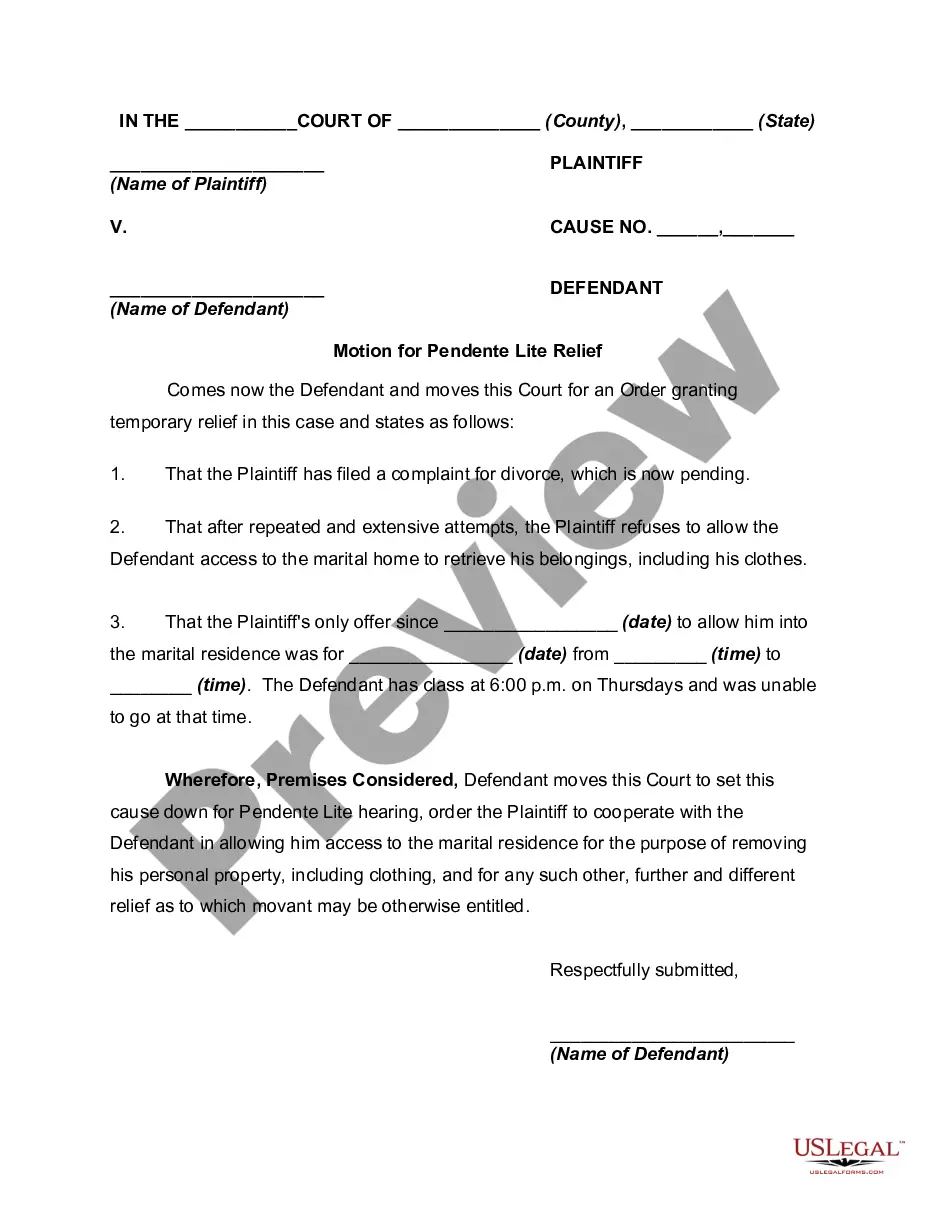


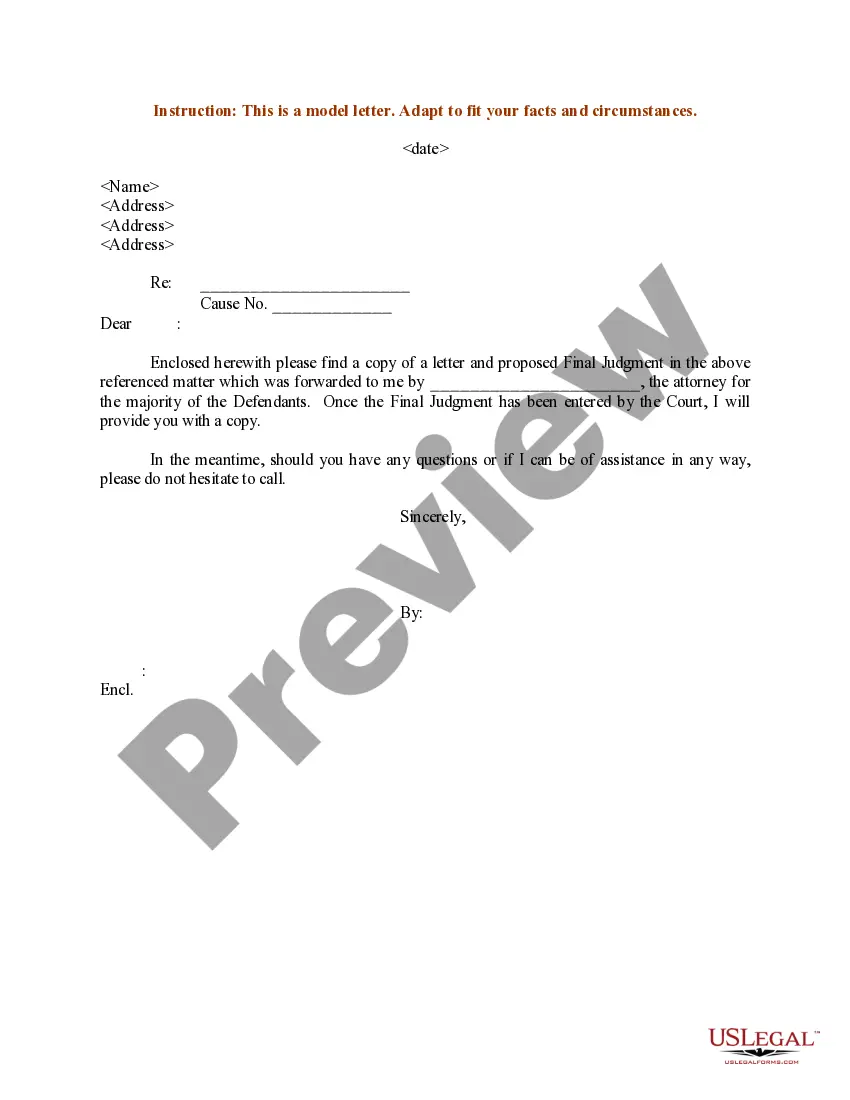
How to fill out Sample Letter For Proposed Order Granting Summary Judgment?
Regardless of whether for corporate objectives or personal concerns, everyone must confront legal circumstances at some stage in their life.
Filling out legal documents requires meticulous care, starting with selecting the appropriate form template. For example, if you select an incorrect edition of the Proposed Order And Stipulation To Continue Trial, it will be rejected when you submit it.
With a vast US Legal Forms catalog available, you won’t need to waste time searching for the suitable template across the internet. Utilize the library’s straightforward navigation to discover the appropriate form for any occasion.
- Obtain the template you require by using the search box or directory navigation.
- Review the form’s description to ensure it suits your situation, jurisdiction, and locality.
- Click on the form’s preview to examine it.
- If it is the wrong document, return to the search function to find the Proposed Order And Stipulation To Continue Trial sample you need.
- Download the file if it aligns with your requirements.
- If you possess a US Legal Forms account, simply click Log in to access previously saved templates in My documents.
- If you do not have an account yet, you can acquire the form by clicking Buy now.
- Choose the appropriate pricing option.
- Complete the account registration form.
- Select your payment method: you can use a credit card or PayPal account.
- Choose the document format you desire and download the Proposed Order And Stipulation To Continue Trial.
- Once it is downloaded, you can fill out the form using editing software or print it and complete it manually.
Form popularity
FAQ
A proposed stipulation and order is a legal document that presents an agreed-upon plan between disputing parties along with a request for court approval. This document articulates how both parties wish to proceed and includes the necessary terms for a judge's review. Crafting a detailed proposed order and stipulation to continue trial can greatly benefit all parties by ensuring agreement and clarity moving forward.
A stipulation and proposed order combine an agreement between parties with a judicial directive. The stipulation lays out what both sides have agreed upon, while the proposed order formalizes this agreement for the court. This approach can be particularly effective when drafting terms for a proposed order and stipulation to continue trial, helping to clarify expectations and responsibilities.
A stipulation to continue is a mutual agreement between parties involved in a case to postpone a trial to a later date. This agreement often includes the justification for the delay and any timelines related to the rescheduled trial. By incorporating a proposed order and stipulation to continue trial, you enhance transparency and ensure that the agreement is legally recognized.
A proposed order is a document submitted for a judge's approval that outlines the specific terms or actions requested by the parties. This document essentially serves as a formal suggestion on how to proceed with the case. When using a proposed order and stipulation to continue trial, it's essential to clearly articulate your requests to facilitate understanding and approval.
Whether a continuance is good or bad largely depends on your situation and perspective. For some, it offers the chance to gather more information or settle disputes, which can be beneficial. However, frequent continuances may delay justice and prolong uncertainty. Using a proposed order and stipulation to continue trial can help manage these concerns by clarifying the reasons and terms for postponement.
When a trial is continued, it indicates that the court has decided to delay the proceedings to a future date. This action can provide the necessary time for parties to prepare more thoroughly or resolve issues out of court. Often, a proposed order and stipulation to continue trial facilitate this process, ensuring clarity and compliance between all involved.
Continuing a trial means postponing it to a later date. This can happen for various reasons, such as needing more time for evidence collection or resolution discussions. A proposed order and stipulation to continue trial often formalizes this postponement, ensuring that all parties are aware and agree to the new timeline.
A stipulation is a mutually agreed upon condition or fact between parties, while an order is a directive issued by a judge that must be followed. The stipulation often lays the groundwork for the order, making it clear what both parties agree upon. Understanding these differences is crucial when drafting a proposed order and stipulation to continue trial, as it impacts how agreements are enforced.
A stipulation in court refers to an agreement made between the parties involved in a legal case. This agreement often outlines certain facts or procedures that the parties accept as true, which helps streamline the trial process. By using a stipulation, you can save time and resources, leading to a more efficient handling of your case. Utilizing a proposed order and stipulation to continue trial can also simplify potential delays.
A good cause to continue a trial might be the unavailability of key evidence or witnesses that are critical to your case. When you prepare a proposed order and stipulation to continue trial, clearly outline why the additional time is vital for fair proceedings. Establishing a legitimate reason can enhance your chances of obtaining the continuance.