Waiver Release Parent With Dementia
Description
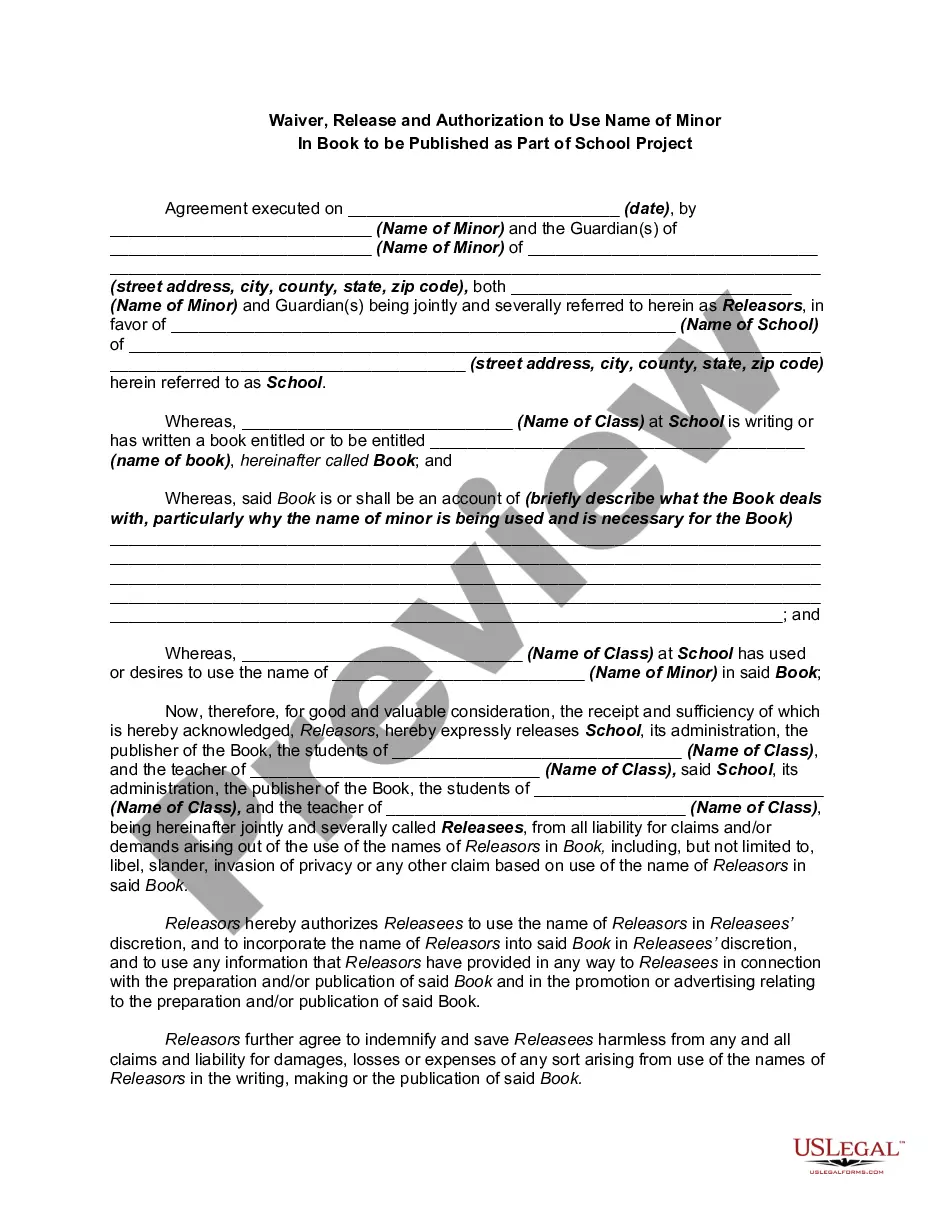
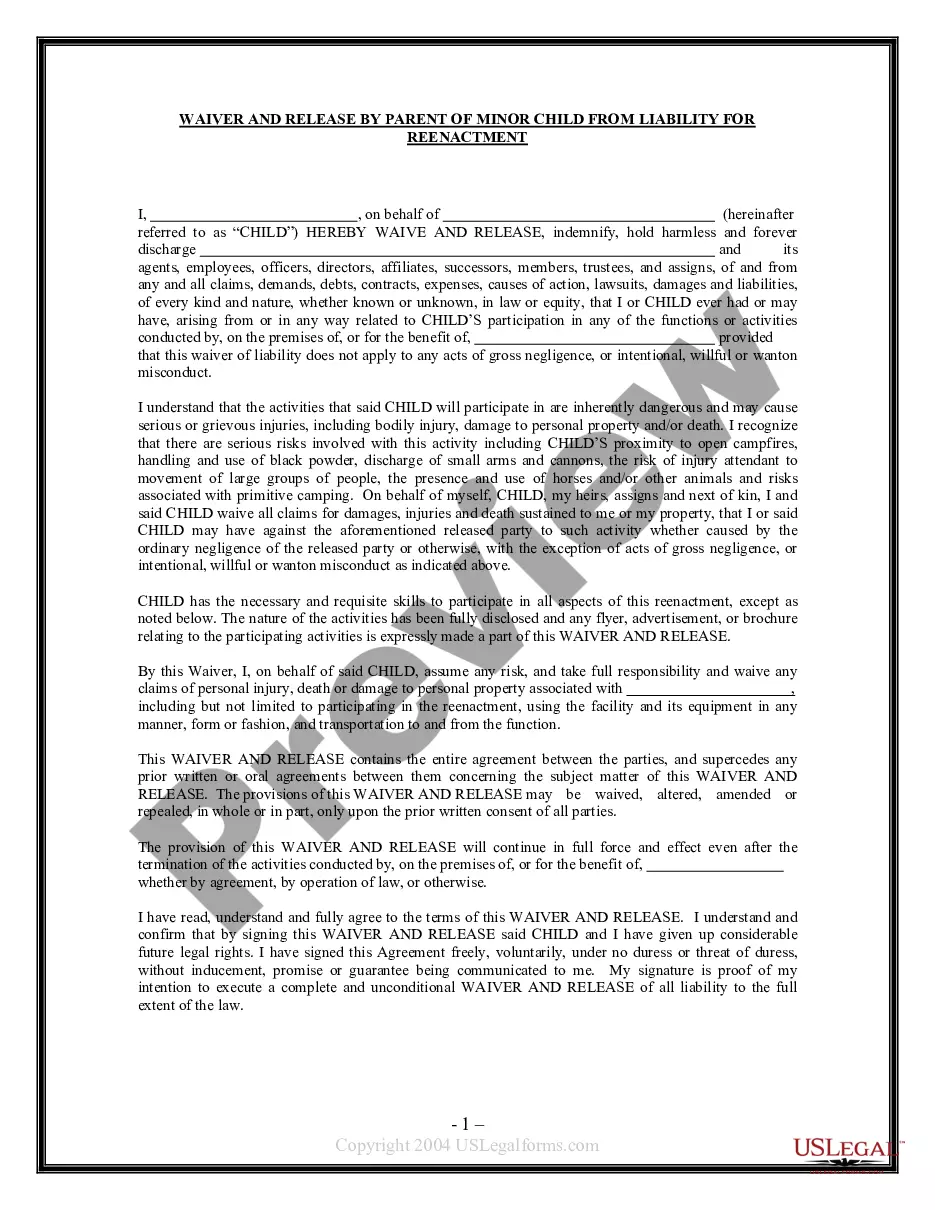
Get your form ready online
Our built-in tools help you complete, sign, share, and store your documents in one place.
Make edits, fill in missing information, and update formatting in US Legal Forms—just like you would in MS Word.
Download a copy, print it, send it by email, or mail it via USPS—whatever works best for your next step.
Sign and collect signatures with our SignNow integration. Send to multiple recipients, set reminders, and more. Go Premium to unlock E-Sign.
If this form requires notarization, complete it online through a secure video call—no need to meet a notary in person or wait for an appointment.
We protect your documents and personal data by following strict security and privacy standards.

Make edits, fill in missing information, and update formatting in US Legal Forms—just like you would in MS Word.

Download a copy, print it, send it by email, or mail it via USPS—whatever works best for your next step.

Sign and collect signatures with our SignNow integration. Send to multiple recipients, set reminders, and more. Go Premium to unlock E-Sign.

If this form requires notarization, complete it online through a secure video call—no need to meet a notary in person or wait for an appointment.

We protect your documents and personal data by following strict security and privacy standards.
Looking for another form?








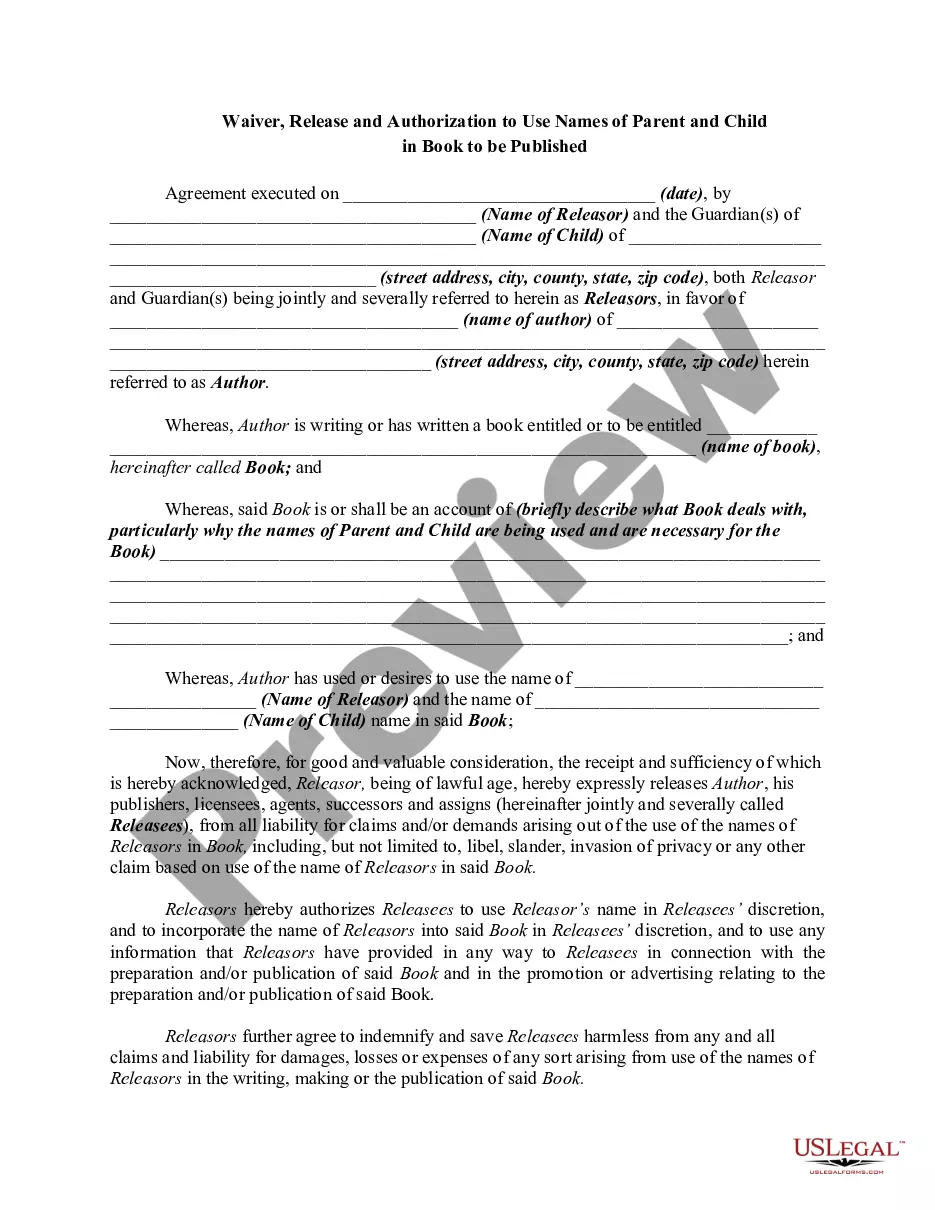
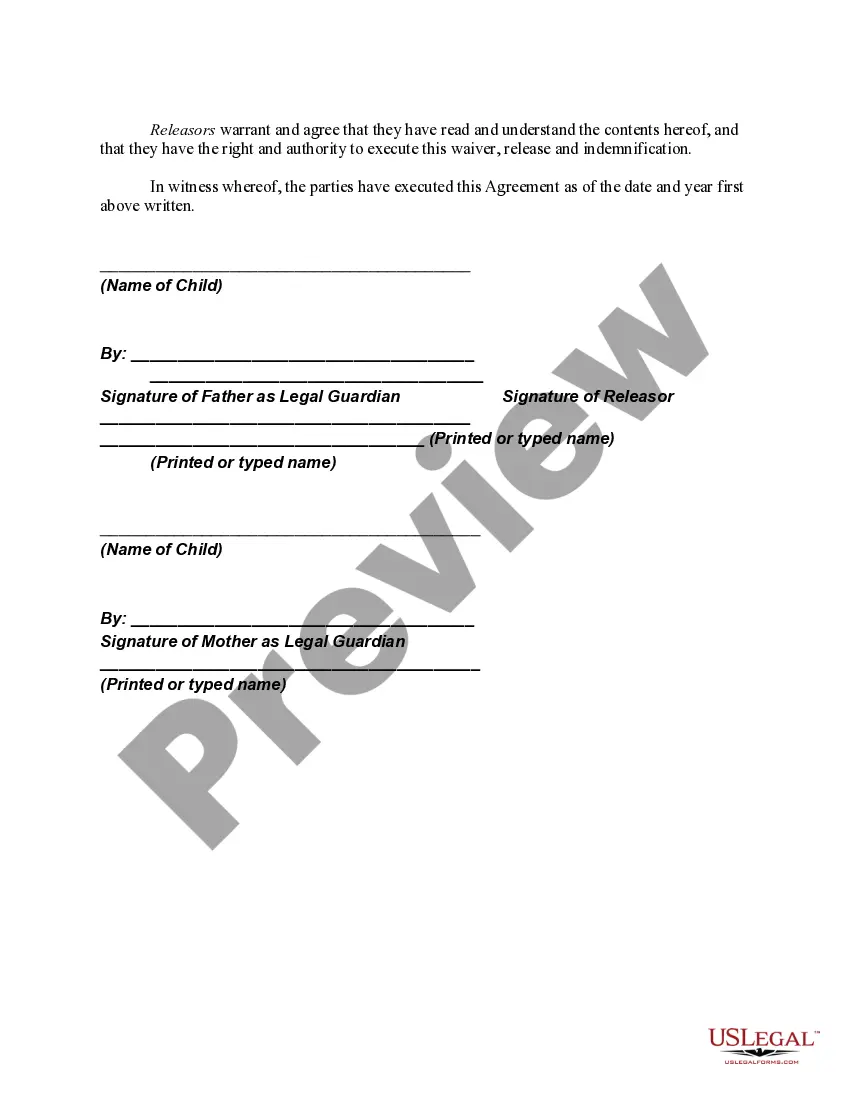
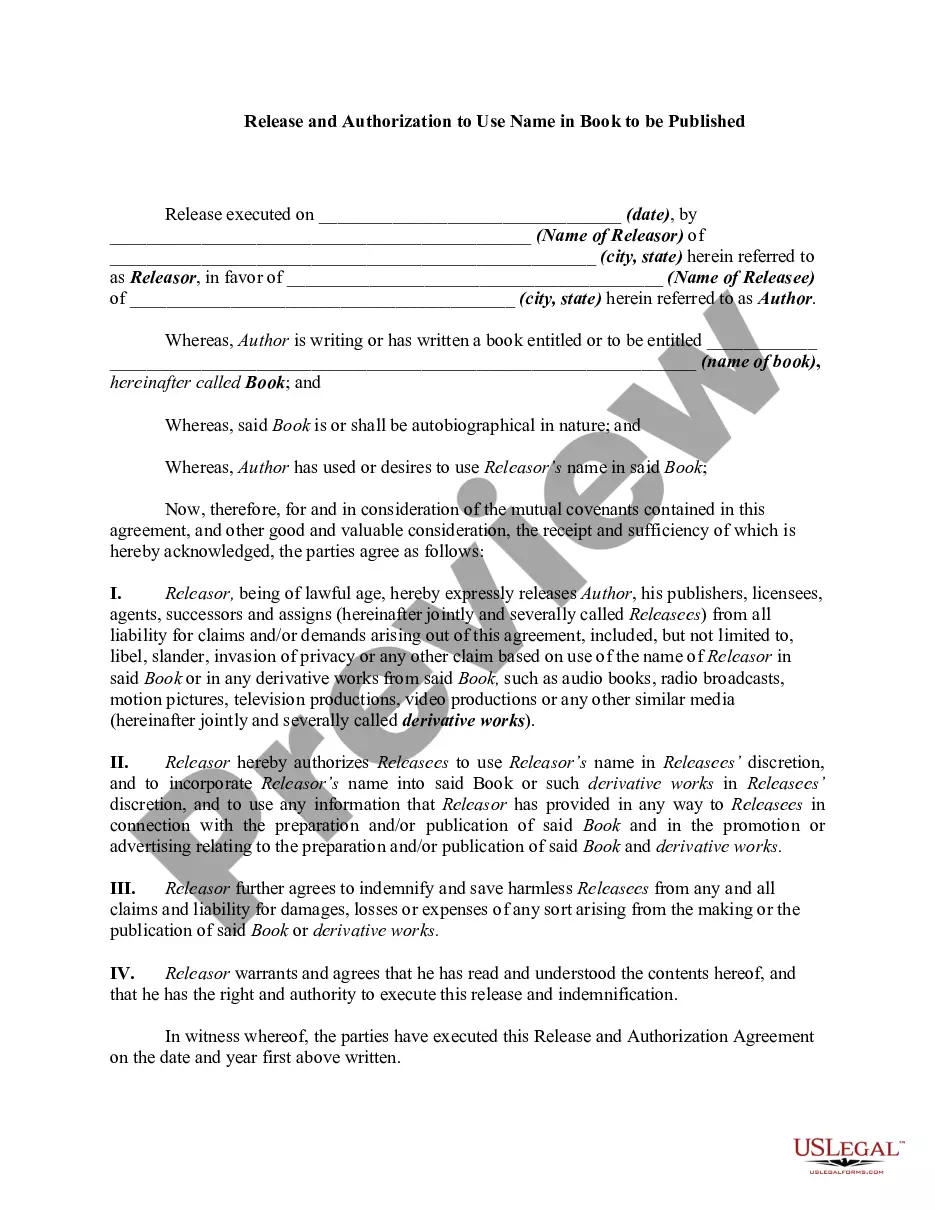
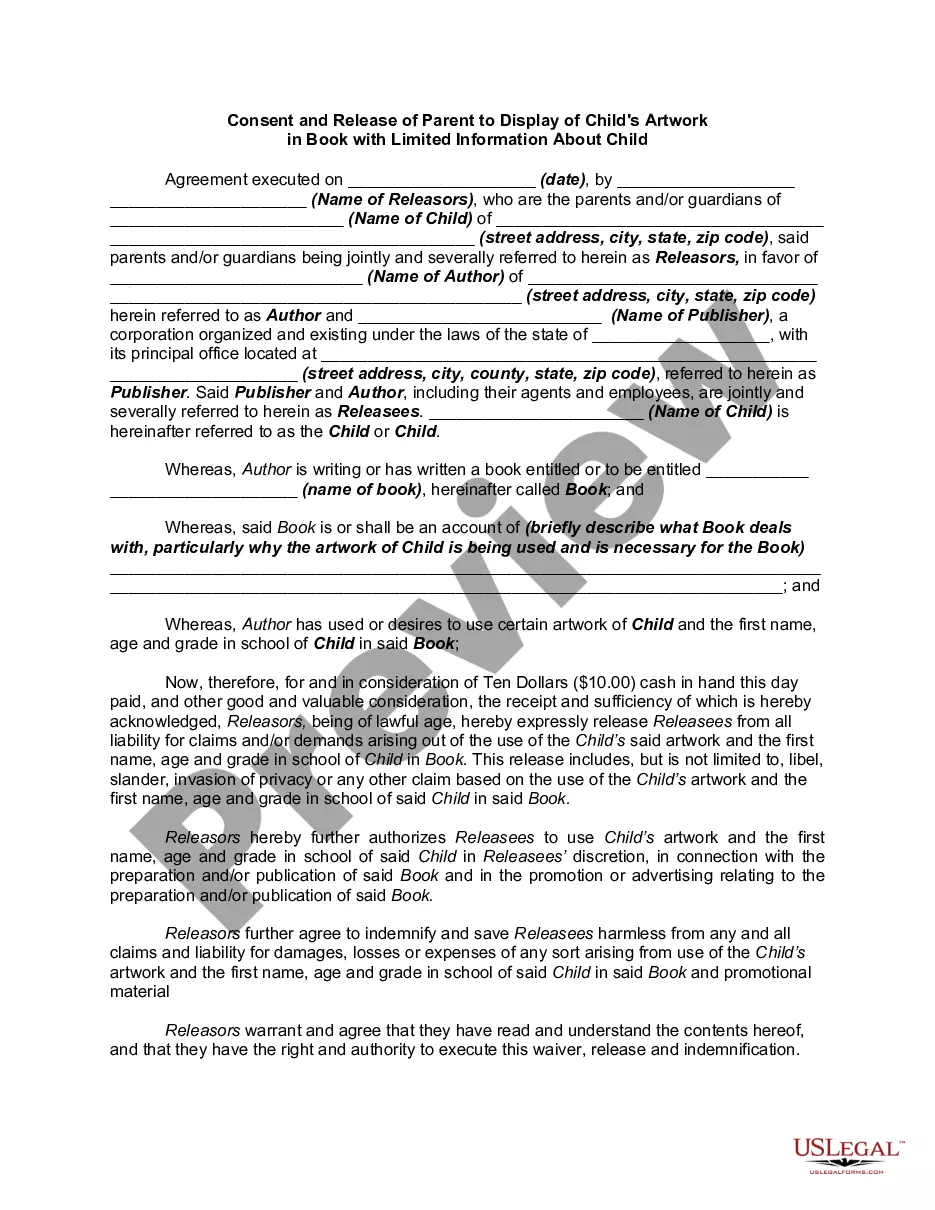
How to fill out Waiver, Release And Authorization To Use Names Of Parent And Child In Book To Be Published?
It is well-known that one cannot instantly become a legal expert, nor can one learn how to swiftly draft a Waiver Release for a Parent with Dementia without possessing a specific skill set.
Assembling legal documents is a lengthy process that demands specialized education and abilities. Therefore, why not leave the drafting of the Waiver Release Parent With Dementia to the experts.
With US Legal Forms, one of the most thorough legal document repositories, you can find everything from court forms to templates for internal communication.
If you need another template, simply start your search again.
Create a complimentary account and choose a subscription plan to purchase the template. Click Buy now. Once the payment is finalized, you can access the Waiver Release for a Parent with Dementia, fill it out, print it, and send or mail it to the specified individuals or organizations.
- We recognize the significance of compliance with federal and local laws and statutes.
- For this reason, all templates on our platform are location-specific and current.
- Let’s get started with our platform and acquire the document you require in just a few minutes.
- Locate the form you need using the search bar at the top of the page.
- If this option is available, preview it and read the accompanying description to determine if Waiver Release for a Parent with Dementia is the form you seek.
Form popularity
FAQ
Ideas for What to Write Encouraging Lines: Whether the letter is long or short, be sure to write a sentence that lets them know you are thinking about them, about what you love about the person, what the person means to you.
The best time to move a person with dementia is when they are stable. An illness or hospital stay may make it difficult for a person with dementia to cope with a move and adjust to new surroundings. However, in many cases, moving only becomes necessary after a person has suffered a serious illness or injury.
Your GP or another health professional at the GP surgery will carry out an initial assessment. If they think it's possible you might have dementia, they will refer you to a local memory service, which has medical staff who specialise in dementia.
The most important part of sex and intimacy is consent. A diagnosis of dementia does not mean that someone automatically lacks the ability to consent to sex and intimacy. However, they may have the mental capacity to engage in sex at some times, and lack it at others. Both partners must consent to sexual activity.
Communicate the transition and keep consistent. It's important that these conversations happen near the time of the move to avoid any anticipatory anxiety or negative emotions. Try to avoid involving them too much in the planning and packing process, as this can often cause additional stress for those with dementia.