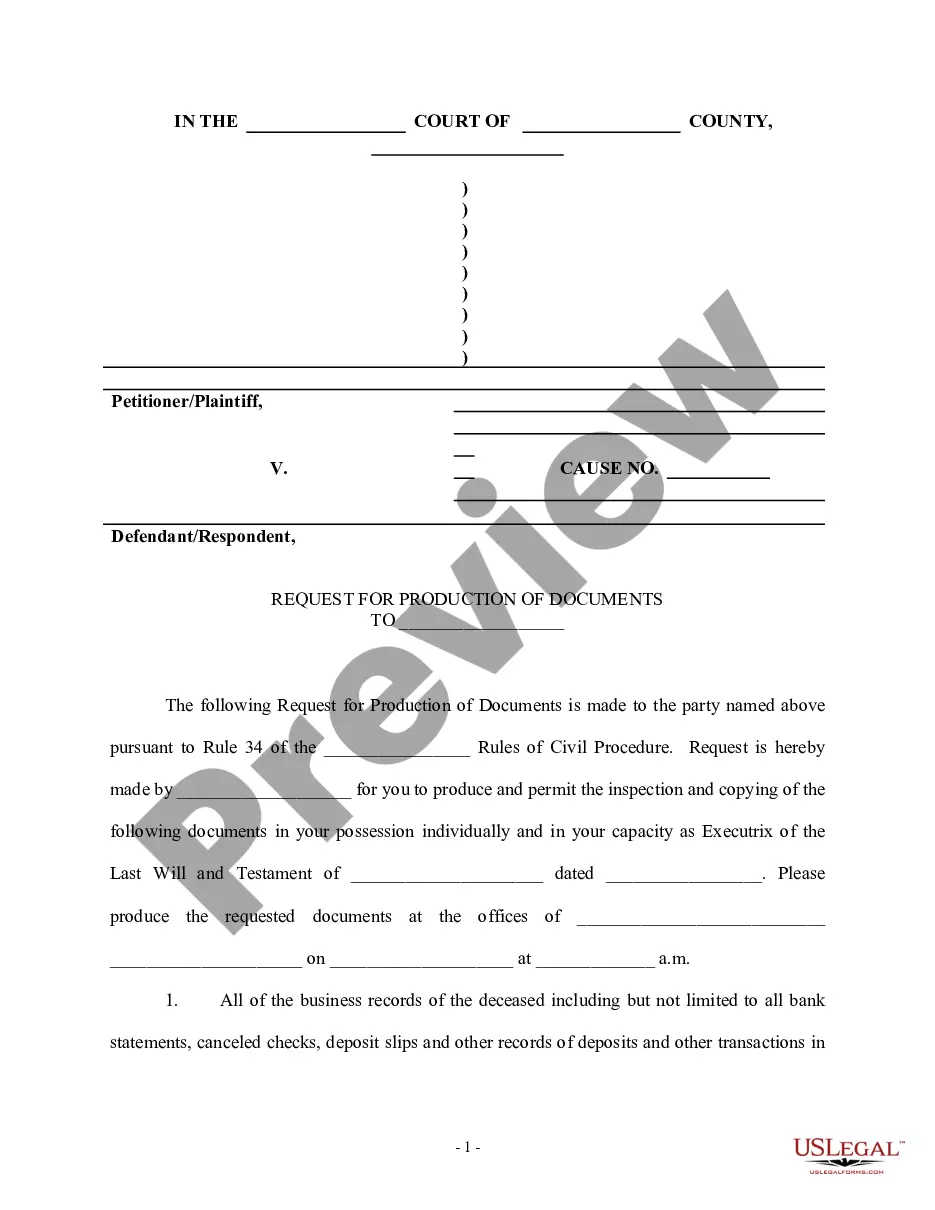
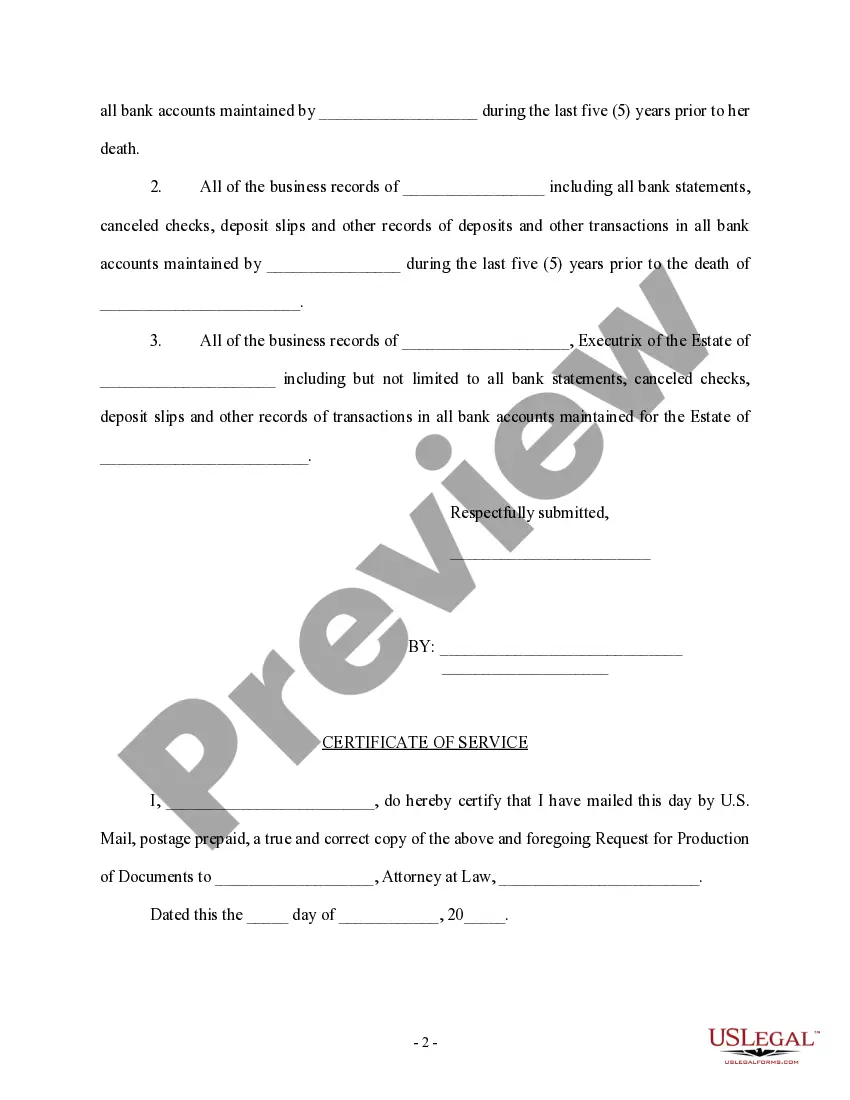
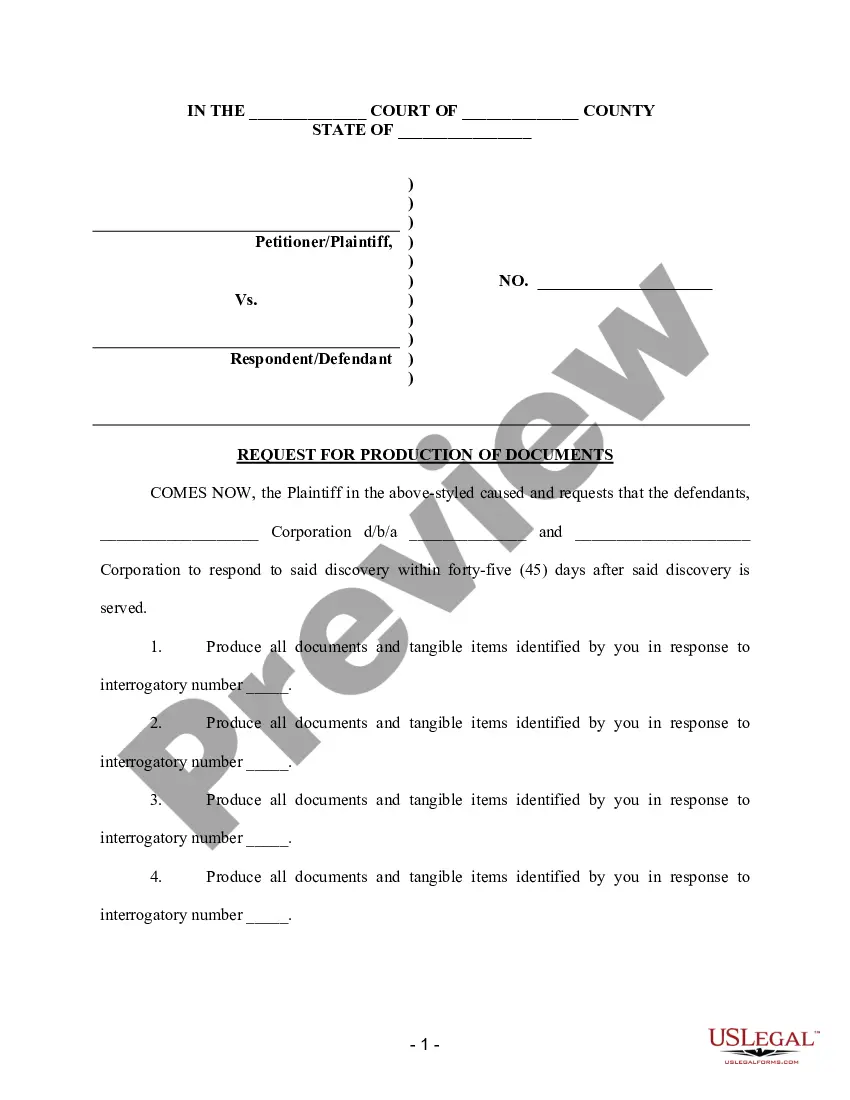
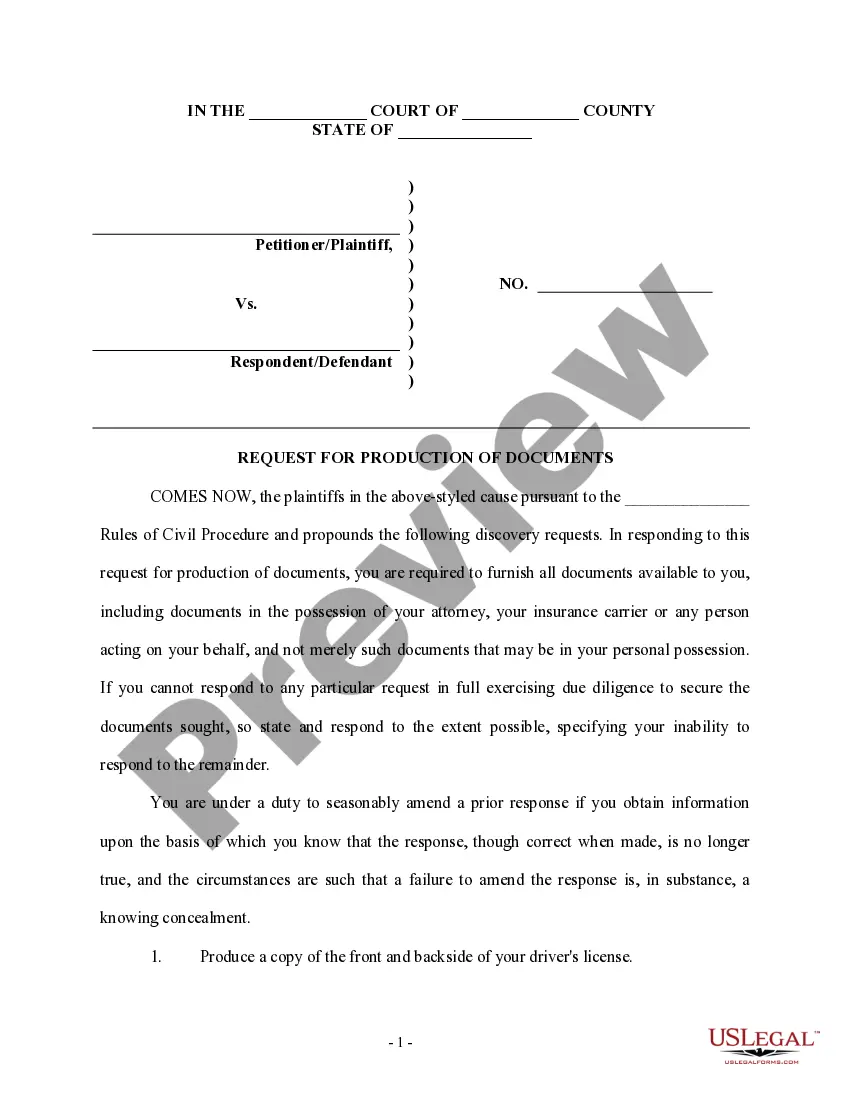
Request For Production Of Documents Family Law
Description

Get your form ready online
Our built-in tools help you complete, sign, share, and store your documents in one place.
Make edits, fill in missing information, and update formatting in US Legal Forms—just like you would in MS Word.
Download a copy, print it, send it by email, or mail it via USPS—whatever works best for your next step.
Sign and collect signatures with our SignNow integration. Send to multiple recipients, set reminders, and more. Go Premium to unlock E-Sign.
If this form requires notarization, complete it online through a secure video call—no need to meet a notary in person or wait for an appointment.
We protect your documents and personal data by following strict security and privacy standards.

Make edits, fill in missing information, and update formatting in US Legal Forms—just like you would in MS Word.

Download a copy, print it, send it by email, or mail it via USPS—whatever works best for your next step.

Sign and collect signatures with our SignNow integration. Send to multiple recipients, set reminders, and more. Go Premium to unlock E-Sign.

If this form requires notarization, complete it online through a secure video call—no need to meet a notary in person or wait for an appointment.

We protect your documents and personal data by following strict security and privacy standards.
Looking for another form?

How to fill out Request For Production Of Documents?
Regardless of whether for corporate needs or personal issues, everyone must confront legal circumstances at some point in their lifetime. Completing legal documents requires meticulous attention, starting from selecting the correct form template.
For instance, if you choose an incorrect version of a Request For Production Of Documents Family Law, it will be rejected upon submission. Hence, it is vital to obtain a reliable source of legal documents such as US Legal Forms.
With an extensive US Legal Forms catalog available, you never need to waste time searching for the correct template online. Utilize the library’s straightforward navigation to find the right form for any circumstance.
- Acquire the template you need by using the search field or catalog navigation.
- Review the form’s details to ensure it aligns with your case, state, and locality.
- Click on the form’s preview to inspect it.
- If it is the wrong document, return to the search function to locate the Request For Production Of Documents Family Law example you require.
- Download the file if it suits your needs.
- If you possess a US Legal Forms account, simply click Log in to access previously saved files in My documents.
- If you do not have an account yet, you can acquire the form by clicking Buy now.
- Choose the appropriate pricing option.
- Complete the account registration form.
- Select your payment method: you can opt for a credit card or PayPal account.
- Choose the file format you desire and download the Request For Production Of Documents Family Law.
- Once it is saved, you can fill out the form using editing software or print it and complete it by hand.
Form popularity
FAQ
To request for production of documents in California family law, you must prepare a formal request that specifies the documents you need. This request is filed with the court and served to the other party involved in the case. The other party is then required to respond within a designated timeframe, either providing the documents or objecting to the request. US Legal Forms offers resources to help you draft effective requests and navigate the family law process with confidence.
A legal order for the production of documents requires an individual to provide specific documents requested by another party, often during legal proceedings. In family law cases, this process helps gather necessary evidence related to child custody, property division, or other relevant issues. The request for production of documents in family law serves to ensure both parties have access to important information. Utilizing platforms like US Legal Forms can simplify this process, providing templates and guidance tailored to your needs.
Examples of production of documents in family law include financial statements, tax returns, communication records, and any relevant contracts. These documents provide critical insights into each party's situation and can significantly impact case outcomes. When you submit a Request for Production of documents, be specific about what you need to avoid delays. Using resources like USLegalForms can simplify the process and ensure you cover all necessary documents.
When answering a Request for Production of documents, read the request carefully to understand what is being asked. Gather the requested documents or specify if you do not have them. Provide your response in writing, and be sure to comply with any deadlines. This process is crucial in family law, as it helps establish transparency and supports your case.
To file a Request for Production of documents in family law, first ensure you understand the specific requirements of your court. Prepare your request by clearly listing the documents you need from the other party. File the request with the court and serve it to the opposing party. Utilizing platforms like USLegalForms can streamline this process, providing templates and guidance tailored to your needs.
When appearing before a family court judge, avoid making disrespectful comments or personal attacks. You should focus on presenting facts and your perspective clearly. It's essential to maintain a respectful tone and refrain from emotional outbursts. Remember, the judge makes decisions based on the evidence and arguments presented, not personal feelings.
The Madras case1 of 1926 points out that the reason for having all documents produced when issues are framed is to prevent fabrication to suit the issues. It has also been pointed out that it is only after the issues are framed that the parties can decide what is essential.
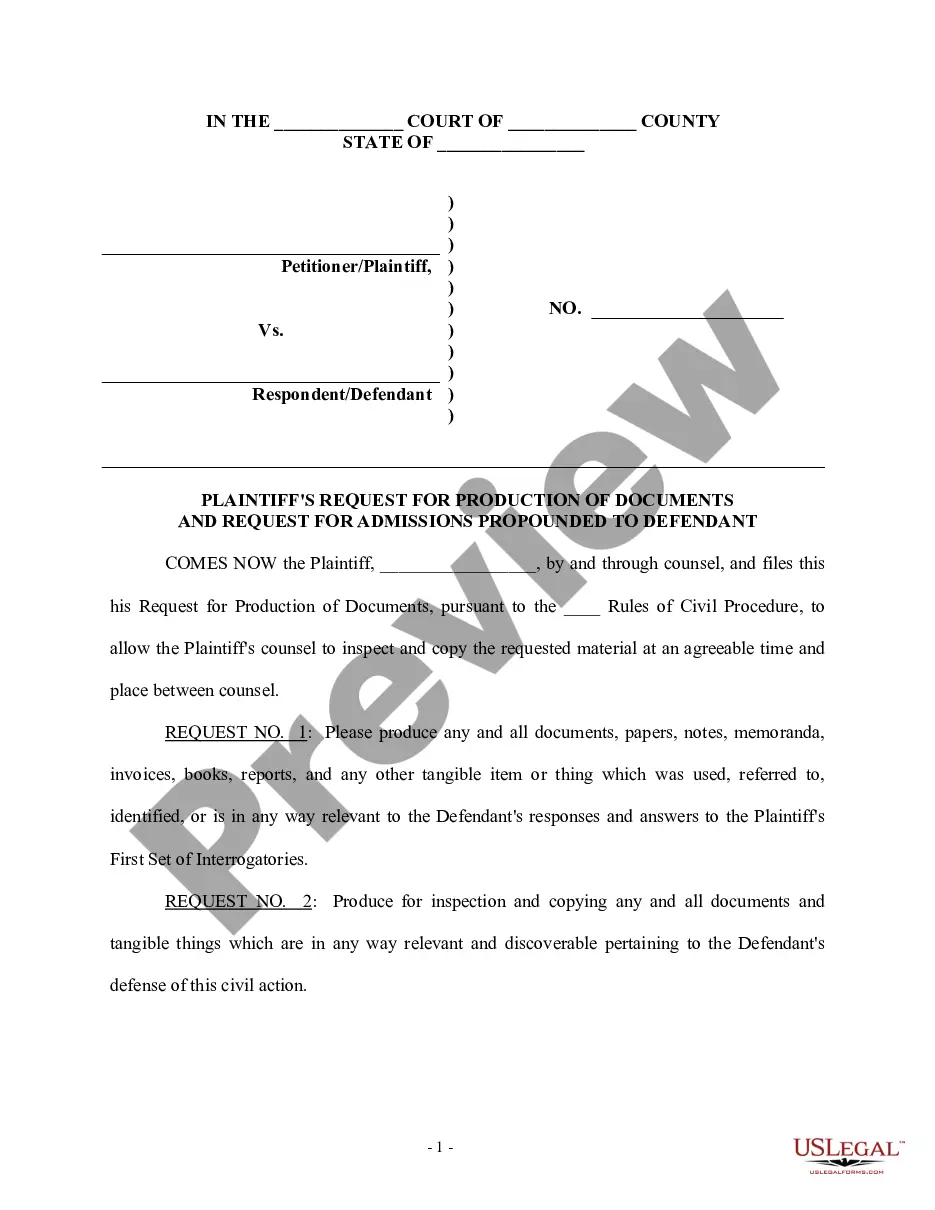
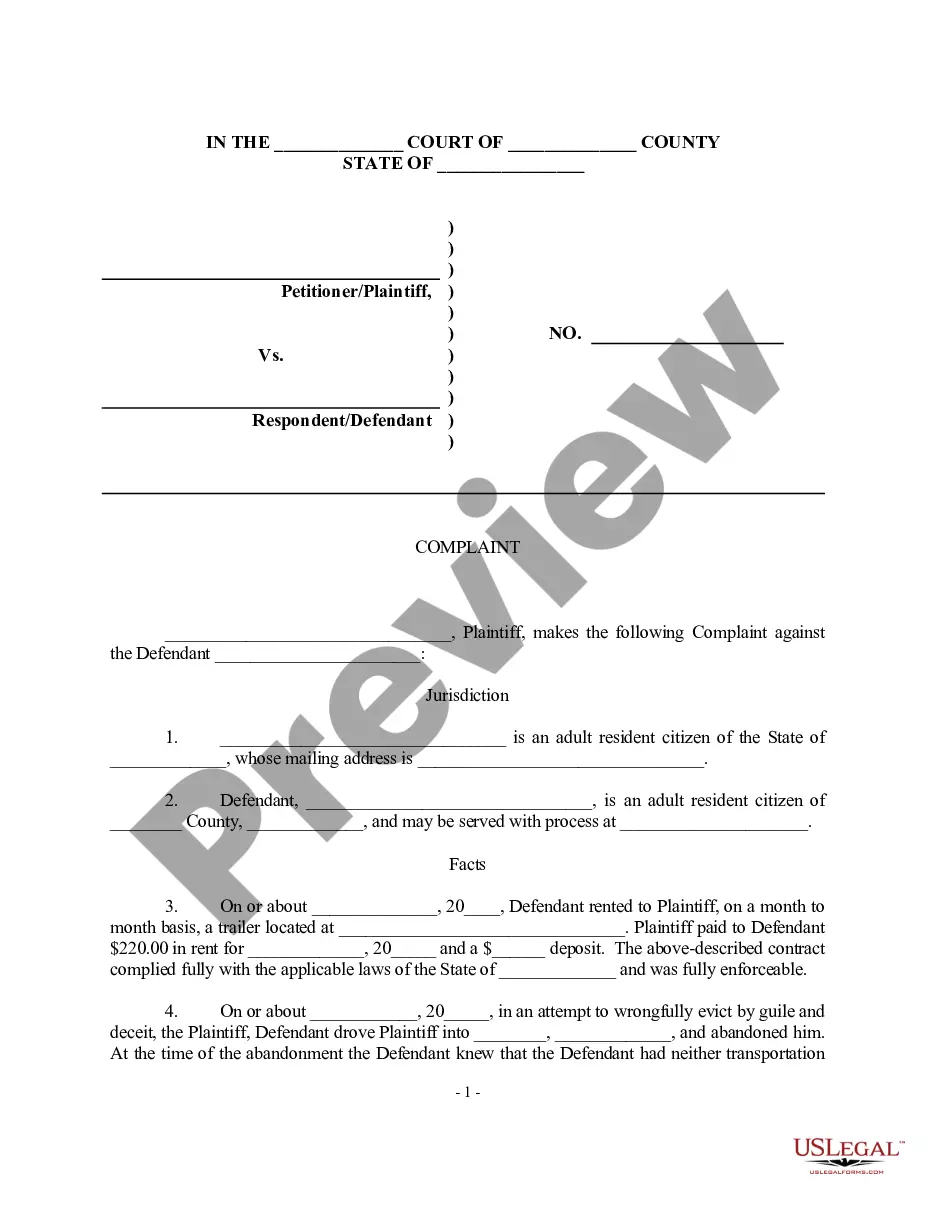
A Request for Production (also known as a Demand for Inspection) asks the other side to produce and allow copying or inspection and measuring of a document or thing.
?(1) Where a plaintiff sues upon a document or relies upon document in his possession or power in support of his claim, he shall enter such documents in a list, and shall produce it in court when the plaint is presented by him and shall, at the same time deliver the document and a copy thereof, to be filed with the ...
A party may serve on another party - no later than 30 days before the end of the discovery period - a request for production or for inspection, to inspect, sample, test, photograph and copy documents or tangible things within the scope of discovery.