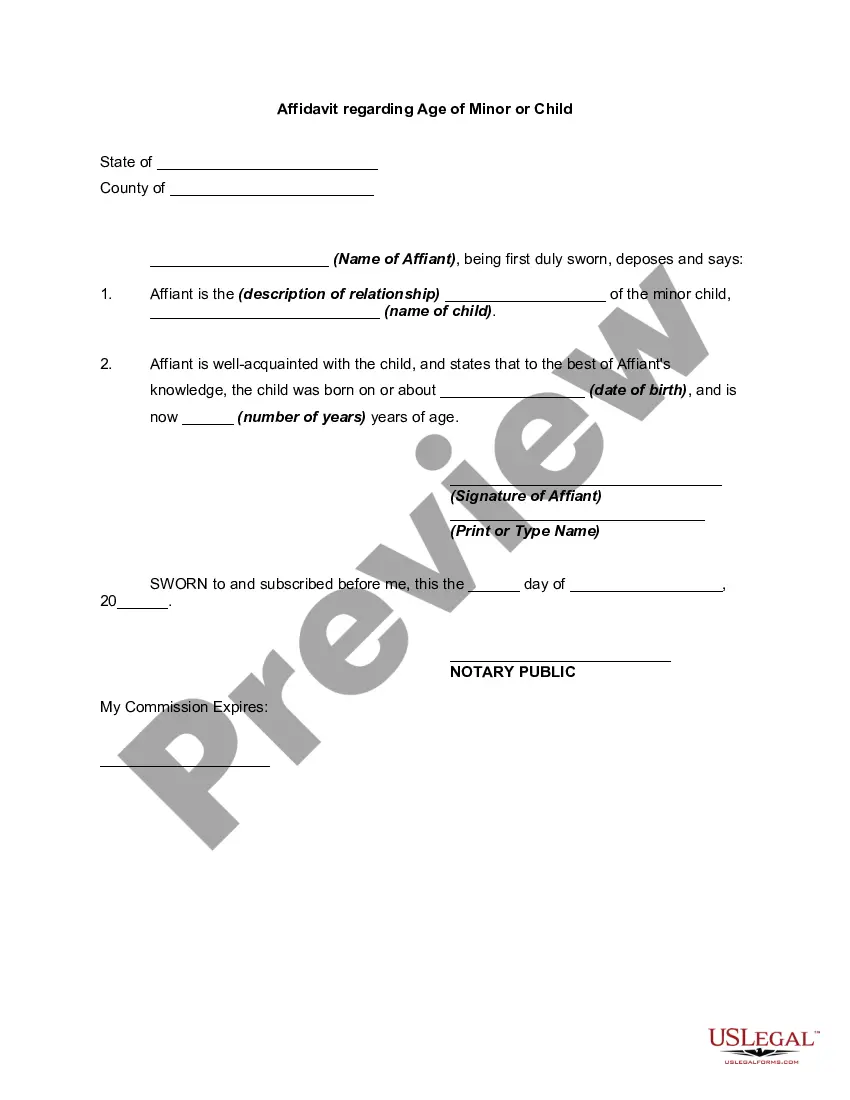
Age Minor Child With Parents
Description
Get your form ready online
Our built-in tools help you complete, sign, share, and store your documents in one place.
Make edits, fill in missing information, and update formatting in US Legal Forms—just like you would in MS Word.
Download a copy, print it, send it by email, or mail it via USPS—whatever works best for your next step.
Sign and collect signatures with our SignNow integration. Send to multiple recipients, set reminders, and more. Go Premium to unlock E-Sign.
If this form requires notarization, complete it online through a secure video call—no need to meet a notary in person or wait for an appointment.
We protect your documents and personal data by following strict security and privacy standards.

Make edits, fill in missing information, and update formatting in US Legal Forms—just like you would in MS Word.

Download a copy, print it, send it by email, or mail it via USPS—whatever works best for your next step.

Sign and collect signatures with our SignNow integration. Send to multiple recipients, set reminders, and more. Go Premium to unlock E-Sign.

If this form requires notarization, complete it online through a secure video call—no need to meet a notary in person or wait for an appointment.

We protect your documents and personal data by following strict security and privacy standards.
Looking for another form?








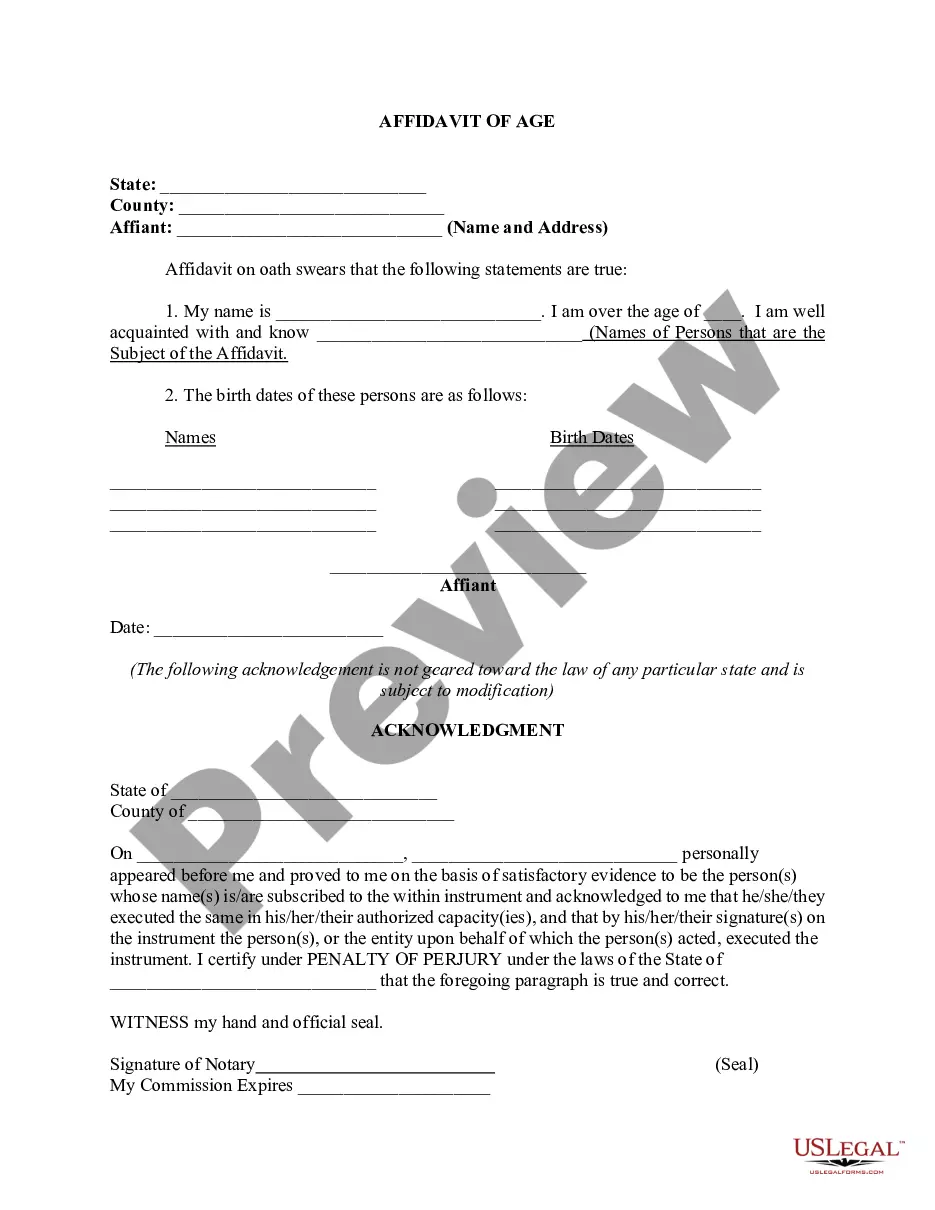
How to fill out Affidavit Regarding Age Of Minor Or Child?
The Age Minor Child With Parents you observe on this page is a versatile formal template created by professional attorneys in accordance with federal and local regulations.
For over 25 years, US Legal Forms has supplied individuals, businesses, and legal practitioners with more than 85,000 validated, state-specific forms for any business and personal situation. It’s the fastest, simplest, and most dependable way to acquire the documentation you require, as the service ensures the utmost level of data protection and anti-malware safeguards.
Register for US Legal Forms to access verified legal templates for every situation in life.
- Search for the document you require and examine it.
- Choose the pricing plan that fits your needs and create an account.
- Select the format you prefer for your Age Minor Child With Parents (PDF, DOCX, RTF) and download the document to your device.
- Complete and sign the documents.
- Retrieve your paperwork again whenever necessary.
Form popularity
FAQ
Filing Form N600, the Application for Certificate of Citizenship, is often necessary for a minor child who has acquired citizenship. If your child meets the criteria, the age minor child with parents takes on importance in the application process. This form helps establish your child's citizenship status officially. Utilizing platforms like USLegalForms can streamline the filing process and ensure accuracy in your application.
The Child Status Protection Act (CSPA) can significantly impact your child's eligibility for immigration benefits. By allowing certain minors to retain their status despite aging out, the CSPA is particularly relevant for the age minor child with parents. If your child turns 21 during the application process, the CSPA may help them remain eligible for certain visas. It's advisable to consult legal resources to understand how the CSPA applies to your situation.
Calculating your CSPA age involves a specific formula. First, determine the child's age on the date of visa availability, then subtract any time spent waiting for a decision on the application. This calculation helps you understand how the age minor child with parents plays a role in immigration benefits. For detailed guidance, consider using resources like USLegalForms to navigate the process effectively.
In the context of immigration, a minor is typically defined as an individual under the age of 21. This age is crucial when assessing the immigration status of a child, especially when considering the age minor child with parents. It's essential to understand that different laws may apply based on specific circumstances, so consulting with an immigration expert can provide clarity.
When a minor child expresses reluctance to see a parent, it's essential to consider the child's feelings and the dynamics between them. At the age minor child with parents, emotional needs often take precedence, and communication becomes vital. You can facilitate a conversation between your child and their father to understand the root of the issue. Additionally, seeking help from a mediator or counselor may provide a neutral space for both parties to express their feelings and work towards a solution.
Law enforcement and the judicial system immediately confers adult status at the age of 18 and the opportunity to use ?I'm just a kid? as a defense will no longer apply. In addition to registering to vote, young men turning 18 must also register for the draft within 30 days of their birthday.
FERPA Release. HIPAA Authorization. Medical Power of Attorney. Living Will. Durable Power of Attorney. Financial Records Access. The Bottom Line.
The legal age is also known as the age of legal majority. This is the age at which a person gains the legal status of an adult. The legal age is set by state law and can differ from state to state. However, almost all states set the base legal age as 18 years old.
How to complete Form I-9 for a Minor Completes the minor's information and checks the box by the minor's status. Enters ?minor under age 18? in the signature field. Completes the Preparer and/or Translator Certification field.
If a minor is unable to present an identity document from List B, a parent or legal guardian may establish identity for the minor by completing Form I-9 as shown in Figures 3a and 3b. If you participate in E-Verify, parents or legal guardians cannot establish identity for a minor as described above.