Transfer Trust Agreement For The Future
Description
Get your form ready online
Our built-in tools help you complete, sign, share, and store your documents in one place.
Make edits, fill in missing information, and update formatting in US Legal Forms—just like you would in MS Word.
Download a copy, print it, send it by email, or mail it via USPS—whatever works best for your next step.
Sign and collect signatures with our SignNow integration. Send to multiple recipients, set reminders, and more. Go Premium to unlock E-Sign.
If this form requires notarization, complete it online through a secure video call—no need to meet a notary in person or wait for an appointment.
We protect your documents and personal data by following strict security and privacy standards.

Make edits, fill in missing information, and update formatting in US Legal Forms—just like you would in MS Word.

Download a copy, print it, send it by email, or mail it via USPS—whatever works best for your next step.

Sign and collect signatures with our SignNow integration. Send to multiple recipients, set reminders, and more. Go Premium to unlock E-Sign.

If this form requires notarization, complete it online through a secure video call—no need to meet a notary in person or wait for an appointment.

We protect your documents and personal data by following strict security and privacy standards.
Looking for another form?


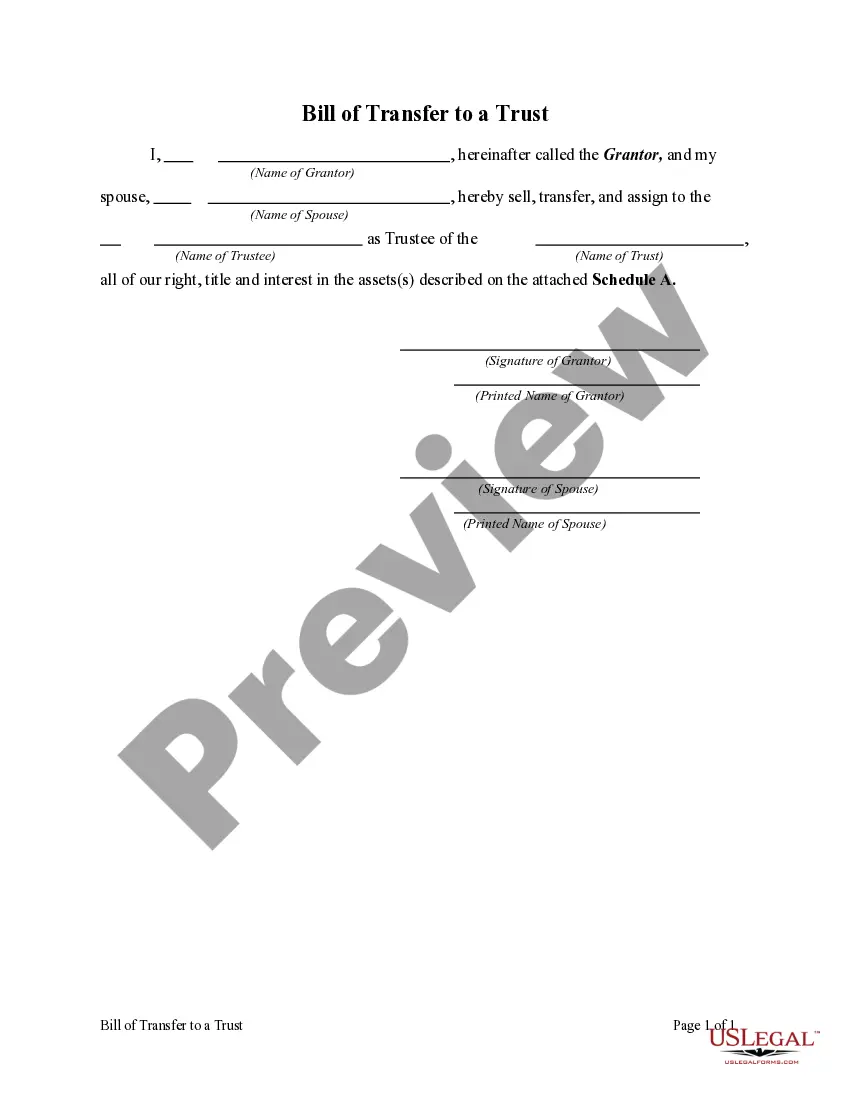
How to fill out Bill Of Transfer To A Trust?
- Login to your US Legal Forms account if you're a returning user. Ensure your subscription is active; renew if necessary.
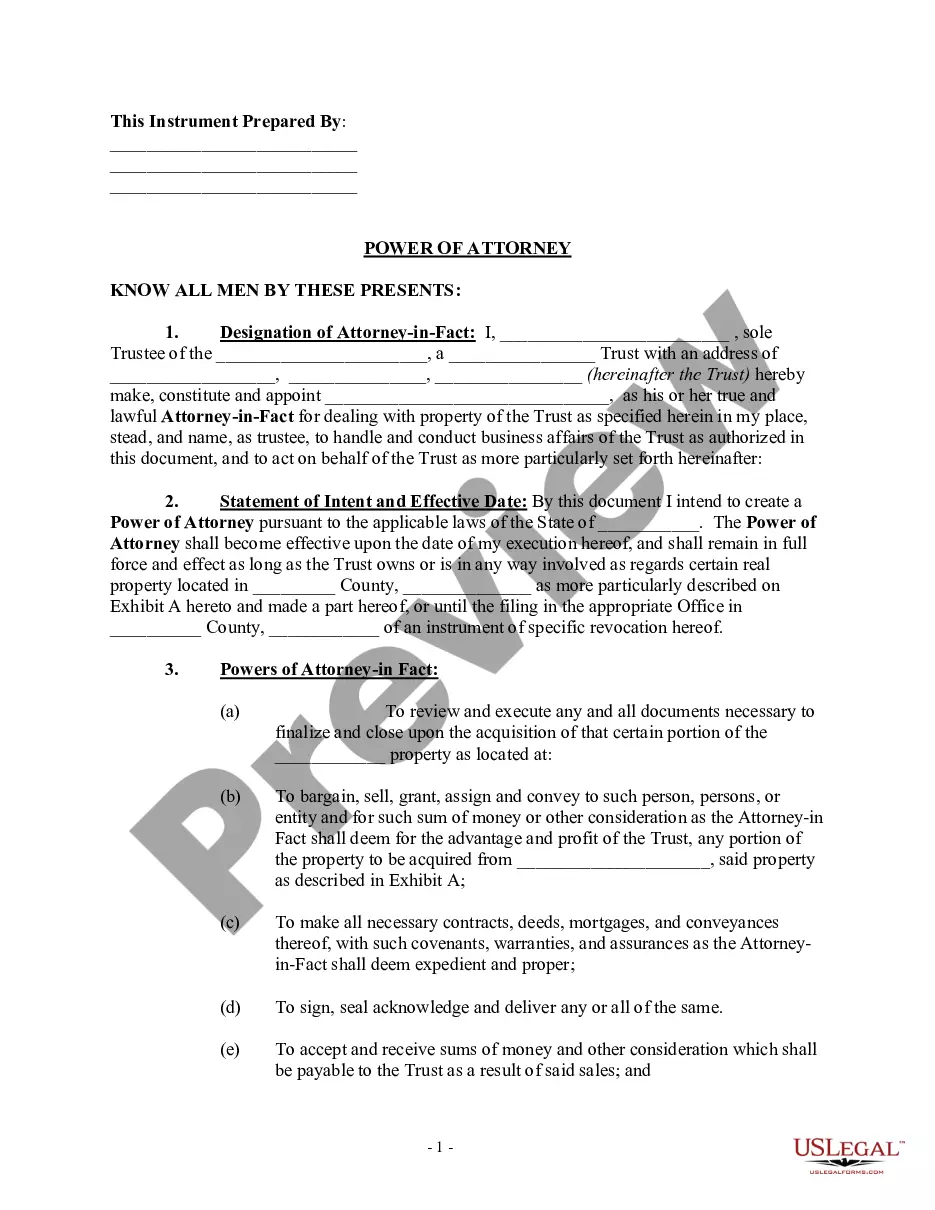
- For first-time users, begin by reviewing the document in Preview mode to ensure it meets your requirements.
- If the current form doesn't fit your needs, utilize the Search tab to find the right template tailored to your local jurisdiction.
- Select the document you need and click the Buy Now button. Choose a subscription plan that suits you.
- Complete your purchase by entering your credit card information or using a PayPal account.
- Download the form to your device. You'll also find it later in the My Forms section of your profile.
With US Legal Forms, you gain access to an extensive library featuring over 85,000 editable legal forms. This empowers individuals and attorneys to create legally sound documents quickly and easily.
Streamline your estate planning by using US Legal Forms today. Start your journey towards securing your future and ensuring that your trust agreements are in order!
Form popularity
FAQ
Your parents should carefully assess their financial situation and goals when considering a transfer trust agreement for the future. Trusts can effectively protect assets and streamline the distribution process after death, providing peace of mind. However, it's vital for them to consult with legal and financial professionals to ensure that a trust aligns with their needs. Overall, establishing a trust can be a proactive way to secure their legacy.
One disadvantage of a family trust involves the potential for ongoing management costs. While establishing a trust can provide significant benefits, such as avoiding probate, you should consider that a transfer trust agreement for the future requires regular maintenance and legal fees. Additionally, if family dynamics shift, managing the trust can become complicated and might lead to disputes. It's essential to weigh these factors before deciding to create a family trust.
Deciding whether to gift a house or place it in a trust depends on your goals and circumstances. A transfer trust agreement for the future can provide long-term protection from taxes and potential claims, while gifting the house may incur tax implications you need to consider. It's essential to evaluate how each option aligns with your estate planning objectives. Consulting a legal professional will help clarify which choice serves your best interests.
Typically, a qualified attorney prepares the trust agreement to ensure it aligns with your wishes and state laws. When considering a transfer trust agreement for the future, it’s wise to consult a legal expert who specializes in trusts and estates. They will gather necessary information, draft the agreement, and help you understand all details. Moreover, using a reliable platform like USLegalForms can simplify this process with accessible resources.
A significant downfall of having a trust is the complexity it adds to your estate planning. While a transfer trust agreement for the future can offer many benefits, it may also require more time and intentionality to manage. Families must communicate clearly about the trust's terms and ensure that they follow through with the planning. Failing to do so can result in confusion or conflicts among inherited parties.
Yes, a nursing home can take your house if it is not structured properly within a transfer trust agreement for the future. If you establish an irrevocable trust, assets like your home may be protected from nursing home costs. However, if the trust is revocable, the nursing home can claim the house as part of your assets. It's essential to consult with a legal professional to structure your trust effectively.
To transfer ownership of a trust, you will need to create and execute a new trust document that outlines the transfer. This process should include proper notifications to all beneficiaries involved. By using a transfer trust agreement for the future, you can clearly articulate your intentions and ensure a smooth transition.
You can indeed transfer one trust to another, often for reasons like reorganization or estate planning changes. This involves a legal process that requires careful documentation. Utilizing a transfer trust agreement for the future will ensure the new trust aligns with your long-term goals and needs.
Yes, you can transfer a trust to another person, but the process can be complex. This typically involves updating the trust documents and notifying beneficiaries. A well-drafted transfer trust agreement for the future can facilitate this process, ensuring that your wishes are clearly stated.
The 5 year rule refers to the requirement that assets placed in a trust must remain there for five years to avoid certain tax penalties. Understanding this rule is essential for effective trust management. When creating a transfer trust agreement for the future, keeping this timeline in mind can help you avoid unexpected tax implications.