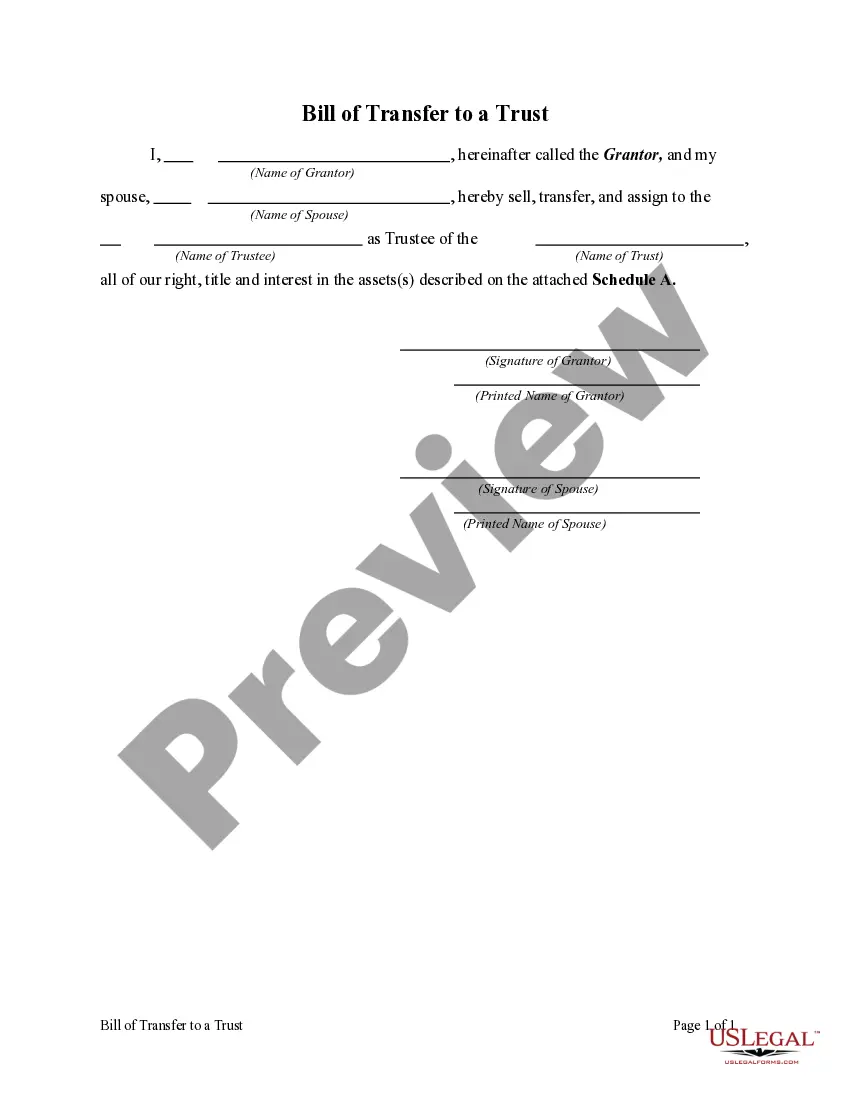
Called Title Trust With Employees
Description
Get your form ready online
Our built-in tools help you complete, sign, share, and store your documents in one place.
Make edits, fill in missing information, and update formatting in US Legal Forms—just like you would in MS Word.
Download a copy, print it, send it by email, or mail it via USPS—whatever works best for your next step.
Sign and collect signatures with our SignNow integration. Send to multiple recipients, set reminders, and more. Go Premium to unlock E-Sign.
If this form requires notarization, complete it online through a secure video call—no need to meet a notary in person or wait for an appointment.
We protect your documents and personal data by following strict security and privacy standards.

Make edits, fill in missing information, and update formatting in US Legal Forms—just like you would in MS Word.

Download a copy, print it, send it by email, or mail it via USPS—whatever works best for your next step.

Sign and collect signatures with our SignNow integration. Send to multiple recipients, set reminders, and more. Go Premium to unlock E-Sign.

If this form requires notarization, complete it online through a secure video call—no need to meet a notary in person or wait for an appointment.

We protect your documents and personal data by following strict security and privacy standards.
Looking for another form?






How to fill out Bill Of Transfer To A Trust?
It’s clear that you cannot transition into a legal expert instantly, nor can you acquire the ability to swiftly create Called Title Trust With Employees without having a specific academic background.
Compiling legal documents is a labor-intensive task that demands specialized training and abilities. So why not entrust the drafting of the Called Title Trust With Employees to the experts.
With US Legal Forms, one of the largest legal template collections, you can discover everything from court papers to templates for internal corporate communication. We understand the importance of compliance and observance of federal and local statutes and regulations.
Sign up for a complimentary account and choose a subscription plan to obtain the form.
Click Buy now. After the transaction is completed, you can download the Called Title Trust With Employees, fill it out, print it, and send or mail it to the required individuals or organizations.
- That’s why, on our platform, all templates are location-specific and current.
- Let’s begin with our platform and acquire the document you need in just minutes.
- Find the document you require using the search bar at the top of the page.
- View it (if this option is available) and review the supporting description to ascertain whether Called Title Trust With Employees is what you seek.
- If you need a different template, restart your search.
Form popularity
FAQ
To fill out a certification of trust form, start by providing basic information like the trust's name and the date it was established. Include details about the trustees and their powers, especially if the trust involves a title trust with employees. Lastly, ensure to sign the document and have it notarized, as this adds authenticity and security to the trust.
An example of a trust title is 'The Smith Family Trust created on January 1, 2023.' This title indicates the name of the trust and when it was established. In a title trust with employees, it might also mention the specific employees responsible for overseeing the trust's assets, adding clarity and defining authority.
The title of a trust typically includes the name of the trust, the effective date, and the names of the trustees. For a title trust with employees, it may also specify the role of each trustee in managing the trust assets. Such titles help establish clear ownership and responsibilities, ensuring that all parties understand their roles.
Building trust with employees takes conscious effort, particularly when discussing called title trust with employees. First, prioritize transparency in decision-making and embrace honesty in all interactions. Consistency in your words and actions reinforces the message that you value your team. Utilizing platforms like US Legal Forms can also help streamline processes, making it easier to communicate policies and procedures clearly, thus reinforcing trust across your organization.
Establishing trust with employees in the framework of called title trust requires intentional actions and strategies. Begin by fostering open communication where employees feel safe to express their thoughts and concerns. Additionally, show reliability by following through on promises and taking responsibility for decisions. Implementing trust-building practices not only improves relationships but also boosts morale and engagement among your workforce, leading to higher productivity.
Creating a trust, particularly in the context of called title trust with employees, involves four essential elements known as the 4 C's: communication, consistency, competence, and care. To effectively establish trust, organizations must be transparent in their communications, maintain consistency in their actions, demonstrate competence in their roles, and show genuine care for their employees' well-being. Each of these elements plays a vital role in fostering a trustworthy environment that encourages collaboration. When these principles are applied, employees feel secure and valued, enhancing workplace dynamics.
Below is a step-by-step list that will outline how to build trust with nearly anyone. Value long-term relationships. Trust requires long-term thinking. ... Be honest. ... Honor your commitments. ... Admit when you're wrong. ... Communicate effectively. ... Be vulnerable. ... Be helpful. ... Show people that you care.
Trust for the organization means that managers and employees feel comfortable giving their teammates goals. They find employees to be accountable in meeting all the reasonable goals and work for the betterment of the team. Trust in a workplace also means that coworkers support each other.
HR professionals should listen actively, ask clarifying questions, and avoid interrupting. They should also show empathy by acknowledging employees' feelings and experiences. Communicate openly and transparently: Open and transparent communication is critical to building trust.
Below is a step-by-step list that will outline how to build trust with nearly anyone. Value long-term relationships. Trust requires long-term thinking. ... Be honest. ... Honor your commitments. ... Admit when you're wrong. ... Communicate effectively. ... Be vulnerable. ... Be helpful. ... Show people that you care.