Variance In Real Estate Example
Description
Get your form ready online
Our built-in tools help you complete, sign, share, and store your documents in one place.
Make edits, fill in missing information, and update formatting in US Legal Forms—just like you would in MS Word.
Download a copy, print it, send it by email, or mail it via USPS—whatever works best for your next step.
Sign and collect signatures with our SignNow integration. Send to multiple recipients, set reminders, and more. Go Premium to unlock E-Sign.
If this form requires notarization, complete it online through a secure video call—no need to meet a notary in person or wait for an appointment.
We protect your documents and personal data by following strict security and privacy standards.

Make edits, fill in missing information, and update formatting in US Legal Forms—just like you would in MS Word.

Download a copy, print it, send it by email, or mail it via USPS—whatever works best for your next step.

Sign and collect signatures with our SignNow integration. Send to multiple recipients, set reminders, and more. Go Premium to unlock E-Sign.

If this form requires notarization, complete it online through a secure video call—no need to meet a notary in person or wait for an appointment.

We protect your documents and personal data by following strict security and privacy standards.
Looking for another form?

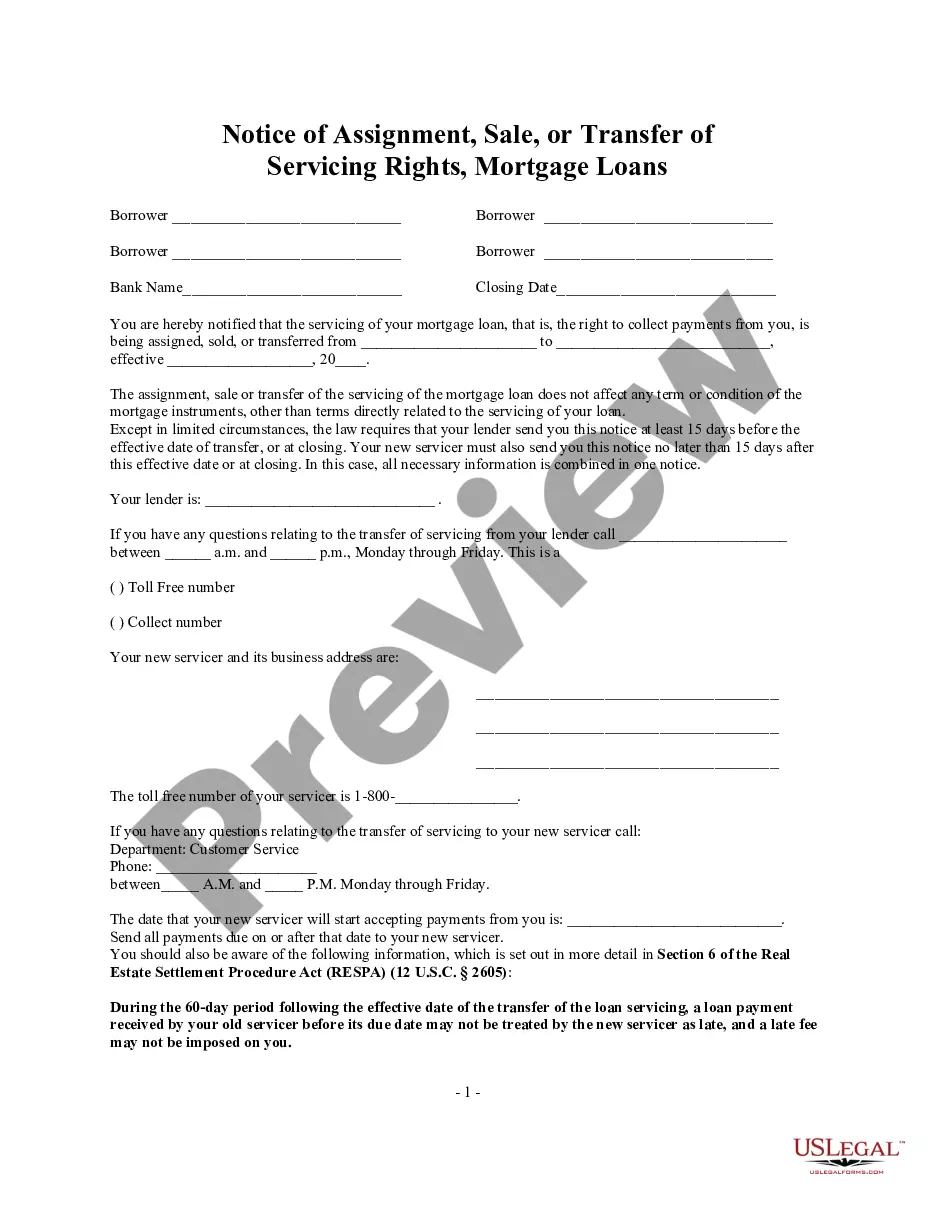
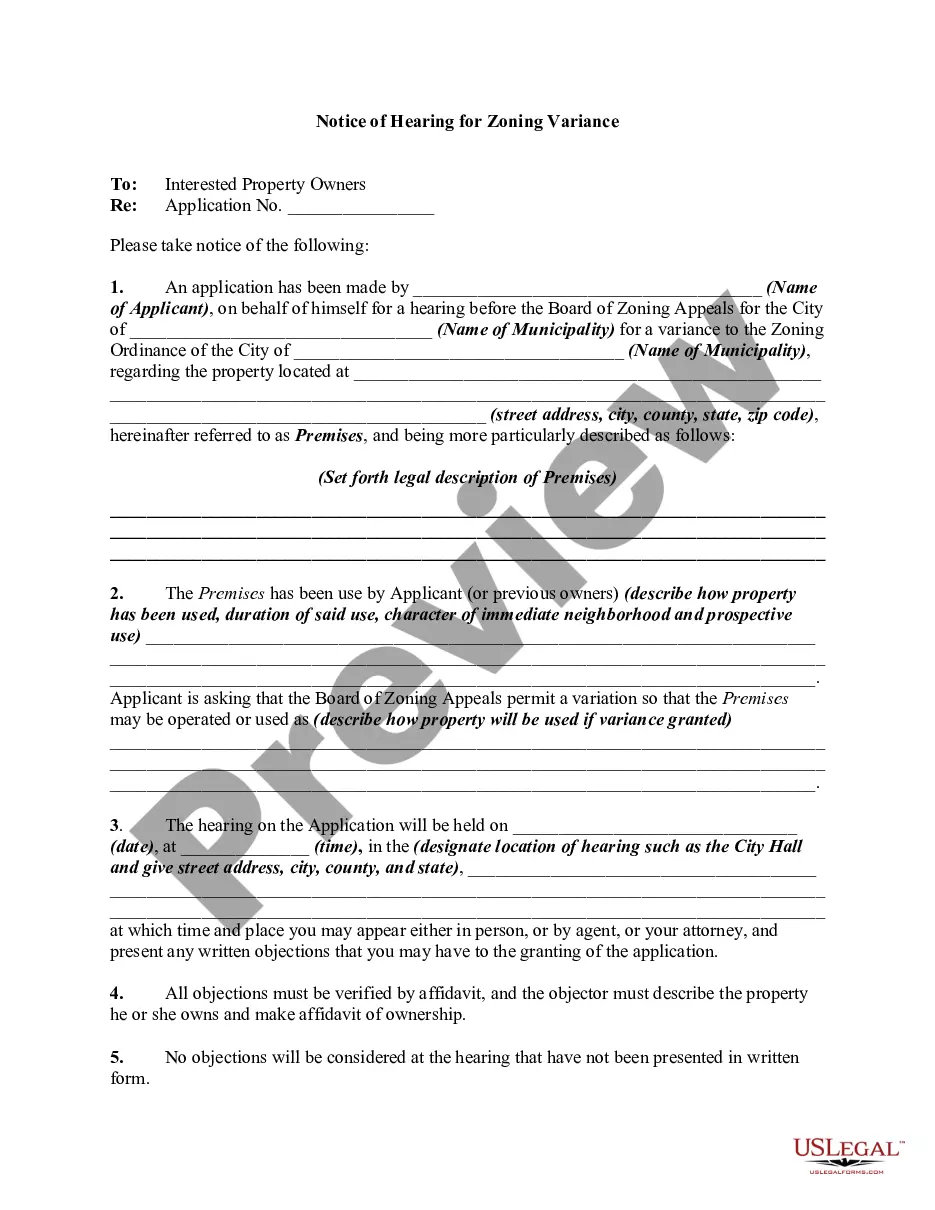
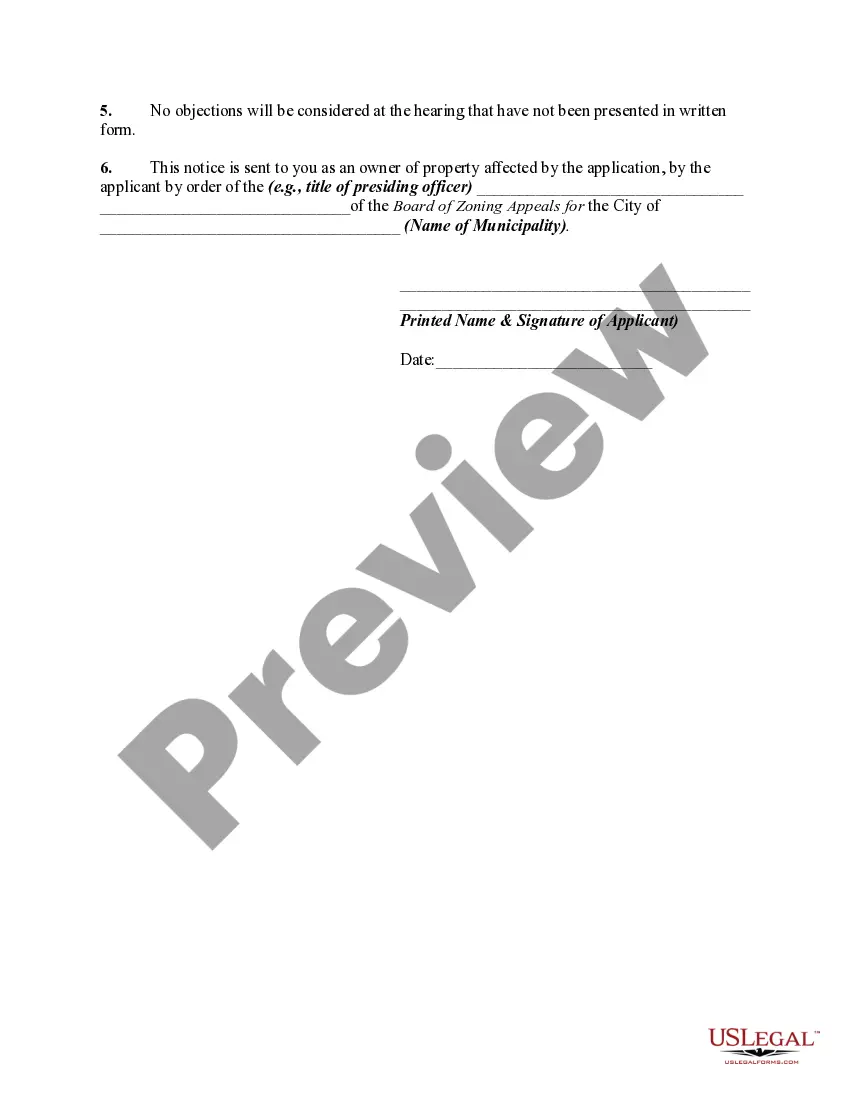
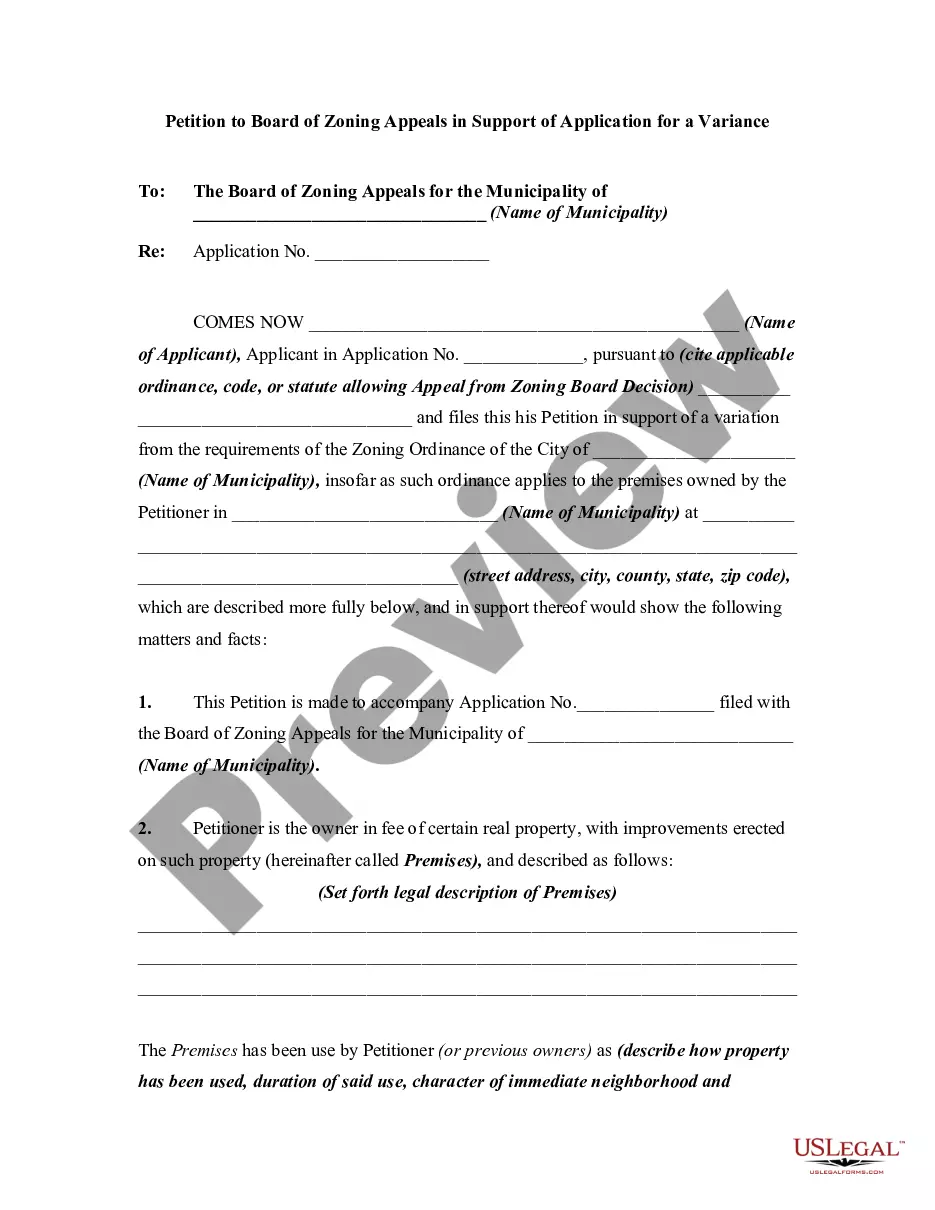
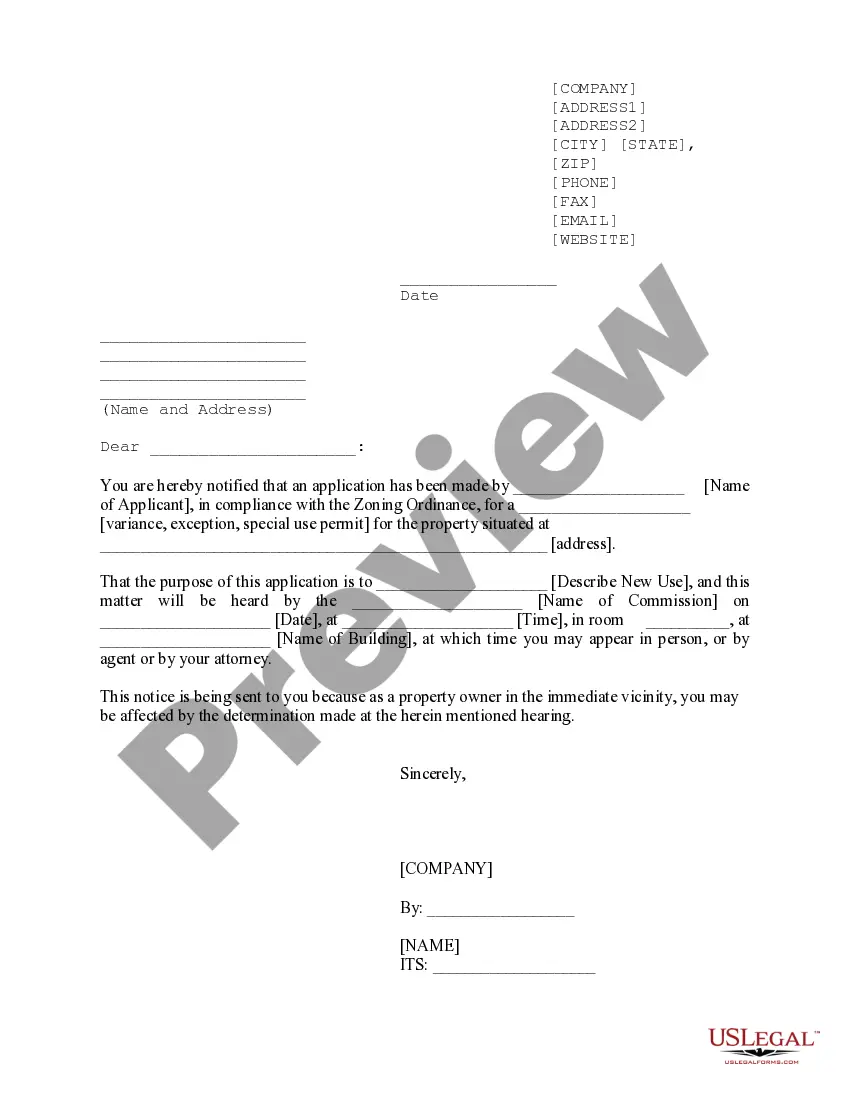
How to fill out Notice Of Hearing For Variance Before Board Of Zoning Appeals - Notice To Be Sent By Applicant To Interested Property Owners?
Acquiring legal document templates that comply with federal and local laws is essential, and the internet provides a multitude of choices.
However, what is the benefit of squandering time hunting for the accurately crafted Variance In Real Estate Example template online when the US Legal Forms digital library conveniently compiles such forms in one location.
US Legal Forms is the most extensive online legal repository with more than 85,000 fillable templates created by attorneys for any business or personal situation.
- They are user-friendly with all documents categorized by state and intended use.
- Our specialists keep abreast of legislative changes to ensure your form is always current and compliant when obtaining a Variance In Real Estate Example from our site.
- Acquiring a Variance In Real Estate Example is quick and straightforward for both existing and new users.
- If you possess an account with an active subscription, Log In to download the document sample you require in the appropriate format.
- If you’re a newcomer to our website, adhere to the steps outlined below.
Form popularity
FAQ
A variance may be required when a proposed land use does not comply with existing zoning regulations. Common situations include building structures that encroach on property lines, exceeding height restrictions, or using land in a manner not typically allowed. Understanding various scenarios that necessitate a variance in real estate example is crucial for property owners to ensure compliance with local laws. Resources available through USLegalForms can assist in navigating these requirements more smoothly.
Writing a variance letter requires clarity and detail about your request. Start by stating your purpose and include specifics such as property details and the nature of your variance request. Highlight how your requested change aligns with local zoning goals and any surrounding property impacts. Utilizing a platform like USLegalForms can simplify this process by providing templates that guide you through creating your variance letter effectively.
A variance is an official permission that allows a property owner to deviate from zoning laws. For instance, if a homeowner wants to build a deck that extends beyond the allowed space, they would need to apply for a variance. An example of a variance in real estate could be a request to have a structure taller than the zoning regulations permit. Thus, understanding this variance in real estate example helps clarify its practical application in property modifications.
A variance is often required when a property owner wishes to use their land in a way that contradicts existing zoning laws. For example, if someone wants to build a taller structure than current zoning allows, a variance would be necessary to proceed. This process ensures compliance while allowing flexibility in property development. Platforms like USLegalForms can assist you in understanding and applying for these variances effectively.
The formula for calculating variance involves a few key steps: first, calculate the mean of your data points. Then, subtract the mean from each data point, square that difference, and sum these squared values. Finally, divide by the total number of data points for the variance value. This approach is vital when analyzing variance in real estate examples, as it provides insight into property market behaviors.
The property of variance reflects how data points differ from the mean value of a dataset. In the context of variance in real estate examples, it can showcase risk levels and potential returns on investment. A lower variance indicates that data points are closer to the mean, while a higher variance suggests greater spread. Understanding this helps investors make informed decisions in property markets.
To calculate the variance in a dataset, first, find the mean of your data points. Next, subtract the mean from each data point, square the result, and sum all the squared values. Finally, divide this total by the number of data points to get the variance. When looking at variance in real estate examples, this calculation can help identify market trends and property value fluctuations.
Obtaining a zoning variance can be challenging, as it often involves navigating local regulations and proving a need for the variance. For instance, you may need to demonstrate how your property is affected by zoning restrictions. Additionally, the approval process typically requires a public hearing, where neighbors can voice their opinions. Consider using resources like USLegalForms to streamline this process and better prepare your application.
An example of a variance in real estate might involve a property owner who wishes to build a garage closer to the property line than the local zoning laws allow. In this case, the owner can apply for a variance to gain approval for the closer placement based on unique property circumstances. Successful examples can illustrate the flexibility of zoning laws, offering insight into potential opportunities for other property owners.
A variance report in real estate is a formal document detailing the specific request for a variance along with supporting evidence. It typically includes information about the property, reasons for the request, and how it meets zoning criteria. This report is crucial for presentations before zoning boards. Utilizing a platform like USLegalForms can streamline the preparation of these reports, ensuring you include all necessary components.