Notice Variance Template With Calculator
Description

Get your form ready online
Our built-in tools help you complete, sign, share, and store your documents in one place.
Make edits, fill in missing information, and update formatting in US Legal Forms—just like you would in MS Word.
Download a copy, print it, send it by email, or mail it via USPS—whatever works best for your next step.
Sign and collect signatures with our SignNow integration. Send to multiple recipients, set reminders, and more. Go Premium to unlock E-Sign.
If this form requires notarization, complete it online through a secure video call—no need to meet a notary in person or wait for an appointment.
We protect your documents and personal data by following strict security and privacy standards.

Make edits, fill in missing information, and update formatting in US Legal Forms—just like you would in MS Word.

Download a copy, print it, send it by email, or mail it via USPS—whatever works best for your next step.

Sign and collect signatures with our SignNow integration. Send to multiple recipients, set reminders, and more. Go Premium to unlock E-Sign.

If this form requires notarization, complete it online through a secure video call—no need to meet a notary in person or wait for an appointment.

We protect your documents and personal data by following strict security and privacy standards.
Looking for another form?


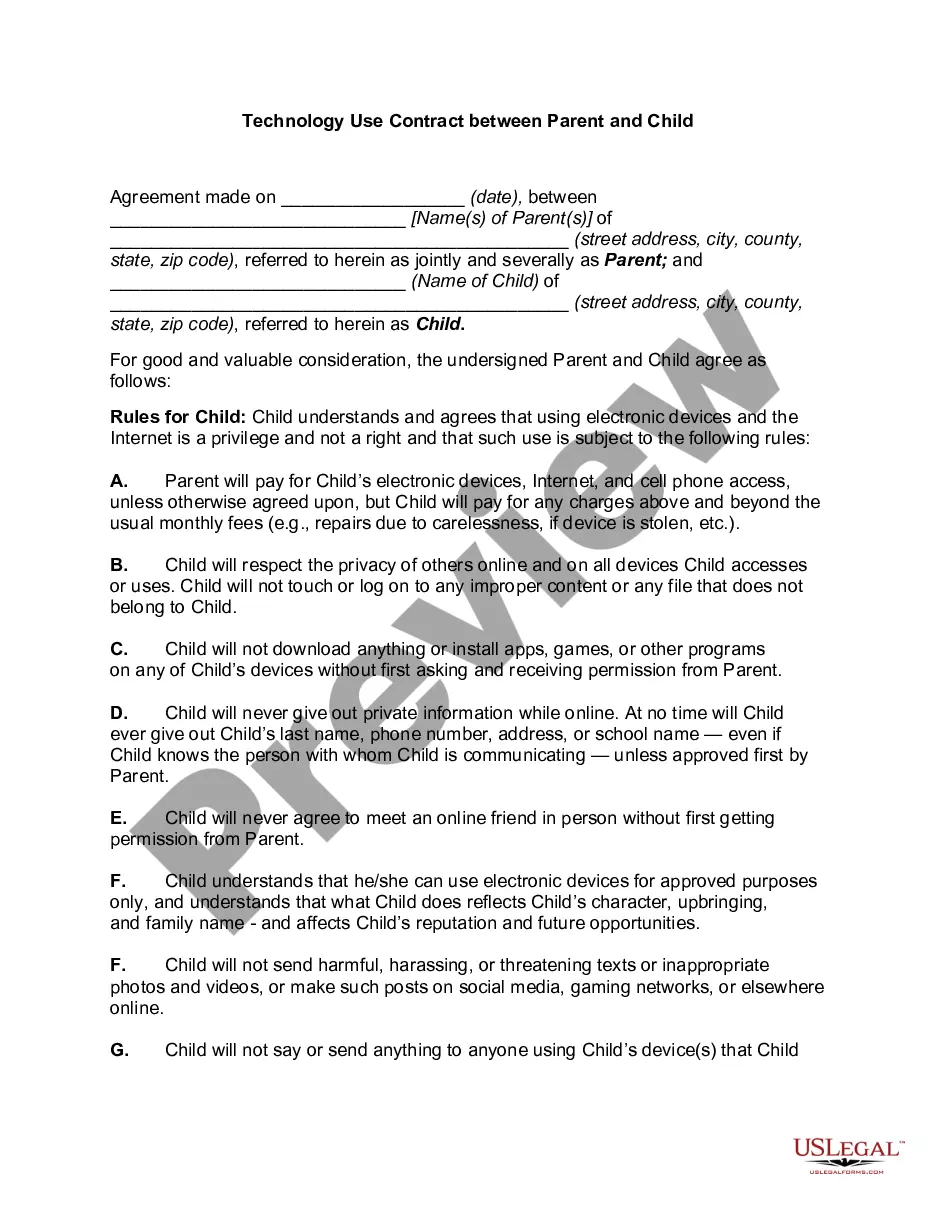




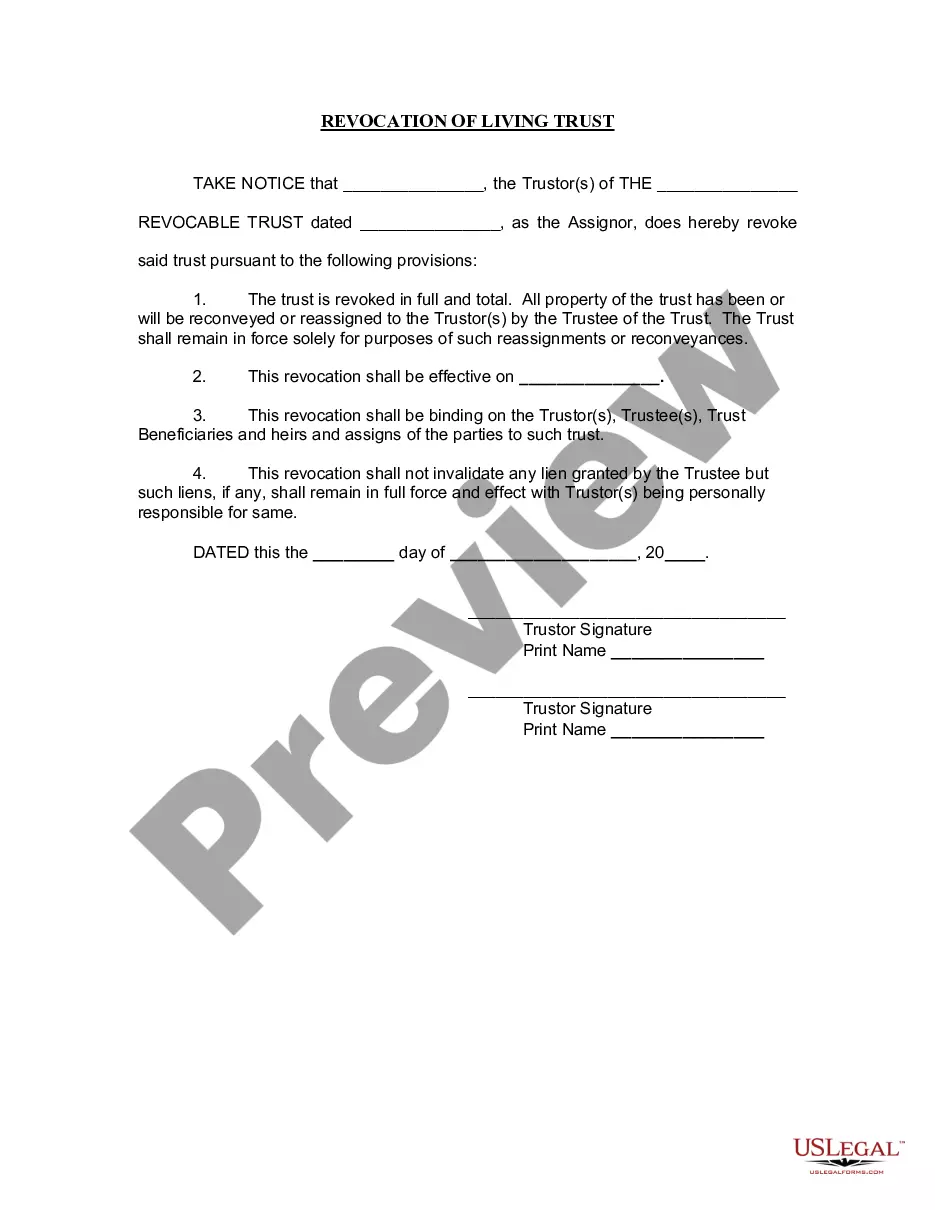


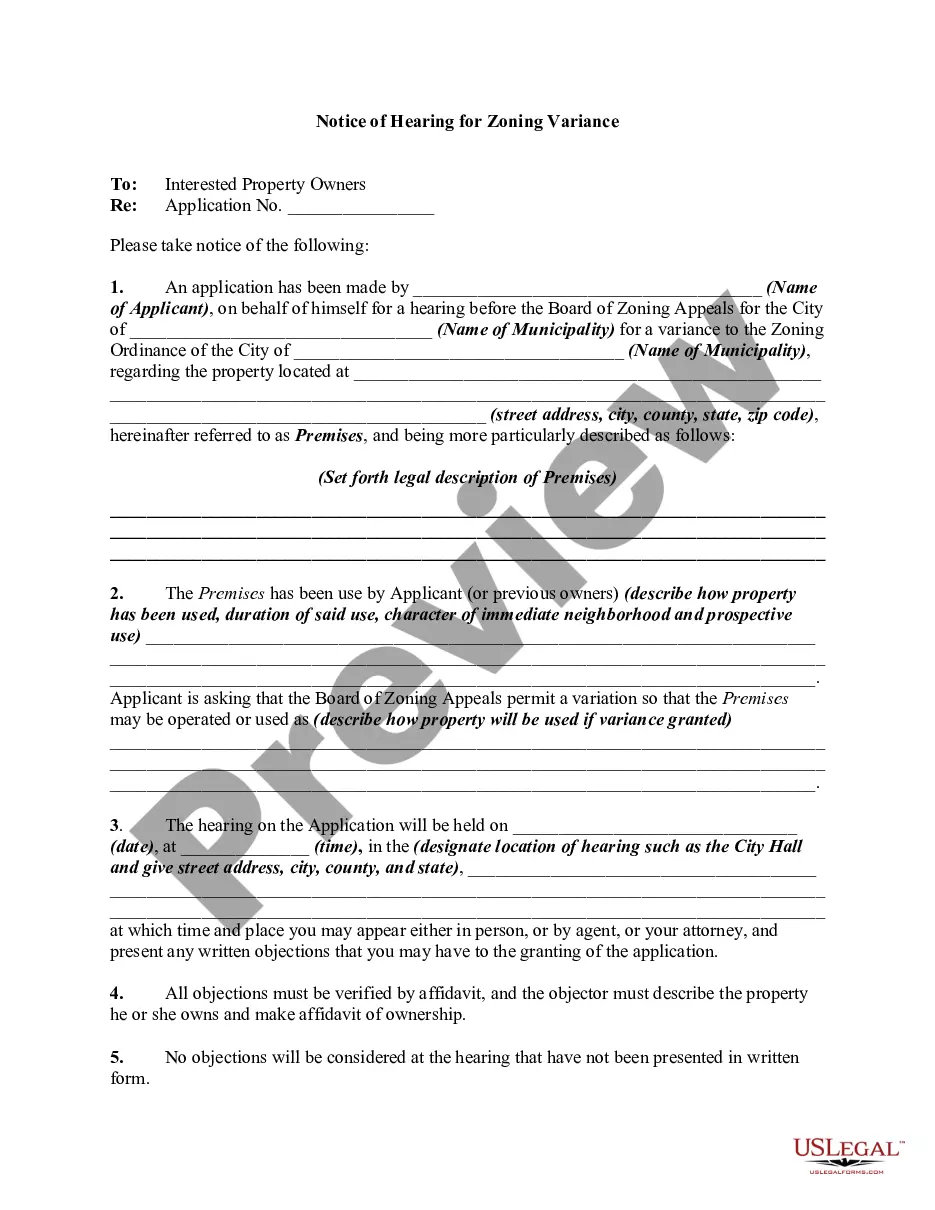
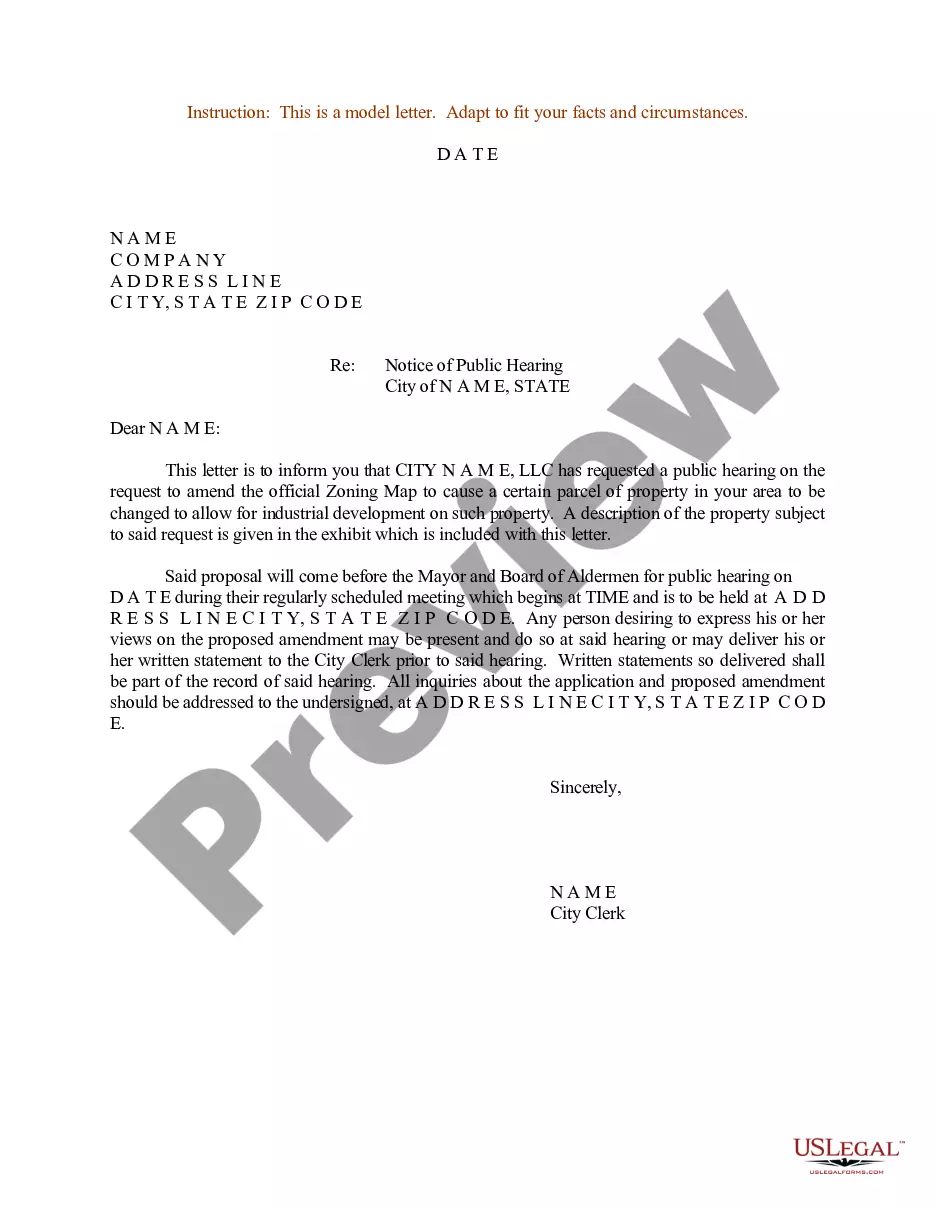
How to fill out Notice Of Hearing For Variance Before Board Of Zoning Appeals - Notice To Be Sent By Applicant To Interested Property Owners?
It’s well known that you cannot become a legal expert instantly, nor can you master how to swiftly create a Notice Variance Template With Calculator without possessing a specific skill set.
Drafting legal documents is a lengthy process that demands a certain level of education and expertise. So why not entrust the creation of the Notice Variance Template With Calculator to the experts.
With US Legal Forms, one of the most extensive libraries of legal documents, you can discover everything from court filings to templates for internal business communication. We understand the significance of compliance and adherence to federal and state statutes and regulations.
Create a free account and choose a subscription plan to purchase the template.
Select Buy now. Once your payment is processed, you can download the Notice Variance Template With Calculator, complete it, print it, and send or mail it to the appropriate individuals or organizations.
- That’s why, on our platform, all forms are region-specific and current.
- Start by visiting our website and obtain the form you require in just a few minutes.
- Locate the form you need using the search bar at the top of the page.
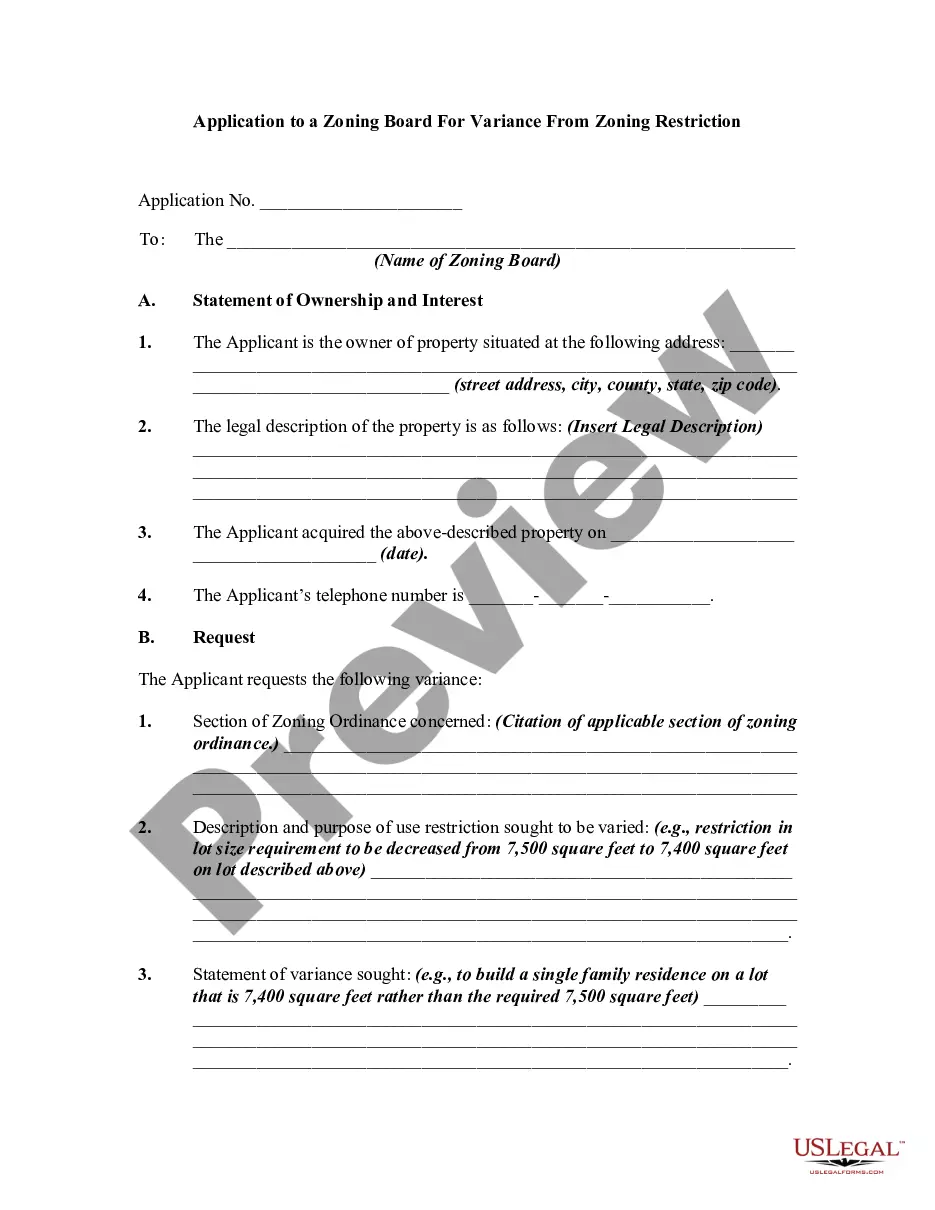
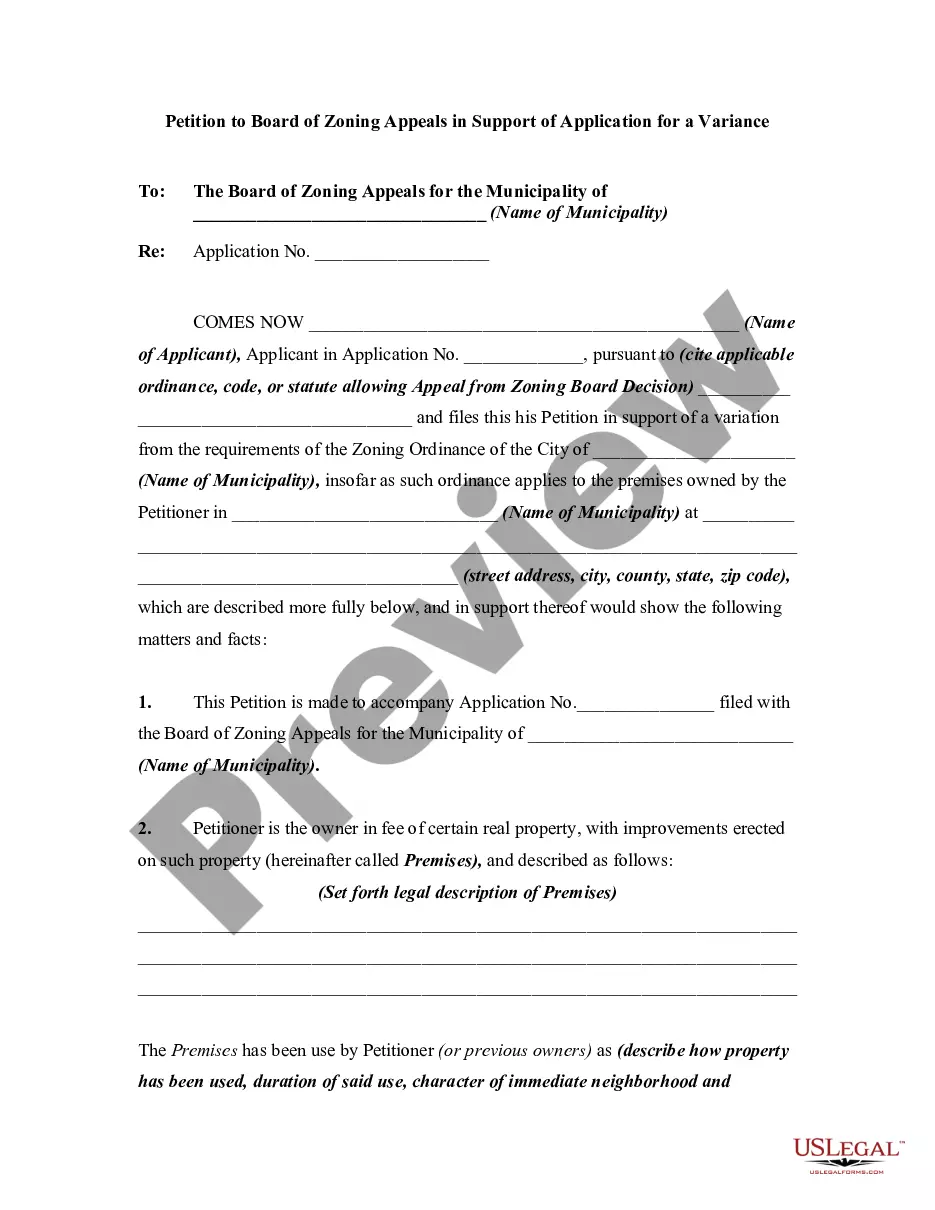
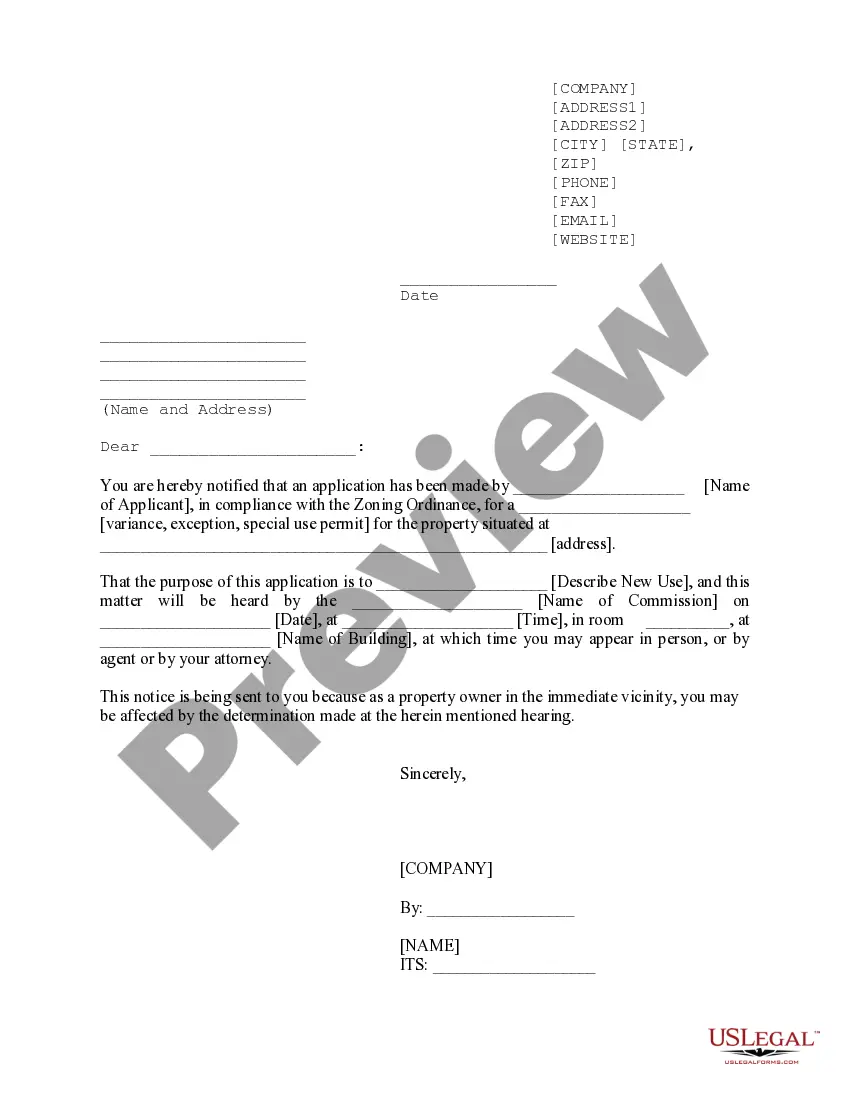
- Preview it (if this option is available) and read the accompanying description to ascertain whether the Notice Variance Template With Calculator is what you’re looking for.
- If you require another template, begin your search anew.
Form popularity
FAQ
It's equal to the actual result subtracted from the forecast number. If the units are dollars, this gives us the dollar variance. This formula can also work for the number of units or any other type of integer. In the same example as above, the revenue forecast was $150,000 and the actual result was $165,721.
Schedule variance is part of Earned Value Management and helps project managers determine if a project is ahead of or behind schedule and by how much. To calculate SV, subtract your project's planned value (PV) from its earned value (EV): SV = EV ? PV.
Calculate the variance by subtracting the actual amount from the planned amount. So if the budget was $3,600 for an expense in a given month, and you spent only $3,100, then that's a positive variance of $500.
The calculation for sales variance is budgeted sales minus actual sales. This is the only type of variance on the list that is good when it is negative. If your budgeted (or expected) sales total was $1,000 and your actual sales total was $2,000, then your sales variance is -$1,000.
Calculating Variance Variance is calculated by subtracting the budgeted amount from the actual amount and then dividing that number by the budgeted amount. This yields a variance percentage that can be used to identify discrepancies between the budget and actual.