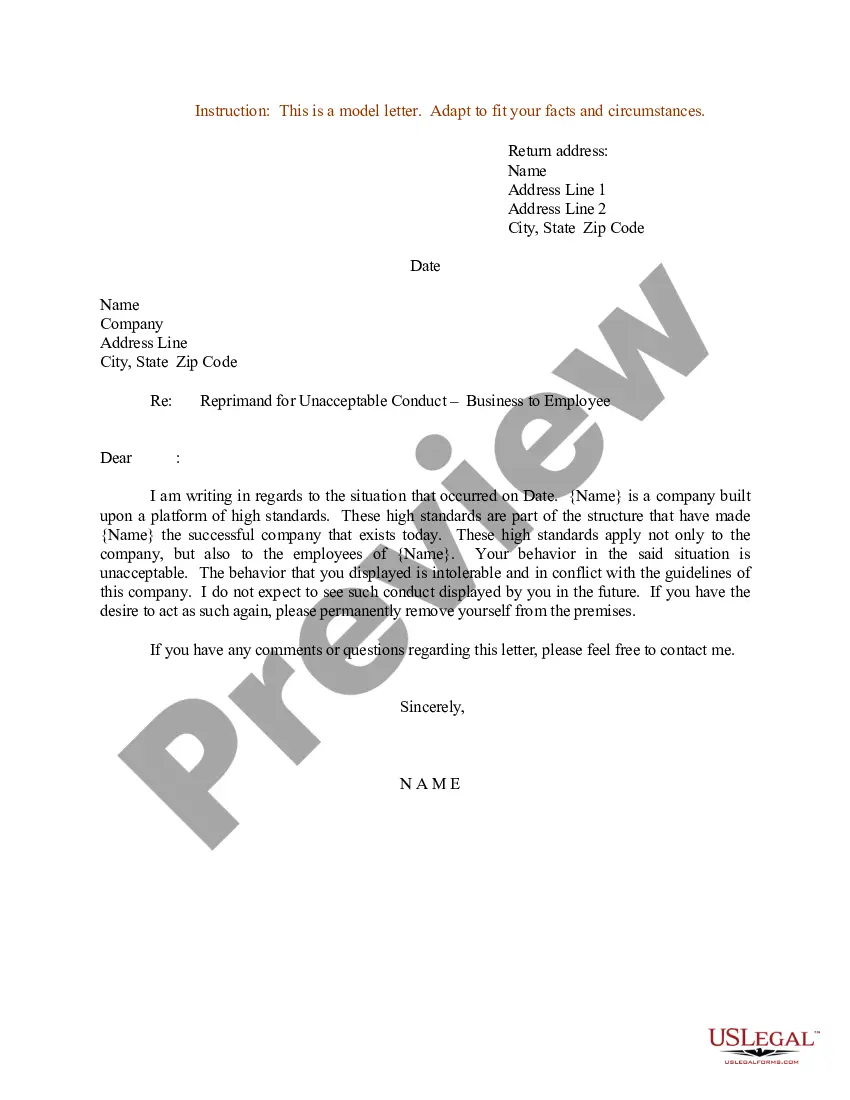
Letter Of Reprimand For Inappropriate Language
Description
Get your form ready online
Our built-in tools help you complete, sign, share, and store your documents in one place.
Make edits, fill in missing information, and update formatting in US Legal Forms—just like you would in MS Word.
Download a copy, print it, send it by email, or mail it via USPS—whatever works best for your next step.
Sign and collect signatures with our SignNow integration. Send to multiple recipients, set reminders, and more. Go Premium to unlock E-Sign.
If this form requires notarization, complete it online through a secure video call—no need to meet a notary in person or wait for an appointment.
We protect your documents and personal data by following strict security and privacy standards.

Make edits, fill in missing information, and update formatting in US Legal Forms—just like you would in MS Word.

Download a copy, print it, send it by email, or mail it via USPS—whatever works best for your next step.

Sign and collect signatures with our SignNow integration. Send to multiple recipients, set reminders, and more. Go Premium to unlock E-Sign.

If this form requires notarization, complete it online through a secure video call—no need to meet a notary in person or wait for an appointment.

We protect your documents and personal data by following strict security and privacy standards.
Looking for another form?
How to fill out Sample Letter For Reprimand For Unacceptable Conduct - Business To Employee?
The Notice of Disciplinary Action for Unacceptable Language presented on this page is a versatile legal template crafted by experienced attorneys in accordance with federal and state statutes and guidelines.
For over 25 years, US Legal Forms has been supplying individuals, organizations, and legal practitioners with more than 85,000 authenticated, state-specific documents for any commercial and personal situation. It’s the fastest, most uncomplicated, and most reliable method to acquire the forms you require, as the service ensures the utmost level of data protection and anti-malware safeguards.
Re-download your documents anytime you need them. Access the My documents section in your profile to retrieve any previously saved forms. Enroll in US Legal Forms to access verified legal templates for all life’s circumstances at your fingertips.
- Search for the document you need and examine it.
- Browse through the file you looked for and preview it or review the form description to verify it meets your specifications. If it does not, use the search bar to find the suitable one. Click Buy Now when you have found the document you require.
- Choose and Log In to your account.
- Select the pricing option that works best for you and create an account. Use PayPal or a credit card to process a quick payment. If you already possess an account, Log In and review your subscription to proceed.
- Obtain the editable template.
- Pick the format you want for your Notice of Disciplinary Action for Unacceptable Language (PDF, Word, RTF) and download the specimen to your gadget.
- Complete and endorse the documents.
- Print out the template to fill it out manually. Alternatively, use an online multifunctional PDF editor to swiftly and accurately complete and endorse your form with a valid signature.
Form popularity
FAQ
A letter of reprimand for inappropriate language is a serious matter, indicating a breach of workplace conduct standards. It serves as a record of behavior that may affect your job stability and relationships with colleagues. While it can be a chance for improvement, ignoring its significance may lead to more severe disciplinary actions. Therefore, it is important to take this notice seriously and adjust your behavior accordingly.
The duration a letter of reprimand for inappropriate language remains on file varies by company policy. Generally, such letters can stay in your personnel file for one to three years. This timeframe depends on the organization's disciplinary procedures and the severity of the misconduct. Understanding your employer’s policy can help you navigate the implications effectively.
A letter of reprimand for inappropriate language can lead to various consequences in your workplace. It typically serves as a formal warning, potentially impacting your future performance reviews and promotions. Additionally, repeated violations may escalate to more severe disciplinary actions, including termination. It's essential to address the issues outlined in the letter promptly to avoid further repercussions.
To write a letter of reprimand for inappropriate language, start by clearly stating the purpose of the letter. Address the individual directly and outline the specific instances of inappropriate language, providing context if necessary. Be factual and professional, avoiding emotional language, and include the consequences of continued behavior. Lastly, offer guidance on how to improve and express the expectation for future communication.
Writing up an employee for profanity involves creating a detailed letter of reprimand for inappropriate language. In this letter, explain the context in which profanity was used and its impact on the workplace. Addressing the behavior directly ensures that the employee understands the seriousness of the issue and outlines the expected standards for professional communication.
To address inappropriate behavior, draft a letter of reprimand that outlines the specific incidents in question. Include the date, time, and context of the behavior, making it clear how it violates company policies. Providing a constructive roadmap for improvement will help the employee understand what is expected and reinforce the importance of professional conduct.
When writing up an employee for using profanity, begin with a formal letter of reprimand for inappropriate language. Clearly cite the instances of profanity and explain why it is unacceptable in the workplace. This letter should guide the employee on expected conduct moving forward, emphasizing the importance of maintaining a respectful environment.
A reprimand typically addresses specific misconduct, like the use of inappropriate language, while a warning letter serves as a broader notification regarding unsatisfactory performance. Both documents can be serious, but a reprimand is often more formal and directed towards correcting behavior. Understanding this difference is crucial when deciding how to address employee issues.
To write a letter of reprimand for inappropriate language, start by clearly stating the purpose of the letter. Include specific examples of the inappropriate language used and the impact it had on the workplace. Be sure to outline the expected behavior going forward and provide any required next steps. This approach fosters clarity and encourages the employee to reflect on their actions.
As mentioned earlier, a letter of reprimand for inappropriate language typically remains on your record for about one to three years. This timeframe can vary based on your organization's policies and the nature of the offense. Always aim to improve your behavior to minimize the impact of such disciplinary actions on your career.