Fiduciary Legal Responsibility For Nonprofit Organizations
Description
Get your form ready online
Our built-in tools help you complete, sign, share, and store your documents in one place.
Make edits, fill in missing information, and update formatting in US Legal Forms—just like you would in MS Word.
Download a copy, print it, send it by email, or mail it via USPS—whatever works best for your next step.
Sign and collect signatures with our SignNow integration. Send to multiple recipients, set reminders, and more. Go Premium to unlock E-Sign.
If this form requires notarization, complete it online through a secure video call—no need to meet a notary in person or wait for an appointment.
We protect your documents and personal data by following strict security and privacy standards.

Make edits, fill in missing information, and update formatting in US Legal Forms—just like you would in MS Word.

Download a copy, print it, send it by email, or mail it via USPS—whatever works best for your next step.

Sign and collect signatures with our SignNow integration. Send to multiple recipients, set reminders, and more. Go Premium to unlock E-Sign.

If this form requires notarization, complete it online through a secure video call—no need to meet a notary in person or wait for an appointment.

We protect your documents and personal data by following strict security and privacy standards.
Looking for another form?
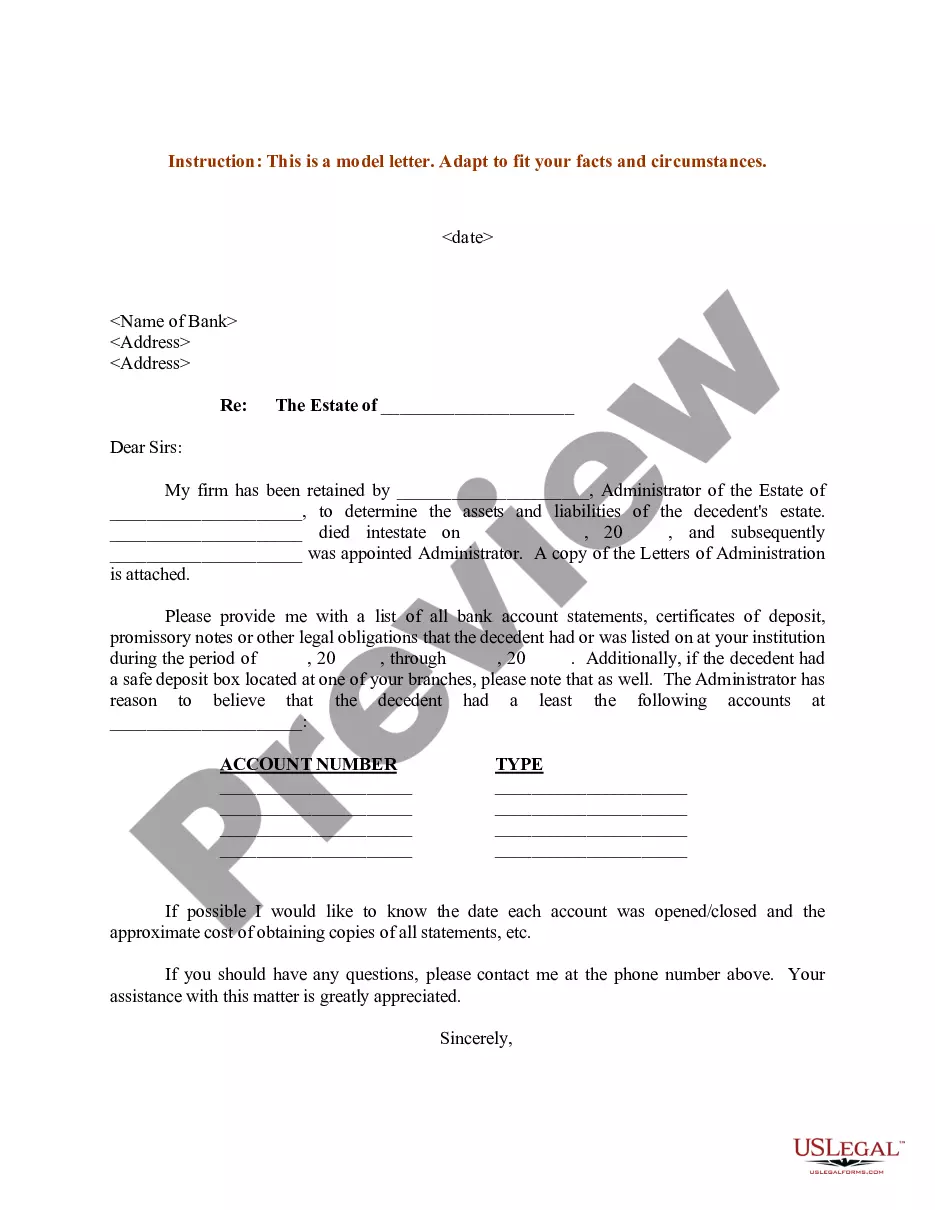
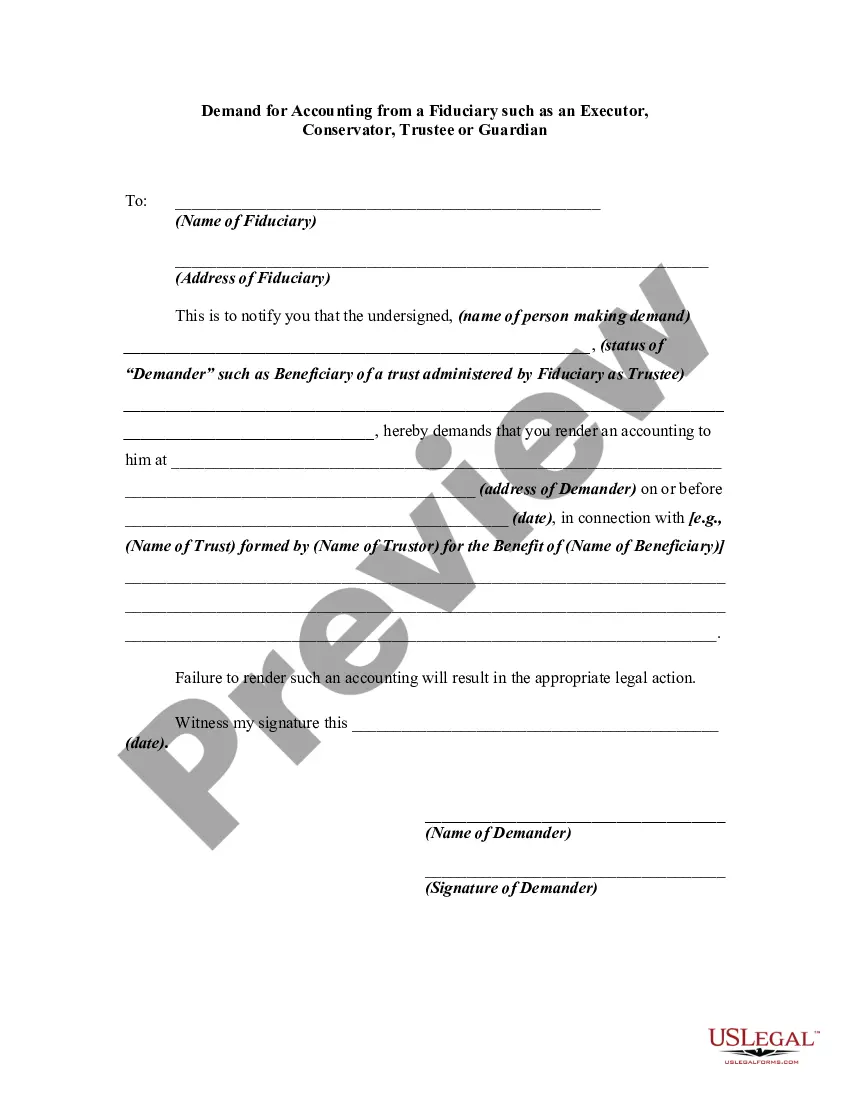
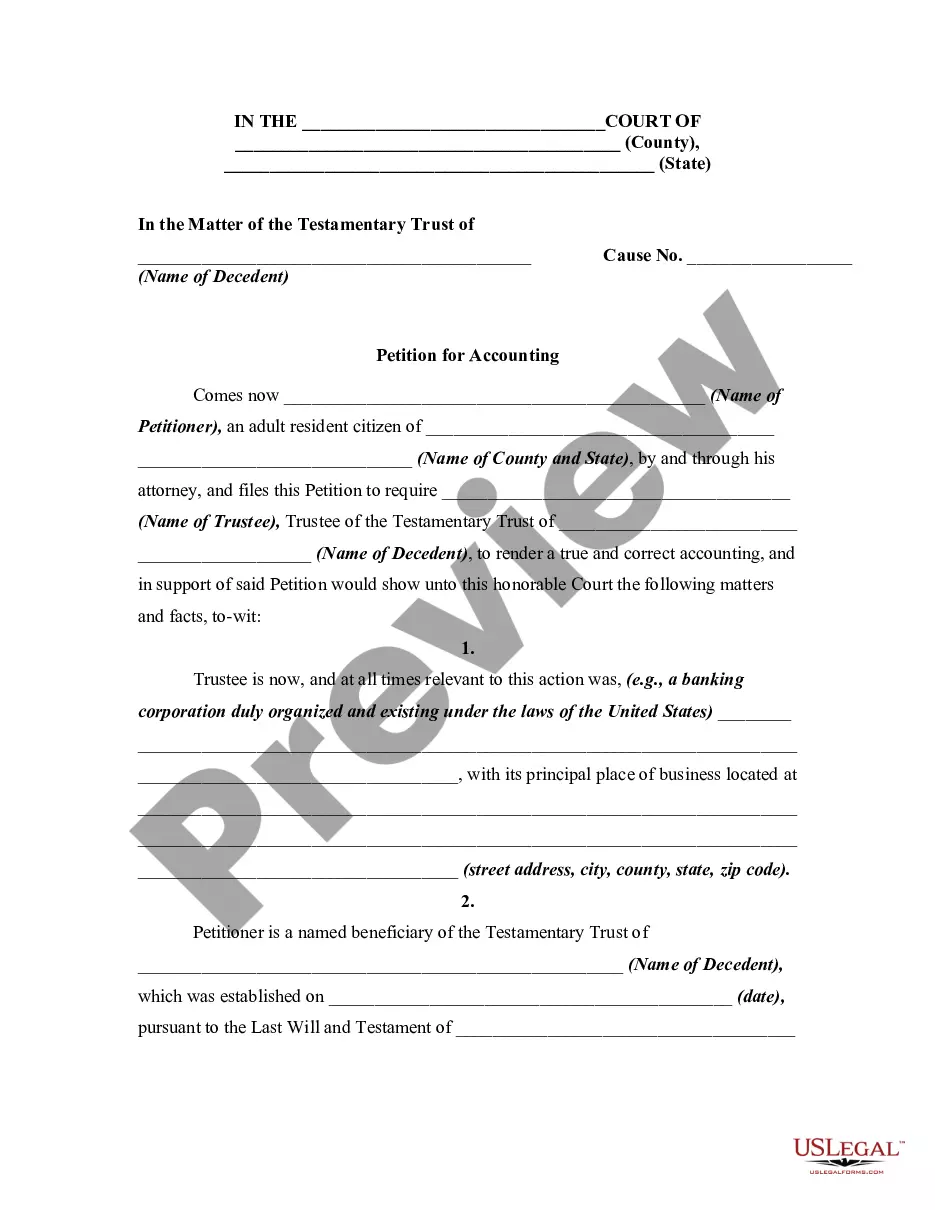
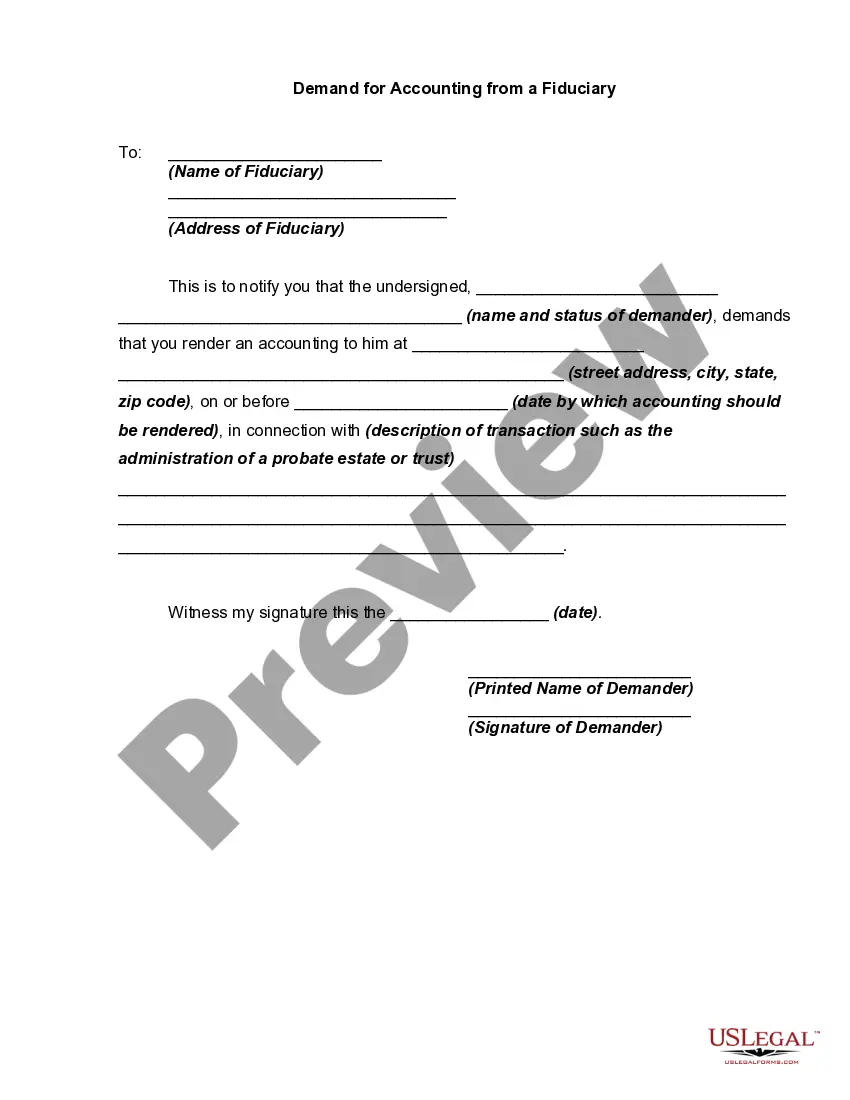
How to fill out Demand For Accounting From A Fiduciary Such As An Executor, Conservator, Trustee Or Legal Guardian?
The Fiduciary Legal Obligation For Nonprofit Entities you observe on this page is a reusable official template created by skilled attorneys in accordance with federal and local statutes and regulations.
For over 25 years, US Legal Forms has supplied individuals, organizations, and legal experts with more than 85,000 authenticated, state-specific documents for any commercial and personal circumstance. It’s the quickest, simplest, and most dependable method to obtain the paperwork you require, as the service ensures the utmost level of data protection and anti-malware safeguards.
Select the format you desire for your Fiduciary Legal Obligation For Nonprofit Entities (PDF, Word, RTF) and download the document onto your device.
- Search for the document you require and verify it.
- Browse through the example you found and look it over or inspect the form description to ensure it meets your requirements. If it doesn’t, utilize the search bar to find the appropriate one. Click Buy Now once you have identified the required template.
- Register and Log In.
- Choose the pricing option that fits you and set up an account. Use PayPal or a credit card to execute a swift transaction. If you already have an account, Log In and verify your subscription to continue.
- Obtain the editable template.
Form popularity
FAQ
Proving a breach of fiduciary duty can be challenging, particularly for fiduciary legal responsibility for nonprofit organizations. You must demonstrate that the fiduciary had a duty to act in the organization's best interest, and that they failed in this duty. This often requires clear evidence of negligence or misconduct, which can be complex to collect. Utilizing resources like US Legal Forms can help you navigate these legal waters effectively and ensure you understand your rights and responsibilities.
The three legal fiduciary duties of nonprofit board members are the duty of care, duty of loyalty, and duty of obedience. The duty of care requires board members to make informed decisions that align with the fiduciary legal responsibility for nonprofit organizations. The duty of loyalty means prioritizing the organization's interests over personal gain. Lastly, the duty of obedience involves ensuring the organization adheres to its mission and complies with laws.
Three examples of breaches of fiduciary duty include self-dealing, misusing organizational funds, and failing to disclose conflicts of interest. A board member might engage in self-dealing by approving contracts that benefit personally, which undermines their fiduciary legal responsibility for nonprofit organizations. Misusing funds can also happen when individuals do not follow proper procedures for expenditures. Addressing these issues proactively can safeguard the organization’s integrity.
Yes, fiduciaries can be held personally liable if they breach their fiduciary duties. This means that if a board member or officer fails to act in the best interest of the nonprofit, they may face legal consequences. Understanding the fiduciary legal responsibility for nonprofit organizations is crucial to avoiding such liability. Organizations can benefit from using legal platforms like US Legal Forms for guidance on these matters.
In the United States, nonprofit organizations are primarily investigated by state attorneys general and regulatory agencies. These entities examine compliance with laws regarding fiduciary legal responsibility for nonprofit organizations. Additionally, the IRS monitors tax-exempt organizations to ensure they follow regulations. Through these investigations, stakeholders can be assured that nonprofits fulfill their roles responsibly.
The legal responsibility for a nonprofit typically falls on its board of directors and officers. These individuals must adhere to the fiduciary legal responsibility for nonprofit organizations, ensuring the organization follows its mission and complies with applicable laws. Board members must act in the best interests of the organization and its stakeholders. This commitment helps maintain public trust in nonprofit entities.
Nonprofits are held accountable by various entities, including government agencies, donors, and the public. State attorneys general oversee nonprofit compliance with laws, ensuring that fiduciary legal responsibility for nonprofit organizations is upheld. Additionally, donors often require transparency and accountability through reporting and audits. Ultimately, the community plays a vital role by monitoring the actions of these organizations.
The five fiduciary duties include the duty of care, duty of loyalty, duty of obedience, duty to disclose, and duty to act in good faith. These responsibilities outline how board members must oversee the nonprofit’s activities effectively. By adhering to these duties, nonprofit leaders fulfill their fiduciary legal responsibility, ensuring professionalism and ethical standards. If you want a deeper understanding or resources, consider exploring USLegalForms for guidance.
An example of fiduciary legal responsibility for nonprofit organizations can be seen in a board member’s obligation to manage the organization's financial assets wisely. For instance, if a board member oversees investment decisions, they must ensure those decisions align with the nonprofit’s mission and maximize its financial health. This responsibility requires transparency and accountability, fostering trust among stakeholders and the community.
Fiduciary legal responsibility for nonprofit organizations primarily includes two types of duties: the duty of care and the duty of loyalty. The duty of care requires board members to make informed decisions that benefit the organization's mission. Meanwhile, the duty of loyalty emphasizes acting in the best interests of the nonprofit, avoiding conflicts of interest. Understanding these duties is essential for effective governance and ensuring ongoing compliance.