Form Counter Offer For More Money
Description
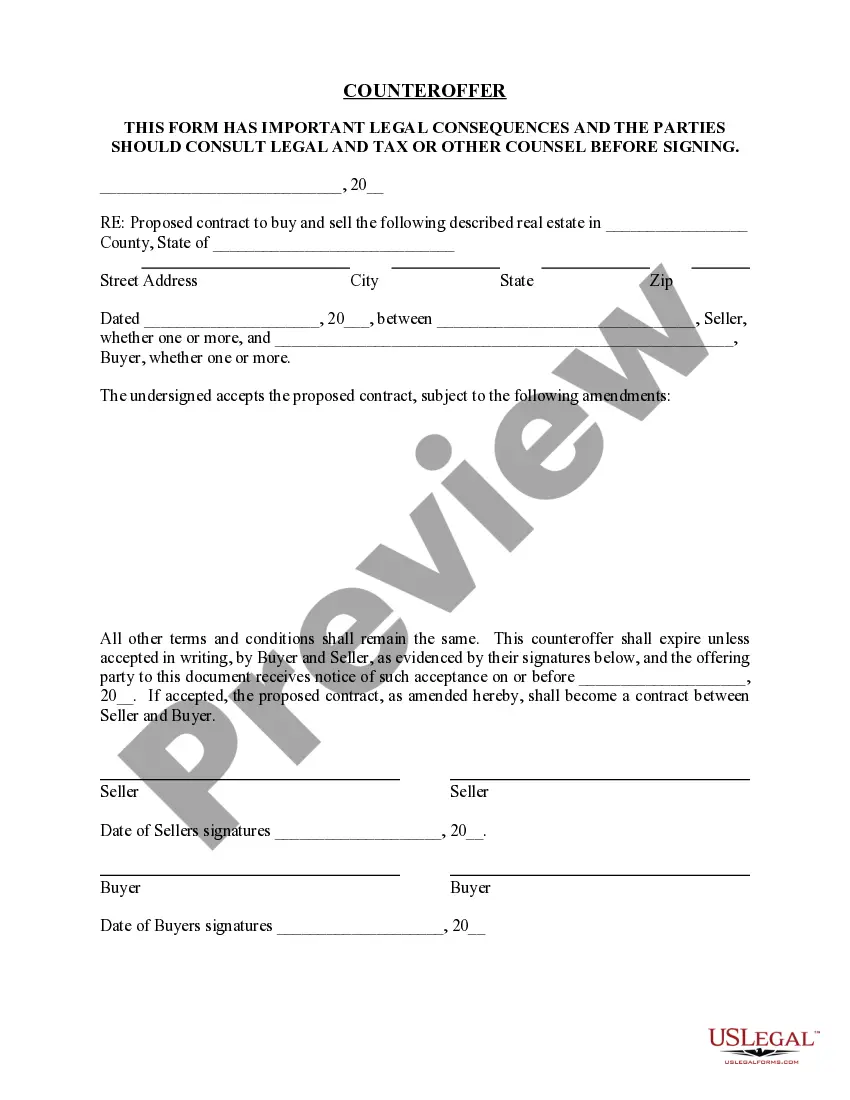
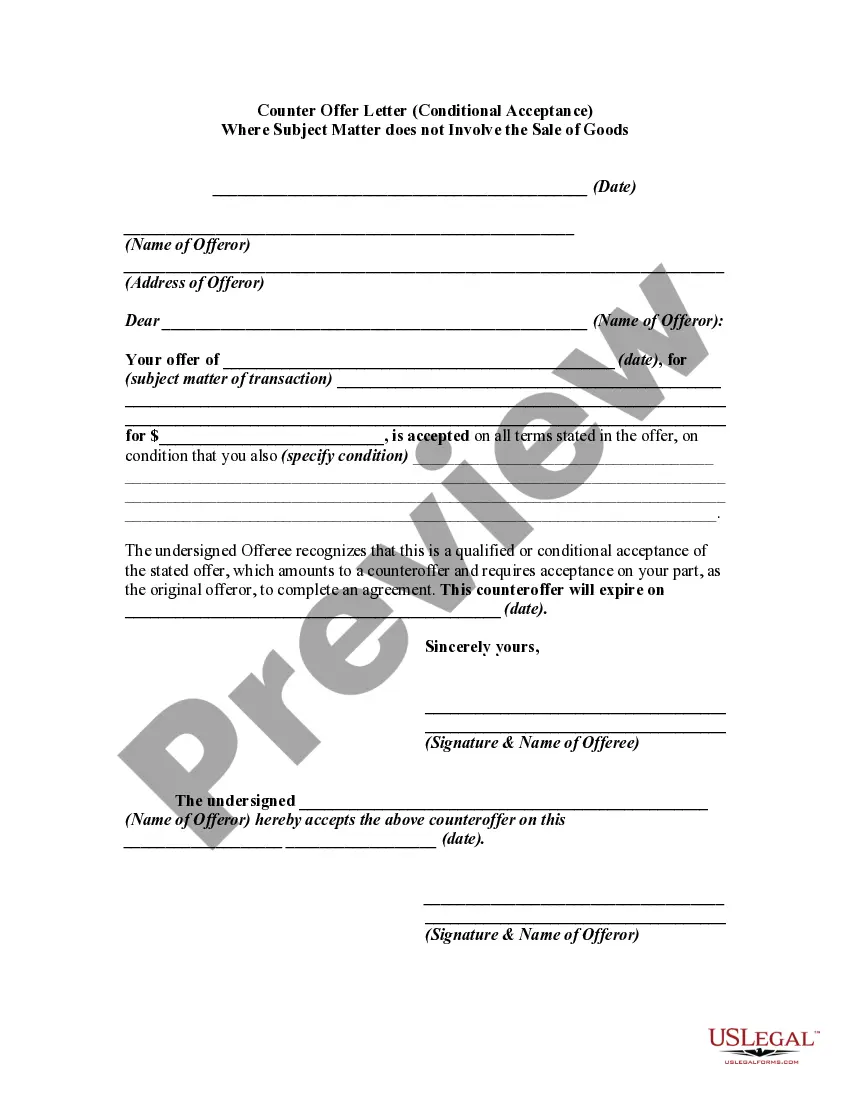
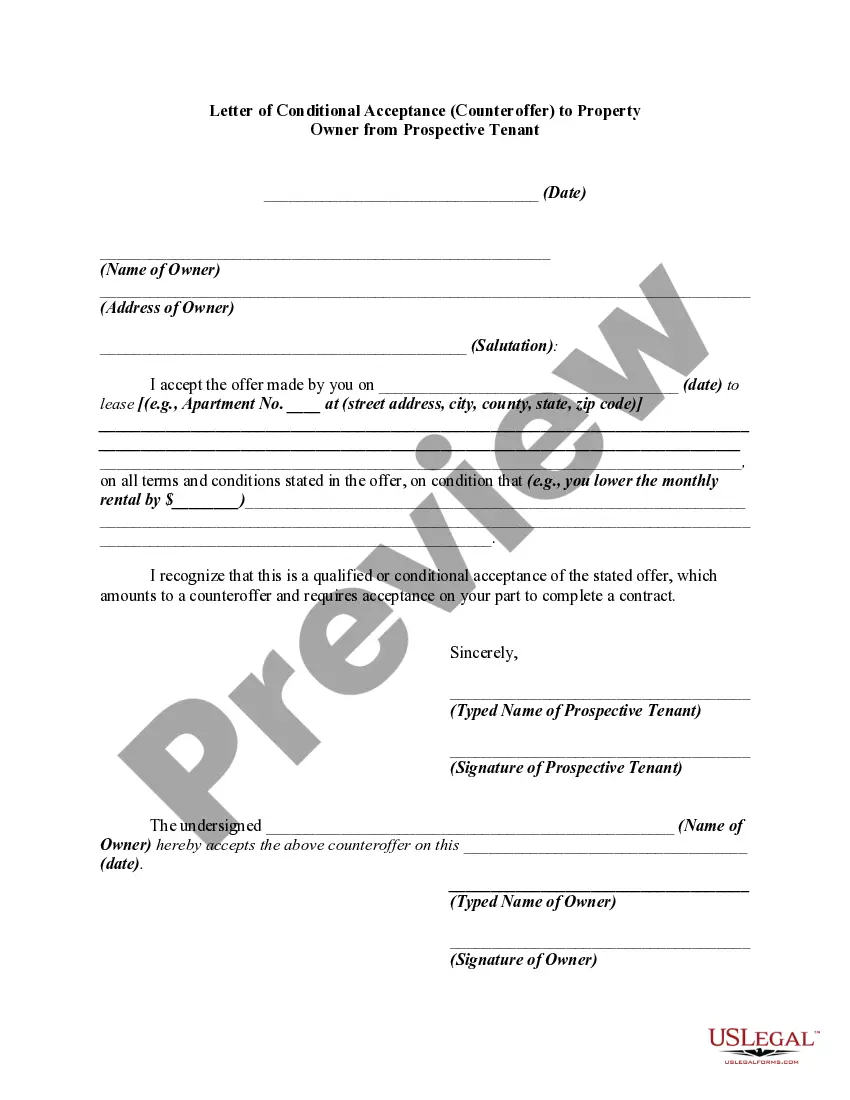
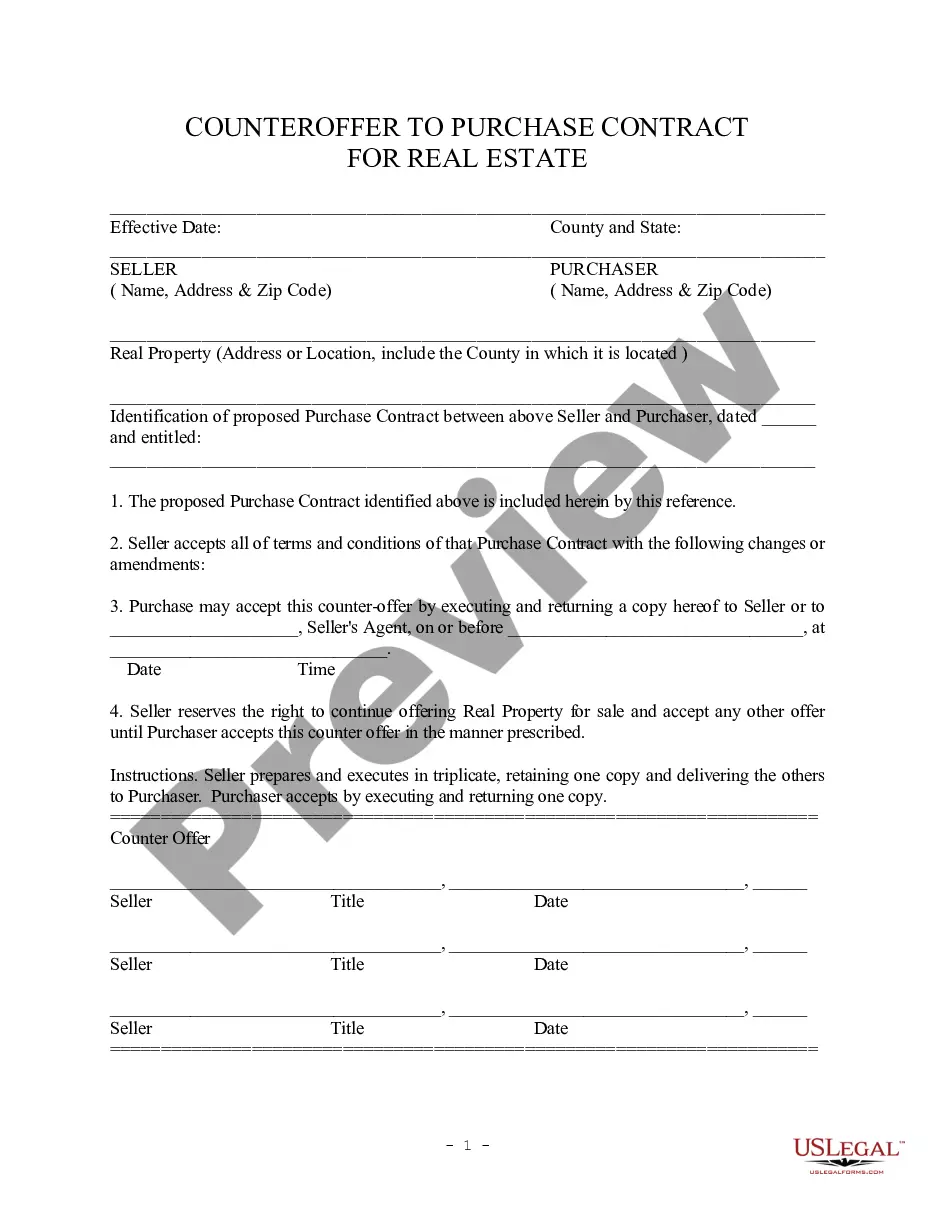
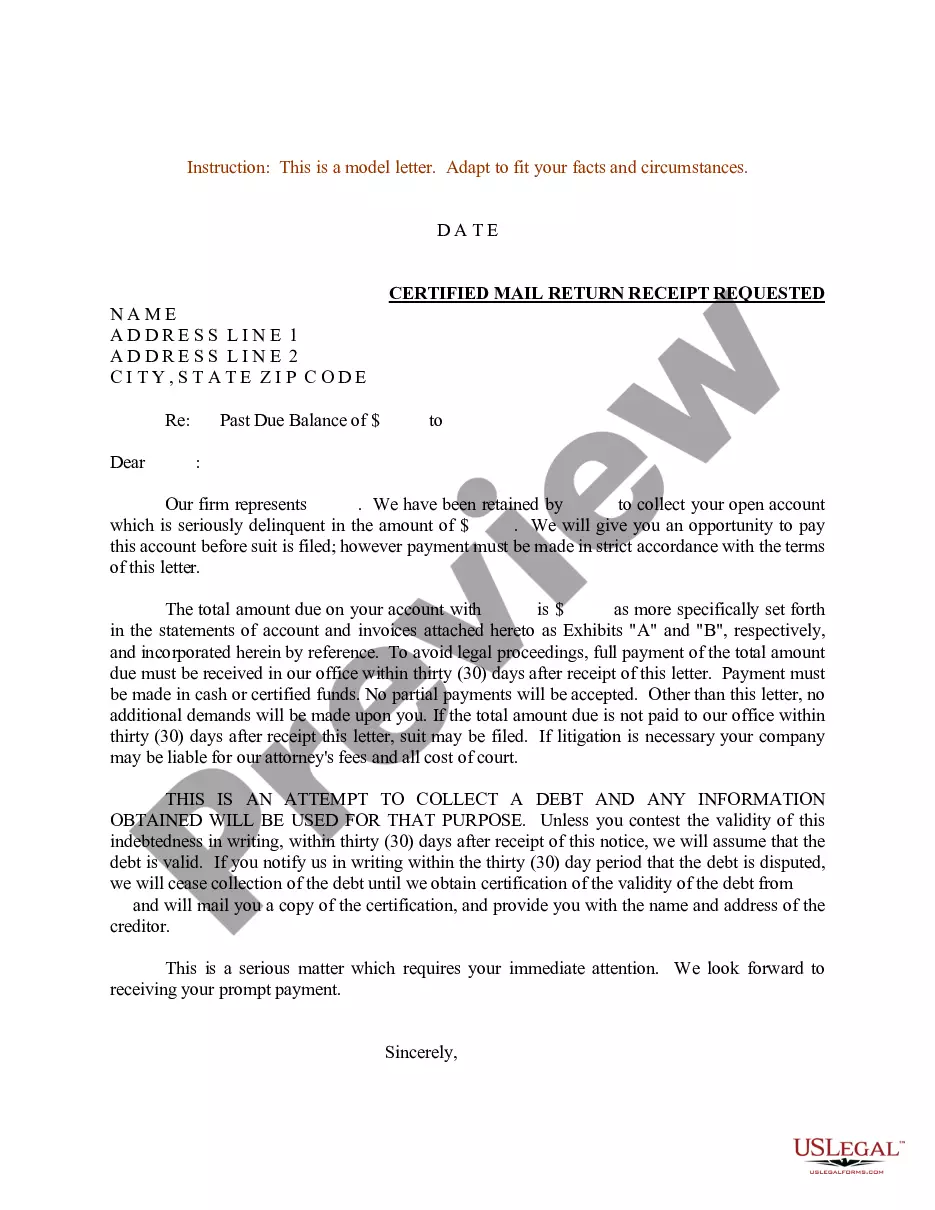
How to fill out Counter Offer Letter Regarding Sale Of Property?
Finding a reliable spot to obtain the latest and pertinent legal forms is half the battle when dealing with bureaucracy.
Locating the appropriate legal documents requires precision and careful attention, which is why it's essential to gather samples of Form Counter Offer For More Money exclusively from credible sources, such as US Legal Forms. An incorrect template will squander your time and delay the situation at hand.
Eliminate the complications associated with your legal documentation. Explore the vast US Legal Forms catalog where you can discover legal templates, assess their applicability to your situation, and download them instantly.
- Utilize the catalog navigation or the search feature to find your template.
- Access the form's description to determine if it meets the criteria of your jurisdiction and location.
- View the form preview, if available, to confirm that the template is the one you seek.
- Return to the search results and find the appropriate document if the Form Counter Offer For More Money does not satisfy your requirements.
- When you are confident in the form's suitability, download it.
- If you are an authorized user, click Log in to verify and access your selected forms in My documents.
- If you do not have an account yet, click Buy now to acquire the form.
- Select the pricing plan that aligns with your needs.
- Proceed with the registration to complete your purchase.
- Finalize your transaction by choosing a payment method (credit card or PayPal).
- Select the document format for downloading the Form Counter Offer For More Money.
- Once you have the form on your device, you can edit it using the editor or print it out and fill it in manually.
Form popularity
FAQ
A 20% counter offer may be considered high, but context matters. Evaluate your current salary, the industry standards, and the specific circumstances of your job offer. If your contributions warrant it, confidently present your case with clear evidence, integrating the term 'form counter offer for more money' to frame your ask. Ultimately, ensure your request aligns with your value and the market expectations.
To write a counter offer for salary increase, start by gathering information about your current salary and the market rates for your position. Clearly state your case for requesting a higher salary, including your contributions and any unique skills you bring. Use a polite and professional tone, and consider including the phrase 'form counter offer for more money' to emphasize your request. Finally, propose a specific salary amount or percentage to guide the negotiation.
To politely ask for a higher offer, you should first express gratitude for the initial proposal. Then, clearly explain your reasons for seeking a higher amount. You can mention the value you bring and how it aligns with their needs. Finally, present your counter offer by using a form counter offer for more money, which can effectively structure your request and facilitate a productive conversation.
When you decide to form a counter offer for more money, it's wise to consider the market value and your initial proposal. Ideally, a counter offer should be about 10% to 20% higher than your initial request, depending on the context of the negotiation. This increment not only reflects your worth but also opens a dialogue for further negotiation. Using uslegalforms, you can easily craft a counter offer that clearly communicates your desired amount while maintaining professionalism.
Now that you defined your desired compensation, you can submit your counteroffer. You may do this verbally by meeting with the employer in person or speaking over the phone. Otherwise, you can detail your request in a formal letter or email and set up a time to negotiate the offer if necessary.
If you wait to negotiate until you get the offer, a ?reasonable? counteroffer usually means $5,000-10,000, or 5-10% more than the company offers. When an offer is around that range but lower than what you're looking for, this is a good time to negotiate.
How to Negotiate a Salary Counter Offer Pause before responding. Ask a follow-up question. Turn the salary expectation question around. Get the salary range. Conduct comparative salary research. Prepare an organized argument. Ask for a 10-to-20-percent bump. Look for non-salary levers to pull.
After careful consideration, we have decided to accept your counter offer. We are happy to match your salary request of $ [X] per year. In addition, we are also willing to provide you with a signing bonus of $ [X]. We hope that this offer is acceptable to you, and we look forward to welcoming you to our team.
Your first counteroffer: Do your skills exceed what's required of you? Start with a figure that's no more than 10-20% above their initial offer. Remember, you're applying for entry level, and you shouldn't expect something on the higher range. Consider negotiating lower if 10-20% places you above the average.