Trust For Beneficiary
Description
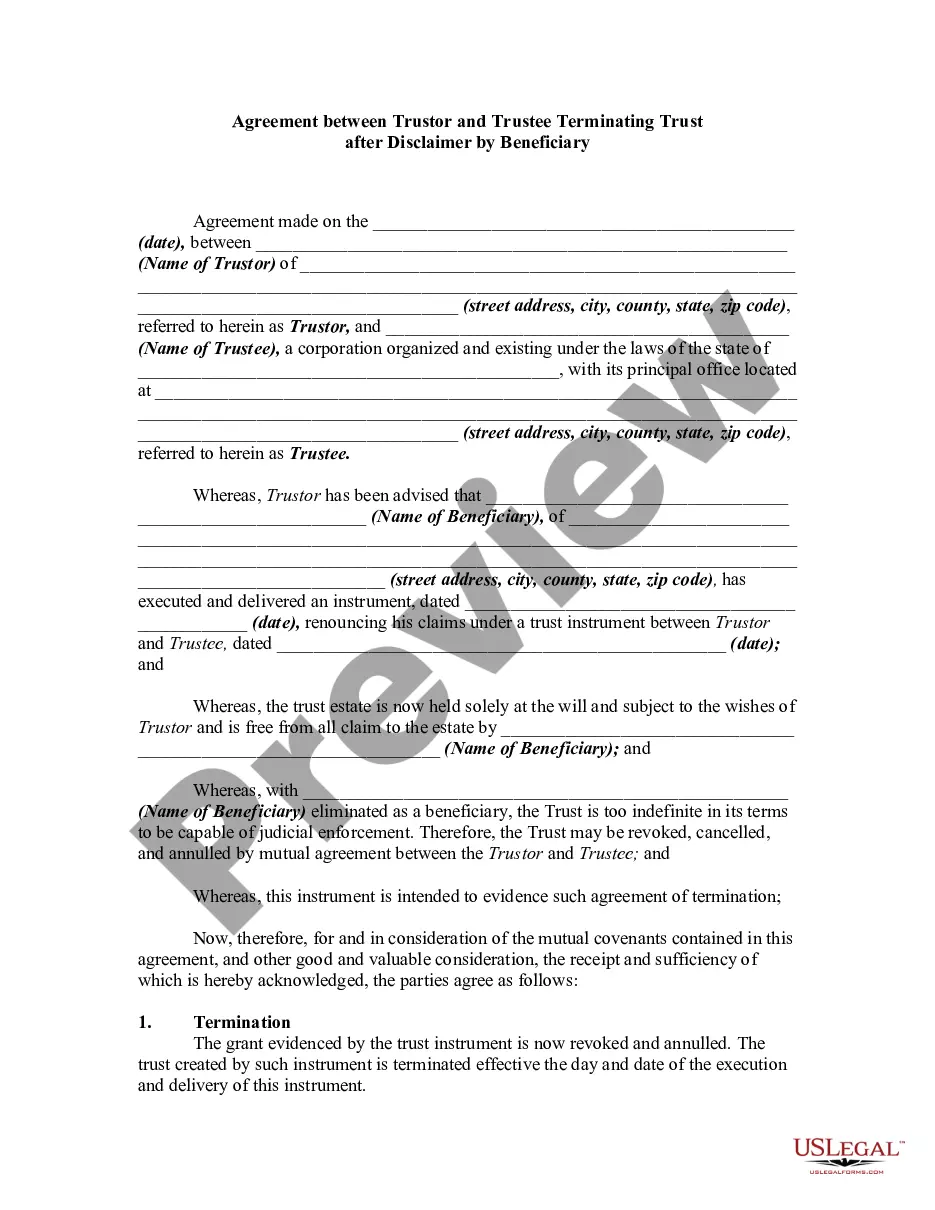
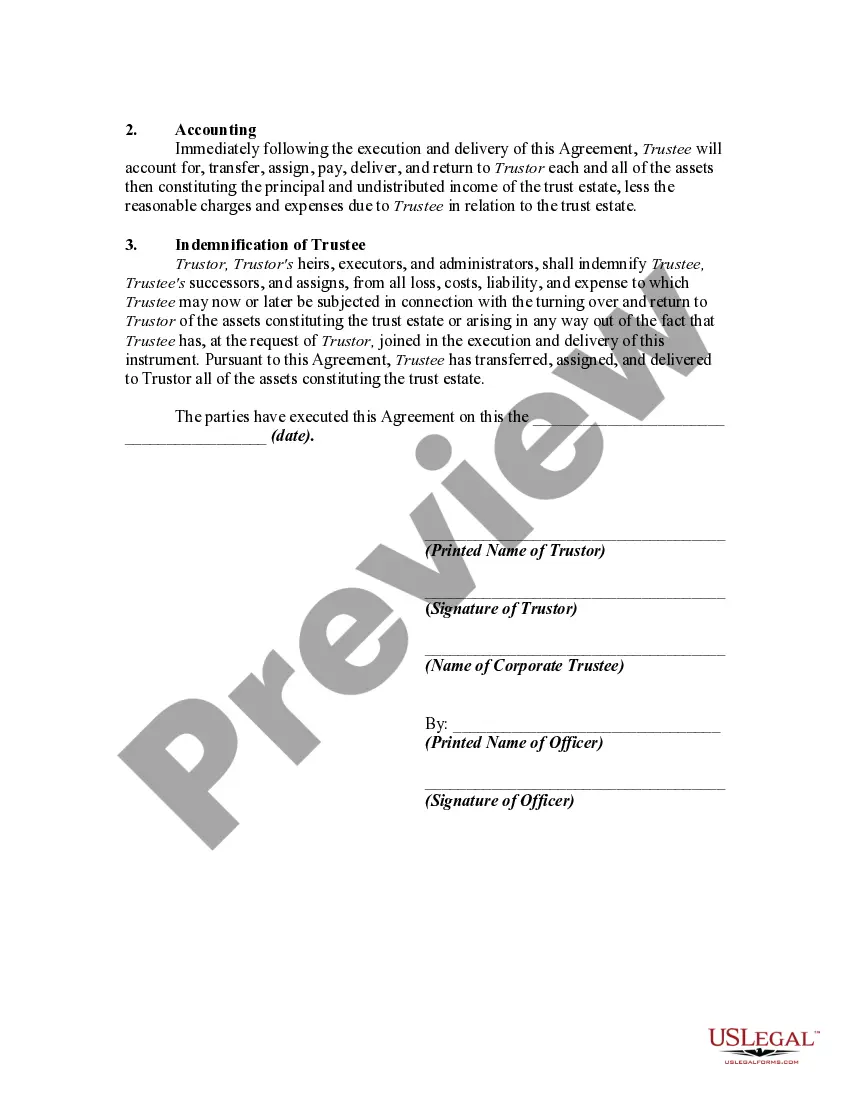
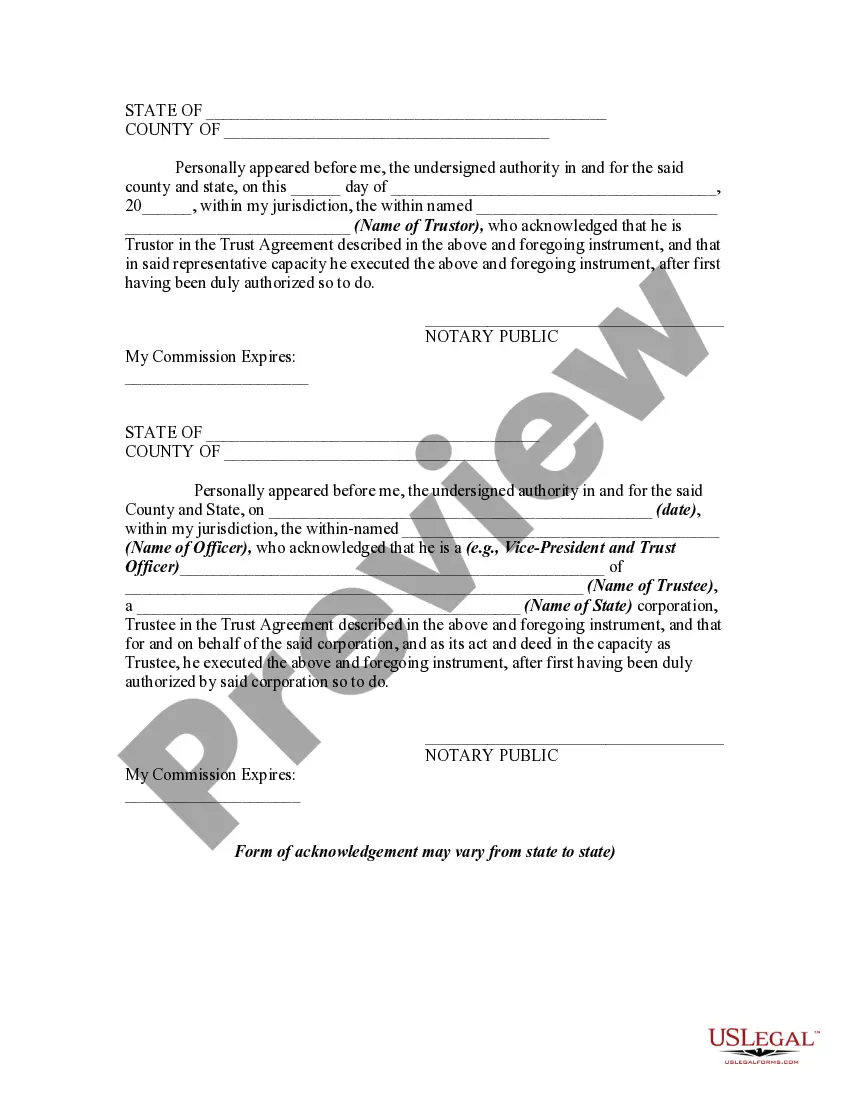
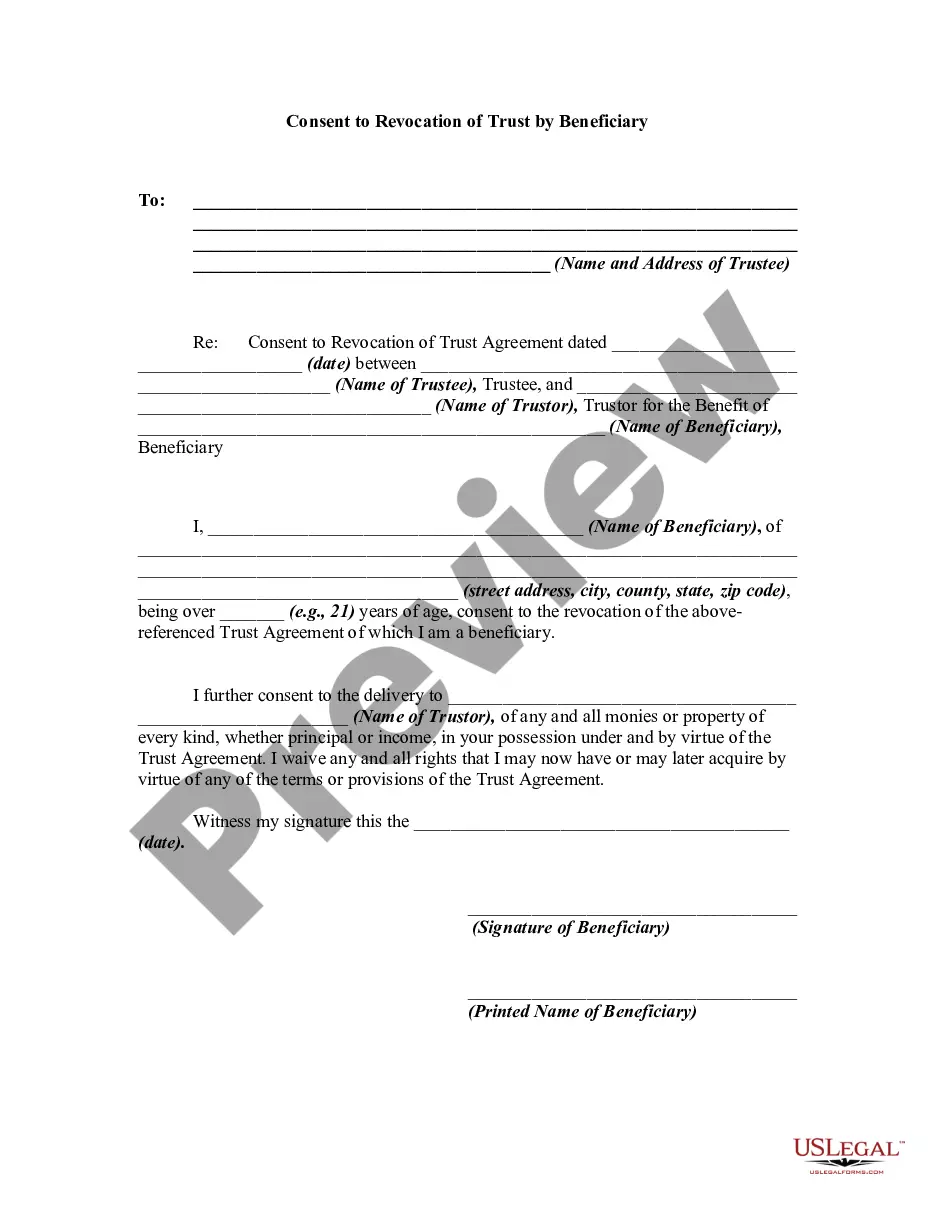
Get your form ready online
Our built-in tools help you complete, sign, share, and store your documents in one place.
Make edits, fill in missing information, and update formatting in US Legal Forms—just like you would in MS Word.
Download a copy, print it, send it by email, or mail it via USPS—whatever works best for your next step.
Sign and collect signatures with our SignNow integration. Send to multiple recipients, set reminders, and more. Go Premium to unlock E-Sign.
If this form requires notarization, complete it online through a secure video call—no need to meet a notary in person or wait for an appointment.
We protect your documents and personal data by following strict security and privacy standards.

Make edits, fill in missing information, and update formatting in US Legal Forms—just like you would in MS Word.

Download a copy, print it, send it by email, or mail it via USPS—whatever works best for your next step.

Sign and collect signatures with our SignNow integration. Send to multiple recipients, set reminders, and more. Go Premium to unlock E-Sign.

If this form requires notarization, complete it online through a secure video call—no need to meet a notary in person or wait for an appointment.

We protect your documents and personal data by following strict security and privacy standards.
Looking for another form?






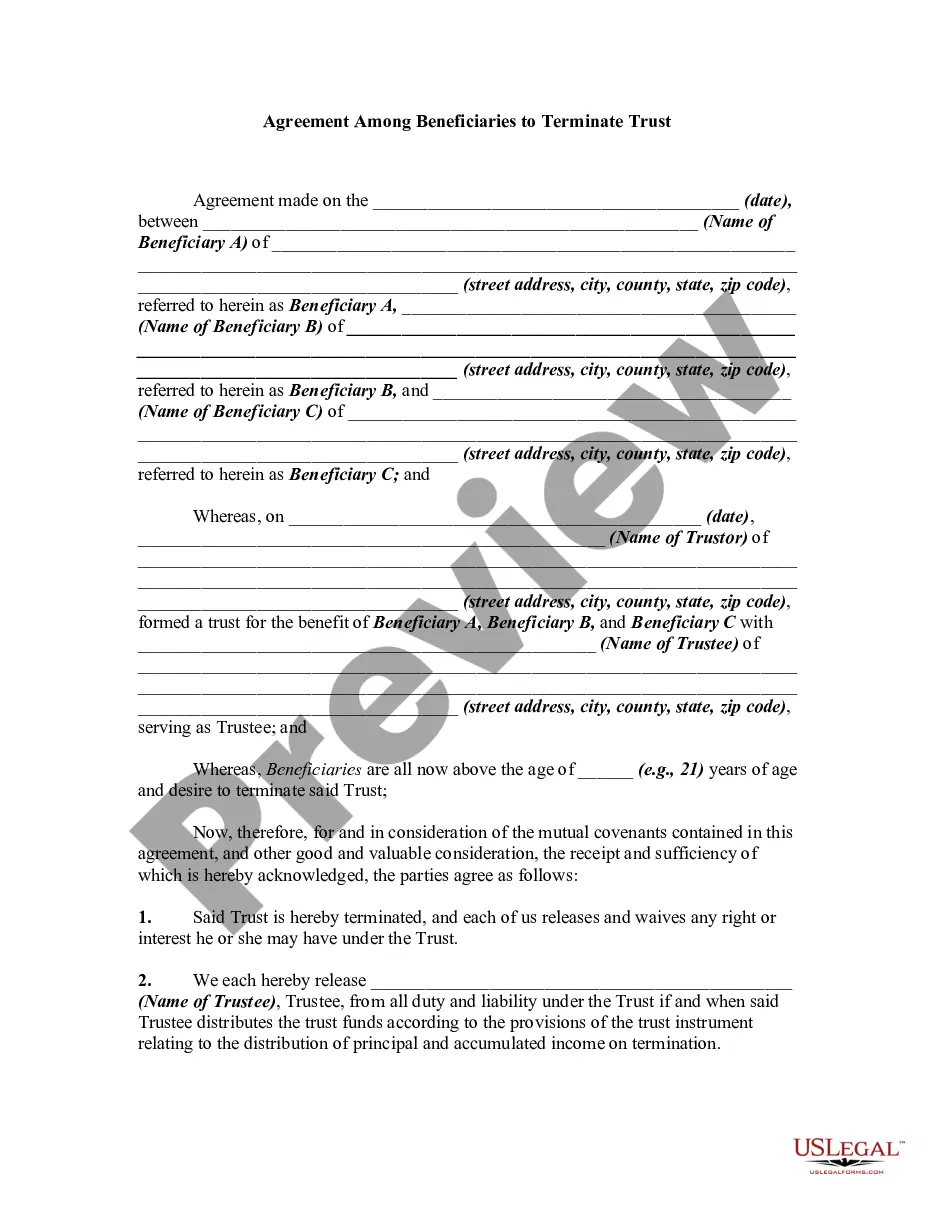
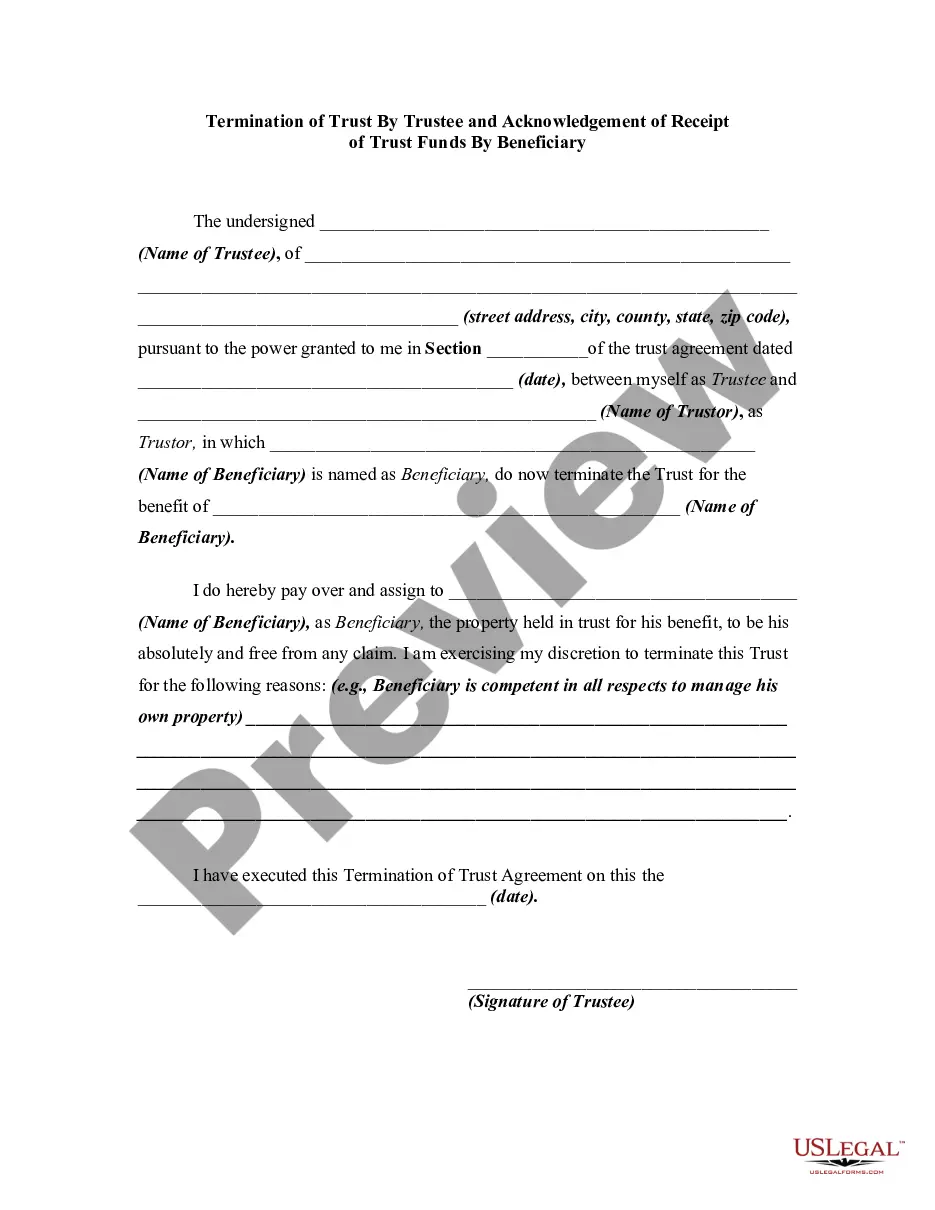
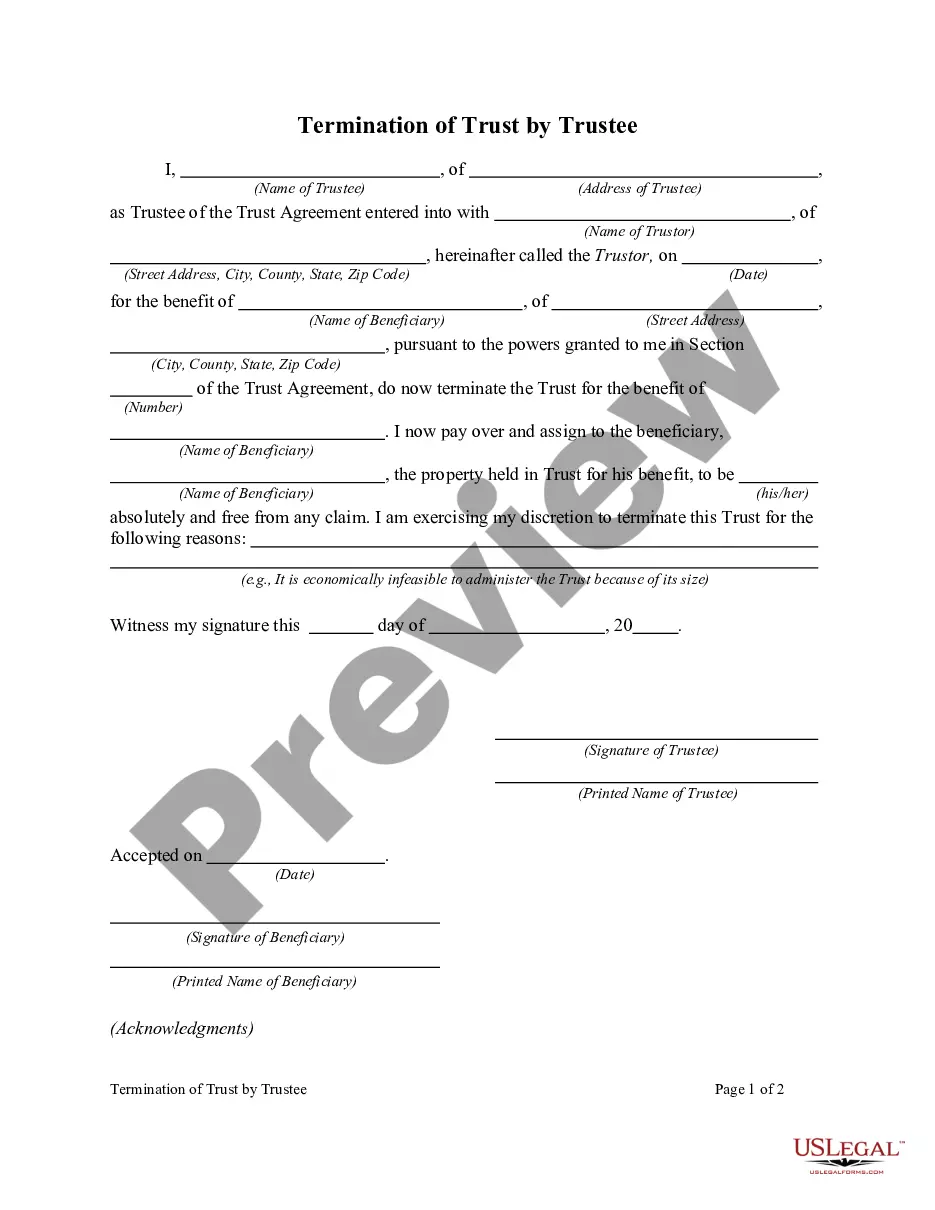
How to fill out Agreement Between Trustor And Trustee Terminating Trust After Disclaimer By Beneficiary?
Locating a reliable resource to obtain the latest and most pertinent legal templates is a significant part of navigating bureaucracy.
Obtaining the appropriate legal documents requires accuracy and meticulousness, which is why sourcing Trust For Beneficiary templates solely from trustworthy providers, such as US Legal Forms, is crucial. An incorrect template could squander your time and delay your situation.
Once you have the document on your device, you can modify it using the editor or print it out for manual completion. Remove the hassle associated with your legal paperwork. Explore the extensive US Legal Forms library to find legal templates, assess their relevance to your situation, and download them instantly.
- Utilize the directory browsing or search bar to find your template.
- Review the document’s description to determine if it meets the needs of your jurisdiction and locale.
- Access the form preview, if available, to confirm the document is the one you need.
- Continue searching to locate a suitable template if the Trust For Beneficiary does not fulfill your requirements.
- Once you are confident about the document’s applicability, download it.
- If you are a registered user, click Log in to verify and access your selected documents in My documents.
- If you don’t have an account yet, click Buy now to acquire the document.
- Choose the payment option that aligns with your needs.
- Proceed to register to complete your transaction.
- Conclude your purchase by selecting a payment method (credit card or PayPal).
- Choose the file format for downloading Trust For Beneficiary.
Form popularity
FAQ
A trust for beneficiaries is a legal arrangement that allows a trustee to hold and manage assets on behalf of beneficiaries. The trust specifies how and when the assets are distributed, ensuring that beneficiaries receive their benefits according to your wishes. It protects the assets from potential creditors and ensures that they are used according to your instructions. By using our Legal Forms platform, you can easily create a trust tailored to your needs, ensuring your beneficiaries are well taken care of.
Filling out a beneficiary designation form for a trust requires careful attention to detail. Begin by identifying the trust and specifying its beneficiaries with their names and personal details. Indicate what percentage of the trust assets each beneficiary will receive, ensuring that your wishes are clear. Utilizing a reliable platform like USLegalForms can simplify this process, providing templates that guide you in creating an effective beneficiary designation for your trust.
To fill a beneficiary form, start by identifying the type of beneficiary you are naming, whether for a trust or account. Provide the full name, address, and relationship to you, ensuring each detail is precise. Include information about the portion or specific items that each beneficiary will receive. Double-check for clarity and completeness, as proper completion of this form is essential for effective management of the trust for beneficiary.
Setting up a trust for a beneficiary involves several important steps. First, choose a reliable trustee who will manage the trust's assets in accordance with your wishes. Next, draft a trust document that clearly outlines the beneficiaries, what assets they will inherit, and how those assets should be distributed. Finally, fund the trust by transferring assets into it, making sure the trust for beneficiary is legally established and protected.
To fill out a beneficiary form for a trust, begin by gathering the necessary information about the trust and the beneficiaries. Clearly list the names and contact details of each beneficiary, ensuring accuracy to avoid any future disputes. Next, indicate the percentage or portion each beneficiary will receive from the trust's assets. Finally, review the completed form for any errors before submission, ensuring it aligns with your intentions for the trust for beneficiary.
To set up a trust for your beneficiaries, begin by identifying your estate planning goals and who you want to benefit. Next, choose the type of trust that aligns with your objectives, whether a revocable or irrevocable trust. Consulting online legal resources, such as US Legal Forms, can guide you through the process and help you create the necessary documents. Taking these steps ensures that you effectively establish a trust for beneficiaries that meets your needs.
While trusts offer many benefits, there are also potential disadvantages for beneficiaries. For instance, a trust can restrict immediate access to assets, thereby delaying personal financial decisions. Additionally, some trusts may impose conditions on distributions, which could be burdensome for your beneficiaries. Therefore, it is important to carefully consider how to structure a trust for beneficiaries to find a balance that serves their needs.
The 2 year rule for trusts refers to a regulation where assets placed in a trust might be considered part of the grantor's estate if created within two years of the grantor’s death. Understanding this rule is critical when establishing a trust for beneficiaries, as it can impact the distribution of assets. If you plan to set up a trust for your beneficiaries, it’s wise to consult with a legal professional to navigate these regulations effectively.