Beneficiary Bank
Description
Get your form ready online
Our built-in tools help you complete, sign, share, and store your documents in one place.
Make edits, fill in missing information, and update formatting in US Legal Forms—just like you would in MS Word.
Download a copy, print it, send it by email, or mail it via USPS—whatever works best for your next step.
Sign and collect signatures with our SignNow integration. Send to multiple recipients, set reminders, and more. Go Premium to unlock E-Sign.
If this form requires notarization, complete it online through a secure video call—no need to meet a notary in person or wait for an appointment.
We protect your documents and personal data by following strict security and privacy standards.

Make edits, fill in missing information, and update formatting in US Legal Forms—just like you would in MS Word.

Download a copy, print it, send it by email, or mail it via USPS—whatever works best for your next step.

Sign and collect signatures with our SignNow integration. Send to multiple recipients, set reminders, and more. Go Premium to unlock E-Sign.

If this form requires notarization, complete it online through a secure video call—no need to meet a notary in person or wait for an appointment.

We protect your documents and personal data by following strict security and privacy standards.
Looking for another form?







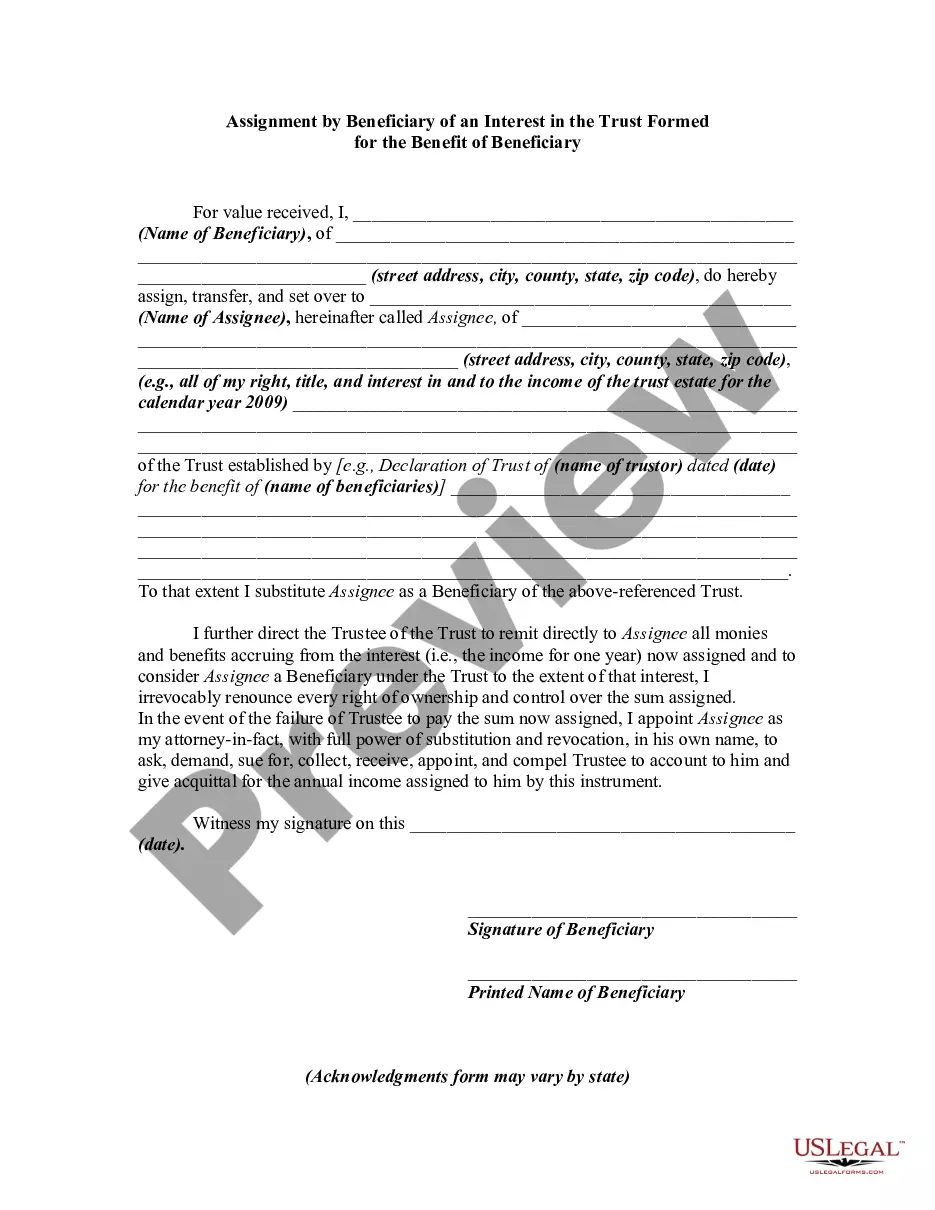
How to fill out Assignment By Beneficiary Of An Interest In The Trust Formed For The Benefit Of Beneficiary?
- Log into your US Legal Forms account if you're an existing user. Make sure your subscription is active. If it's not, renew according to your payment plan.
- If you're new to the service, begin by checking the Preview mode and form description. Confirm that the selected form aligns with your needs and local jurisdiction requirements.
- If necessary, utilize the Search tab to find alternate templates that better fit your specifications.
- Purchase the document by clicking the Buy Now button. Select your preferred subscription plan and create an account for full access to the resource library.
- Complete your purchase by entering your credit card information or using your PayPal account for payment.
- Finally, download your form to your device. You can revisit it anytime through the My Forms section in your profile.
By following these steps, you can efficiently navigate the comprehensive legal forms offered by US Legal Forms and ensure legal clarity in your transactions.
Start your easy document creation journey today and explore how US Legal Forms can simplify your legal needs.
Form popularity
FAQ
Adding someone as a beneficiary on your bank account is usually a straightforward process. Begin by visiting your bank’s website or calling customer support for guidance. You will likely need to fill out a designated form and provide your beneficiary's information, such as their full name and Social Security number. Utilizing uslegalforms can simplify this task, allowing you to complete and submit the required documents efficiently.
To list beneficiaries on your bank account, start by contacting your bank's customer service or visiting a branch. You will need to provide identification and details about the beneficiaries you wish to add. It’s important to ensure that your choices meet the specific requirements of the bank. Consider using platforms like uslegalforms to streamline the process and ensure all necessary forms are completed correctly.
A beneficiary bank is the financial institution that holds the account of the individual designated to receive funds from another person's account. In transactions, the beneficiary bank plays a vital role by ensuring that the recipient receives their funds securely and efficiently. By choosing the right beneficiary bank, you can facilitate smoother banking transitions for your loved ones.
A bank beneficiary is an individual designated to receive assets from a bank account upon the account holder's death. This designation allows for a straightforward transfer of funds, bypassing the probate process. Essentially, naming a bank beneficiary can streamline estate management and provide assurance that your intended recipient will have access to the resources you've allocated for them.
Yes, putting a beneficiary on your bank account is generally a wise decision. This arrangement simplifies the process of transferring assets upon your death, avoiding complications like probate. Moreover, it ensures that your loved ones receive their inheritance without delays, giving you peace of mind knowing that your wishes will be honored.
The receiving bank is the institution that receives a payment or transfer from another bank, while the beneficiary bank is the bank where the recipient of the funds holds an account. In essence, the receiving bank plays a role in processing the transaction, whereas the beneficiary bank is connected to the account holder receiving the funds. Understanding these nuances can help clarify how your transactions are managed.
A beneficiary account is one in which a designated person receives the funds upon the account holder's death. For instance, if you have a savings account and name your child as the beneficiary, that child will inherit the account balance when you pass away. This setup makes it easier to transfer assets without the need for a will or probate, ensuring that your loved ones receive their inheritance promptly.
To set up a beneficiary bank account, start by choosing a bank that offers this service. Schedule an appointment or visit the branch to discuss your options with a bank representative. You will need to provide identification and complete forms to designate your beneficiary. Using platforms like US Legal Forms can simplify the paperwork, ensuring that you fill out everything correctly for your new beneficiary bank account.
While a Payable on Death (POD) account offers a simple way to transfer assets, it does have some disadvantages. For instance, the beneficiary will not have access to the funds during your lifetime, which may pose challenges in unexpected situations. Additionally, the funds are subject to creditor claims after your passing if you have any debts. This could affect the amount left to your loved ones from your beneficiary bank account.
To open a beneficiary bank account, you'll first need to visit your chosen bank. Bring necessary identification documents and any required information about the beneficiary. During your visit, ask the bank representative about the process, as it may vary by institution. They will help you complete the necessary paperwork to establish a beneficiary alongside your account.