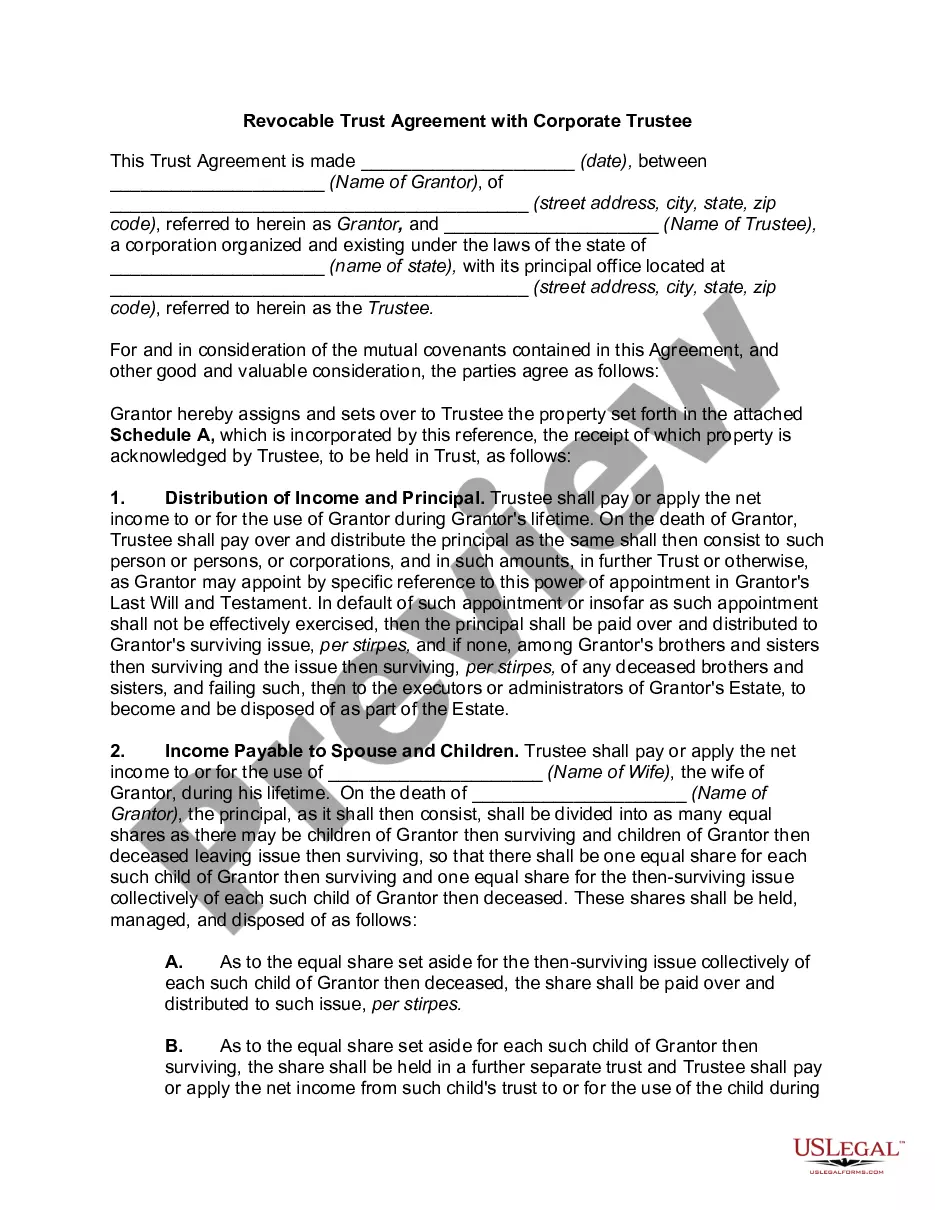
Trust Agreement For Bank Account
Description

Get your form ready online
Our built-in tools help you complete, sign, share, and store your documents in one place.
Make edits, fill in missing information, and update formatting in US Legal Forms—just like you would in MS Word.
Download a copy, print it, send it by email, or mail it via USPS—whatever works best for your next step.
Sign and collect signatures with our SignNow integration. Send to multiple recipients, set reminders, and more. Go Premium to unlock E-Sign.
If this form requires notarization, complete it online through a secure video call—no need to meet a notary in person or wait for an appointment.
We protect your documents and personal data by following strict security and privacy standards.

Make edits, fill in missing information, and update formatting in US Legal Forms—just like you would in MS Word.

Download a copy, print it, send it by email, or mail it via USPS—whatever works best for your next step.

Sign and collect signatures with our SignNow integration. Send to multiple recipients, set reminders, and more. Go Premium to unlock E-Sign.

If this form requires notarization, complete it online through a secure video call—no need to meet a notary in person or wait for an appointment.

We protect your documents and personal data by following strict security and privacy standards.
Looking for another form?
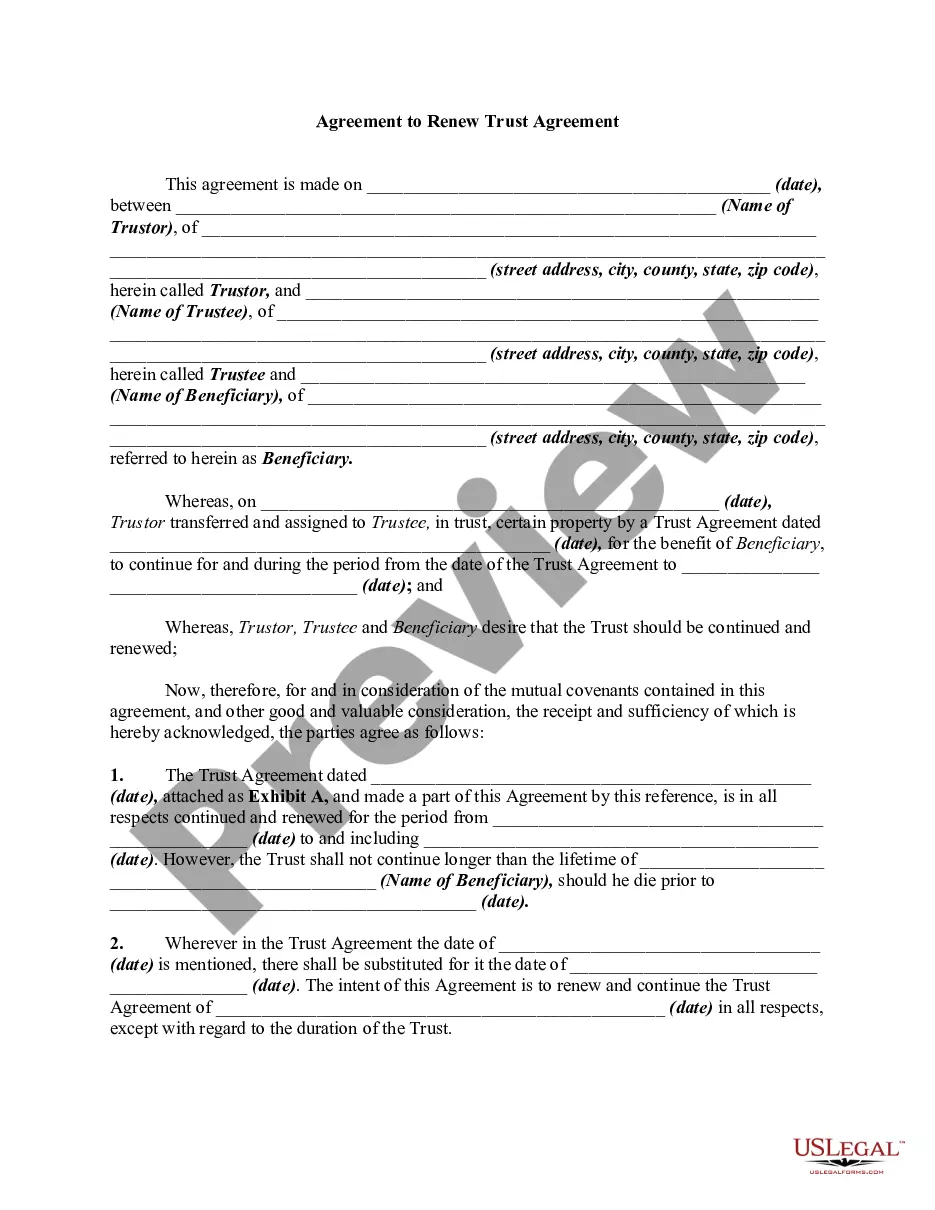
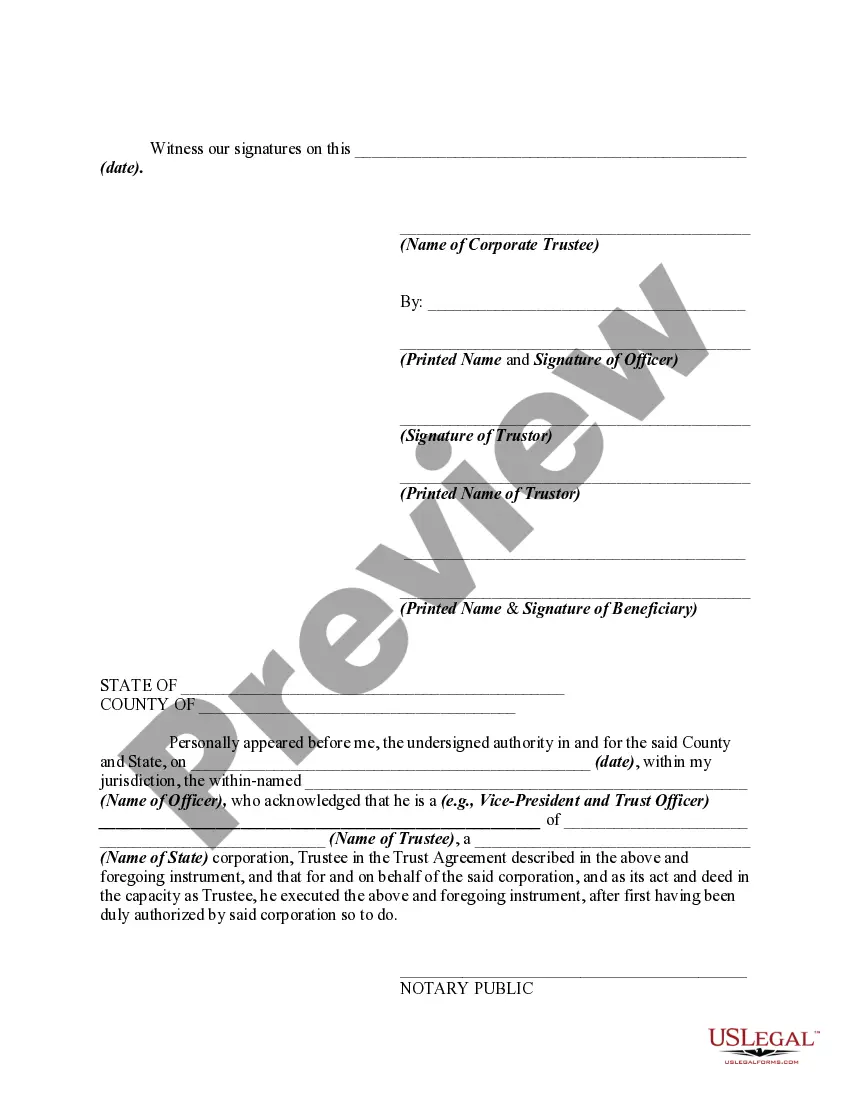
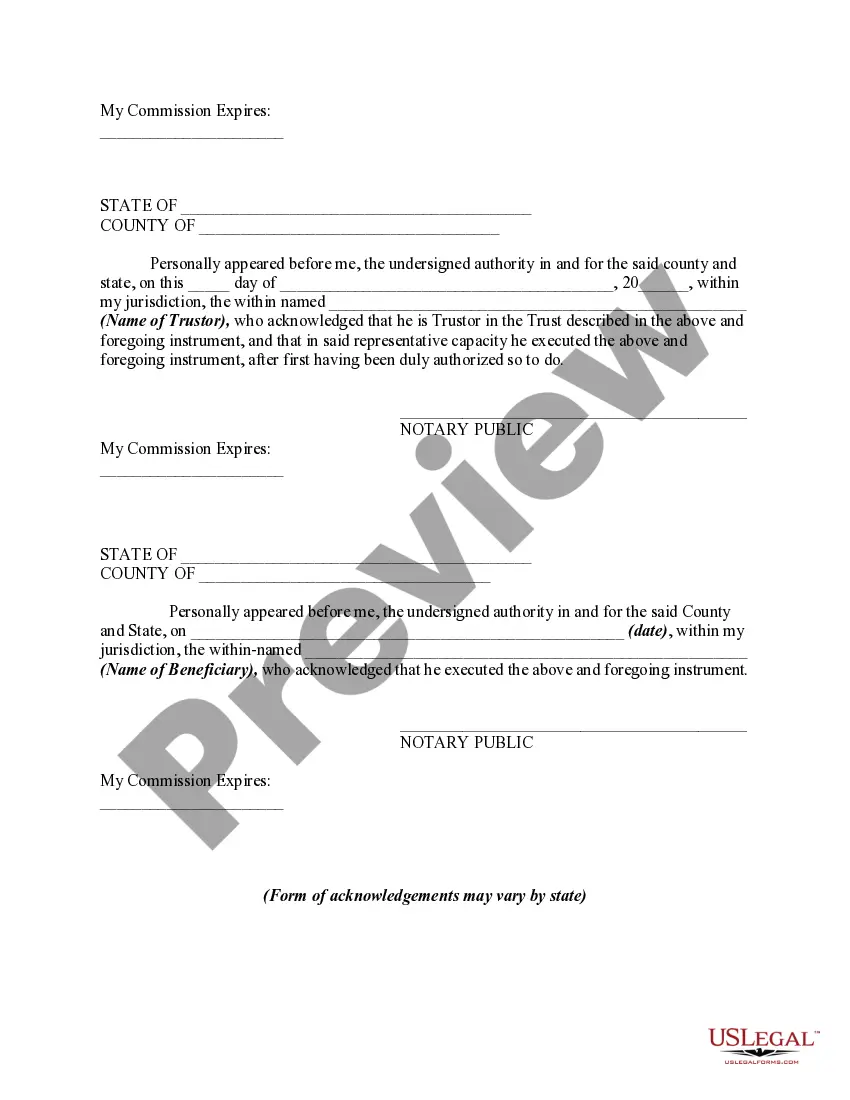
How to fill out Agreement To Renew Trust Agreement?
- If you're an existing US Legal Forms user, begin by logging into your account. Ensure your subscription is active; if it’s not, you’ll need to renew it first.
- For new users, start by browsing the forms available. Go through the Preview mode and description to confirm you’ve selected the right trust agreement that aligns with your needs and local jurisdiction.
- Should you need a different form, utilize the Search tab to refine your options. Find the form that matches your requirements before proceeding.
- Once you've identified the appropriate document, click on the Buy Now button and select your desired subscription plan. You'll be prompted to register an account for full access to the library.
- Complete your purchase by entering your payment details, using either a credit card or PayPal.
- After the transaction, download your trust agreement form directly to your device. You can also access it later in the My Forms section of your profile.
In conclusion, US Legal Forms provides an extensive library of over 85,000 editable and fillable legal documents, making it easy for anyone to handle their legal needs effectively. With access to knowledgeable experts, you can ensure your trust agreement is accurate and compliant.
Start your journey towards creating a secure trust agreement for your bank account today with US Legal Forms!
Form popularity
FAQ
Yes, you typically need an Employer Identification Number (EIN) to open a bank account for a trust. The EIN serves as a tax identification number for the trust and is often required by banks during the account setup process. Obtaining an EIN is simple and can enhance your trust's legitimacy, while also ensuring compliance with tax regulations. If you need assistance, the uslegalforms platform can help you navigate this process.
Yes, you can name a trust as a beneficiary on your bank account, which can be a smart estate planning strategy. When you designate a trust as the beneficiary, the assets in the account will go to the trust upon your death, ensuring that they are managed according to your wishes outlined in the trust agreement for bank account. This process can simplify the distribution of funds and avoid probate, making it easier for your heirs.
To add a trust to your bank account, you will first need to obtain a proper trust agreement for bank account, which outlines the terms and conditions of the trust. Next, visit your bank and provide them with the trust agreement, along with any required identification and documentation. The bank may ask for additional paperwork, so be prepared to answer their questions and provide necessary information.
The new FDIC rules for trusts clarify coverage limits and provide specific guidelines for beneficiaries. Understanding these rules can enhance how you manage your accounts and protect your assets. It is critical to draft a well-structured trust agreement for bank account to take full advantage of these revised regulations and safeguard your investments.
Putting bank accounts in a trust can be an excellent strategy for managing your assets. It allows for seamless transfers upon death and prevents the lengthy probate process. By drafting a trust agreement for bank account, you can ensure that your wishes are followed and provide financial security for your beneficiaries.
The National Credit Union Administration (NCUA) provides insurance for trust accounts, similar to the FDIC. The limit for coverage typically mirrors that of FDIC accounts, which can protect each beneficiary's share separately under a trust agreement for bank account. Understanding these limits is essential for ensuring adequate coverage and peace of mind regarding your assets.
The new FDIC rule for trust accounts specifies that deposits held in a trust can be insured up to a certain amount. This updated regulation is designed to protect beneficiaries better and clarify how funds will be secured. If you establish a trust agreement for bank account, understanding these new rules can help maximize your coverage and safeguard your financial interests.
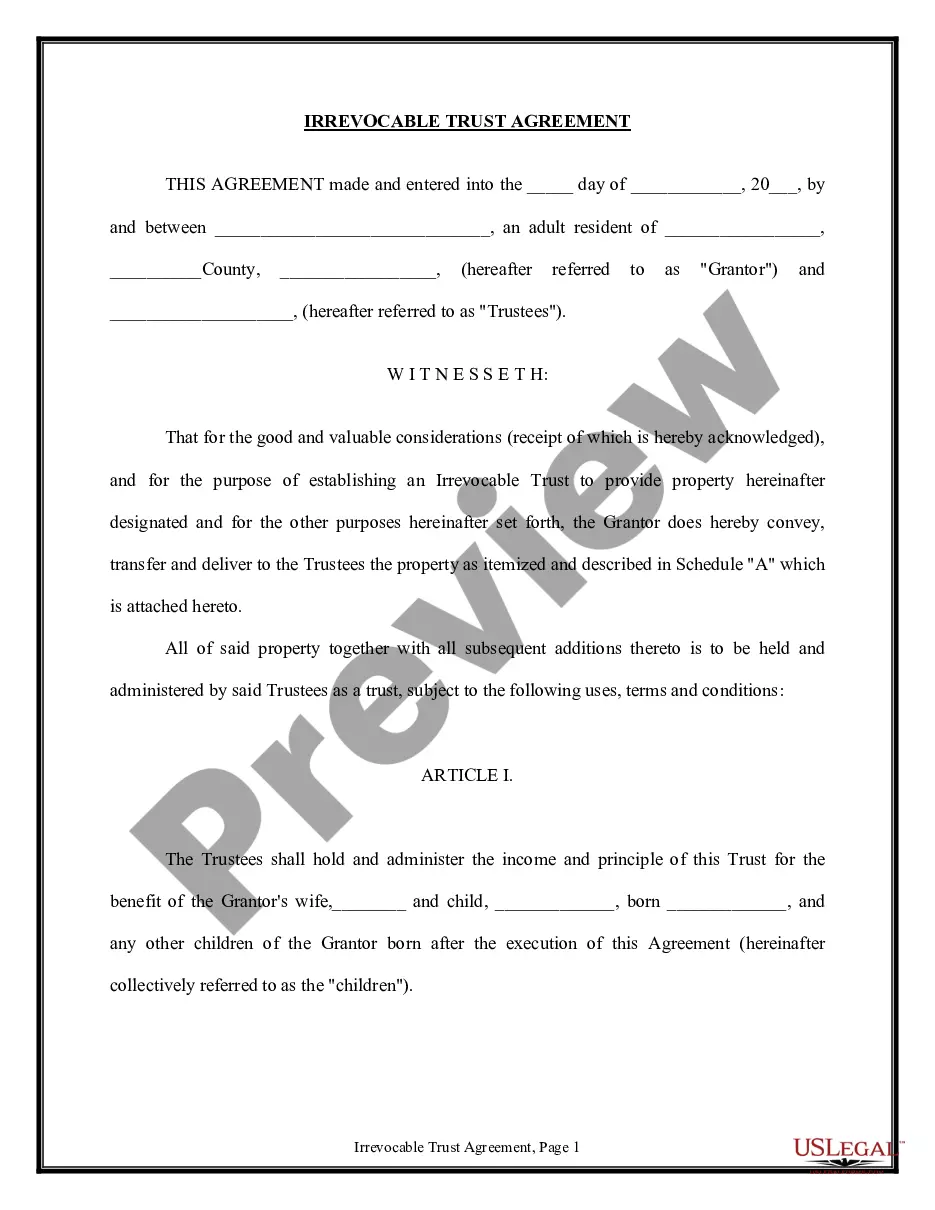
A trust agreement in banking is a legal document that outlines the arrangement between the trustee and beneficiaries regarding the management of assets. This document specifies how funds in the bank account will be handled, providing clarity and legal guidance. By creating a trust agreement for bank account, individuals can ensure their assets are managed in accordance with their wishes.
The Federal Deposit Insurance Corporation (FDIC) provides insurance coverage for trust accounts, but only if the trust is set up correctly. When establishing a trust agreement for bank account, it is crucial to ensure that the beneficiaries are clearly defined, as this affects insurance limits. Each beneficiary's share of the account can be insured separately, offering added protection for your assets.
Banks have shifted away from traditional trust accounts due to increasing regulatory pressures and complexities involved in managing them. The focus has moved towards more straightforward account types that appeal to a wider customer base. Consequently, a trust agreement for bank account has become a more specialized service, often requiring clear documentation and understanding from account holders.