Revocation Trust Trustee For The Security Certificate
Description
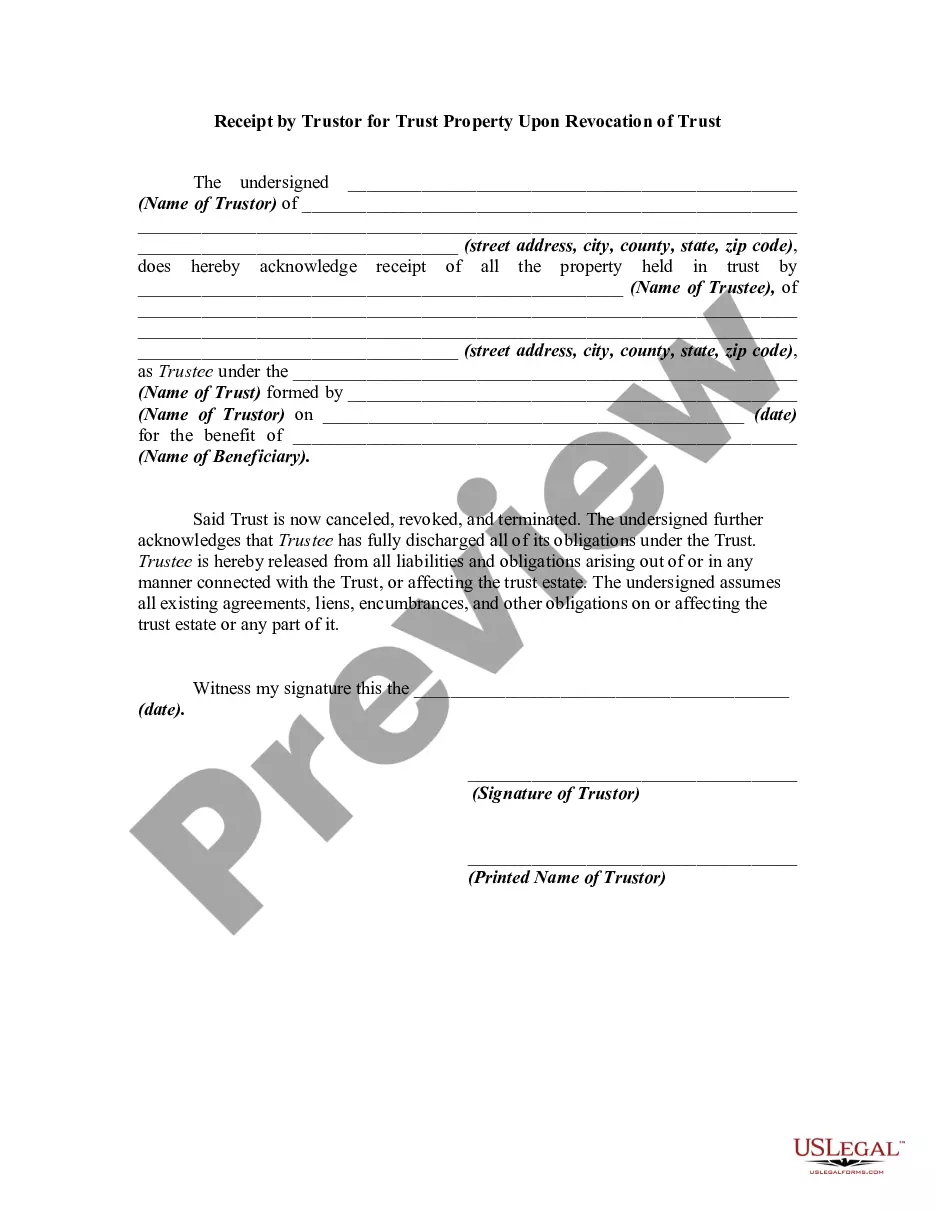
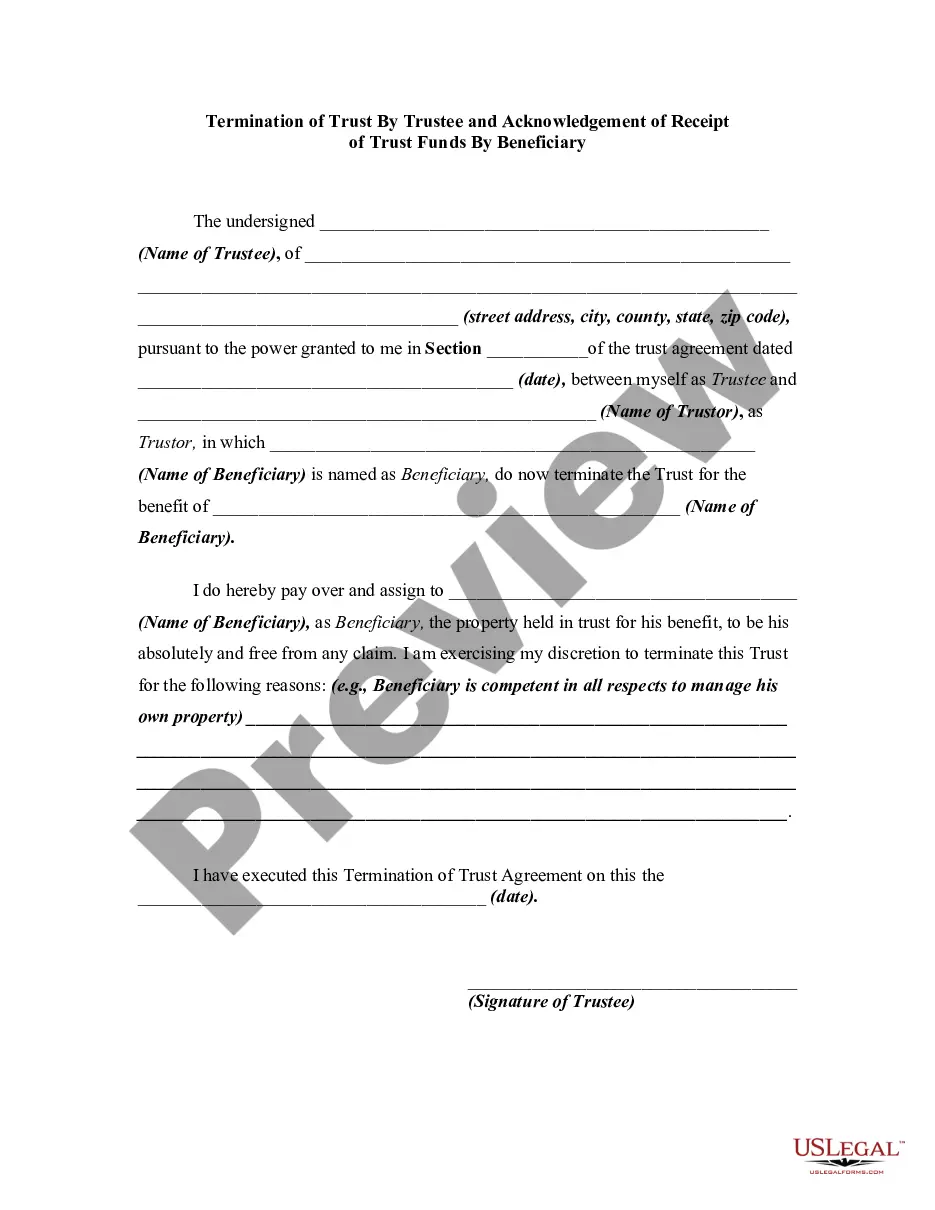
Get your form ready online
Our built-in tools help you complete, sign, share, and store your documents in one place.
Make edits, fill in missing information, and update formatting in US Legal Forms—just like you would in MS Word.
Download a copy, print it, send it by email, or mail it via USPS—whatever works best for your next step.
Sign and collect signatures with our SignNow integration. Send to multiple recipients, set reminders, and more. Go Premium to unlock E-Sign.
If this form requires notarization, complete it online through a secure video call—no need to meet a notary in person or wait for an appointment.
We protect your documents and personal data by following strict security and privacy standards.

Make edits, fill in missing information, and update formatting in US Legal Forms—just like you would in MS Word.

Download a copy, print it, send it by email, or mail it via USPS—whatever works best for your next step.

Sign and collect signatures with our SignNow integration. Send to multiple recipients, set reminders, and more. Go Premium to unlock E-Sign.

If this form requires notarization, complete it online through a secure video call—no need to meet a notary in person or wait for an appointment.

We protect your documents and personal data by following strict security and privacy standards.
Looking for another form?






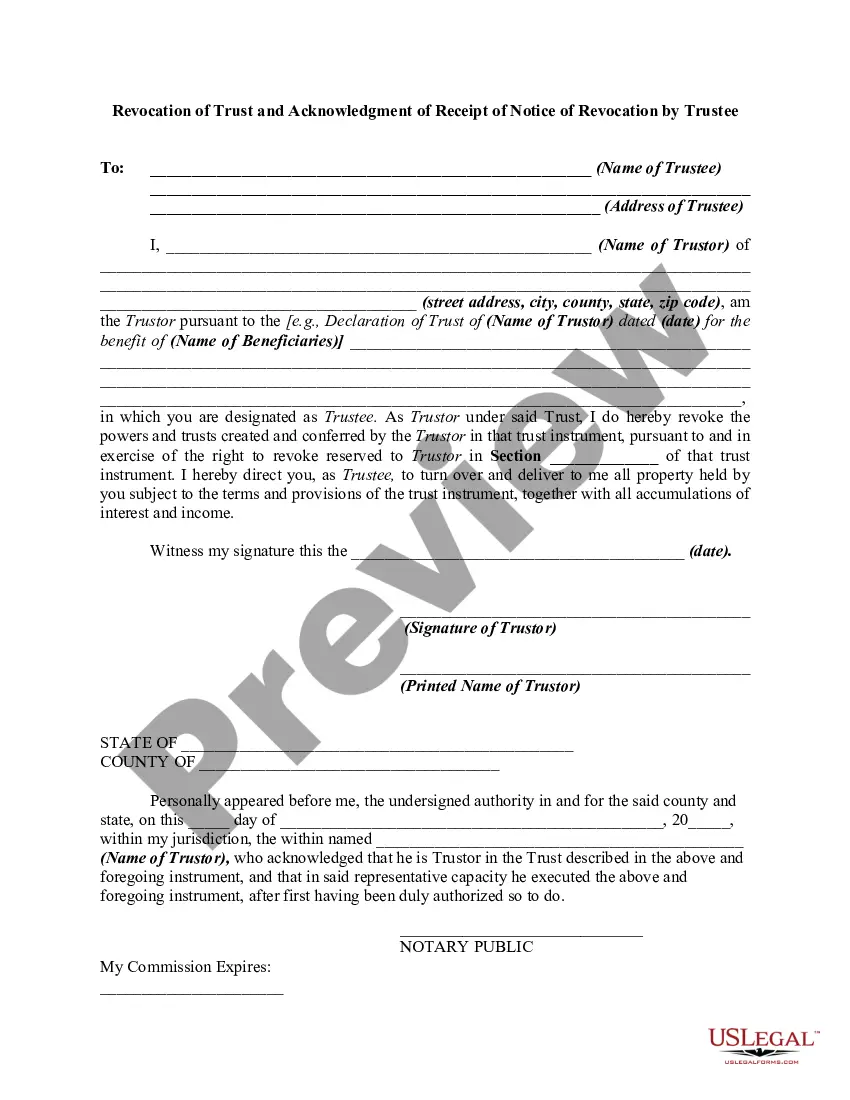
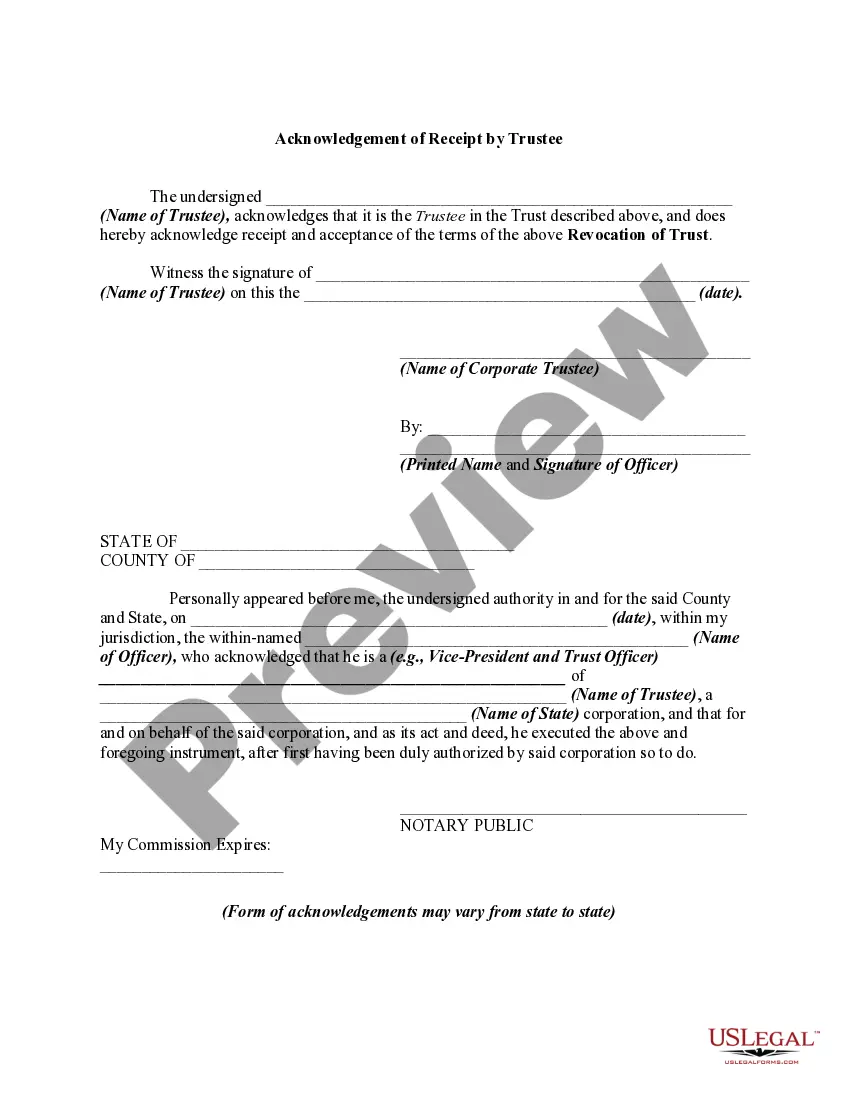
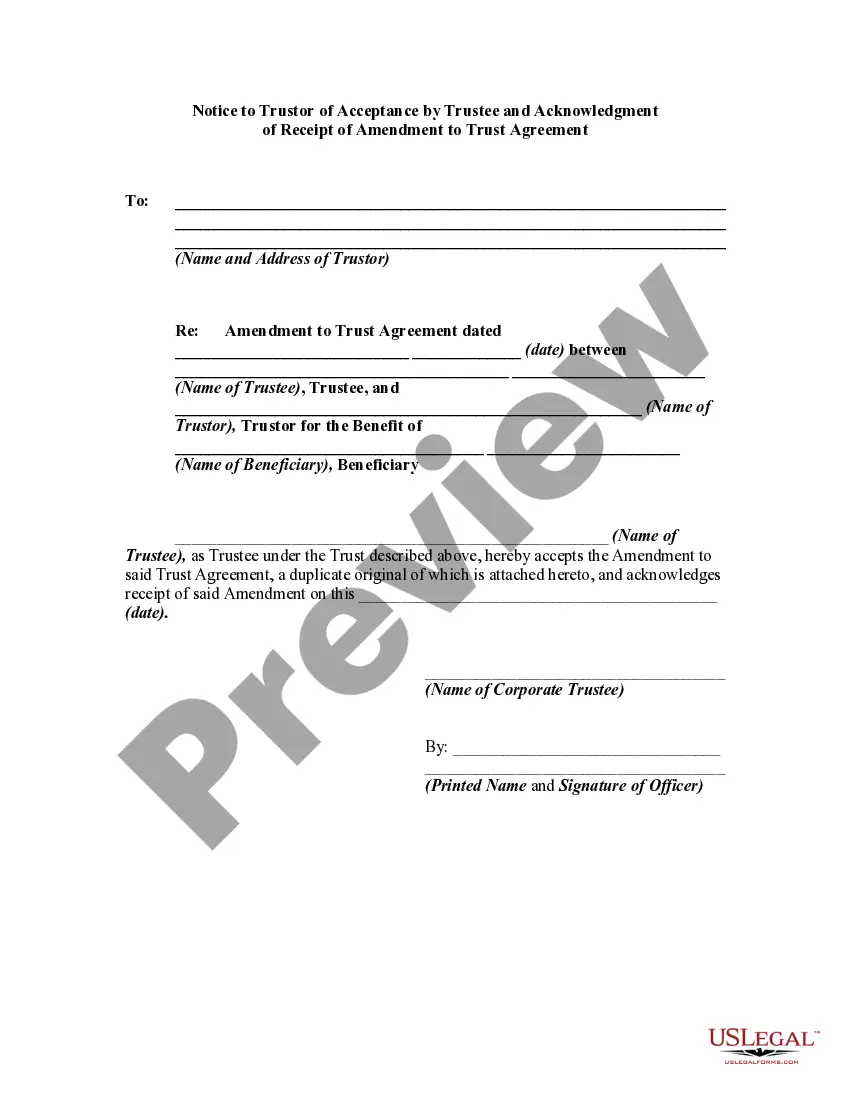
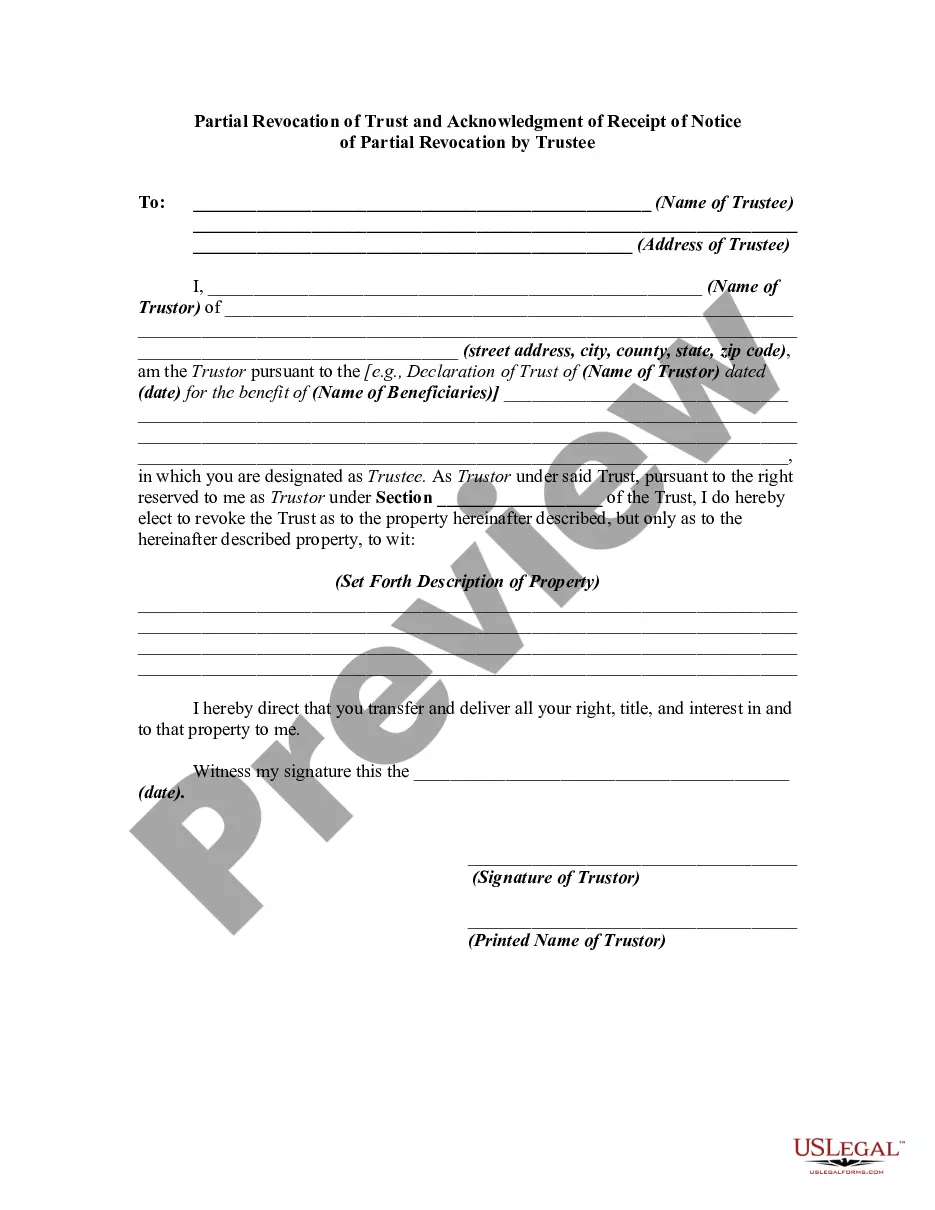
How to fill out Revocation Of Trust And Acknowledgment Of Receipt Of Notice Of Revocation By Trustee?
- Log in to your US Legal Forms account if you are a returning user, ensuring your subscription is active. If it's expired, please renew it using your preferred payment method.
- If you're new to US Legal Forms, start by checking the Preview mode and reviewing the form's description. Make sure that the selected form fits your specific needs and aligns with your local jurisdiction.
- Should you need a different template, utilize the Search tab to find alternative options that better suit your requirements.
- Once you find the correct document, click on the 'Buy Now' button to select your desired subscription plan, creating an account for access to the extensive library.
- Enter your payment information or log into your PayPal account to complete your purchase successfully.
- After payment, download your form, saving it to your device for easy access and editing later. You can also find it in the 'My Forms' section of your profile.
In conclusion, US Legal Forms greatly enhances the legal document creation process, offering its users an extensive array of forms and expert assistance. Signing up today can ensure you have the right legal documents at your fingertips.
Don't wait—visit US Legal Forms now and empower yourself with the legal resources you need!
Form popularity
FAQ
A nursing home generally cannot take your revocable trust directly, but the assets in a revocable trust may be considered part of your financial resources for Medicaid eligibility. This consideration can affect your estate planning strategy significantly. Consulting a professional about maintaining a revocation trust trustee for the security certificate can help protect your assets effectively.
Someone might revoke a trust for several reasons, including changes in financial status, relationships, or specific asset considerations. Life changes often prompt individuals to reassess their estate plans, leading to a decision to revoke a trust. By doing so, they provide the revocation trust trustee for the security certificate an opportunity to realign the trust with their current intentions.
The main purpose of a revocable trust is to manage your assets during your lifetime and distribute them after your death according to your wishes. This type of trust allows you, as the grantor, to make changes while you are alive, maintaining flexibility. It also aids in minimizing probate, ensuring that the revocation trust trustee for the security certificate can act promptly when needed.
The meaning of revocation of trust refers to the act of officially canceling or nullifying a trust. This can happen for numerous reasons, and it often involves the revocation trust trustee for the security certificate making various adjustments to ensure the trust's assets and responsibilities are appropriately managed. Understanding this concept is vital for effective estate planning.
To fix revocation information for the security certificate, you must access the necessary legal documents that establish the trust. It's crucial to ensure that the revocation trust trustee for the security certificate receives updated information reflecting any changes. Working with a legal professional can streamline this process, ensuring that your information aligns with current laws and regulations.
The revocation of trust means that the person who created the trust decides to annul it, effectively voiding its terms and conditions. This process can often involve specific legal steps, ensuring that the revocation trust trustee for the security certificate handles any necessary changes seamlessly. People revoke trusts for various personal or financial reasons, such as changes in circumstances or preferences.
A certification of a revocable trust is an official document that proves the existence and legitimacy of a revocable trust. This document provides important details about the trust and identifies the revocation trust trustee for the security certificate. It is essential for ensuring that the trust functions as intended, especially during financial transactions and asset management.
A revocable trust does not need to be notarized in California for it to be valid; however, notarization is beneficial. Having a notary public witness and sign the trust document adds an extra layer of legal assurance. It can help avoid potential disputes regarding the trust's validity later on. Emphasizing the role of a trustworthy revocation trust trustee for the security certificate is essential when considering how to manage your estate effectively.
A trustee can revoke a trust by following the guidelines outlined in the trust document itself. This usually requires preparing a formal revocation document that clearly states the intent to revoke the trust. The revocation must be signed and, in some cases, witnessed to hold up in court. When managing this process, selecting a qualified revocation trust trustee for the security certificate can help ensure proper execution.
To obtain your trust certificate, you will typically need to contact the institution or agency holding your trust documents. They may require identifying information, such as your name and the date the trust was created. Once your identity is verified, they can issue the trust certificate for your records. If you're unsure about the process, uslegalforms can assist you in navigating this step efficiently, especially if you need to manage a revocation trust trustee for the security certificate.