Revocation Trust Trustee For Discretionary
Description
Get your form ready online
Our built-in tools help you complete, sign, share, and store your documents in one place.
Make edits, fill in missing information, and update formatting in US Legal Forms—just like you would in MS Word.
Download a copy, print it, send it by email, or mail it via USPS—whatever works best for your next step.
Sign and collect signatures with our SignNow integration. Send to multiple recipients, set reminders, and more. Go Premium to unlock E-Sign.
If this form requires notarization, complete it online through a secure video call—no need to meet a notary in person or wait for an appointment.
We protect your documents and personal data by following strict security and privacy standards.

Make edits, fill in missing information, and update formatting in US Legal Forms—just like you would in MS Word.

Download a copy, print it, send it by email, or mail it via USPS—whatever works best for your next step.

Sign and collect signatures with our SignNow integration. Send to multiple recipients, set reminders, and more. Go Premium to unlock E-Sign.

If this form requires notarization, complete it online through a secure video call—no need to meet a notary in person or wait for an appointment.

We protect your documents and personal data by following strict security and privacy standards.
Looking for another form?



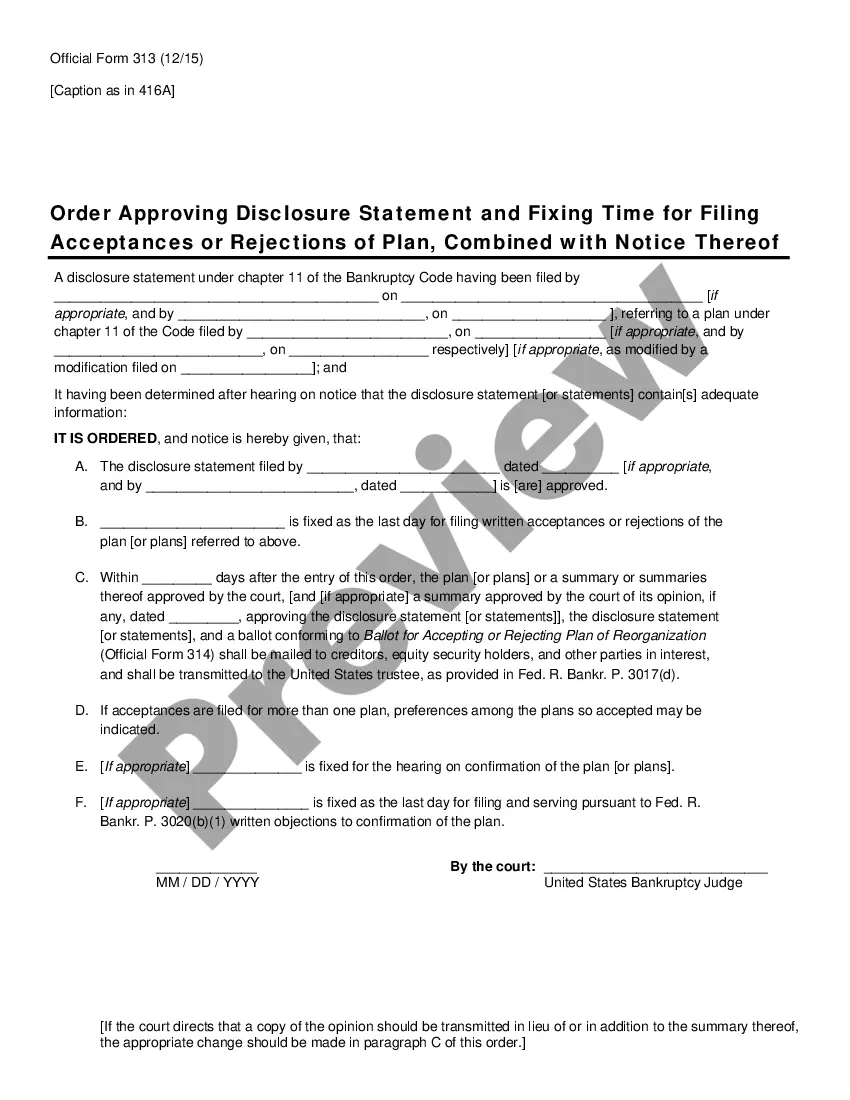



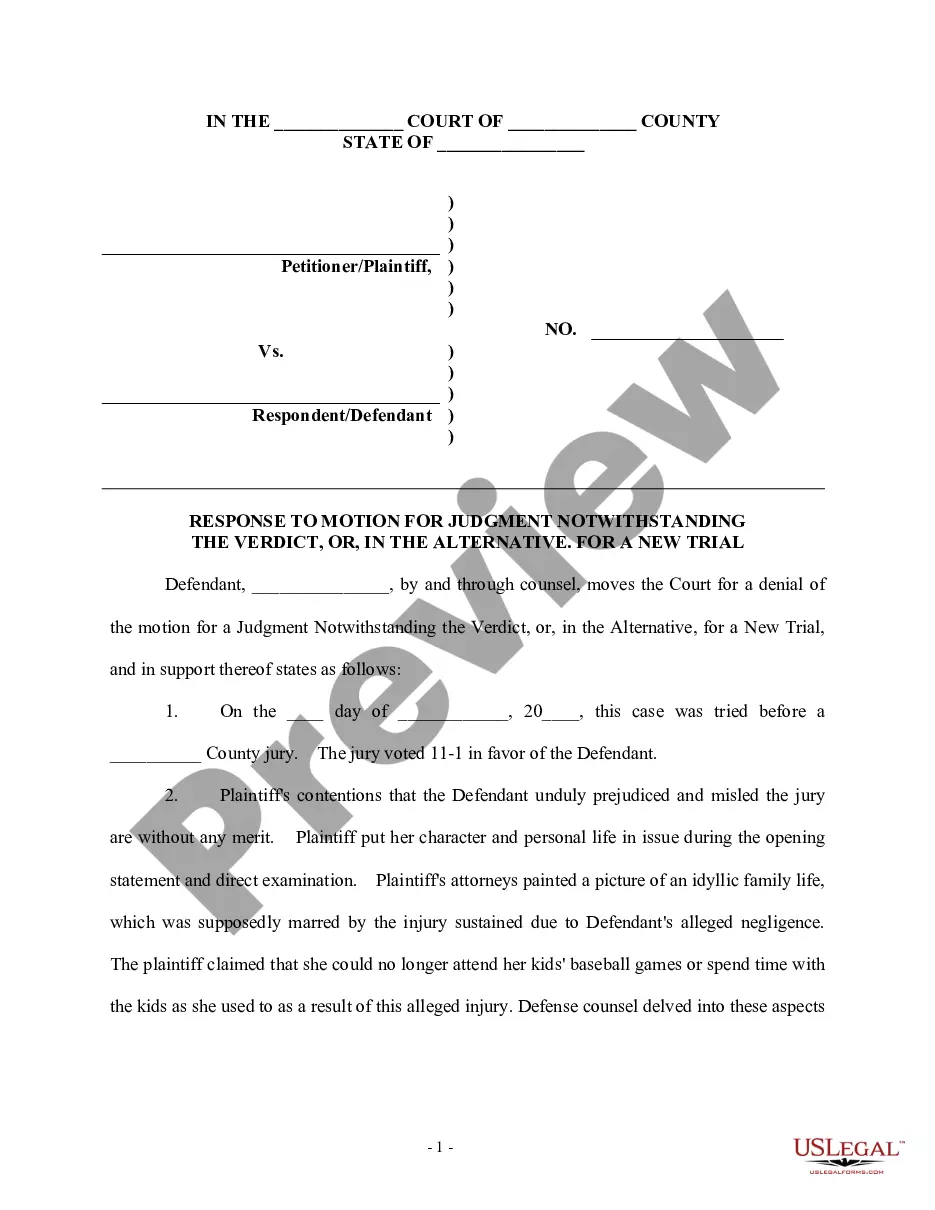
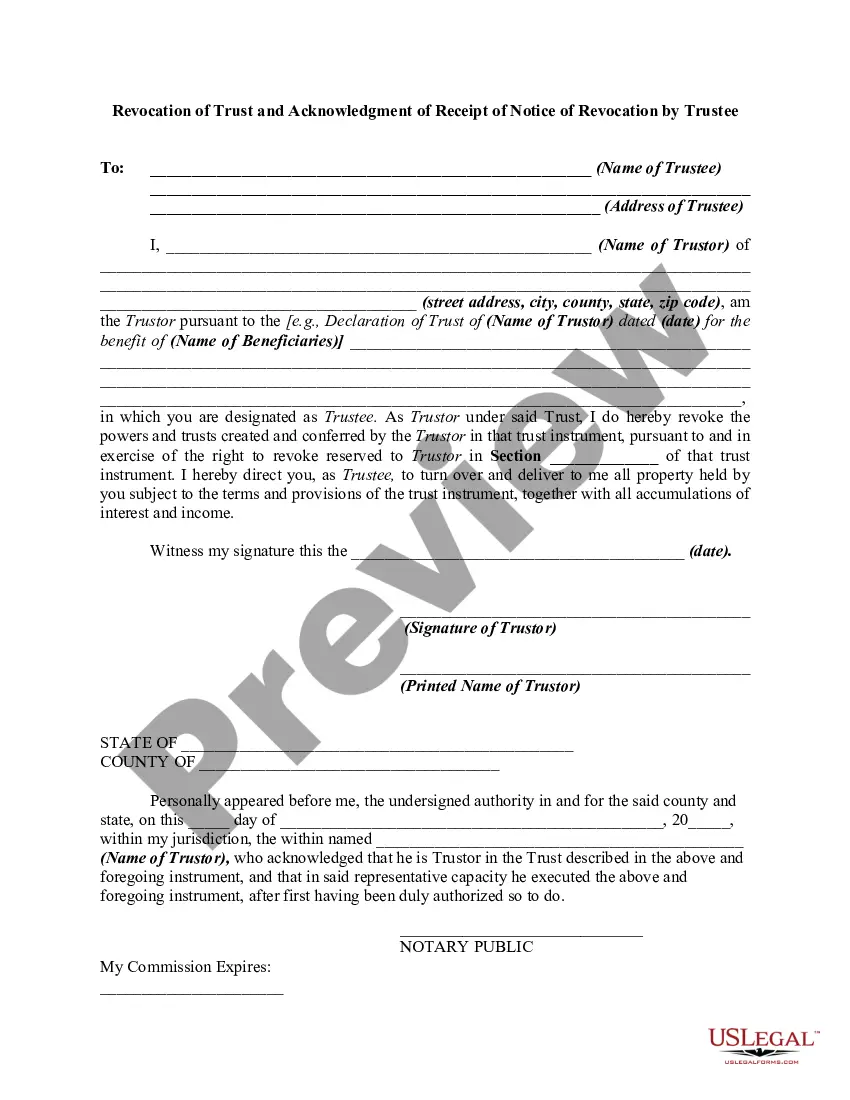
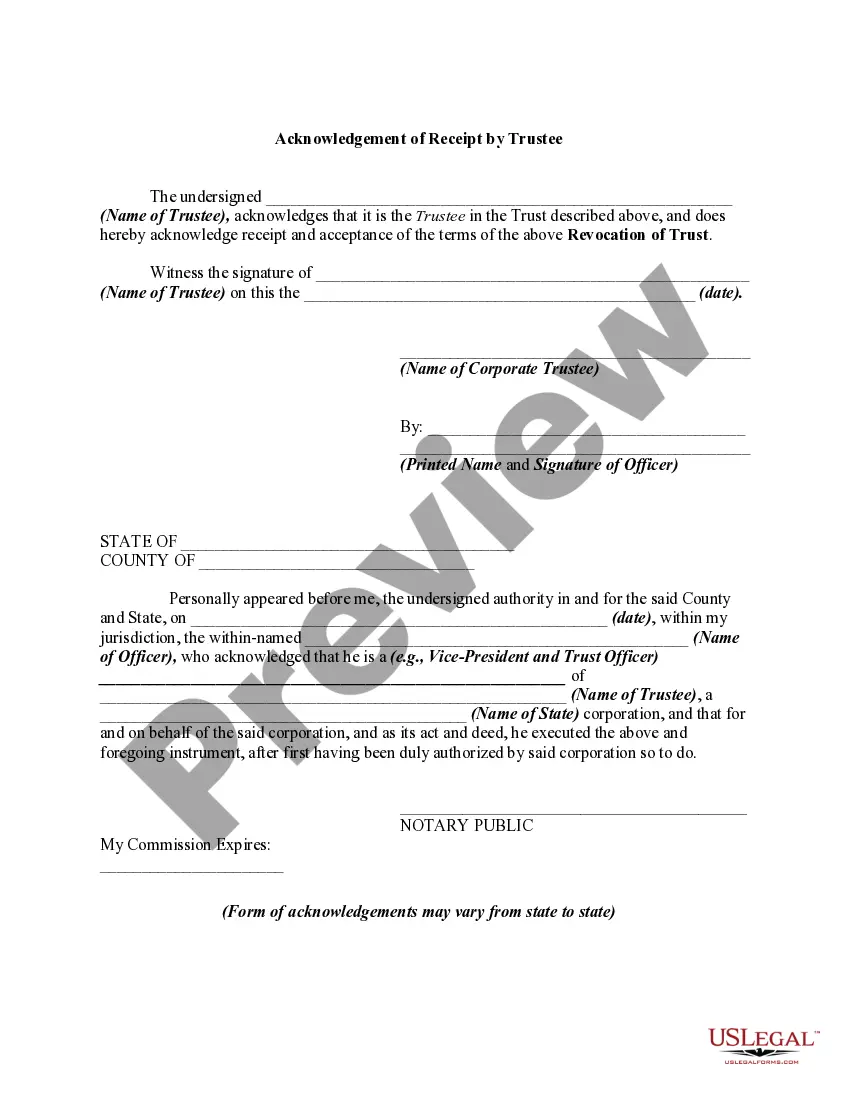
How to fill out Revocation Of Trust And Acknowledgment Of Receipt Of Notice Of Revocation By Trustee?
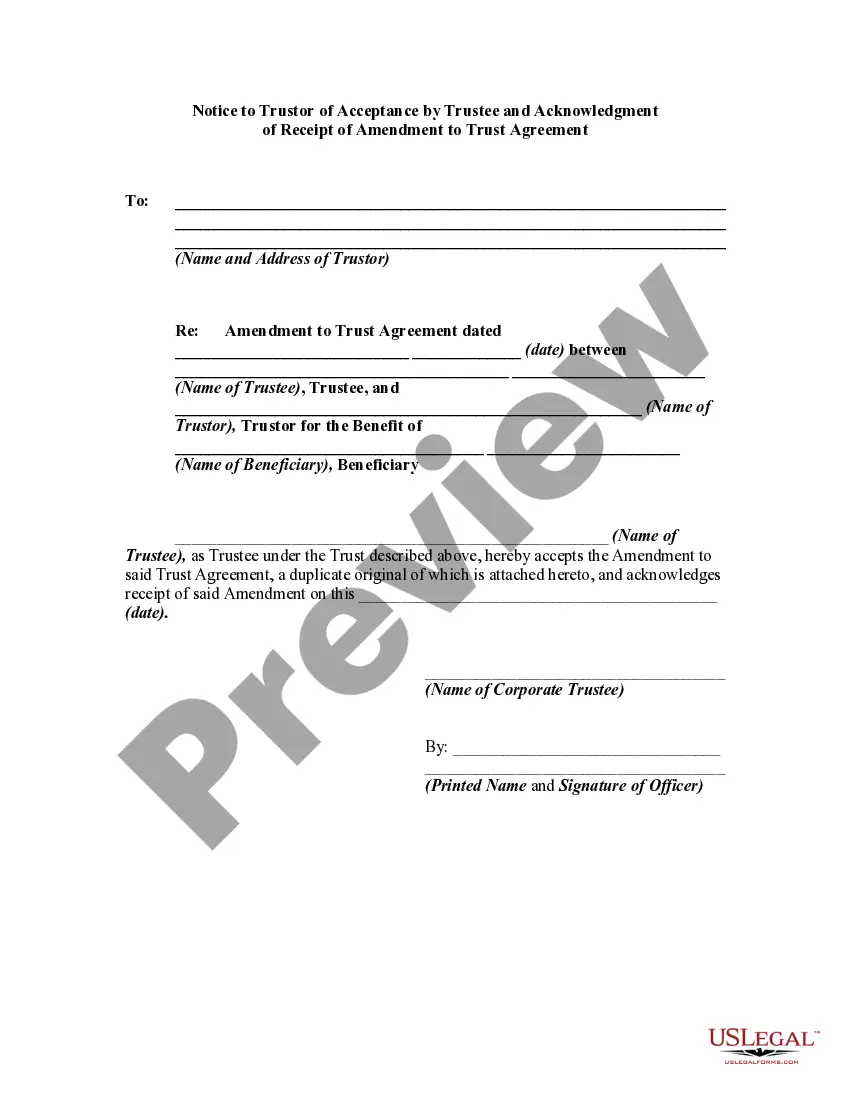
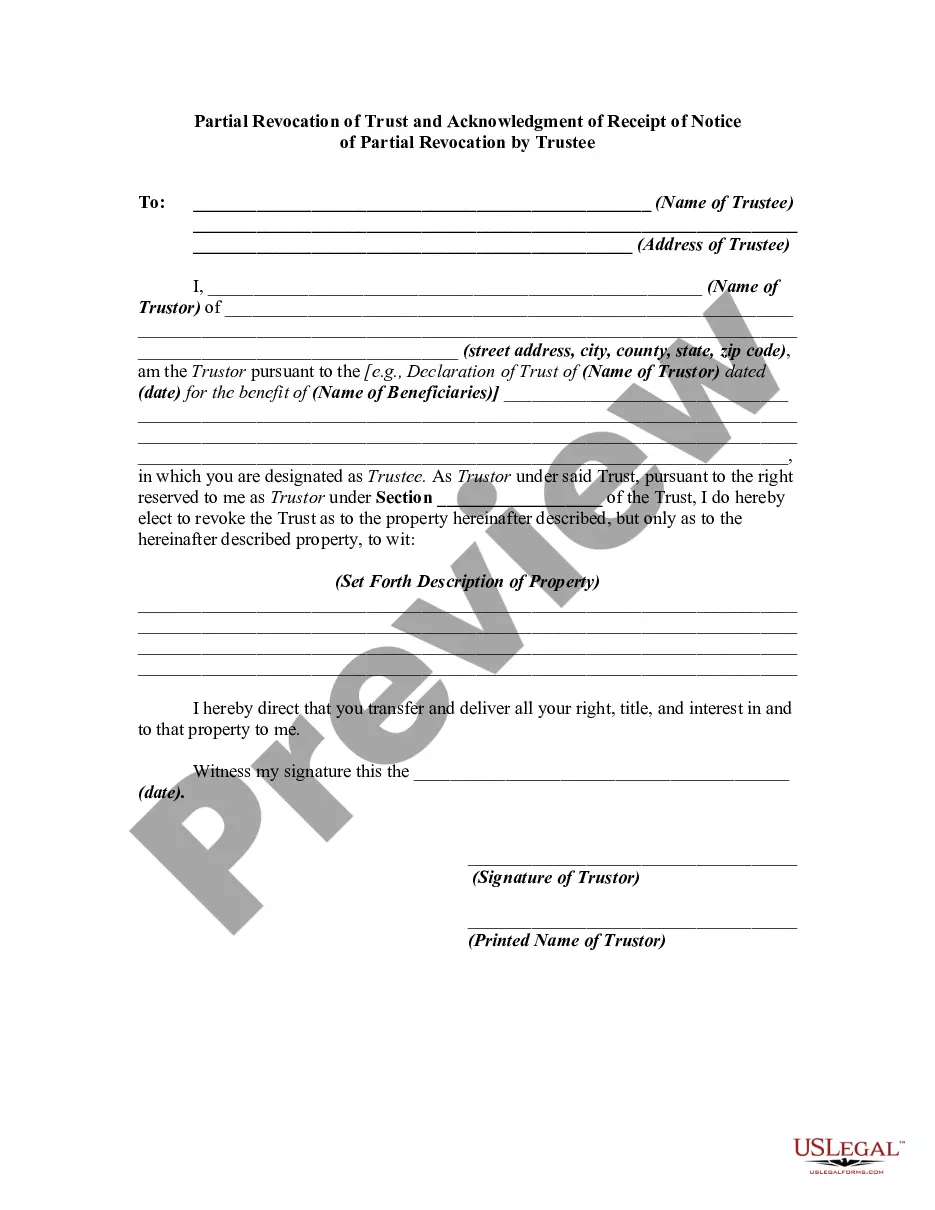
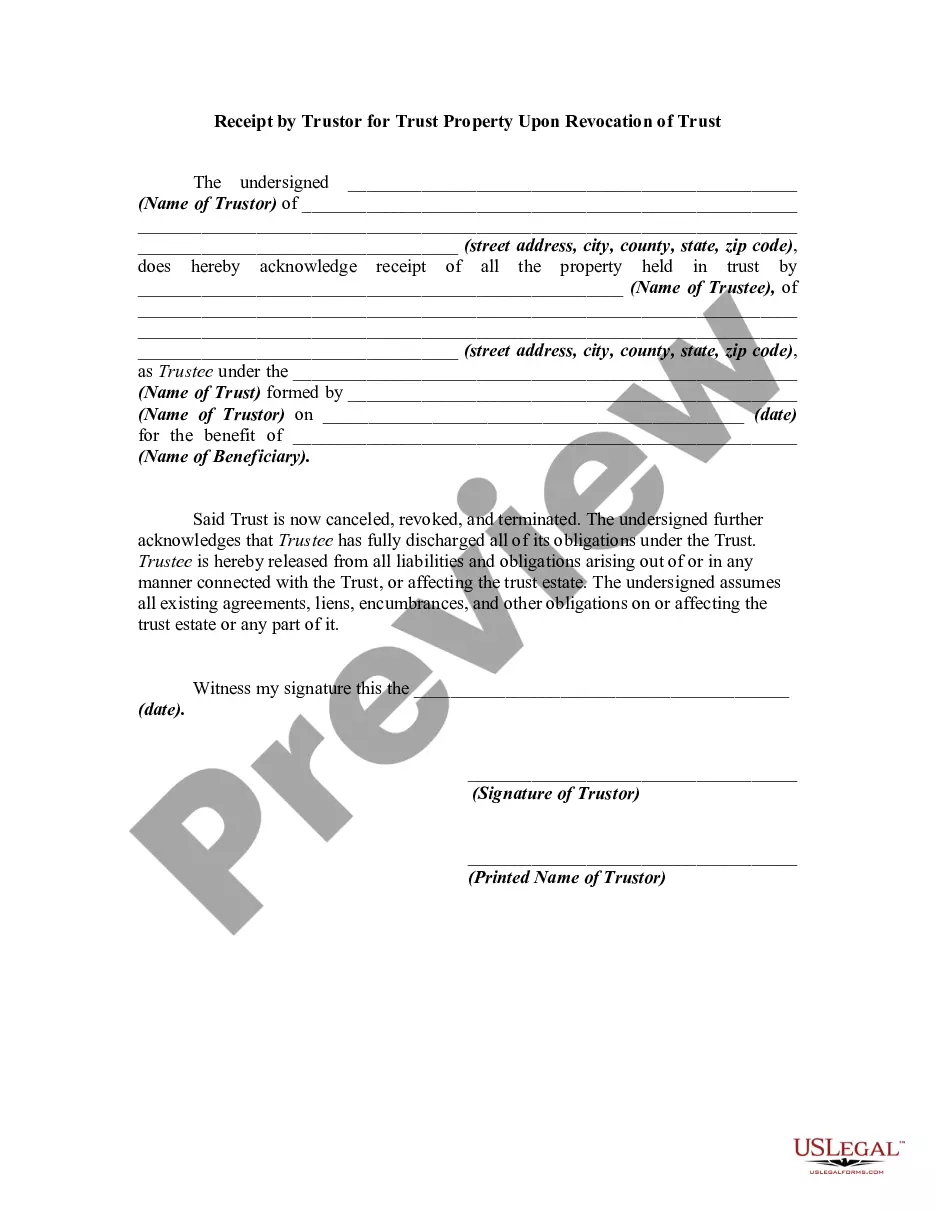
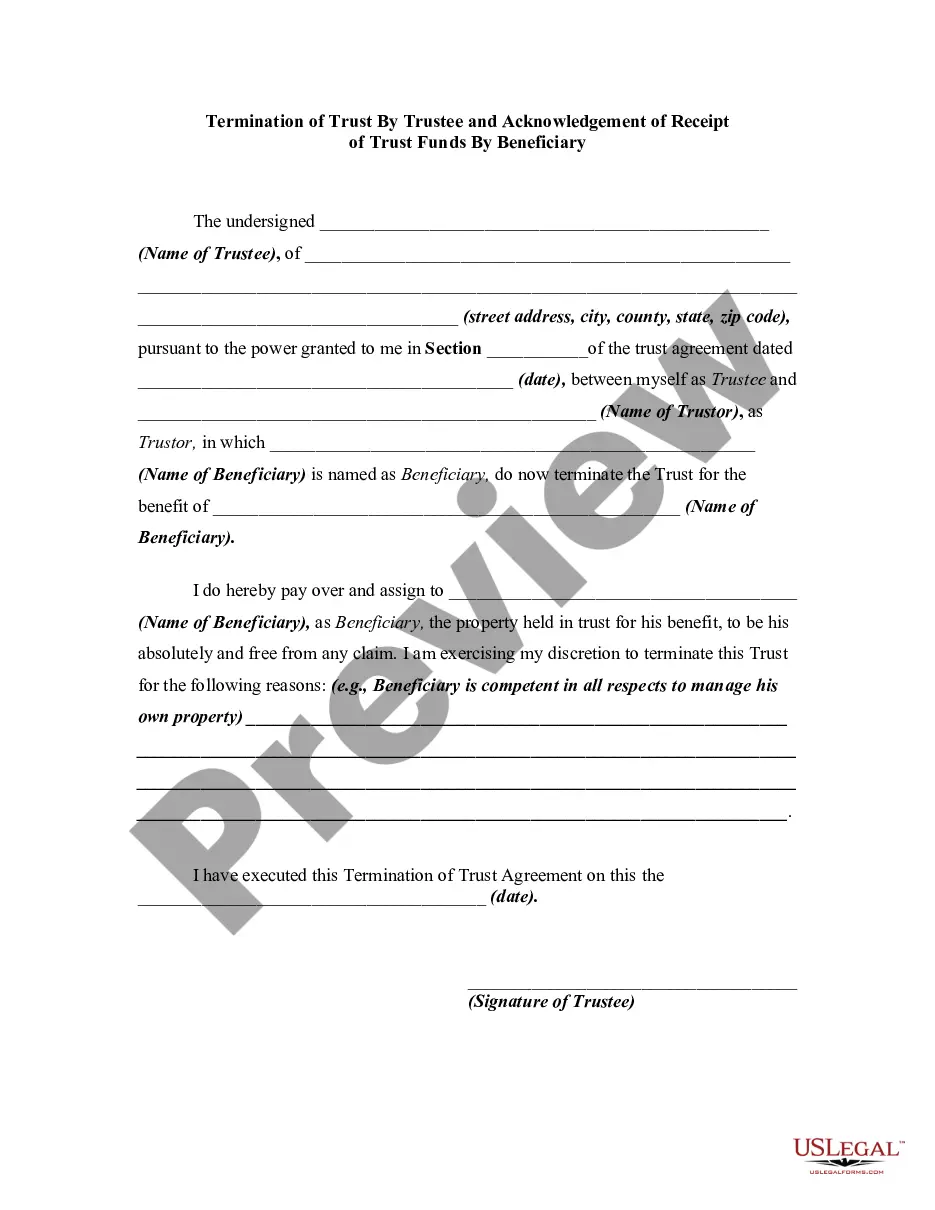
The Revocation Trust Trustee For Discretionary you observe on this page is a reusable legal template crafted by professional attorneys in compliance with federal and regional laws and regulations.
For over 25 years, US Legal Forms has supplied individuals, businesses, and lawyers with more than 85,000 validated, state-specific forms for any commercial and personal circumstance. It’s the quickest, most direct, and most reliable method to obtain the documents you require, as the service ensures bank-level data security and anti-malware safeguards.
Register for US Legal Forms to have validated legal templates for all of life’s situations at your fingertips.
- Search for the document you require and examine it. Browse through the template you looked for and preview it or read the form description to verify it meets your requirements. If it does not, utilize the search feature to find the appropriate one. Click Buy Now once you have located the template you need.
- Register and Log In. Select the pricing option that fits you and create an account. Use PayPal or a credit card to make a swift payment. If you already possess an account, Log In and verify your subscription to proceed.
- Obtain the fillable template. Choose the format you prefer for your Revocation Trust Trustee For Discretionary (PDF, DOCX, RTF) and download the sample to your device.
- Complete and sign the documents. Print the template to fill it out manually. Alternatively, use an online multifunctional PDF editor to quickly and accurately complete and sign your form with a legally-binding electronic signature.
- Download your documents once more. Use the same document again whenever necessary. Access the My documents tab in your profile to redownload any forms you have previously downloaded.
Form popularity
FAQ
In certain circumstances, you can dissolve a discretionary trust with the consent of the beneficiaries. If the beneficiaries have the legal capacity and are above 18 years of age, they may be able to compel a trustee to transfer the trust property to the beneficiaries and terminate the trust.
Whether a provision shall be made or not. The discretion "is to be the. exercise of judgment directed to the care and protection of the bene- ficiary, by making such a provision as will best secure that end."'1. As often happens, the trustee was left without any standards save his own judgment.
The trust deed lists the trustees. Therefore, to change an individual trustee, you need to amend the trust deed. Most trust deeds permit a change of trustee by way of a trustee resolution and entry into a deed of variation. A trustee resolution is a signed statement of the actions taken by the trustee.
Discretionary trusts are a type of irrevocable trust where the trustee has complete discretion on when and what amounts of assets to distribute to the beneficiaries. The beneficiaries have no right to distributions from the trust.
Trustees will usually be appointed by the instrument that brings the trust into existence. The trust instrument should also make provision for any additional appointments that may be necessary during the continuance of the trust.