Revocation Acknowledgment Trustee With Beneficiary
Description
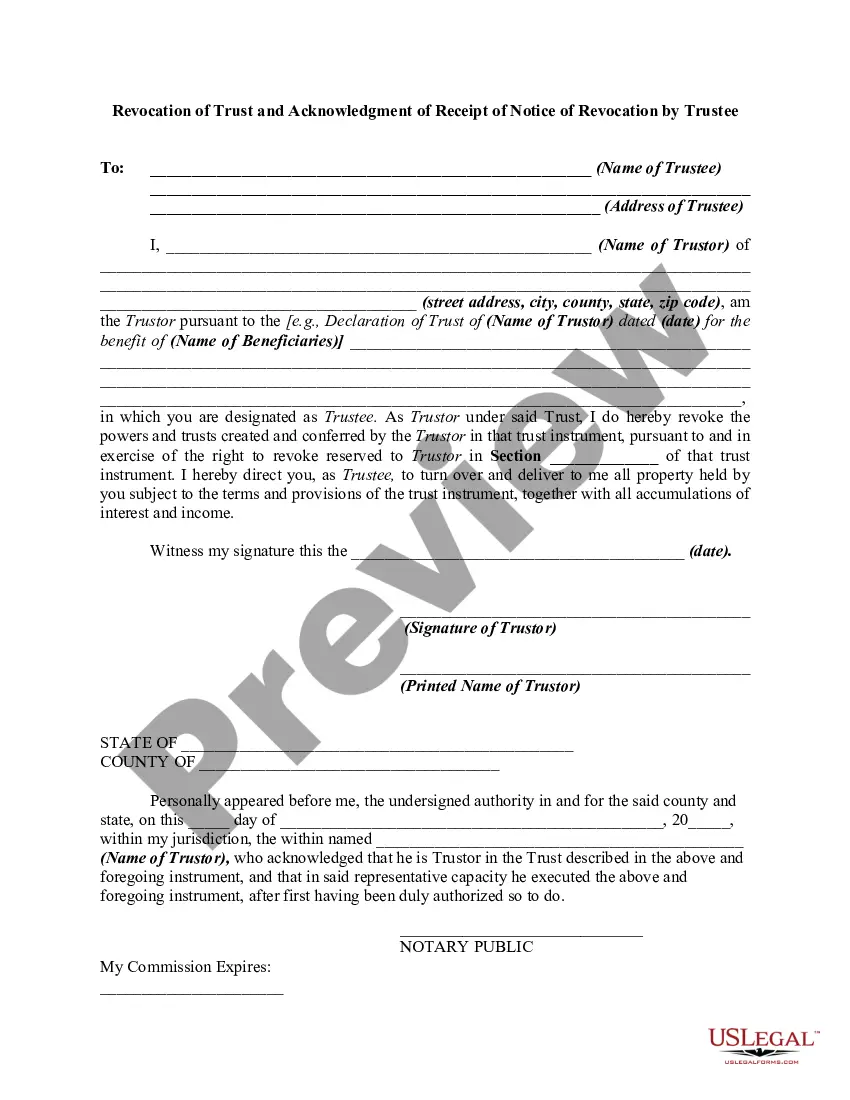
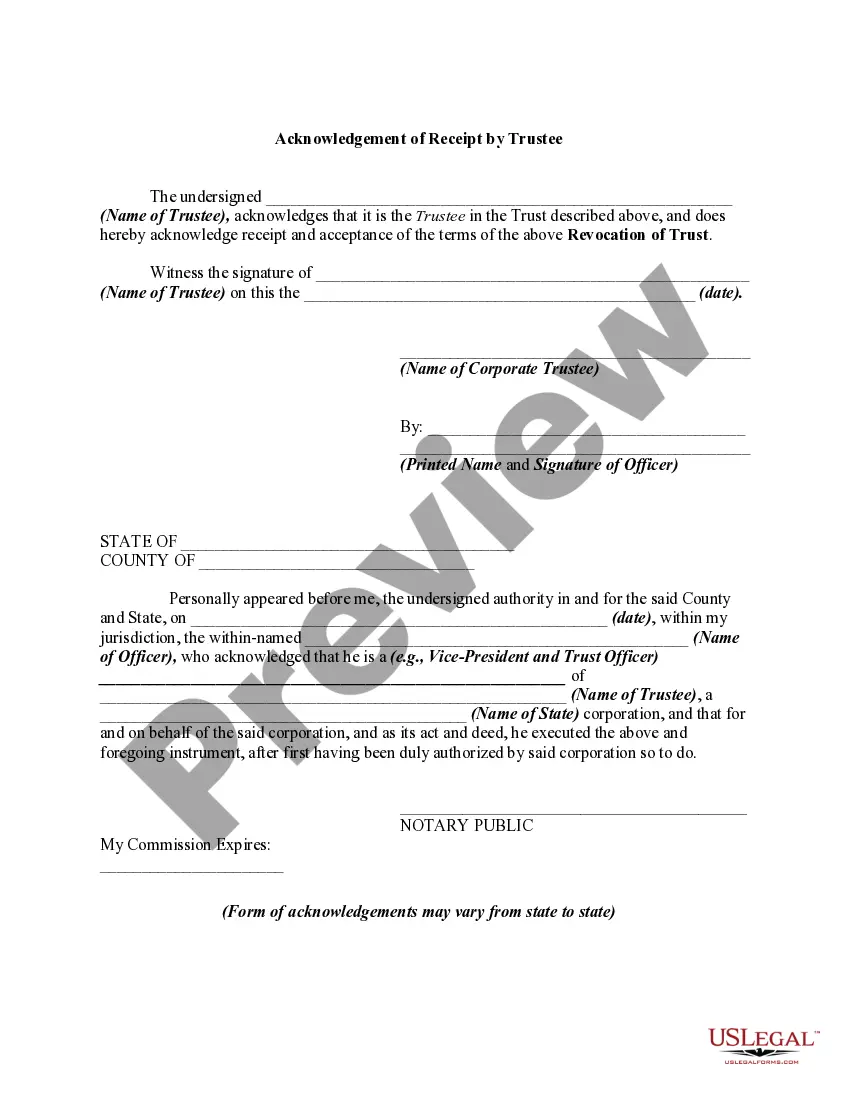
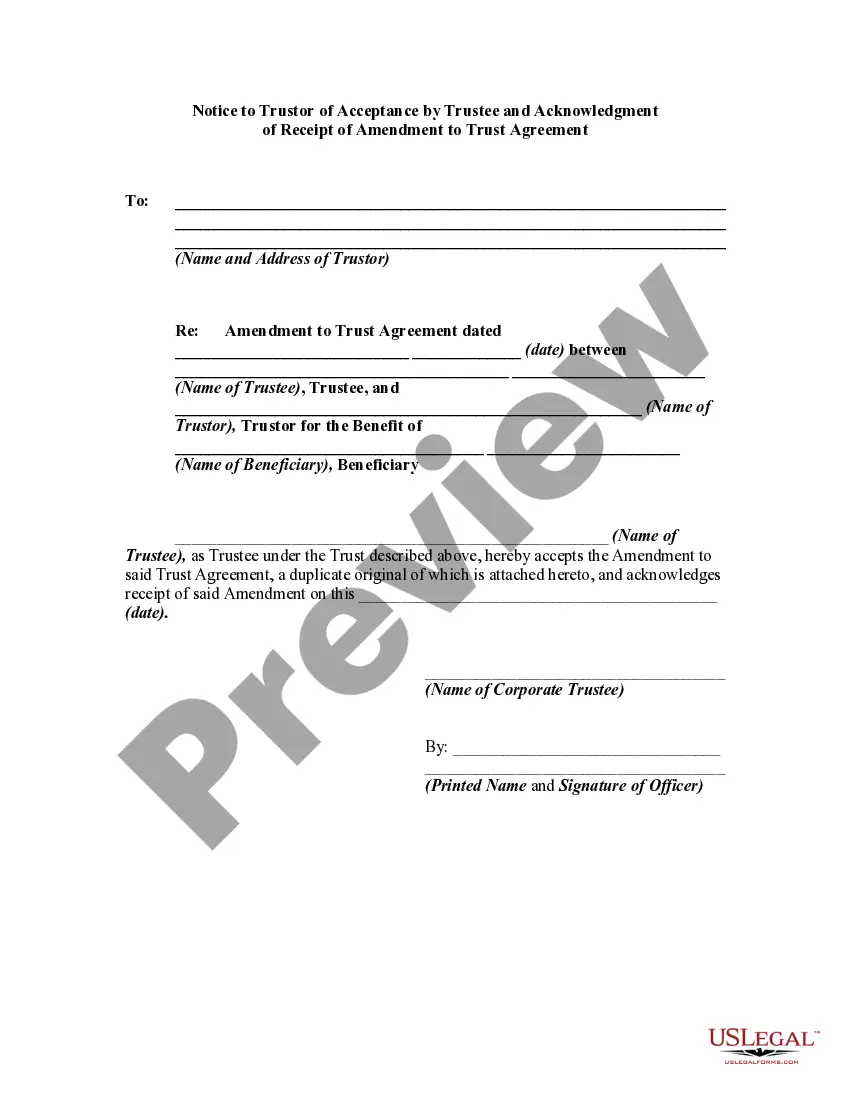
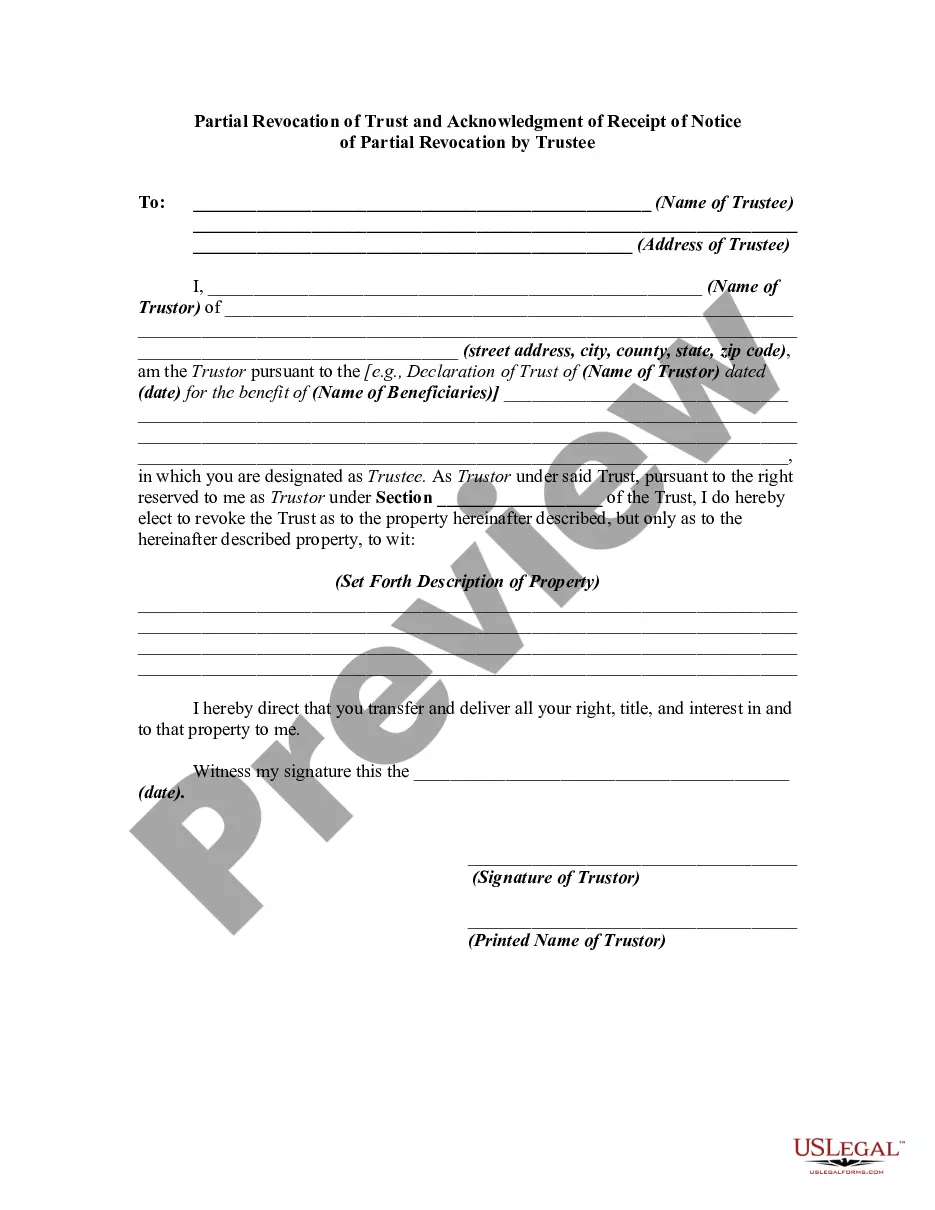
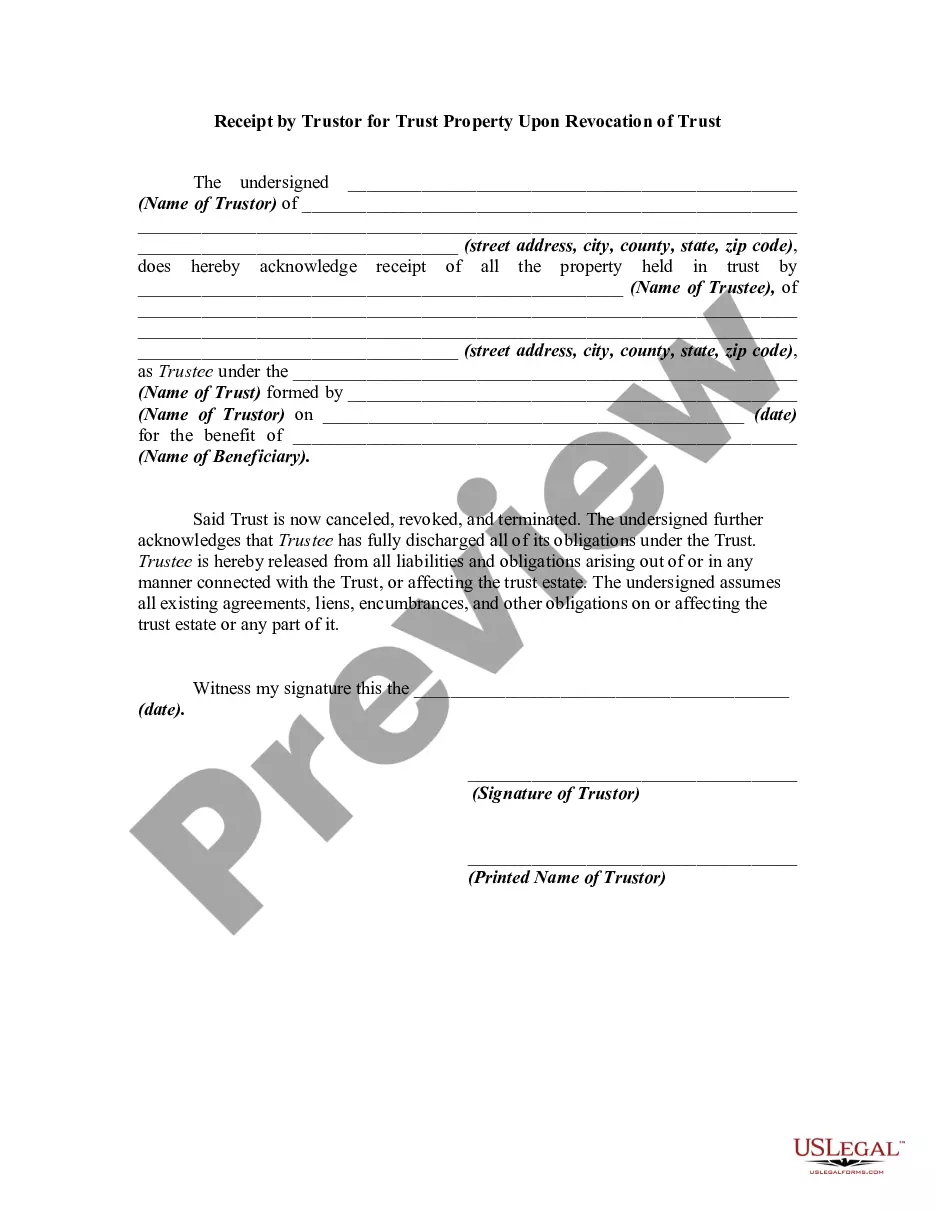
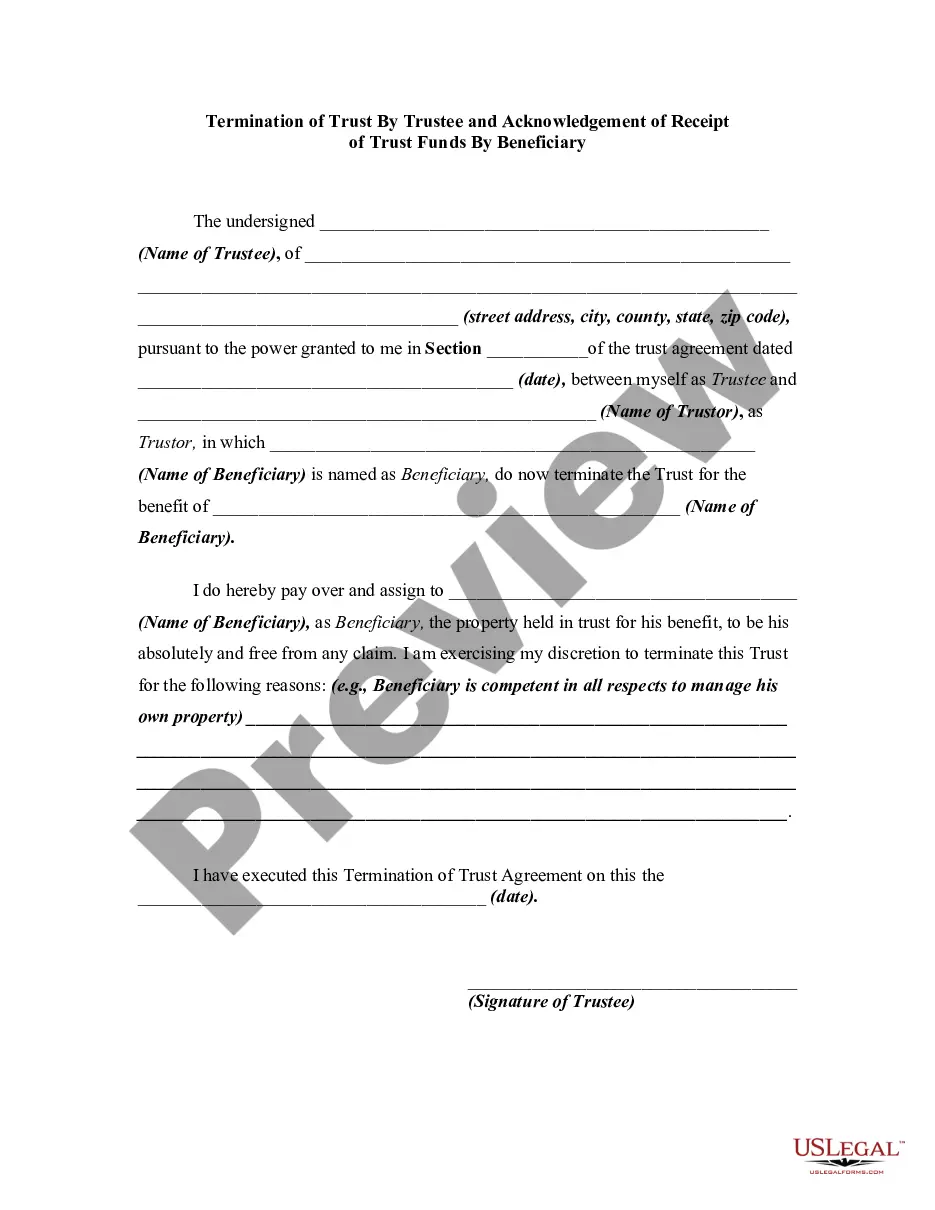
Get your form ready online
Our built-in tools help you complete, sign, share, and store your documents in one place.
Make edits, fill in missing information, and update formatting in US Legal Forms—just like you would in MS Word.
Download a copy, print it, send it by email, or mail it via USPS—whatever works best for your next step.
Sign and collect signatures with our SignNow integration. Send to multiple recipients, set reminders, and more. Go Premium to unlock E-Sign.
If this form requires notarization, complete it online through a secure video call—no need to meet a notary in person or wait for an appointment.
We protect your documents and personal data by following strict security and privacy standards.

Make edits, fill in missing information, and update formatting in US Legal Forms—just like you would in MS Word.

Download a copy, print it, send it by email, or mail it via USPS—whatever works best for your next step.

Sign and collect signatures with our SignNow integration. Send to multiple recipients, set reminders, and more. Go Premium to unlock E-Sign.

If this form requires notarization, complete it online through a secure video call—no need to meet a notary in person or wait for an appointment.

We protect your documents and personal data by following strict security and privacy standards.
Looking for another form?


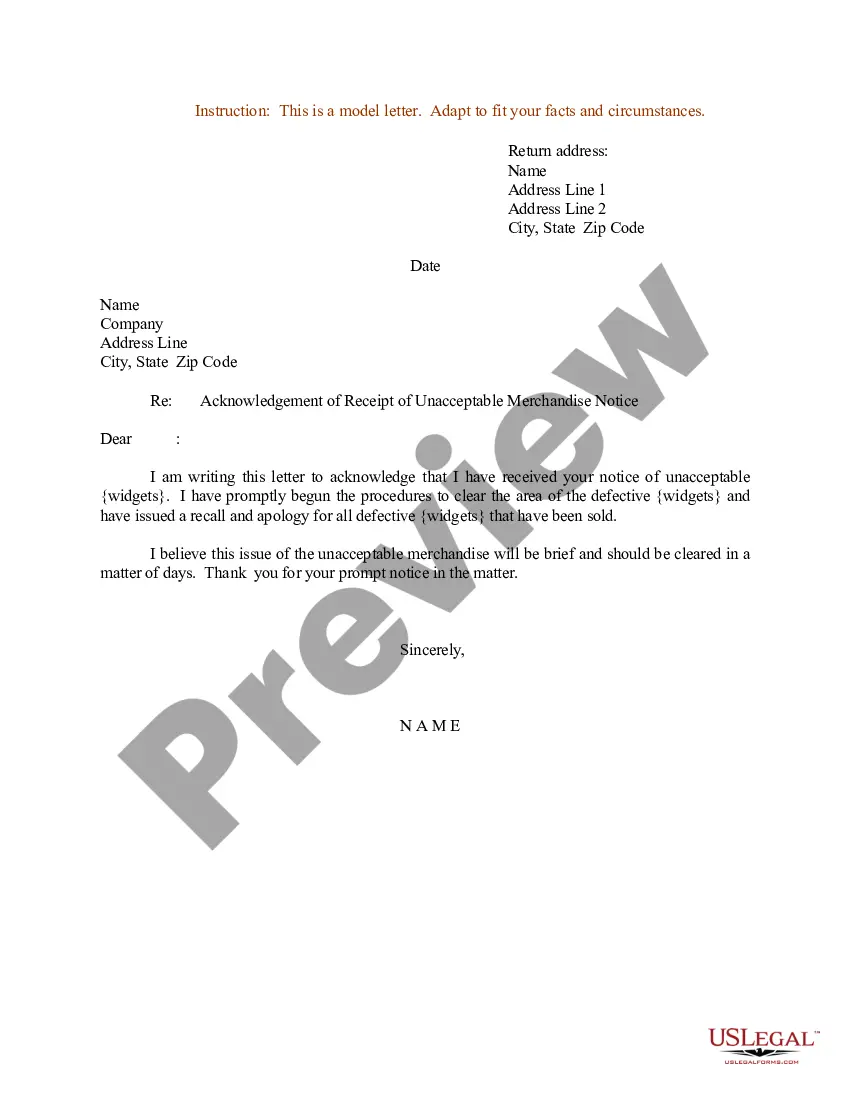



How to fill out Revocation Of Trust And Acknowledgment Of Receipt Of Notice Of Revocation By Trustee?
- If you're a returning user, log in to your account to access previously downloaded templates. Verify your subscription is active; renew if necessary.
- For first-time users, start by selecting the appropriate revocation acknowledgment template. Review the form’s preview and description to confirm it aligns with your requirements and local jurisdiction.
- If you need a different document, utilize the search feature to find alternatives that may fit better. Ensure the selected template meets your needs.
- Proceed to purchase the document. Click the Buy Now button and select a subscription plan that suits you. New users must create an account to gain access to the extensive resource library.
- Complete your purchase by entering your payment details or using PayPal. Once the transaction is confirmed, the document is available for download.
- Download your form to your device, ensuring you can easily complete it. Access your documents anytime through the My Forms section in your profile.
Using US Legal Forms empowers you to leverage a robust collection of over 85,000 legal templates. Whether you need assistance or wish to execute documents confidently, expert help is readily available.
Experience the ease of legal form execution today. Start your journey with US Legal Forms and ensure your documents are both precise and legally sound!
Form popularity
FAQ
Yes, a beneficiary can be removed under specific circumstances, often outlined in the trust document itself. This typically requires a legal process and valid reasons, such as misconduct or conflict of interest. Considering the implications of a revocation acknowledgment trustee with beneficiary is crucial, as it affects how assets are distributed and managed moving forward.
A trust becomes null and void for several reasons, such as lack of proper execution or if the grantor did not have the mental capacity at the time of creation. Another critical factor is a clear revocation acknowledgment trustee with beneficiary that explicitly cancels the trust. Understanding the legal requirements can help ensure that a trust remains valid and enforceable.
A trustee has a legal obligation to keep beneficiaries informed about the trust's status and any changes that occur. This includes notifying them of a revocation acknowledgment trustee with beneficiary when applicable. Failing to provide this information can lead to disputes, so clear and timely communication is essential to maintain trust and transparency.
The trustee and beneficiary have different roles and powers within a trust. The trustee manages the trust assets and must act in the best interest of the beneficiaries. While the trustee has authority over administrative decisions, the beneficiaries hold a vested interest in the assets, making their rights significant when conflicts arise, especially relevant in matters of revocation acknowledgment trustee with beneficiary.
A revocation of a trust occurs when the grantor formally cancels their trust document. For instance, if a person creates a trust to manage their assets but later decides to change their estate plan, they can draft a revocation acknowledgment trustee with beneficiary. This document serves as a clear notice that the trust is no longer valid and outlines the new intentions regarding asset distribution.
Changing the beneficiary on a revocable trust is generally a straightforward process, often requiring a simple amendment to the trust document. It is essential to ensure the amendment complies with both the trust’s terms and state laws. For assistance, consider using platforms like uslegalforms, which provide the necessary tools for managing the revocation acknowledgment trustee with beneficiary.
Revoking a trust beneficiary may involve formally amending the trust document or drafting a new trust. This process should be performed carefully, ensuring compliance with state laws and trust provisions. To address these changes properly, you may want to utilize resources like uslegalforms, which can guide you through the complexities of the revocation acknowledgment trustee with beneficiary.
Yes, beneficiaries can remove trustees under certain conditions set forth in the trust agreement or by state law. Reasons, like breach of fiduciary duty or incapacity, usually justify removal. It’s advisable for beneficiaries to seek guidance and consider the implications of the revocation acknowledgment trustee with beneficiary before proceeding.
A beneficiary typically needs to follow specific legal steps to remove a trustee, which may include filing a petition in court. Valid reasons, such as misconduct or failure to fulfill duties, must be demonstrated. Utilizing proper legal documentation and understanding the revocation acknowledgment trustee with beneficiary is crucial to ensure a smooth removal process.
In general, a beneficiary cannot simply override a trustee's decisions without proper legal authority. However, if the trust documents allow it, beneficiaries may have certain rights to challenge trustee actions. It’s important to review the specific terms of the trust and consult legal advice to understand your options with regard to revocation acknowledgment trustee with beneficiary.