Trust Revocation Form With Irs
Description
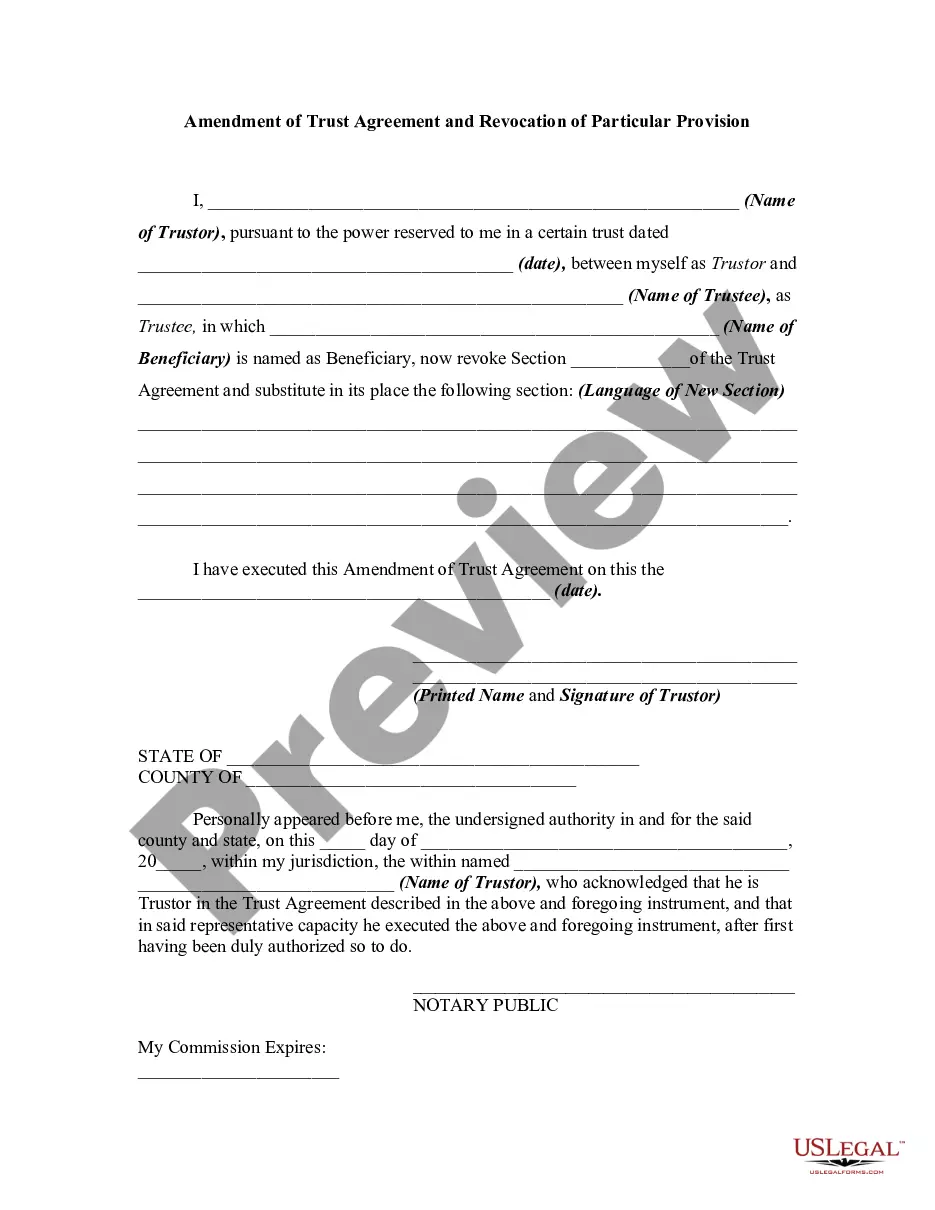
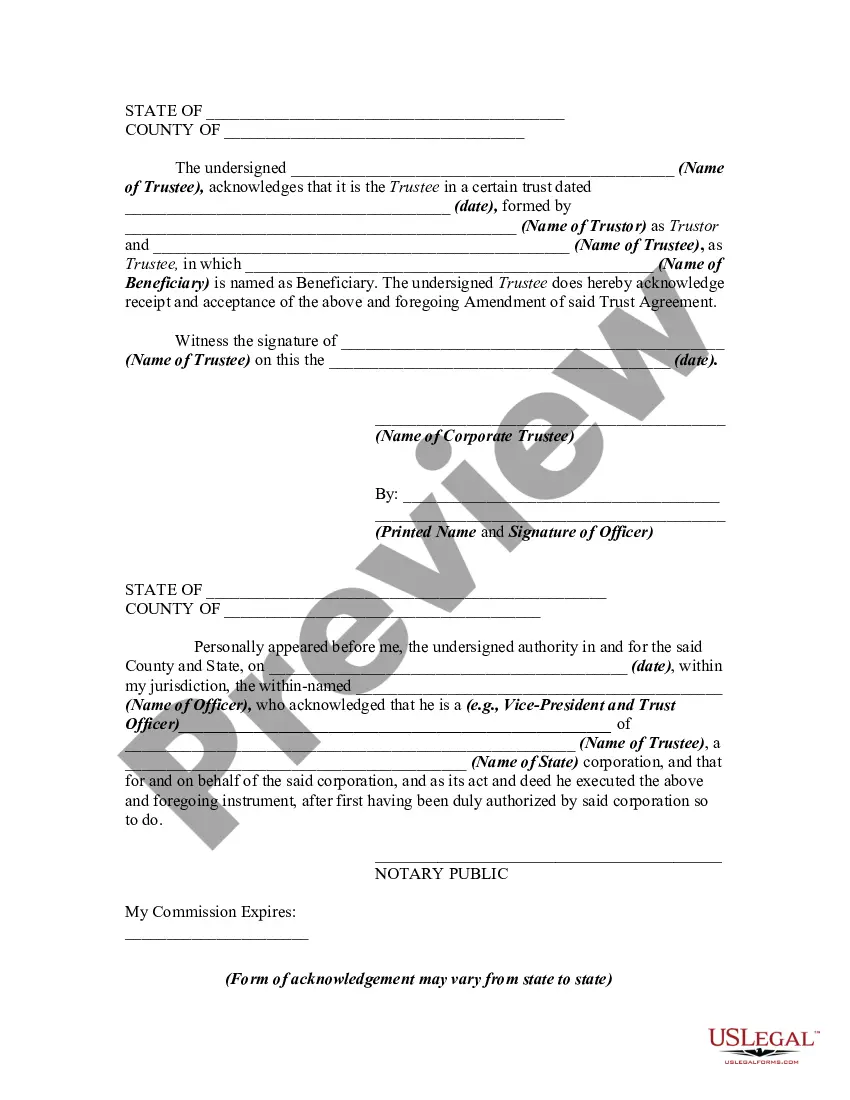
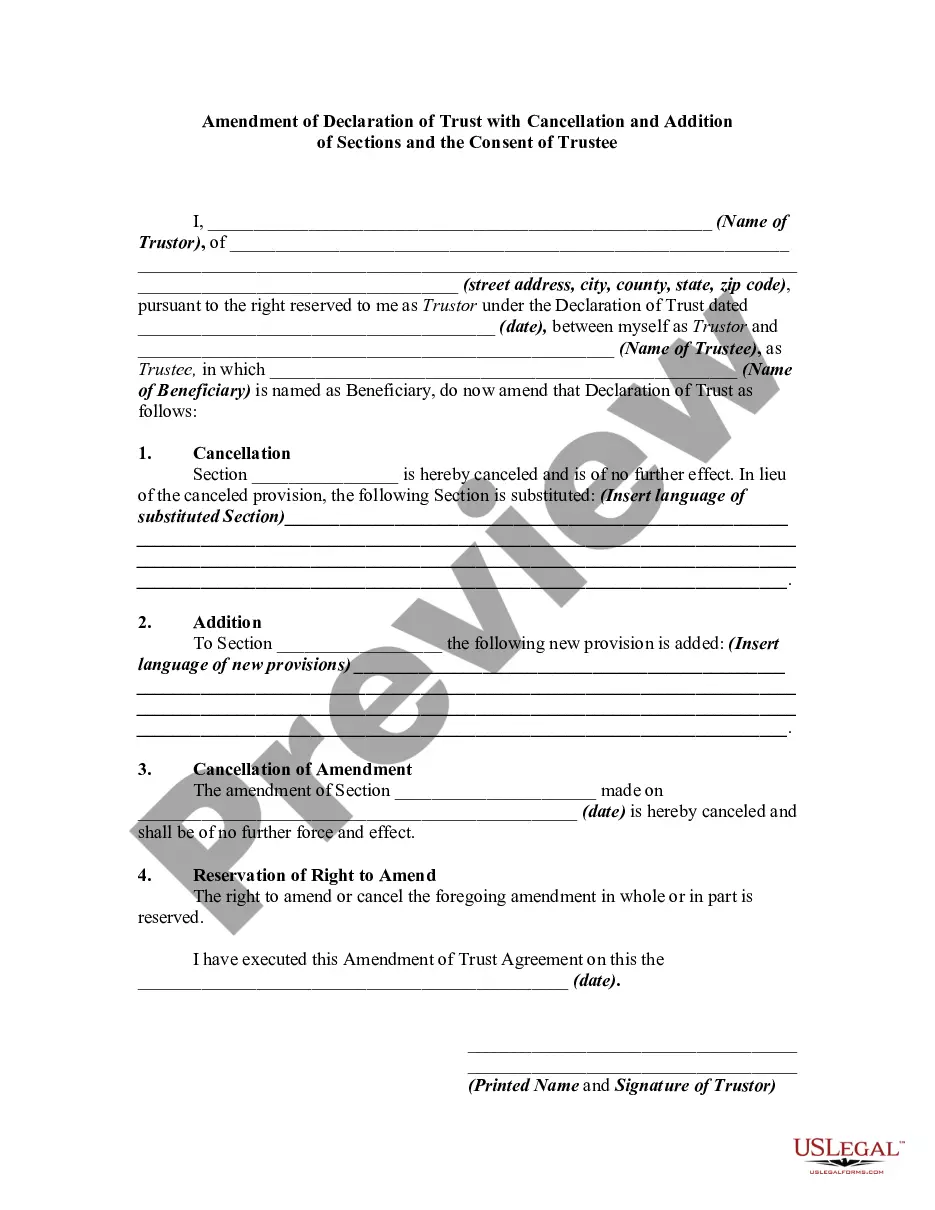
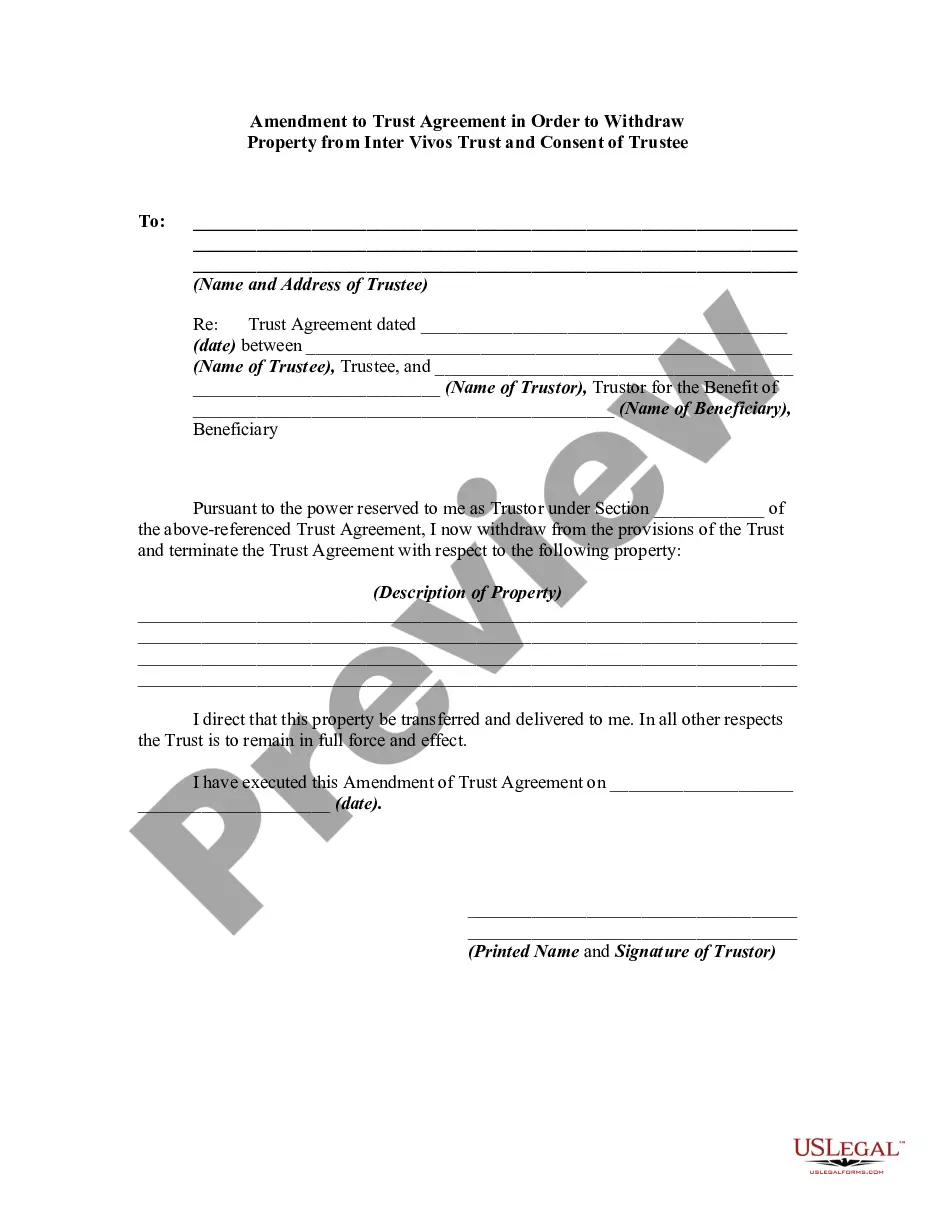
Get your form ready online
Our built-in tools help you complete, sign, share, and store your documents in one place.
Make edits, fill in missing information, and update formatting in US Legal Forms—just like you would in MS Word.
Download a copy, print it, send it by email, or mail it via USPS—whatever works best for your next step.
Sign and collect signatures with our SignNow integration. Send to multiple recipients, set reminders, and more. Go Premium to unlock E-Sign.
If this form requires notarization, complete it online through a secure video call—no need to meet a notary in person or wait for an appointment.
We protect your documents and personal data by following strict security and privacy standards.

Make edits, fill in missing information, and update formatting in US Legal Forms—just like you would in MS Word.

Download a copy, print it, send it by email, or mail it via USPS—whatever works best for your next step.

Sign and collect signatures with our SignNow integration. Send to multiple recipients, set reminders, and more. Go Premium to unlock E-Sign.

If this form requires notarization, complete it online through a secure video call—no need to meet a notary in person or wait for an appointment.

We protect your documents and personal data by following strict security and privacy standards.
Looking for another form?








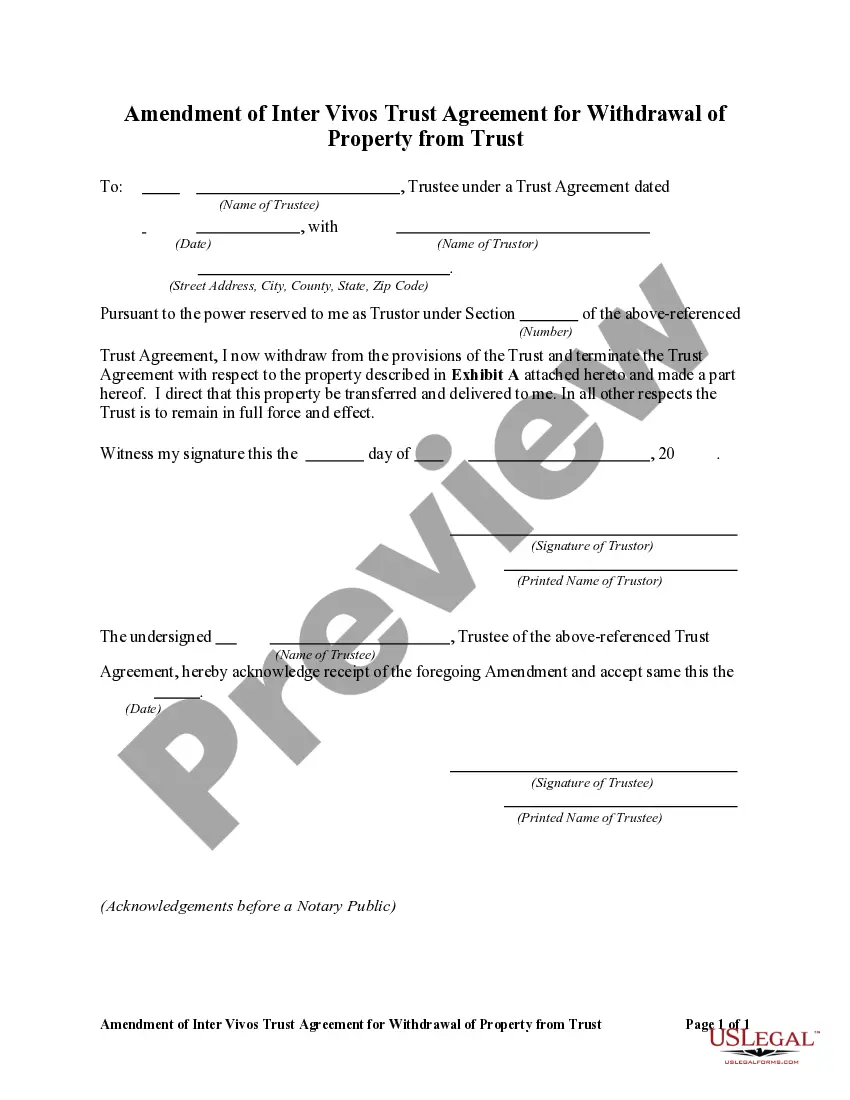
How to fill out Amendment Of Trust Agreement And Revocation Of Particular Provision?
- Log in to your US Legal Forms account. If you’re an existing user, access your dashboard and search for the Trust revocation form with IRS. Ensure your subscription is up-to-date to avoid any interruptions.
- If you're new to the service, begin by browsing the available forms. Use the Preview mode and read the description to confirm it suits your requirements.
- If you need a different form, utilize the Search feature to find appropriate alternatives that better meet your needs.
- Once you've found the correct document, click on the Buy Now button. Select a subscription plan that works for you and create an account to gain access to all resources.
- Complete your purchase by inputting your payment details. You can choose between different payment methods, including credit cards and PayPal.
- After payment, download the Trust revocation form to your device. You can always access it later from the My Forms section in your profile.
By following these steps, you will ensure a smooth experience in obtaining your Trust revocation form with IRS through US Legal Forms. This service not only saves time but also guarantees you have the most accurate and legally sound documents available.
Ready to get your Trust revocation form with IRS? Visit US Legal Forms today and empower yourself with our extensive library!
Form popularity
FAQ
An IRS revocation refers to the process of canceling a previous decision or designation related to tax status, such as the revocation of a trust's tax-exempt status. This action can significantly impact how a trust is treated for tax purposes, which is why understanding the implications is crucial. If you’re handling a trust revocation form with IRS, be sure to address any potential consequences on the trust's assets effectively. For assistance, consider using services like USLegalForms to navigate through the revocation process smoothly.
Form 56 is a notice that informs the IRS about the creation and existence of a trust. This form is pivotal as it designates the IRS to recognize the trust and its fiduciaries for tax purposes. Completing form 56 correctly ensures Trustees can manage the trust's tax obligations appropriately. If you're navigating trust revocation and need clarity, resources like USLegalForms can assist you in managing all required documentation.
Form 4810 is designed to request a prompt assessment of estate tax by the IRS. This form can expedite the process of assessing taxes due, which can be particularly beneficial in estate planning and management. By submitting this form, you can gain clarity on your tax obligations sooner rather than later. Utilizing USLegalForms can simplify the creation and submission of this form, ensuring accuracy and compliance.
The Schedule E tax form is primarily used for reporting income from various sources, such as rental real estate, royalties, partnerships, and S corporations. This form helps taxpayers report earnings on their tax returns and is essential for maintaining compliance with the IRS. It may also have implications when dealing with a trust revocation form with IRS, as accurate reporting affects the overall tax situation. Always seek clarity when filing to ensure you meet all IRS requirements.
To request a prompt assessment for estate tax, you will need to complete the appropriate forms and submit them to the IRS along with any required payment. Specifically, you can use form 4810, which is designed for requesting a quick assessment. Be sure to include all necessary details and documentation to avoid delays. Using platforms like USLegalForms can guide you through this process efficiently.
The IRS typically has 30 days to respond to form 4810 when submitted online. However, response times can vary depending on their current workload and any additional documentation required. It's crucial to track your submission and follow up if you do not receive a response within this timeframe. Understanding this timeline can help you plan your estate matters effectively.
To report trust income on a tax return, you include it on your Form 1040, which details your total income. You will list the income sources and complete any necessary schedules, like Schedule B for interest and dividends. Utilizing the trust revocation form with IRS assists in documenting the status of the trust, ensuring all income is correctly reported. If you ever feel uncertain, uslegalforms can provide guidance.
You typically do not file a separate tax return for a revocable trust because its income is reported on your individual tax return. Since revocable trusts do not incur their own tax liabilities, the income is included in your personal taxable income. Nevertheless, using the right forms and understanding how to manage them can be beneficial, and resources from uslegalforms can guide you in this area.
Failing to file a trust tax return can lead to penalties and interest accruing on any unpaid taxes. The IRS may also question the management of the trust, potentially complicating your financial situation. However, if you use the trust revocation form with IRS, you can clarify your intentions and maintain transparency with the agency. It’s essential to stay compliant to avoid any future issues.
Filing taxes for a revocable trust involves treating it as a pass-through entity. You will report the trust’s income on your personal tax return using Form 1040 and Schedule B. Remember, since the trust is revocable, you maintain control over the assets, but you must still comply with IRS regulations. Using tools from uslegalforms can simplify this process.