Form To Dissolve Trust With Someone You Hurt
Description
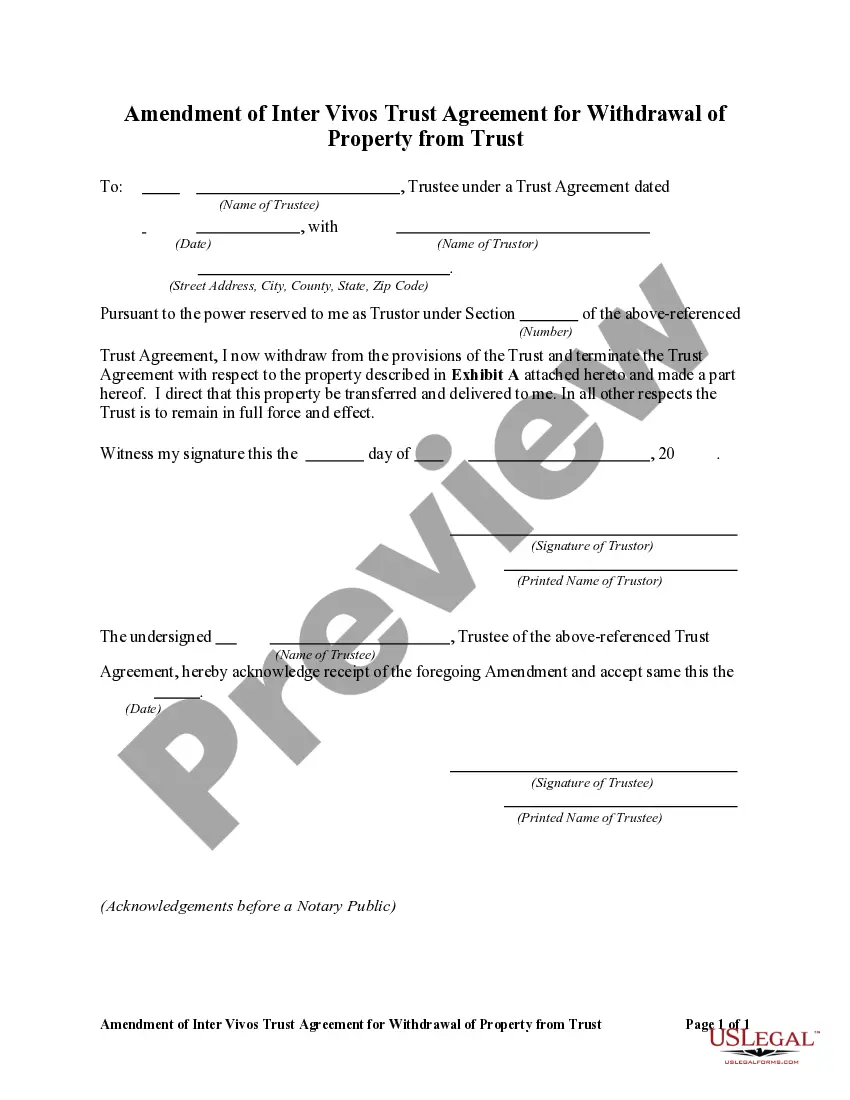
Get your form ready online
Our built-in tools help you complete, sign, share, and store your documents in one place.
Make edits, fill in missing information, and update formatting in US Legal Forms—just like you would in MS Word.
Download a copy, print it, send it by email, or mail it via USPS—whatever works best for your next step.
Sign and collect signatures with our SignNow integration. Send to multiple recipients, set reminders, and more. Go Premium to unlock E-Sign.
If this form requires notarization, complete it online through a secure video call—no need to meet a notary in person or wait for an appointment.
We protect your documents and personal data by following strict security and privacy standards.

Make edits, fill in missing information, and update formatting in US Legal Forms—just like you would in MS Word.

Download a copy, print it, send it by email, or mail it via USPS—whatever works best for your next step.

Sign and collect signatures with our SignNow integration. Send to multiple recipients, set reminders, and more. Go Premium to unlock E-Sign.

If this form requires notarization, complete it online through a secure video call—no need to meet a notary in person or wait for an appointment.

We protect your documents and personal data by following strict security and privacy standards.
Looking for another form?


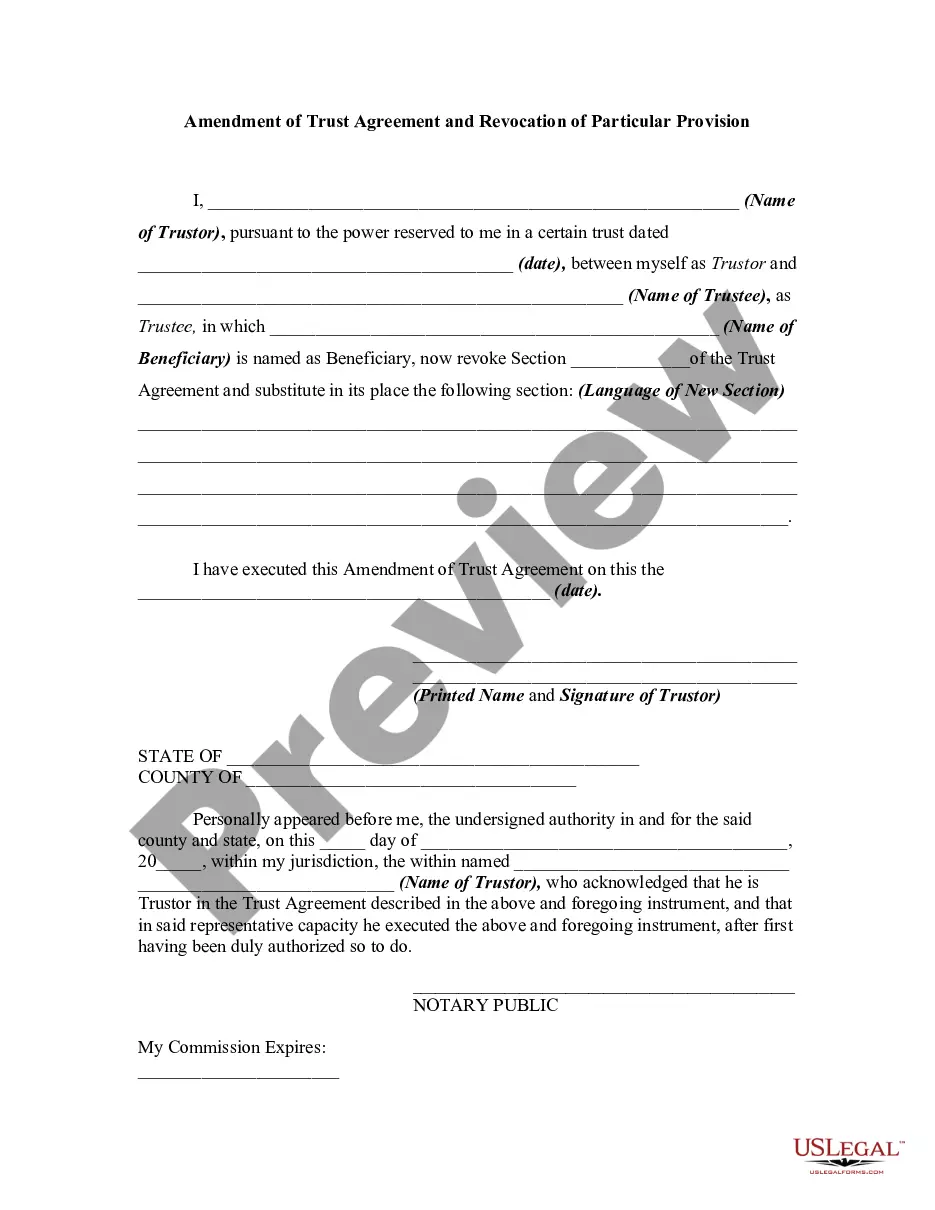
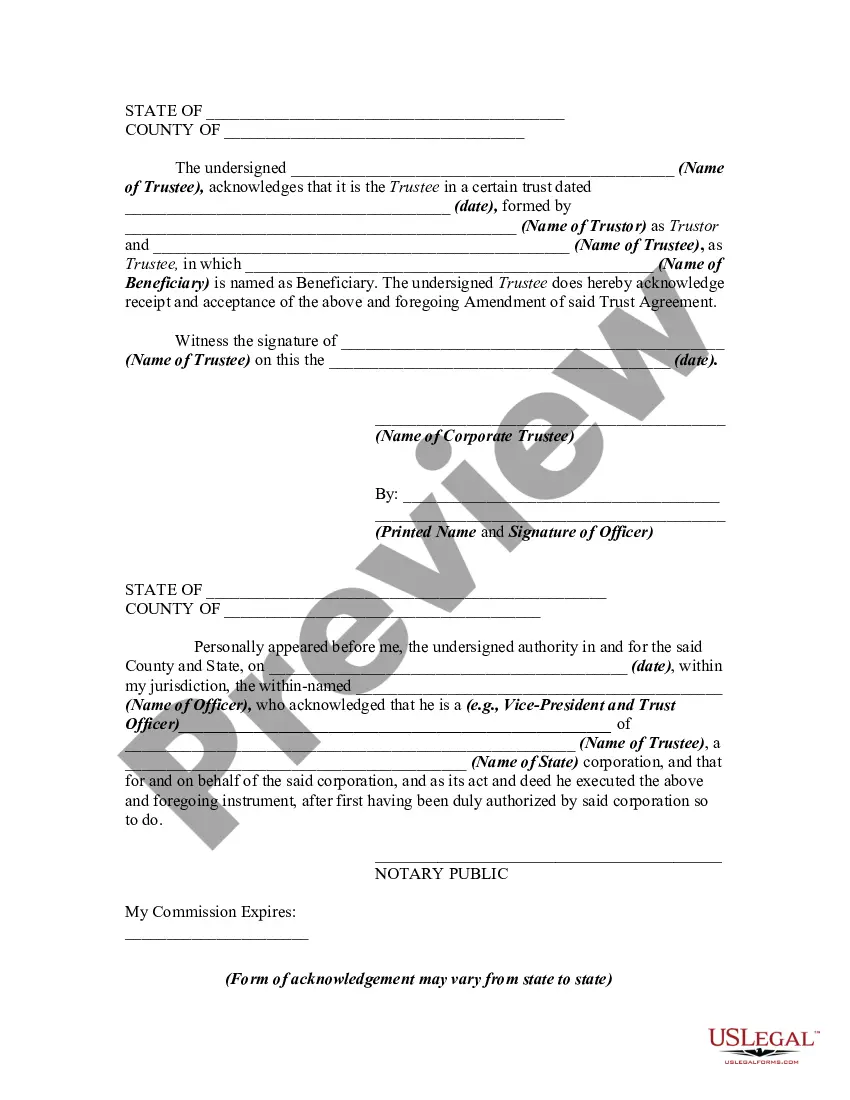
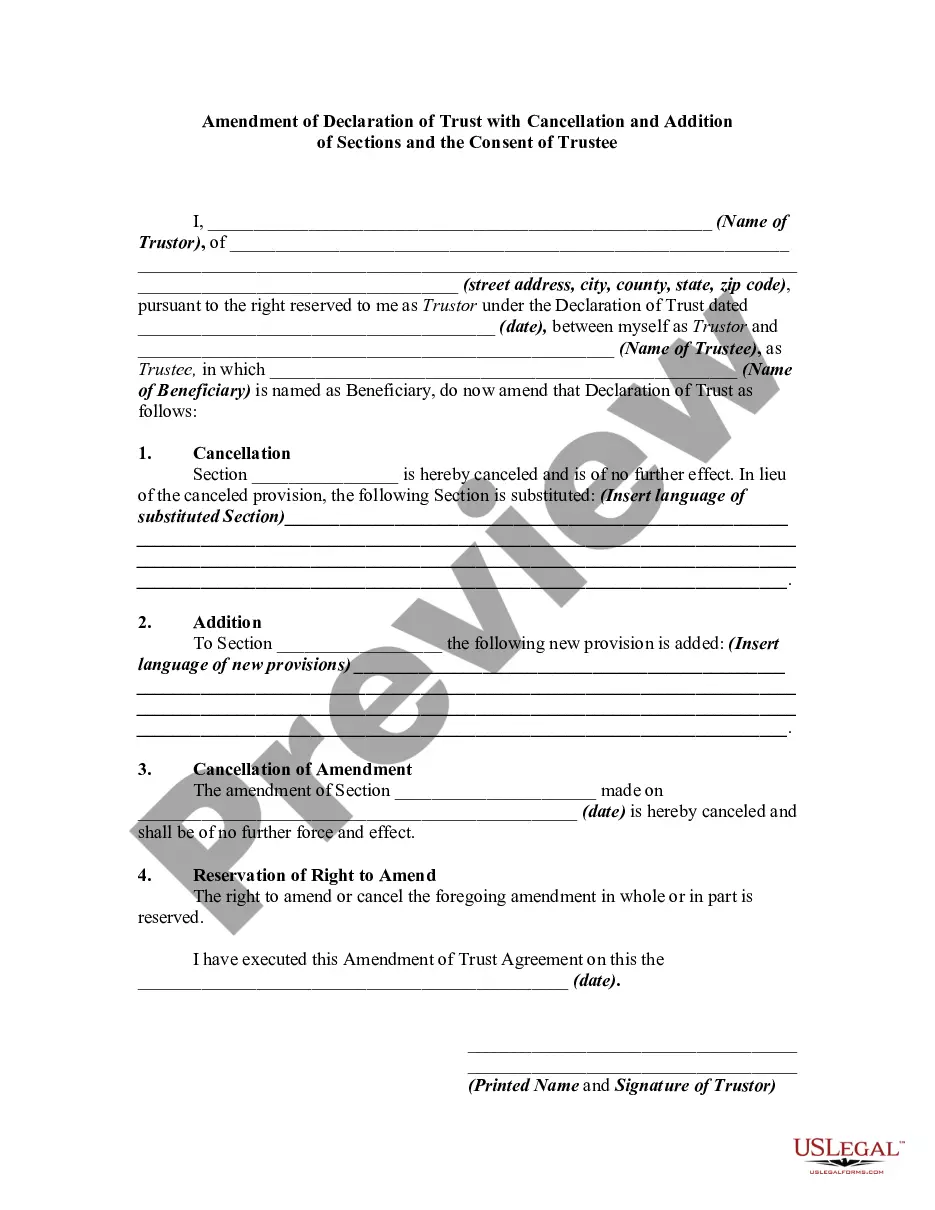
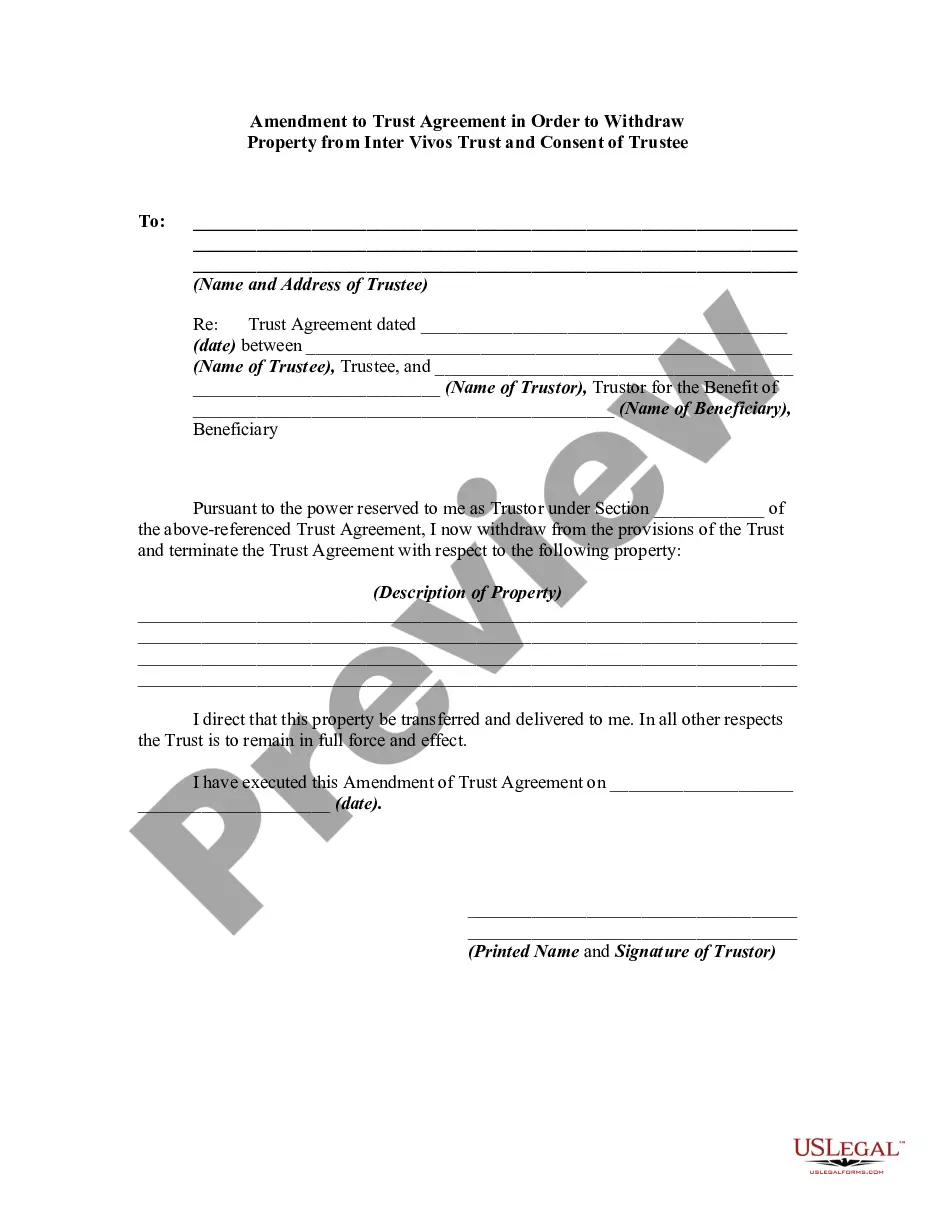
How to fill out Amendment Of Trust Agreement And Revocation Of Particular Provision?
Regardless of whether for commercial reasons or personal issues, everyone encounters legal matters at some stage in their life.
Completing legal paperwork demands meticulous care, starting from selecting the right form template.
Once downloaded, you can fill out the form using editing software or print it and complete it by hand. With an extensive US Legal Forms catalog available, you never have to waste time searching for the right sample online. Utilize the library’s user-friendly navigation to find the correct form for any situation.
- For instance, if you choose an incorrect version of the Form To Dissolve Trust With Someone You Hurt, it will be denied upon submission.
- Thus, it is essential to have a reliable source of legal documents like US Legal Forms.
- To obtain a Form To Dissolve Trust With Someone You Hurt template, follow these straightforward steps.
- Locate the sample you require by using the search bar or catalog navigation.
- Review the form’s description to ensure it suits your situation, state, and locality.
- Click on the form’s preview to inspect it.
- If it is the incorrect document, return to the search feature to find the Form To Dissolve Trust With Someone You Hurt template you need.
- Acquire the template when it aligns with your specifications.
- If you already possess a US Legal Forms account, click Log in to access previously saved documents in My documents.
- If you do not have an account yet, you can get the form by clicking Buy now.
- Choose the appropriate pricing option.
- Complete the account registration form.
- Select your payment method: you can utilize a credit card or PayPal account.
- Choose the document format you desire and download the Form To Dissolve Trust With Someone You Hurt.
Form popularity
FAQ
Instead, in most cases, an irrevocable trust can only be dissolved by court order. The details of dissolving an irrevocable trust differ widely between states and jurisdictions. However, typically you will need to get approval from the trust's beneficiaries and potentially its trustees as well.
Trust termination may occur through a mutual agreement between the parties involved, such as the beneficiaries and the trustee. This type of termination usually requires the consent of all beneficiaries and may involve the distribution of the trust assets as agreed upon by the parties.
Perhaps the most common method for terminating a trust is by the trustee exercising its dispositive powers and making an appointment out of the remaining trust assets to the beneficiaries.
The two most common ways to terminate and/or modify an irrevocable trust is to 1) argue that there has been a change of circumstances not anticipated by the settlors at the time they created the trust (for example changes in tax law, and 2) argue that all beneficiaries consent to the proposed termination and or ...
A trust might terminate because: The trust has accomplished its intended purposes. It is no longer economically feasible to have a trust. The trust has distributed all of its property and assets. The trust is revoked. The court dissolves the trust because of a dispute or illegality.