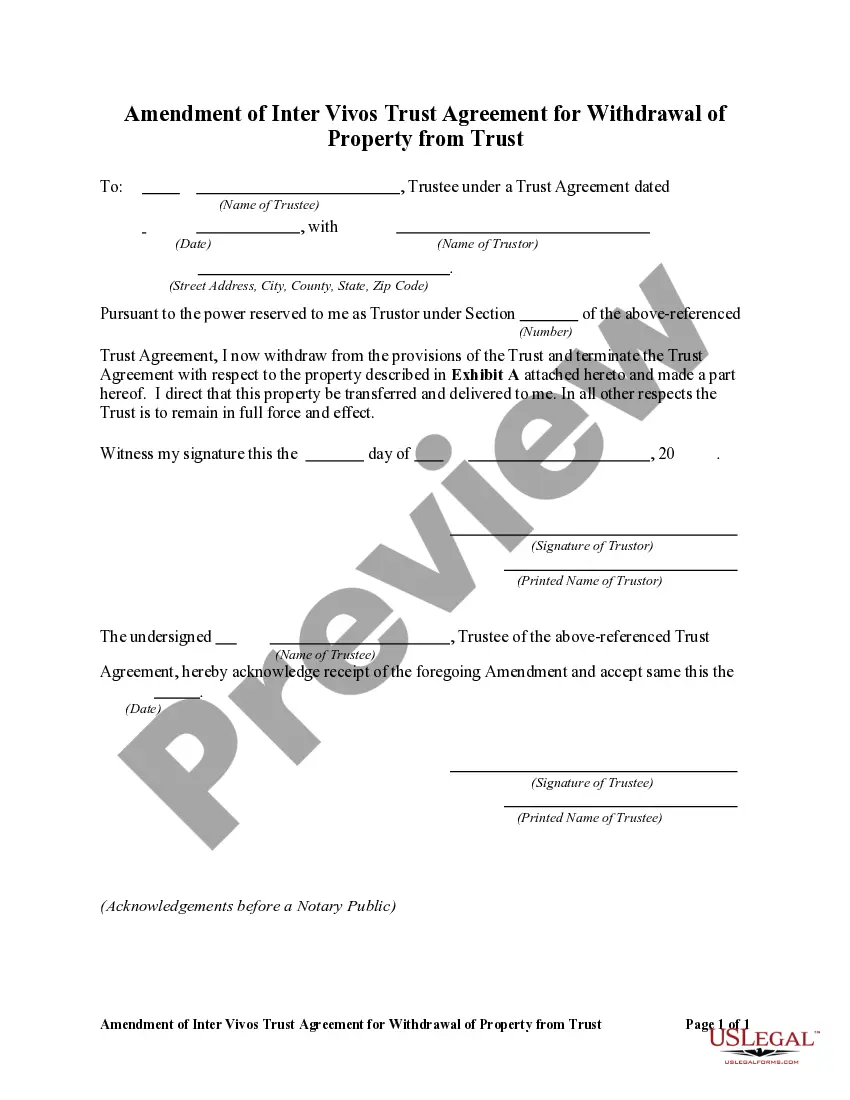
Amendment In Trust Deed
Description
Get your form ready online
Our built-in tools help you complete, sign, share, and store your documents in one place.
Make edits, fill in missing information, and update formatting in US Legal Forms—just like you would in MS Word.
Download a copy, print it, send it by email, or mail it via USPS—whatever works best for your next step.
Sign and collect signatures with our SignNow integration. Send to multiple recipients, set reminders, and more. Go Premium to unlock E-Sign.
If this form requires notarization, complete it online through a secure video call—no need to meet a notary in person or wait for an appointment.
We protect your documents and personal data by following strict security and privacy standards.

Make edits, fill in missing information, and update formatting in US Legal Forms—just like you would in MS Word.

Download a copy, print it, send it by email, or mail it via USPS—whatever works best for your next step.

Sign and collect signatures with our SignNow integration. Send to multiple recipients, set reminders, and more. Go Premium to unlock E-Sign.

If this form requires notarization, complete it online through a secure video call—no need to meet a notary in person or wait for an appointment.

We protect your documents and personal data by following strict security and privacy standards.
Looking for another form?



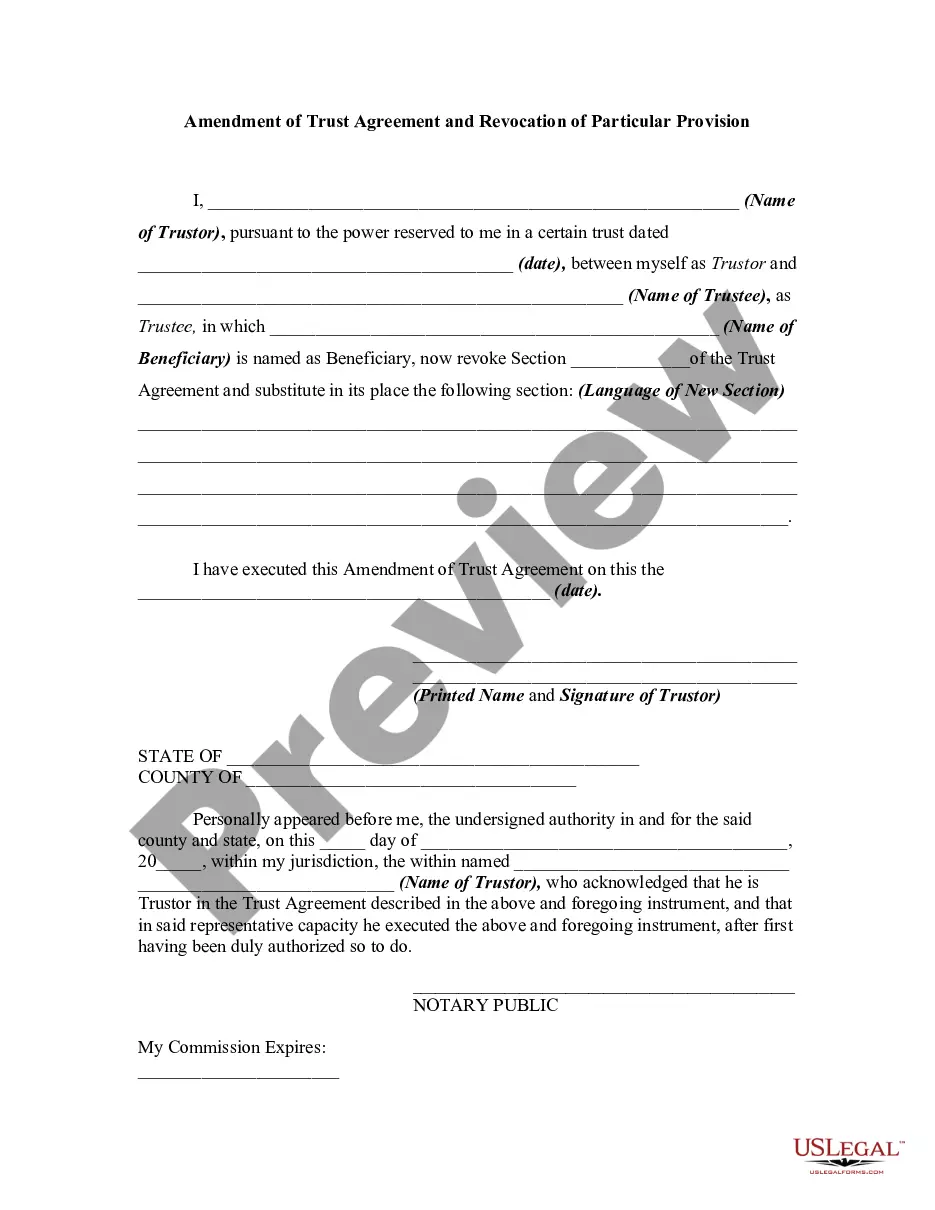
How to fill out Amendment Of Trust Agreement And Revocation Of Particular Provision?
Identifying a reliable source for obtaining the latest and most pertinent legal templates is a significant part of managing administrative duties.
Finding the appropriate legal documents requires precision and meticulousness, which is why it is crucial to source Amendment In Trust Deed examples exclusively from trustworthy providers, such as US Legal Forms. An incorrect template can squander your time and prolong your current predicament.
Once the form is on your device, you can edit it using the editor, or print it to complete manually. Eliminate the complications associated with your legal documents. Explore the extensive US Legal Forms library where you can locate legal templates, assess their relevance to your circumstances, and download them without delay.
- Utilize the library navigation or search bar to find your sample.
- Examine the form’s description to determine if it meets the requirements of your state and locality.
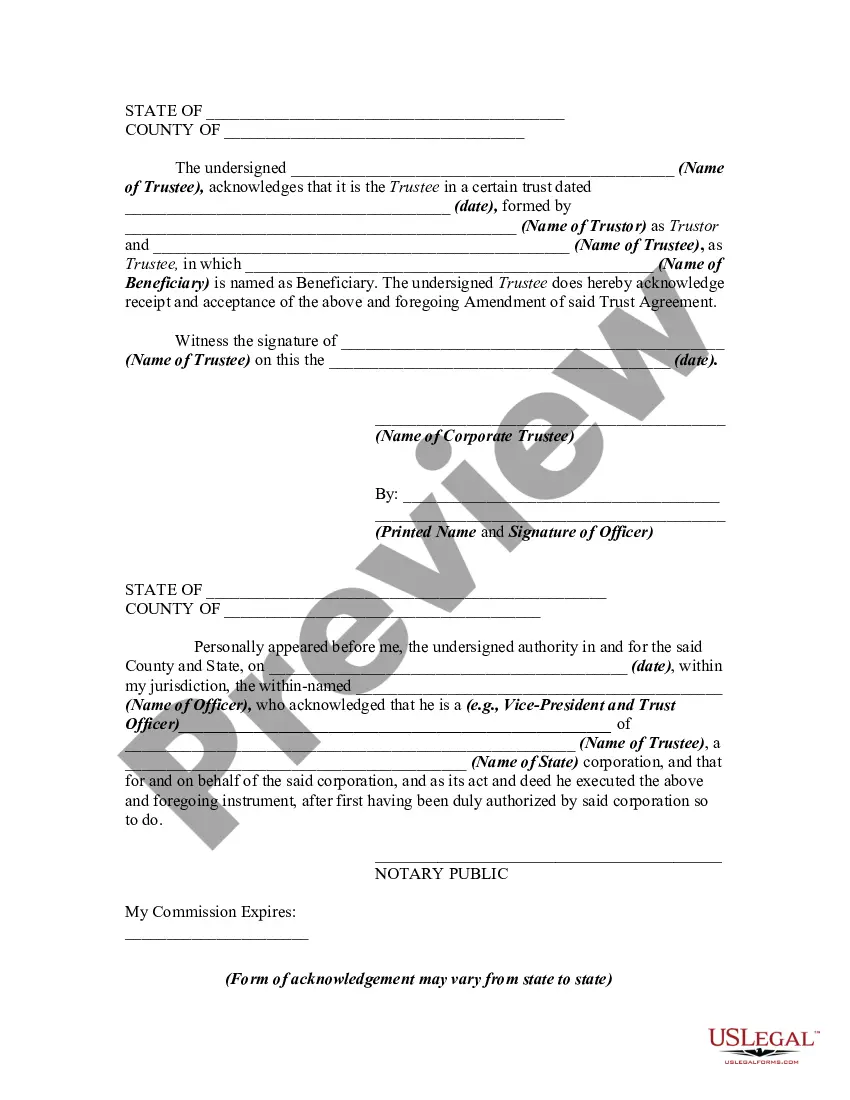
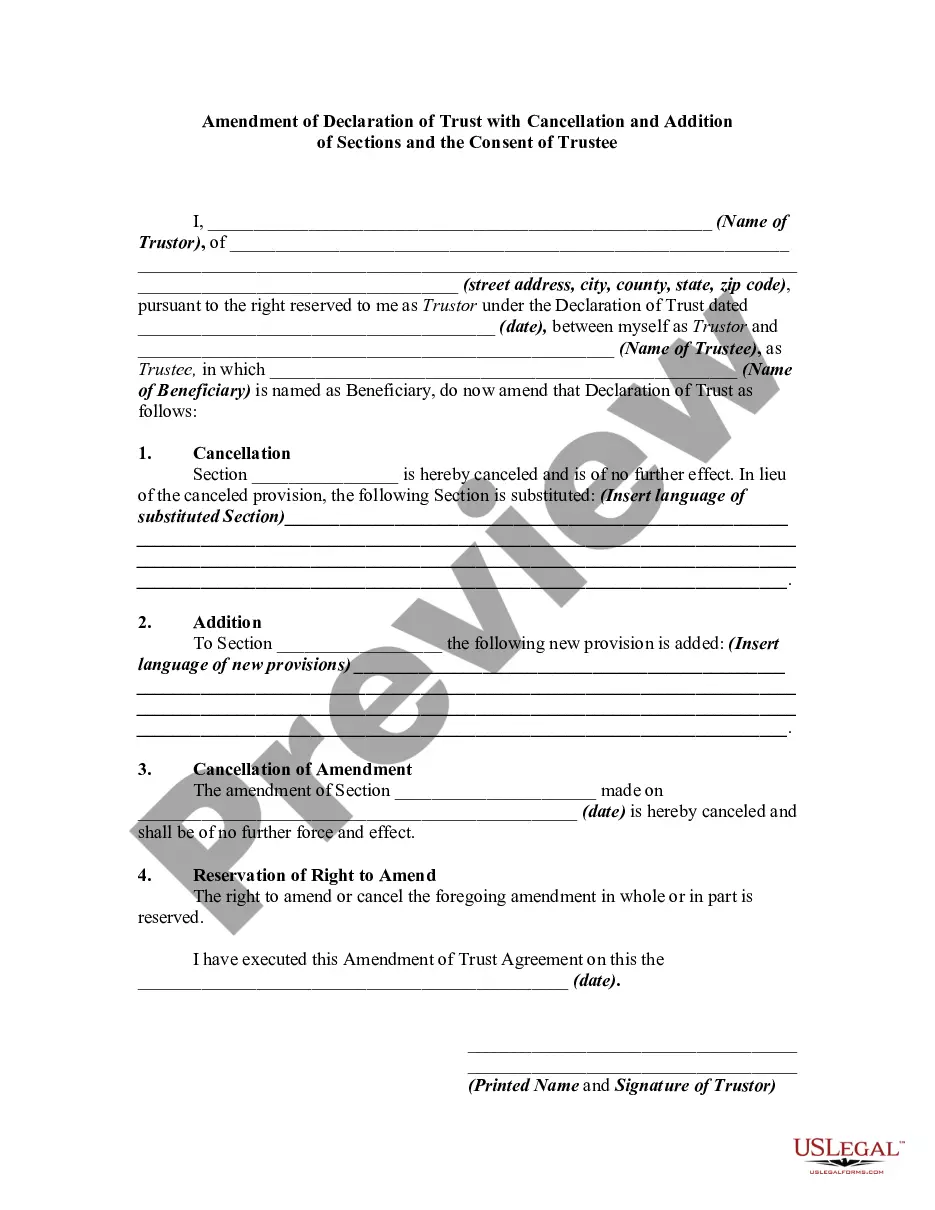
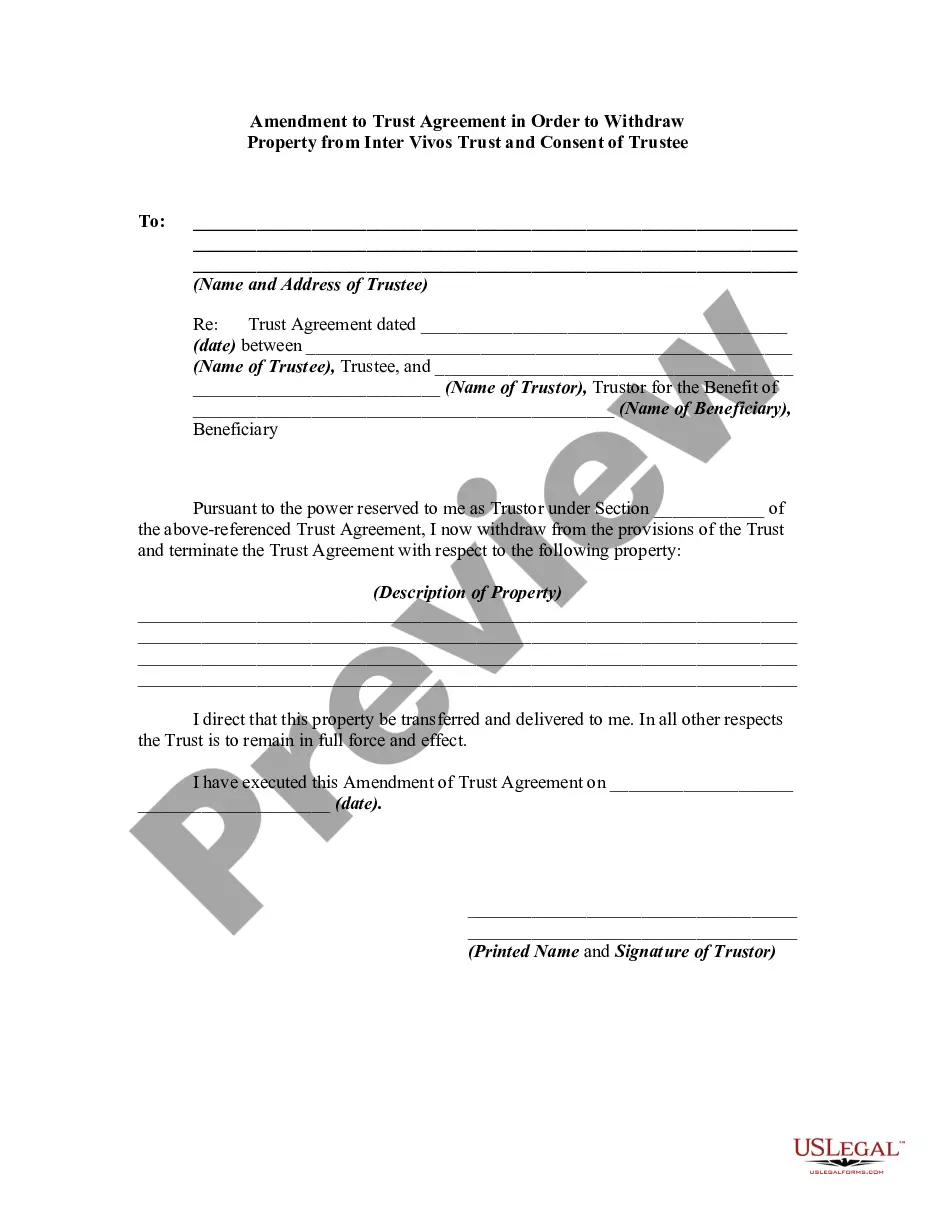
- View the form preview, if available, to confirm that the template matches your interests.
- Continue the search to find the appropriate template if the Amendment In Trust Deed does not satisfy your needs.
- If you are confident about the form’s applicability, download it.
- If you are a registered user, click Log in to verify and gain access to your chosen forms in My documents.
- If you haven't created a profile yet, click Buy now to purchase the form.
- Select the pricing option that best aligns with your preferences.
- Proceed to registration to finalize your purchase.
- Complete your transaction by selecting a payment method (credit card or PayPal).
- Pick the document format for downloading the Amendment In Trust Deed.
Form popularity
FAQ
If there is no amendment clause in the Trust Deed, any amendment has to be done with the permission of a Civil Court. Once the Civil Court has allowed permission for amendment, it is not open on the part of the Income Tax Officer or any other person to challenge such amendment.
(If you are a beneficiary, you will likely need approval from the trust's founder if they still live, its trustees and all other beneficiaries.) If you have approval from all the relevant parties, you will then have to petition a court and state your reasons for dissolving the trust.
A revocable trust can be changed at any time by the grantor during their lifetime, as long as they are competent. An irrevocable trust usually can't be changed without a court order or the approval of all the trust's beneficiaries. This makes an irrevocable trust less flexible.
(If you are a beneficiary, you will likely need approval from the trust's founder if they still live, its trustees and all other beneficiaries.) If you have approval from all the relevant parties, you will then have to petition a court and state your reasons for dissolving the trust.
Revising the terms of a trust is known as ?amending? the trust. An amendment is generally appropriate when there are only a few minor changes to make, like rewording a certain paragraph, changing the successor trustee, or modifying beneficiaries.