Successor Trustee With A Trust
Description

Get your form ready online
Our built-in tools help you complete, sign, share, and store your documents in one place.
Make edits, fill in missing information, and update formatting in US Legal Forms—just like you would in MS Word.
Download a copy, print it, send it by email, or mail it via USPS—whatever works best for your next step.
Sign and collect signatures with our SignNow integration. Send to multiple recipients, set reminders, and more. Go Premium to unlock E-Sign.
If this form requires notarization, complete it online through a secure video call—no need to meet a notary in person or wait for an appointment.
We protect your documents and personal data by following strict security and privacy standards.

Make edits, fill in missing information, and update formatting in US Legal Forms—just like you would in MS Word.

Download a copy, print it, send it by email, or mail it via USPS—whatever works best for your next step.

Sign and collect signatures with our SignNow integration. Send to multiple recipients, set reminders, and more. Go Premium to unlock E-Sign.

If this form requires notarization, complete it online through a secure video call—no need to meet a notary in person or wait for an appointment.

We protect your documents and personal data by following strict security and privacy standards.
Looking for another form?


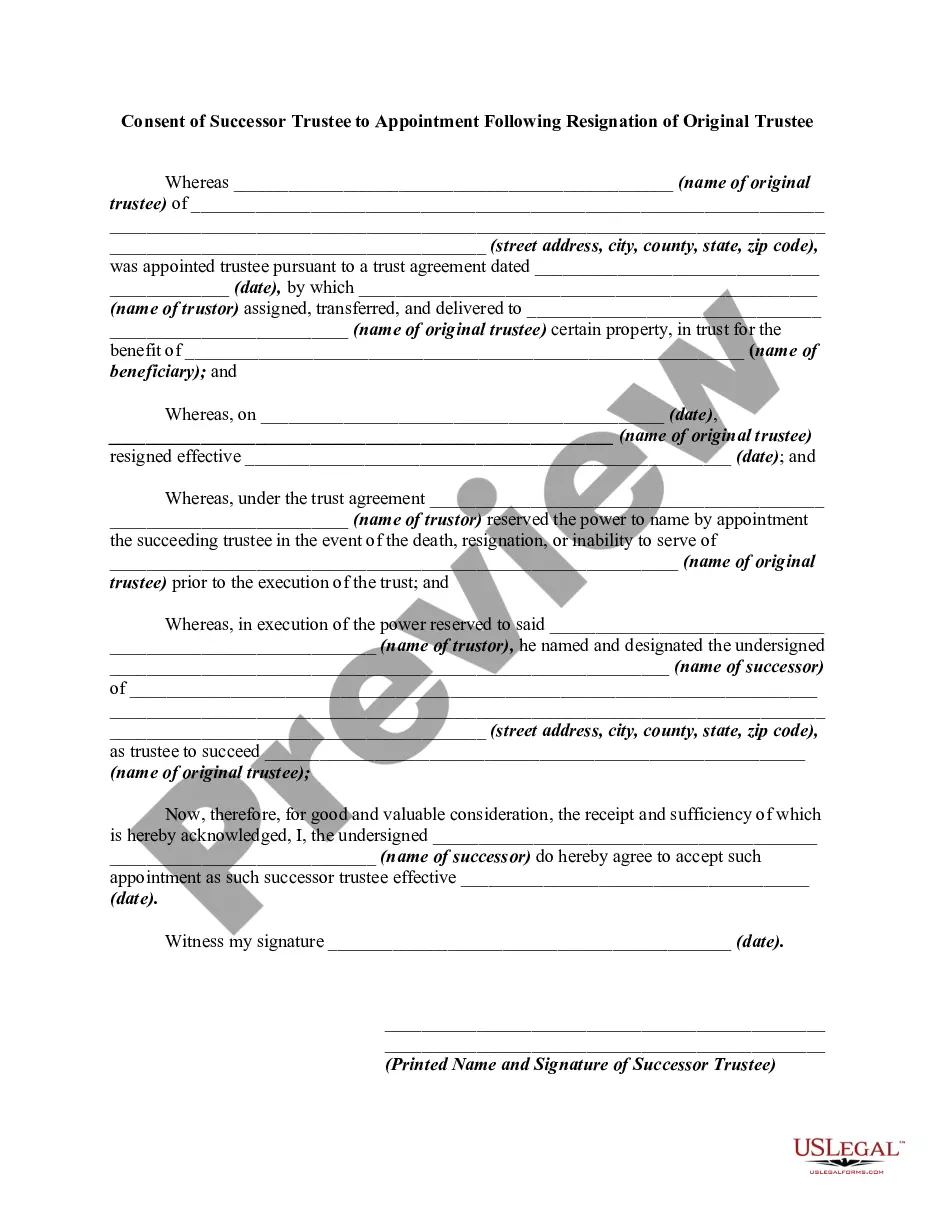
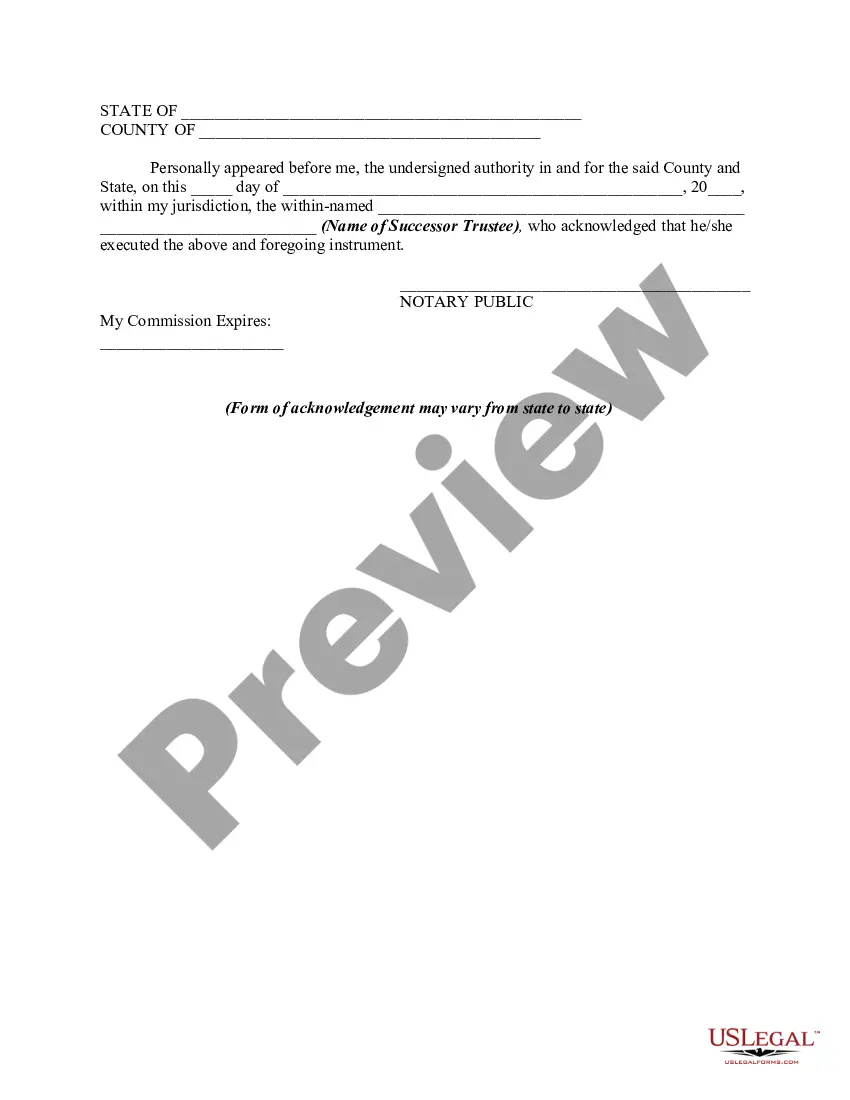
How to fill out Consent Of Successor Trustee To Appointment Following Resignation Of Original Trustee?
- Log in to your account on US Legal Forms if you are a returning user, making sure your subscription is valid. If not, renew your plan promptly.
- For first-time users, begin by previewing the available form templates. Check the descriptions and local jurisdiction requirements to ensure accuracy.
- If you encounter issues finding the right template, utilize the search feature to locate a suitable document that meets your needs.
- Purchase the selected document by clicking on the Buy Now button and choosing your preferred subscription plan. Registration may be required.
- Complete your transaction by entering your payment information, whether through credit card or PayPal, to finalize your subscription.
- Download the completed form to your device for immediate access and future use, available in the My Forms section of your profile.
By using US Legal Forms, individuals and attorneys can navigate the complexities of legal documentation with confidence and ease. Backed by a vast library, you will find over 85,000 fillable forms catered to various legal needs.
Start today to simplify your legal documentation processes and ensure compliance with legal requirements. Visit US Legal Forms for more information.
Form popularity
FAQ
The primary difference between a trustee and a successor trustee lies in the timing of their roles. A trustee manages the trust during its active period, while a successor trustee takes over only when the original trustee can no longer fulfill their duties. Understanding this distinction helps you choose an appropriate successor trustee with a trust to ensure smooth management of your assets. Tools like US Legal Forms can assist in outlining these roles clearly within your trust agreement.
A successor trustee is appointed by specifying their name in the trust agreement, thereby designating them to step in when the original trustee is unable to fulfill their duties. This can include scenarios such as incapacity or death. Clear language in your trust document is essential for a seamless transition. Consider using US Legal Forms to ensure that your trust details, including the successor trustee, are clearly established.
If there is no successor trustee appointed with a trust, the trust may face challenges in management and distribution of assets. In such cases, a court may need to appoint a trustee, which can lead to delays and additional costs. This situation emphasizes the importance of designating a reliable successor trustee within the trust documentation. Using platforms like US Legal Forms can help you avoid this issue by guiding you through proper appointment.
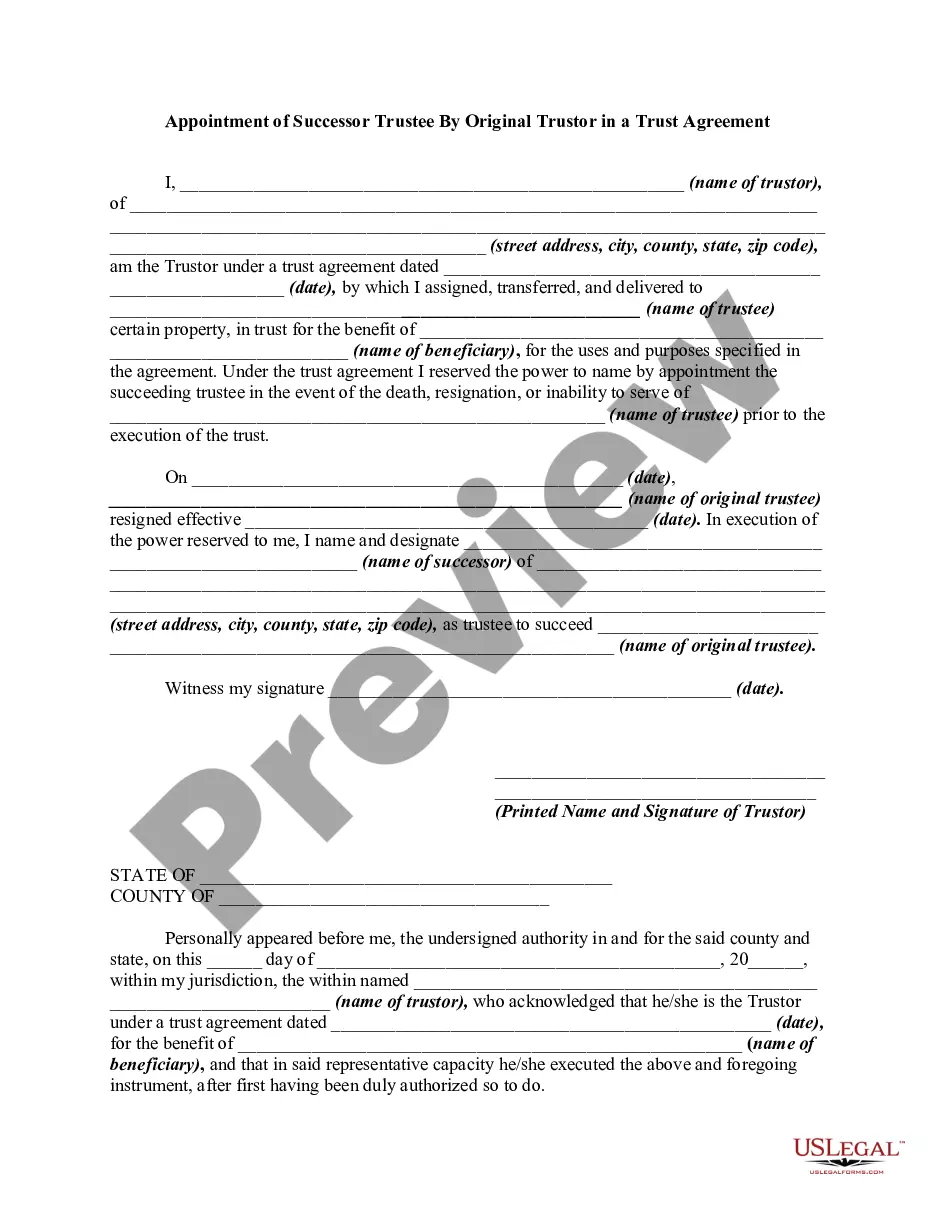
To appoint a successor trustee with a trust, you typically name them in the trust document itself. This can be done during the initial creation of the trust or modified later through a trust amendment. It is also wise to communicate your decision to the potential successor trustee to ensure they are willing and able to take on this responsibility. Utilizing a legal service like US Legal Forms can simplify this process and provide clear templates.
Yes, a trustee can also serve as a beneficiary of the trust. This dual role can exist as long as it is properly documented and does not create a conflict of interest. For some, it enhances trust since the trustee has a vested interest. Making sure all terms are clear in the trust can be easily facilitated through tools available from uslegalforms.
Generally, successor trustees are not automatically considered beneficiaries of the trust. Their main role is to manage and distribute the trust's assets according to the trustor's wishes. However, if named as a beneficiary in the trust document, they may receive assets as well. This clarity further emphasizes the importance of outlining roles within the trust established through platforms like uslegalforms.
A beneficiary is someone who receives assets directly from a trust upon the trustor's death. In contrast, a successor beneficiary inherits only if the primary beneficiary cannot or does not wish to accept the assets. Knowing the difference can help you craft a clearer estate plan. Structuring these roles effectively with a successor trustee with a trust can enhance your peace of mind.
An example of a successor trustee is a trusted family member or a close friend appointed to manage the trust after the initial trustee's passing. This person will oversee the distribution of assets according to the terms of the trust. Choosing someone with financial knowledge and a strong sense of duty can help ensure that your wishes are honored. Utilizing resources like uslegalforms can simplify the notice and selection process.
Yes, a successor trustee can also be a beneficiary of the trust. However, it is essential to clarify the roles and responsibilities in the trust document. By choosing a successor trustee with a trust who is also a beneficiary, you can simplify the administration process. Just ensure that all parties understand their obligations and expectations.
USLegalForms provides valuable resources and templates to help you establish a trust and designate a successor trustee effectively. With easy-to-use forms and comprehensive guidance, you can ensure that your trust meets all legal requirements. This platform simplifies the process and gives you peace of mind as you plan for the future.