Unjust Enrichment Form For Contract
Description
Get your form ready online
Our built-in tools help you complete, sign, share, and store your documents in one place.
Make edits, fill in missing information, and update formatting in US Legal Forms—just like you would in MS Word.
Download a copy, print it, send it by email, or mail it via USPS—whatever works best for your next step.
Sign and collect signatures with our SignNow integration. Send to multiple recipients, set reminders, and more. Go Premium to unlock E-Sign.
If this form requires notarization, complete it online through a secure video call—no need to meet a notary in person or wait for an appointment.
We protect your documents and personal data by following strict security and privacy standards.

Make edits, fill in missing information, and update formatting in US Legal Forms—just like you would in MS Word.

Download a copy, print it, send it by email, or mail it via USPS—whatever works best for your next step.

Sign and collect signatures with our SignNow integration. Send to multiple recipients, set reminders, and more. Go Premium to unlock E-Sign.

If this form requires notarization, complete it online through a secure video call—no need to meet a notary in person or wait for an appointment.

We protect your documents and personal data by following strict security and privacy standards.
Looking for another form?
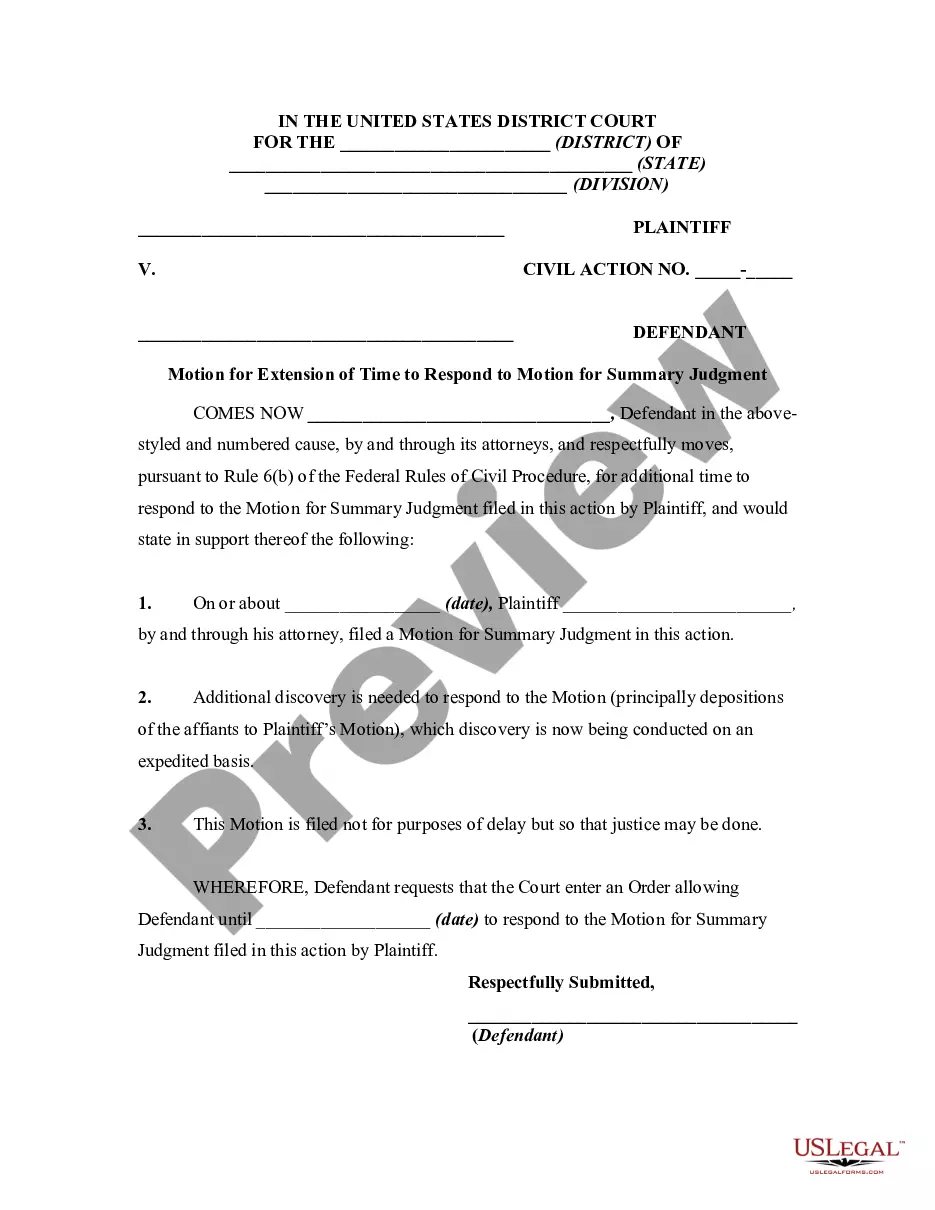

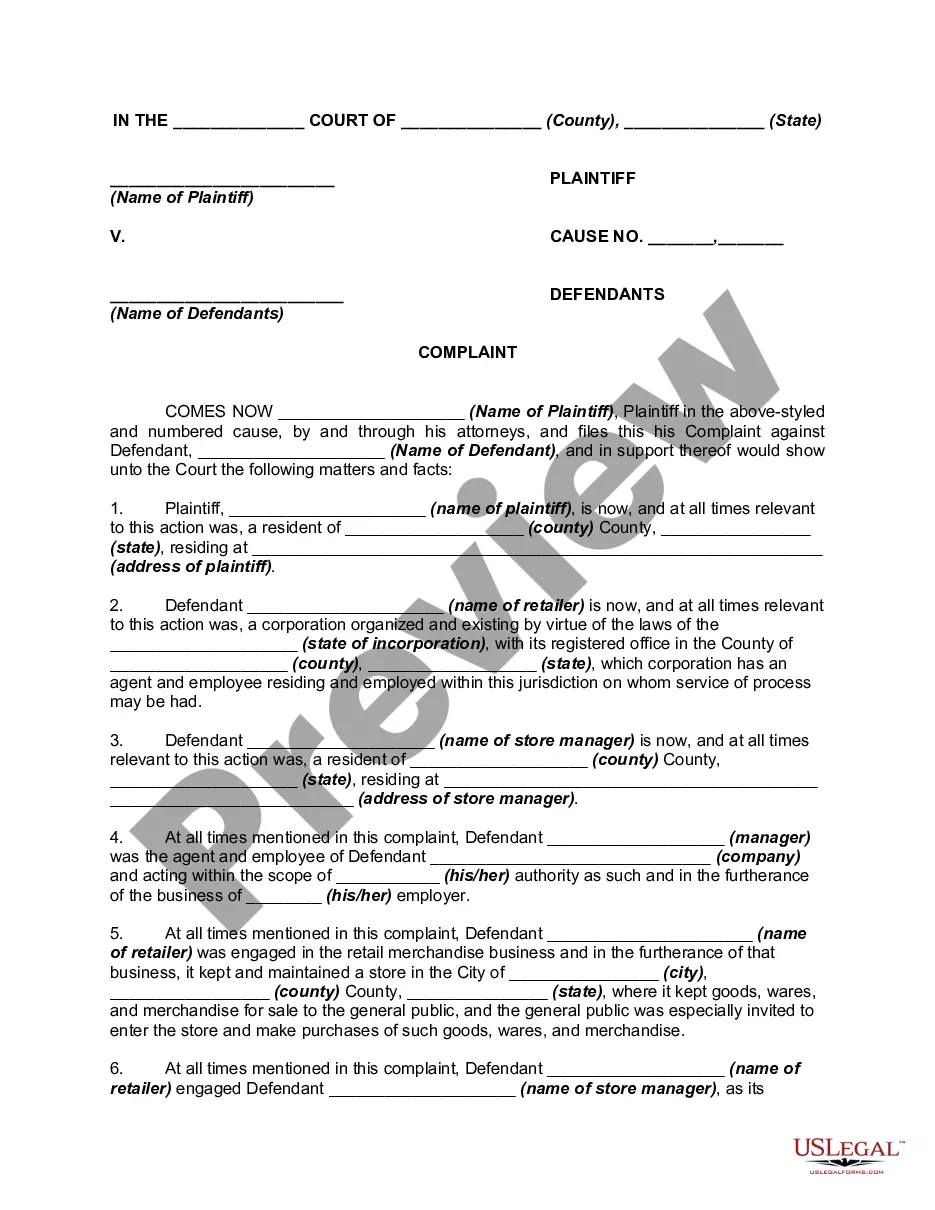
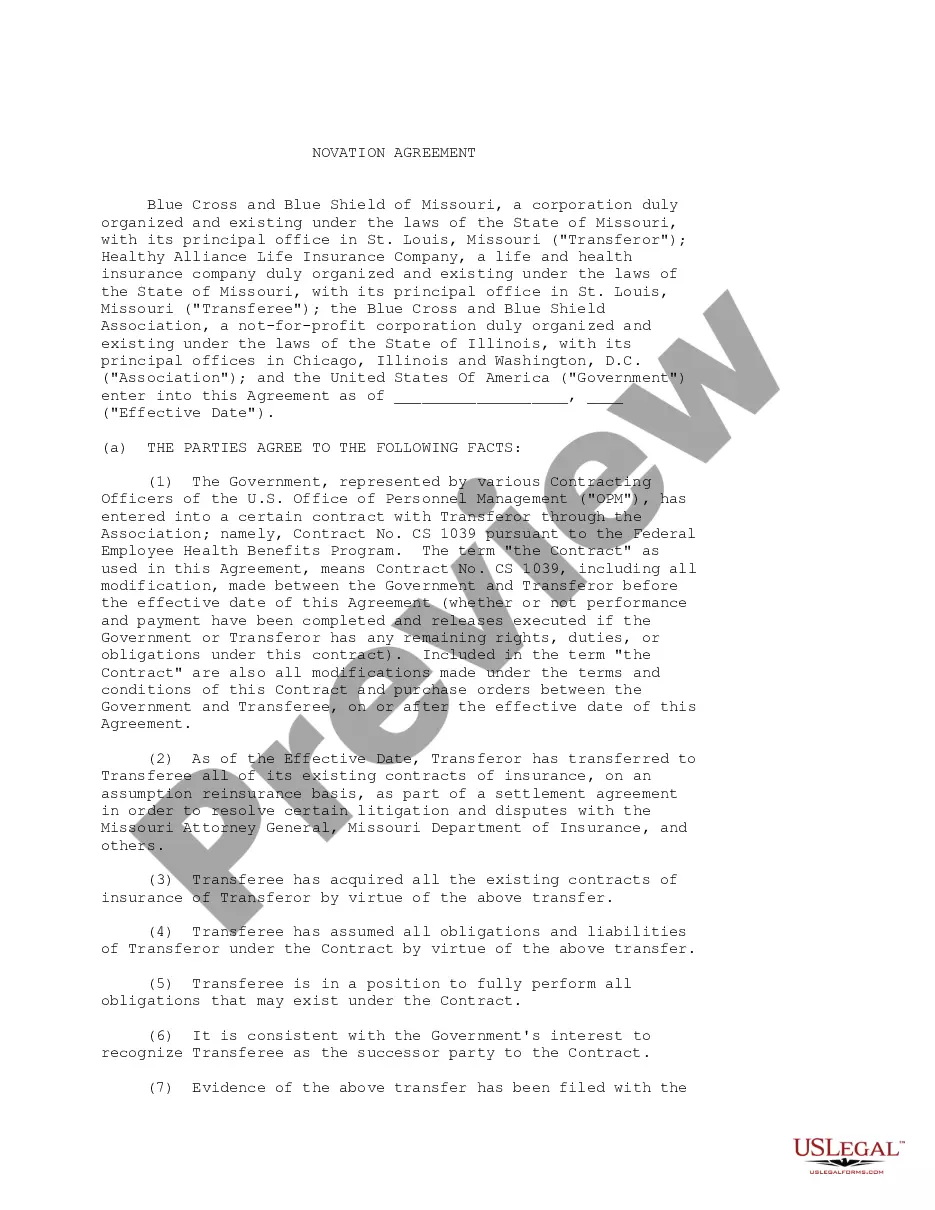
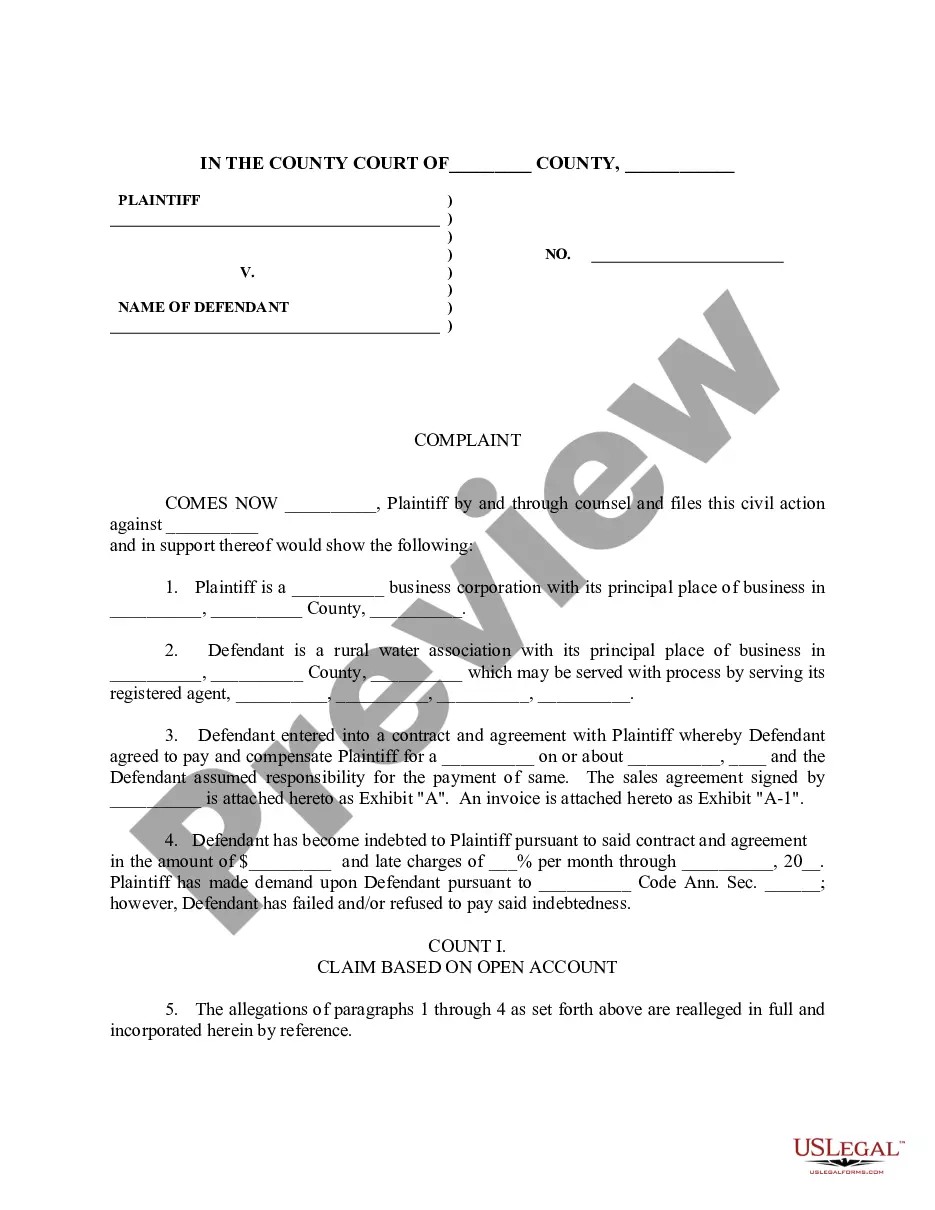
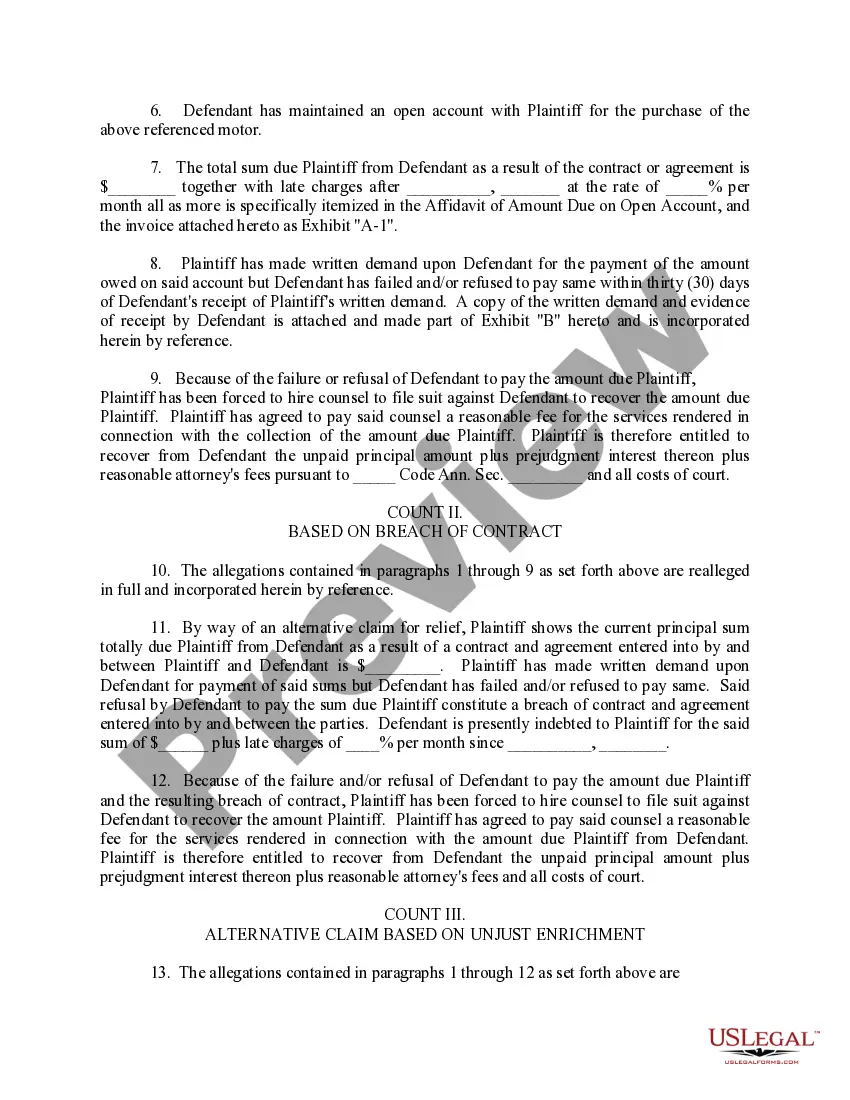
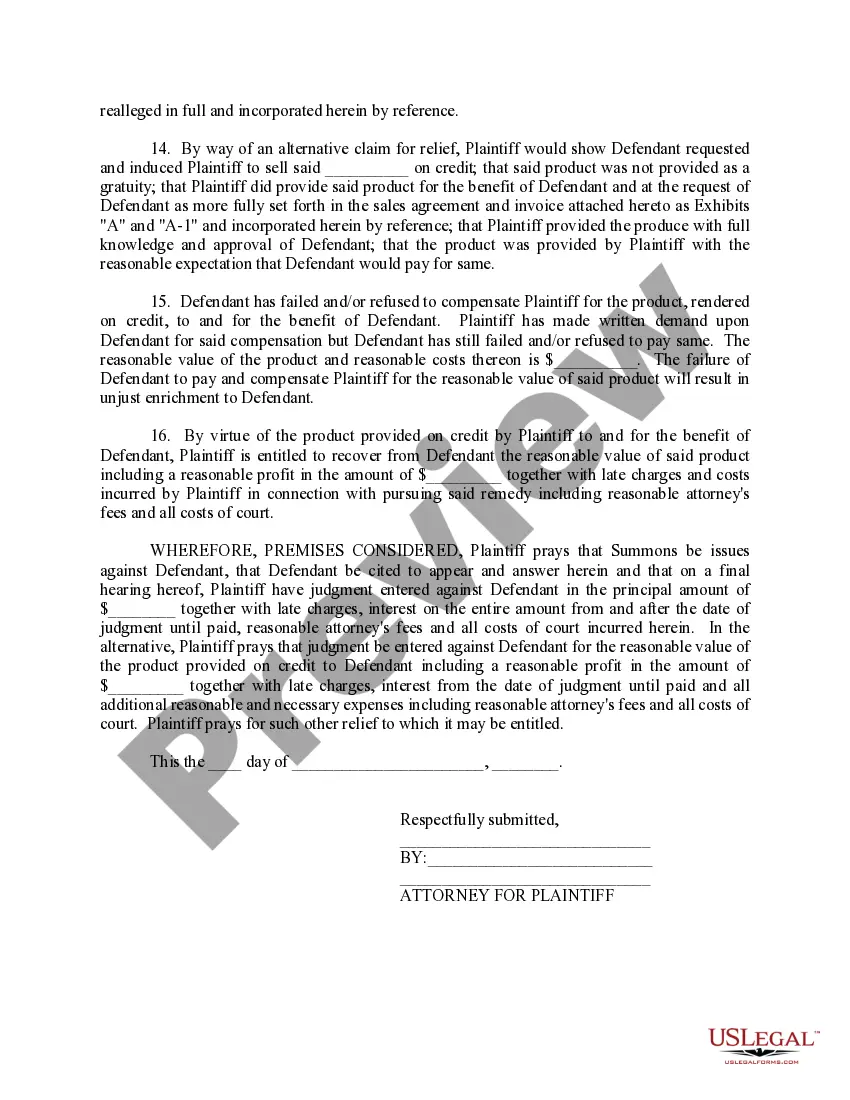
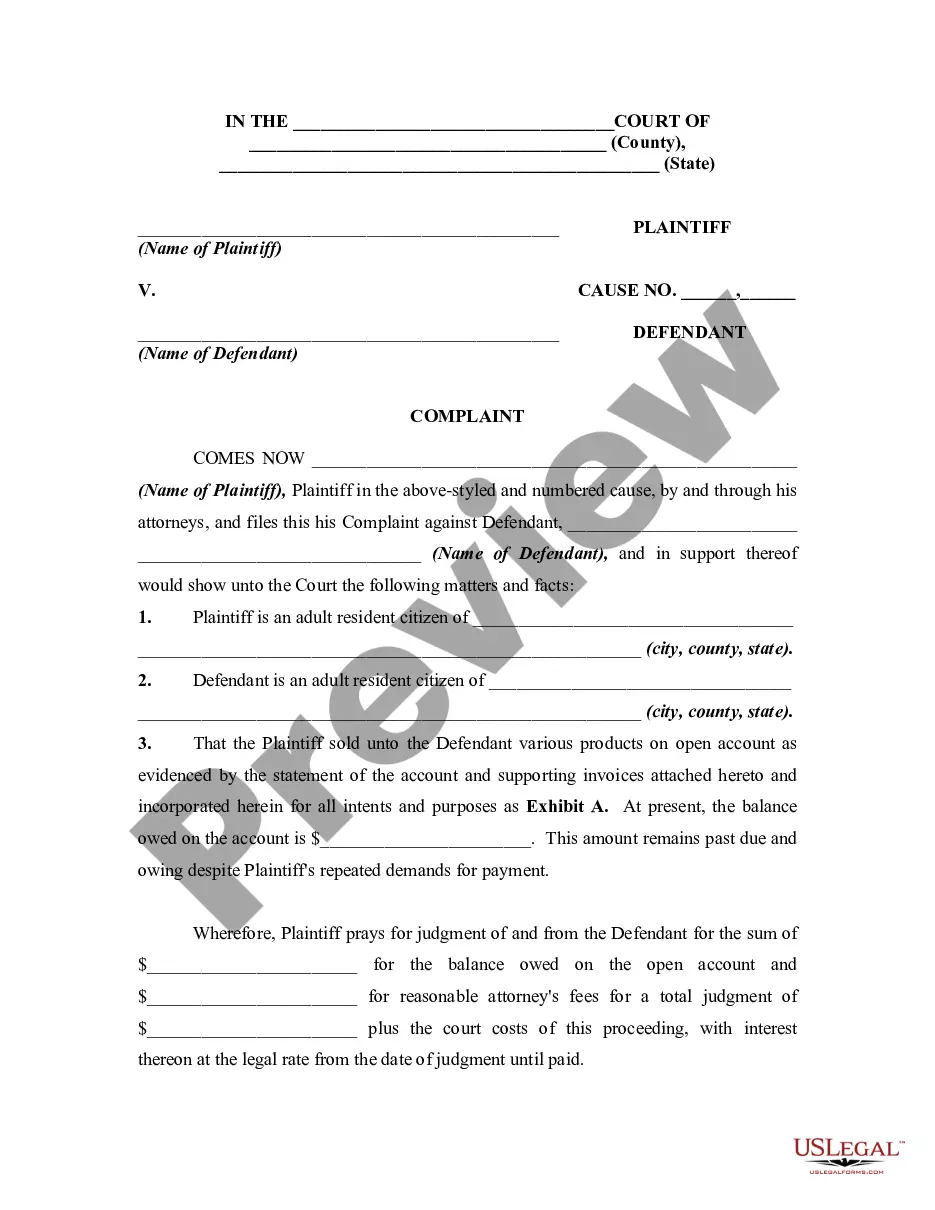
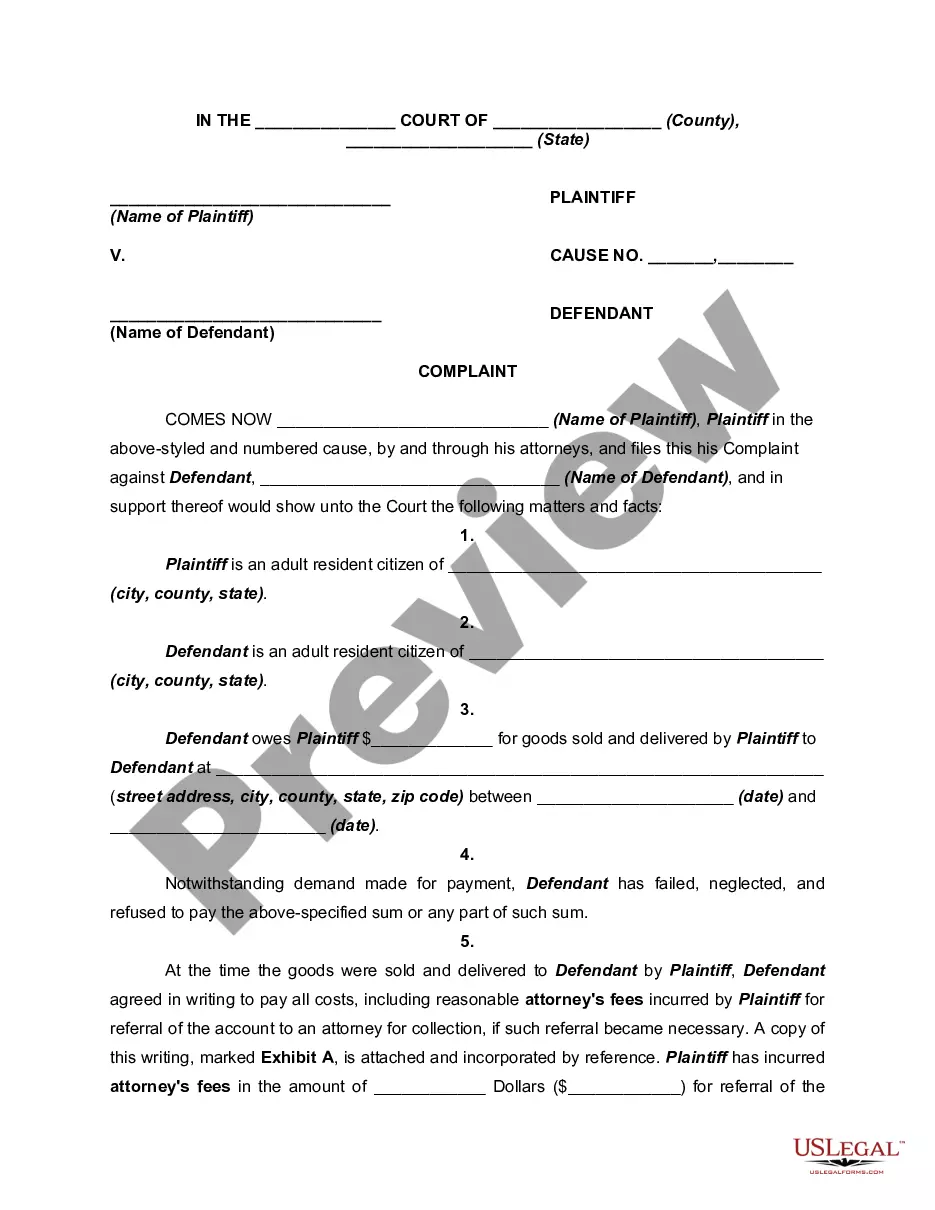
How to fill out Complaint Based On Open Account, Breach Of Contract, Unjust Enrichment?
It’s well-known that you cannot become a legal authority instantly, nor can you learn how to swiftly create Unjust Enrichment Form For Contract without possessing a specific skill set.
Assembling legal documents is a lengthy process that demands a particular education and expertise.
So why not entrust the creation of the Unjust Enrichment Form For Contract to the professionals.
You can regain access to your documents from the My documents tab at any time.
If you’re a current customer, you can simply Log In, and find and download the template from the same tab.
- Locate the document you require by utilizing the search bar at the top of the page.
- View it (if this option is available) and review the accompanying description to determine if Unjust Enrichment Form For Contract is what you’re looking for.
- Initiate your search again if you need an alternative template.
- Sign up for a complimentary account and pick a subscription plan to purchase the template.
- Select Buy now. After completing the payment, you can download the Unjust Enrichment Form For Contract, complete it, print it, and deliver it or send it via mail to the appropriate individuals or organizations.
Form popularity
FAQ
Yes, you can experience unjust enrichment even when a contract is in place. This situation typically arises when one party does not fulfill their contractual obligations, leading to an unfair advantage for the other party. If you believe you are facing unjust enrichment, consider utilizing an unjust enrichment form for contract to formally address your concerns. This form can assist you in outlining your case and seeking appropriate remedies.
Exceptions to unjust enrichment may include instances where a legal contract governs the relationship, or where a party had a valid reason to retain a benefit. Additionally, if the benefit was conferred as a gift, or if there was an agreement that stipulates otherwise, unjust enrichment may not apply. It's crucial to examine the specific circumstances surrounding your case. Using an unjust enrichment form for contract can help you document these exceptions clearly.
The four elements of unjust enrichment include a benefit conferred to one party, knowledge of that benefit by the receiving party, acceptance or retention of the benefit, and the absence of a legal justification for that benefit. Each element must be demonstrated to establish a claim of unjust enrichment. If you find yourself in such a situation, utilizing an unjust enrichment form for contract can streamline the process of seeking recourse. This form helps clarify the details and supports your claim.
Unjust enrichment occurs when one party benefits at the expense of another party without a legal justification. In the context of a contract, it means that even if a contract exists, one party may still be required to compensate the other if they received a benefit unjustly. You may need an unjust enrichment form for contract disputes to ensure that the affected party receives proper compensation. Understanding this concept can help you navigate potential legal issues effectively.
The standard of proof for unjust enrichment typically requires the claimant to demonstrate that the defendant received a benefit at their expense and that it would be unjust for the defendant to keep that benefit. Specifically, you must show that there was no legal justification for the transfer of value. In a legal context, the unjust enrichment form for contract helps establish these elements by providing a structured way to present your case. By using US Legal Forms, you can access resources and templates that guide you through this process, ensuring your claim is well-documented and supported.
Claiming for unjustified enrichment involves outlining the circumstances that led to the benefit received by one party without compensation to the other. You need to establish that the enrichment was not legally justified and that your loss is directly tied to this. An unjust enrichment form for contract can serve as a useful tool to articulate your claim clearly and effectively.
To bring a claim for unjust enrichment, you must demonstrate that one party received a benefit, the other party suffered a loss, and there is no legal justification for the enrichment. Gather relevant evidence, such as contracts or communications, to support your claim. Using an unjust enrichment form for contract can streamline this process and ensure all necessary information is presented.
Generally, you cannot bring an unjust enrichment claim if a valid contract governs the relationship between the parties. However, if the contract is unenforceable or if it doesn't cover specific benefits, an unjust enrichment claim may still be valid. Utilizing an unjust enrichment form for contract can provide clarity and support for your position in such scenarios.
Yes, you can pursue claims for both negligence and breach of contract simultaneously, provided that each claim is based on distinct facts. A negligence claim focuses on a failure to exercise reasonable care, while a breach of contract centers on violations of specific contractual terms. If you're dealing with complex legal issues, an unjust enrichment form for contract may simplify your claims and help you organize your approach.
Unjust enrichment under a contract occurs when one party receives a benefit at the expense of another without a legal justification. This principle aims to prevent one party from being unfairly enriched when it has not fulfilled its contractual obligations. To navigate this issue effectively, using an unjust enrichment form for contract can help clarify the claims and remedies available.