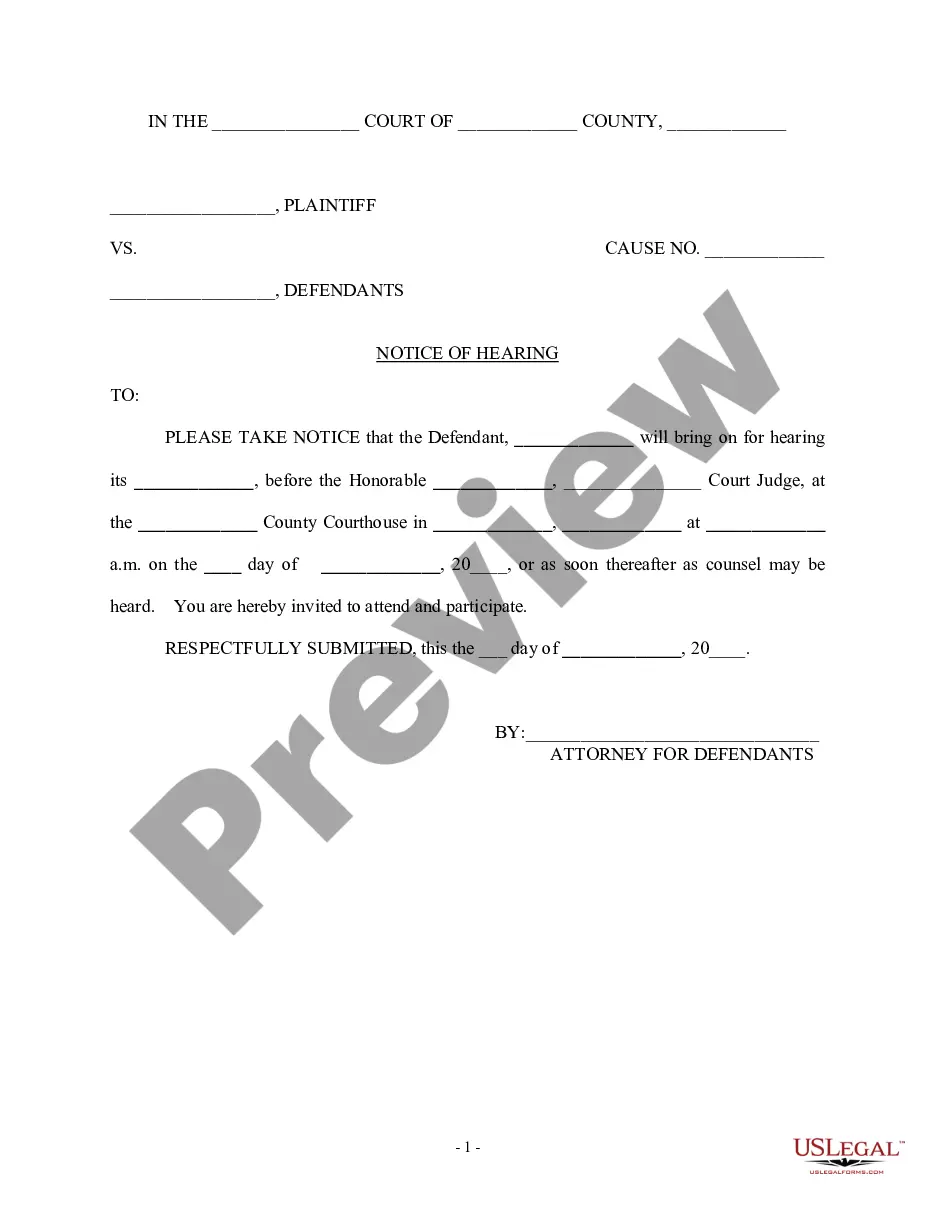
Civil Hearing In Court
Description
Get your form ready online
Our built-in tools help you complete, sign, share, and store your documents in one place.
Make edits, fill in missing information, and update formatting in US Legal Forms—just like you would in MS Word.
Download a copy, print it, send it by email, or mail it via USPS—whatever works best for your next step.
Sign and collect signatures with our SignNow integration. Send to multiple recipients, set reminders, and more. Go Premium to unlock E-Sign.
If this form requires notarization, complete it online through a secure video call—no need to meet a notary in person or wait for an appointment.
We protect your documents and personal data by following strict security and privacy standards.

Make edits, fill in missing information, and update formatting in US Legal Forms—just like you would in MS Word.

Download a copy, print it, send it by email, or mail it via USPS—whatever works best for your next step.

Sign and collect signatures with our SignNow integration. Send to multiple recipients, set reminders, and more. Go Premium to unlock E-Sign.

If this form requires notarization, complete it online through a secure video call—no need to meet a notary in person or wait for an appointment.

We protect your documents and personal data by following strict security and privacy standards.
Looking for another form?








How to fill out Notice Of Hearing?
Legal administration can be perplexing, even for the most seasoned professionals.
When you are looking for a Civil Hearing In Court and lack the time to seek out the accurate and updated version, the procedures can be stressful.
Access state- or county-specific legal and organizational documents.
US Legal Forms encompasses all requirements you may have, ranging from personal to corporate paperwork, all in one location.
Should this be your first experience with US Legal Forms, create a complimentary account and gain unrestricted access to all features of the platform. Here are the steps to follow after locating the form you require.
- Utilize sophisticated tools to complete and manage your Civil Hearing In Court.
- Access a helpful resource repository of articles, guides, handbooks, and materials pertinent to your circumstances and requirements.
- Save time and effort searching for the documents needed, and leverage US Legal Forms’ advanced search and Review feature to locate the Civil Hearing In Court and obtain it.
- If you possess a monthly subscription, Log In to your US Legal Forms account, search for the form, and obtain it.
- Check your My documents tab to review the documents you have previously saved and manage your folders as desired.
- A comprehensive online form directory can revolutionize the way anyone tackles these circumstances effectively.
- US Legal Forms is a prominent leader in the realm of online legal forms, with over 85,000 state-specific legal documents available to you at any time.
- Using US Legal Forms, you can.
Form popularity
FAQ
B. The first step to starting a civil case is to write and file a complaint with the court. At a minimum, the complaint identifies the parties. You are the plaintiff and the person or entity you are suing is the defendant. The complaint tells the court how the defendant violated the law.
The person who commences a civil lawsuit is called the plaintiff. The person against whom the suit is brought is the defendant. In some cases, there may be more than one plaintiff or defendant.
Write and file an answer. The ?answer? is your written response to the claims made against you. You must file an answer with the court that issued the summons or citation. If you fail to answer, you could lose the case without ever having the opportunity to tell your side of the story.
The three most common civil cases are tort claims, contract breaches and landlord/tenant issues. Tort Claim - An act committed by one person that causes harm to another. Tort cases can take many different forms, and can relate to a person's personal safety, safety of their property, and financial security.
To sue someone in Massachusetts, you have to file a complaint with the clerk of the court. A complaint is not a specific form. It is a document that contains a short statement of the facts showing your claim and why you are entitled to relief and a demand for judgment granting that relief.