Motion State Garnishment Withdrawal
Description
Get your form ready online
Our built-in tools help you complete, sign, share, and store your documents in one place.
Make edits, fill in missing information, and update formatting in US Legal Forms—just like you would in MS Word.
Download a copy, print it, send it by email, or mail it via USPS—whatever works best for your next step.
Sign and collect signatures with our SignNow integration. Send to multiple recipients, set reminders, and more. Go Premium to unlock E-Sign.
If this form requires notarization, complete it online through a secure video call—no need to meet a notary in person or wait for an appointment.
We protect your documents and personal data by following strict security and privacy standards.

Make edits, fill in missing information, and update formatting in US Legal Forms—just like you would in MS Word.

Download a copy, print it, send it by email, or mail it via USPS—whatever works best for your next step.

Sign and collect signatures with our SignNow integration. Send to multiple recipients, set reminders, and more. Go Premium to unlock E-Sign.

If this form requires notarization, complete it online through a secure video call—no need to meet a notary in person or wait for an appointment.

We protect your documents and personal data by following strict security and privacy standards.
Looking for another form?





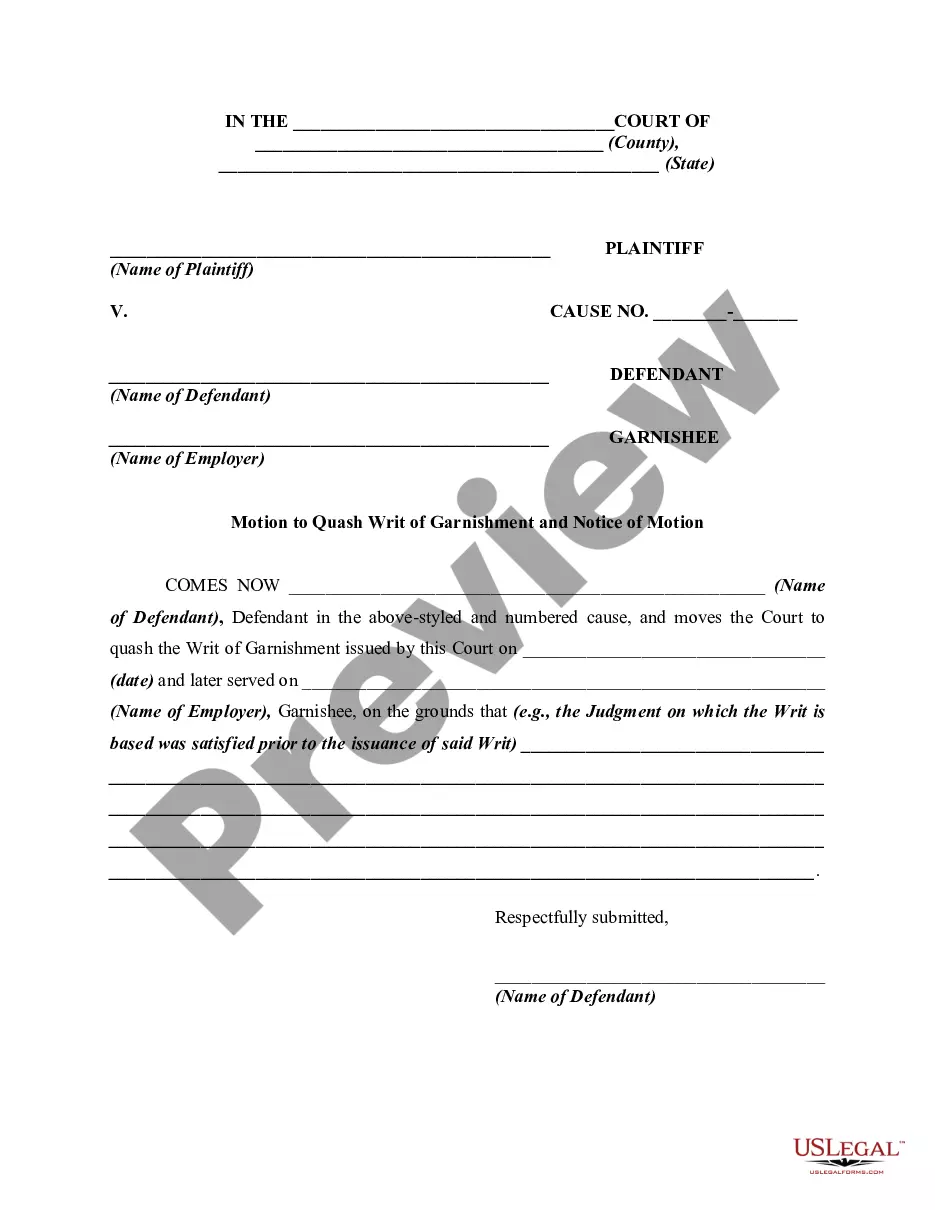
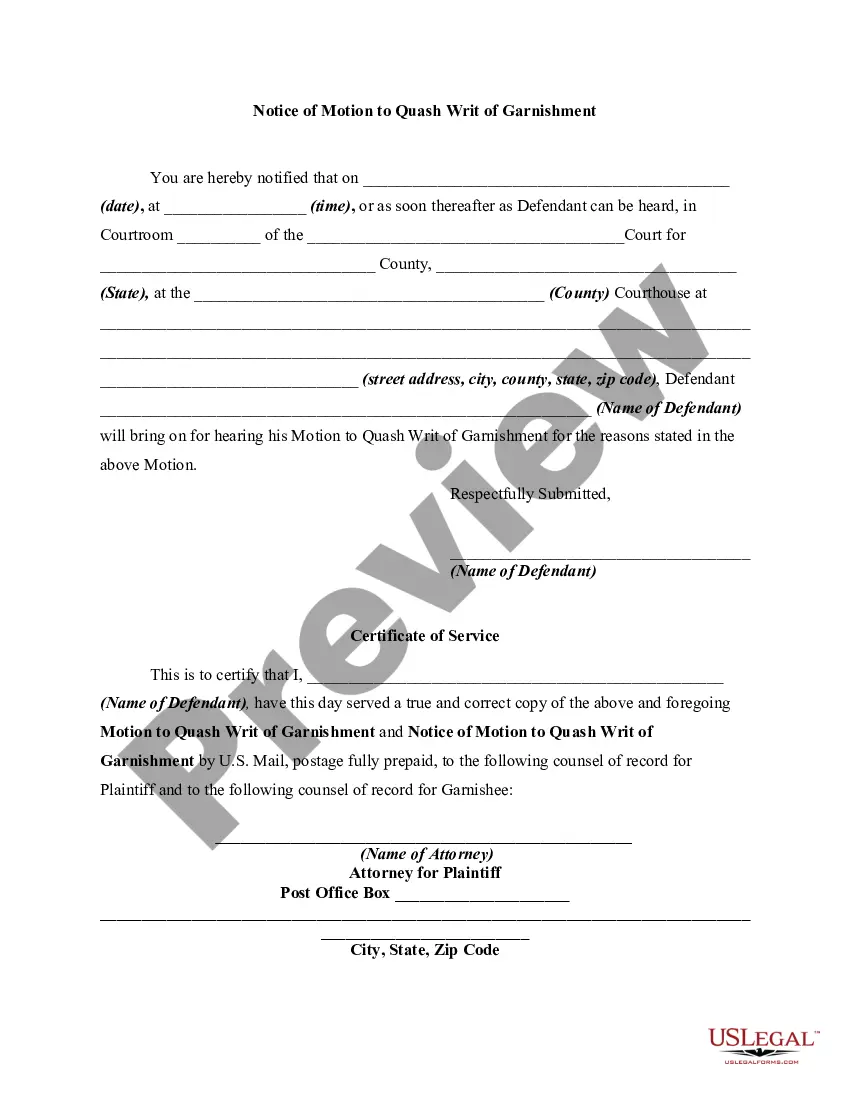
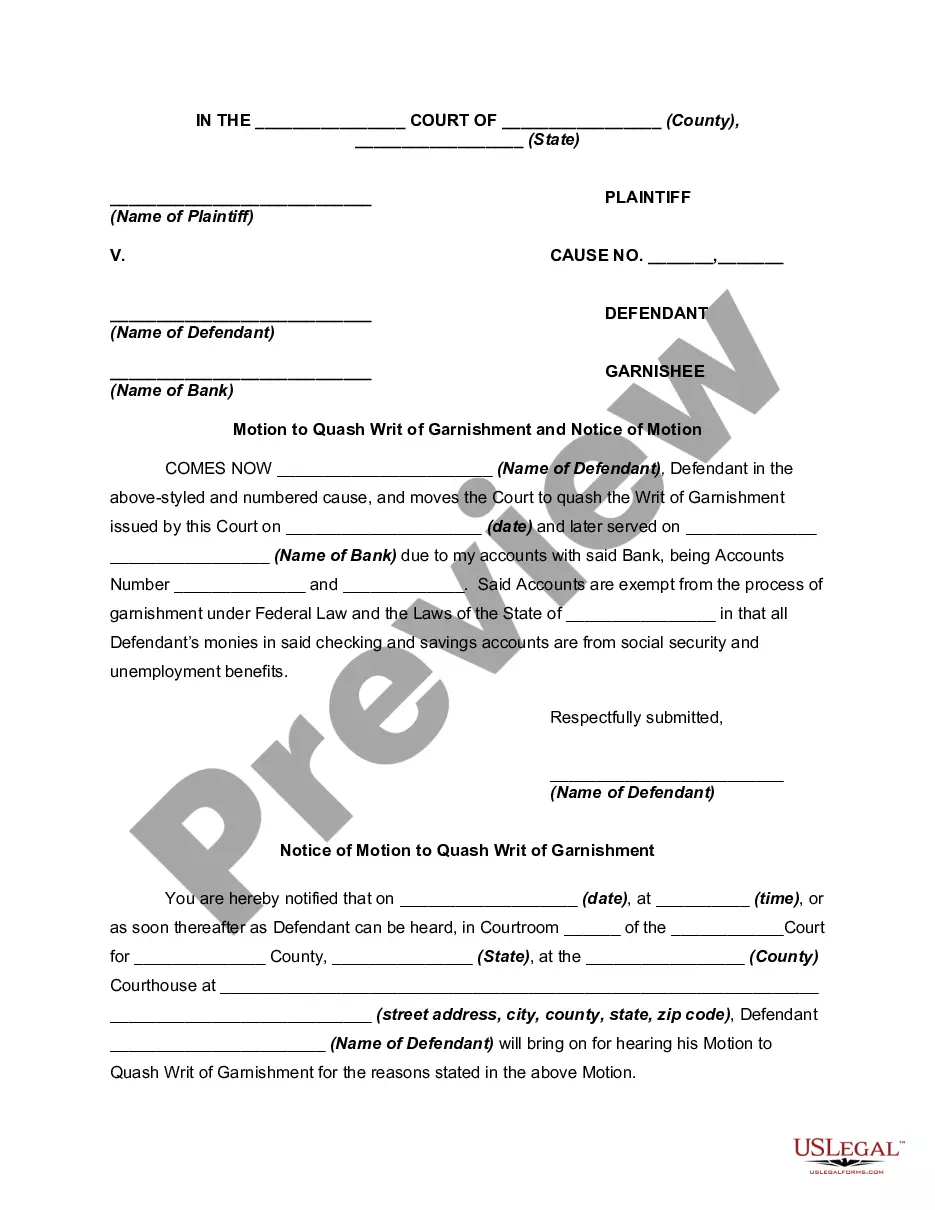
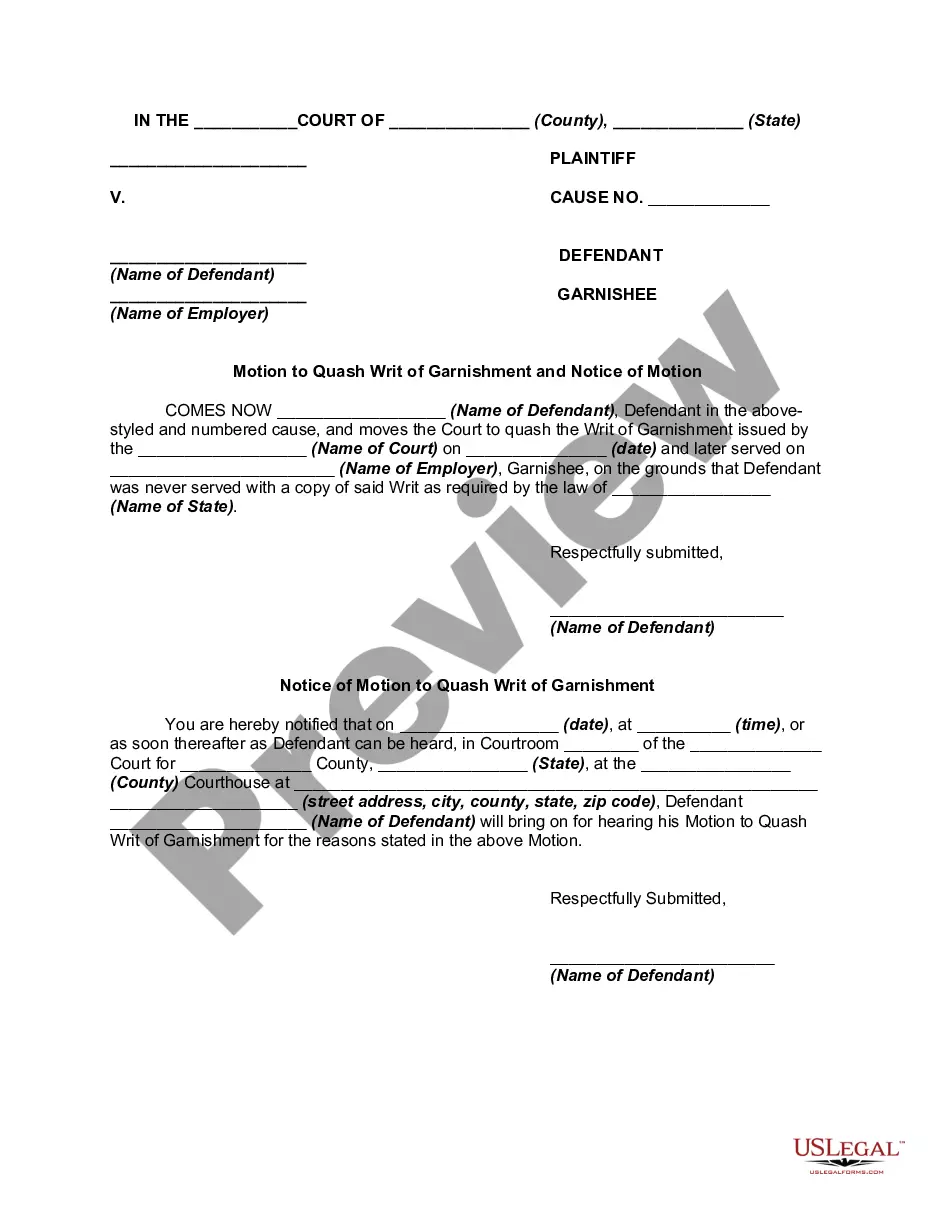
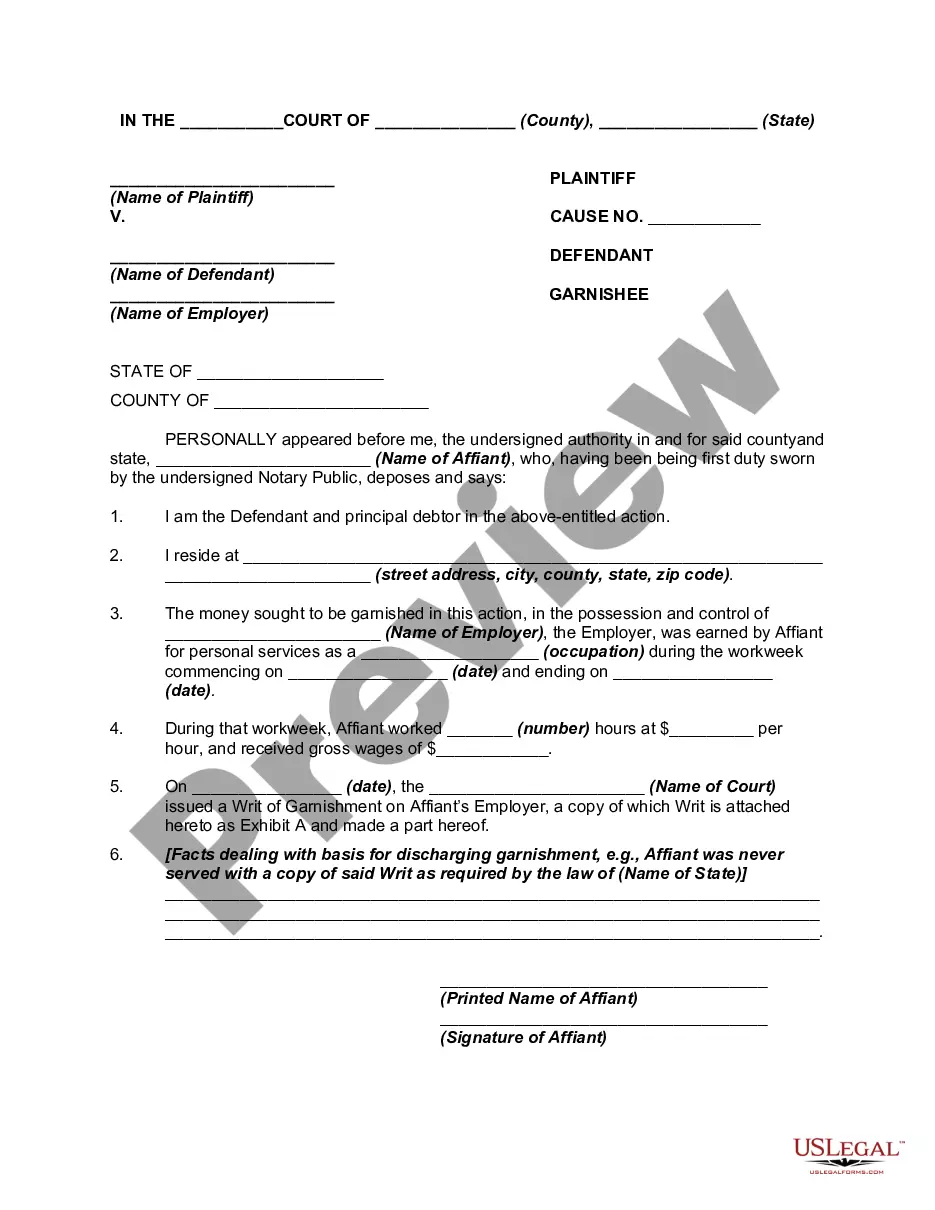
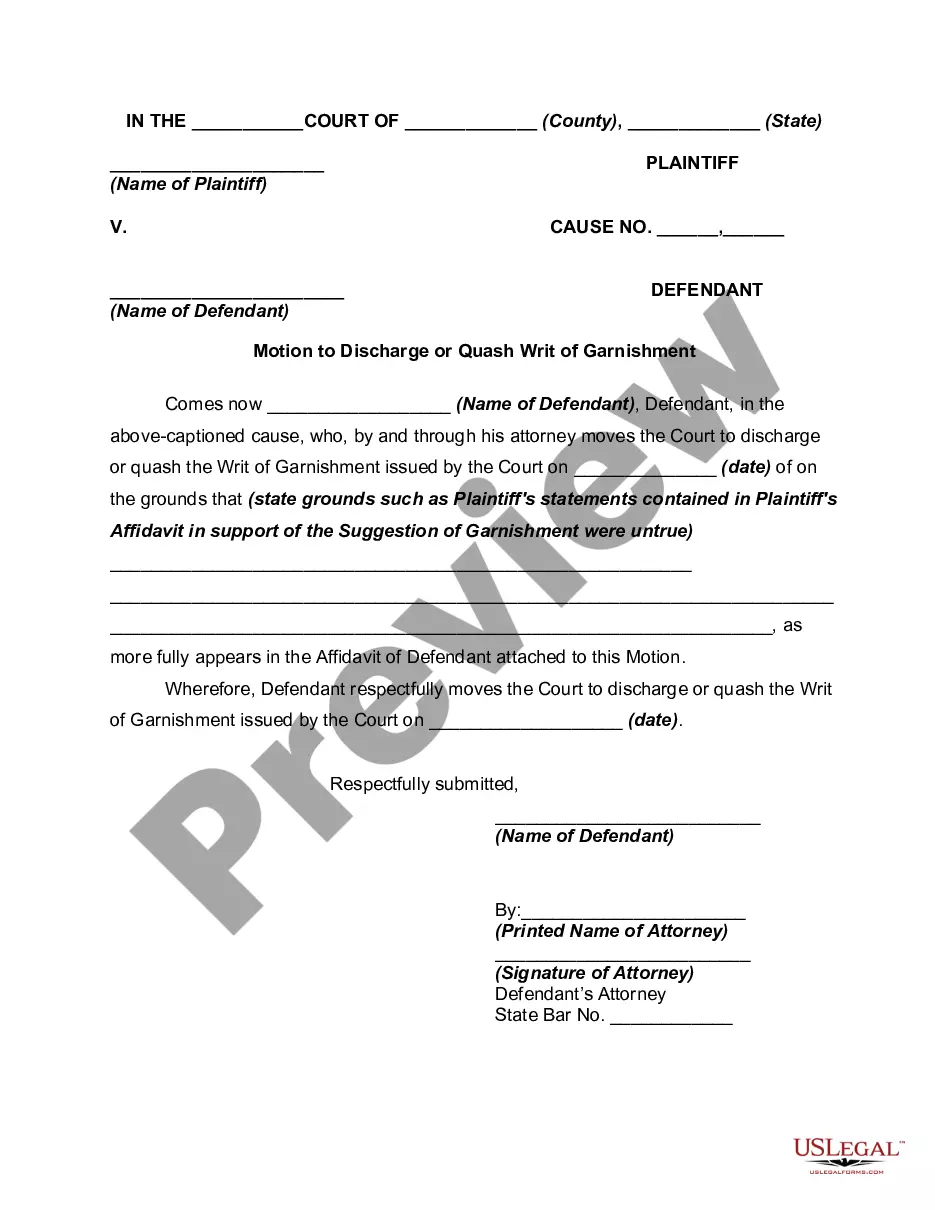
How to fill out Motion Of Defendant To Discharge Or Quash Writ Of Garnishment And Notice Of Motion?
It’s widely known that you cannot transform into a legal expert in an instant, nor can you learn how to swiftly craft Motion State Garnishment Withdrawal without having a specialized background.
Drafting legal papers is a lengthy process that demands specific education and expertise. So why not entrust the development of the Motion State Garnishment Withdrawal to the experts.
With US Legal Forms, one of the most extensive legal template libraries, you can access anything from court paperwork to templates for internal communication.
You can regain entry to your forms from the My documents tab at any time. If you’re a current client, you can simply Log In and find and download the template from the same tab.
Regardless of the intent of your documents—be it financial, legal, or personal—our platform has you covered. Explore US Legal Forms today!
- Identify the form you require by utilizing the search bar at the top of the webpage.
- View it (if this option is available) and read the accompanying description to ascertain if Motion State Garnishment Withdrawal is what you need.
- Restart your search if you require any additional form.
- Sign up for a complimentary account and choose a subscription plan to acquire the template.
- Select Buy now. Once the payment is processed, you can obtain the Motion State Garnishment Withdrawal, complete it, print it, and deliver or send it by postal service to the appropriate individuals or organizations.
Form popularity
FAQ
Writing off a wage garnishment typically depends on the nature of the debt and specific legal allowances. In some cases, you can negotiate with the creditor for a settlement that resolves the debt owed. However, it is essential to understand that not all debts can be dismissed, and you may need to pursue a motion state garnishment withdrawal instead. Consulting with a legal professional can clarify your options.
To respond to a wage garnishment letter, first read it carefully to understand the details. Collect any necessary documentation that supports your situation. Next, write a formal letter explaining your position or requesting a reconsideration of the garnishment. This step can be crucial in pursuing a motion state garnishment withdrawal or negotiating alternative arrangements.
A motion to dismiss the garnishment action is a formal request made to the court to terminate the garnishment process. This motion typically asserts that the garnishment is based on invalid grounds or that the debt has been settled. Filing this motion is vital if you believe the garnishment is unjustified, and it can lead to a motion state garnishment withdrawal if granted by the court.
To write a letter to stop wage garnishment, begin by addressing the appropriate party, such as the creditor or the court. Clearly state your request to withdraw the garnishment and explain your reasons. Include relevant details, such as your account number and any supporting documentation. A well-structured letter increases your chances of successfully achieving a motion state garnishment withdrawal.
The best way to stop wage garnishment often depends on your situation. You can negotiate with the creditor to set up a payment plan or make a settlement offer. Another option is to file a motion state garnishment withdrawal, where you argue for the garnishment to be lifted. Consulting with a legal expert can help you determine the most effective approach for your circumstances.
To request a payment plan to stop a wage garnishment, you need to contact the creditor or the court that initiated the garnishment. Clearly explain your financial situation and express your desire to resolve the debt through a payment plan. Be prepared to provide any required documentation that supports your request. By doing this, you may be able to initiate a motion state garnishment withdrawal.
To file an objection for a garnishment, you need to complete the necessary forms in your state. Start by gathering information about the garnishment, including the court order and the details of your financial situation. Then, submit your objection to the court that issued the garnishment. Utilizing the Motion state garnishment withdrawal option can simplify this process, as it allows you to formally challenge the garnishment and seek a withdrawal.
After a motion to dismiss is filed, the court will review your request and may schedule a hearing. You will have the opportunity to present your case and demonstrate why the garnishment should be lifted. If the court approves your motion, the garnishment will be terminated, allowing you to regain access to your funds. If you need assistance in this process, consider consulting USLegalForms for guidance on motion state garnishment withdrawal.
The time it takes to release a garnishment can vary based on the complexity of your case and the court's schedule. Typically, once a motion for garnishment withdrawal is filed and approved, the process may take a few weeks. You will receive notifications regarding the release, and your employer will stop withholding funds. For a smoother process, utilizing a platform like USLegalForms can help facilitate your motion state garnishment withdrawal.
Dismissal of garnishment refers to the court's decision to terminate a garnishment order. This can happen for several reasons, such as paying off the debt or successfully arguing that the garnishment is improper. When a garnishment is dismissed, funds will no longer be withheld from your income. If you are facing garnishment, consider a motion state garnishment withdrawal to seek dismissal.