Garnishment Notice Sample With Replacement
Description
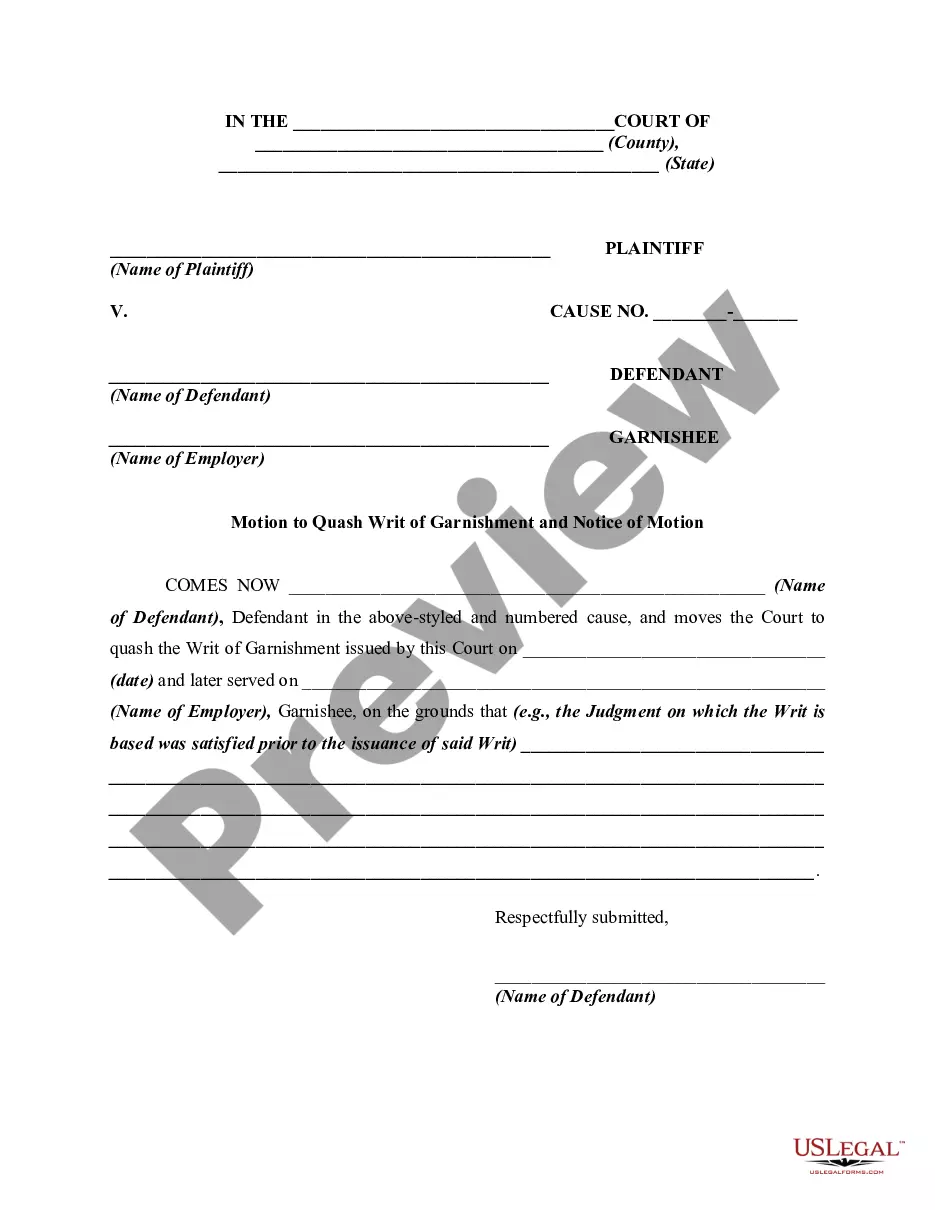
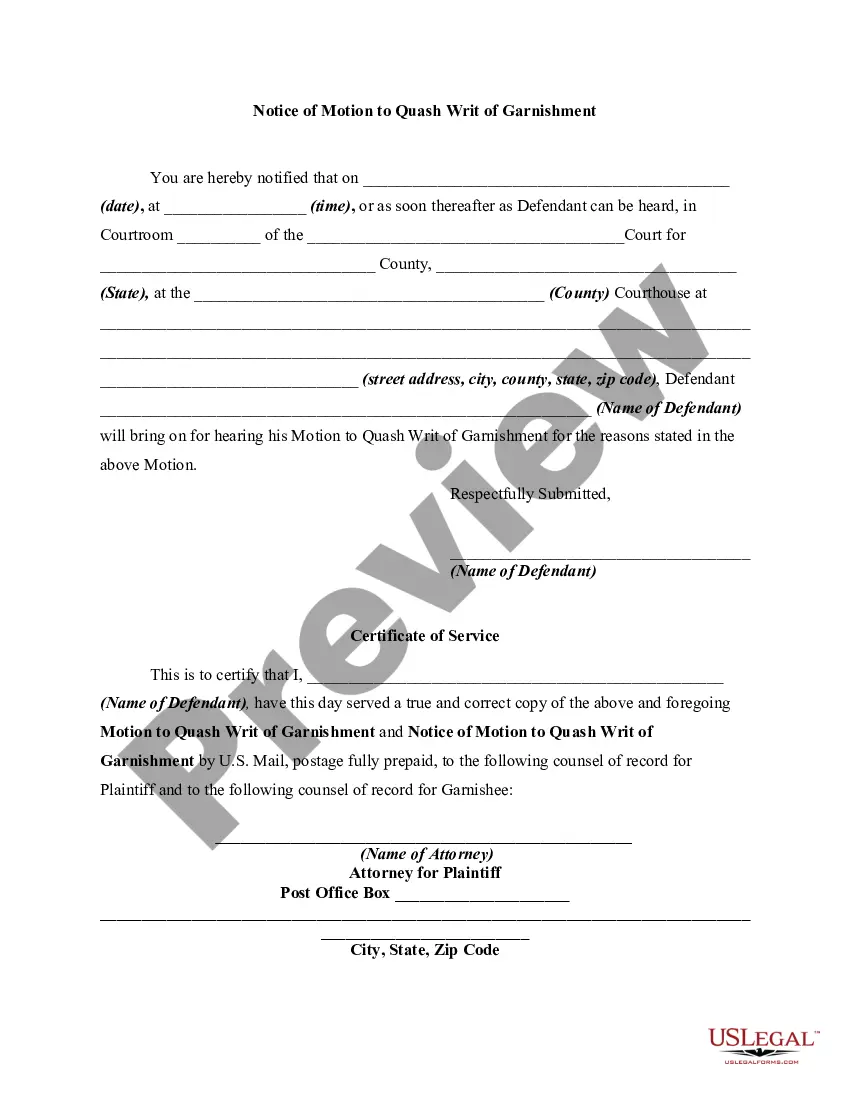
Get your form ready online
Our built-in tools help you complete, sign, share, and store your documents in one place.
Make edits, fill in missing information, and update formatting in US Legal Forms—just like you would in MS Word.
Download a copy, print it, send it by email, or mail it via USPS—whatever works best for your next step.
Sign and collect signatures with our SignNow integration. Send to multiple recipients, set reminders, and more. Go Premium to unlock E-Sign.
If this form requires notarization, complete it online through a secure video call—no need to meet a notary in person or wait for an appointment.
We protect your documents and personal data by following strict security and privacy standards.

Make edits, fill in missing information, and update formatting in US Legal Forms—just like you would in MS Word.

Download a copy, print it, send it by email, or mail it via USPS—whatever works best for your next step.

Sign and collect signatures with our SignNow integration. Send to multiple recipients, set reminders, and more. Go Premium to unlock E-Sign.

If this form requires notarization, complete it online through a secure video call—no need to meet a notary in person or wait for an appointment.

We protect your documents and personal data by following strict security and privacy standards.
Looking for another form?





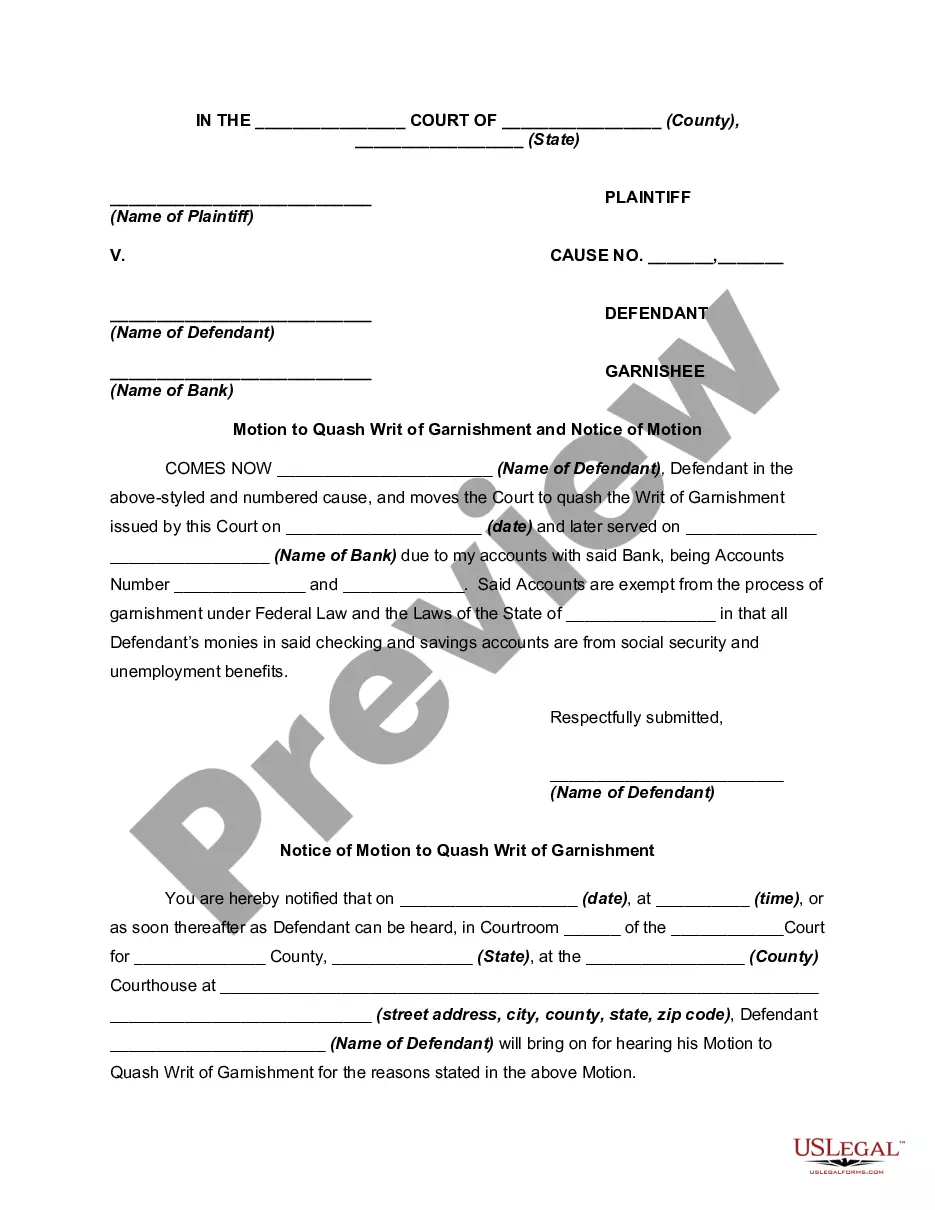
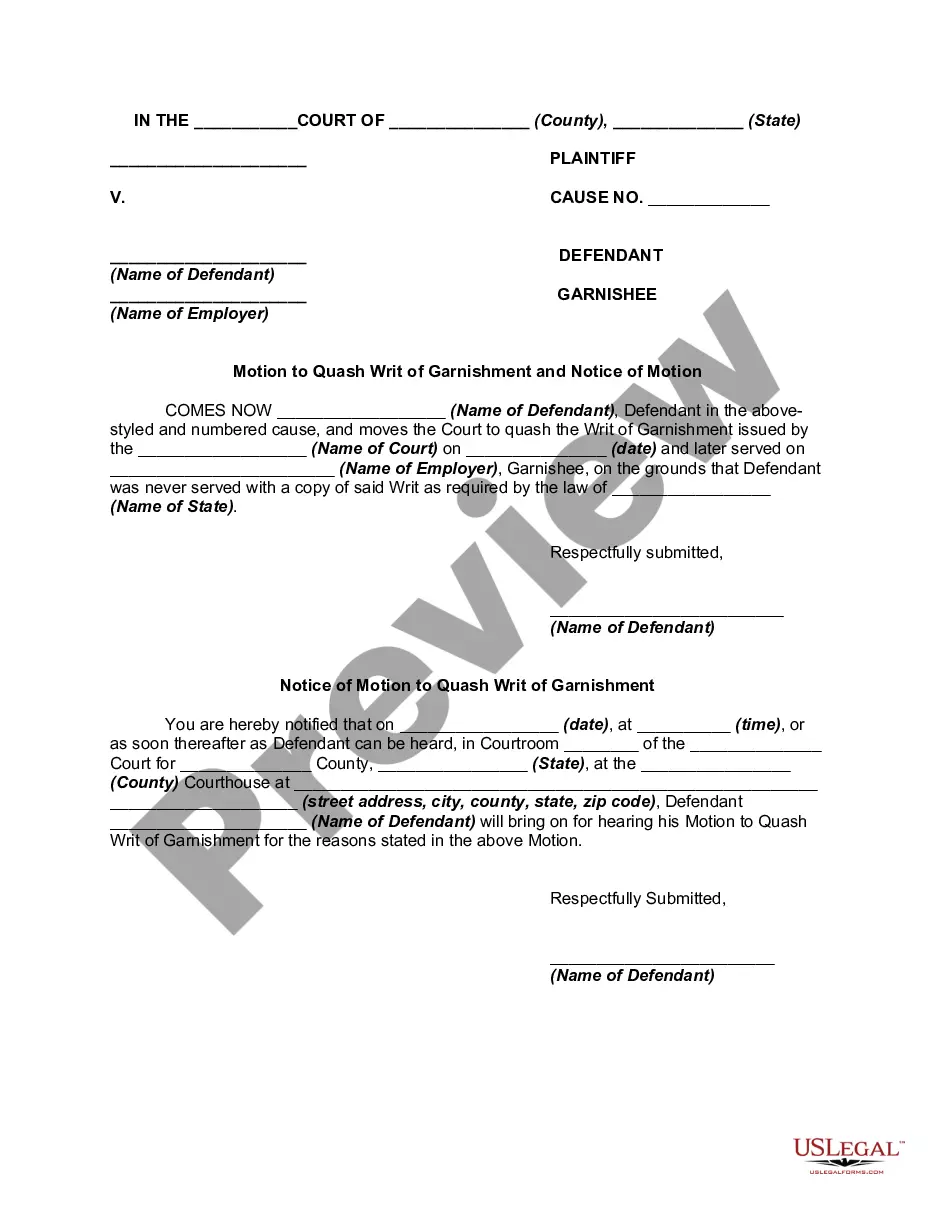
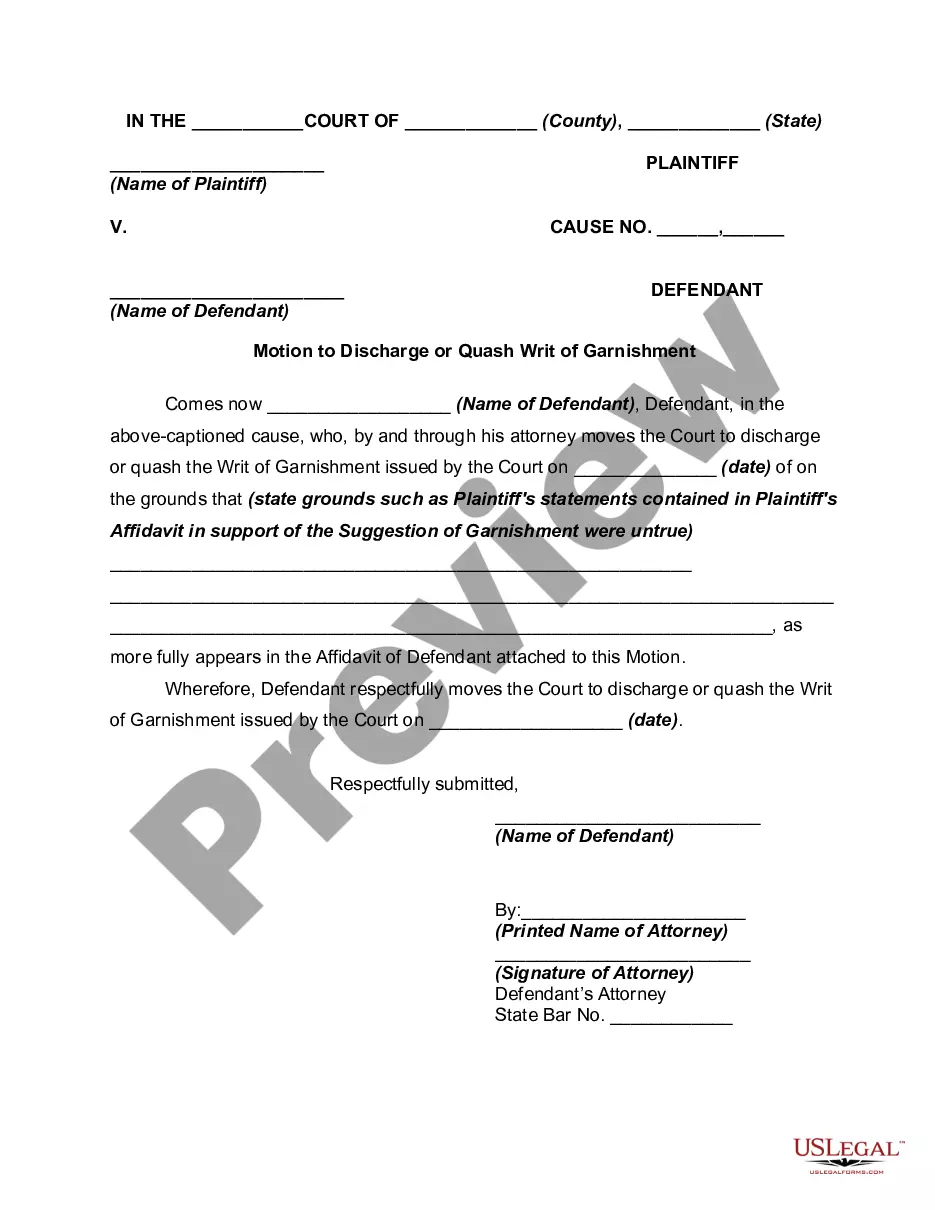
How to fill out Motion Of Defendant To Discharge Or Quash Writ Of Garnishment And Notice Of Motion?
Regardless of whether it’s for corporate reasons or personal issues, every individual will inevitably face legal matters at some point in their lives. Completing legal documents requires meticulous care, starting from selecting the right form template. For example, if you select an incorrect version of a Garnishment Notice Template With Replacement, it will be declined once you submit it. Thus, it’s essential to find a trustworthy source for legal documents such as US Legal Forms.
If you need to acquire a Garnishment Notice Template With Replacement, follow these simple steps.
With a comprehensive US Legal Forms catalog available, you do not need to waste time searching for the right template online. Utilize the library’s easy navigation to find the suitable document for any circumstance.
- Obtain the template you require by utilizing the search bar or browsing through the catalog.
- Review the document’s description to confirm it corresponds with your situation, state, and area.
- Click on the document’s preview to assess it.
- If it is the wrong file, return to the search feature to find the Garnishment Notice Template With Replacement that you need.
- Download the template once it satisfies your criteria.
- If you possess a US Legal Forms account, click Log in to access previously stored documents in My documents.
- If you do not have an account yet, you can obtain the document by clicking Buy now.
- Select the appropriate pricing plan.
- Complete the profile registration form.
- Choose your payment method: either a credit card or a PayPal account.
- Select the file format you desire and download the Garnishment Notice Template With Replacement.
- Once it is saved, you can complete the document using editing software or print it and fill it out manually.
Form popularity
FAQ
Complete the Garnishee order for debts form ???Your case number. Date of the judgment. Name and address of the other party. Name and address of the garnishee (the bank or third party who owes the other party money). Total amount of the judgment. Your contact details including address, telephone, fax and email.
Collect evidence showing how detrimental the wage garnishment is to your financial stability or how you qualify for an exemption. In either case, the creditor may agree to a solution that doesn't involve a garnishment, such as an adjustment payment plan or a settlement for a lump sum.
You can negotiate a wage garnishment, and your creditor may be open to that especially if you have less money coming in. Ideally, you should get in touch with them once you are served and try to negotiate a wage garnishment from there. They'll still garnish your wages, but at a lower negotiated rate.
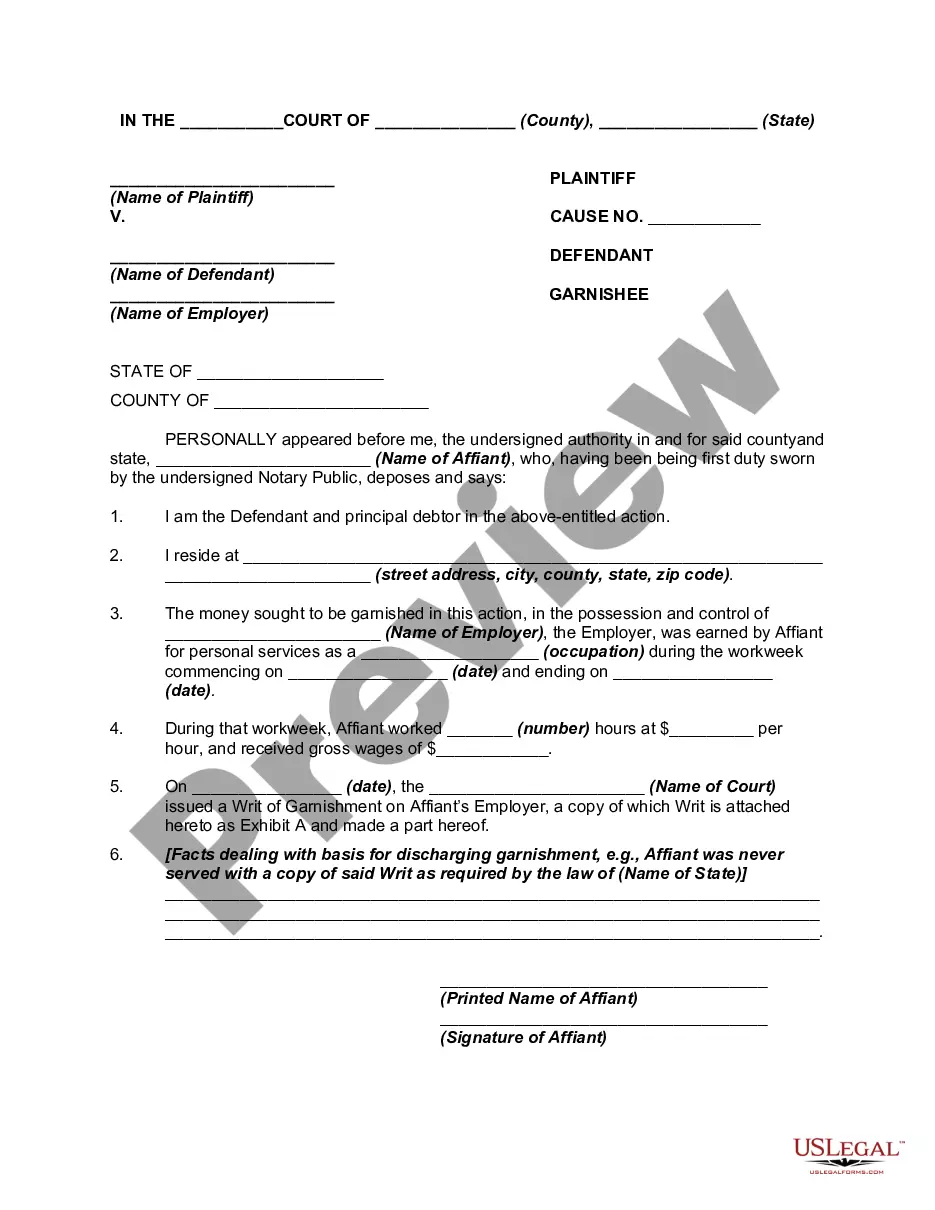
At a minimum, your written objection to the garnishment should include the following information: the case number and case caption (ex: "XYZ Bank vs. John Doe") the date of your objection. your name and current contact information. the reasons (or "grounds") for your objection, and. your signature.
Information in the Letter Other items in the letter are how often the deductions will occur, when they will begin and how long the deductions will last. You must also include who requested the garnishment, such as a state agency, court or business, as well as information on how the employee can stop the garnishments.