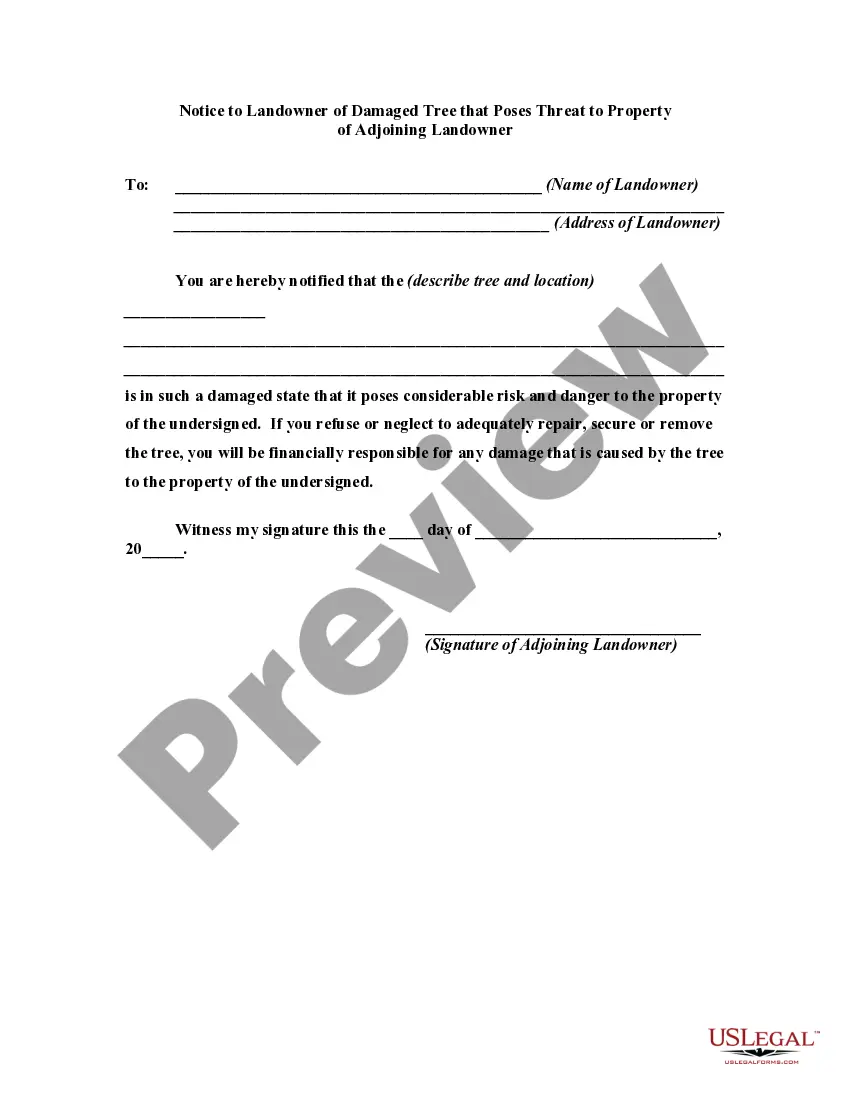
Tree Damage To Property
Description
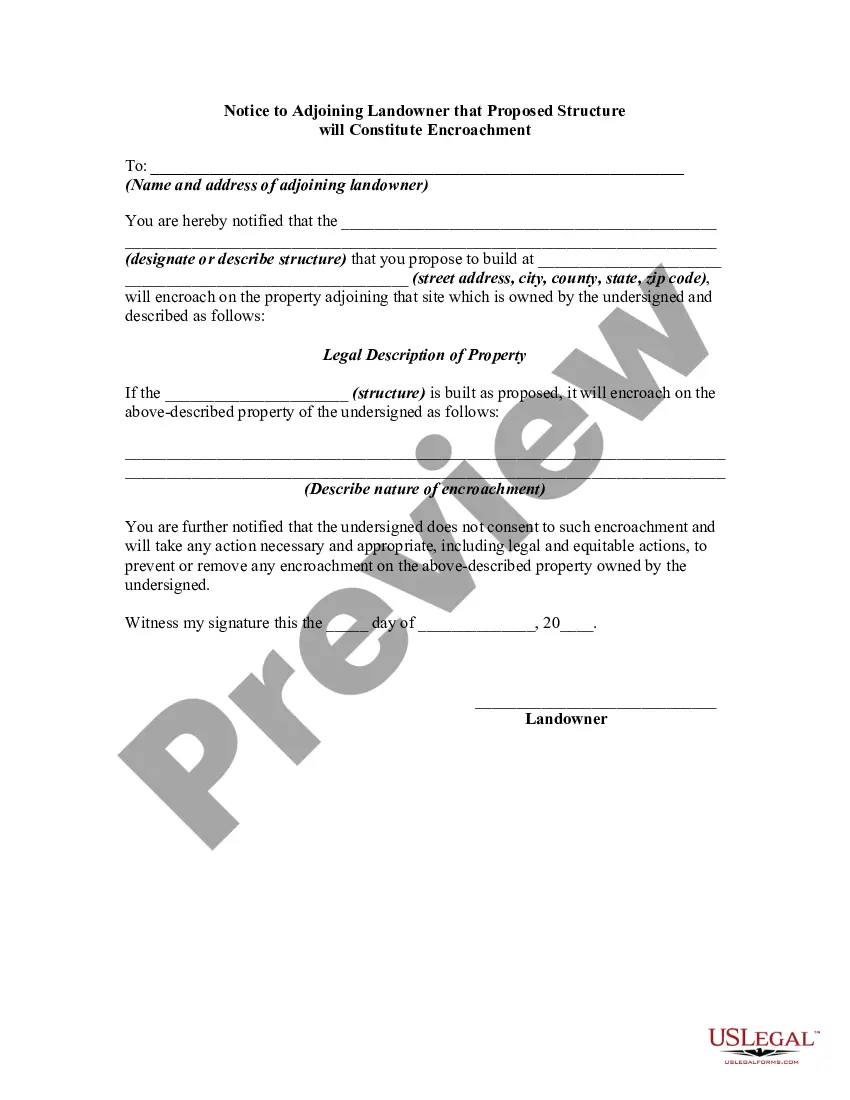
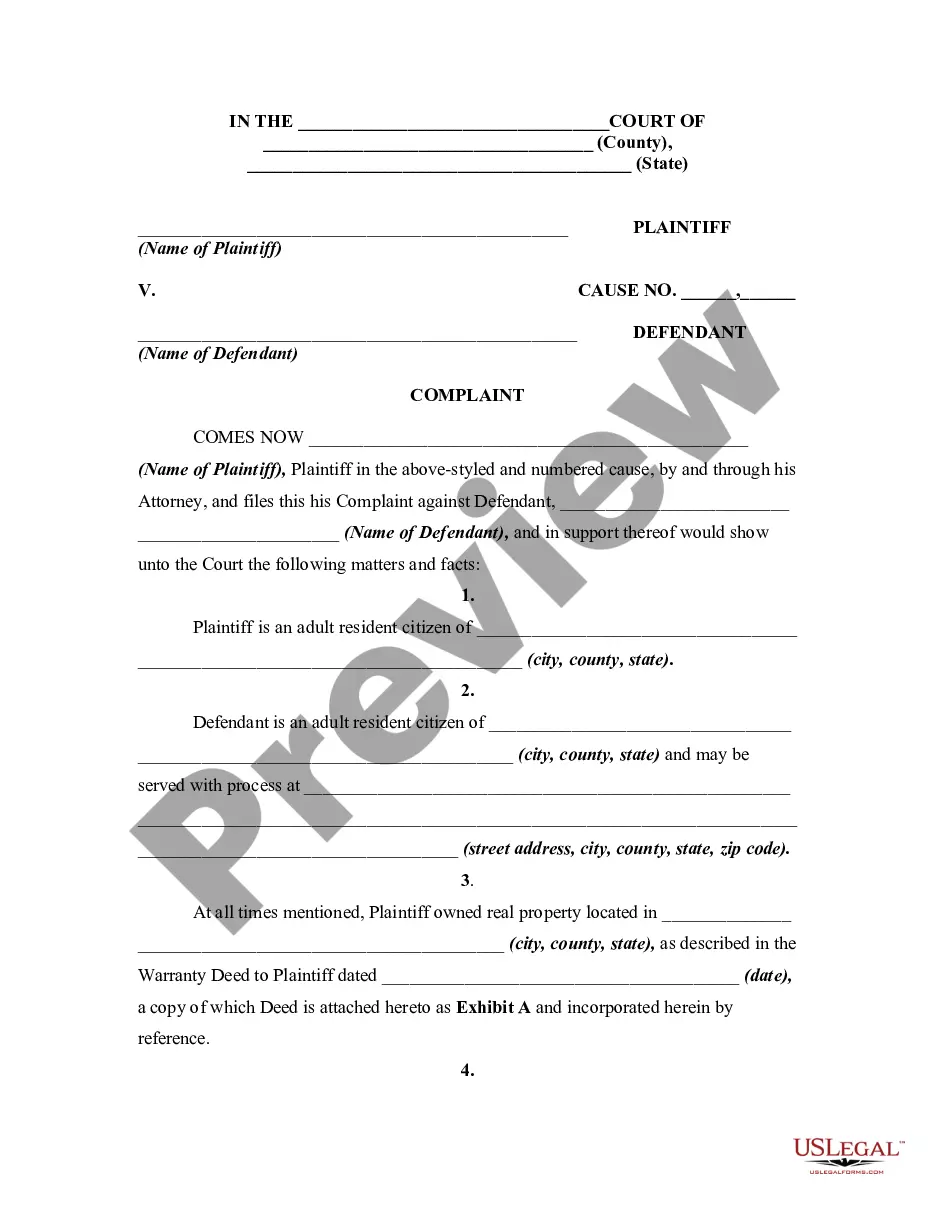
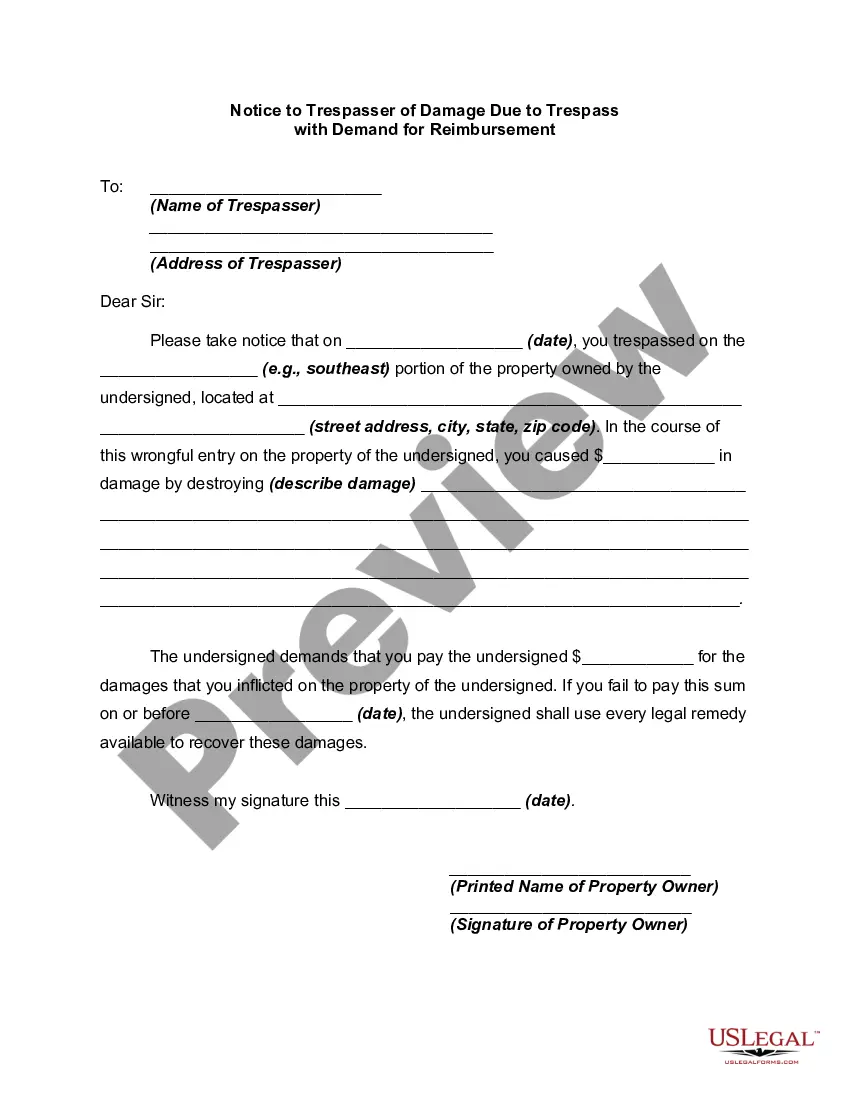
Get your form ready online
Our built-in tools help you complete, sign, share, and store your documents in one place.
Make edits, fill in missing information, and update formatting in US Legal Forms—just like you would in MS Word.
Download a copy, print it, send it by email, or mail it via USPS—whatever works best for your next step.
Sign and collect signatures with our SignNow integration. Send to multiple recipients, set reminders, and more. Go Premium to unlock E-Sign.
If this form requires notarization, complete it online through a secure video call—no need to meet a notary in person or wait for an appointment.
We protect your documents and personal data by following strict security and privacy standards.

Make edits, fill in missing information, and update formatting in US Legal Forms—just like you would in MS Word.

Download a copy, print it, send it by email, or mail it via USPS—whatever works best for your next step.

Sign and collect signatures with our SignNow integration. Send to multiple recipients, set reminders, and more. Go Premium to unlock E-Sign.

If this form requires notarization, complete it online through a secure video call—no need to meet a notary in person or wait for an appointment.

We protect your documents and personal data by following strict security and privacy standards.
Looking for another form?
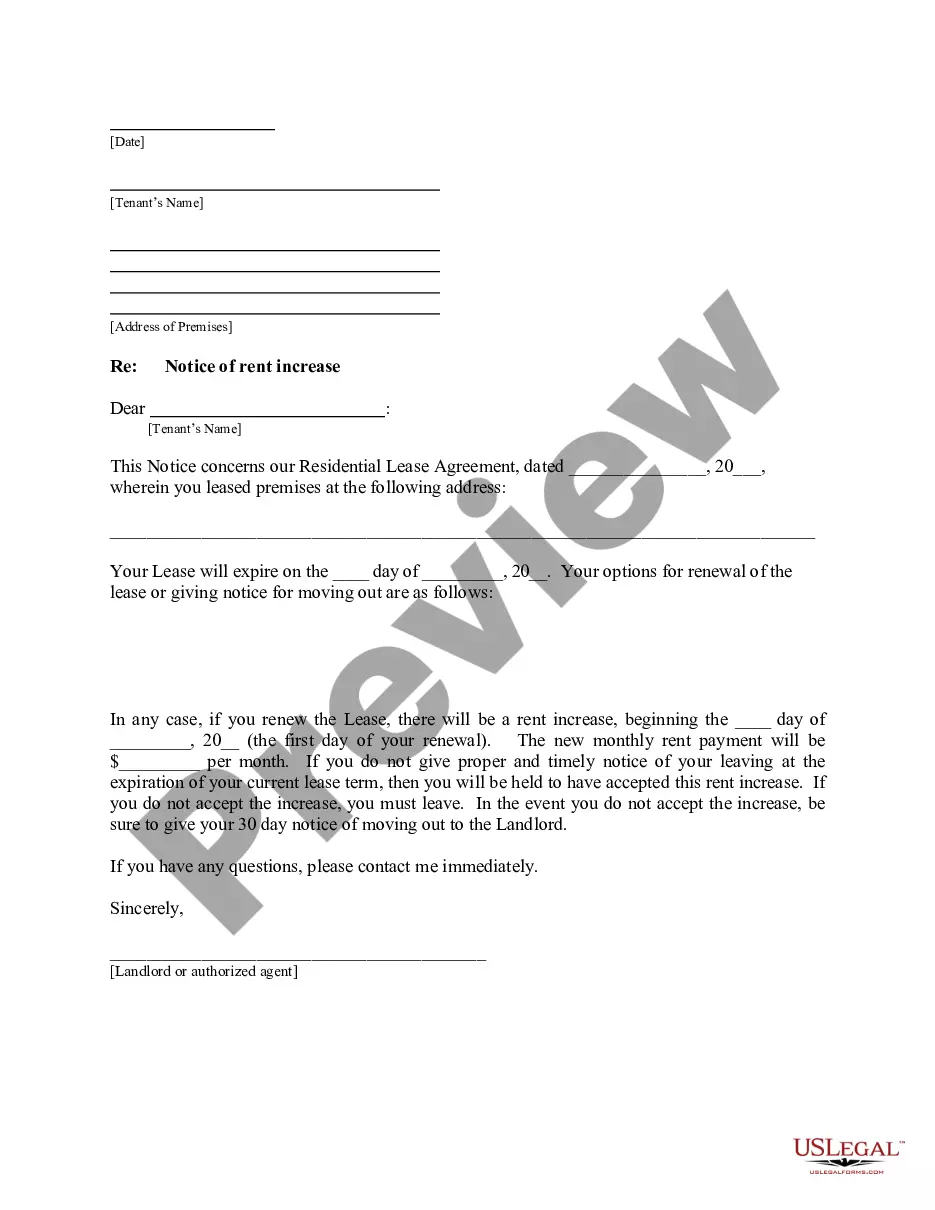


How to fill out Notice To Landowner Of Damaged Tree That Poses Threat To Property Of Adjoining Landowner?
It’s widely recognized that becoming a legal expert takes time, and you cannot swiftly learn to draft Tree Damage To Property without a specific skill set.
Compiling legal documents is a lengthy process that necessitates specialized training and expertise. So why not entrust the crafting of the Tree Damage To Property to the professionals.
With US Legal Forms, which boasts one of the most extensive libraries of legal templates, you can locate everything from court documents to templates for internal business communication. We recognize the importance of compliance with federal and state laws and regulations.
You can re-access your documents from the My documents section at any time. If you are an existing client, you can simply Log In to find and download the template from the same section.
Regardless of the reason for your documentation—be it financial, legal, or personal—our website accommodates all your needs. Give US Legal Forms a try now!
- Find the form you're looking for by utilizing the search bar located at the top of the page.
- View it (if this option is available) and review the accompanying description to see if Tree Damage To Property is what you need.
- Initiate your search again if you're looking for a different template.
- Create a free account and choose a subscription plan to acquire the template.
- Click Buy now. After the transaction is completed, you can access the Tree Damage To Property, fill it in, print it, and send or mail it to the appropriate individuals or organizations.
Form popularity
FAQ
When it comes to tree damage to property, the responsibility for cleanup often depends on where the tree was located. Typically, if the tree fell from your property and caused damage to your neighbor's property, you may be liable for the cleanup. Conversely, if a tree from your neighbor's property falls onto yours, they usually bear the responsibility. It is essential to check local laws and regulations, as they may offer guidance on liability in cases of tree damage to property.
In Washington, laws regarding tree damage to property can be complex. Generally, property owners must maintain their trees and avoid causing harm to neighboring properties. If damage occurs, the owner may be liable, especially if the tree was unhealthy. It's important to consult legal resources or a professional to ensure you understand your rights and responsibilities.
If you experience tree damage to property, start by documenting the damage with photos and notes. Approach your neighbor to discuss the issue and seek a resolution together. If necessary, consider filing a claim with your insurance company. For legal guidance, US Legal Forms offers resources that can help you understand your rights and options.
In the case of tree damage to property, you may need to assess the extent of the damage first. You can discuss the situation with your neighbor to find an amicable solution. If that fails, documenting the damage and seeking legal advice can help clarify your rights. Platforms like US Legal Forms can assist you in navigating the legal pathways.
When tree damage to property occurs, responsibility often falls on the tree owner. If the tree was healthy and the damage was sudden, the neighbor may not be liable. However, if the tree was dead or hazardous, you may have grounds for a claim. It is advisable to consult with a legal expert to explore your options.
In Ohio, tree damage laws indicate that property owners are responsible for their trees. If your tree damages a neighbor's property, you could be liable if the tree was unhealthy or you failed to maintain it. Understanding tree damage to property laws in Ohio can help you mitigate risks. Consulting legal resources can provide useful insights into your responsibilities.
Responsibility for tree damage to property often falls on the tree owner, particularly if negligence is involved. If your tree causes damage due to its poor health, you may face liability. However, if a tree falls due to a storm and was previously healthy, the responsibility might not fall on you. Each case can differ, so understanding the circumstances is vital.
If your tree damages your neighbor's property, you may be held liable, especially if the tree was unhealthy or you ignored its condition. It's crucial to address any potential hazards before they lead to tree damage to property. Consider discussing the situation with your neighbor to resolve it amicably. If necessary, you might seek legal advice to clarify your responsibilities.
In Oregon, tree damage laws state that property owners are generally responsible for their trees. If a tree from your property damages a neighbor's property, you may be liable if the tree was dead or you neglected its maintenance. Oregon law takes into account neglect, so it’s essential to manage your trees properly to avoid legal issues related to tree damage to property. Understanding these laws can help you protect yourself.
Liability for damage caused by trees can vary based on specific factors, such as ownership and condition of the tree. If a tree falls and damages your property, the owner of the tree might be liable if the tree was weak or unhealthy. However, acts of nature complicate this, as owners typically are not held accountable for unforeseen incidents. You may want to explore legal options to understand your rights.