Visitation Grandchild Forum
Description
Get your form ready online
Our built-in tools help you complete, sign, share, and store your documents in one place.
Make edits, fill in missing information, and update formatting in US Legal Forms—just like you would in MS Word.
Download a copy, print it, send it by email, or mail it via USPS—whatever works best for your next step.
Sign and collect signatures with our SignNow integration. Send to multiple recipients, set reminders, and more. Go Premium to unlock E-Sign.
If this form requires notarization, complete it online through a secure video call—no need to meet a notary in person or wait for an appointment.
We protect your documents and personal data by following strict security and privacy standards.

Make edits, fill in missing information, and update formatting in US Legal Forms—just like you would in MS Word.

Download a copy, print it, send it by email, or mail it via USPS—whatever works best for your next step.

Sign and collect signatures with our SignNow integration. Send to multiple recipients, set reminders, and more. Go Premium to unlock E-Sign.

If this form requires notarization, complete it online through a secure video call—no need to meet a notary in person or wait for an appointment.

We protect your documents and personal data by following strict security and privacy standards.
Looking for another form?









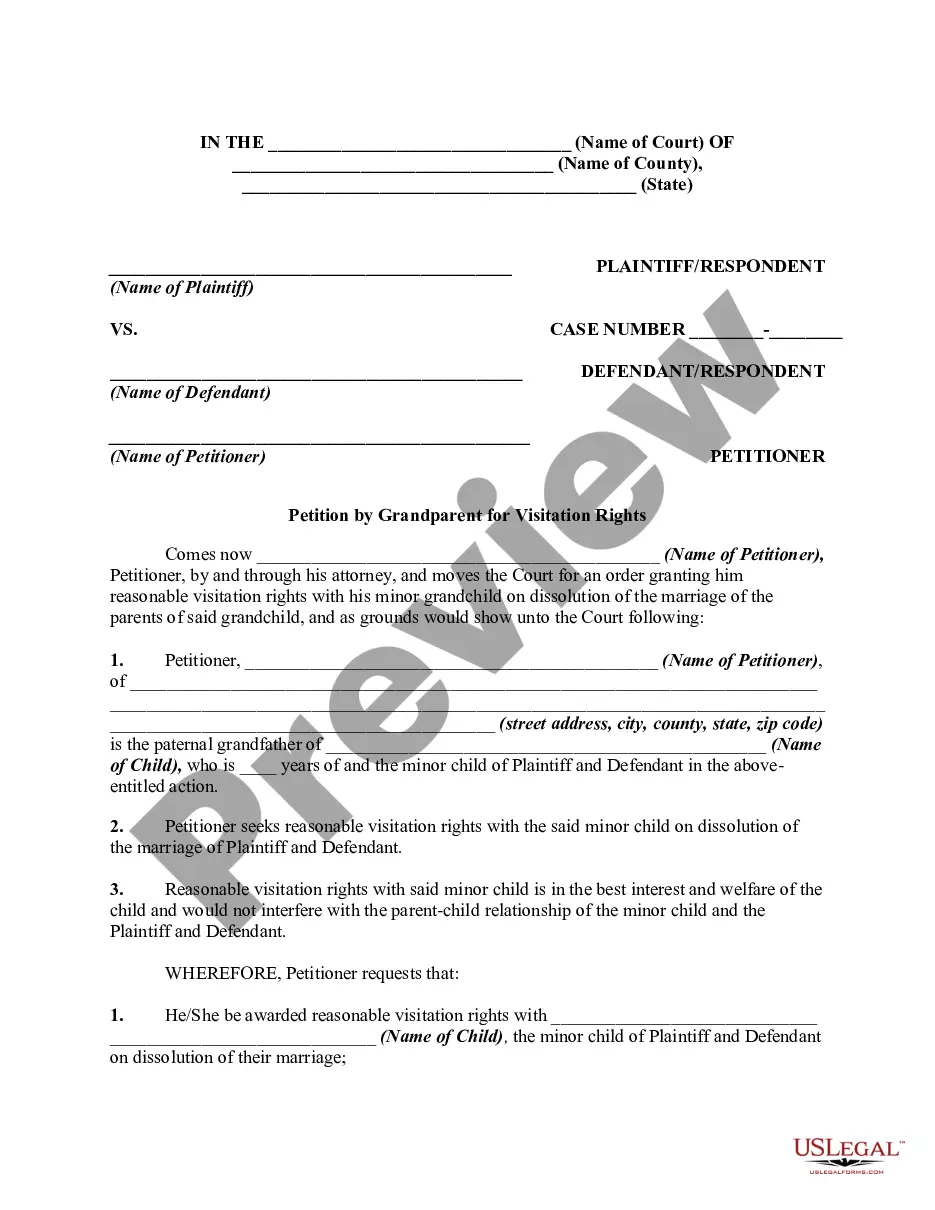
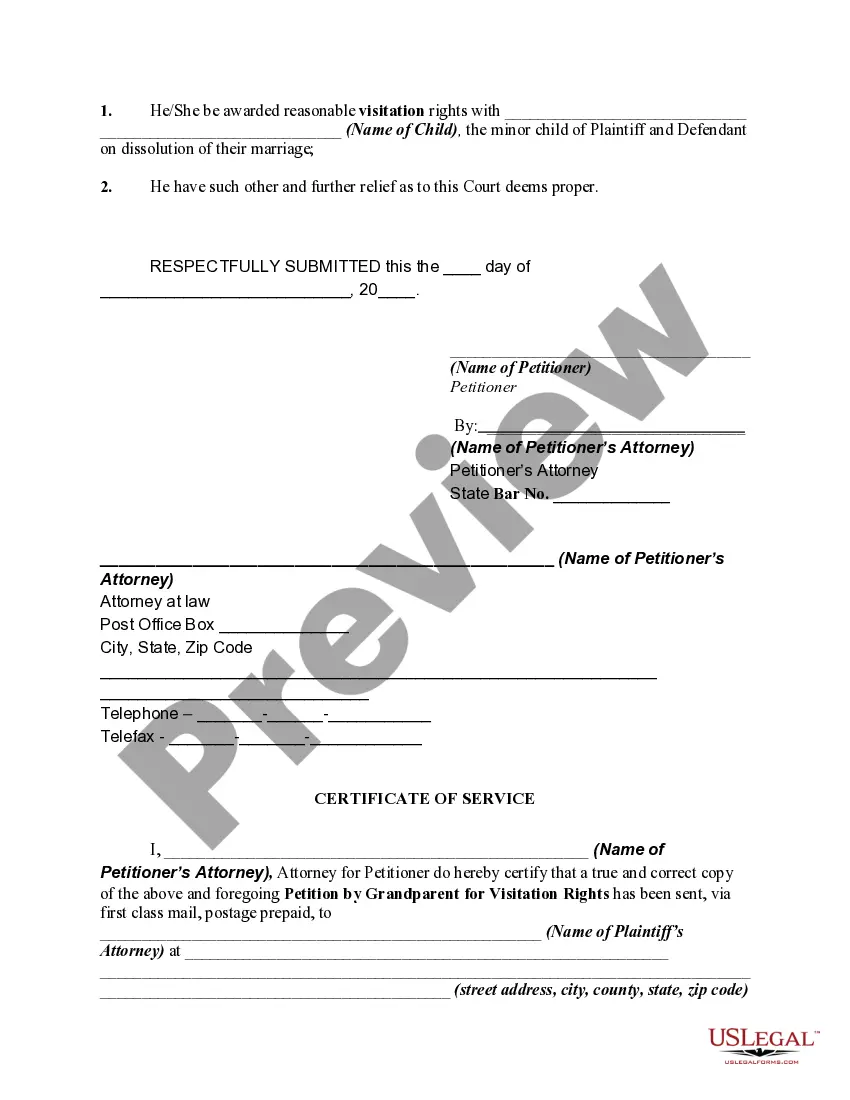
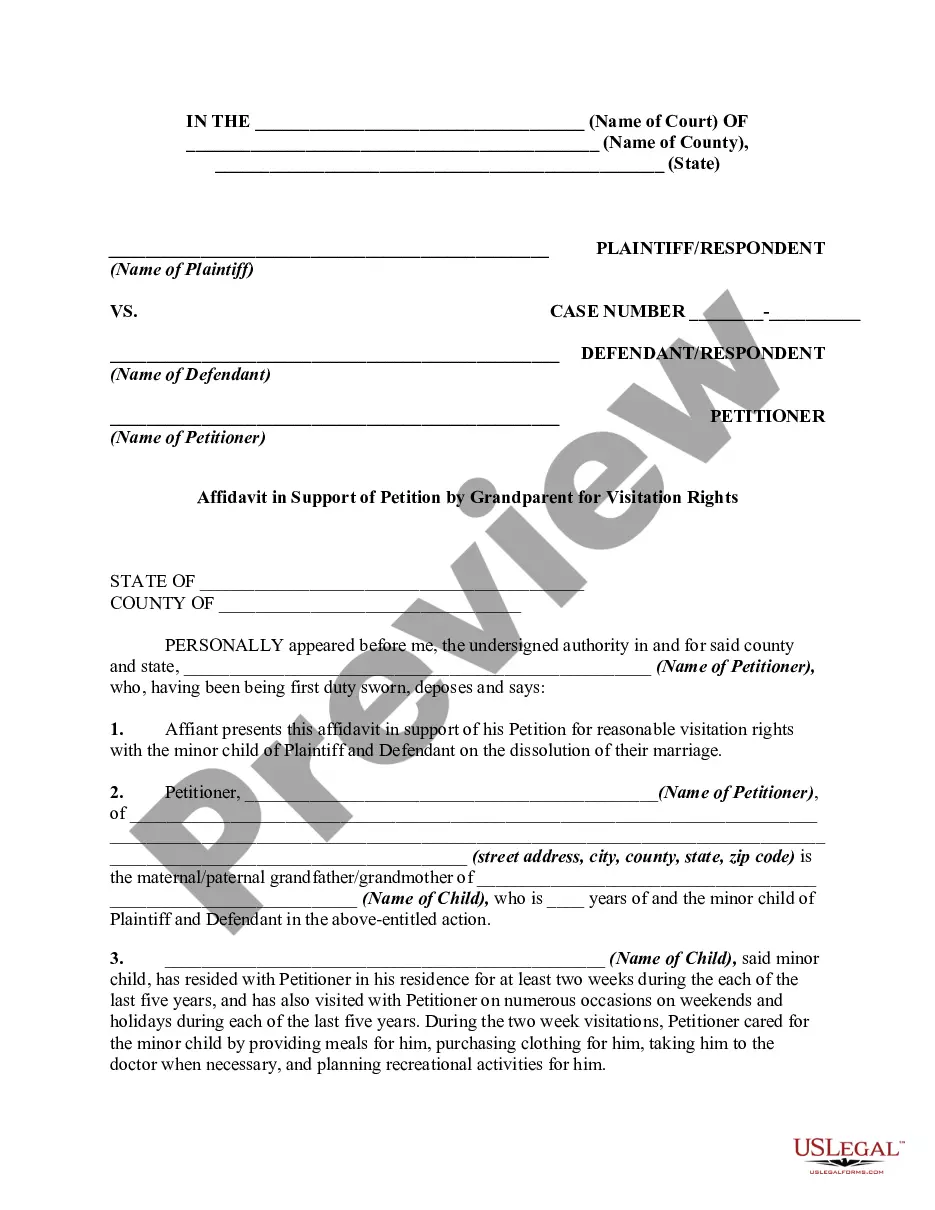
How to fill out Petition By Grandparent For Visitation Rights With Minor Grandchild On Dissolution Of The Marriage Of The Parents Of Minor Child?
Regardless of whether for commercial needs or for private matters, individuals must confront legal circumstances at some stage in their lives.
Completing legal paperwork requires meticulous care, starting from selecting the appropriate form model.
With a vast US Legal Forms library available, there’s no need to waste time searching for the appropriate template online. Utilize the library's user-friendly navigation to find the right form for any occasion.
- Locate the template you require by utilizing the search bar or browsing the catalog.
- Review the form's description to ensure it aligns with your circumstance, jurisdiction, and locality.
- Click on the form's preview to inspect it.
- If it is the incorrect form, return to the search tool to find the Visitation Grandchild Forum template you need.
- Download the file once it corresponds to your specifications.
- If you have an existing US Legal Forms account, simply click Log in to access previously stored templates in My documents.
- If you do not have an account yet, you may acquire the form by clicking Buy now.
- Select the appropriate pricing plan.
- Complete the account registration form.
- Choose your payment method: utilize a credit card or PayPal account.
- Select the file format you desire and download the Visitation Grandchild Forum.
- After it is downloaded, you can fill out the form using editing software or print it and complete it by hand.
Form popularity
FAQ
Several factors can negatively influence a custody battle, including a history of neglect or abuse, failure to meet the child's needs, or poor communication with the other parent. Additionally, displaying hostility or making false accusations can undermine your credibility in court. It is crucial to maintain a cooperative approach and focus on what is best for the child. A Visitation grandchild forum may offer resources and advice on how to present your case positively.
An unstable parent is typically someone who exhibits erratic behavior, struggles with substance abuse, or lacks emotional consistency in their parenting. This instability can negatively impact the child's development and emotional health. Courts often consider these factors when determining custody arrangements. Engaging with a Visitation grandchild forum can help you understand how to demonstrate stability and address concerns effectively.
In a child custody trial, the best witnesses often include teachers, childcare providers, and mental health professionals who interact regularly with the child. These individuals can provide valuable insights into the child's well-being and the parent's involvement. Additionally, family members who have observed the interactions between the child and the parent can also serve as strong witnesses. Utilizing a Visitation grandchild forum can help connect you with others who have navigated similar trials, offering support and shared experiences.
One significant mistake in custody battles is failing to prioritize the child's best interests over personal grievances. This can lead to decisions that harm relationships with both parents and extended family members, including grandparents. Being overly aggressive or contentious can also backfire, causing courts to view one party unfavorably. Seeking guidance from the visitation grandchild forum can help you navigate these challenges more effectively, ensuring that you focus on creating a supportive environment for your grandchild.
Reasonable grandparent visitation involves a schedule that prioritizes the child's well-being while allowing grandparents to maintain a meaningful relationship. This often includes regular, planned visits that suit both the grandparents' and parents' availability. Courts typically favor visitation that does not disrupt the child's routine and supports their emotional needs. For tailored advice, the visitation grandchild forum can be a helpful resource, offering diverse perspectives from those who understand the nuances of these arrangements.
The frequency of visits depends on various factors, including the child's age, the relationship between grandparents and grandchildren, and the parents' agreement. Generally, a reasonable visitation schedule allows for regular interaction, fostering strong family ties. Many find that consistent visits, such as every other weekend or a few times a month, work well. Engaging in discussions on the visitation grandchild forum can provide insights and shared experiences from others navigating similar situations.
File a petition outlining your request for visitation rights in the appropriate New York county court where the grandchild resides. Detail the nature of your relationship with the grandchild, alleged interference with visitation, and proposed visitation schedule in the petition.
New York courts have recognized the following circumstances as grounds to grant standing to grandparents to petition for custody: Parental fitness and ability to provide a safe home. ... Abandonment. ... Surrender. ... Strong psychological bond. ... Extended disruption of custody.
A parent seeking to visit with a child may file a petition in Family Court against the person or persons who have custody of the child. Custody and visitation matters are often heard together within the same hearing, but a visitation petition may also be filed as a separate matter.
New York Non-Parent Visitation Law If a grandparent, or grandparents, seek visitation rights when both of the child(ren)'s parents are alive, Section 72 of the Domestic Relations Law of the State of New York requires the Court to seek to first determine if the grandparents have standing to seek visitation.