Medicine For Minor Stroke
Description
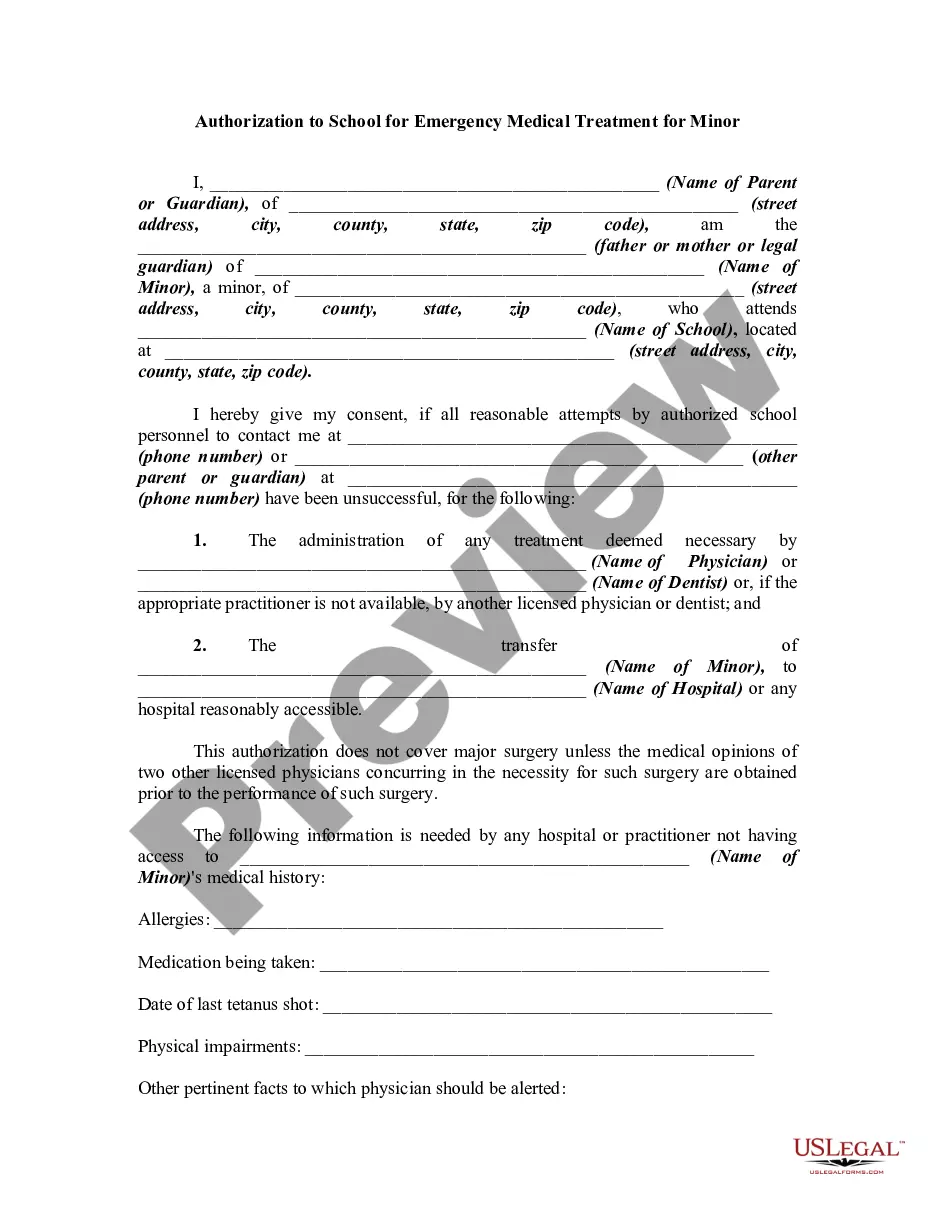
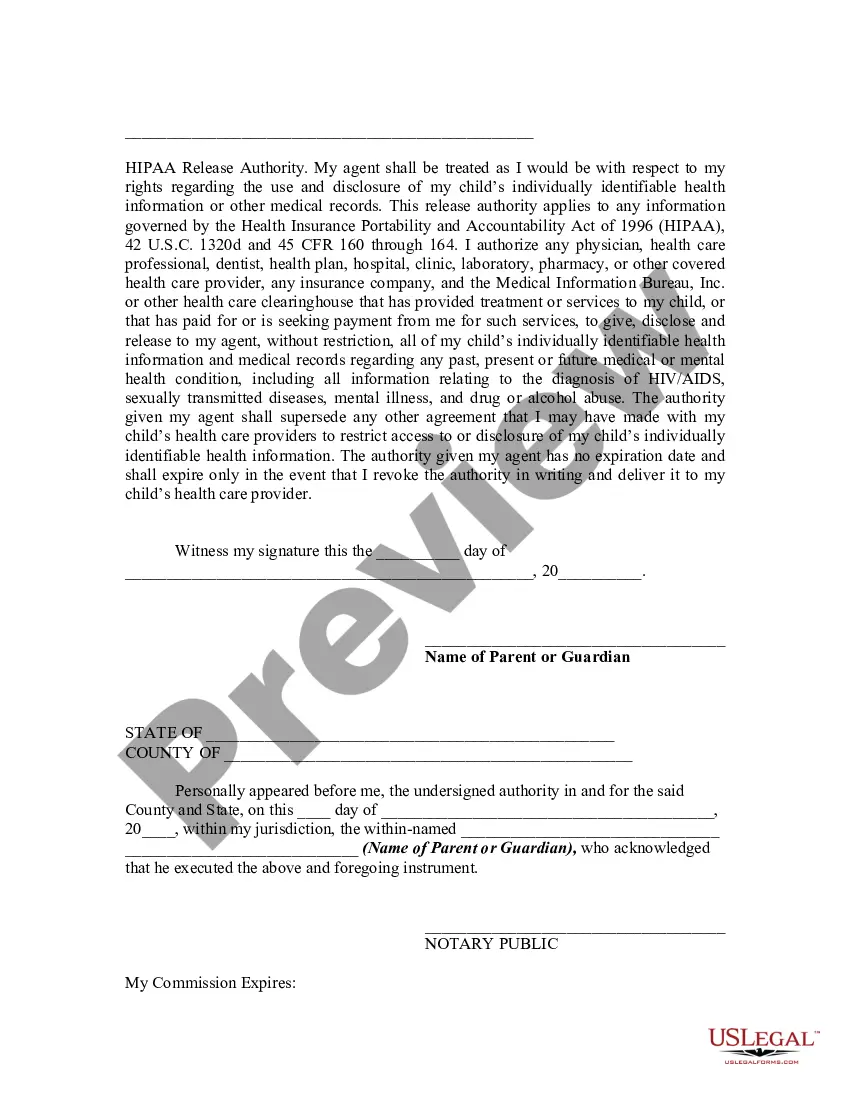

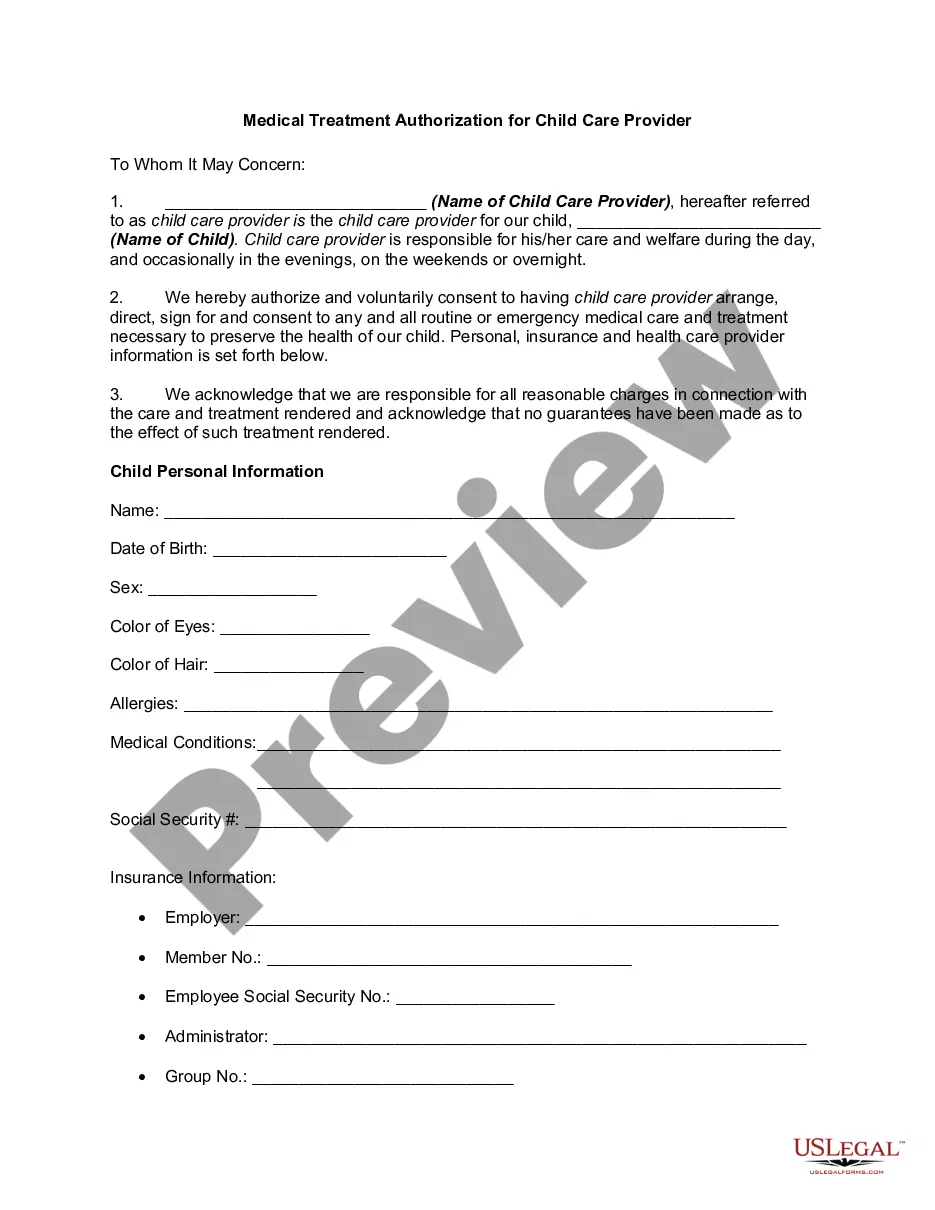
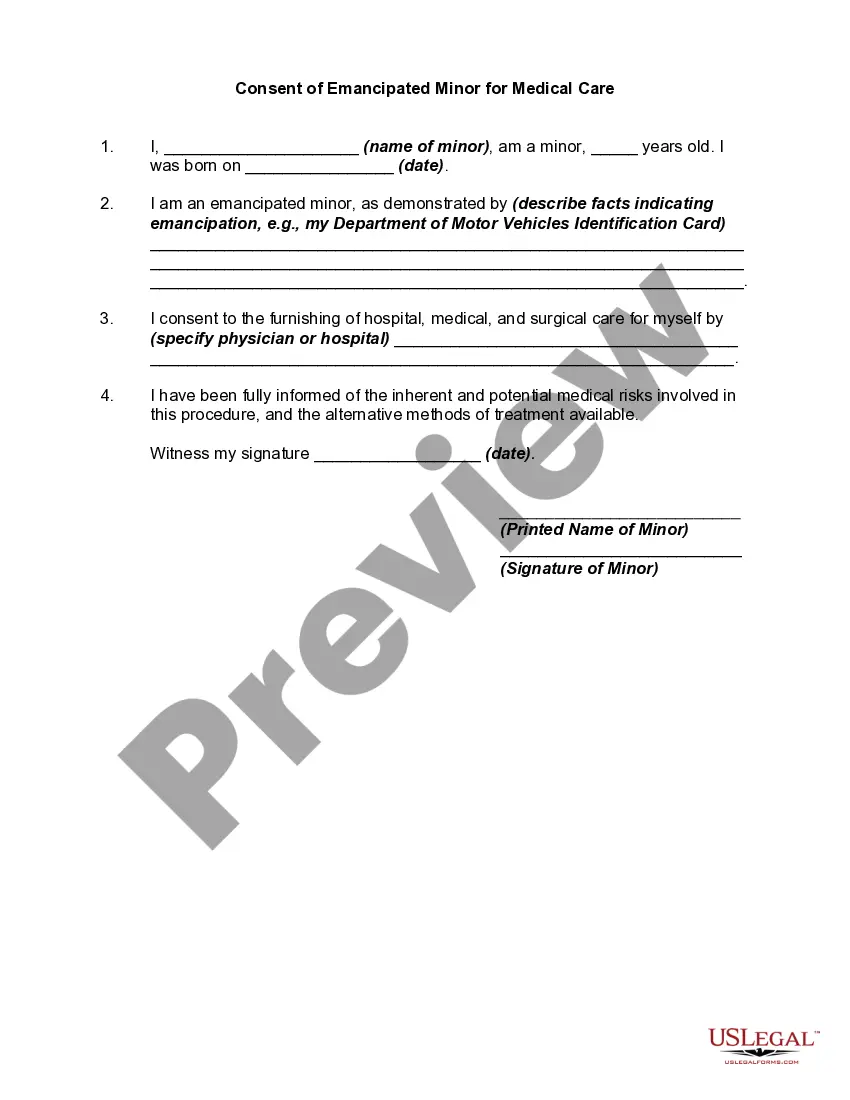
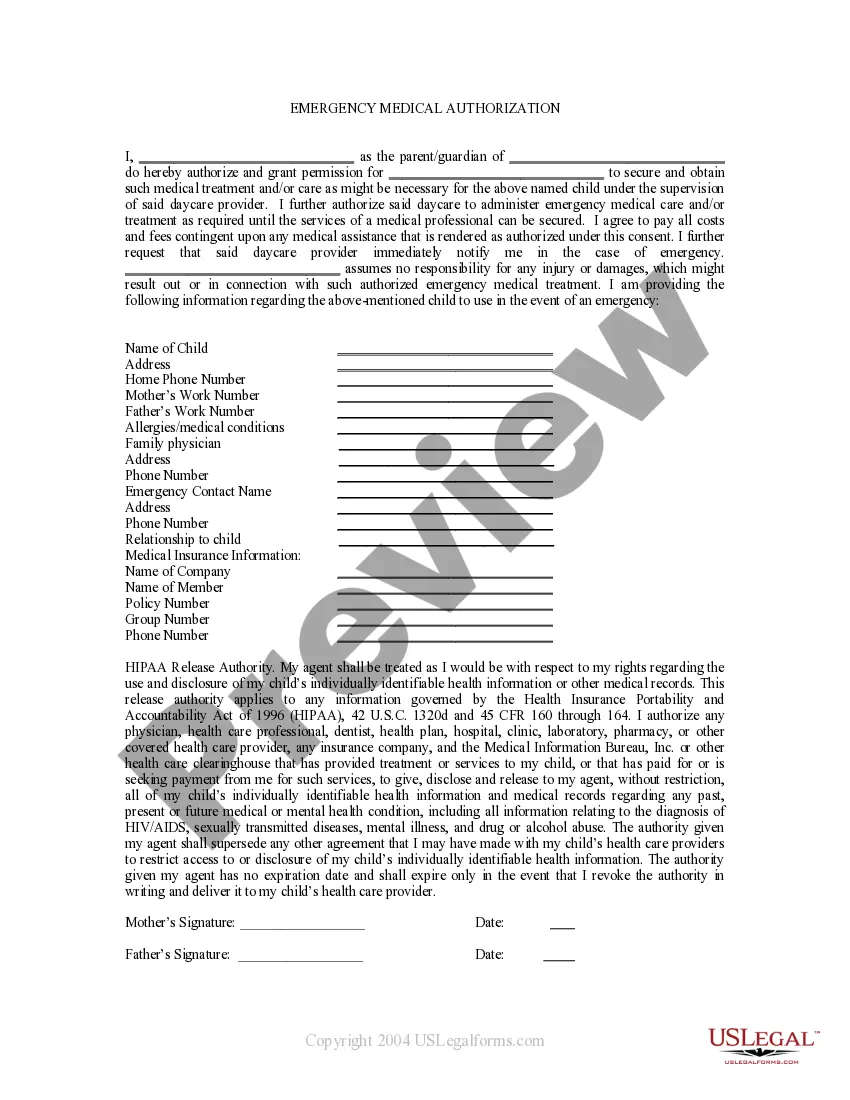
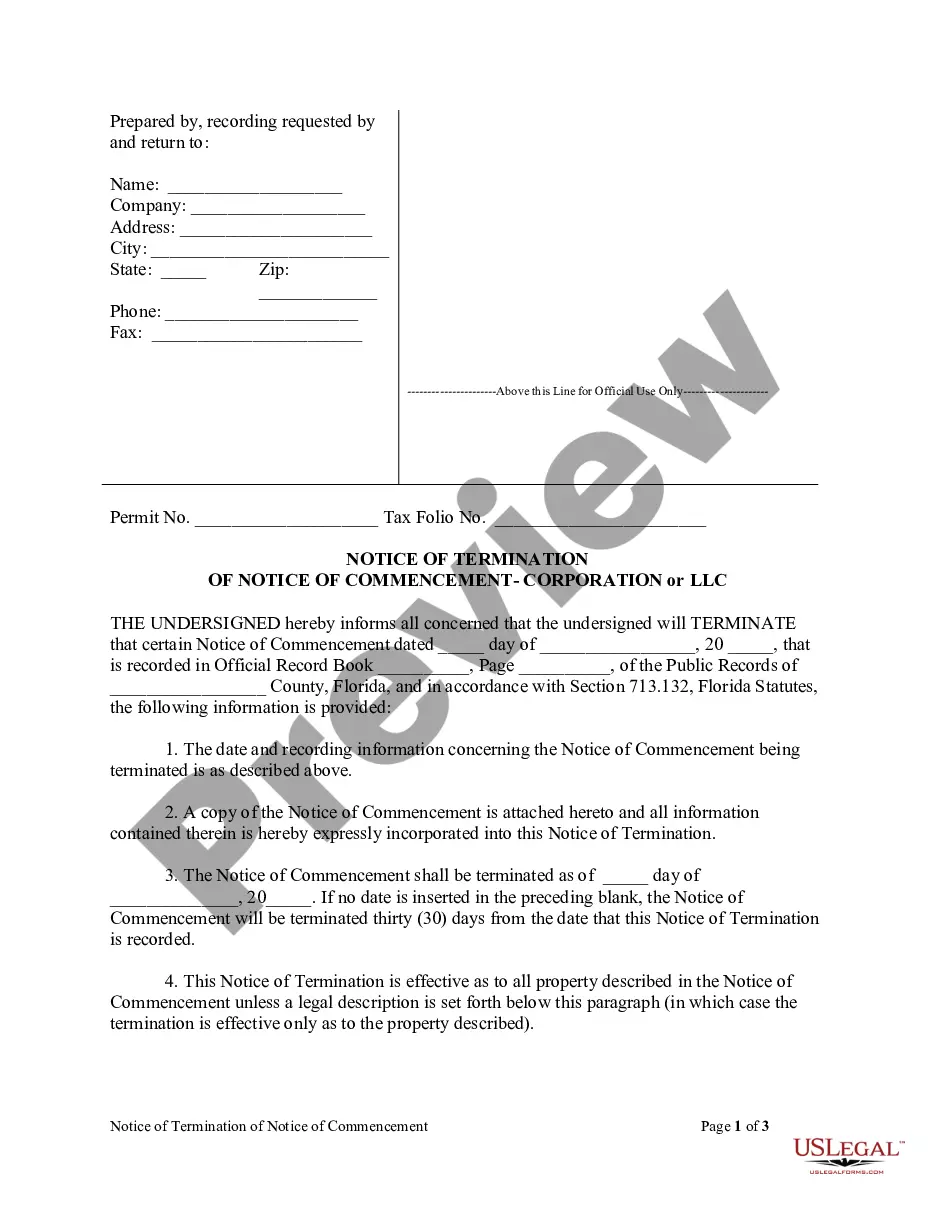



How to fill out Authorization To School For Emergency Medical Treatment For Minor - Patient Consent?
Dealing with legal documents and procedures could be a lengthy addition to your whole day.
Medicine For Minor Stroke and similar forms frequently require you to locate them and comprehend how to fill them out correctly.
Consequently, whether you are managing financial, legal, or personal issues, having a detailed and user-friendly online directory of forms readily available will greatly assist.
US Legal Forms is the premier online platform for legal templates, featuring over 85,000 state-specific documents and a range of tools to help you complete your paperwork effortlessly.
Is this your first experience with US Legal Forms? Sign up and establish your account in just a few minutes, and you’ll gain entry to the form directory and Medicine For Minor Stroke. Then, follow the instructions outlined below to finalize your form: Ensure you have located the correct form using the Preview option and reviewing the form description. Select Buy Now when ready, and choose the subscription plan that fits your needs. Click Download and then fill out, sign, and print the form. US Legal Forms has twenty-five years of experience assisting clients with their legal documents. Locate the form you need today and streamline any process with ease.
- Browse the collection of relevant forms accessible to you with just a single click.
- US Legal Forms offers you state- and county-specific documents available for download at any time.
- Protect your document management processes by utilizing a superior service that enables you to create any form in a matter of minutes without any additional or hidden fees.
- Simply Log In to your account, locate Medicine For Minor Stroke, and obtain it immediately in the My documents section.
- You can also retrieve previously downloaded documents.
Form popularity
FAQ
Minor strokes typically involve the use of antiplatelet medications, with aspirin being one of the most commonly prescribed. These medicines play a crucial role in preventing future strokes by reducing blood clot formation. Your doctor may also recommend additional treatments based on your health needs. For personalized guidance, explore resources like UsLegalForms, which can assist you in understanding your options and rights related to the medicine for minor stroke.
For mini strokes, also known as transient ischemic attacks (TIAs), antiplatelet medications like aspirin are often recommended. These medications help reduce the risk of future strokes by preventing blood clots. In some cases, doctors may prescribe anticoagulants for patients with specific risk factors. Always consider discussing your options with a healthcare professional to find the right medicine for minor stroke.
Treating a minor stroke usually involves medications and lifestyle changes. Antiplatelet drugs are commonly prescribed to prevent future strokes. Rehabilitation may also be recommended to improve any lingering effects. Consulting with a healthcare provider is vital, as they can guide you on the best medicine for minor stroke tailored to your needs.
The initial medication for a stroke patient typically includes clot-busting drugs, known as thrombolytics. These are crucial for treating ischemic strokes, where a blood vessel is blocked. However, for minor strokes, doctors may focus on antiplatelet medications to ensure better recovery. Always consult with a healthcare professional to determine the most suitable medicine for minor stroke.
After a mild stroke, doctors often prescribe antiplatelet medications like aspirin. These medicines help prevent further clots, which can lead to more severe strokes. Additionally, your doctor may recommend other medications to manage risk factors, such as cholesterol and blood pressure. It's essential to follow your healthcare provider's recommendations regarding the best medicine for minor stroke.
The best medicine for a mild stroke often depends on individual health conditions and medical history. Antiplatelet drugs, such as aspirin, are frequently recommended due to their effectiveness in preventing future strokes. However, your doctor may tailor a different medication based on your unique situation. It's essential to work closely with your healthcare provider to identify the most appropriate medicine for minor stroke in your case.
Doctors approach the treatment of mild strokes with a comprehensive plan that includes both medication and lifestyle modifications. They may suggest rehabilitation therapies to aid recovery, focusing on physical, occupational, and speech therapies as needed. Additionally, healthcare providers often discuss preventive measures, such as controlling blood pressure and cholesterol levels. By using medicine for minor stroke and tailored treatment strategies, doctors aim for optimal patient outcomes.
Doctors typically prescribe antiplatelet medications, such as aspirin or clopidogrel, as the primary medicine for minor stroke. These medications help prevent blood clots, which can lead to further strokes. In some cases, anticoagulants may also be recommended based on the patient's specific risk factors. Always consult with your healthcare provider to find the most suitable medication for your needs.
When treating a mild stroke, doctors first assess the patient's condition through imaging tests and physical examinations. They may recommend immediate lifestyle changes, such as diet adjustments or increased physical activity, to prevent future strokes. Furthermore, they often prescribe medicine for minor stroke to help manage symptoms and improve recovery. Continuous follow-up appointments ensure effective monitoring and adjustments to the treatment plan.