Medicine For Minor Heart Attack
Description
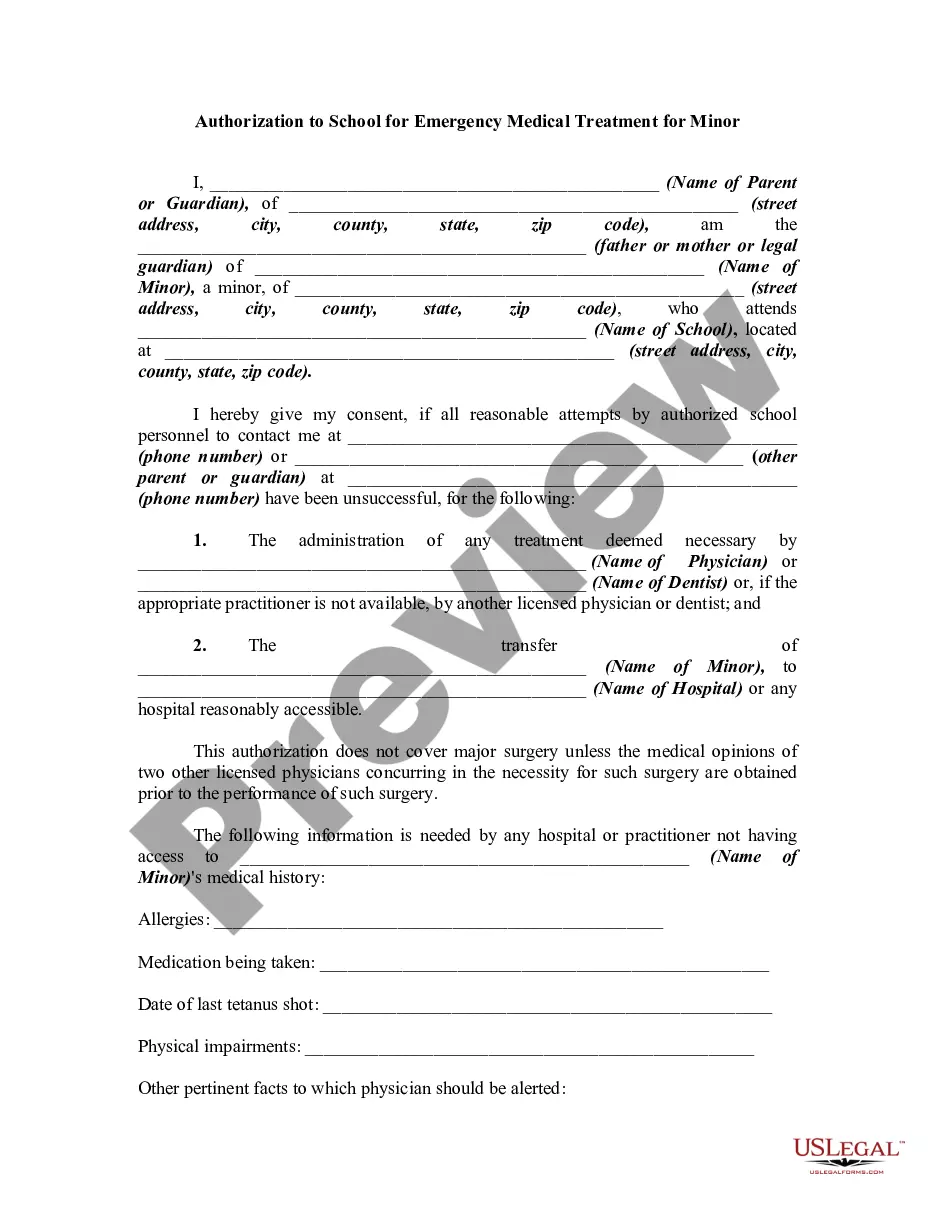
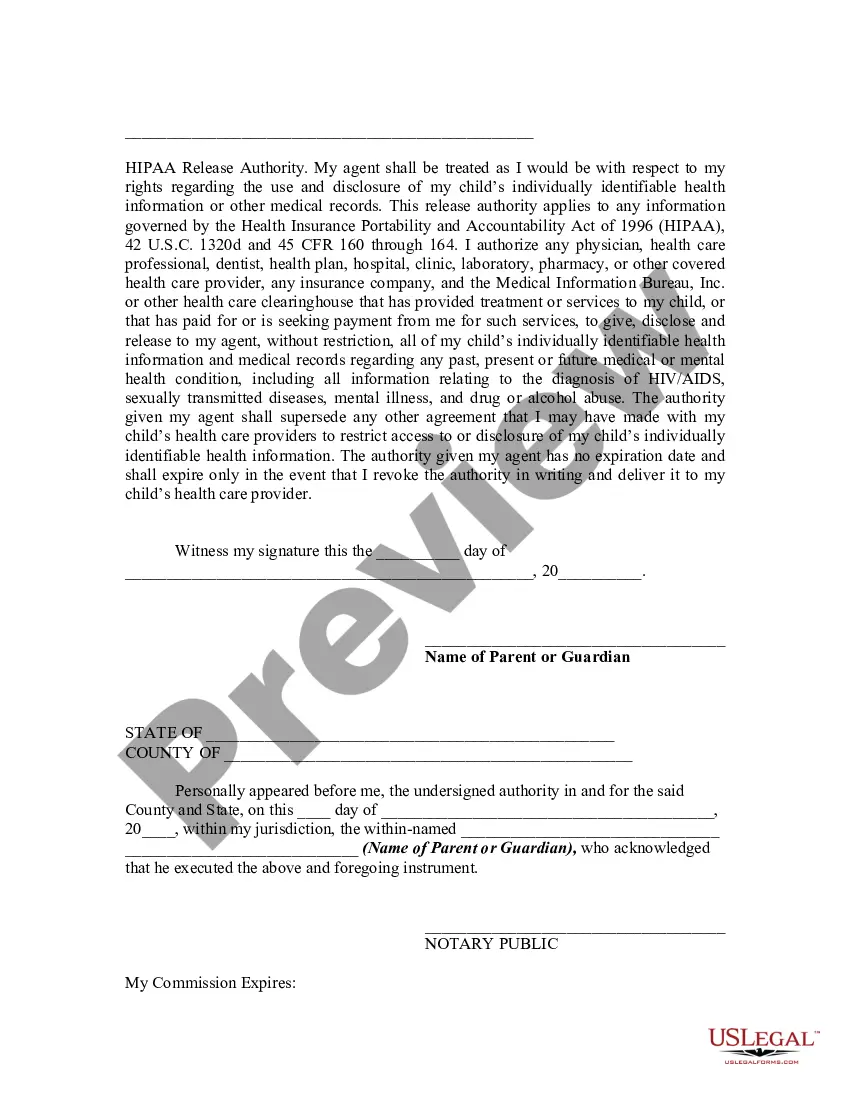
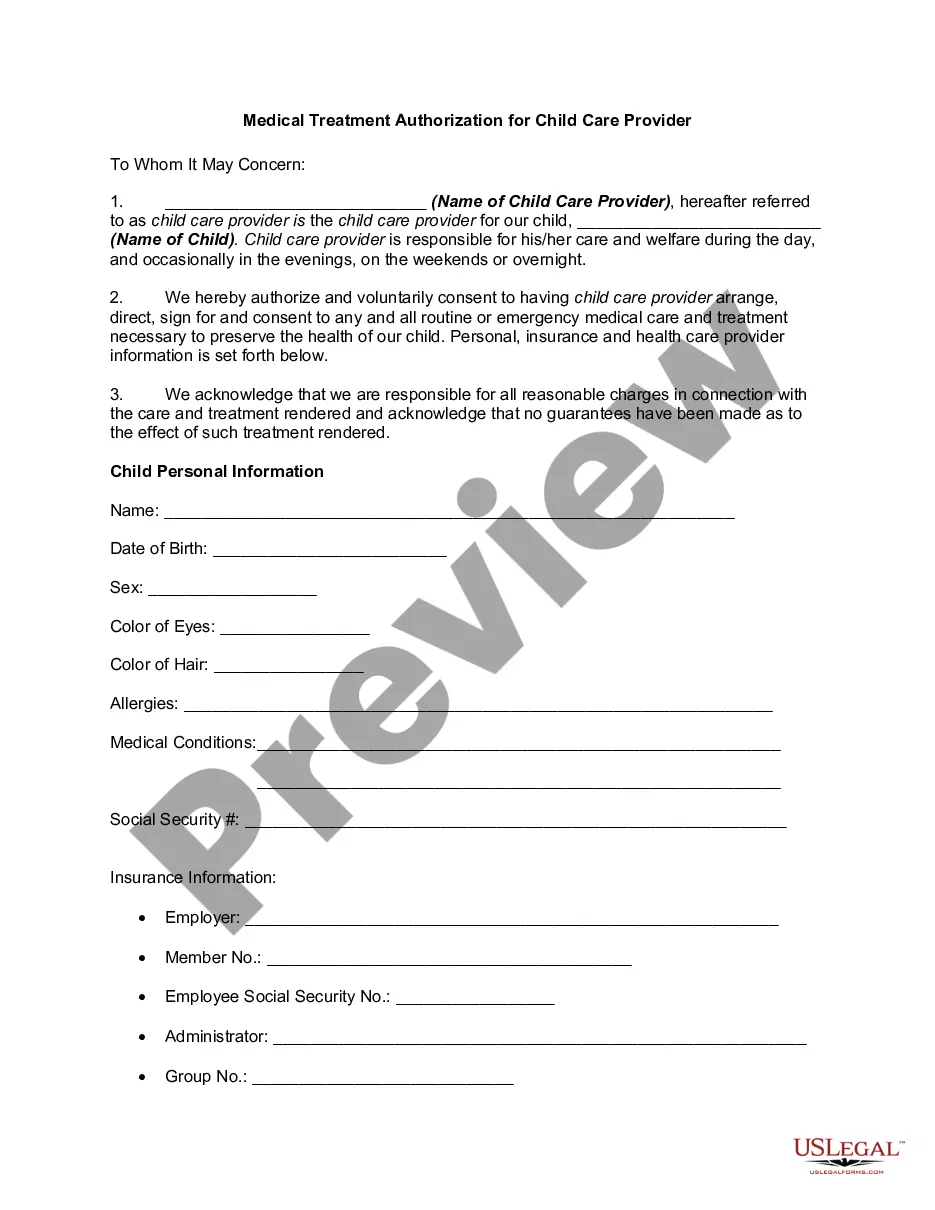
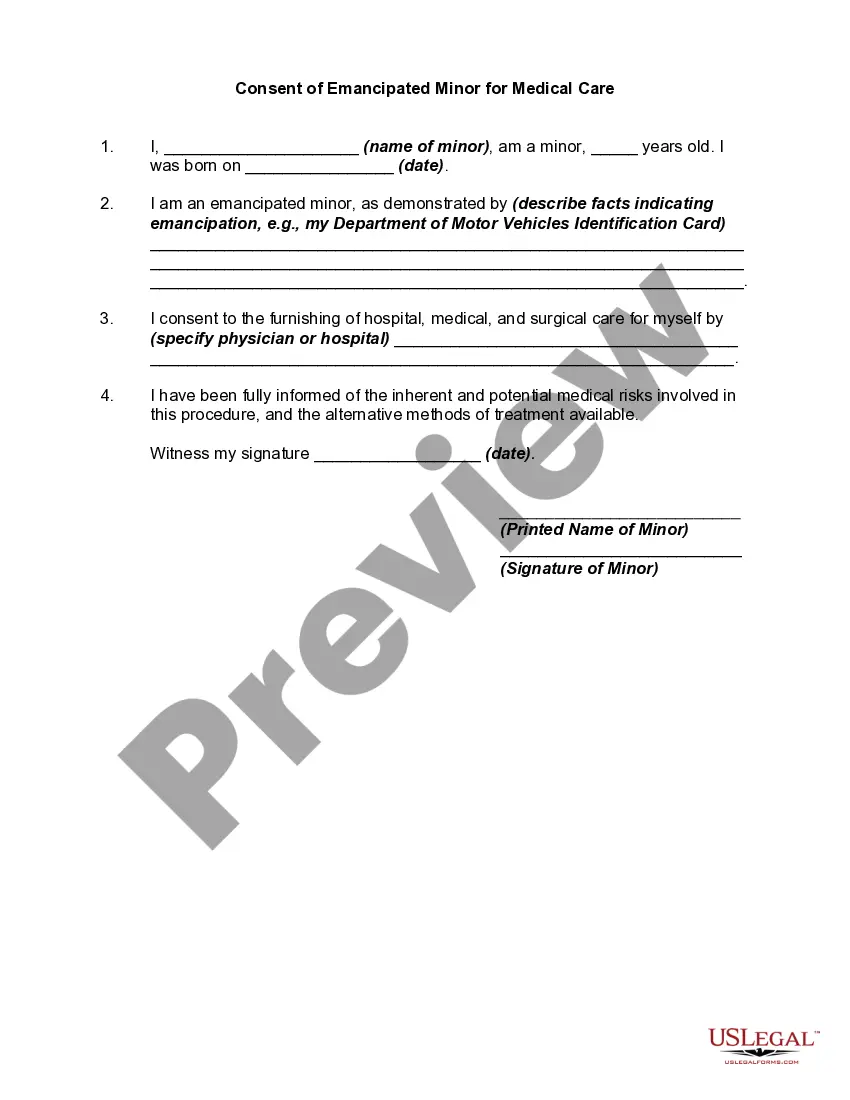
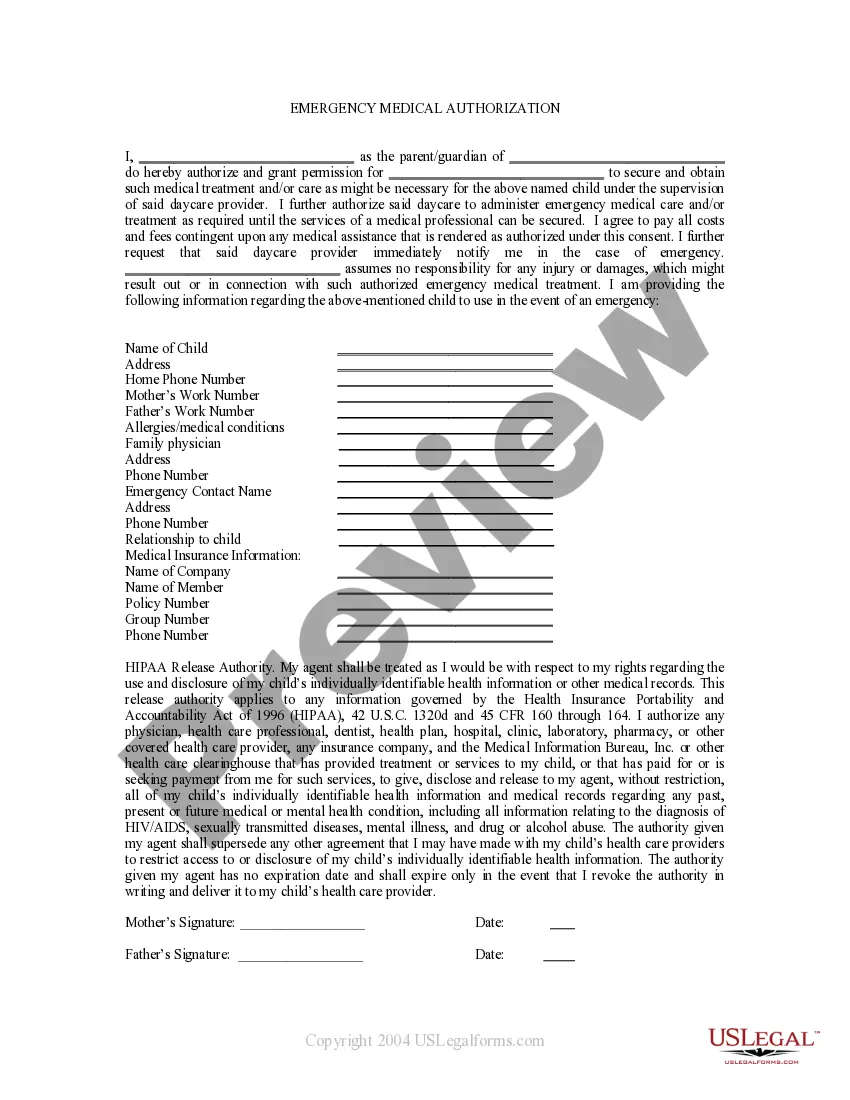

How to fill out Authorization To School For Emergency Medical Treatment For Minor - Patient Consent?
Creating legal documents from the ground up can frequently be daunting.
Certain situations may require extensive research and significant financial investment.
If you’re looking for a simpler and more economical method of producing Medicine For Minor Heart Attack or any other paperwork without unnecessary complications, US Legal Forms is always accessible to you.
Our online collection of over 85,000 current legal documents encompasses nearly every facet of your financial, legal, and personal matters.
Review the form preview and descriptions to confirm that you are on the document you are looking for. Verify that the form you choose meets the requirements of your state and county. Select the most appropriate subscription option to obtain the Medicine For Minor Heart Attack. Download the form, then complete, sign, and print it. US Legal Forms has an excellent reputation and over 25 years of expertise. Join us today and simplify the document completion process!
- With just a few clicks, you can quickly obtain state- and county-specific templates carefully crafted for you by our legal professionals.
- Utilize our platform whenever you need dependable and trustworthy services to swiftly find and download the Medicine For Minor Heart Attack.
- If you’re already familiar with our website and have previously established an account with us, simply Log In to your account, choose the template, and download it or re-download it at any time from the My documents section.
- Don’t have an account? No worries. Setting it up and exploring the library only takes a few minutes.
- However, before proceeding to download Medicine For Minor Heart Attack, adhere to these suggestions.
Form popularity
FAQ
Yes, you typically need medication after a mild heart attack. The right medicine for a minor heart attack helps manage your heart's health and reduces the risk of future problems. These medications may include blood thinners, beta-blockers, or statins. It's crucial to work closely with your healthcare provider to determine the best medication plan tailored to your needs.
Your treatment will depend on what is causing your symptoms. If you have an acute case of angina (chest pain), your doctor will probably give you nitroglycerin and aspirin. Nitroglycerin improves blood flow to your heart.
Hospitals use techniques to restore blood flow to the part of the heart muscle damaged during your heart attack: You might receive clot-dissolving drugs (thrombolysis), balloon angioplasty, surgery or a combination of treatments.
Push hard and fast on the center of the person's chest in a fairly rapid rhythm ? about 100 to 120 compressions a minute. If an automated external defibrillator (AED) is immediately available and the person is unconscious, follow the device instructions for using it.
Emergency medical providers may give you aspirin immediately. Clot busters (thrombolytics or fibrinolytics). These drugs help break up any blood clots that are blocking blood flow to the heart.
These may include: Antiplatelet medication such as clopidogrel (Plavix®), prasugrel (Effient®), ticagrelor (Brilinta?) or aspirin, and in some cases, both. Statin (HMG-CoA reductase inhibitors) to lower cholesterol. Heart medications such as beta blockers or calcium channel blockers to help keep your arteries open.