Adverse Possession Requirements With High Interest
Description
Get your form ready online
Our built-in tools help you complete, sign, share, and store your documents in one place.
Make edits, fill in missing information, and update formatting in US Legal Forms—just like you would in MS Word.
Download a copy, print it, send it by email, or mail it via USPS—whatever works best for your next step.
Sign and collect signatures with our SignNow integration. Send to multiple recipients, set reminders, and more. Go Premium to unlock E-Sign.
If this form requires notarization, complete it online through a secure video call—no need to meet a notary in person or wait for an appointment.
We protect your documents and personal data by following strict security and privacy standards.

Make edits, fill in missing information, and update formatting in US Legal Forms—just like you would in MS Word.

Download a copy, print it, send it by email, or mail it via USPS—whatever works best for your next step.

Sign and collect signatures with our SignNow integration. Send to multiple recipients, set reminders, and more. Go Premium to unlock E-Sign.

If this form requires notarization, complete it online through a secure video call—no need to meet a notary in person or wait for an appointment.

We protect your documents and personal data by following strict security and privacy standards.
Looking for another form?
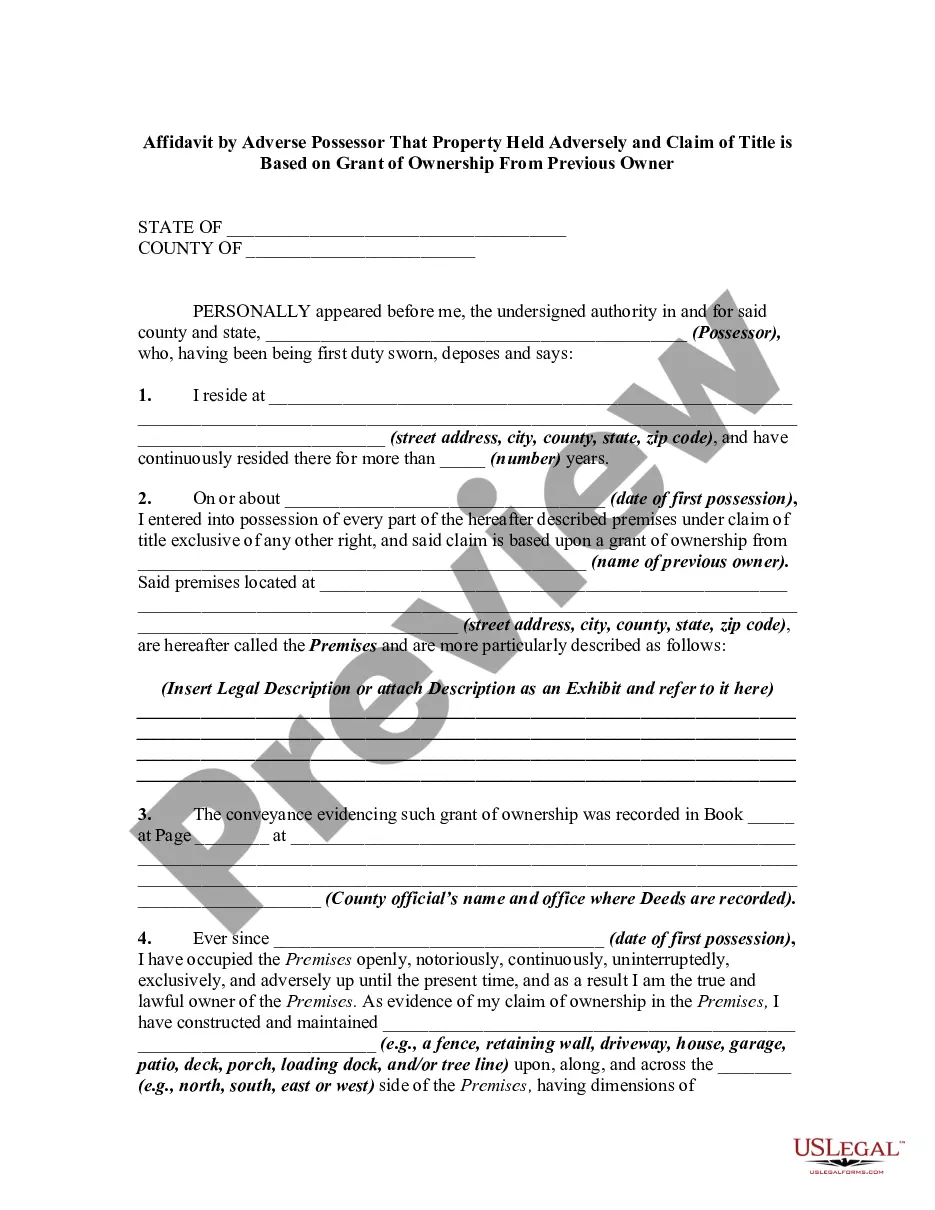
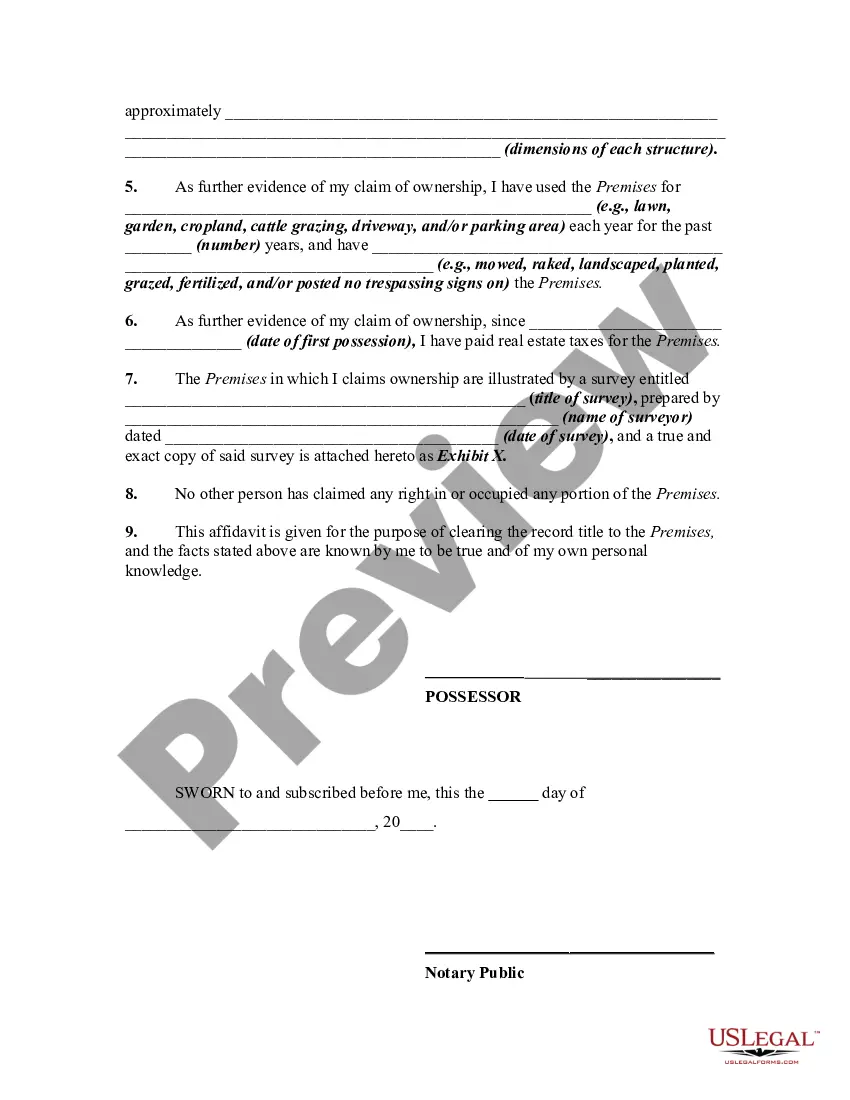
How to fill out Affidavit By Adverse Possessor That Property Held Adversely And Claim Of Title Is Based On Grant Of Ownership From Previous Owner - Squatters Rights?
- If you're an existing user, log in to your account and locate the necessary form. Ensure your subscription is active. If it has lapsed, please renew according to your selected payment plan.
- If you're new to US Legal Forms, start by reviewing the available document previews and descriptions. Confirm that the form you choose complies with your local jurisdiction's requirements.
- Should you need a different template, use the Search bar to find the correct form. Once identified, proceed to the next step.
- Purchase the document by clicking the Buy Now button and selecting your preferred subscription plan. Creating an account is necessary to access the complete library.
- Complete the transaction by entering your payment information, either through credit card or PayPal.
- Finally, download the form to your device. You can always access it later in your My Forms section.
US Legal Forms empowers users by providing them with an expansive collection of over 85,000 legal documents, which is more than many competitors offer for a similar cost. This extensive library ensures users can find the forms they need without hassle.
With the support of premium experts available for assistance, you can be confident that your legal documents are filled out accurately and maintain legal integrity. Start simplifying your legal journey today!
Form popularity
FAQ
In New York, the adverse possession requirements mandate continuous and exclusive possession of the property for a period of 10 years. The claimant must occupy the land openly and without permission, treating it as their own. Importantly, the possession must be adverse and not under a lease or license. Familiarizing yourself with these requirements is crucial in understanding your rights as a property owner.
To defeat a claim of adverse possession, you can provide evidence that the claimant did not meet the necessary requirements. Proving that the possession was not exclusive or that permission was granted to the claimant can weaken their case. Additionally, intervening promptly when you suspect an adverse claim can help to assert your ownership rights effectively. Leveraging legal resources can guide you in addressing these claims.
In Connecticut, the adverse possession requirements specify that a claimant must occupy the property openly, continuously, and without permission for at least 15 years. This possession must be exclusive, and the claimant must demonstrate that they treated the property as their own. Additionally, the possession must be adverse to the interests of the true owner. Understanding these rules can help you assess any claims on your property.
To claim a piece of property through adverse possession, you must prove specific elements consistent with the adverse possession requirements with high interest. This includes showing continuous and exclusive possession, as well as open and notorious use of the land. Additionally, you must demonstrate that your occupation is under a claim of right, meaning you believe you have a right to the property. The Quizlet format can be helpful for reviewing these elements before pursuing your claim, enhancing your understanding of the necessary requirements.
Proving adverse possession in Texas involves demonstrating several key factors that align with the adverse possession requirements with high interest. You must provide evidence of open and notorious possession, which can include testimonials, photographs, or improvements made to the property. Additionally, documentation showing your continuous usage, such as utility bills or tax payments, can support your claim. It’s advisable to keep thorough records to strengthen your case.
The 3-year rule in Texas allows a person to claim adverse possession after only three years of possession if they have a recorded deed, even if that deed is flawed. This rule is one of the exceptions to the typical 10-year requirement associated with the adverse possession requirements with high interest. To take advantage of this, your possession must still fulfill the other conditions set by Texas law. Therefore, understanding this rule can significantly speed up your claim process.
To successfully claim real property through adverse possession in Texas, you typically need to possess the property for 10 years. This time requirement aligns with the adverse possession requirements with high interest that are structured to protect property owners while allowing legitimate claims. It's essential to maintain continuous and open possession throughout this entire period. Any interruption could reset the clock on your claim.
In Texas, the adverse possession requirements with high interest include continuous possession, open and notorious use, exclusive possession, adverse character, and seasonal use for a defined period. First, you must occupy the property without interruption for a specific time, typically 10 years. This use must be visible and obvious to anyone, thereby preventing hidden claims. Additionally, your possession should not be shared with others, and it must conflict with the legal owner's rights.
In Maryland, adverse possession requires the possessor to use the property continuously and openly for 15 years. The use must also be exclusive and without the owner's consent. Knowing these specific adverse possession requirements with high interest can guide you if you are considering a claim in Maryland.
The latest Supreme Court ruling on adverse possession affirmed that state laws govern the requirements and processes involved. This decision highlights the importance of consulting local regulations for up-to-date information. Staying informed about adverse possession requirements with high interest can significantly affect how you approach property disputes.