Adverse Possession Requirements
Description
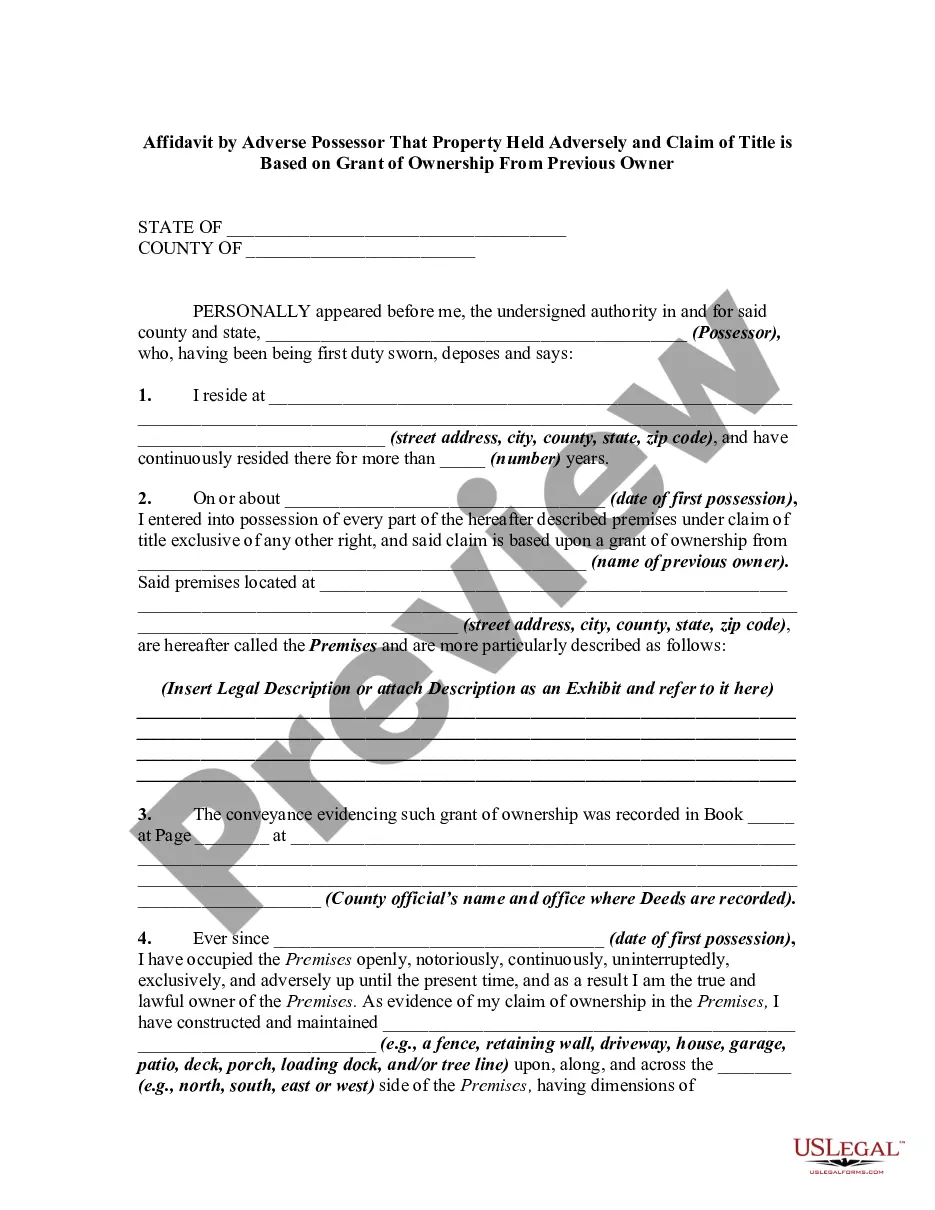
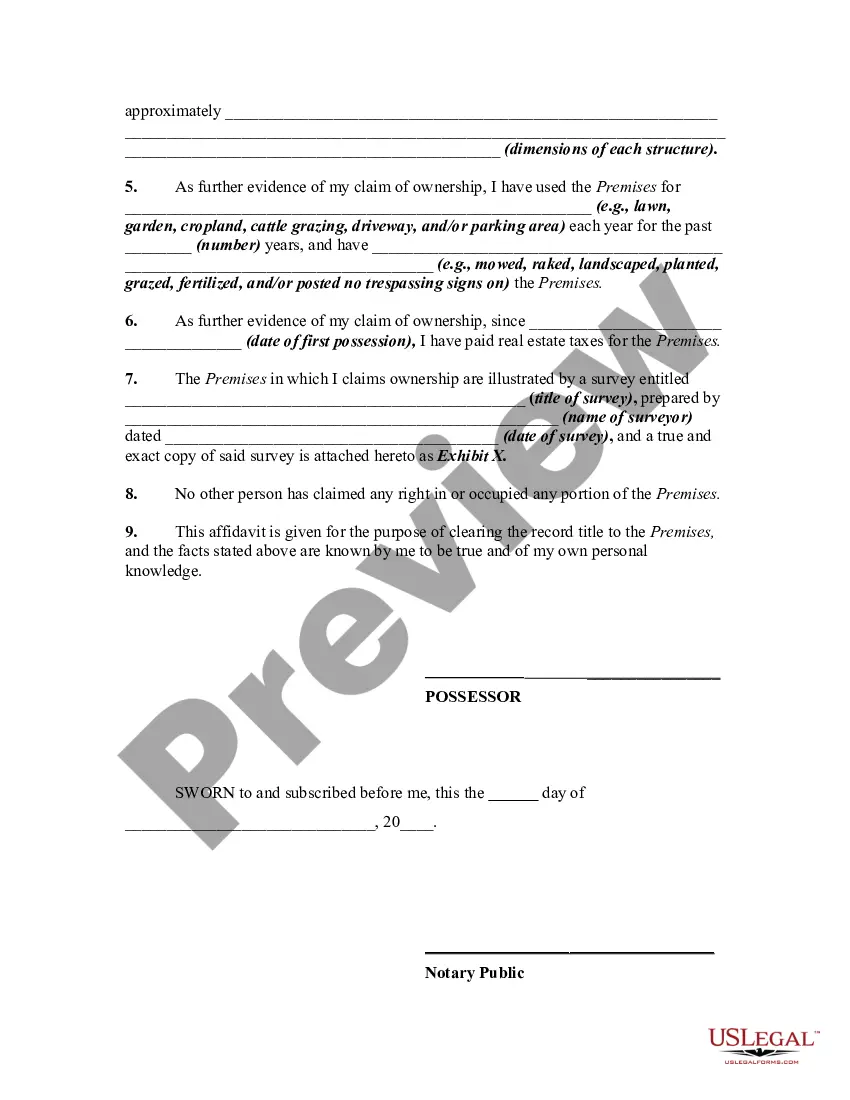

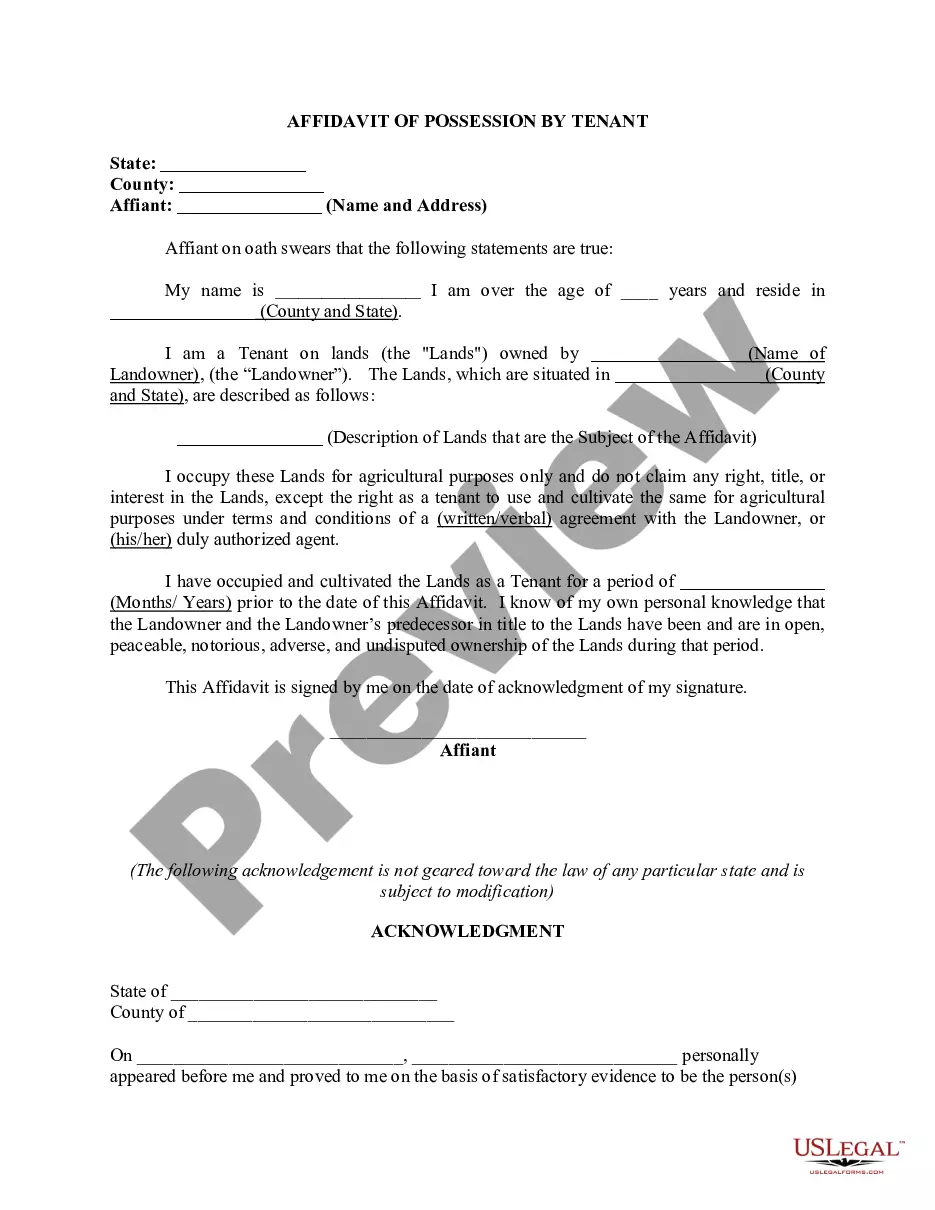
Get your form ready online
Our built-in tools help you complete, sign, share, and store your documents in one place.
Make edits, fill in missing information, and update formatting in US Legal Forms—just like you would in MS Word.
Download a copy, print it, send it by email, or mail it via USPS—whatever works best for your next step.
Sign and collect signatures with our SignNow integration. Send to multiple recipients, set reminders, and more. Go Premium to unlock E-Sign.
If this form requires notarization, complete it online through a secure video call—no need to meet a notary in person or wait for an appointment.
We protect your documents and personal data by following strict security and privacy standards.

Make edits, fill in missing information, and update formatting in US Legal Forms—just like you would in MS Word.

Download a copy, print it, send it by email, or mail it via USPS—whatever works best for your next step.

Sign and collect signatures with our SignNow integration. Send to multiple recipients, set reminders, and more. Go Premium to unlock E-Sign.

If this form requires notarization, complete it online through a secure video call—no need to meet a notary in person or wait for an appointment.

We protect your documents and personal data by following strict security and privacy standards.
Looking for another form?



How to fill out Affidavit By Adverse Possessor That Property Held Adversely And Claim Of Title Is Based On Grant Of Ownership From Previous Owner - Squatters Rights?
- If you're an existing user, first log in to your account and check your subscription status. If it's valid, locate the necessary form template and click the Download button.
- If you're new to US Legal Forms, start by reviewing the form descriptions and preview mode. Make sure the chosen form aligns with your needs and your state's requirements.
- Search for additional templates if needed. Use the Search tab to address any discrepancies and find the proper document.
- Select your desired form by clicking the Buy Now button and pick a subscription plan that suits you. Create an account to access the extensive library.
- Provide your payment information, either by credit card or PayPal, and finalize your purchase.
- Once completed, download your form to your device. You'll also be able to find it in the My Forms section of your profile.
Utilizing US Legal Forms offers you a robust collection of legal documents, surpassing competitors with over 85,000 readily accessible templates. Plus, you can access premium expert assistance for form completion.
By following these steps, you can easily access and manage your legal forms, ensuring you're well-prepared to handle your legal matters. Start your journey with US Legal Forms today!
Form popularity
FAQ
In Maryland, the statutory period for adverse possession is 20 years. During this time, the possessor must meet all adverse possession requirements, including being continuous, exclusive, and open about their use of the land. If these conditions are fulfilled for the 20 years, the possessor may then claim legal ownership of the property. If you are facing a potential adverse possession situation, resources like USLegalForms can provide guidance and documentation to navigate the legal process effectively.
Yes, adverse possession can transfer to a new owner under specific conditions. If a person successfully claims property through adverse possession, their rights to that land remain valid even if it is sold or transferred. The new owner inherits the same rights and must respect the adverse possession requirements established by the previous possessor. This situation can lead to unforeseen complications; thus, it's advisable to consult legal resources to understand your rights thoroughly.
An example of adverse possession occurs when someone occupies a piece of land without the permission of the owner for a specific period, as defined by state law. For instance, if a neighbor builds a fence encroaching on your property and maintains that fence for several years without your challenge, they may claim that land through adverse possession. The key adverse possession requirements include open and notorious use, continuous possession, and exclusive occupancy. Understanding these elements can help clarify potential disputes over property boundaries.
In Texas, the key adverse possession requirements include actual possession, open and notorious use, exclusive possession, adverse or hostile use, and continuous possession for the statutory period. Each criterion plays a vital role in establishing a successful claim. Possessors must treat the property as their own without the owner's permission for a specific duration. Learning these requirements thoroughly is essential, and US Legal Forms can provide you with valuable resources and documents to assist in your process.
Adverse possession in Texas typically takes a minimum of 10 years. However, this period can be reduced to three years if the possessor has a valid deed or color of title. The adverse possession requirements involve using the property openly, continuously, and without permission from the true owner. If you're considering claiming property through adverse possession in Texas, it's wise to understand these timelines and legal provisions.
In Texas, the adverse possession requirements specify that a person usually must possess the property for at least 10 years to acquire it legally. This possession must be continuous, and the possessor must use the property in a way that is visible and direct. In certain cases, if the possessor has some color of title, they may acquire the property in as little as three years. Knowing the specific timelines can be crucial when dealing with property issues in Texas.
In Minnesota, the requirements for adverse possession state that a person must possess the property continuously for 15 years. This possession must be open and notorious, meaning it cannot be secretive. Additionally, the possessor must claim the property as their own, and the true owner must not take action to reclaim it during that time. Understanding these adverse possession requirements can help you navigate property disputes in Minnesota.
An adverse possession claim often arises when a person has been using a strip of land for gardening or parking for several years without permission from the owner. If the rightful owner never contests this use, the user may eventually claim legal ownership. Understanding the specific adverse possession requirements in your state is essential, as they can vary significantly.
To formally record an adverse possession claim, you typically must file a legal action in the local court, where you provide evidence of your claim and fulfill the adverse possession requirements set by your state. Once a court recognizes your claim, you may receive a judgment that can be recorded with the county recorder's office. Engaging with legal resources such as US Legal Forms can streamline this process and ensure proper documentation.
A common example of adverse possession occurs when a neighbor continuously maintains a part of another person's property, like mowing a lawn or building a fence, without permission. Over time, if the neighbor can show they have used that piece of land openly and continuously for a legally defined period, they might claim ownership. This highlights the importance of understanding adverse possession requirements and the legal timeframe involved.