Adverse Interest In Criminal Law
Description
Get your form ready online
Our built-in tools help you complete, sign, share, and store your documents in one place.
Make edits, fill in missing information, and update formatting in US Legal Forms—just like you would in MS Word.
Download a copy, print it, send it by email, or mail it via USPS—whatever works best for your next step.
Sign and collect signatures with our SignNow integration. Send to multiple recipients, set reminders, and more. Go Premium to unlock E-Sign.
If this form requires notarization, complete it online through a secure video call—no need to meet a notary in person or wait for an appointment.
We protect your documents and personal data by following strict security and privacy standards.

Make edits, fill in missing information, and update formatting in US Legal Forms—just like you would in MS Word.

Download a copy, print it, send it by email, or mail it via USPS—whatever works best for your next step.

Sign and collect signatures with our SignNow integration. Send to multiple recipients, set reminders, and more. Go Premium to unlock E-Sign.

If this form requires notarization, complete it online through a secure video call—no need to meet a notary in person or wait for an appointment.

We protect your documents and personal data by following strict security and privacy standards.
Looking for another form?







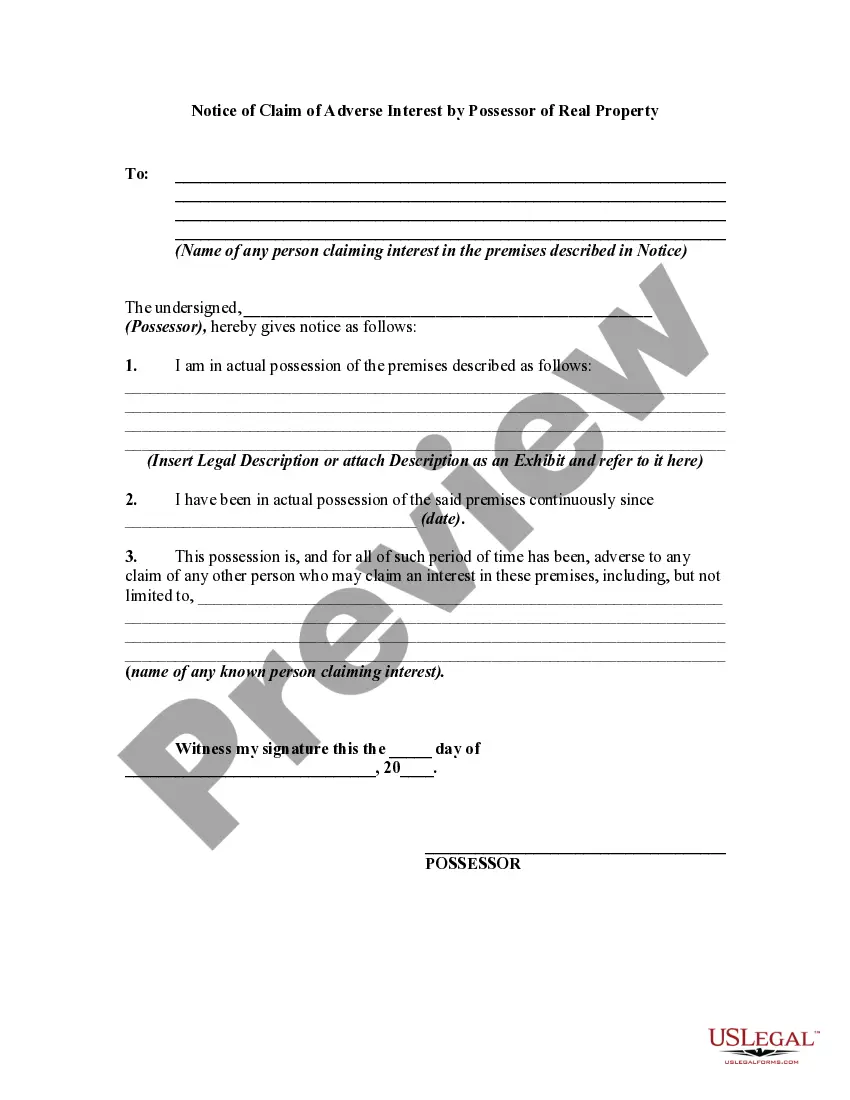
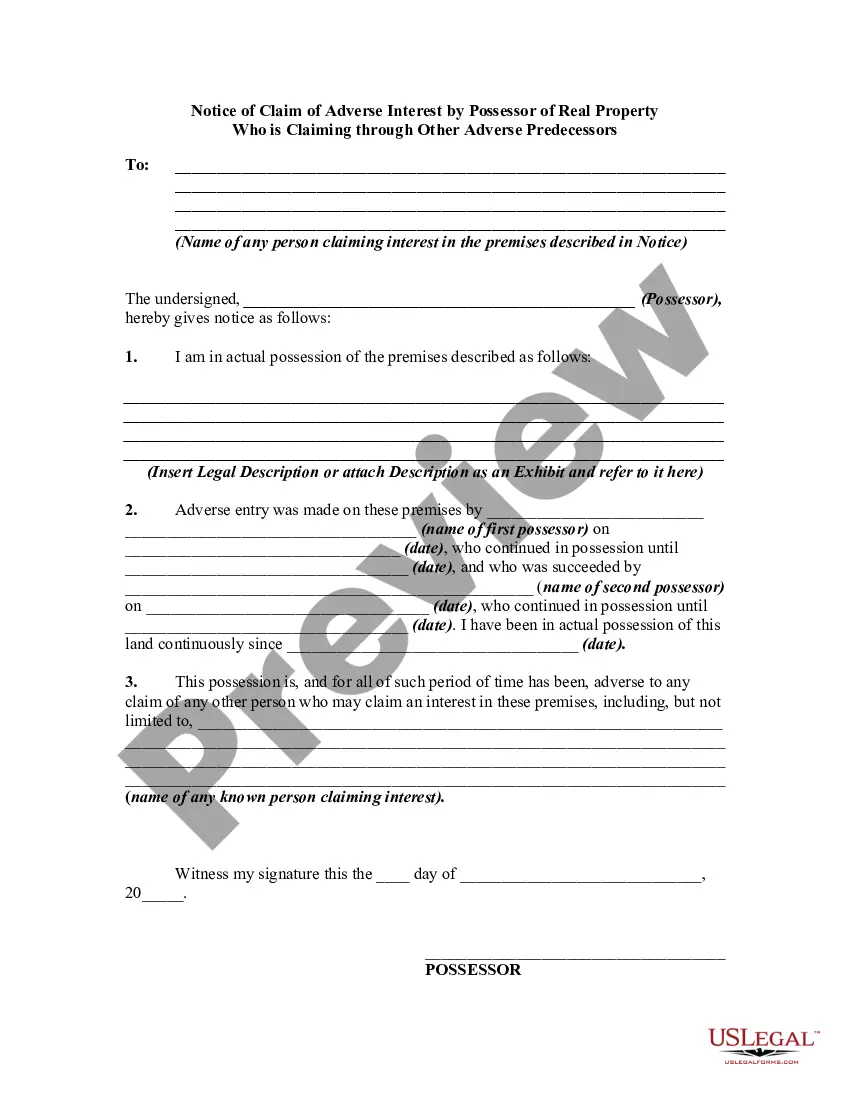
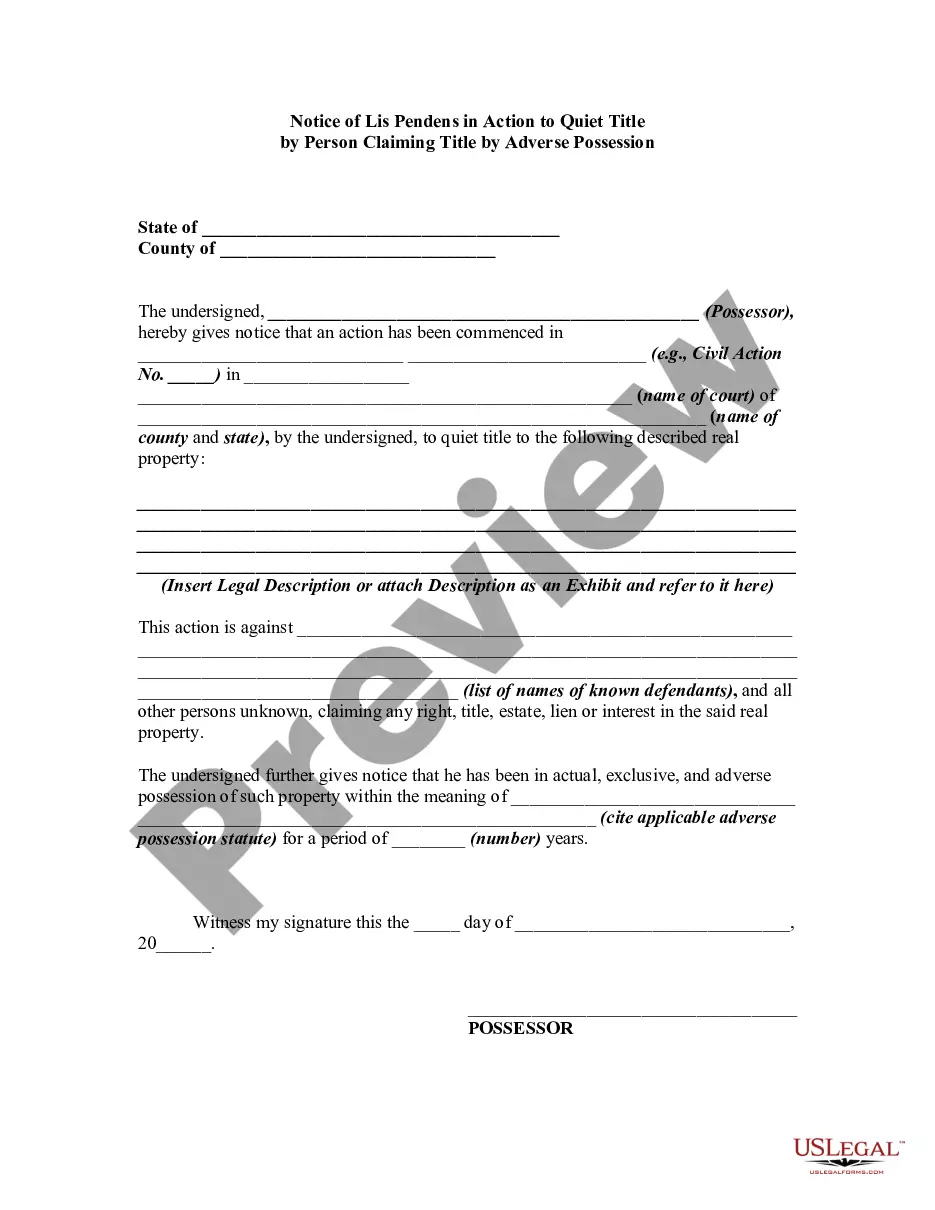
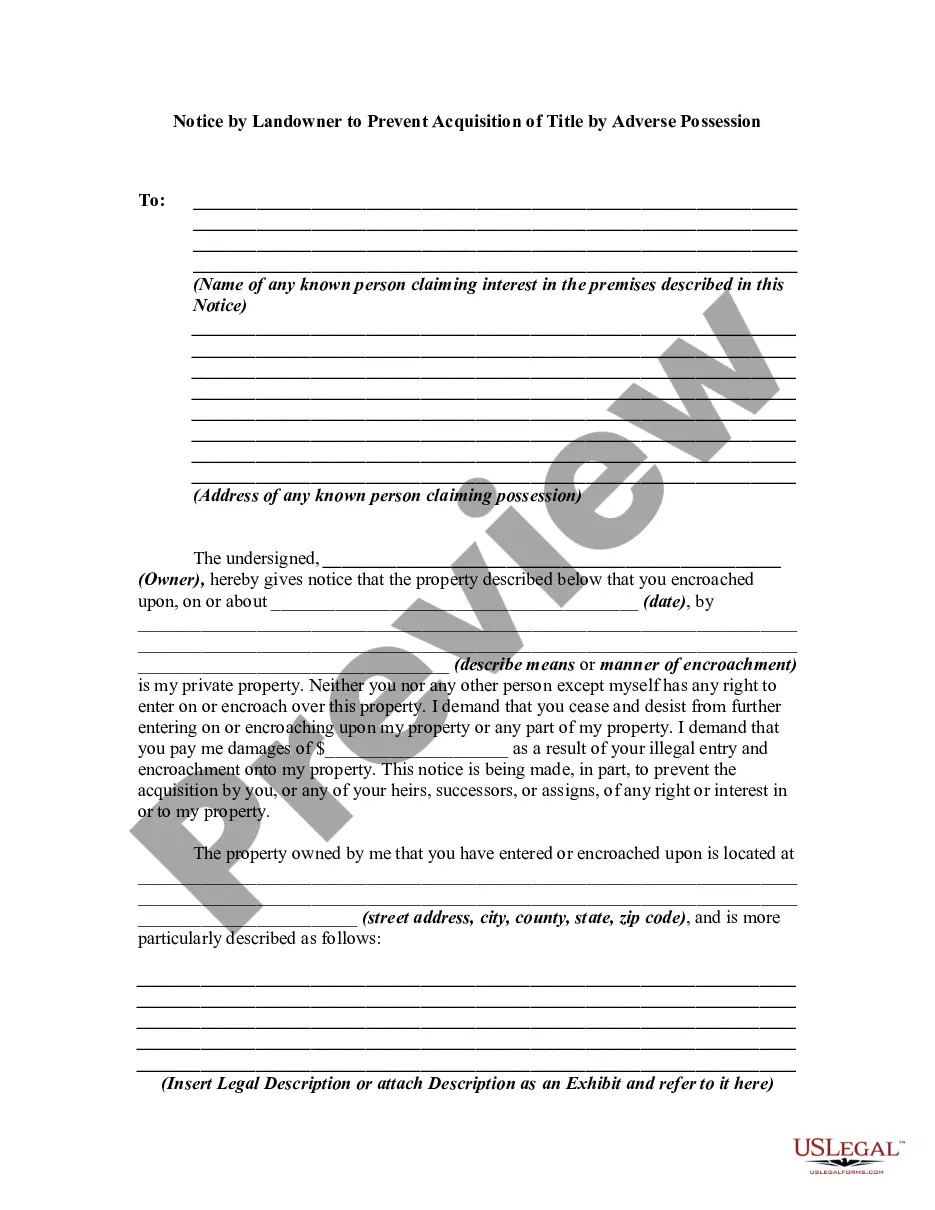
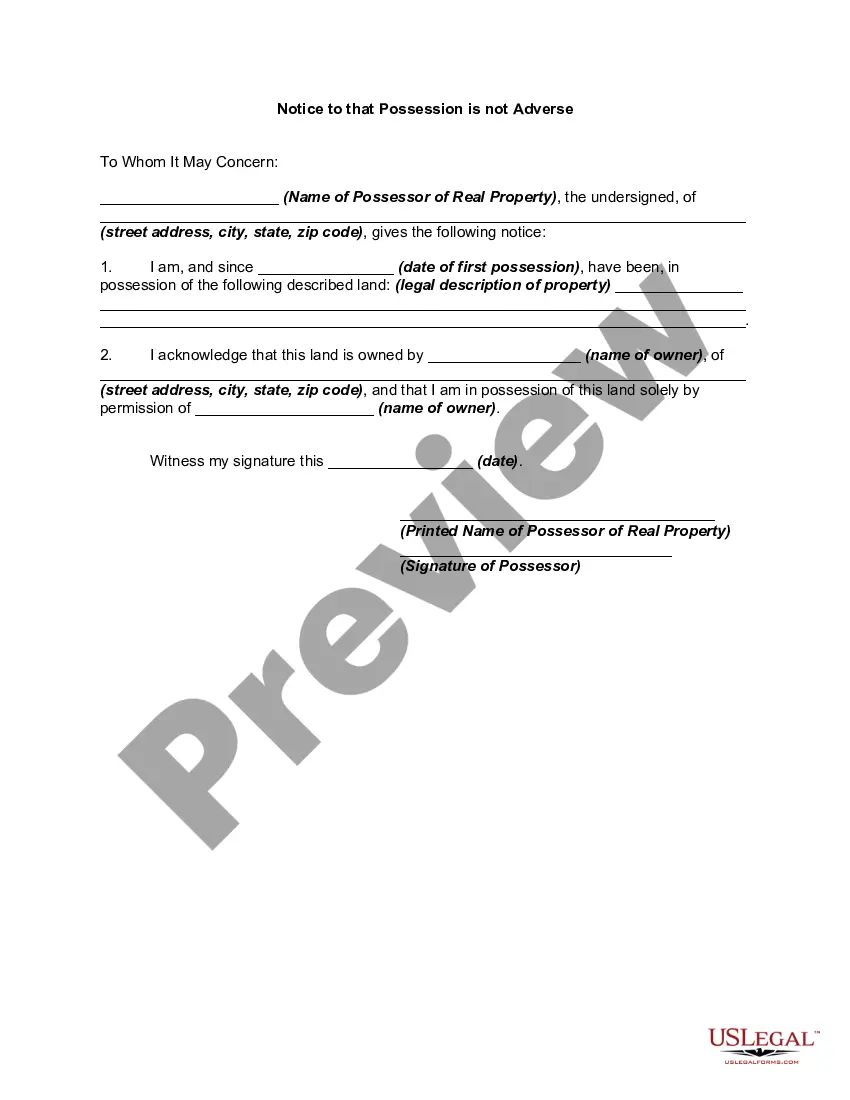
How to fill out Notice Of Claim Of Adverse Interest By Possessor Of Real Property - Squatters Rights?
Using legal document samples that meet the federal and state laws is crucial, and the internet offers many options to pick from. But what’s the point in wasting time searching for the correctly drafted Adverse Interest In Criminal Law sample on the web if the US Legal Forms online library already has such templates collected in one place?
US Legal Forms is the largest online legal catalog with over 85,000 fillable templates drafted by attorneys for any professional and life scenario. They are simple to browse with all files arranged by state and purpose of use. Our professionals stay up with legislative updates, so you can always be sure your paperwork is up to date and compliant when acquiring a Adverse Interest In Criminal Law from our website.
Getting a Adverse Interest In Criminal Law is simple and fast for both current and new users. If you already have an account with a valid subscription, log in and save the document sample you require in the right format. If you are new to our website, follow the instructions below:
- Examine the template utilizing the Preview feature or through the text outline to make certain it fits your needs.
- Look for a different sample utilizing the search function at the top of the page if necessary.
- Click Buy Now when you’ve found the correct form and opt for a subscription plan.
- Register for an account or sign in and make a payment with PayPal or a credit card.
- Choose the right format for your Adverse Interest In Criminal Law and download it.
All documents you locate through US Legal Forms are reusable. To re-download and complete earlier obtained forms, open the My Forms tab in your profile. Enjoy the most extensive and simple-to-use legal paperwork service!
Form popularity
FAQ
You arrive at work one day to find your audit manager fuming. She has just received notice that your firm's client, Green Mountain Bikes Company, has initiated litigation against your firm. This poses an adverse interest threat as the member's objectivity in relation to the client has been compromised.
Adverse interest means when someone has an interest, claim, or right that goes against someone else's interest. For example, in a court case, the plaintiff and defendant have adverse interests because they want different outcomes.
For example, in a criminal case brought by a State against a defendant, a witness whose interest is aligned with the state's interest is an adverse witness to the defendant. If the witness is not a party and has no legal interest in the outcome of the litigation, then the witness is not an adverse witness.
An adverse party is the other side of a lawsuit, the opposite party, one with opposing interests. If there are numerous parties and claims, parties may be in agreement on some matters and adverse on some issues. For example, the adverse party for a defendant is the plaintiff.
In real property, adverse interest means a person, who's not the owner of the land or house, owns an interest of the property. For example, neighbor A owns an easement, which gives A the right to pass B's land to access public road, on the land of owner B. In this case, A has an adverse interest on B's land.