Continuance Form With Two Points
Description

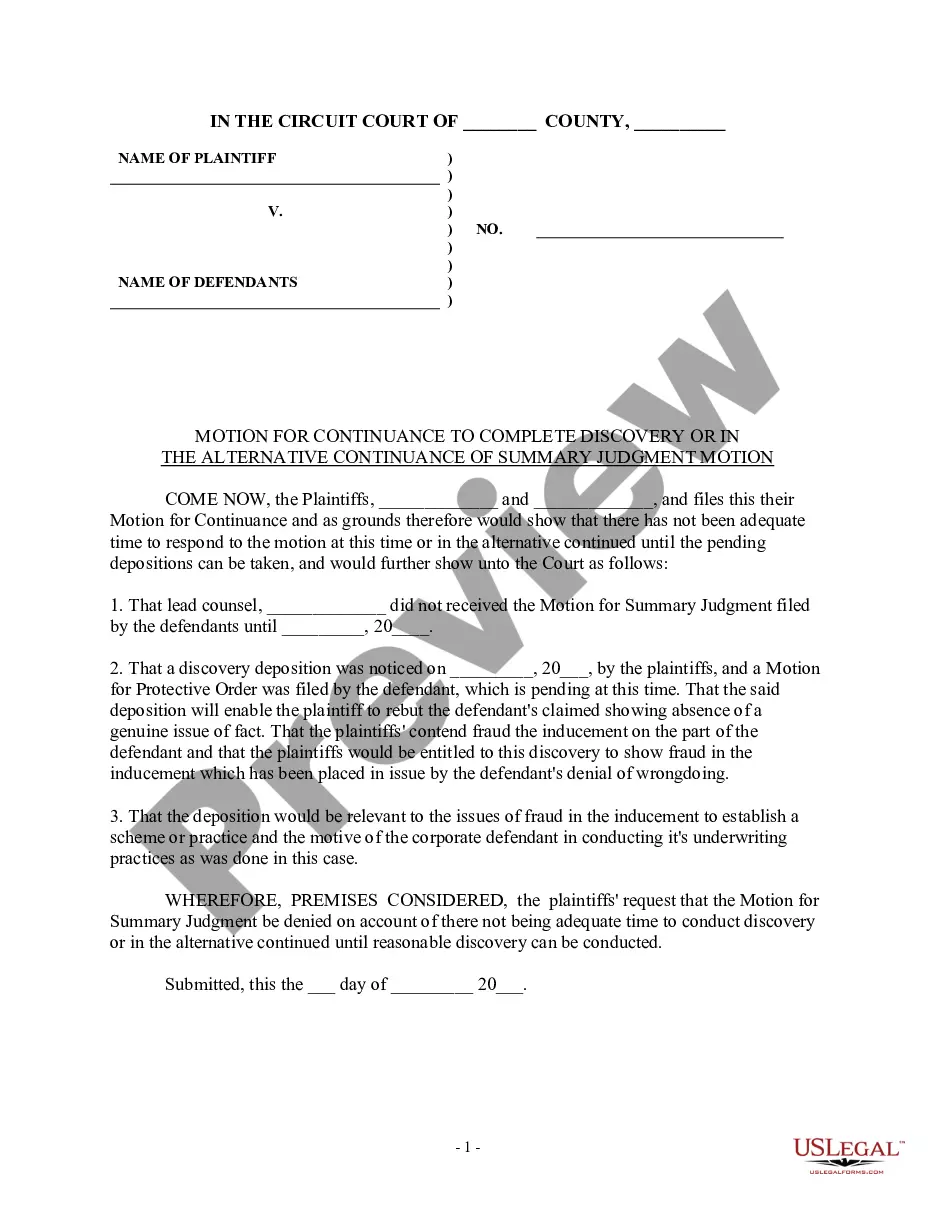
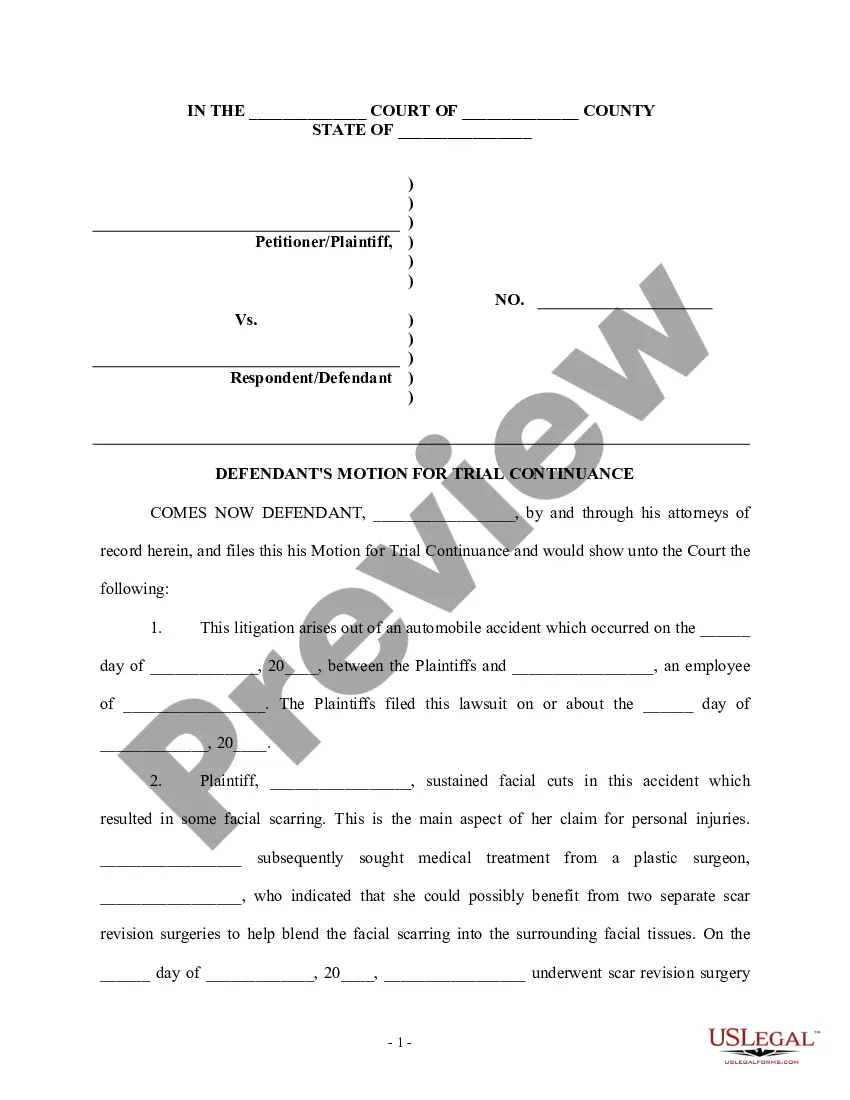
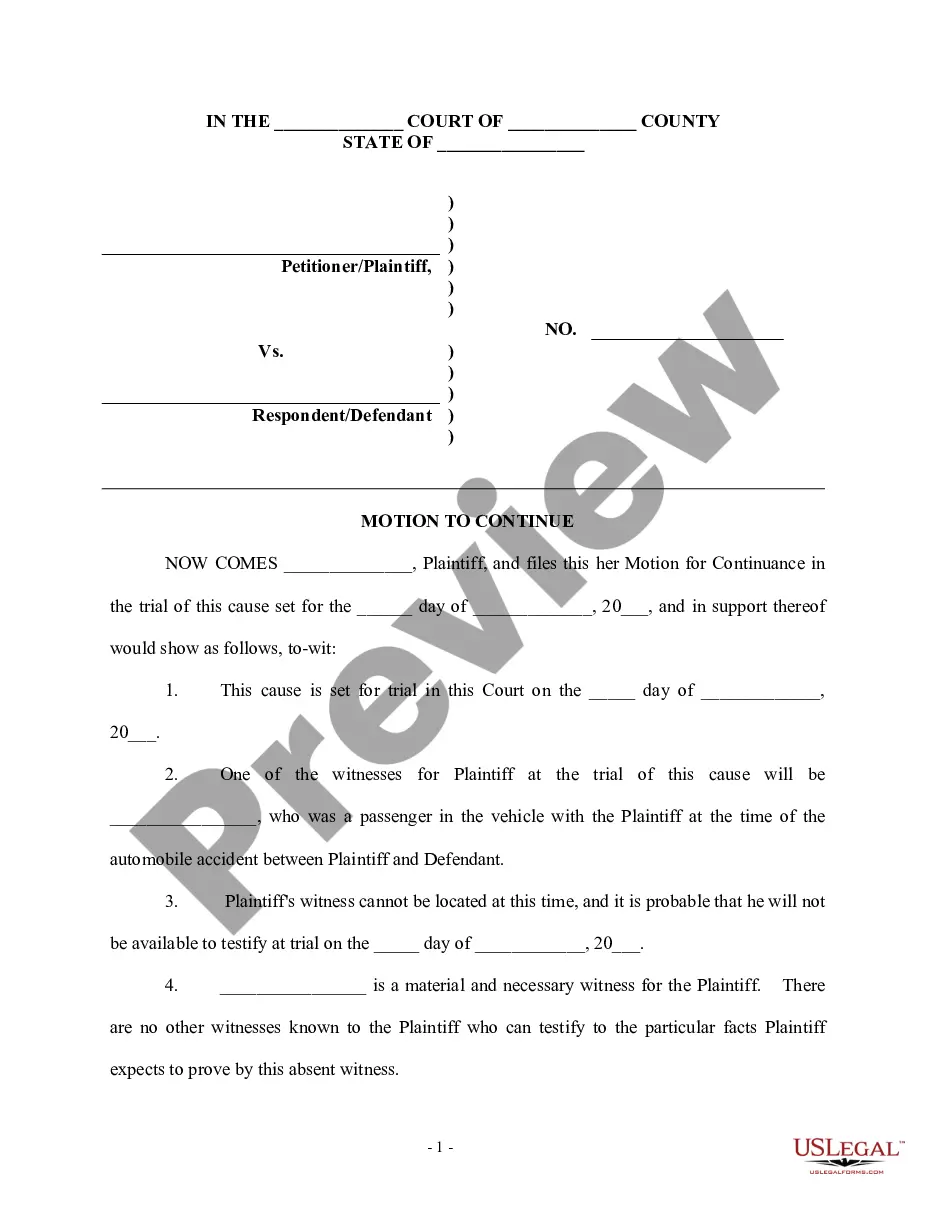
Get your form ready online
Our built-in tools help you complete, sign, share, and store your documents in one place.
Make edits, fill in missing information, and update formatting in US Legal Forms—just like you would in MS Word.
Download a copy, print it, send it by email, or mail it via USPS—whatever works best for your next step.
Sign and collect signatures with our SignNow integration. Send to multiple recipients, set reminders, and more. Go Premium to unlock E-Sign.
If this form requires notarization, complete it online through a secure video call—no need to meet a notary in person or wait for an appointment.
We protect your documents and personal data by following strict security and privacy standards.

Make edits, fill in missing information, and update formatting in US Legal Forms—just like you would in MS Word.

Download a copy, print it, send it by email, or mail it via USPS—whatever works best for your next step.

Sign and collect signatures with our SignNow integration. Send to multiple recipients, set reminders, and more. Go Premium to unlock E-Sign.

If this form requires notarization, complete it online through a secure video call—no need to meet a notary in person or wait for an appointment.

We protect your documents and personal data by following strict security and privacy standards.
Looking for another form?




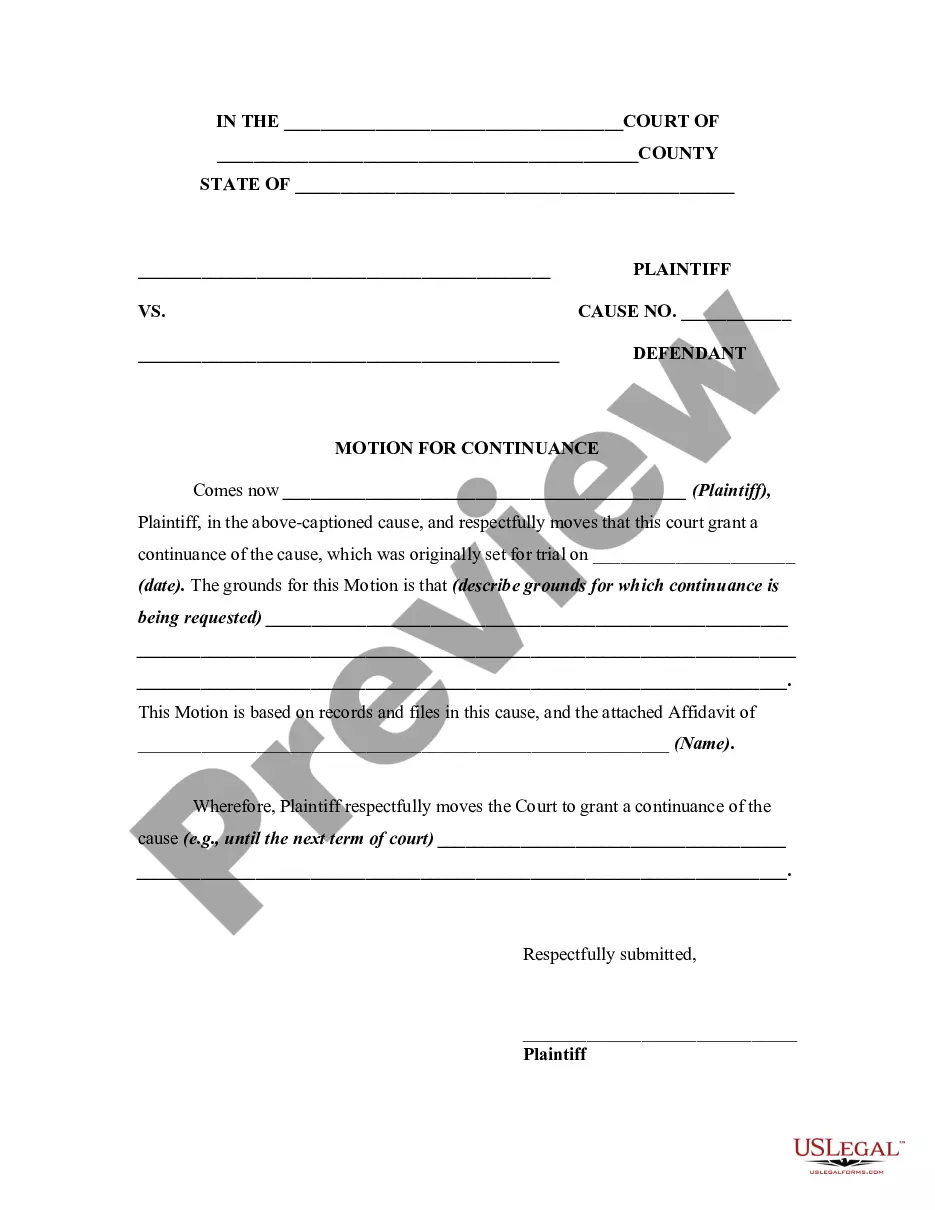
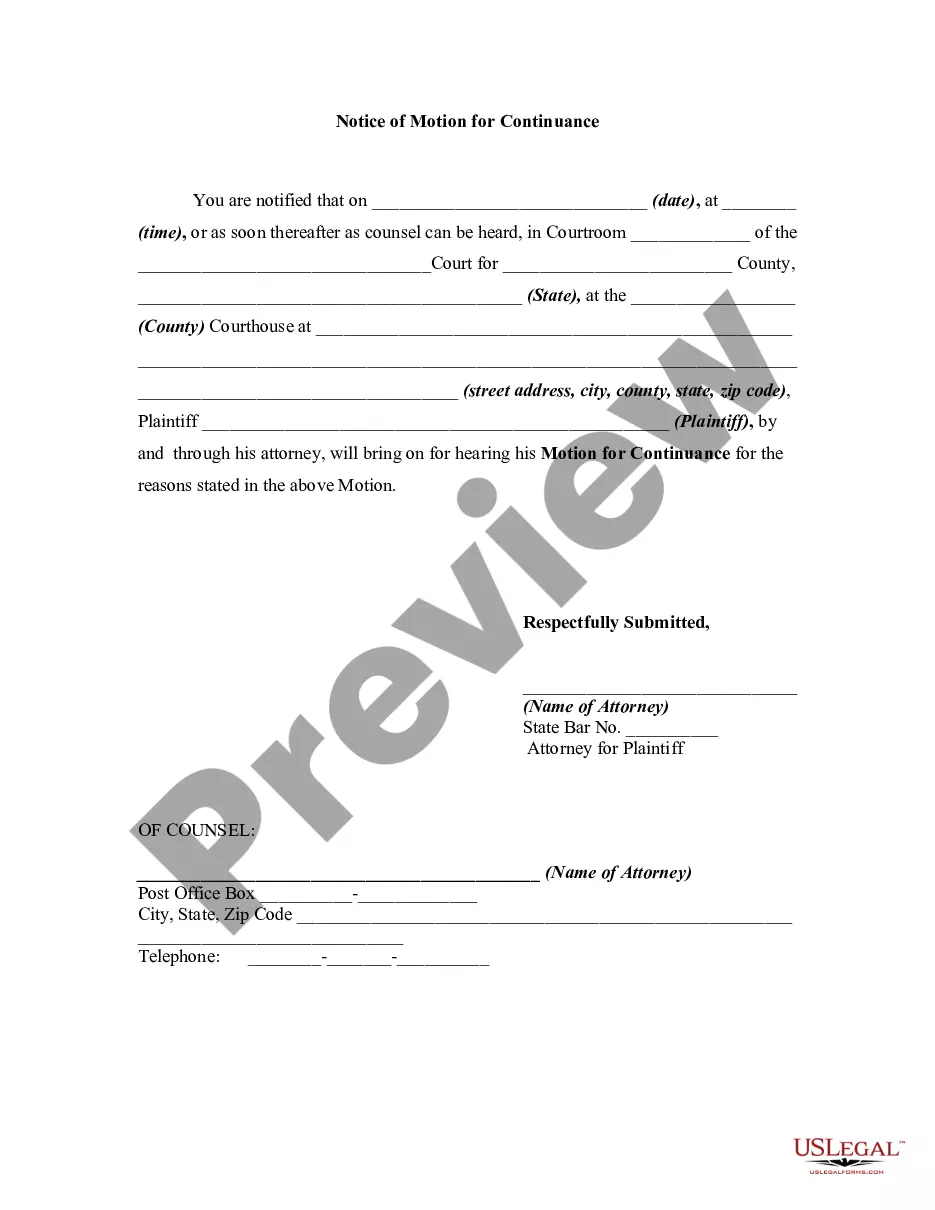
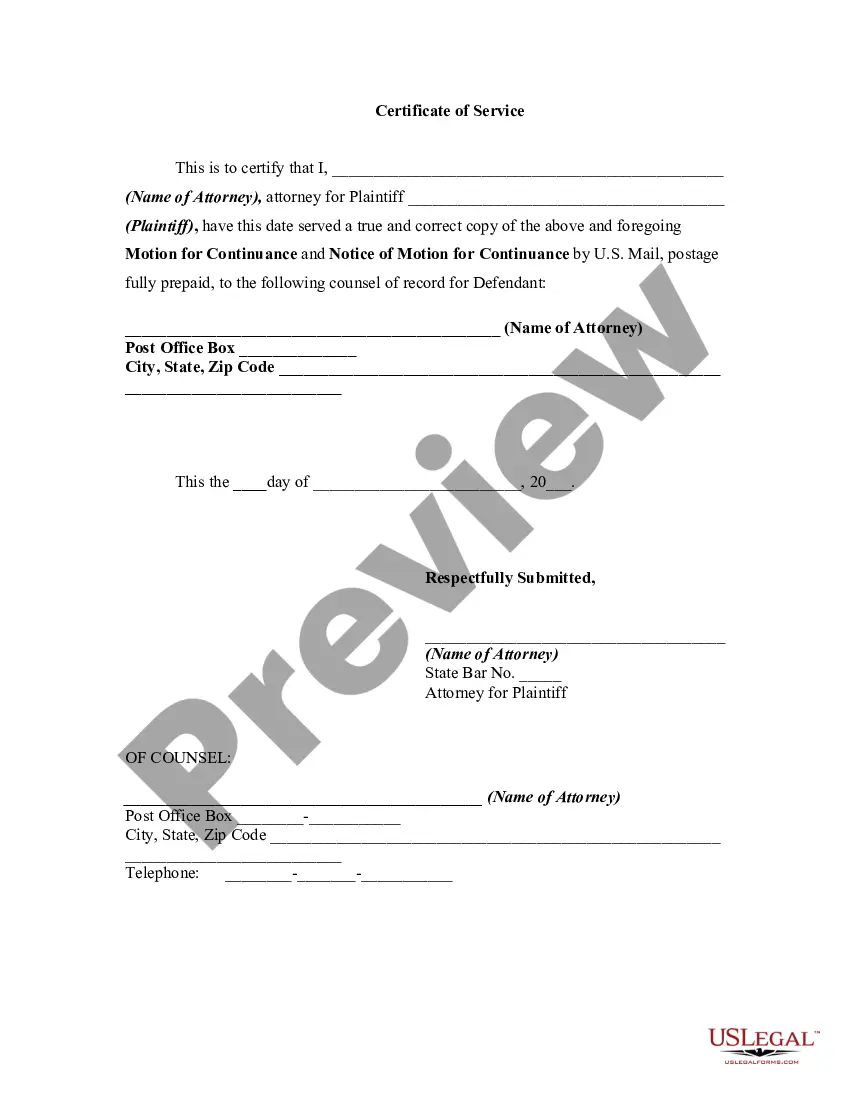
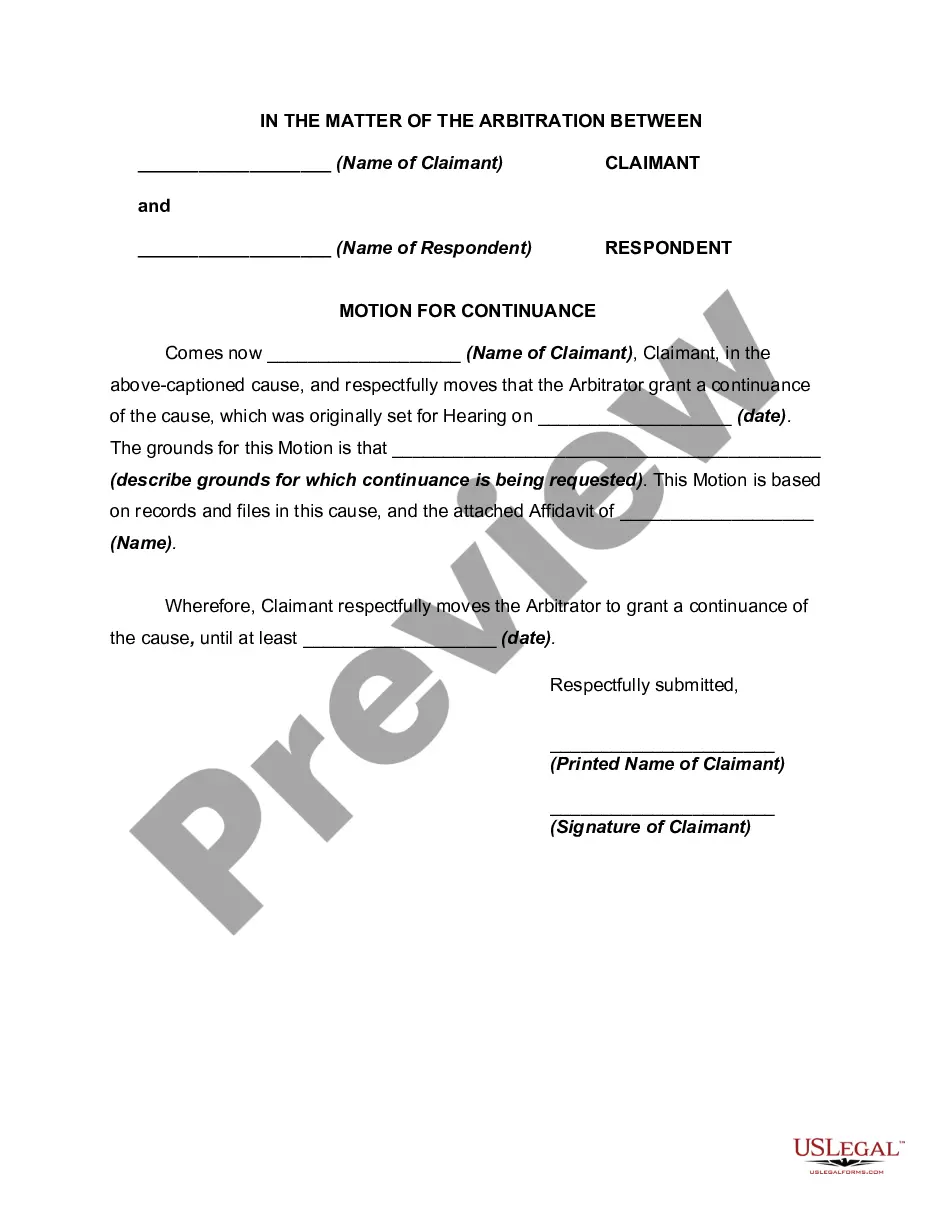
How to fill out Generic Motion For Continuance And Notice Of Motion?
Finding a reliable source for the latest and pertinent legal templates is a significant part of navigating bureaucratic processes.
Identifying the appropriate legal documents requires precision and diligence, which is why it's crucial to obtain samples of the Continuance Form With Two Points from trustworthy providers, such as US Legal Forms. An incorrect template can lead to wasted time and delays in your situation.
Once you have the form on your device, you can edit it using an editor or print it to fill it out by hand. Eliminate the stress associated with your legal documentation. Explore the vast US Legal Forms collection to discover legal templates, verify their suitability for your situation, and download them instantly.
- Utilize the library navigation or search bar to find your template.
- Review the form's description to determine if it meets the specifications of your state and locality.
- Access the form preview, if available, to confirm that it matches your expectations.
- Return to the search to find the correct document if the Continuance Form With Two Points does not suit your requirements.
- If you are confident about the form’s appropriateness, proceed to download it.
- If you are a registered customer, click Log in to verify and access your selected forms in My documents.
- If you do not have an account yet, click Buy now to acquire the form.
- Select the payment option that fits your needs.
- Continue to the checkout to finalize your purchase.
- Complete your transaction by choosing a payment method (credit card or PayPal).
- Select the file type for downloading the Continuance Form With Two Points.
Form popularity
FAQ
Forming an equation with two points involves finding the slope and using it with one of the points in the point-slope form. This equation can be rearranged into various forms, such as standard or slope-intercept form. Understanding this method is particularly important for those looking for a clear representation of a continuance form with two points.
To write the slope-intercept form using two points, first calculate the slope from the coordinates. Once you have the slope, select one of the points to plug into the slope-intercept equation y = mx + b. This technique is valuable for visualizing relationships, particularly in the context of a continuance form with two points.
The 2 point formula allows you to calculate the slope between two coordinates, such as (x1, y1) and (x2, y2). It’s expressed as m = (y2 - y1) / (x2 - x1). Understanding this formula is essential when creating a continuance form with two points, as it forms the basis for most linear equations.
Converting two points into standard form begins with finding the slope and using that to create the point-slope equation. After writing the equation, rearrange it to reach the standard form, which is typically represented as Ax + By = C. This step is crucial when working on a problem related to a continuance form with two points.
Writing an equation with two points involves calculating the slope first and then using either point to formulate the line's equation. Start with the slope formula and once you have the slope, apply the point-slope form to generate your equation. This process is integral to understanding the continuance form with two points.
To turn a single point into an equation, you need to identify the slope or be given an additional point. From there, you can use the point-slope format to write the equation. If you’re working with the framework of a continuance form with two points, understanding this transformation is vital.
The two point form equation uses the coordinates of two points (x1, y1) and (x2, y2) to find the slope. The formula is y - y1 = (y2 - y1)/(x2 - x1)(x - x1). By utilizing this equation, you effectively represent the line defined by those two points, which is a critical aspect of creating a continuance form with two points.
To find the standard form equation with two points, start by determining the slope using the coordinates of the points. After finding the slope, use the point-slope form to write the equation. Finally, rearrange the equation to fit the standard form Ax + By = C. This process is essential when dealing with a continuance form with two points.
To convert two points into point slope form, you first need to identify the coordinates of those points. Use the formula for the slope, which is (y2 - y1) / (x2 - x1). Once you have the slope, substitute one of the points into the point slope equation, which is y - y1 = m(x - x1). This method aligns with the concept of a continuance form with two points.
To request a continuation, you should submit a formal motion or written request to the court, clearly stating the reasons for your request. It's imperative to provide any supporting documentation that backs your reasons. Ensure that you follow your local court's rules regarding the submission process. Using a straightforward continuance form can help you comply with these requirements and present your case effectively.