Plot Markers For Cemetery
Description


Get your form ready online
Our built-in tools help you complete, sign, share, and store your documents in one place.
Make edits, fill in missing information, and update formatting in US Legal Forms—just like you would in MS Word.
Download a copy, print it, send it by email, or mail it via USPS—whatever works best for your next step.
Sign and collect signatures with our SignNow integration. Send to multiple recipients, set reminders, and more. Go Premium to unlock E-Sign.
If this form requires notarization, complete it online through a secure video call—no need to meet a notary in person or wait for an appointment.
We protect your documents and personal data by following strict security and privacy standards.

Make edits, fill in missing information, and update formatting in US Legal Forms—just like you would in MS Word.

Download a copy, print it, send it by email, or mail it via USPS—whatever works best for your next step.

Sign and collect signatures with our SignNow integration. Send to multiple recipients, set reminders, and more. Go Premium to unlock E-Sign.

If this form requires notarization, complete it online through a secure video call—no need to meet a notary in person or wait for an appointment.

We protect your documents and personal data by following strict security and privacy standards.
Looking for another form?






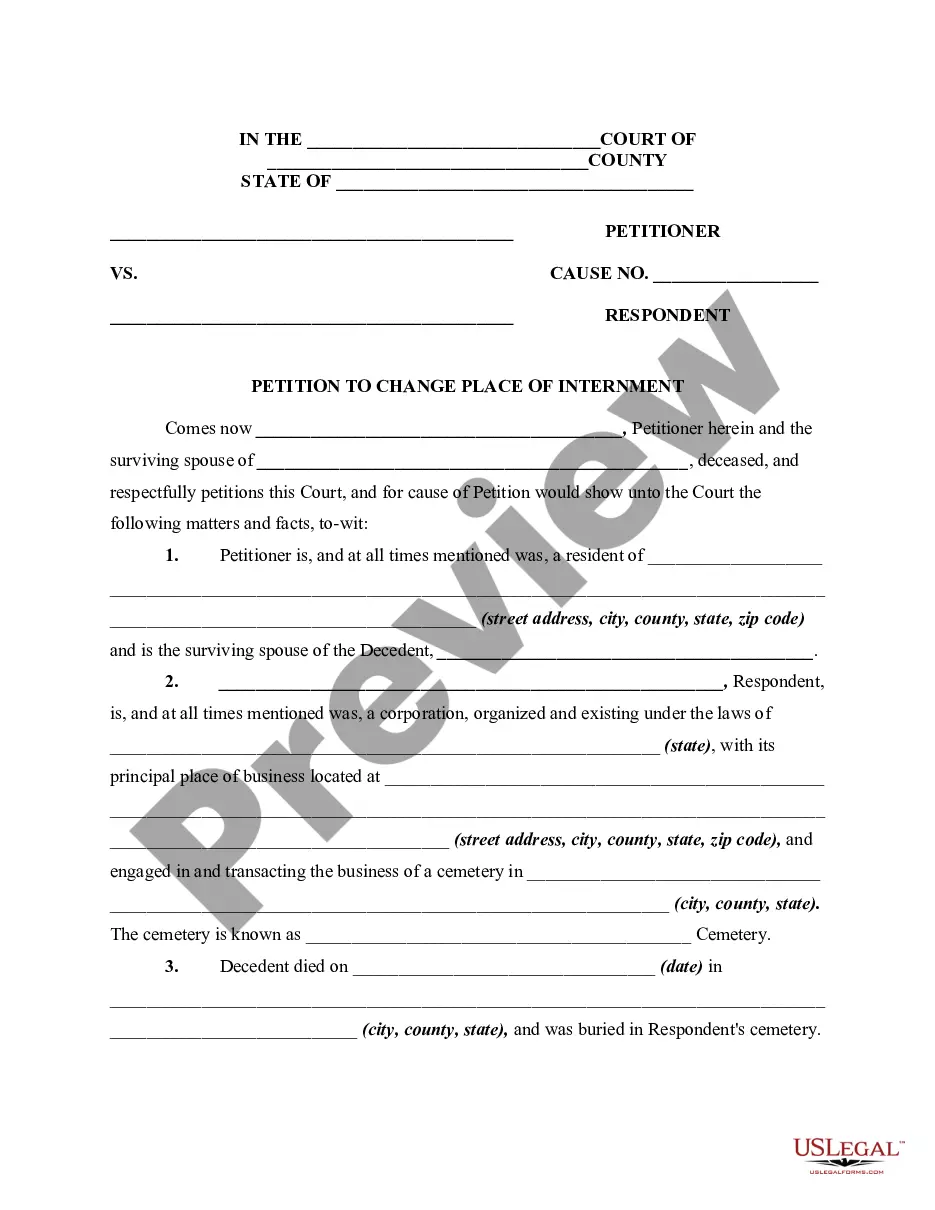
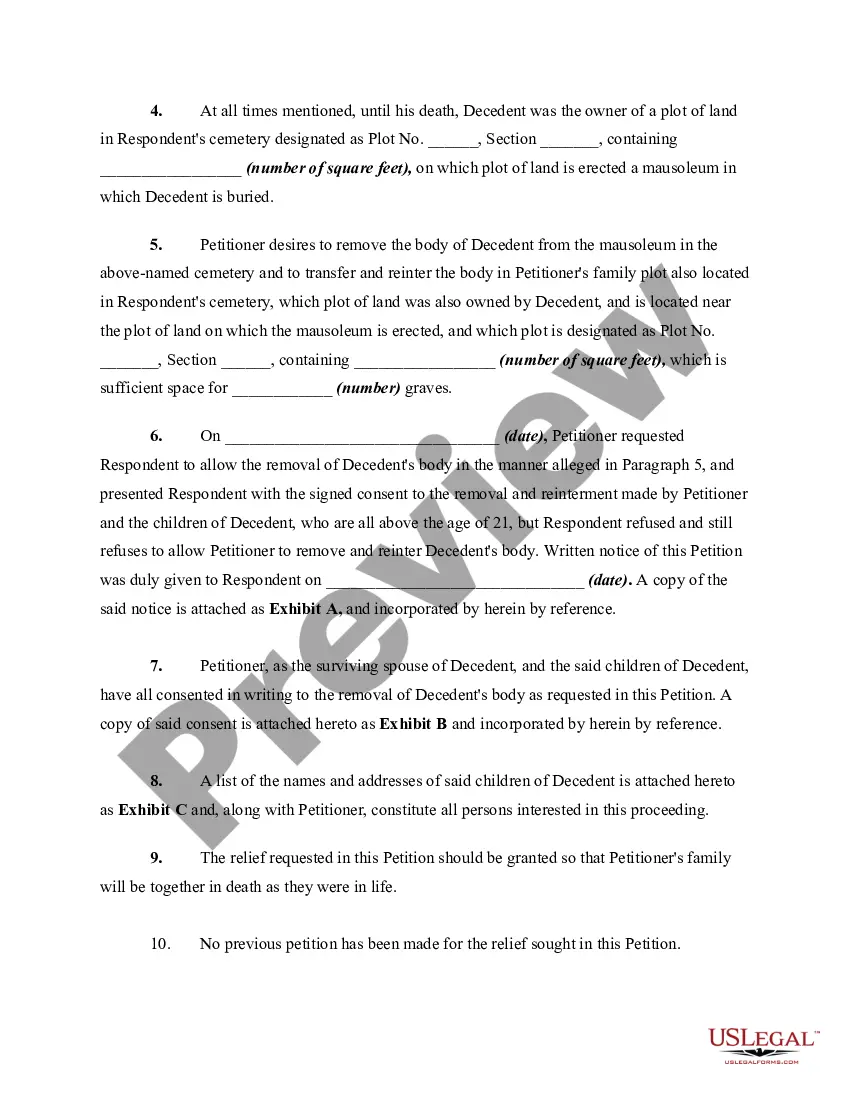
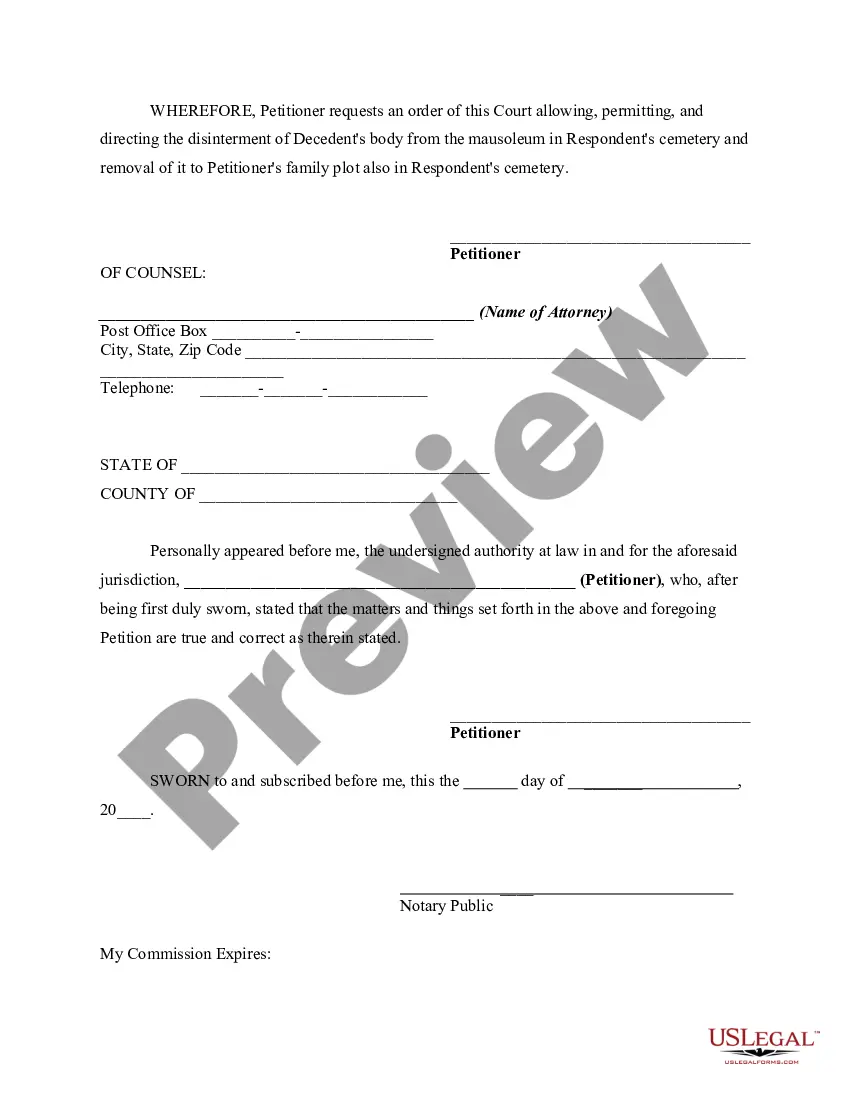
How to fill out Petition By Surviving Spouse To Change Place Of Interment From Mausoleum To Family Plot In Same Cemetery?
- If you're already a user, log in to your account and download the required form template directly by clicking the Download button. Ensure your subscription is currently active; renew as needed.
- For first-time users, start by browsing the US Legal Forms library. Check the Preview mode and read the form descriptions to find the exact form tailored to your needs and local regulations.
- If you find any discrepancies or need a different template, utilize the Search tab above to locate the appropriate document before proceeding.
- Once you've located the correct form, click the Buy Now button and select your desired subscription plan. You'll need to create an account to gain access to their extensive library.
- Complete your purchase by entering your credit card information or using your PayPal account to finalize the subscription payment.
- After the payment is processed, download your form and save it to your device. You can also access it anytime from the My documents section of your profile.
US Legal Forms stands out by offering a robust collection of forms, boasting over 85,000 readily editable legal documents. This extensive resource enables both individuals and attorneys to execute legal documents efficiently, ensuring accuracy and compliance with legal standards.
Take advantage of US Legal Forms today. Access the tools you need to manage your cemetery plot markers and other legal documents easily!
Form popularity
FAQ
A plot marker in a cemetery specifically indicates the boundaries or the exact location of a burial site. These markers can come in various forms, including flat stones, upright monuments, or plaques. Selecting the right plot markers for cemetery can help maintain the integrity of the burial site while also honoring the memory of loved ones.
A marker at a cemetery is a physical object that denotes the location of a grave. These markers provide important information about the individual buried there, often displaying their name, birth date, and death date. Understanding the options available for these markers is vital, as they play a significant role in the overall memorialization process, including the use of plot markers for cemetery.
Cemetery markers are often called headstones, grave markers, or memorial stones. These markers serve as a focal point for remembrance and can carry personalized messages honoring the deceased. Choosing the right marker can enhance the aesthetic of the cemetery plot and provide comfort through plot markers for cemetery.
A plot in a cemetery refers to a designated piece of land where a deceased individual is buried. This space can vary in size based on the cemetery's layout and regulations. Understanding the dimensions is crucial for planning, especially when considering plot markers for cemetery to commemorate your loved ones.
A cemetery plot refers to the designated area within a cemetery where one or more graves can be located. In contrast, a burial plot specifically indicates the exact location where an individual is interred. While all burial plots are part of cemetery plots, not all cemetery plots contain actual graves. Understanding this distinction can help you make informed decisions about plot markers for cemetery.
To get a grave marker, you should start by selecting the type you want, such as a headstone or flat marker. Research local suppliers or online options that provide plot markers for cemetery. Many cemeteries also offer specific guidelines for marker sizes and materials, so check their requirements. Finally, once you make a selection, you can place an order and schedule installation.
To transfer ownership of a cemetery plot, you must prepare a deed that designates the new owner, including all pertinent details about the plot. It is essential to include any identifying features, such as plot markers for cemetery, to prevent future disputes. Once signed, submit the deed to your local government office to register the change formally. Platforms like US Legal Forms can provide templates and guidance to streamline this process.
Transferring ownership of a cemetery plot involves drafting a deed that clearly states the transfer between the current owner and the new owner. This deed should include specific details about the plot, including any plot markers for cemetery if applicable. After signing the deed, you may need to submit it for recording at your local county office to finalize the transfer. Using US Legal Forms can help you navigate these requirements smoothly.
Cemetery plot deeds are usually recorded in the local county clerk's office or a similar governmental department. This ensures that the information is publicly accessible and verifiable. By recording the deeds, you establish a clear ownership status. Utilizing services like US Legal Forms can simplify this process, helping you find the right procedures for your location.
To create a deed for a cemetery plot, start by including your full name, the name of the person receiving the plot, and a clear description of the plot. Make sure to reference any relevant details like plot markers for cemetery and location. You should also provide the date and your signature at the end. It's advisable to consult a legal expert or use platforms like US Legal Forms to ensure that all necessary details are included correctly.