Assignment Of Collateral
Description
Get your form ready online
Our built-in tools help you complete, sign, share, and store your documents in one place.
Make edits, fill in missing information, and update formatting in US Legal Forms—just like you would in MS Word.
Download a copy, print it, send it by email, or mail it via USPS—whatever works best for your next step.
Sign and collect signatures with our SignNow integration. Send to multiple recipients, set reminders, and more. Go Premium to unlock E-Sign.
If this form requires notarization, complete it online through a secure video call—no need to meet a notary in person or wait for an appointment.
We protect your documents and personal data by following strict security and privacy standards.

Make edits, fill in missing information, and update formatting in US Legal Forms—just like you would in MS Word.

Download a copy, print it, send it by email, or mail it via USPS—whatever works best for your next step.

Sign and collect signatures with our SignNow integration. Send to multiple recipients, set reminders, and more. Go Premium to unlock E-Sign.

If this form requires notarization, complete it online through a secure video call—no need to meet a notary in person or wait for an appointment.

We protect your documents and personal data by following strict security and privacy standards.
Looking for another form?



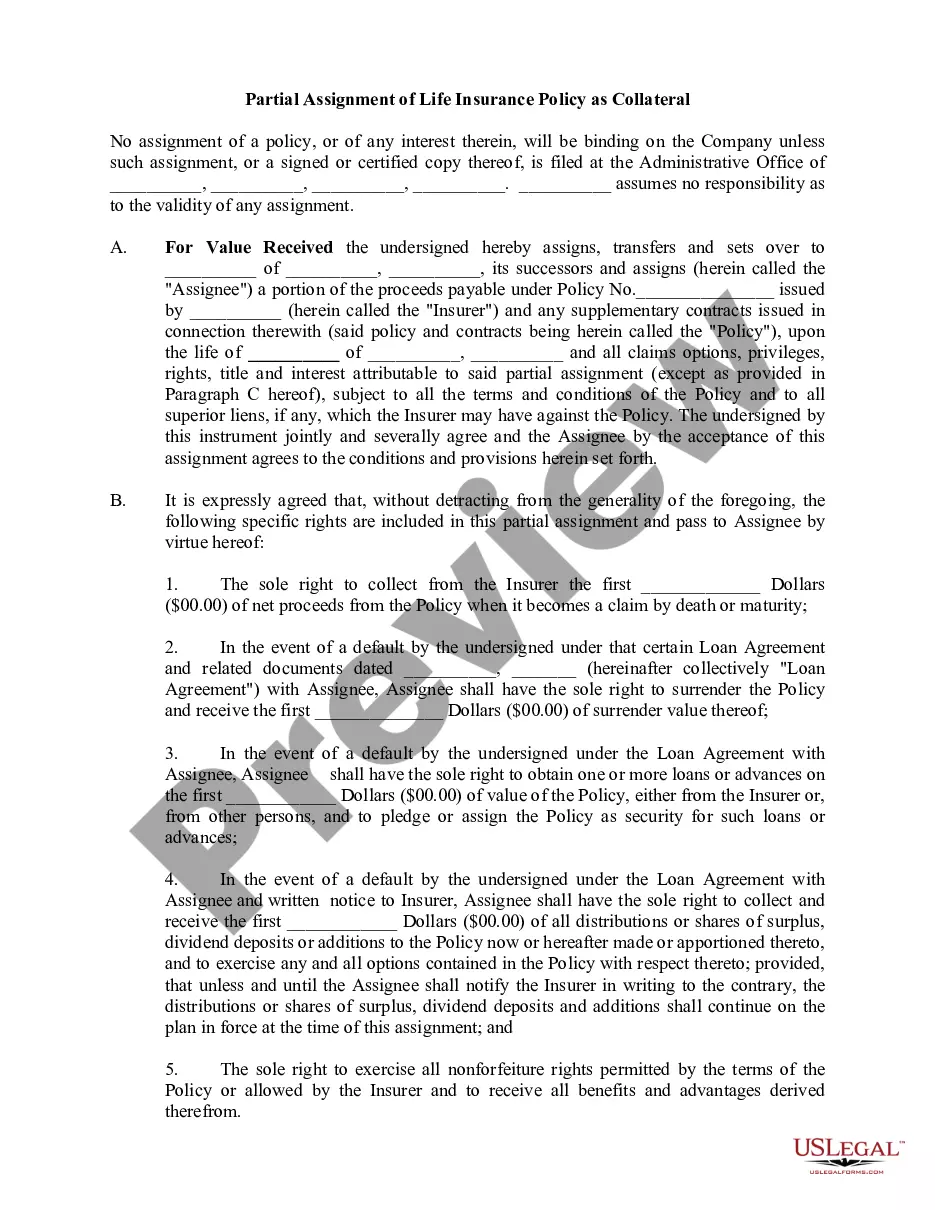
How to fill out Partial Assignment Of Life Insurance Policy As Collateral?
Securing a reliable source for obtaining the latest and suitable legal templates is half the challenge of navigating bureaucracy.
Locating the correct legal documents requires precision and attention to detail, which is why it is crucial to obtain Assignment Of Collateral samples exclusively from trustworthy providers, such as US Legal Forms.
Eliminate the stress associated with your legal paperwork. Explore the extensive US Legal Forms collection to discover legal templates, verify their relevance to your needs, and download them instantly.
- An inaccurate template will squander your time and delay the situation you are facing.
- With US Legal Forms, you can rest easy.
- You have the ability to access and verify all information regarding the document’s applicability and significance for your situation and in your region or jurisdiction.
- Follow these steps to complete your Assignment Of Collateral.
- Use the library navigation or search bar to find your template.
- View the form’s details to confirm if it meets the criteria of your state and locality.
- Check the form preview, if available, to ensure it is the correct document you are looking for.
- Continue your search to locate the appropriate template if the Assignment Of Collateral does not satisfy your requirements.
- If you are confident about the form’s applicability, download it.
- As an authorized user, click Log in to verify and access your selected forms in My documents.
- If you do not have an account yet, click Buy now to acquire the template.
- Select the pricing plan that best fits your requirements.
- Proceed to the registration process to finalize your purchase.
- Complete your transaction by selecting a payment option (credit card or PayPal).
- Choose the file format for downloading Assignment Of Collateral.
- Once you have the document on your device, you can edit it using the editor or print it and complete it manually.
Form popularity
FAQ
In the context of an assignment of collateral, the assignee is the individual or entity that receives the rights to the collateral. This person or organization is typically the lender or creditor who holds a security interest in the collateral. The assignee can enforce the terms of the assignment if the original borrower defaults on their obligations. Understanding the role of the assignee is crucial for anyone involved in a collateral assignment, and our platform at US Legal Forms provides essential resources to help you navigate these legal processes.
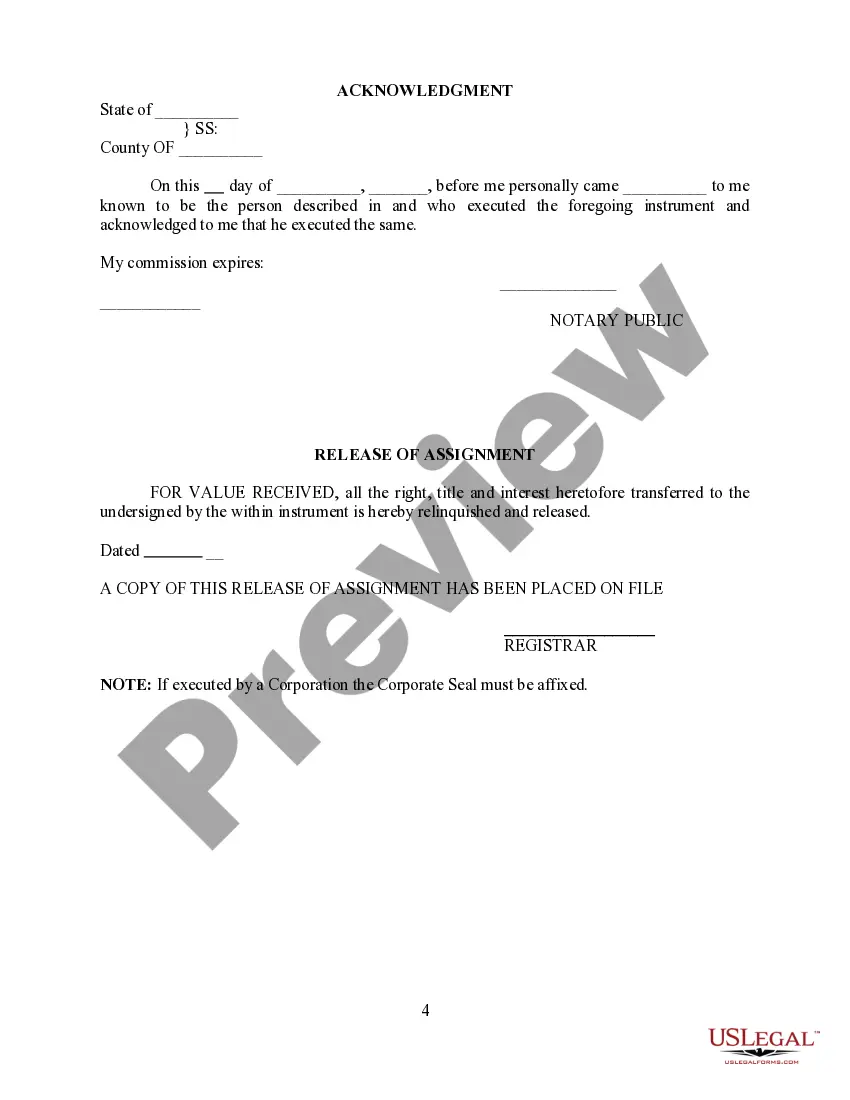
Filling out a collateral assignment form involves providing details about both the borrower and the lender, as well as a clear description of the collateral being assigned. Be sure to include any relevant terms, such as repayment schedules and conditions for reclaiming the collateral. Using a platform like uslegalforms can simplify this process, offering templates and guidance to ensure accuracy.
To complete a collateral assignment, start by identifying the asset you wish to use as collateral. Next, draft an agreement that clearly outlines the terms and conditions of the assignment. Both parties should sign the document, and it may be beneficial to register the assignment with relevant authorities to protect your interests.
To use an asset as collateral, it must be valuable and legally owned by you. Common forms of collateral include real estate, vehicles, or savings accounts. Additionally, the asset should be easily transferable, allowing the lender to claim it if you default on your obligations.
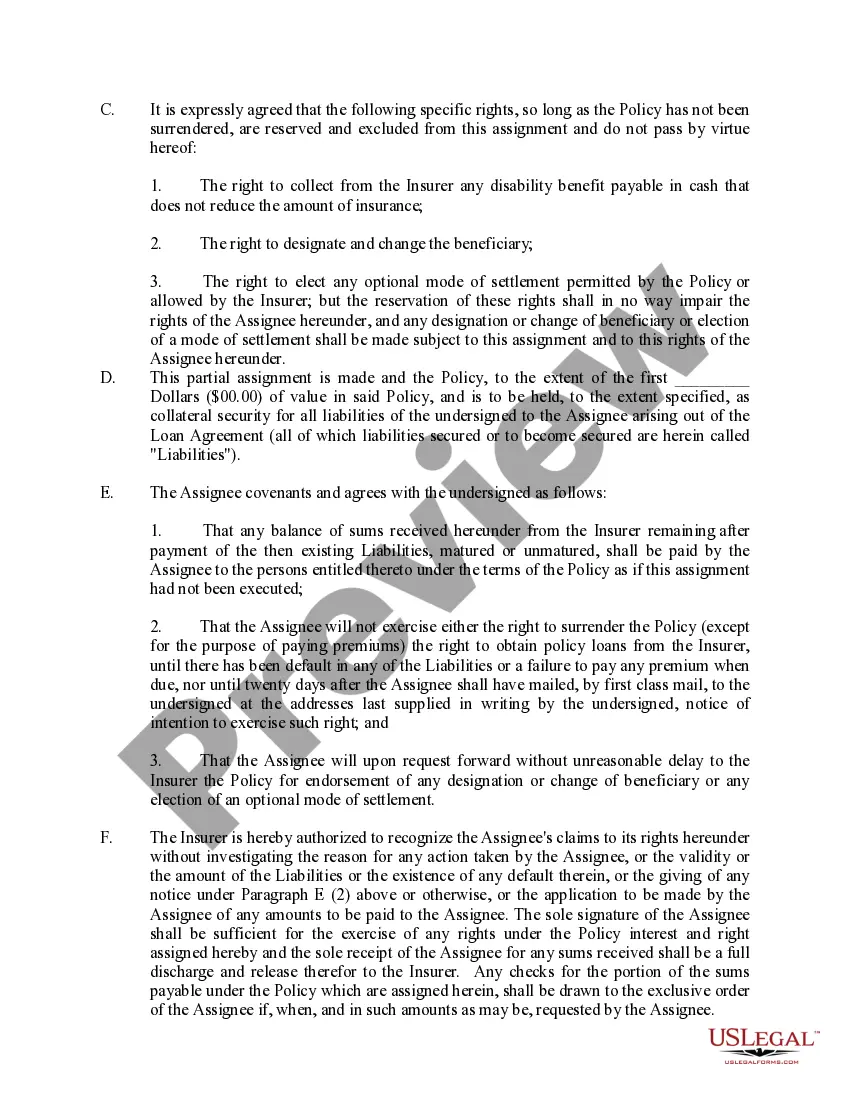
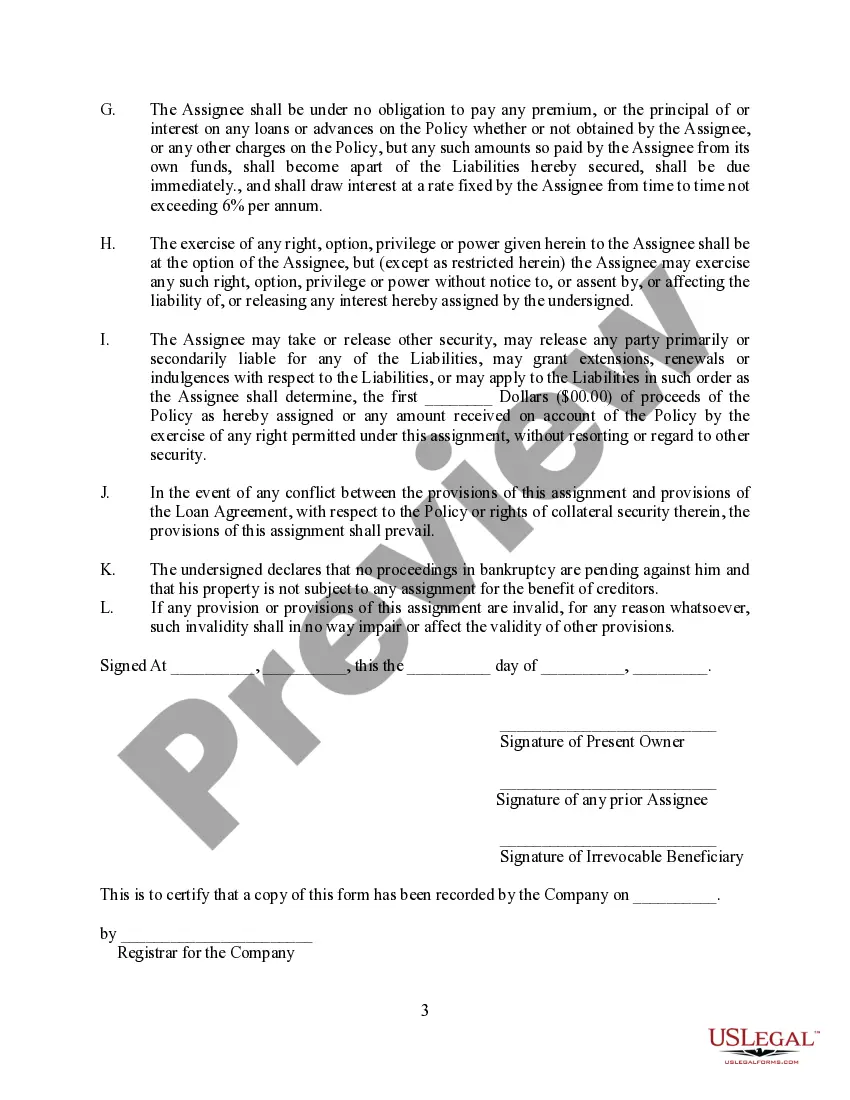
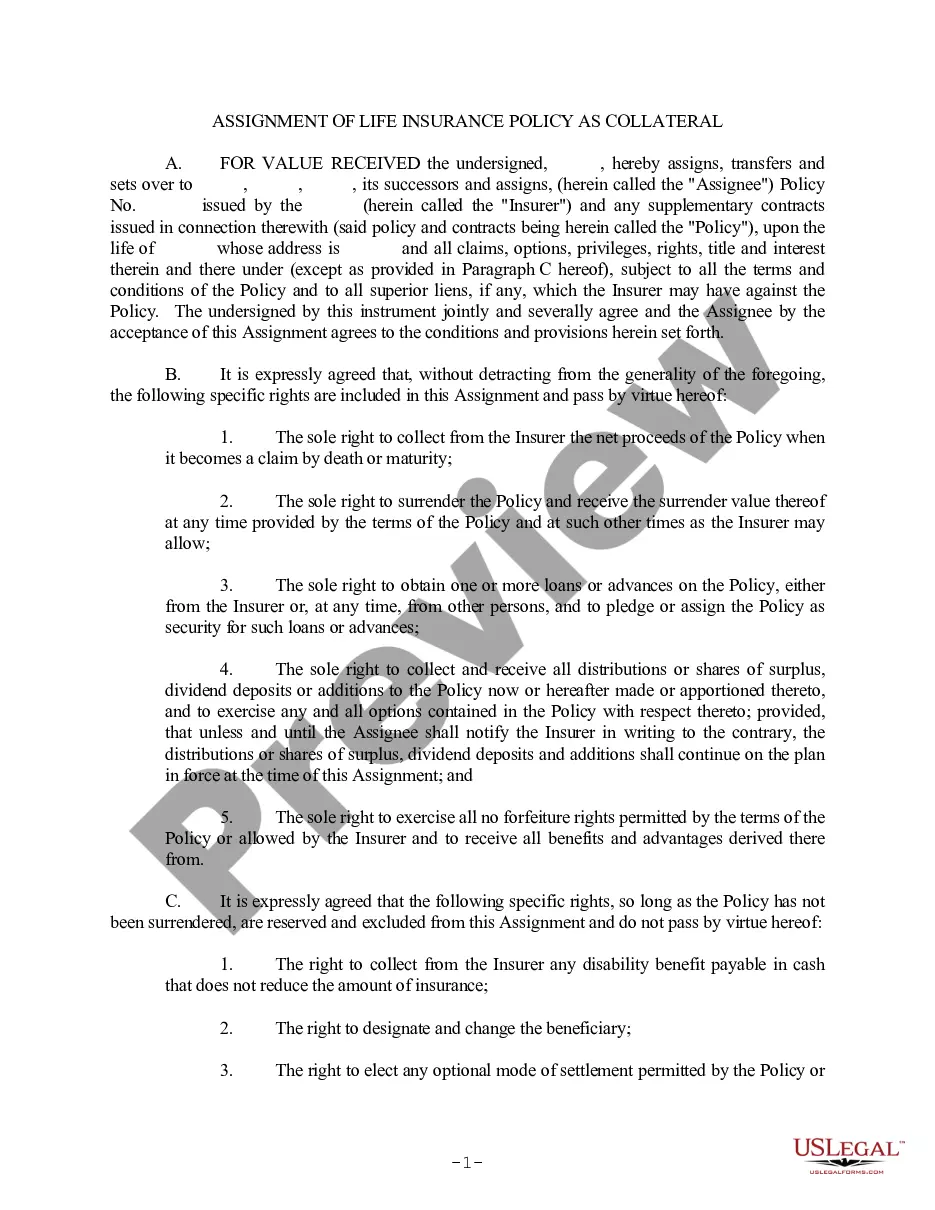
A collateral assignment pledges a permanent life insurance policy's cash value and death benefits to another party and is most commonly used to secure a loan taken out by the policyowner. A collateral assignment primarily serves to protect the repayment interest of the lender.
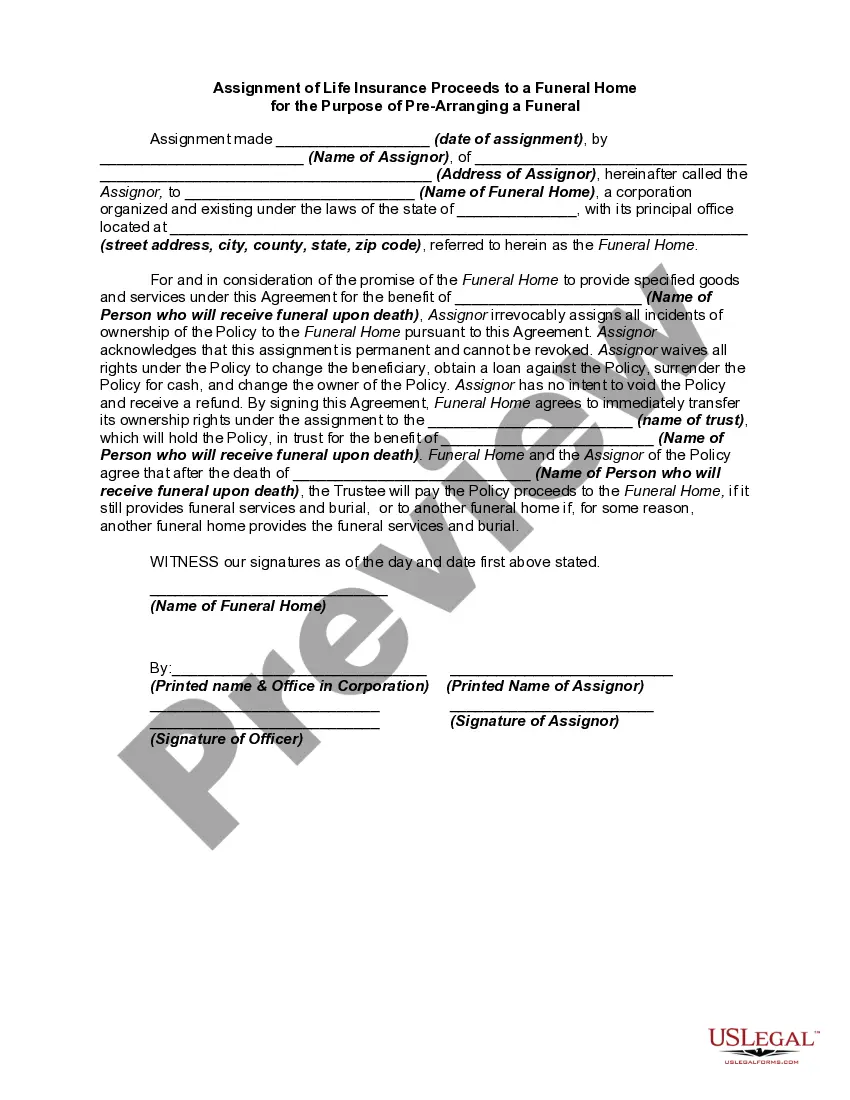
Collateral assignment of life insurance is a method of providing a lender with collateral when you apply for a loan. In this case, the collateral is your life insurance policy's face value, which could be used to pay back the amount you owe in case you die while in debt.
A collateral assignment is an act of allocating or transferring ownership privileges of a particular asset or real estate property as collateral for a loan. It is a lawful arrangement where the borrower promises a distinct asset or property to the lender to guarantee the debt repayment or meet a financial obligation.
A collateral assignment of life insurance is a method of securing a loan by using a life insurance policy as collateral. If you pass away before the loan is repaid, the lender can collect the outstanding loan balance from the death benefit of your life insurance policy.
Example of Collateral Assignment of Life Insurance You have a whole life insurance policy with a cash value of $65,000 and a death benefit of $300,000, which the bank accepts as collateral. So, you then designate the bank as the policy's assignee until you repay the $50,000 loan.