Amendment For Civil Rights
Description

Get your form ready online
Our built-in tools help you complete, sign, share, and store your documents in one place.
Make edits, fill in missing information, and update formatting in US Legal Forms—just like you would in MS Word.
Download a copy, print it, send it by email, or mail it via USPS—whatever works best for your next step.
Sign and collect signatures with our SignNow integration. Send to multiple recipients, set reminders, and more. Go Premium to unlock E-Sign.
If this form requires notarization, complete it online through a secure video call—no need to meet a notary in person or wait for an appointment.
We protect your documents and personal data by following strict security and privacy standards.

Make edits, fill in missing information, and update formatting in US Legal Forms—just like you would in MS Word.

Download a copy, print it, send it by email, or mail it via USPS—whatever works best for your next step.

Sign and collect signatures with our SignNow integration. Send to multiple recipients, set reminders, and more. Go Premium to unlock E-Sign.

If this form requires notarization, complete it online through a secure video call—no need to meet a notary in person or wait for an appointment.

We protect your documents and personal data by following strict security and privacy standards.
Looking for another form?





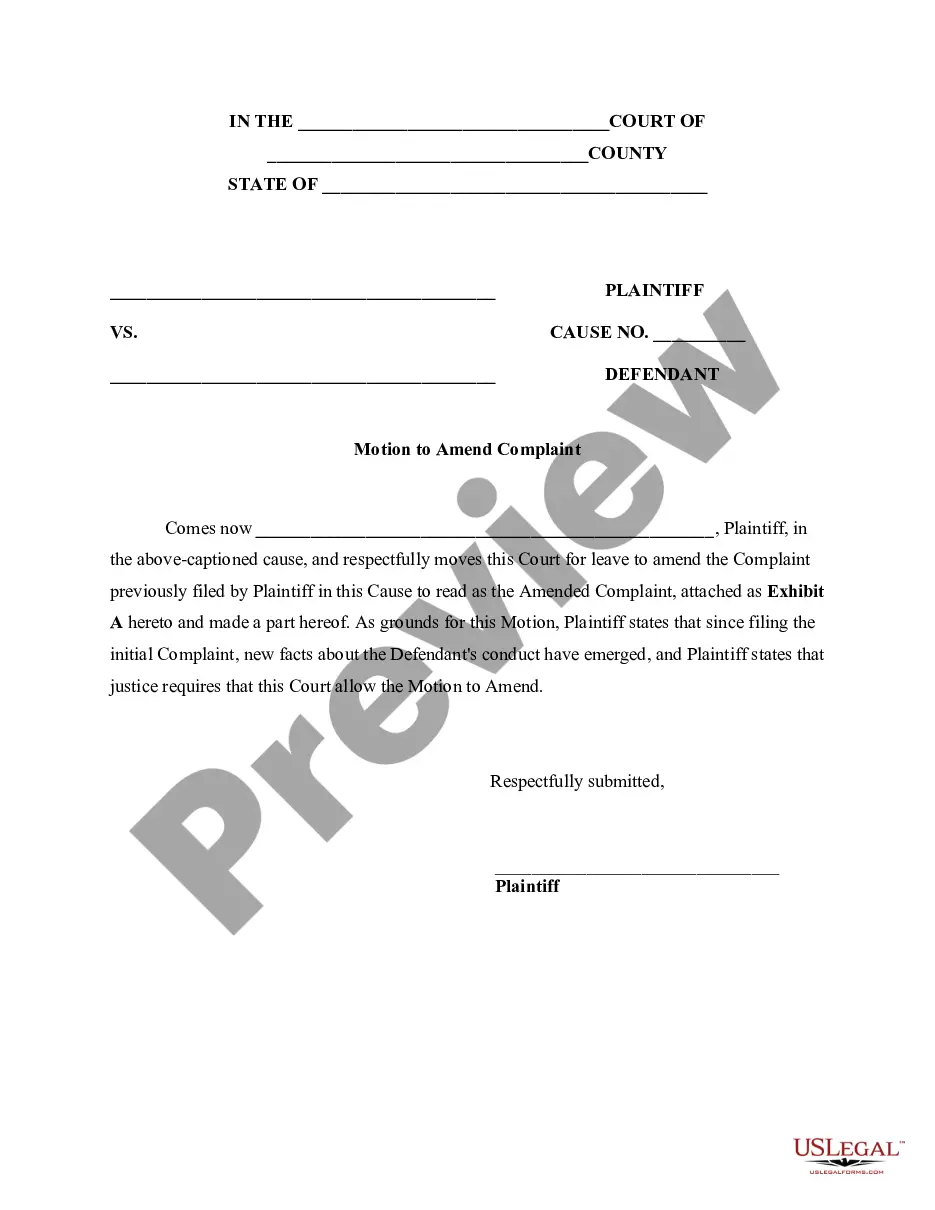
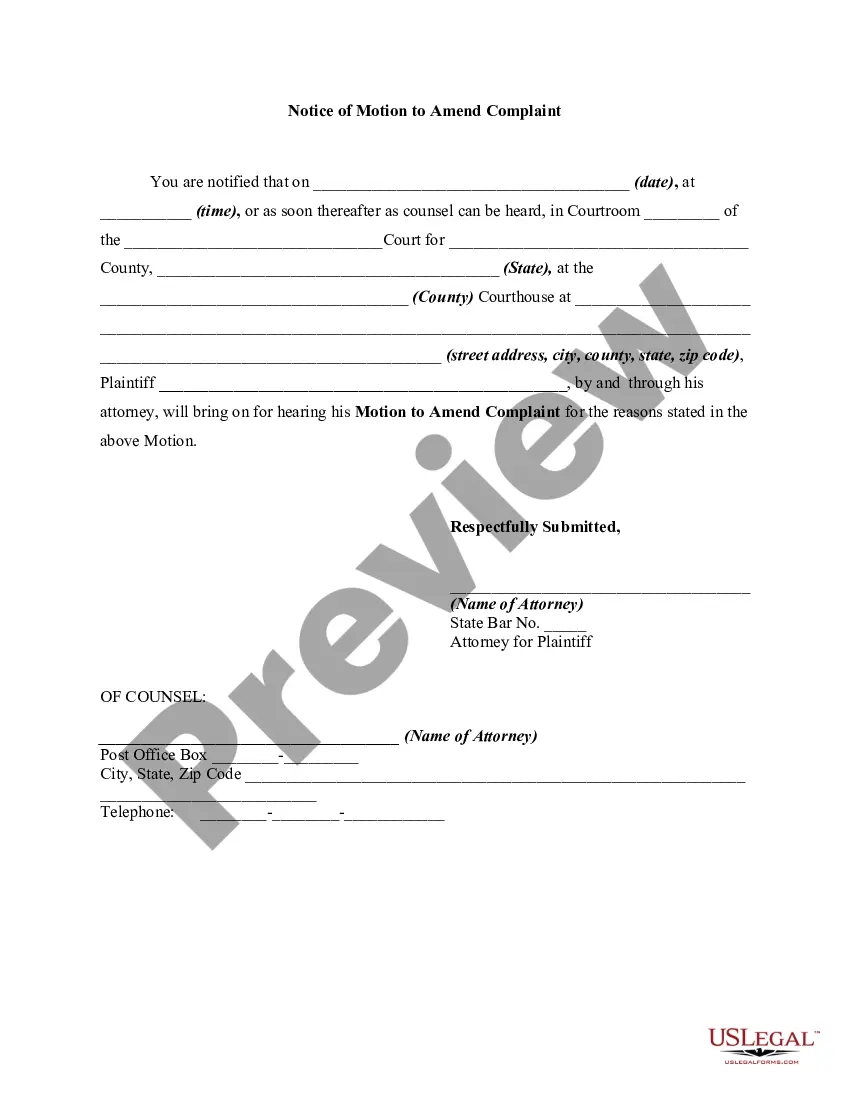
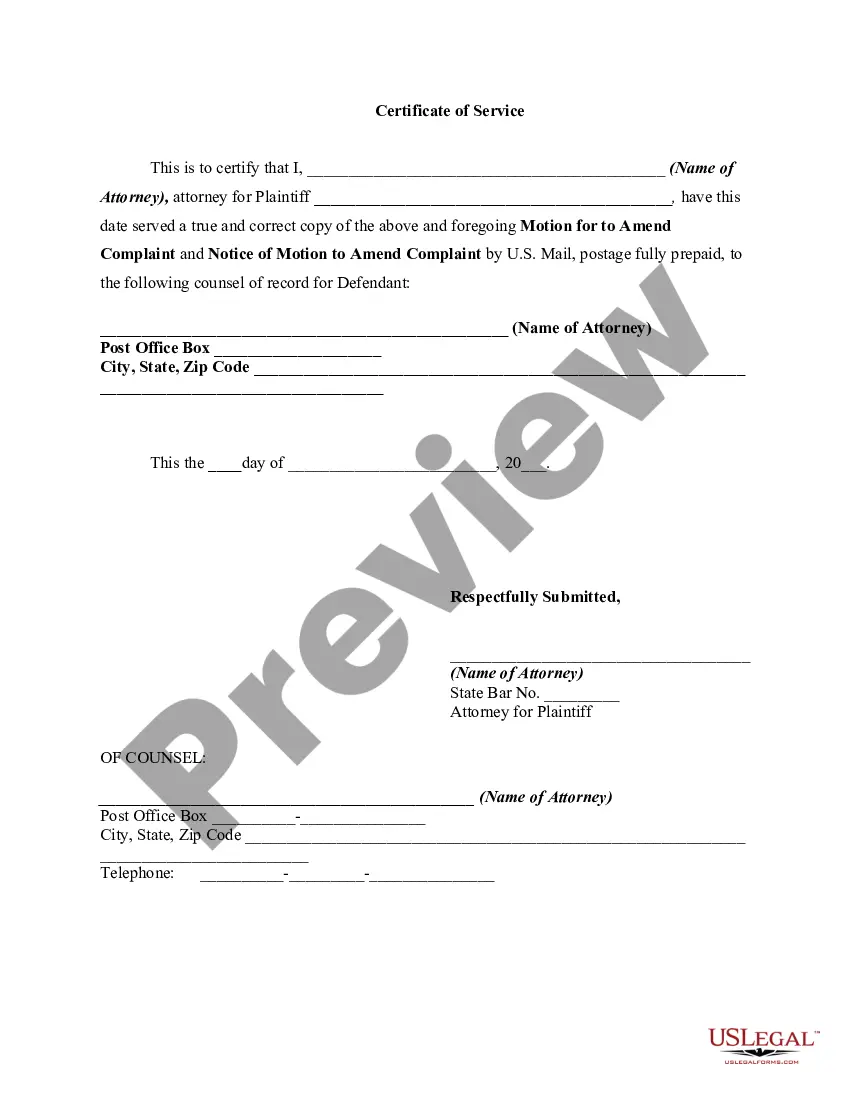
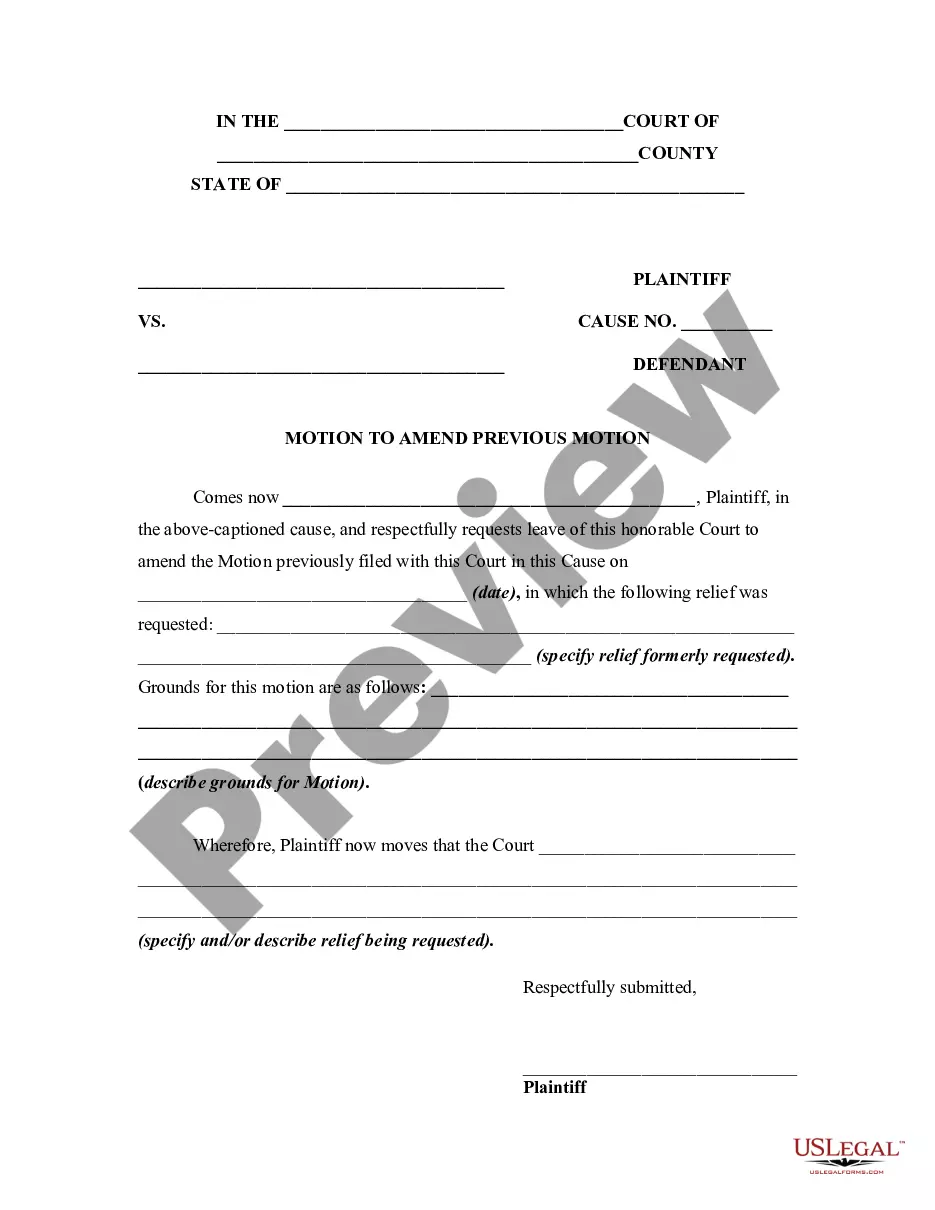
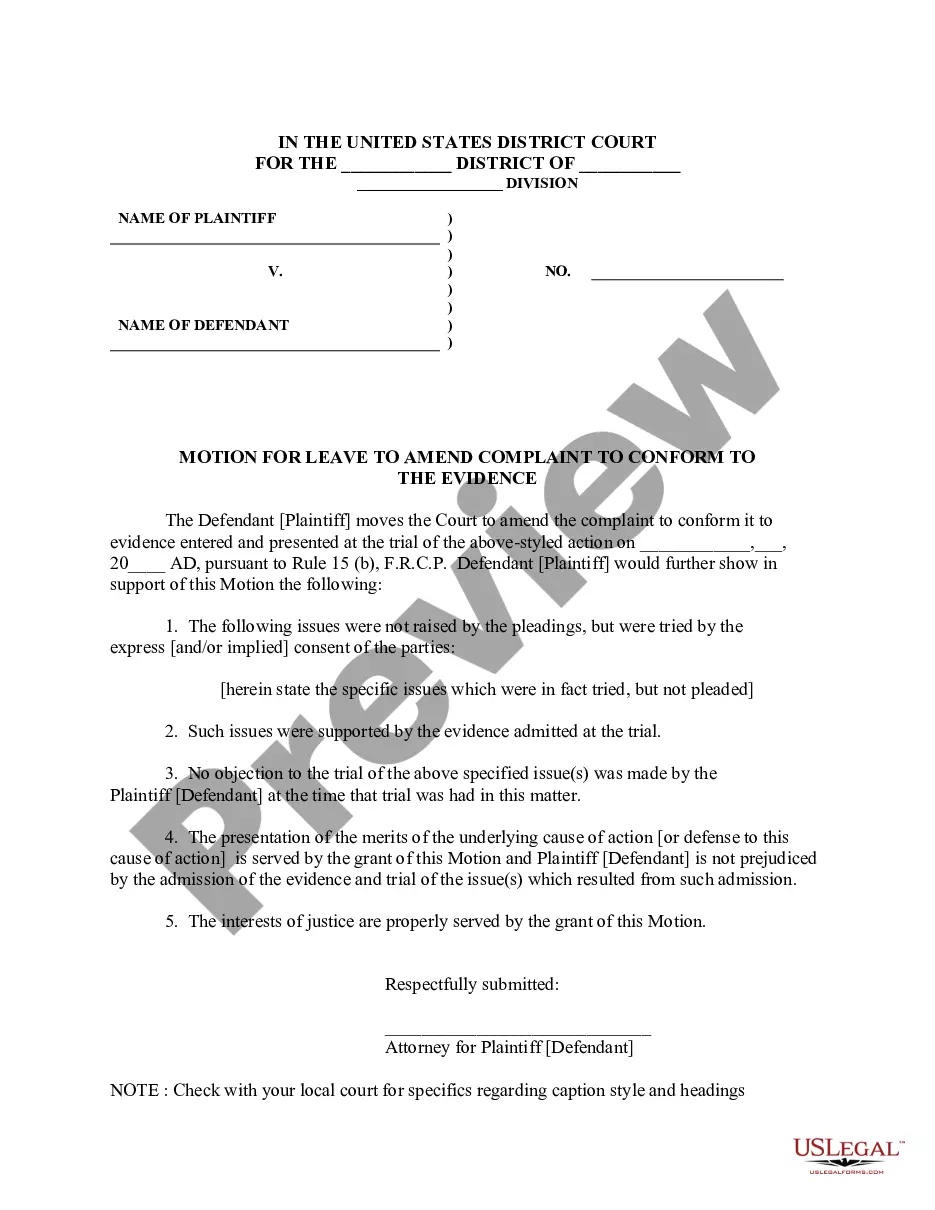
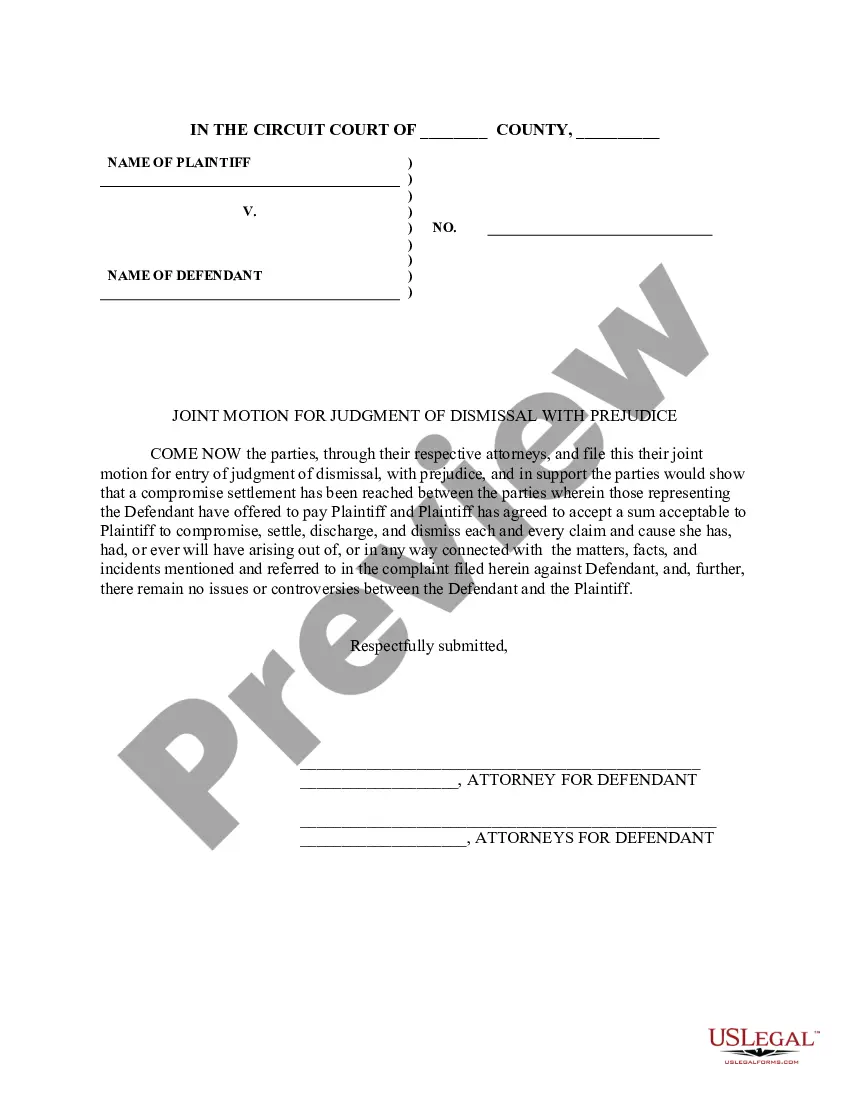
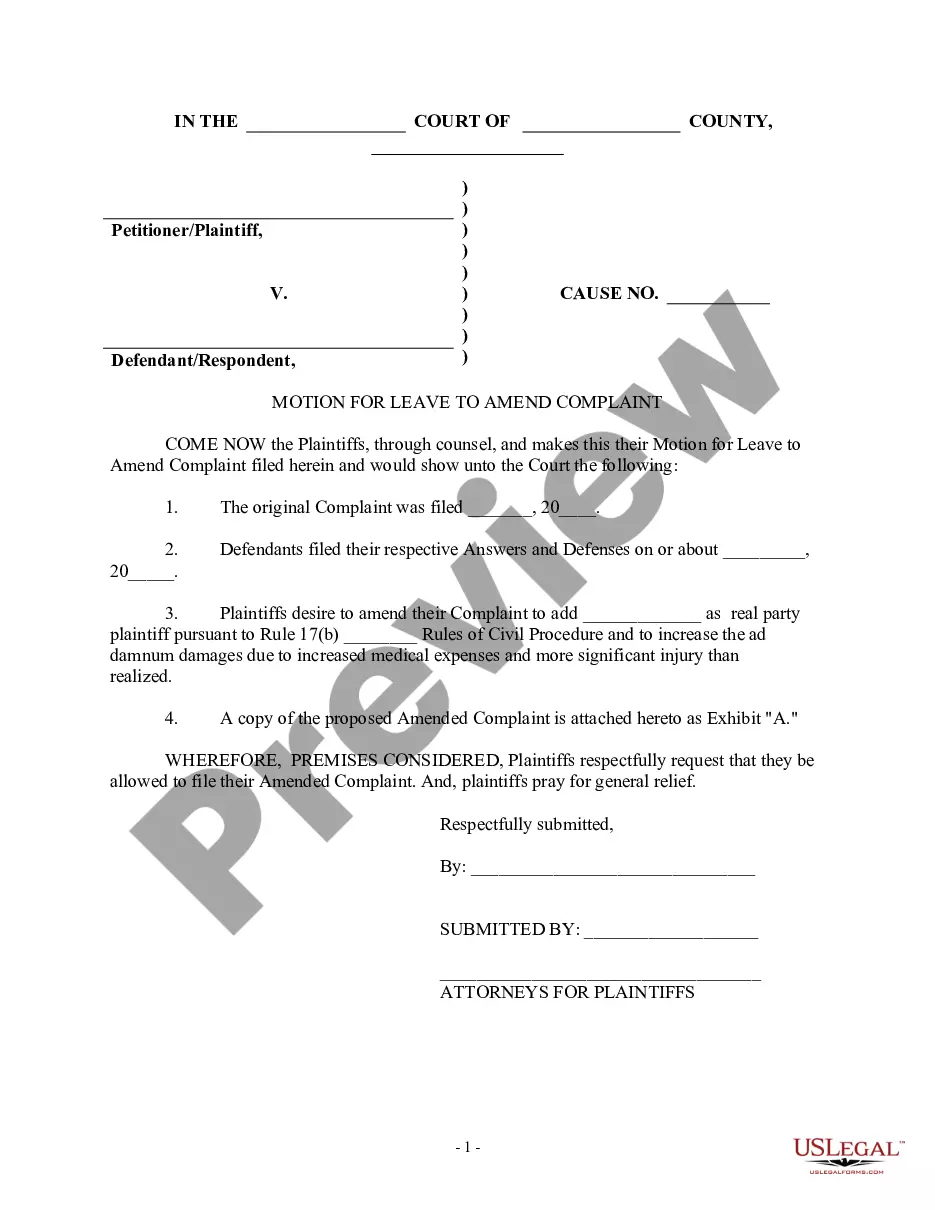
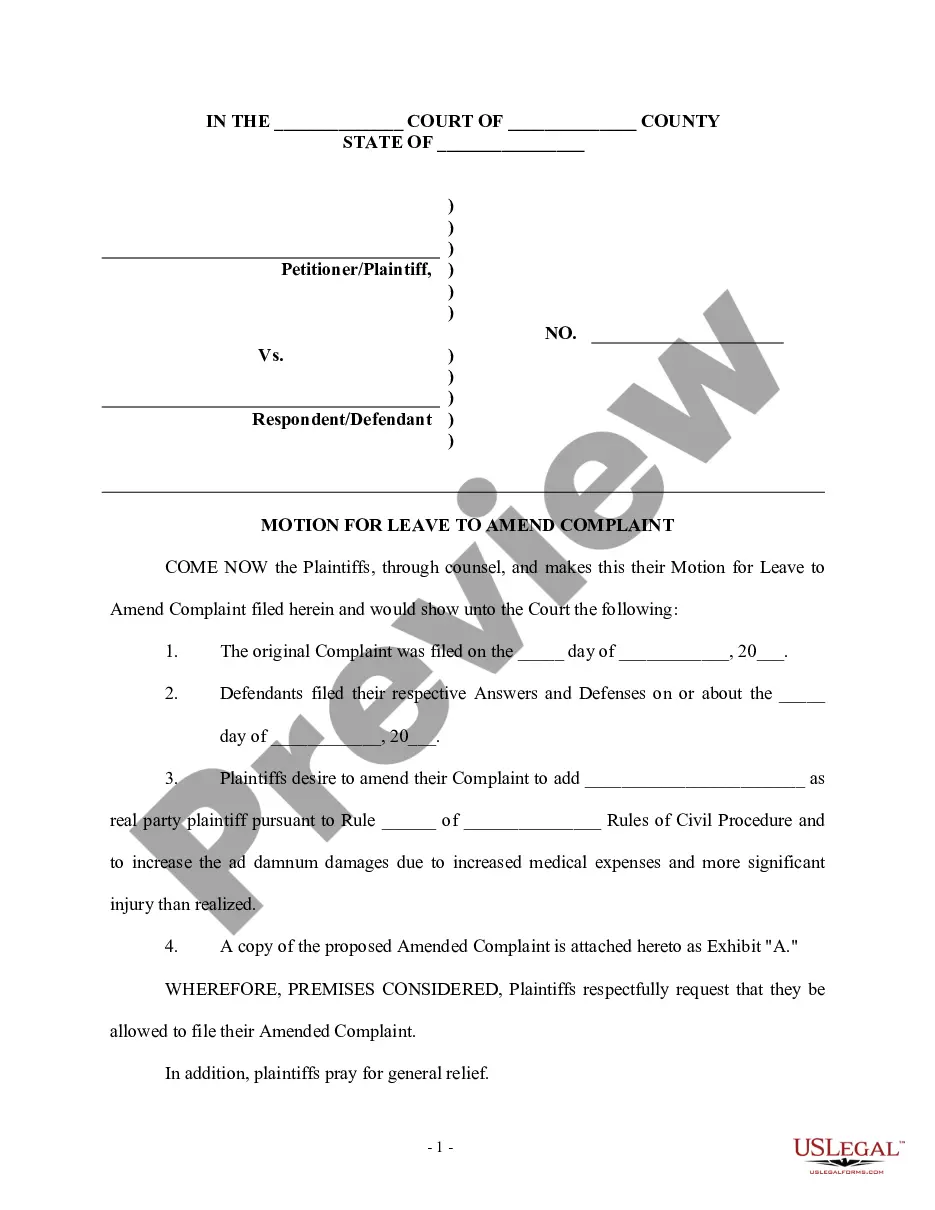
How to fill out Simple Motion To Amend Complaint And Notice Of Motion?
Utilizing legal templates that adhere to federal and local regulations is crucial, and the internet provides numerous options to select from.
However, why waste time searching for the appropriately drafted Amendment For Civil Rights example online when the US Legal Forms online library has already compiled such templates in one location.
US Legal Forms is the most comprehensive online legal repository with over 85,000 fillable templates created by lawyers for various business and personal situations.
Evaluate the template using the Preview feature or via the text outline to confirm it satisfies your needs.
- They are easy to navigate with all documents categorized by state and intended use.
- Our specialists stay updated on legal changes, ensuring your documents are current and compliant when obtaining an Amendment For Civil Rights from our site.
- Acquiring an Amendment For Civil Rights is straightforward and quick for both existing and new users.
- If you already possess an account with an active subscription, sign in and download the document sample you need in the appropriate format.
- If you are a newcomer to our site, follow the steps below.
Form popularity
FAQ
The civil rights Amendment was designed to rectify injustices faced by marginalized groups and to ensure their rights as citizens. Its main goal was to provide equal protection under the law to all individuals, particularly after the Civil War. By focusing on these objectives, the Amendment for civil rights plays a significant role in promoting equality and justice, serving as a fundamental aspect of American democracy.
The civil rights Amendment typically refers to various amendments in the U.S. Constitution aimed at protecting the civil liberties of individuals. Specifically, the 14th Amendment addresses citizenship rights and equal protection under the law. This Amendment for civil rights has been pivotal in shaping the legal landscape for civil rights protections and advancing equality in America, making it a critical area of study.
Civil rights refer to the freedoms and protections granted to individuals by law. These rights ensure that every person is treated equally and without discrimination based on characteristics such as race, gender, or religion. A clear understanding of civil rights is vital, especially when discussing the Amendment for civil rights, as it highlights the importance of fairness and equality in society.
The Civil Rights Act of 1964 consists of three main parts: Title I prohibits discrimination in voting, Title II forbids discrimination in public accommodations, and Title III ensures equitable access to federally funded programs. This landmark legislation plays a crucial role in enforcing civil rights and serves as a powerful tool for individuals seeking justice. Understanding these components is essential when discussing the Amendment for civil rights, as they form the foundation of protection against discrimination.
A good sentence for an amendment could be: 'This amendment proposes to enhance protections for civil rights by prohibiting discrimination based on race, gender, or sexual orientation.' This sentence clearly articulates the intention behind an amendment focused on civil rights. When composing your amendment, be sure to maintain a consistent voice and clarity in your message. Using tools like USLegalForms can help you refine your phrasing effectively.
Writing an amendment format starts with stating the purpose of the amendment at the top of the document. Include a section that specifies what the amendment will modify in the existing text. When focusing on civil rights, it’s beneficial to portray your intentions clearly, ensuring that all stakeholders understand the implications. Platforms like USLegalForms can help you with templates and examples to ensure accuracy.
To format an amendment, begin with a title that clearly states the purpose of the change. Next, include the original text you want to amend with the proposed changes highlighted or marked. When you focus on drafting an amendment for civil rights, it is essential to maintain a clear and organized layout. Consider using templates available on USLegalForms to simplify this process and ensure compliance.
Writing an amendment involves outlining the specific changes you want to propose. It typically starts with a preamble that explains the need for the amendment; followed by the exact wording of the change. When crafting an amendment for civil rights, clarity is vital to ensure that the intent is understood. You can utilize platforms like USLegalForms to guide you through a structured process.
An example of an amendment is the First Amendment to the Constitution, which protects freedoms concerning religion, expression, assembly, and the right to petition. This amendment is crucial for ensuring that civil rights are upheld. When we talk about an amendment for civil rights, we often refer to such changes that enhance individual freedoms and protect communities from discrimination. It serves as a pillar for democratic values in our society.
The 42nd Amendment does not exist; however, you might be referring to federal laws aimed at protecting civil rights against discrimination. On the other hand, the 44th Amendment, while not officially recognized in the U.S. Constitution, can represent various proposed amendments over time that aimed to enhance civil rights protections. Engaging with civil rights legislation is essential for fostering equality in daily life. To navigate these complexities, consider using platforms like USLegalForms for resources and support.