Applying For Jobs After Accepting An Offer
Description
Get your form ready online
Our built-in tools help you complete, sign, share, and store your documents in one place.
Make edits, fill in missing information, and update formatting in US Legal Forms—just like you would in MS Word.
Download a copy, print it, send it by email, or mail it via USPS—whatever works best for your next step.
Sign and collect signatures with our SignNow integration. Send to multiple recipients, set reminders, and more. Go Premium to unlock E-Sign.
If this form requires notarization, complete it online through a secure video call—no need to meet a notary in person or wait for an appointment.
We protect your documents and personal data by following strict security and privacy standards.

Make edits, fill in missing information, and update formatting in US Legal Forms—just like you would in MS Word.

Download a copy, print it, send it by email, or mail it via USPS—whatever works best for your next step.

Sign and collect signatures with our SignNow integration. Send to multiple recipients, set reminders, and more. Go Premium to unlock E-Sign.

If this form requires notarization, complete it online through a secure video call—no need to meet a notary in person or wait for an appointment.

We protect your documents and personal data by following strict security and privacy standards.
Looking for another form?






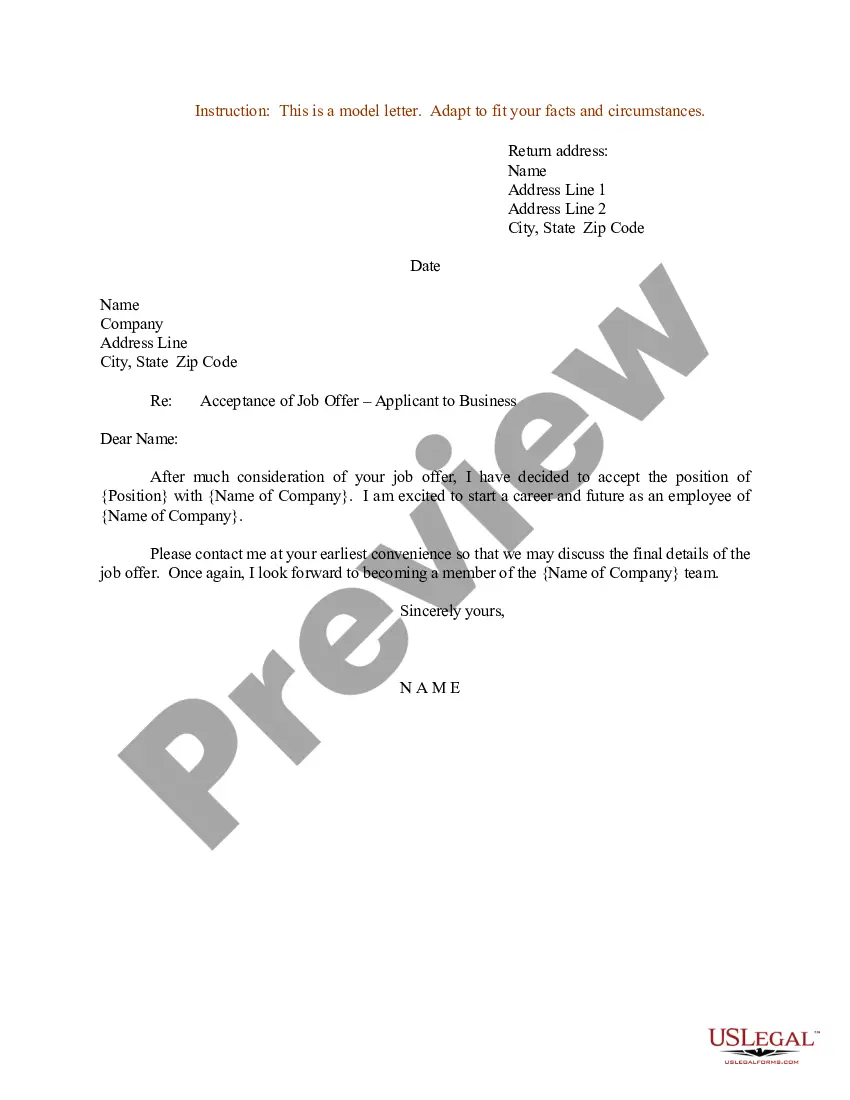

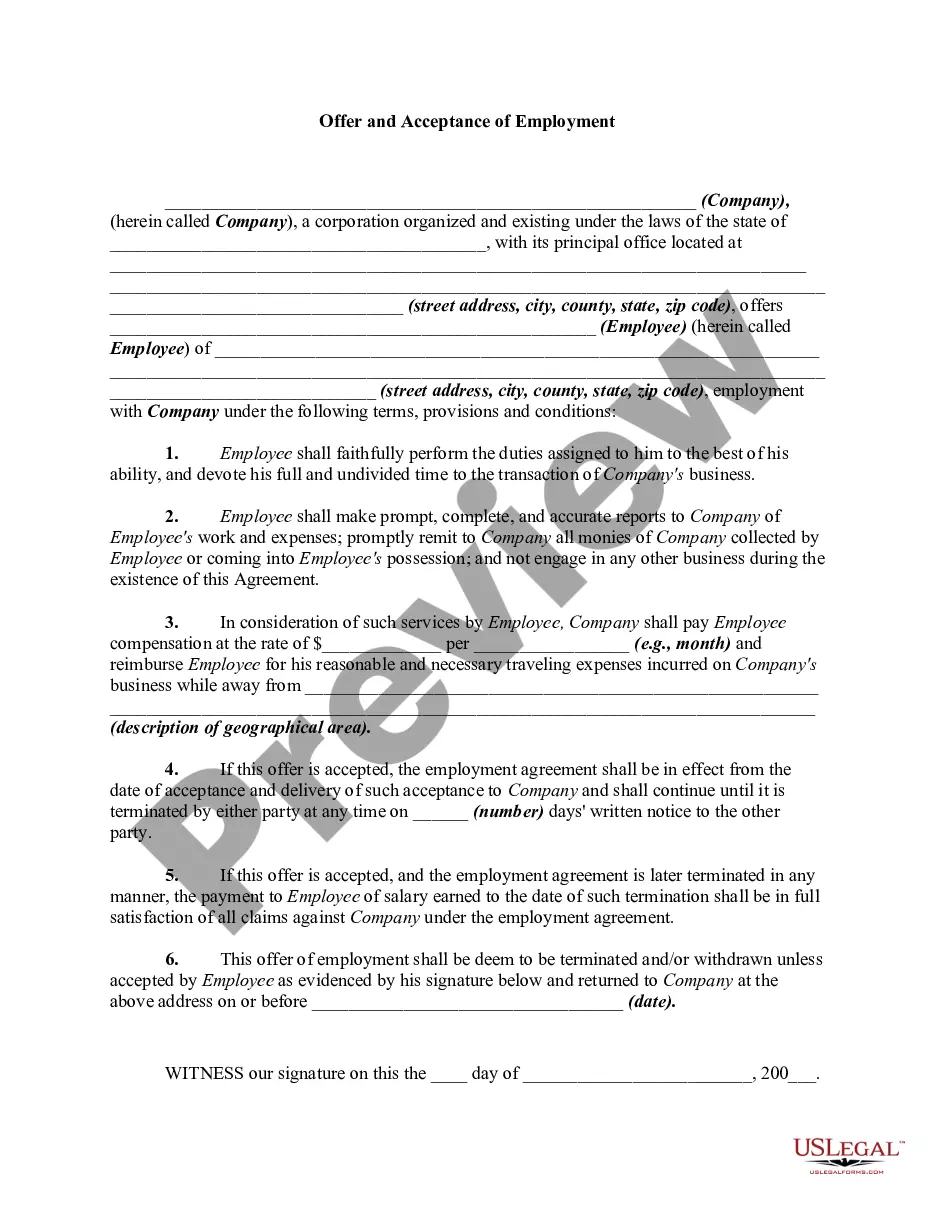
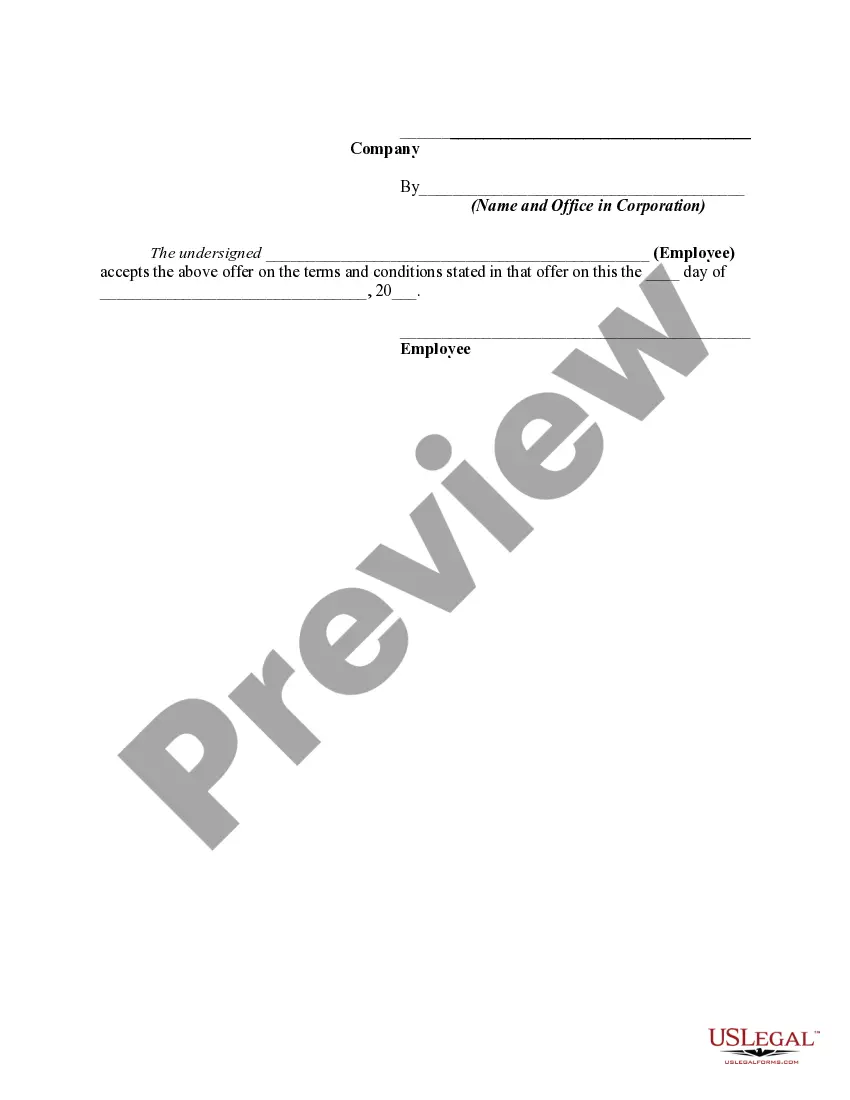
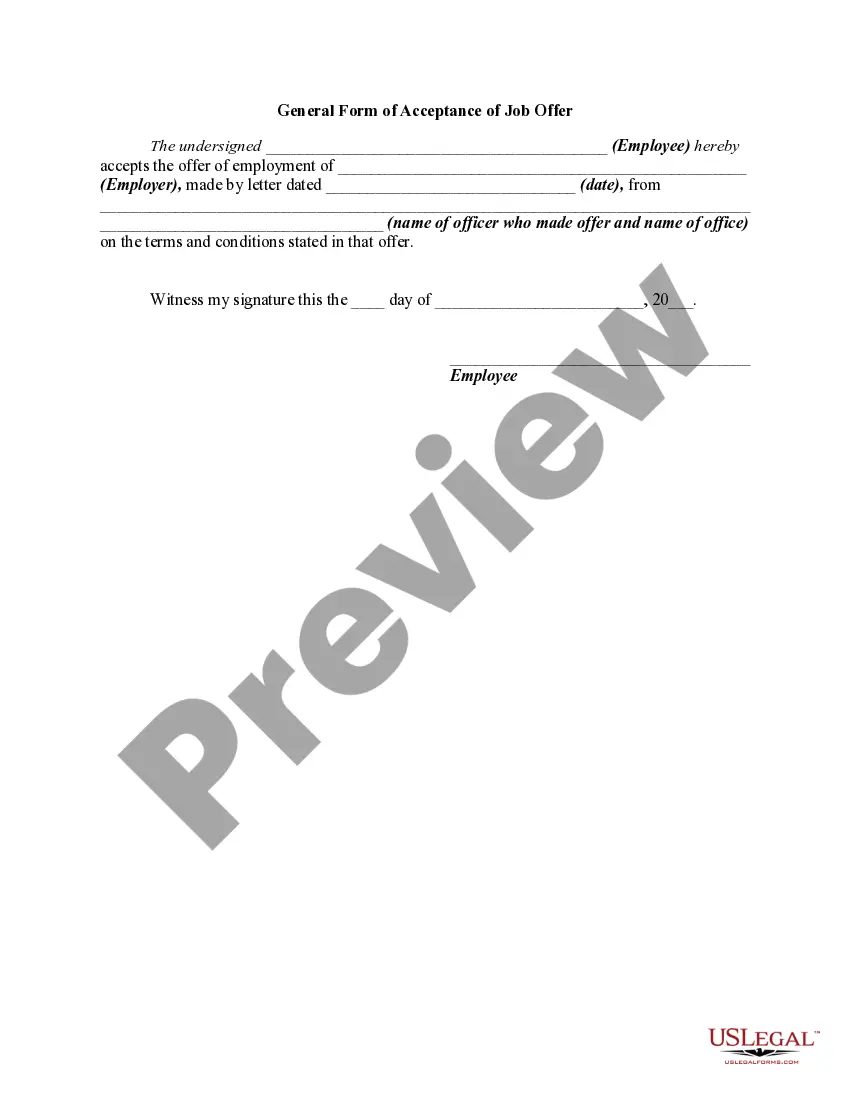
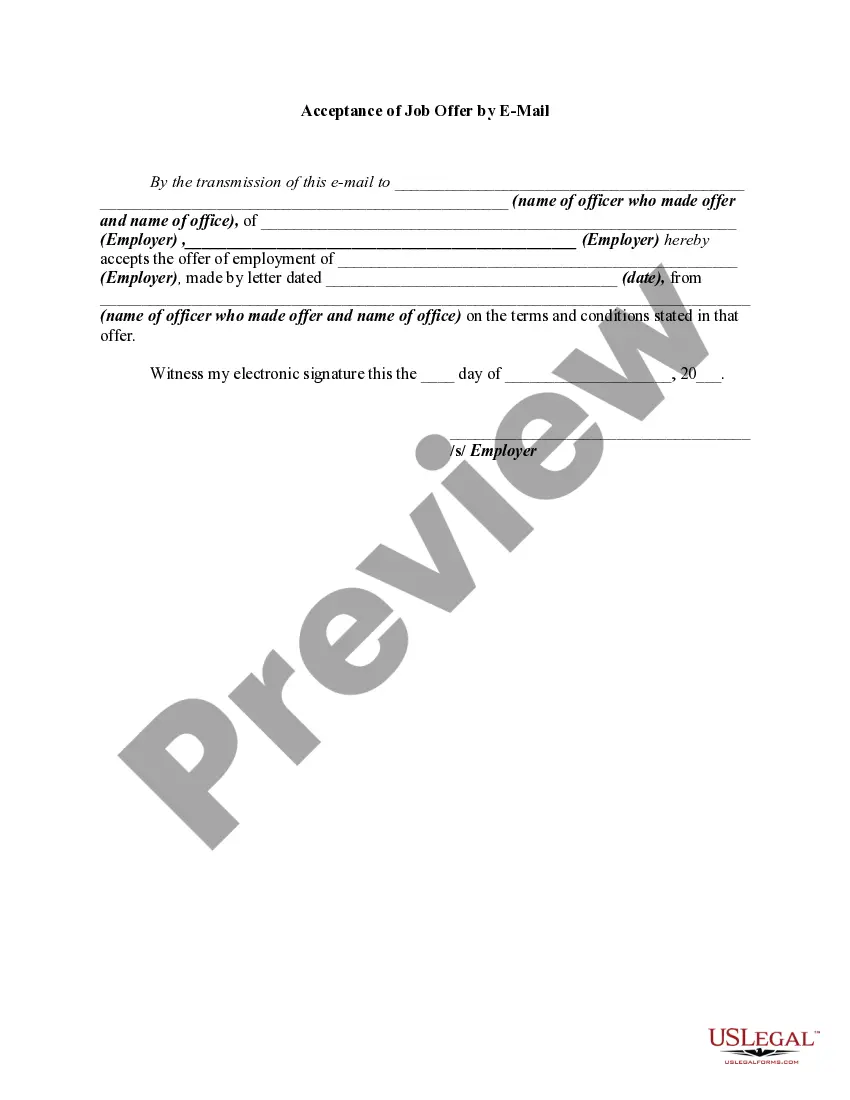
How to fill out Offer And Acceptance Of Employment?
The Application For Employment Following Job Acceptance that you observe on this webpage is a versatile formal template created by expert attorneys in alignment with national and local laws.
For over 25 years, US Legal Forms has offered individuals, businesses, and legal practitioners more than 85,000 validated, state-specific documents for any commercial and personal needs. It’s the quickest, easiest, and most reliable method to acquire the paperwork you require, as the service ensures bank-level data security and anti-malware safeguards.
Sign up for US Legal Forms to access validated legal forms for every situation in life.
- Conduct a search for the document you require and examine it.
- Browse the file you find and preview it or read the form description to confirm it meets your criteria. If it does not, utilize the search feature to discover the fitting one. Click Buy Now after locating the document you need.
- Register and Log In to your account.
- Select the payment plan that best fits you and create an account. Use PayPal or a credit card for a swift transaction. If you already possess an account, Log In and check your subscription to move forward.
- Obtain the editable template.
Form popularity
FAQ
Backing out of a job offer is acceptable under certain conditions, such as personal or professional changes that arise suddenly. However, you should approach this decision thoughtfully, as it might have lasting effects on your career. Communicate your decision respectfully and promptly to the employer to ease any tension. In the context of applying for jobs after accepting an offer, using tools like US Legal Forms can assist you in understanding your rights and obligations during this process.
Backing out of a job offer after acceptance can be viewed unfavorably, yet it can sometimes be necessary due to unforeseen circumstances. It's important to handle the situation with professionalism; consider informing the employer as soon as possible. This action can impact your future applications, but being transparent will aid in maintaining goodwill. If you're in a bind while applying for jobs after accepting an offer, resources like US Legal Forms can provide guidance on best practices.
Yes, you can quit a job after accepting the offer, but it's crucial to consider the potential repercussions. If you change your mind, it may affect your reputation in the job market. While applying for jobs after accepting an offer, ensure you weigh your options carefully and communicate openly with the employer. You may also want to explore resources, like US Legal Forms, to help navigate the complexities of job acceptance.
It is possible to back out of a job offer after acceptance, but you must handle the situation carefully. Doing so can affect your professional relationships and reputation in the industry. Before making this decision, weigh the implications of applying for jobs after accepting an offer. US Legal Forms can provide resources that clarify your rights and responsibilities in this context, ensuring you make informed choices.
Yes, you can keep applying for jobs after accepting an offer. However, it is important to consider the impact of your actions on your professional reputation. Engaging in this process may lead to potential complications, especially if you decide to accept a new offer shortly after. If you are unsure about your current choice, using platforms like US Legal Forms can help ensure you fully understand your options before proceeding.
Leaving a job after three months can raise some eyebrows, but it doesn't have to be viewed negatively. Employers often understand that not every fit is perfect, and circumstances can change rapidly. When you are applying for jobs after accepting an offer, be prepared to explain your reasons thoughtfully and highlight what you learned during your time there, as this can present you positively to prospective employers.
The 3-month period at the start of a job is often known as the onboarding phase. During this time, you learn about the organization, its operations, and how to fulfill your responsibilities effectively. If you find yourself interested in applying for jobs after accepting an offer, reflecting on this period can assist you in identifying your skills and experiences to present to future employers.
A 3-month plan for work is a structured roadmap that outlines your goals, objectives, and milestones during your initial months in a new job. This plan helps you focus on onboarding, learning the company culture, and integrating with your team. If you're considering applying for jobs after accepting an offer, having a solid 3-month plan can increase your chances of success in any new role you pursue.
The 3-month rule for jobs suggests that employees should remain in their new position for at least three months before considering a change. Employers often view stability favorably, and a short tenure may raise questions during future job applications. When applying for jobs after accepting an offer, keeping this rule in mind can help you make more strategic decisions regarding your career.
The 3-month period of work typically refers to a time frame when an employee starts their new job and becomes familiar with the role and responsibilities. During this duration, employees often undergo training, adjustment, and performance evaluations. If you are thinking about applying for jobs after accepting an offer, understanding this period is crucial because it might affect your decision to explore other opportunities.