Dynasty Trust Disadvantages Foreign
Description



Get your form ready online
Our built-in tools help you complete, sign, share, and store your documents in one place.
Make edits, fill in missing information, and update formatting in US Legal Forms—just like you would in MS Word.
Download a copy, print it, send it by email, or mail it via USPS—whatever works best for your next step.
Sign and collect signatures with our SignNow integration. Send to multiple recipients, set reminders, and more. Go Premium to unlock E-Sign.
If this form requires notarization, complete it online through a secure video call—no need to meet a notary in person or wait for an appointment.
We protect your documents and personal data by following strict security and privacy standards.

Make edits, fill in missing information, and update formatting in US Legal Forms—just like you would in MS Word.

Download a copy, print it, send it by email, or mail it via USPS—whatever works best for your next step.

Sign and collect signatures with our SignNow integration. Send to multiple recipients, set reminders, and more. Go Premium to unlock E-Sign.

If this form requires notarization, complete it online through a secure video call—no need to meet a notary in person or wait for an appointment.

We protect your documents and personal data by following strict security and privacy standards.
Looking for another form?






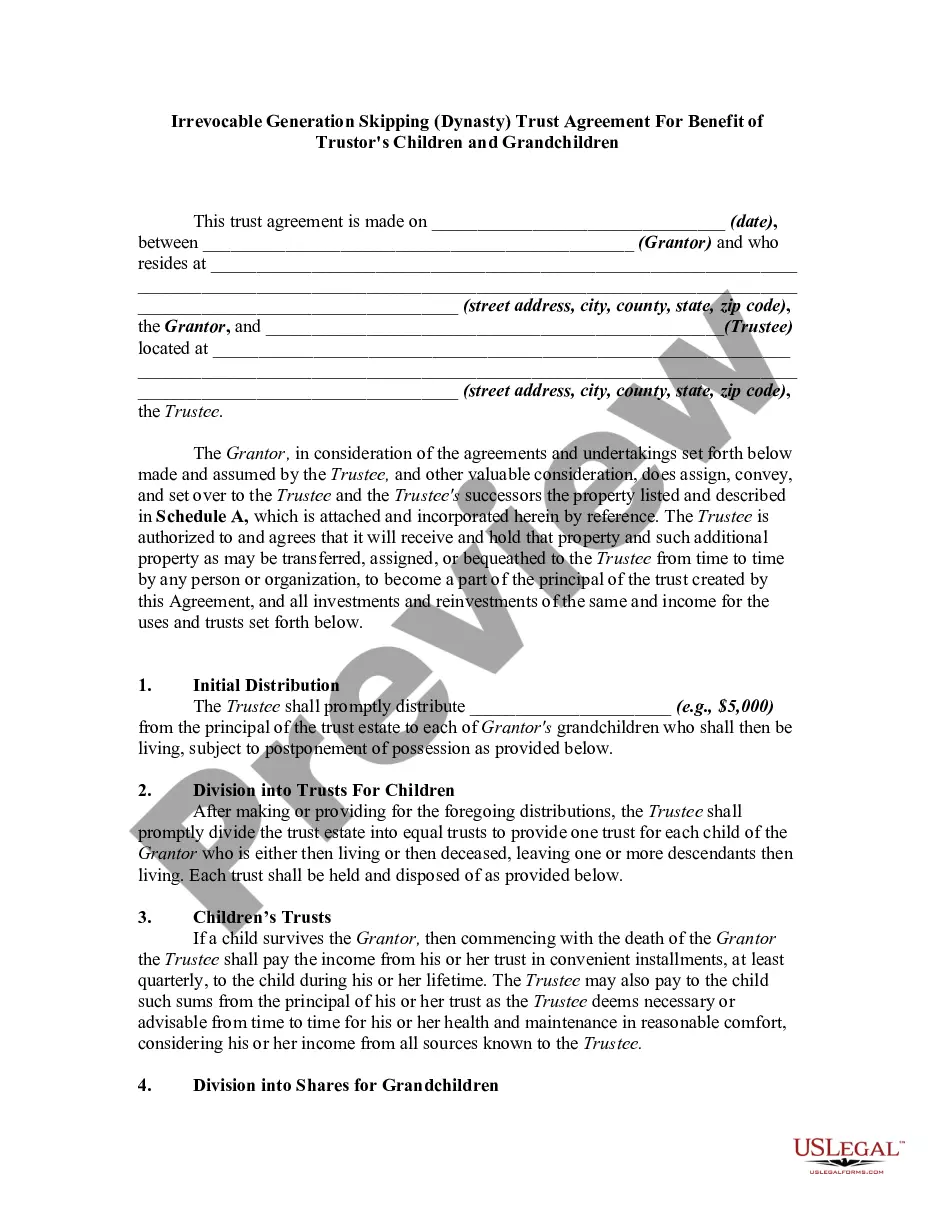
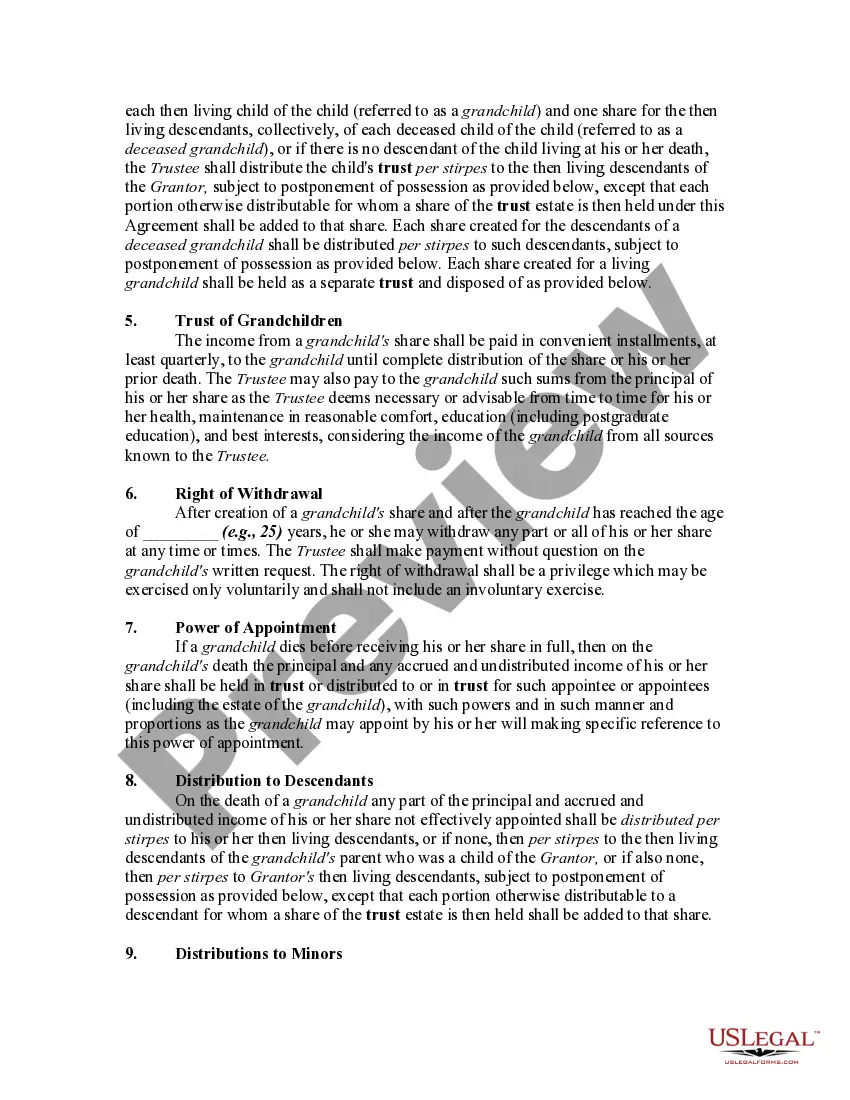
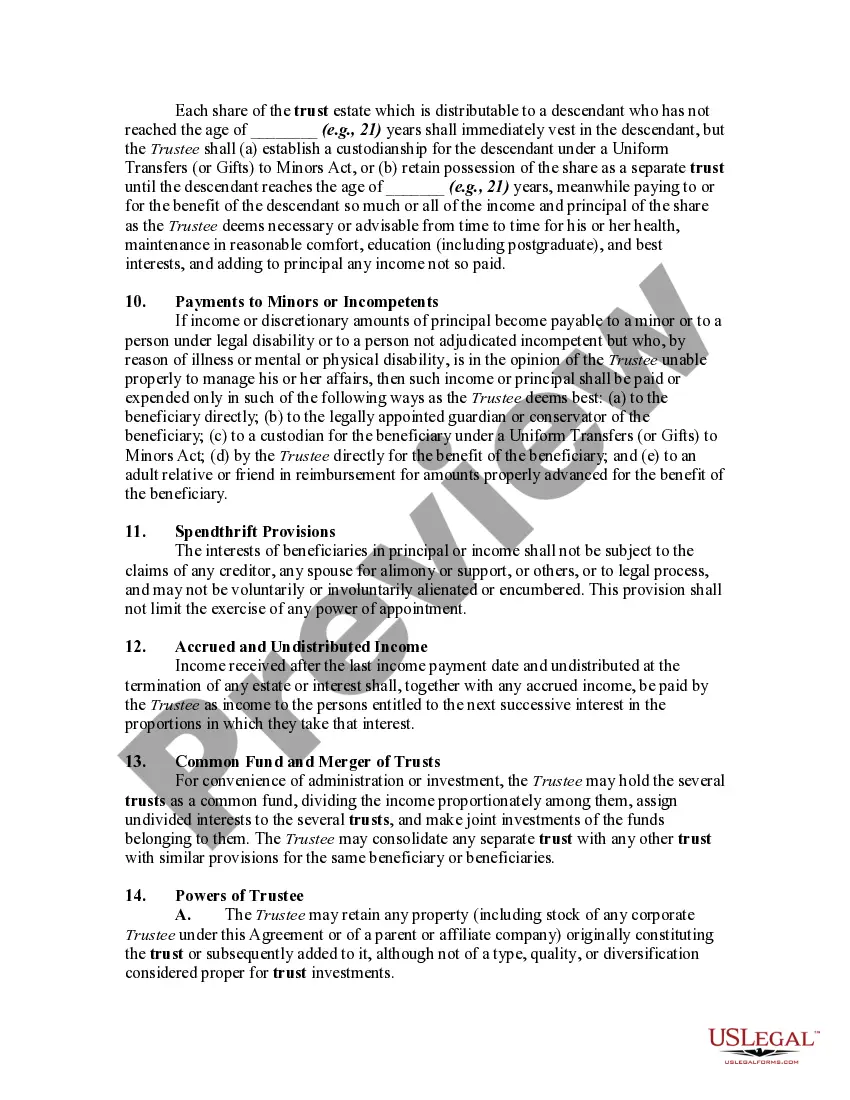
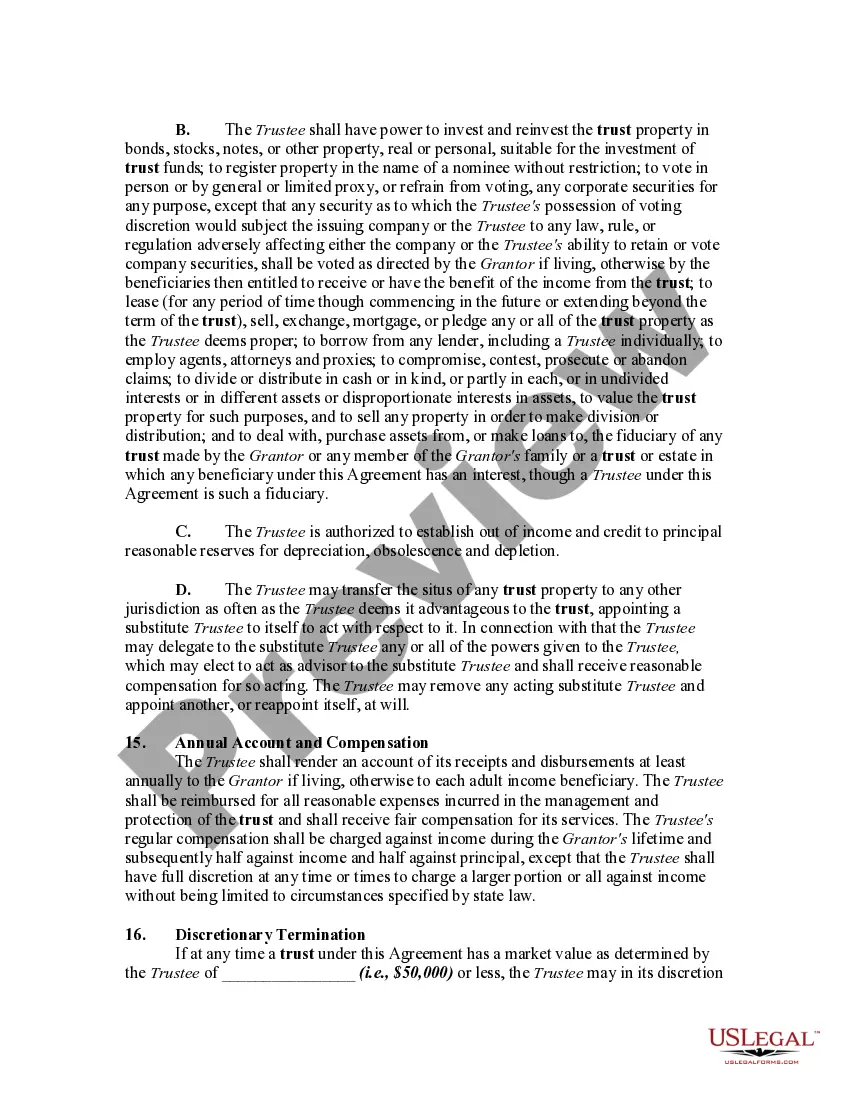
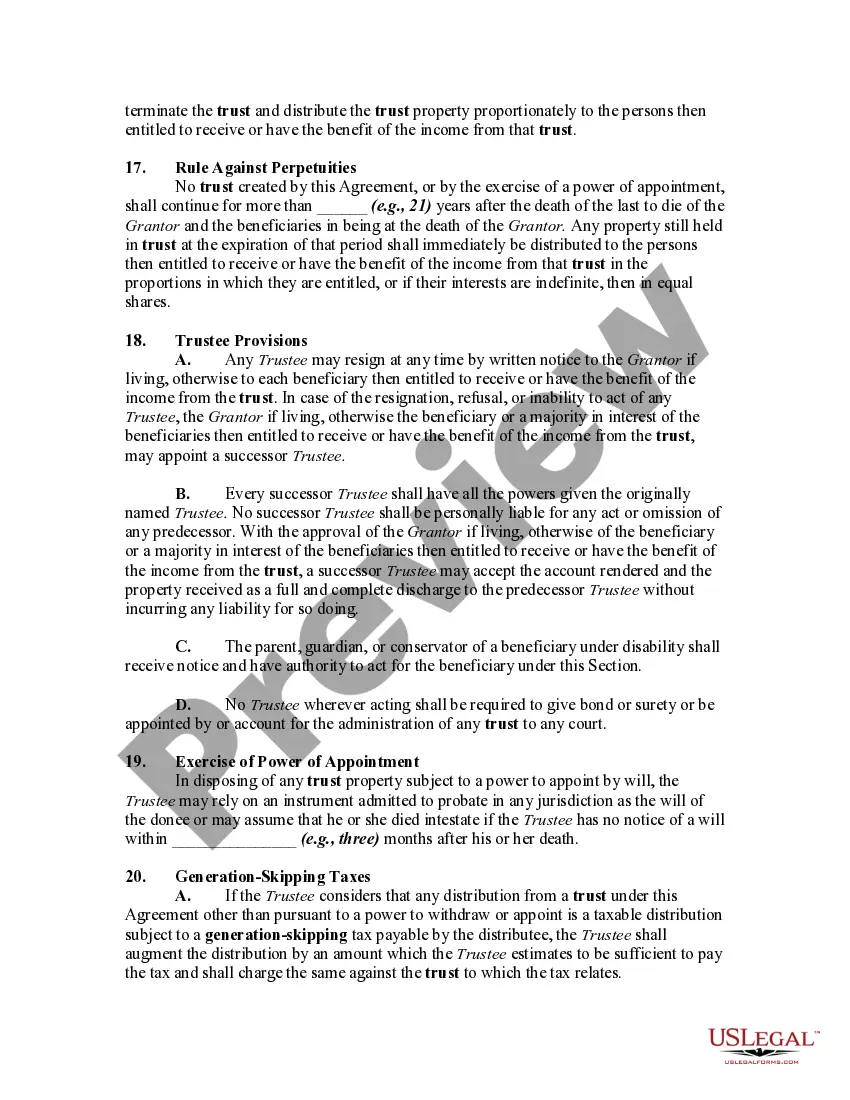
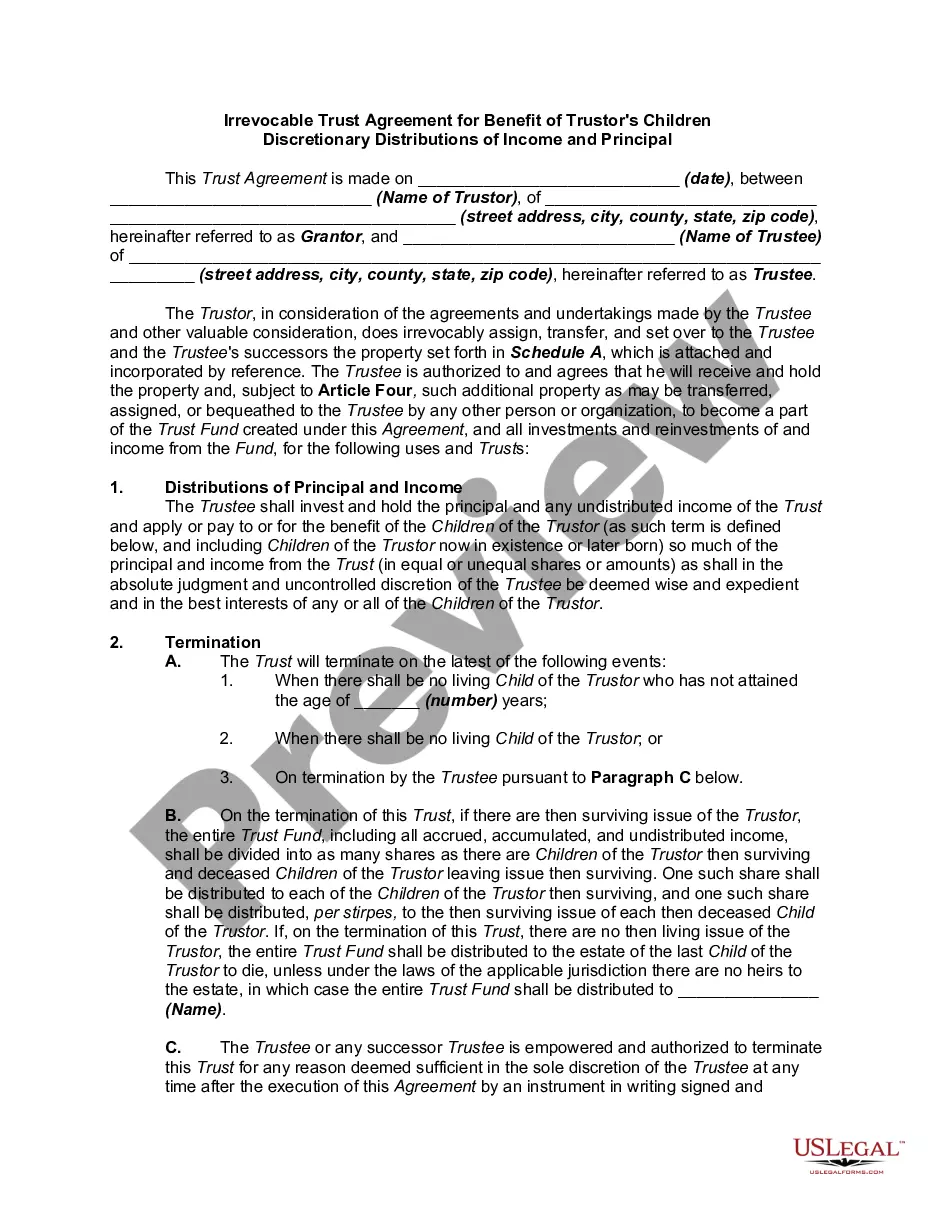
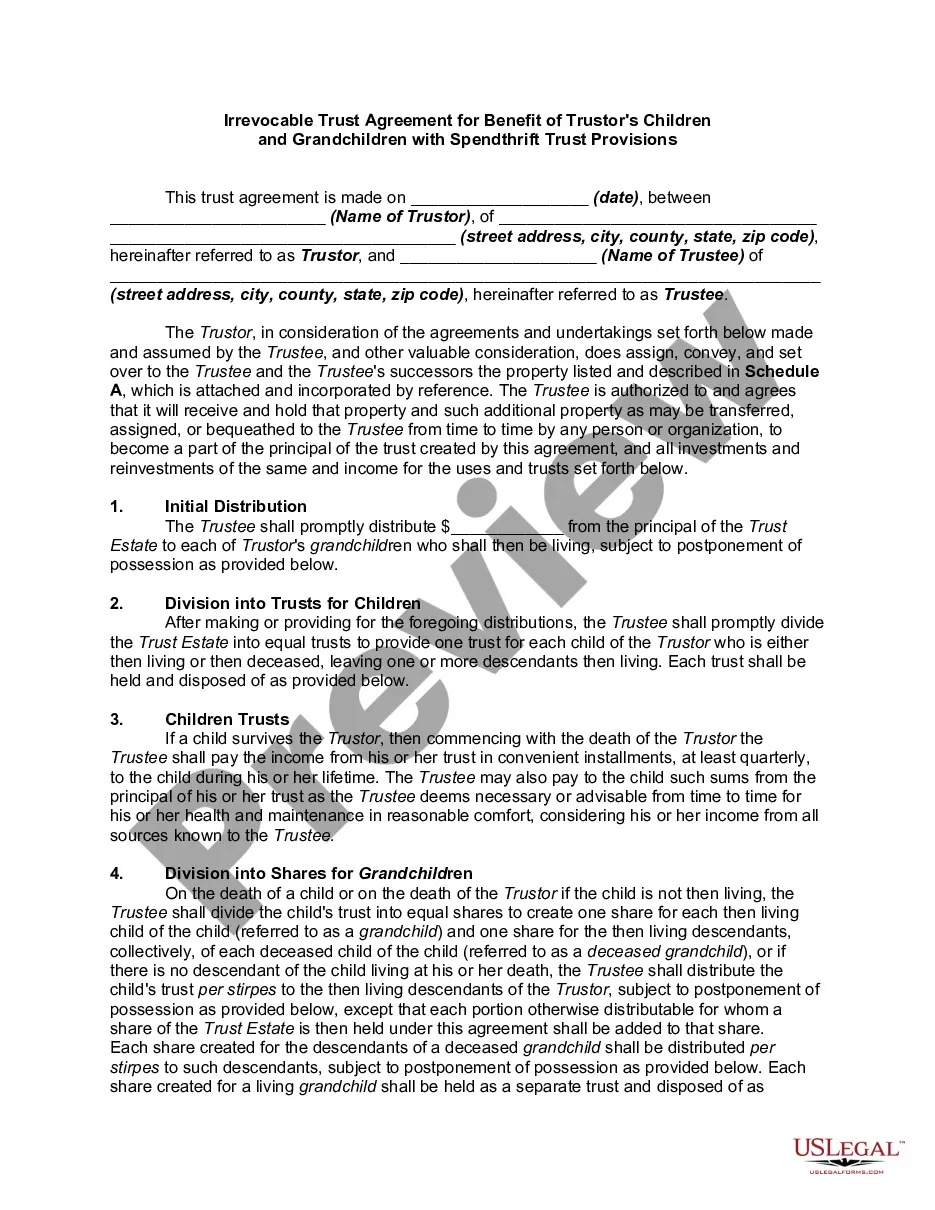
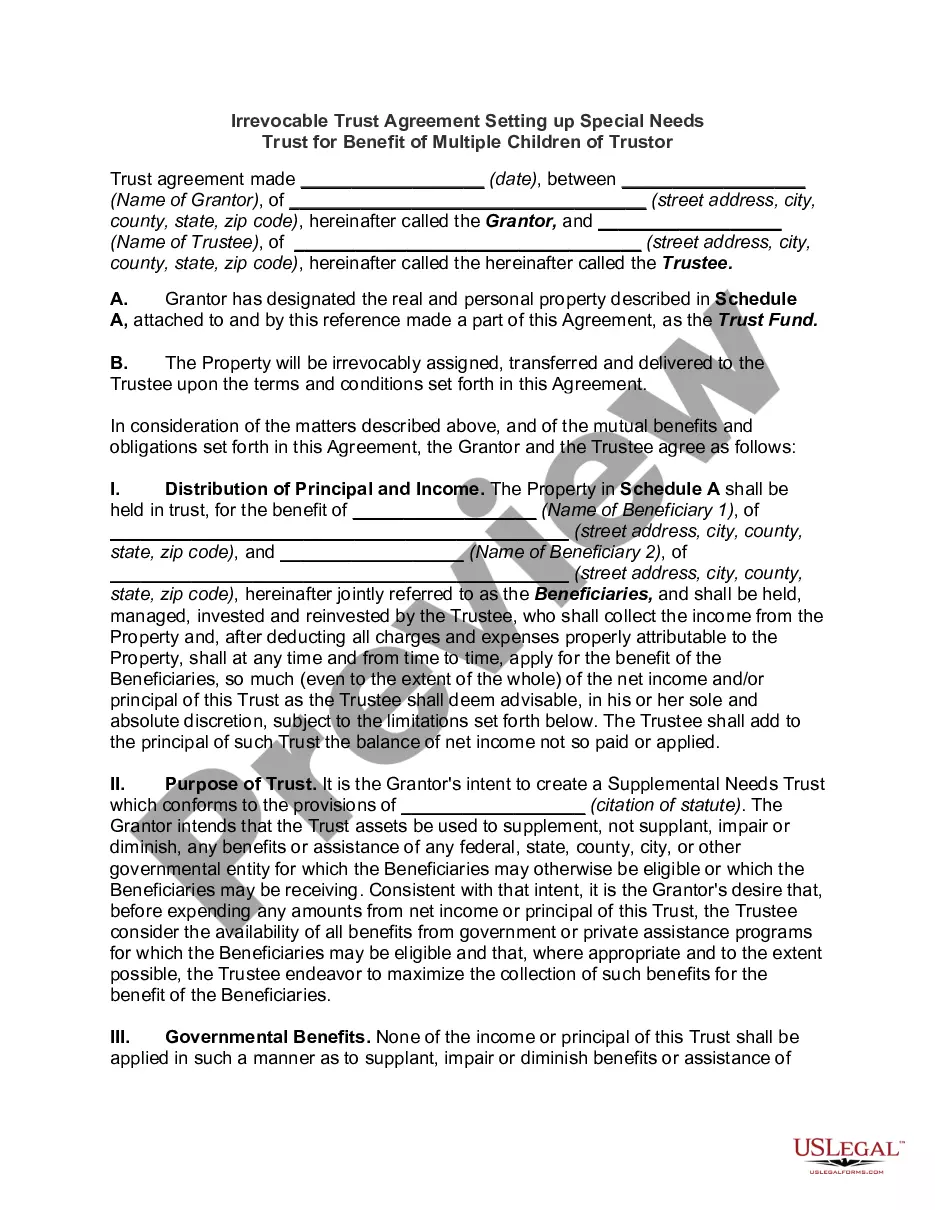
How to fill out Irrevocable Generation Skipping Or Dynasty Trust Agreement For Benefit Of Trustor's Children And Grandchildren?
Working with legal papers and procedures could be a time-consuming addition to the day. Dynasty Trust Disadvantages Foreign and forms like it usually require that you search for them and understand how you can complete them correctly. As a result, whether you are taking care of financial, legal, or individual matters, having a thorough and hassle-free web library of forms when you need it will help a lot.
US Legal Forms is the best web platform of legal templates, offering over 85,000 state-specific forms and a variety of resources that will help you complete your papers effortlessly. Check out the library of pertinent documents open to you with just one click.
US Legal Forms gives you state- and county-specific forms offered by any moment for downloading. Protect your papers administration procedures by using a top-notch service that allows you to put together any form in minutes without additional or hidden fees. Simply log in to your profile, find Dynasty Trust Disadvantages Foreign and acquire it right away in the My Forms tab. You may also gain access to formerly downloaded forms.
Is it the first time making use of US Legal Forms? Sign up and set up an account in a few minutes and you will have access to the form library and Dynasty Trust Disadvantages Foreign. Then, stick to the steps listed below to complete your form:
- Be sure you have discovered the right form by using the Review option and looking at the form information.
- Select Buy Now when ready, and select the subscription plan that fits your needs.
- Press Download then complete, eSign, and print the form.
US Legal Forms has twenty five years of expertise assisting consumers control their legal papers. Discover the form you want right now and improve any process without breaking a sweat.
Form popularity
FAQ
Taxation of a Grantor Trust If it is a foreign trust, its income and gains earned after the death of the grantor will generally be subject to US income tax only if earned from US sources, or when distributed to its US beneficiaries, as discussed below.
Interest income earned by the trust is deductible if distributed to a foreign beneficiary but because the beneficiary is a nonresident alien, he will not be subject to U.S. income tax on the distribution. Therefore, the income is not subject to withholding tax (see Rev. Rul.
Income from a foreign grantor trust is generally taxed to the trust's individual grantor, rather than to the trust itself or to the trust's beneficiaries. For a U.S. owner, this means that the trust's worldwide income would be subject to U.S. tax as if the owner himself earned such income.
If a foreign trust is considered a grantor trust for tax purposes, the IRS will tax the trust's grantor rather than the trust itself or the trust's beneficiaries. For US owners, this means that the trust's worldwide income and capital gains will be taxed as if the owner had earned the income personally.
Since the trust is designed to continue and retain most assets for an indefinite period after its creators die, a dynasty trust often pays mainly income only to the beneficiaries. This income to your family can be eaten up by high legal and trustee fees, legal disputes, and misbehaving trustees.