Easement Termination Form For Employee Purchases
Description

Get your form ready online
Our built-in tools help you complete, sign, share, and store your documents in one place.
Make edits, fill in missing information, and update formatting in US Legal Forms—just like you would in MS Word.
Download a copy, print it, send it by email, or mail it via USPS—whatever works best for your next step.
Sign and collect signatures with our SignNow integration. Send to multiple recipients, set reminders, and more. Go Premium to unlock E-Sign.
If this form requires notarization, complete it online through a secure video call—no need to meet a notary in person or wait for an appointment.
We protect your documents and personal data by following strict security and privacy standards.

Make edits, fill in missing information, and update formatting in US Legal Forms—just like you would in MS Word.

Download a copy, print it, send it by email, or mail it via USPS—whatever works best for your next step.

Sign and collect signatures with our SignNow integration. Send to multiple recipients, set reminders, and more. Go Premium to unlock E-Sign.

If this form requires notarization, complete it online through a secure video call—no need to meet a notary in person or wait for an appointment.

We protect your documents and personal data by following strict security and privacy standards.
Looking for another form?






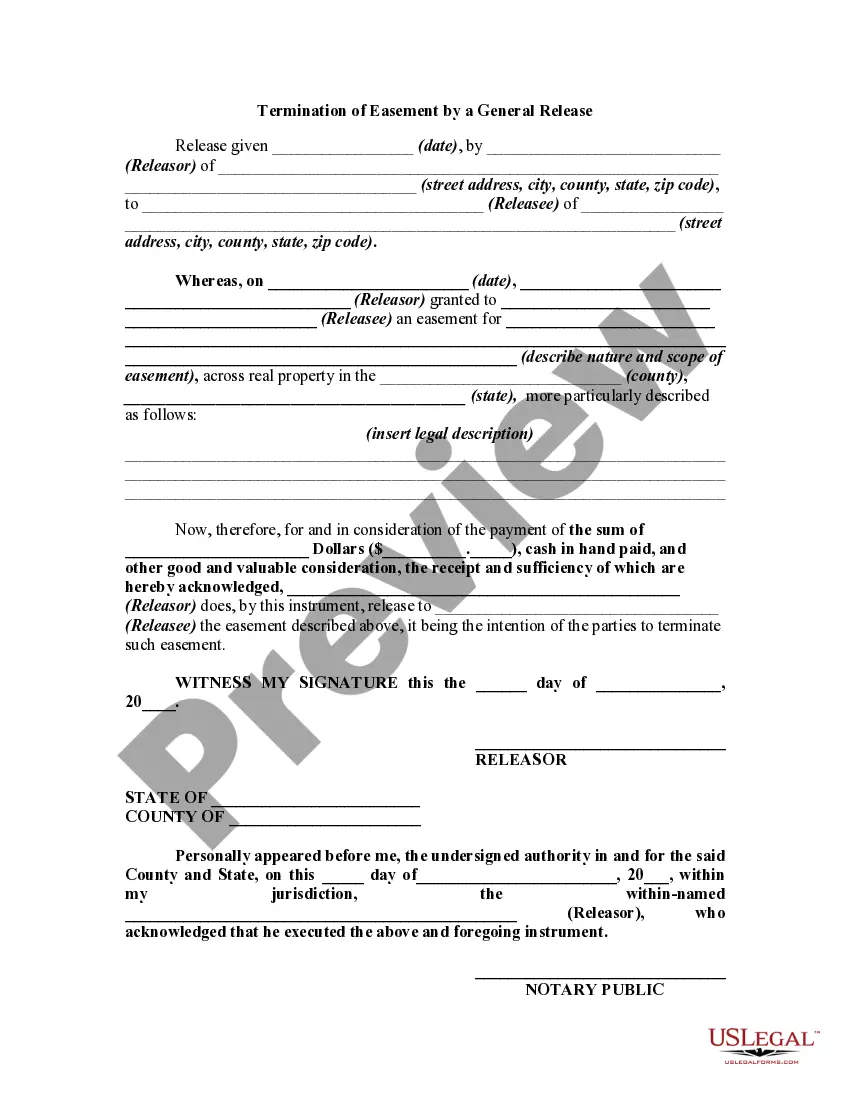
How to fill out Terminating Or Termination Of Easement By A General Release?
Utilizing legal templates that comply with federal and local laws is essential, and the web provides numerous choices to select from.
However, why spend time looking for the appropriate Easement Termination Form For Employee Purchases example online when the US Legal Forms online library already contains such templates consolidated in one location.
US Legal Forms is the most extensive online legal repository with over 85,000 editable templates created by legal professionals for any business and personal matter. These templates are simple to search as all documents are organized by state and intended use. Our experts monitor changes in legislation to ensure your documentation is current and compliant when obtaining an Easement Termination Form For Employee Purchases from our site.
All documents you find through US Legal Forms can be reused. To access and complete previously acquired forms, navigate to the My documents tab in your account. Enjoy the most comprehensive and user-friendly legal documentation service!
- Obtain an Easement Termination Form For Employee Purchases quickly and easily for both existing and new users.
- If you already possess an account with an active subscription, Log In and retrieve the document sample you need in your preferred format.
- If you're a newcomer to our website, follow the steps below.
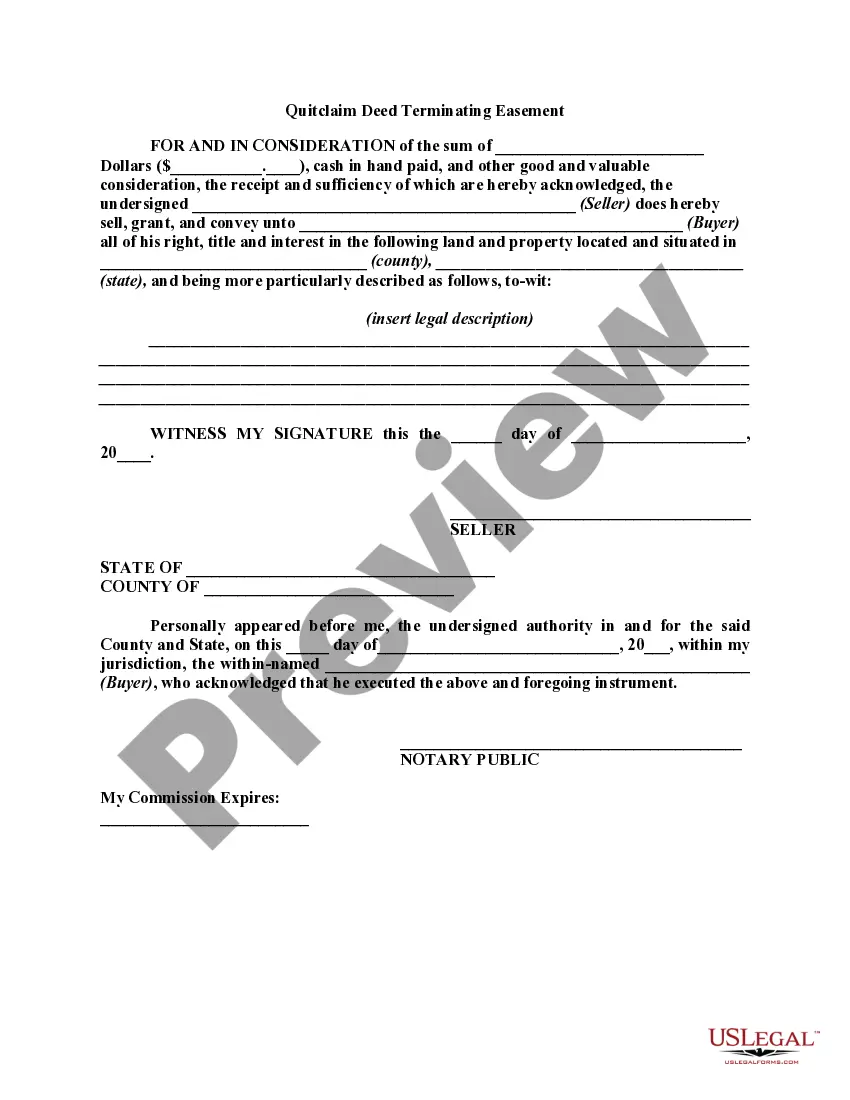
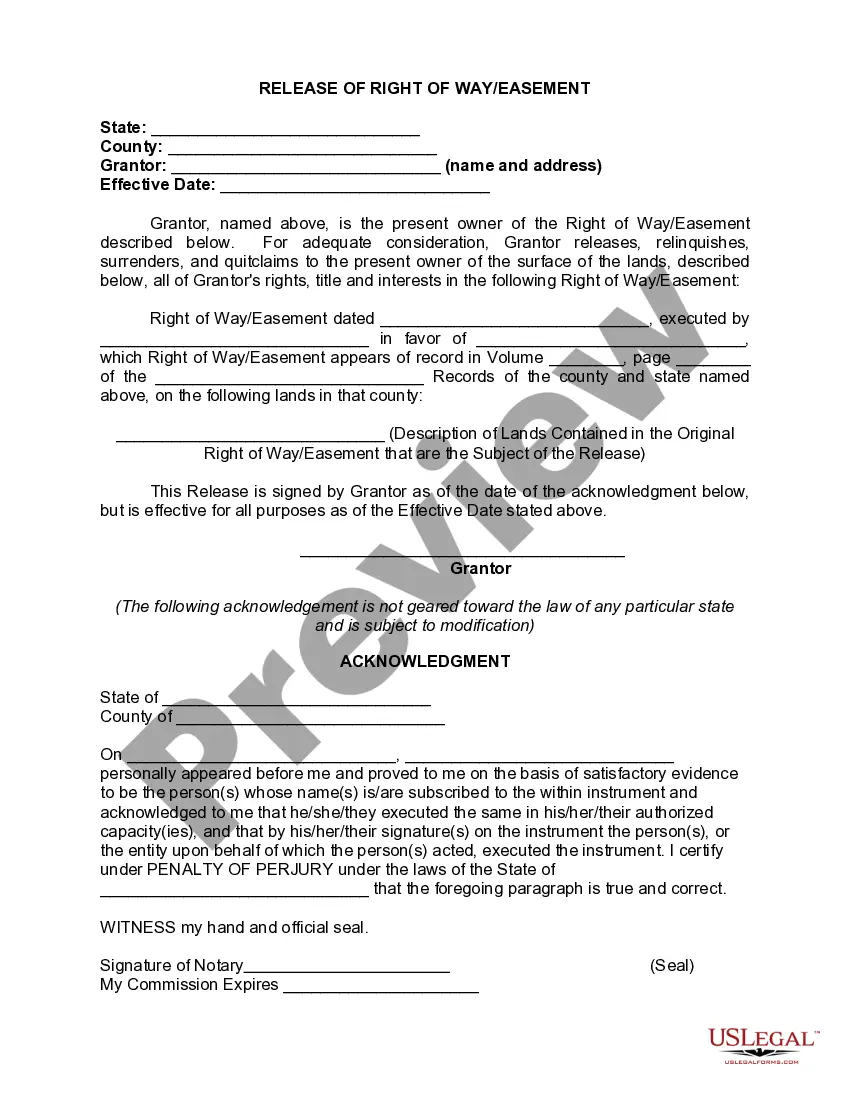
- Review the template using the Preview function or via the written description to ensure it fits your requirements.
- Search for an alternative sample using the search feature at the top of the page if needed.
- Press Buy Now once you've identified the appropriate form and choose a subscription plan.
- Create an account or Log In, and process the payment through PayPal or a credit card.
- Pick the suitable format for your Easement Termination Form For Employee Purchases and download it.
Form popularity
FAQ
An express grant is an easement by a property owner allowing another person access to their property, while a reservation is an easement by a property owner ing himself certain rights to the property even when he or she does sell it.
As soon as she bought Steve's property, her easement was extinguished because the ownership of the two parcels merged. Of course, she can re-acquire that easement from Joe if Joe agrees to give it to her, but her easement from the days that Steve owned the property is gone forever.
There are eight ways to terminate an easement: abandonment, merger, end of necessity, demolition, recording act, condemnation, adverse possession, and release.
Creation by Express Grant or Reservation The most straightforward method of creating an easement is by express grant. This occurs when the owner of the servient tenement actually gives the easement to the owner of the dominant tenement.
Non-exclusive means that a number of different parties can use the easement. Non-exclusive can also mean that additional parties could be granted the right to use that same easement in the future. A common example of a non-exclusive easement is an access or roadway easement in a shopping center.