Affirmative Defense Terms With Example
Description
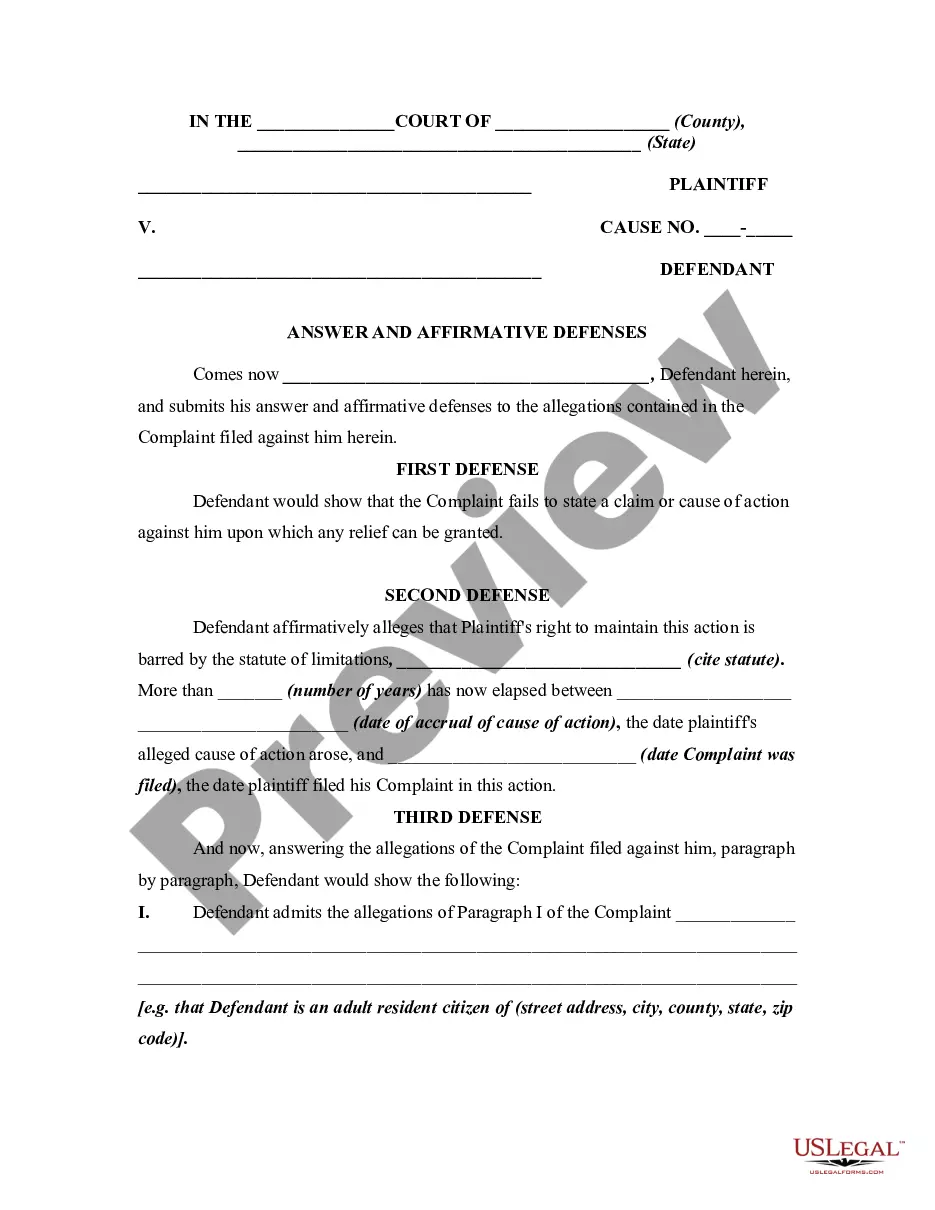
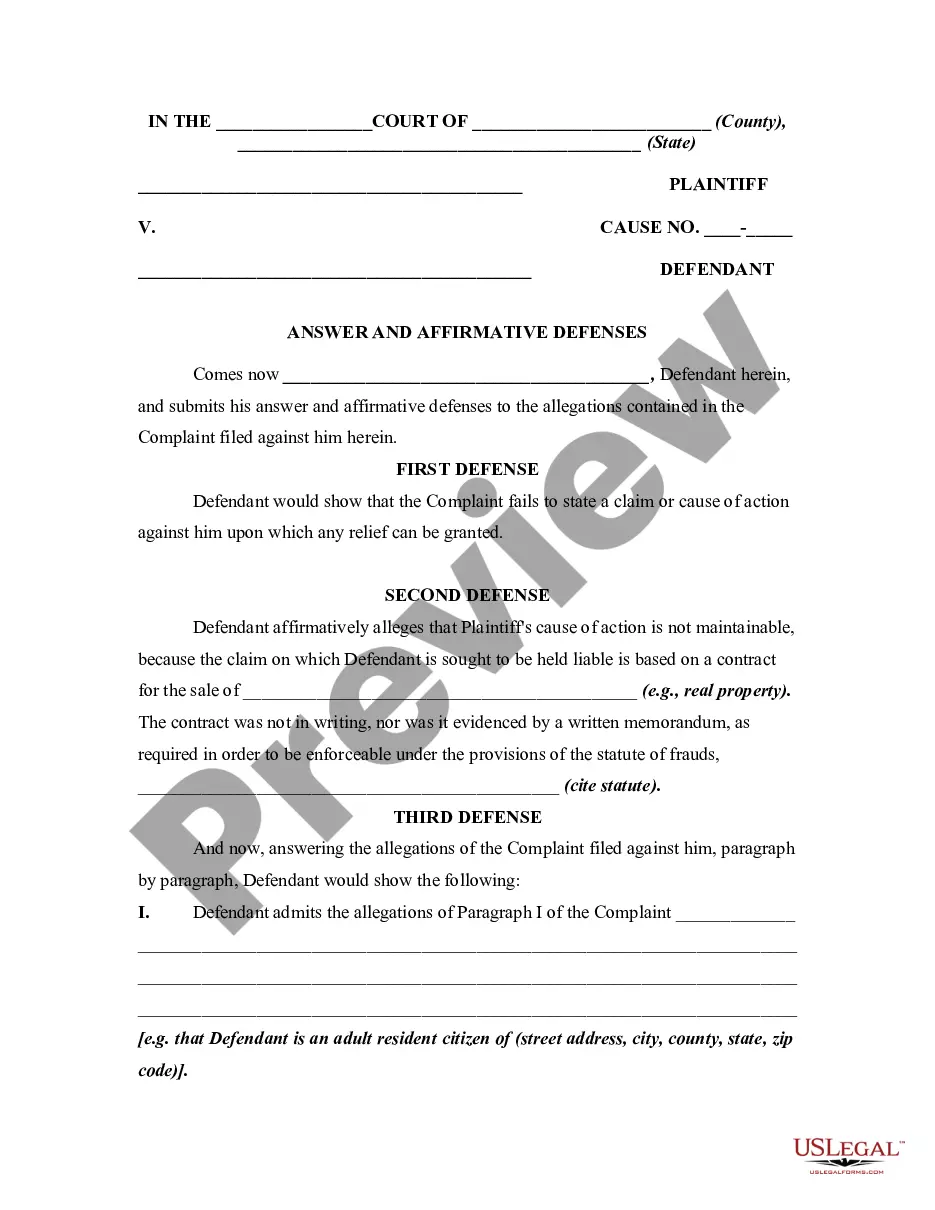
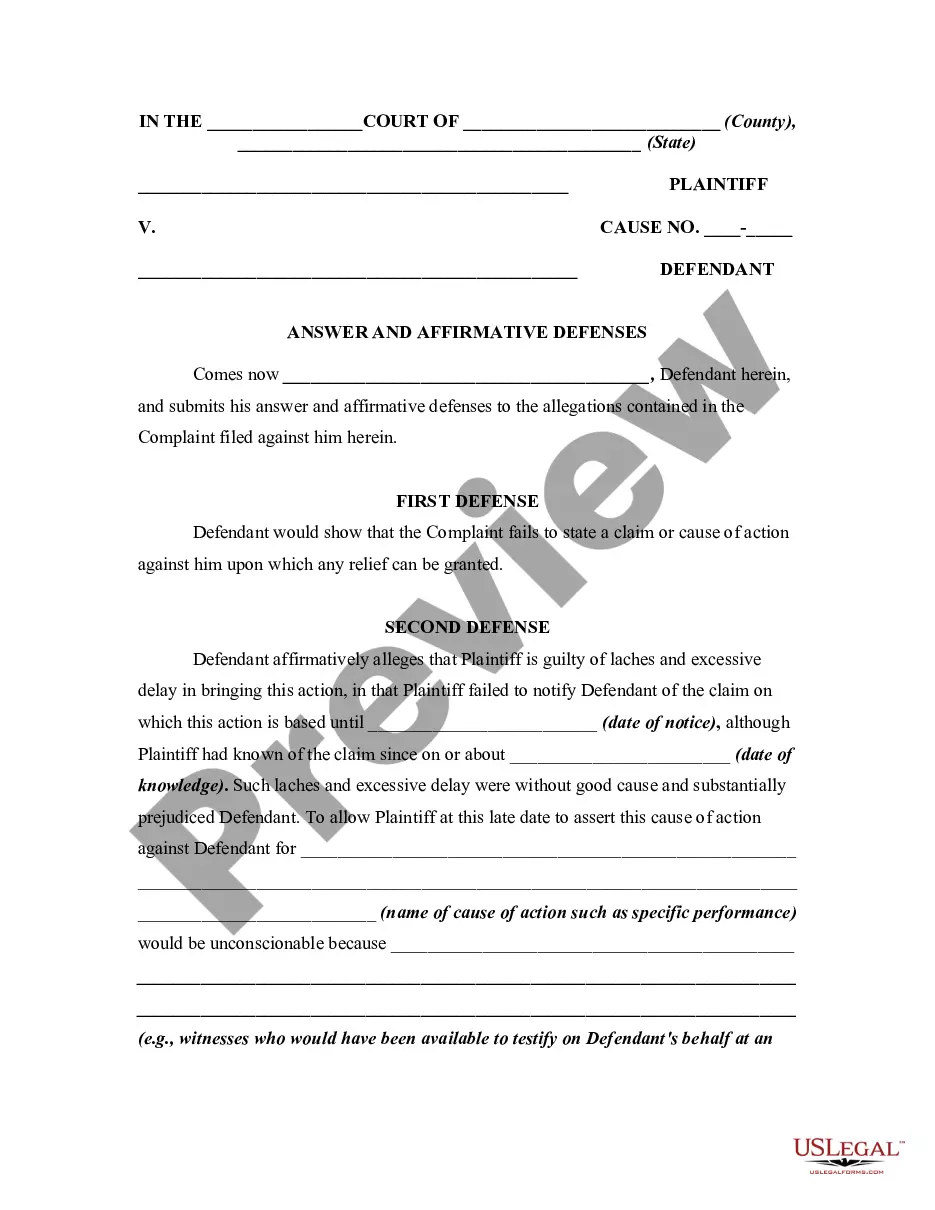
Get your form ready online
Our built-in tools help you complete, sign, share, and store your documents in one place.
Make edits, fill in missing information, and update formatting in US Legal Forms—just like you would in MS Word.
Download a copy, print it, send it by email, or mail it via USPS—whatever works best for your next step.
Sign and collect signatures with our SignNow integration. Send to multiple recipients, set reminders, and more. Go Premium to unlock E-Sign.
If this form requires notarization, complete it online through a secure video call—no need to meet a notary in person or wait for an appointment.
We protect your documents and personal data by following strict security and privacy standards.

Make edits, fill in missing information, and update formatting in US Legal Forms—just like you would in MS Word.

Download a copy, print it, send it by email, or mail it via USPS—whatever works best for your next step.

Sign and collect signatures with our SignNow integration. Send to multiple recipients, set reminders, and more. Go Premium to unlock E-Sign.

If this form requires notarization, complete it online through a secure video call—no need to meet a notary in person or wait for an appointment.

We protect your documents and personal data by following strict security and privacy standards.
Looking for another form?


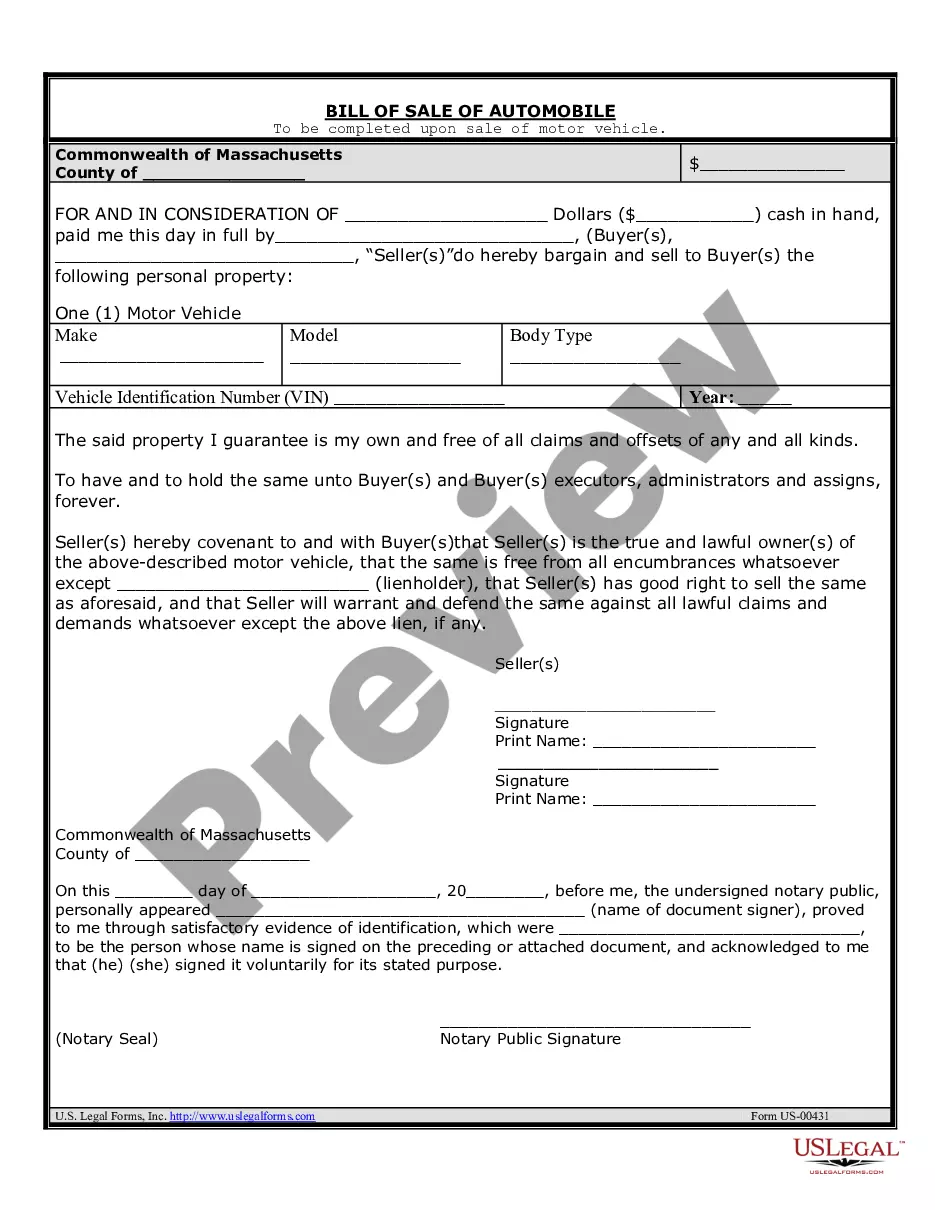






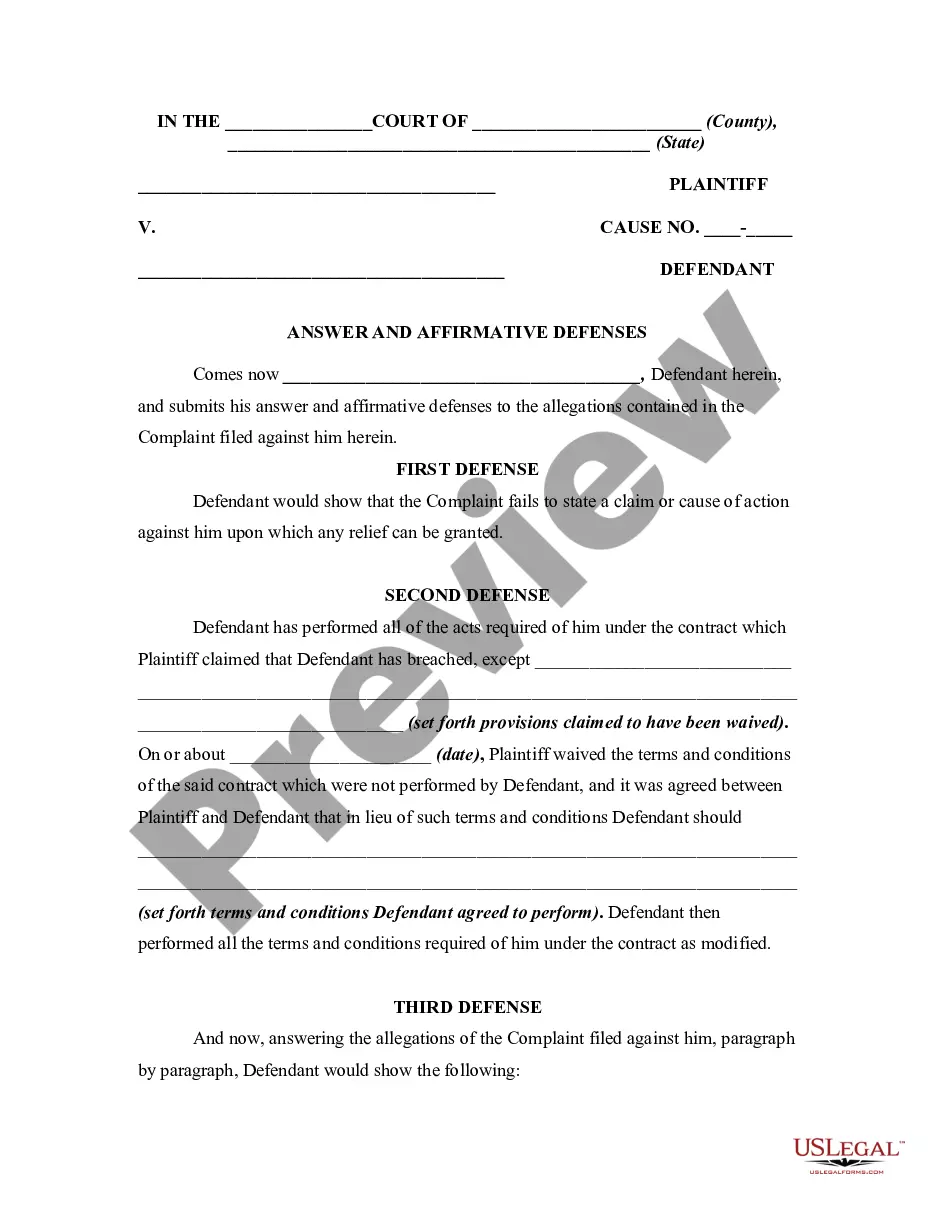
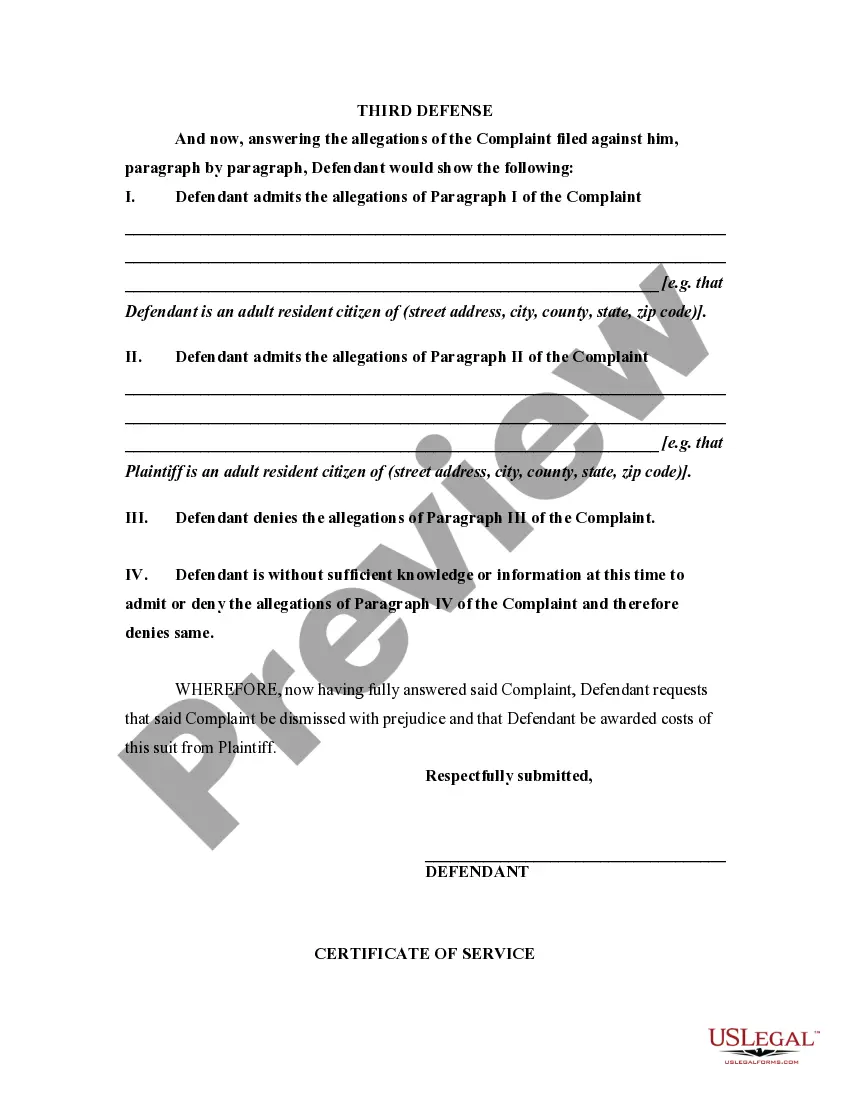
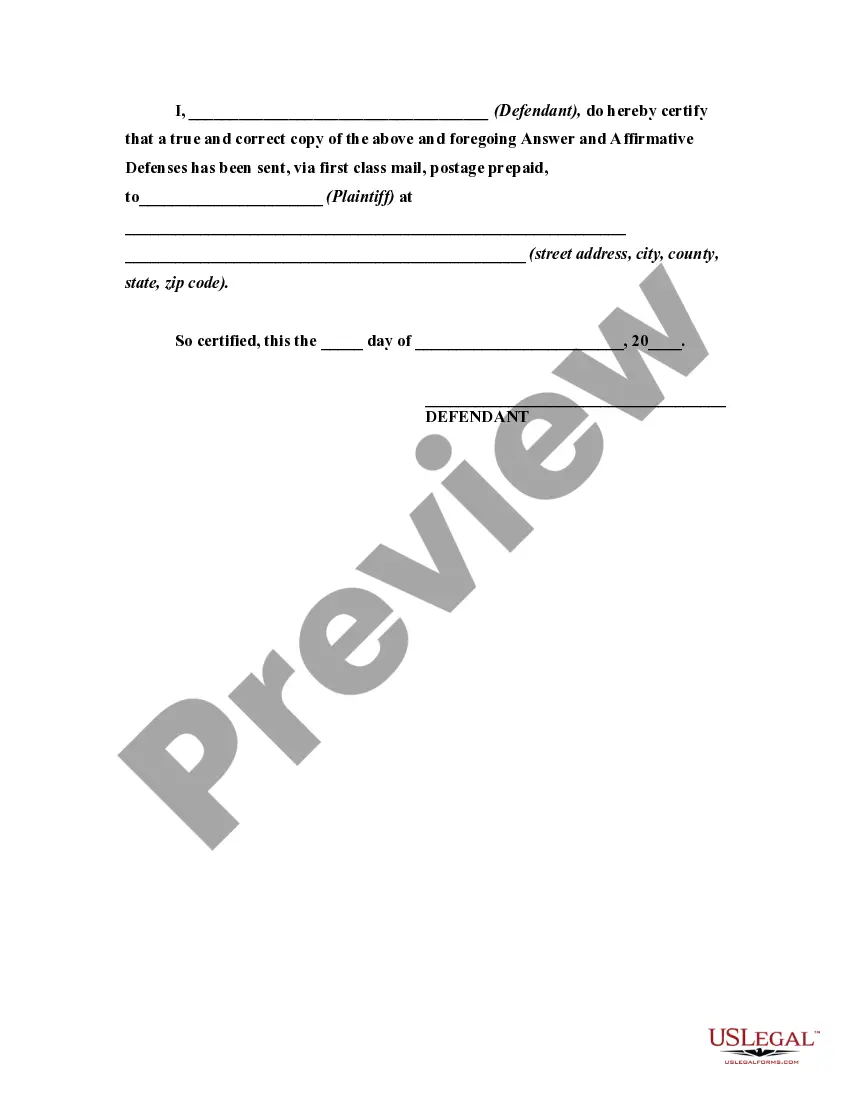
How to fill out Answer By Defendant In A Civil Lawsuit Alleging The Affirmative Defense Of The Cause Of Action Being Barred By Waiver Of Terms Of Contract By Plaintiff?
Legal administration can be perplexing, even for the most experienced specialists.
When you are on the lookout for Affirmative Defense Terms With Example and lack the opportunity to dedicate to finding the correct and up-to-date version, the tasks can be challenging.
US Legal Forms caters to all requirements you might encounter, from personal to corporate documentation, all in one place.
Utilize cutting-edge tools to complete and oversee your Affirmative Defense Terms With Example.
Here are the steps to follow after you download the form you require: confirm it is the right one by previewing it and reviewing its details.
- Tap into a valuable repository of articles, guides, manuals, and resources pertinent to your situation and requirements.
- Conserve your time and effort searching for the documentation you need, and utilize US Legal Forms' sophisticated search and Review tool to find Affirmative Defense Terms With Example and obtain it.
- If you hold a monthly subscription, Log Into your US Legal Forms account, find the form, and obtain it.
- Check the My documents tab to view the documents you have previously downloaded and organize your files as desired.
- If it's your first experience with US Legal Forms, create an account and gain unlimited access to all the platform's benefits.
- A comprehensive online form archive could revolutionize the way anyone manages these issues efficiently.
- US Legal Forms stands as a frontrunner in digital legal forms, boasting over 85,000 jurisdiction-specific legal documents available to you at any moment.
- With US Legal Forms, you can access forms tailored to specific states or counties.
Form popularity
FAQ
Self-defense, entrapment, insanity, necessity, and respondeat superior are some examples of affirmative defenses. Under the Federal Rules of Civil Procedure Rule 56, any party may make a motion for summary judgment on an affirmative defense.
If you want the judge to consider your legal defenses, you must include them in the form you file to respond to the lawsuit (your Answer). Include any possible defense you want the judge to consider in your Answer. You can focus on one, once you've collected more evidence while preparing for your trial.
Examples Civil law. and satisfaction. assumption of risk (when the plaintiff knowingly entered into a dangerous situation) authority. consent. defense of property. estoppel. contract specification. ... Criminal law. insanity defense. necessity. duress. self defense. truth. public interest.
A common example is a breach of contract action, where a prospective plaintiff was damaged by another party's failure to fulfill its contractual obligation(s). In such a circumstance, a prospective plaintiff has six years from the breach of contract to timely bring his or her action.
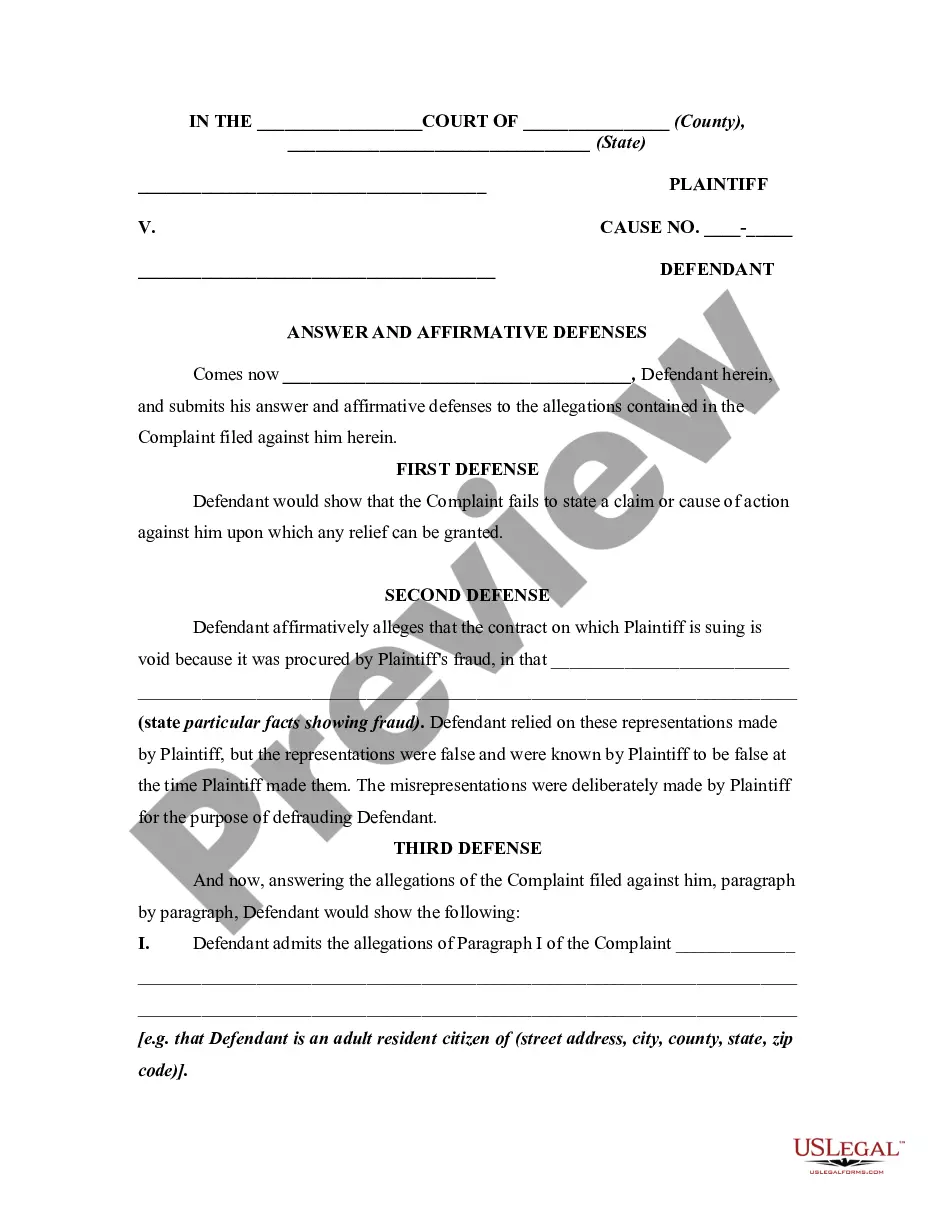
An affirmative defense is a defense that brings up new facts or issues not in the Complaint that, if true, would be a legal reason why the plaintiff should not win, or should win less than they're asking for. It is not a denial that you did what the plaintiff says you did. Using affirmative defenses if you're sued California Courts | Self Help (.gov) ? civil-lawsuit ? defendant California Courts | Self Help (.gov) ? civil-lawsuit ? defendant