Civil Suit For Defamation
Description
Get your form ready online
Our built-in tools help you complete, sign, share, and store your documents in one place.
Make edits, fill in missing information, and update formatting in US Legal Forms—just like you would in MS Word.
Download a copy, print it, send it by email, or mail it via USPS—whatever works best for your next step.
Sign and collect signatures with our SignNow integration. Send to multiple recipients, set reminders, and more. Go Premium to unlock E-Sign.
If this form requires notarization, complete it online through a secure video call—no need to meet a notary in person or wait for an appointment.
We protect your documents and personal data by following strict security and privacy standards.

Make edits, fill in missing information, and update formatting in US Legal Forms—just like you would in MS Word.

Download a copy, print it, send it by email, or mail it via USPS—whatever works best for your next step.

Sign and collect signatures with our SignNow integration. Send to multiple recipients, set reminders, and more. Go Premium to unlock E-Sign.

If this form requires notarization, complete it online through a secure video call—no need to meet a notary in person or wait for an appointment.

We protect your documents and personal data by following strict security and privacy standards.
Looking for another form?








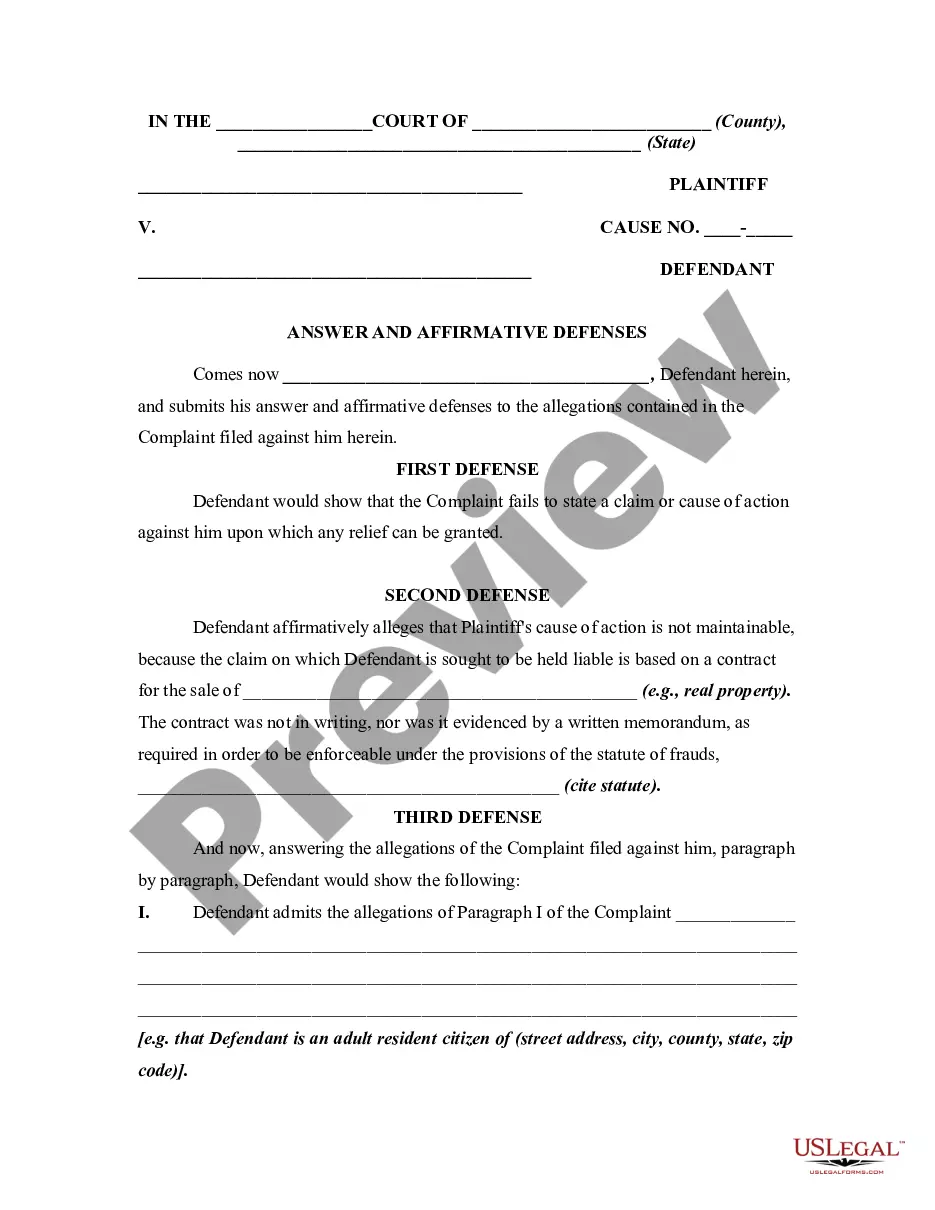
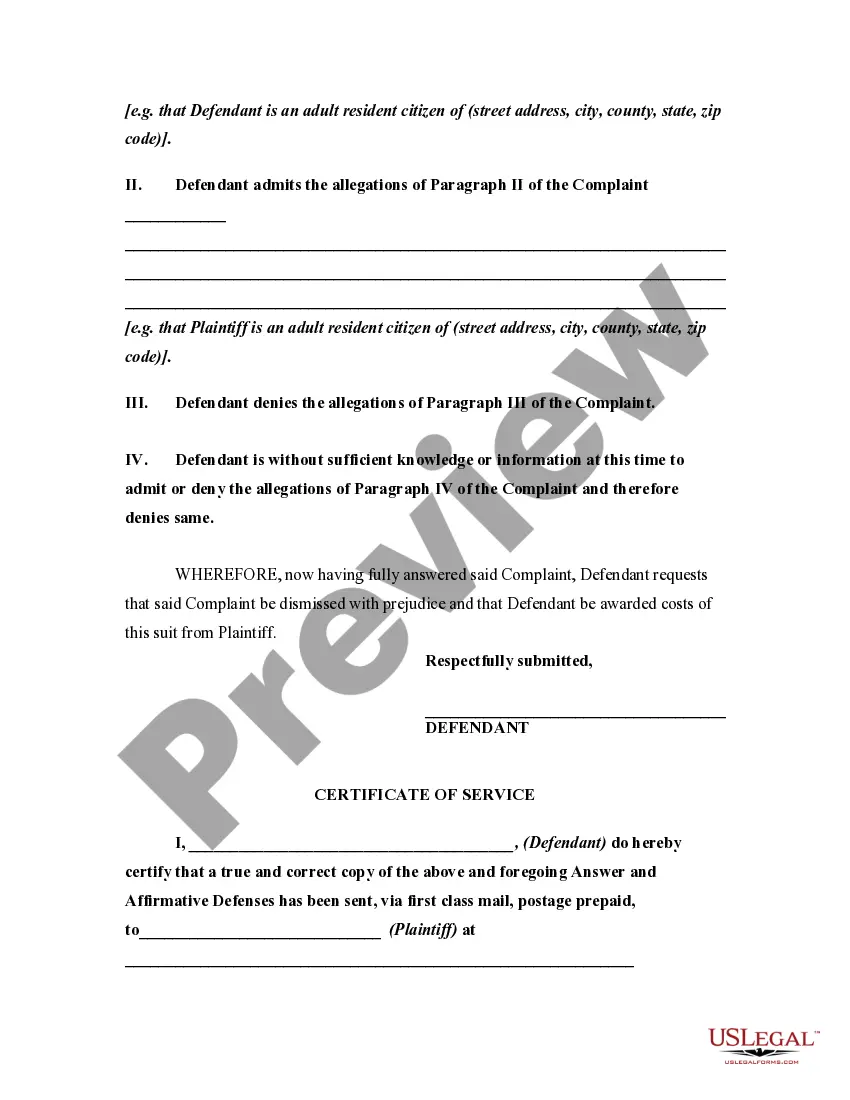
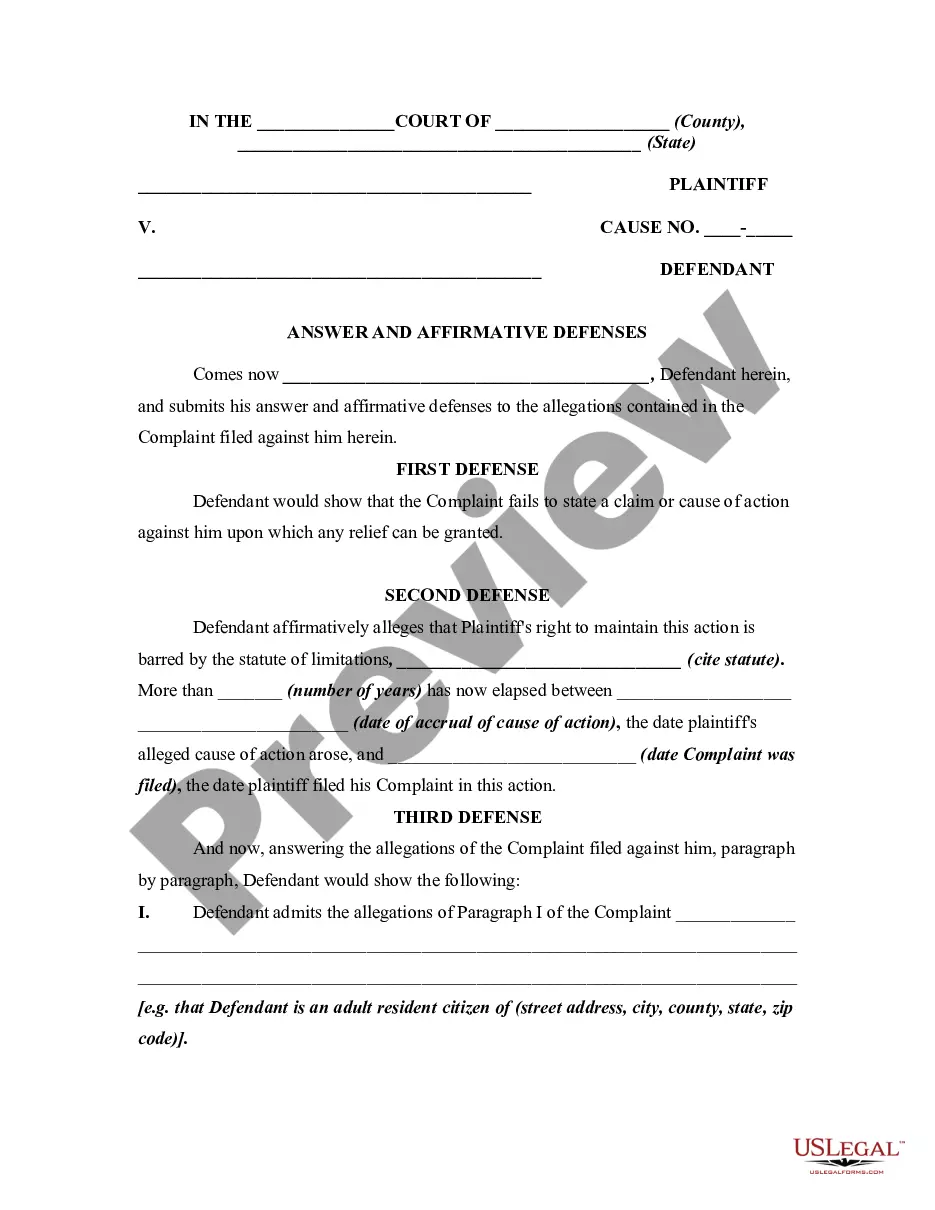
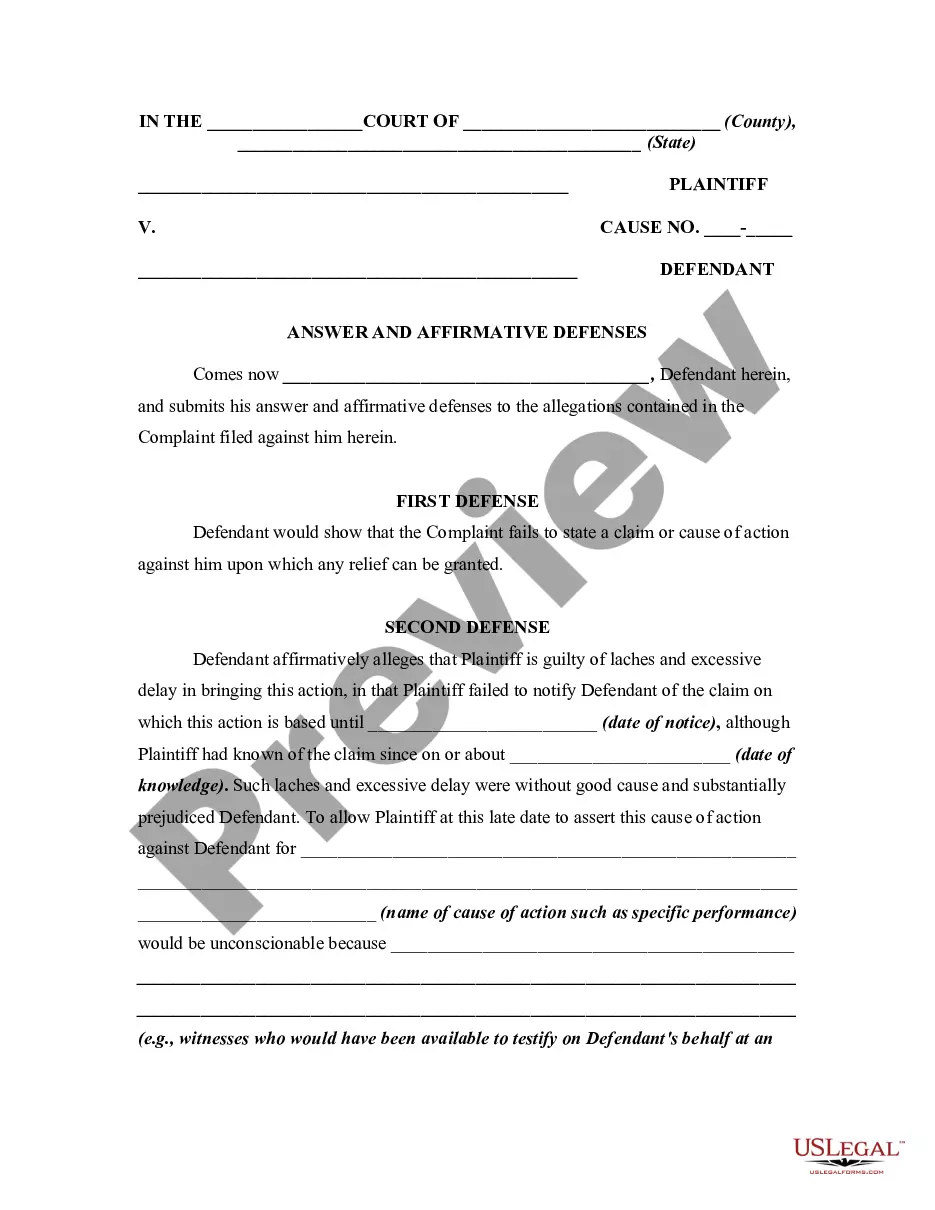
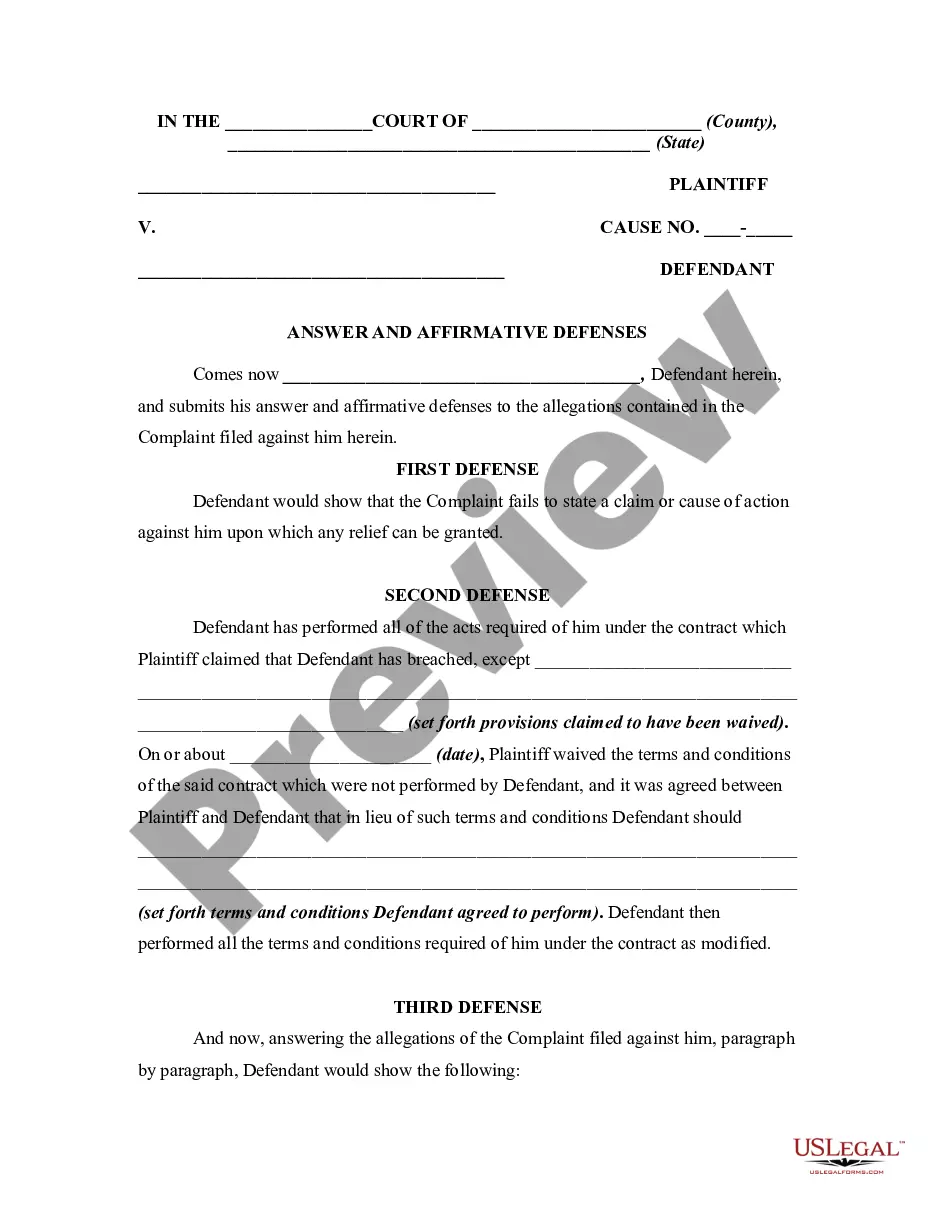
How to fill out Answer By Defendant In A Civil Lawsuit Alleging The Affirmative Defense Of The Cause Of Action Being Barred By The Appropriate Statute Of Frauds?
- Begin by logging into your existing US Legal Forms account. Ensure that your subscription is current, and if necessary, renew it.
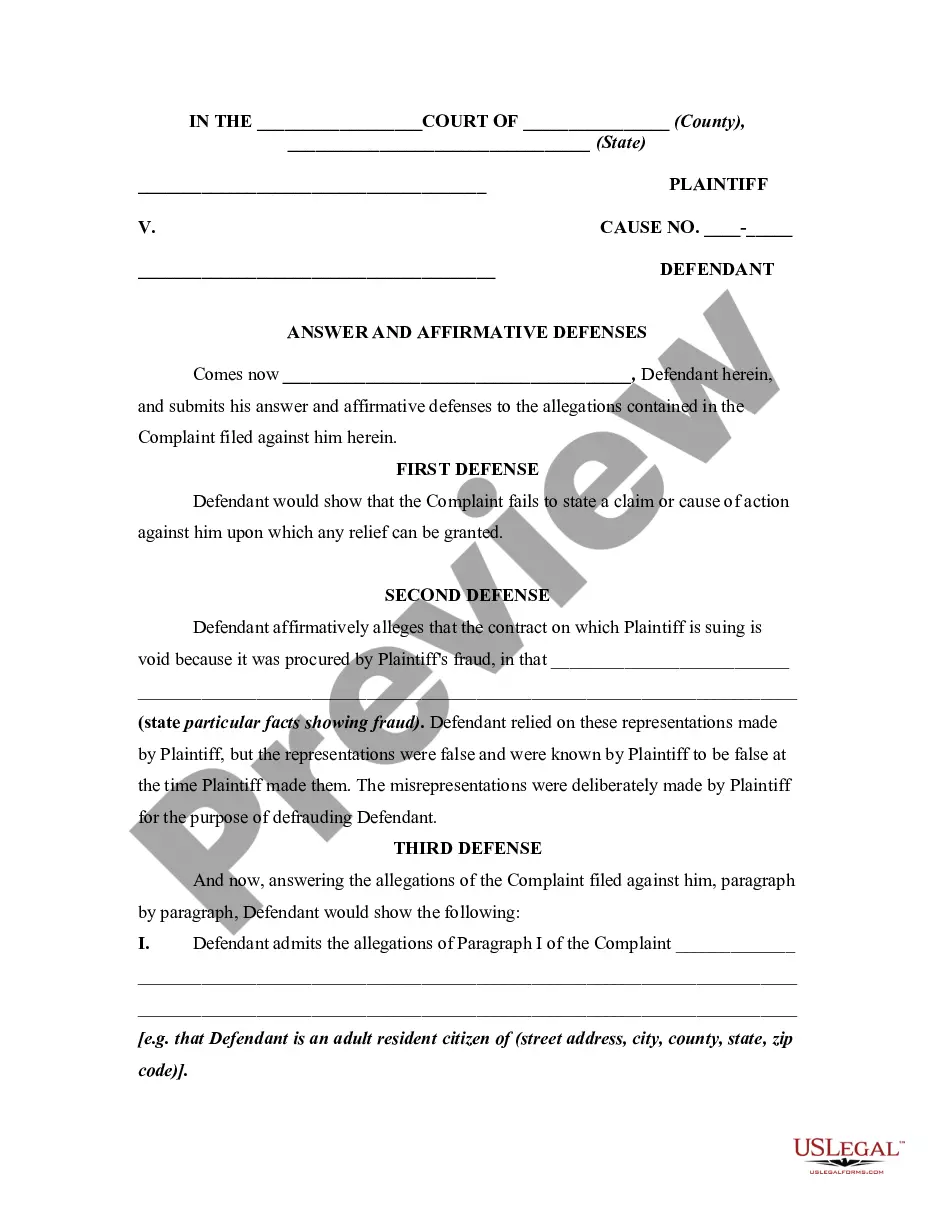
- Preview the form templates available for defamation suits. Make sure the selected form aligns with your local jurisdiction requirements.
- If the available form does not meet your specific needs, utilize the search function to find a suitable document.
- Once you've selected the correct template, click the 'Buy Now' button. Choose a subscription plan that fits your requirements, and create an account if you haven't already.
- Complete your purchase by entering your payment details, either through a credit card or PayPal.
- Lastly, download the form onto your device. You can also find it anytime in the 'My Forms' section of your profile.
By following these straightforward steps, you can streamline the process of filing a civil suit for defamation with confidence. US Legal Forms equips you with the necessary tools and resources to navigate your legal journey efficiently.
Take action today and ensure your legal documents are in order. Sign up for US Legal Forms and gain access to a comprehensive library of legal resources!
Form popularity
FAQ
Winning a civil suit for defamation can be challenging due to the burden of proof resting on the plaintiff. You must demonstrate the falsity of the statements and the harm they caused. However, having the right legal guidance can significantly improve your chances of success. US Legal Forms offers tools and resources to help simplify your journey through the legal landscape.
For a civil suit for defamation, you need to establish that the statements made about you were false and damaging. Evidence may include witness testimonies, written communications, or any documentation that supports your claim. Having a solid foundation of proof is crucial to strengthening your case and increasing your chances of success in court.
Suing for defamation can be worthwhile if the harm caused by the false statements is substantial. The civil suit for defamation serves not only to seek damages but also to restore your credibility and reputation. If the case has strong evidence to support your claims, pursuing this legal route may lead to a favorable outcome. At US Legal Forms, we empower you with the necessary information to make informed decisions.
In a civil suit for defamation, typically, the losing party pays the legal costs. This includes compensatory damages to the winning side if the court rules in their favor. However, both parties often incur their own legal costs as the process unfolds. Understanding these financial implications can provide clarity before you decide to move forward.
Considering a civil suit for defamation can be a significant decision. The value of suing often depends on the impact the defamation has had on your reputation and life. If the statements made against you are false and damaging, pursuing a lawsuit may be essential to restoring your good name. At US Legal Forms, we provide resources to help you understand your options and guide you through the process.
Proving a defamation case can be challenging, particularly due to the requirement of showing that the statements made were false and harmful. It also involves demonstrating that the defendant acted with negligence or actual malice, especially if you are a public figure. Despite these challenges, a well-prepared plaintiff can prevail in a civil suit for defamation by presenting strong evidence and arguments.
To file a civil suit for defamation, start by gathering all necessary evidence that supports your claim. Next, you will need to draft and file a complaint in the appropriate court, outlining the details of your case. Using a platform like US Legal Forms can simplify this process by providing customizable templates for your civil suit for defamation.
Yes, you need substantial evidence to file a civil suit for defamation. This includes documentation or testimonies that support your claim that false information was spread and that it caused damage to your reputation. Having clear evidence strengthens your case and increases your chances of success in a civil suit for defamation.
In a civil suit for defamation, the standard of proof requires the plaintiff to demonstrate that the false statements harmed their reputation. Typically, this means proving that the statements were made with actual malice, particularly if the plaintiff is a public figure. If you are considering a civil suit for defamation, understanding this standard of proof is crucial in building your case.
A civil suit for defamation occurs when someone makes a false statement that harms another person's reputation. To qualify, the statement must be presented as a fact, not opinion, and it must be untrue. The harmed party typically needs to prove that the statement caused actual damages, such as lost income or emotional distress. If you believe you have grounds for a civil suit for defamation, consider exploring resources that can help you navigate this legal process effectively.